


Accessibility links

Breaking News

'Extensive' Tests Under Way On Putin Foe Navalny At Berlin Hospital

Updated
'Extensive' Tests Under Way On Putin Foe Navalny After Transfer To Berlin Hospital
please wait

No media source currently available

0:00 0:01:41 0:00

The Berlin hospital where Aleksei Navalny is being treated said on August 22 that doctors had begun "extensive" diagnostic tests on the Russian opposition politician.

"After completing the examinations and after consulting the family, the physicians will comment on the disease and further treatment steps. The examinations will take some time," the hospital said on Twitter.

German President Frank-Walter Steinmeier said that finding out why the fierce political critic of Russian President Vladimir Putin had fallen into the coma is "critical."

"I hope that all those who can contribute to answering this question will actually do so," Steinmeier said while on a visit to Austria. He also expressed support for Navalny’s cause.

"I wish that Mr. Navalny recovers not only quickly, but fully, to regain his health so that he can continue working," he said.

Navalny arrived in Berlin from the Siberian city of Omsk following his suspected poisoning.

Jaka Bizilj, the head of the NGO that sent the private plane to evacuate Navalny, said the Russian's condition was "stable" during the flight and on arrival.

The founder of Cinema For Peace added that the anti-corruption campaigner was "very worrying."

"We got a very clear message from the doctors that if there had not been an emergency landing in Omsk, he would have died," Bizilj said.

The flight followed a daylong battle by Navalny's family and supporters to get the fierce political critic of President Vladimir Putin to the West for what they regard as more reliable, effective, and transparent treatment.

Navalny spokeswoman Kira Yarmysh said on Twitter that his condition during the trip "once again confirms: nothing prevented Navalny from being transported, and it was necessary to do it as quickly as possible."

Hours earlier, she tweeted on his departure from Russia that "The struggle for Aleksei's life and health is just beginning, and there is still a lot to go through, but now at least the first step has been taken."

Yarmysh posted a picture of Navalny, encased in a protective stretcher, being taken aboard the charity plane in Omsk escorted by his wife.

Aleksei Navalny is loaded onto an air ambulance in Omsk on August 22.

Navalny has been in a coma at Omsk hospital since he became ill from suspected poisoning on August 20 during a flight from the Siberian city of Tomsk to Moscow. The plane made an emergency landing in Omsk, which is also in Siberia.

Navalny's family and allies had been fighting to transfer him to Germany for urgent treatment, but Russian doctors treating him had refused for hours to allow him to leave the hospital in Omsk, arguing that he was not fit to travel.

But later on August 21, a senior official at the Omsk hospital, Anatoly Kalinichenko, told the media that Navalny could be transported, as his condition has stabilized.

German doctors who arrived with an ambulance plane were earlier in the day allowed to examine Navalny in Omsk after being refused access to him because of what the hospital said was his grave condition.

Russian Opposition Leader Navalny Fights For His Life After Suspected Poisoning
please wait

No media source currently available

0:00 0:03:50 0:00

Navalny's wife had earlier appealed to Russian President Vladimir Putin to allow her husband’s evacuation to Germany for urgent medical care.

The Kremlin said that the initial decision to refuse the transfer to Germany of Navalny was based only on medical grounds.

But Navalny's supporters denounced the medical verdict as a ploy to stall until any poison would no longer be found in his body.

A Timeline Of Russian Poisoning Cases

A Timeline Of Russian Poisoning Cases
Over Vladimir Putin's 20 years in power, there have been numerous cases where outspoken Kremlin opponents are suspected of having been poisoned -- sometimes fatally.

Yarmysh had called the hospital's decision "an attempt on his life being carried out right now by doctors and the deceitful authorities that have authorized it."

After offering to have him flown to Germany for treatment, the German government said on August 21 that Navalny's life must be saved.

"The most important priority is of course that Mr. Navalny's life can be saved and that he can recover," government spokesman Steffen Seibert told reporters in Berlin.

EU Calls For Investigation

There has been no official diagnosis of Navalny's condition, but his team believes he was poisoned because of his activities.

Yarmysh said she believed the politician was poisoned when he drank tea he had bought at the Tomsk airport.

But Aleksandr Murakhovsky, the head doctor at Omsk Emergency Hospital No. 1, told journalists the most likely cause of Navalny's condition was a disorder pertaining to his metabolism of carbohydrates, according to comments carried by state news agency TASS.

"Today we have some working diagnoses. The main one is...a metabolic disorder," Murakhovsky said, adding that Navalny's condition "may be caused by a sudden drop in blood-sugar levels."

Murakhovsky's comments came after Yarmysh quoted Navalny’s associate, Ivan Zhdanov, as saying that "a police officer at the hospital just said that a poison was found in Aleksei's body, which was dangerous not only for him, but also for those around him."

The European Union has asked for a swift investigation into what caused Navalny to fall into a coma.

Aleksei Navalny (file photo)

"We are very worried about Aleksei Navalny's health following his suspected poisoning yesterday," EU spokeswoman for foreign affairs and security policy Nabila Massrali said on August 21.

"We expect a swift, independent, and transparent investigation. If confirmed, those responsible must be held to account," Massrali added, urging Russia to permit Navalny to be transferred abroad for treatment.

'Very Courageous Man'

White House national-security adviser Robert O'Brien said on August 20 that the suspected poisoning was "extraordinarily concerning" and could have an impact on U.S.-Russia relations.

"He's a very courageous man. He is a very courageous politician to have stood up to [Russian President] Putin inside Russia, and our thoughts and our prayers are with him and his family," O'Brien said in an interview on Fox News.

"It's extraordinarily concerning and if the Russians were behind this...it's something that we're going to factor into how we deal with the Russians going forward," he said.

Navalny, who has exposed rampant corruption in Russia, has suffered physical attacks in the past.

He endured chemical burns to one of his eyes in 2017 after he was assaulted with antiseptic dye.

Run-Ins Endured By Aleksei Navalny, Russia's Leading Opposition Figure

Aleksei Navalny in court in December 2011 after his arrest during an unauthorized anti-government march in Moscow. Navalny was sentenced to 15 days detention for “resisting law enforcement officers.” It was the first of what would later become a regular occurrence for the opposition figure.
1/15 Aleksei Navalny in court in December 2011 after his arrest during an unauthorized anti-government march in Moscow. Navalny was sentenced to 15 days detention for “resisting law enforcement officers.” It was the first of what would later become a regular occurrence for the opposition figure.
Pictures from some of the dozens of encounters Russia’s leading opposition figure has had with police, the courts, and unknown assailants through his years of public activism. Navalny has been jailed more than 10 times and has spent hundreds of days in custody since 2011.
A sign expressing support for Navalny scrawled on the back of a truck outside the detention center where Navalny was being held after his December 2011 arrest. In February 2011, Navalny described President Vladimir Putin&rsquo;s political party, United Russia, as &ldquo;the party of crooks and thieves&rdquo; in a radio interview. The phrase was widely picked up by opposition groups.<br />
&nbsp;
2/15 A sign expressing support for Navalny scrawled on the back of a truck outside the detention center where Navalny was being held after his December 2011 arrest. In February 2011, Navalny described President Vladimir Putin’s political party, United Russia, as “the party of crooks and thieves” in a radio interview. The phrase was widely picked up by opposition groups.
 
Pictures from some of the dozens of encounters Russia’s leading opposition figure has had with police, the courts, and unknown assailants through his years of public activism. Navalny has been jailed more than 10 times and has spent hundreds of days in custody since 2011.
Navalny is escorted to a court session in Moscow in May 2012. He was detained during an opposition rally a day after the May 7 inauguration of Putin. Navalny was sentenced to another 15 days of jail for &quot;participating in an illegal public event.&quot;
3/15 Navalny is escorted to a court session in Moscow in May 2012. He was detained during an opposition rally a day after the May 7 inauguration of Putin. Navalny was sentenced to another 15 days of jail for "participating in an illegal public event."
Pictures from some of the dozens of encounters Russia’s leading opposition figure has had with police, the courts, and unknown assailants through his years of public activism. Navalny has been jailed more than 10 times and has spent hundreds of days in custody since 2011.
A journalist films Navalny&rsquo;s Moscow apartment after it was ransacked by police on June 11, 2012.&nbsp; Russian police raided several opposition leaders&#39; homes amid widespread anti-government protests in the spring and summer of 2012.<br />
&nbsp;
4/15 A journalist films Navalny’s Moscow apartment after it was ransacked by police on June 11, 2012.  Russian police raided several opposition leaders' homes amid widespread anti-government protests in the spring and summer of 2012.
 
Pictures from some of the dozens of encounters Russia’s leading opposition figure has had with police, the courts, and unknown assailants through his years of public activism. Navalny has been jailed more than 10 times and has spent hundreds of days in custody since 2011.
Masked men drive away after searching Navalny&rsquo;s Moscow office on June 12, 2012. Navalny was later summoned for questioning by police, which prevented his participation in a planned protest.
5/15 Masked men drive away after searching Navalny’s Moscow office on June 12, 2012. Navalny was later summoned for questioning by police, which prevented his participation in a planned protest.
Pictures from some of the dozens of encounters Russia’s leading opposition figure has had with police, the courts, and unknown assailants through his years of public activism. Navalny has been jailed more than 10 times and has spent hundreds of days in custody since 2011.
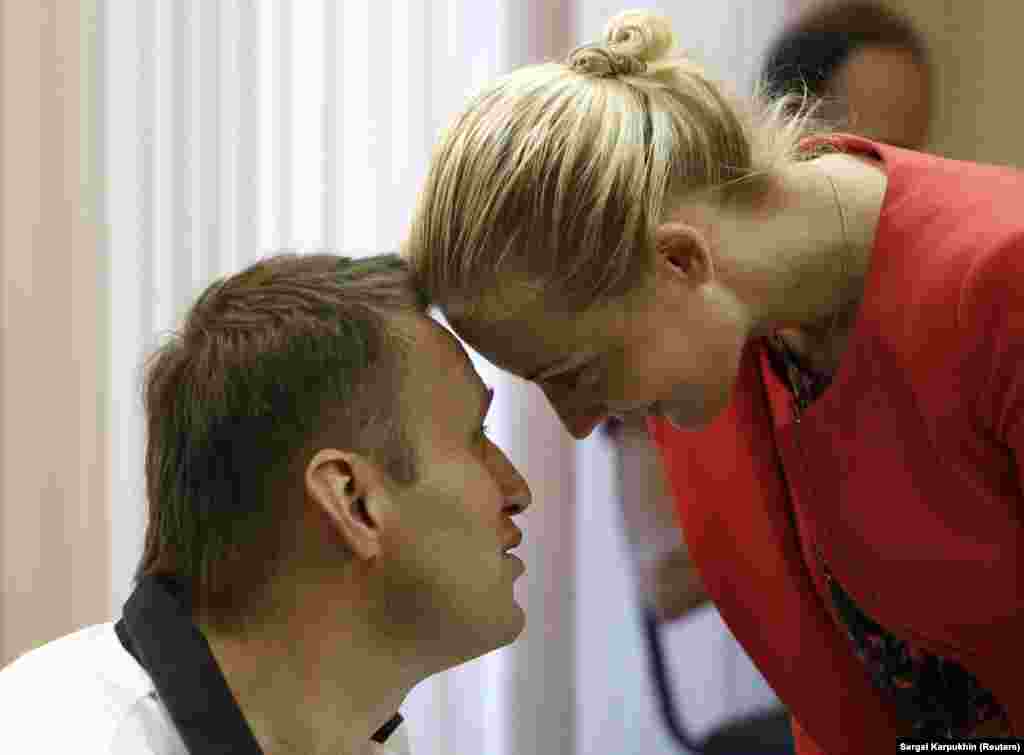
Navalny and his wife, Yulia, during a break in court proceedings in Kirov in July 2013. Navalny was charged with stealing 16 million rubles ($500,000) from a state timber firm. He rejected the charges as trumped up. The court handed down a five-year prison term that was later reduced to a suspended sentence after widespread public protests.<br />
&nbsp;
6/15 Navalny and his wife, Yulia, during a break in court proceedings in Kirov in July 2013. Navalny was charged with stealing 16 million rubles ($500,000) from a state timber firm. He rejected the charges as trumped up. The court handed down a five-year prison term that was later reduced to a suspended sentence after widespread public protests.
 
Pictures from some of the dozens of encounters Russia’s leading opposition figure has had with police, the courts, and unknown assailants through his years of public activism. Navalny has been jailed more than 10 times and has spent hundreds of days in custody since 2011.
Navalny and his brother Oleg (inside cage) during a court hearing in Moscow in December 2014. The pair were convicted of stealing around $500,000 from Russian firms during business dealings dating back several years. They rejected the charges. Aleksei Navalny&rsquo;s sentence was suspended, but his brother served a full prison term of 3 1/2 years, being released in June 2018.<br />
&nbsp;<br />
&nbsp;
7/15 Navalny and his brother Oleg (inside cage) during a court hearing in Moscow in December 2014. The pair were convicted of stealing around $500,000 from Russian firms during business dealings dating back several years. They rejected the charges. Aleksei Navalny’s sentence was suspended, but his brother served a full prison term of 3 1/2 years, being released in June 2018.
 
 
Pictures from some of the dozens of encounters Russia’s leading opposition figure has had with police, the courts, and unknown assailants through his years of public activism. Navalny has been jailed more than 10 times and has spent hundreds of days in custody since 2011.
Navalny being detained after leaving a radio station in Moscow in January 2015. Shortly before, Navalny had snipped off an electronic bracelet he was required to wear while under house arrest for his 2014 suspended sentence.
8/15 Navalny being detained after leaving a radio station in Moscow in January 2015. Shortly before, Navalny had snipped off an electronic bracelet he was required to wear while under house arrest for his 2014 suspended sentence.
Pictures from some of the dozens of encounters Russia’s leading opposition figure has had with police, the courts, and unknown assailants through his years of public activism. Navalny has been jailed more than 10 times and has spent hundreds of days in custody since 2011.
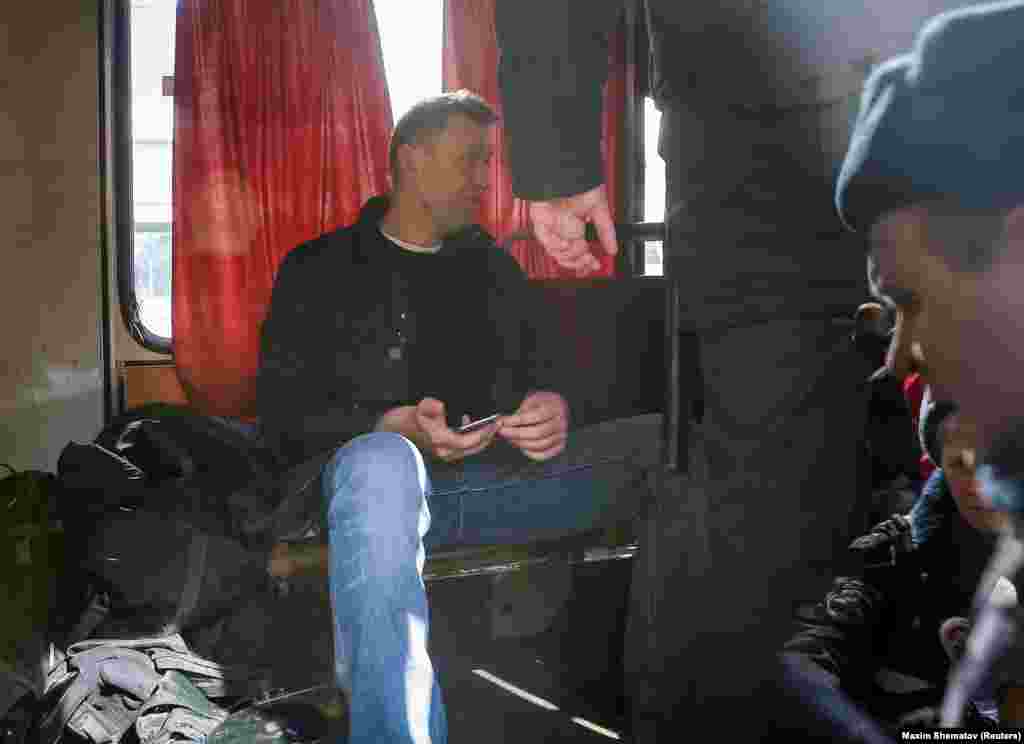
Navalny sitting in a police van after being seized by police during a massive Moscow rally in March 2017. He was fined $350 for taking part in what the authorities called an illegal protest.
9/15 Navalny sitting in a police van after being seized by police during a massive Moscow rally in March 2017. He was fined $350 for taking part in what the authorities called an illegal protest.
Pictures from some of the dozens of encounters Russia’s leading opposition figure has had with police, the courts, and unknown assailants through his years of public activism. Navalny has been jailed more than 10 times and has spent hundreds of days in custody since 2011.
Navalny on his way to the hospital after being splashed with green dye by unknown assailants in Moscow in April 2017. He suffered burns to his eye in the attack.
10/15 Navalny on his way to the hospital after being splashed with green dye by unknown assailants in Moscow in April 2017. He suffered burns to his eye in the attack.
Pictures from some of the dozens of encounters Russia’s leading opposition figure has had with police, the courts, and unknown assailants through his years of public activism. Navalny has been jailed more than 10 times and has spent hundreds of days in custody since 2011.
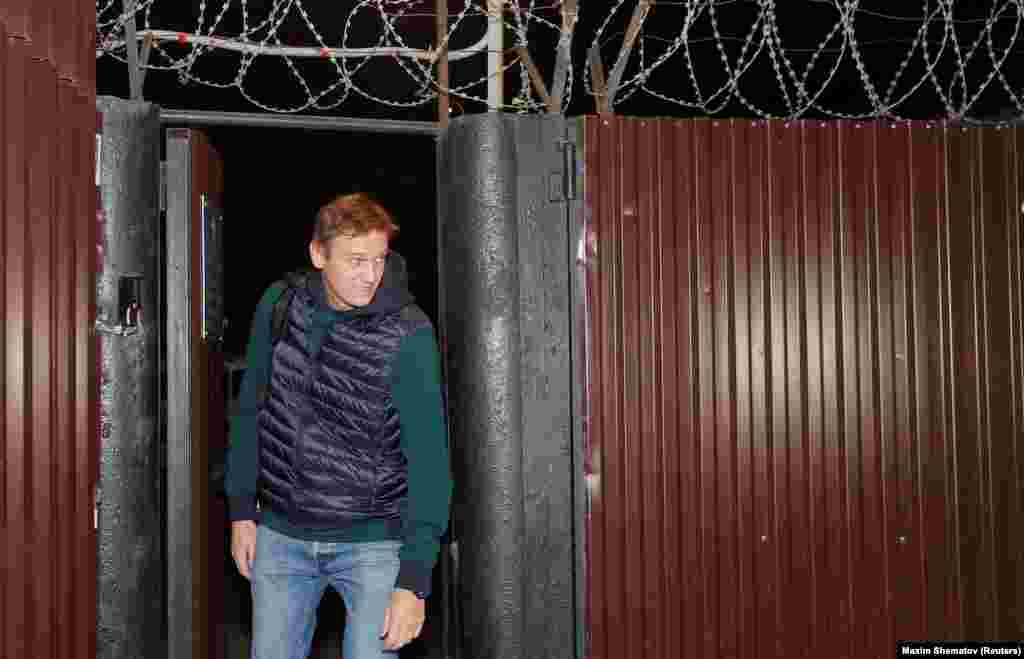
Navalny leaves a Moscow jail in October 2018 after serving 20 days on charges of staging illegal protests.<br />
&nbsp;
11/15 Navalny leaves a Moscow jail in October 2018 after serving 20 days on charges of staging illegal protests.
 
Pictures from some of the dozens of encounters Russia’s leading opposition figure has had with police, the courts, and unknown assailants through his years of public activism. Navalny has been jailed more than 10 times and has spent hundreds of days in custody since 2011.
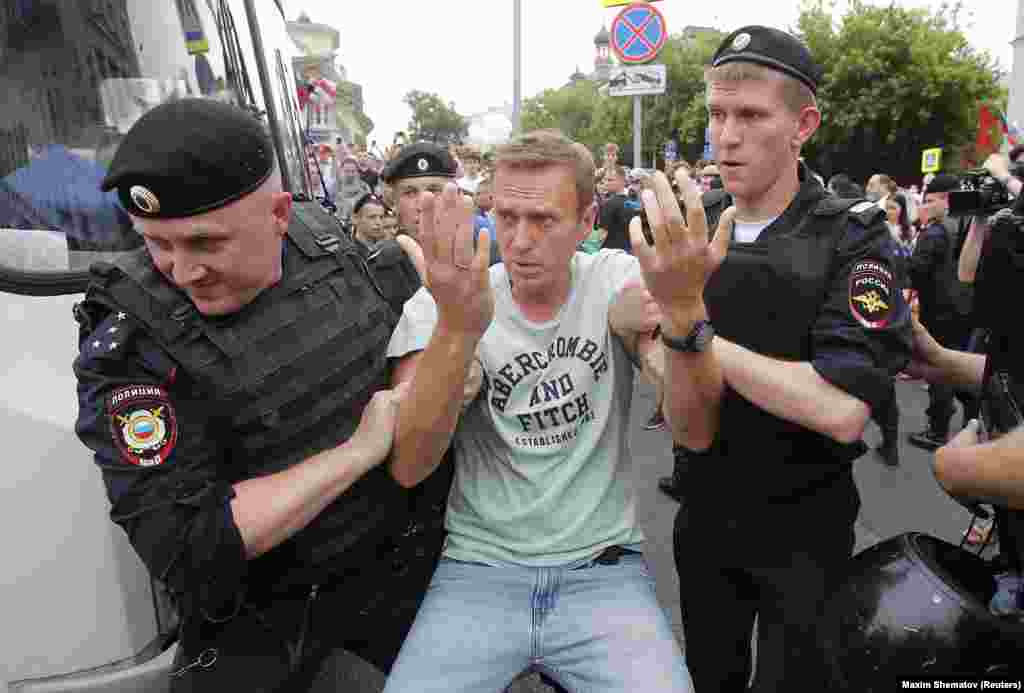
Police detain Navalny during a rally in support of investigative journalist Ivan Golunov, who was detained by police and accused of drug possession on June 12, 2019.<br />
&nbsp;
12/15 Police detain Navalny during a rally in support of investigative journalist Ivan Golunov, who was detained by police and accused of drug possession on June 12, 2019.
 
Pictures from some of the dozens of encounters Russia’s leading opposition figure has had with police, the courts, and unknown assailants through his years of public activism. Navalny has been jailed more than 10 times and has spent hundreds of days in custody since 2011.
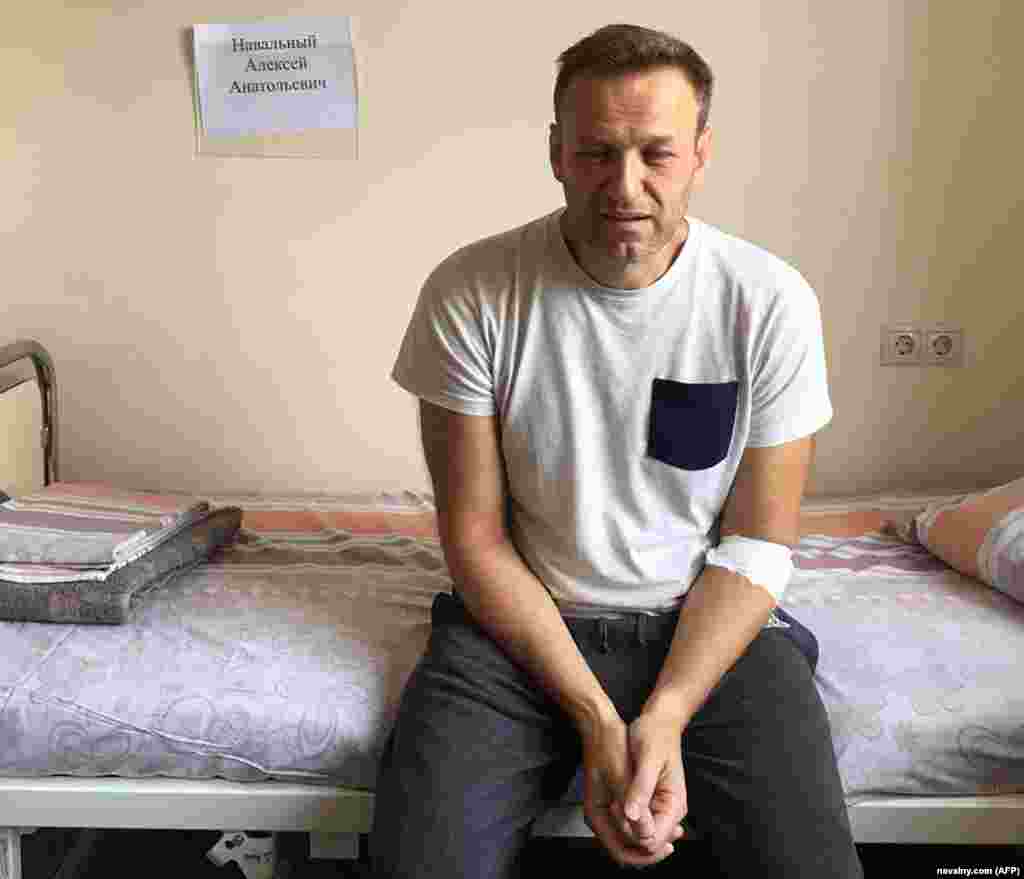
Navalny, his eyes red and puffy, sits on a hospital bed in Moscow on July 29, 2019, after feeling unwell in his Moscow cell while serving a prison term on charges of calling an unauthorized rally. He said he believed he&#39;d been poisoned. Doctors attributed it to an &quot;acute allergic reaction.&quot;
13/15 Navalny, his eyes red and puffy, sits on a hospital bed in Moscow on July 29, 2019, after feeling unwell in his Moscow cell while serving a prison term on charges of calling an unauthorized rally. He said he believed he'd been poisoned. Doctors attributed it to an "acute allergic reaction."
Pictures from some of the dozens of encounters Russia’s leading opposition figure has had with police, the courts, and unknown assailants through his years of public activism. Navalny has been jailed more than 10 times and has spent hundreds of days in custody since 2011.
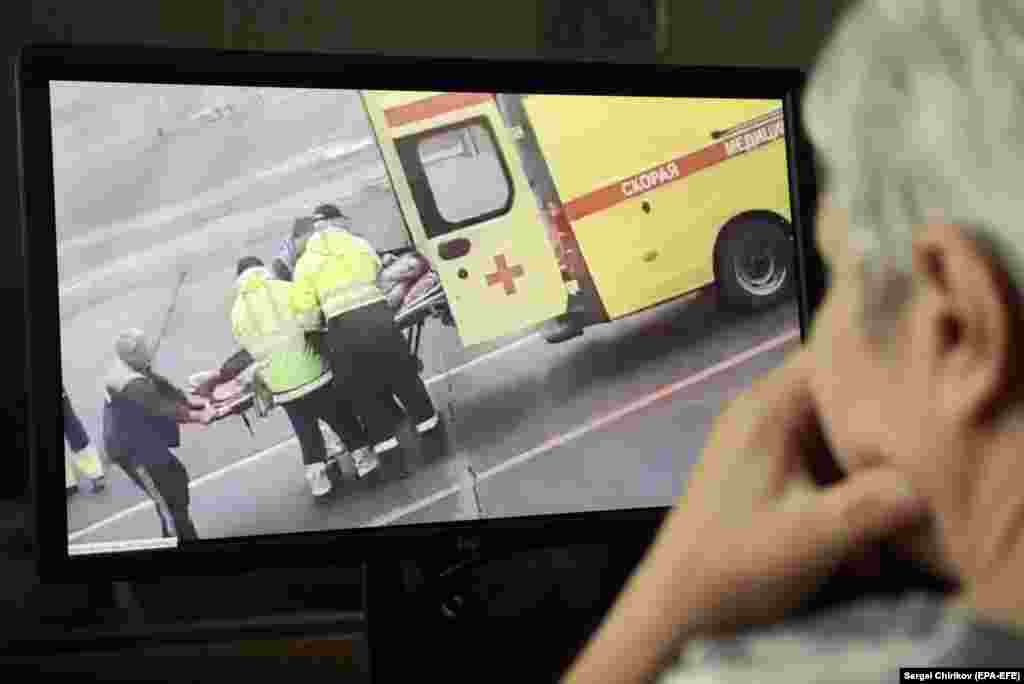
A person watches a video on social media showing Navalny being carried on a stretcher by an ambulance team in Omsk after falling gravely ill from suspected poisoning while aboard a flight from Tomsk to Moscow on August 20.
14/15 A person watches a video on social media showing Navalny being carried on a stretcher by an ambulance team in Omsk after falling gravely ill from suspected poisoning while aboard a flight from Tomsk to Moscow on August 20.
Pictures from some of the dozens of encounters Russia’s leading opposition figure has had with police, the courts, and unknown assailants through his years of public activism. Navalny has been jailed more than 10 times and has spent hundreds of days in custody since 2011.
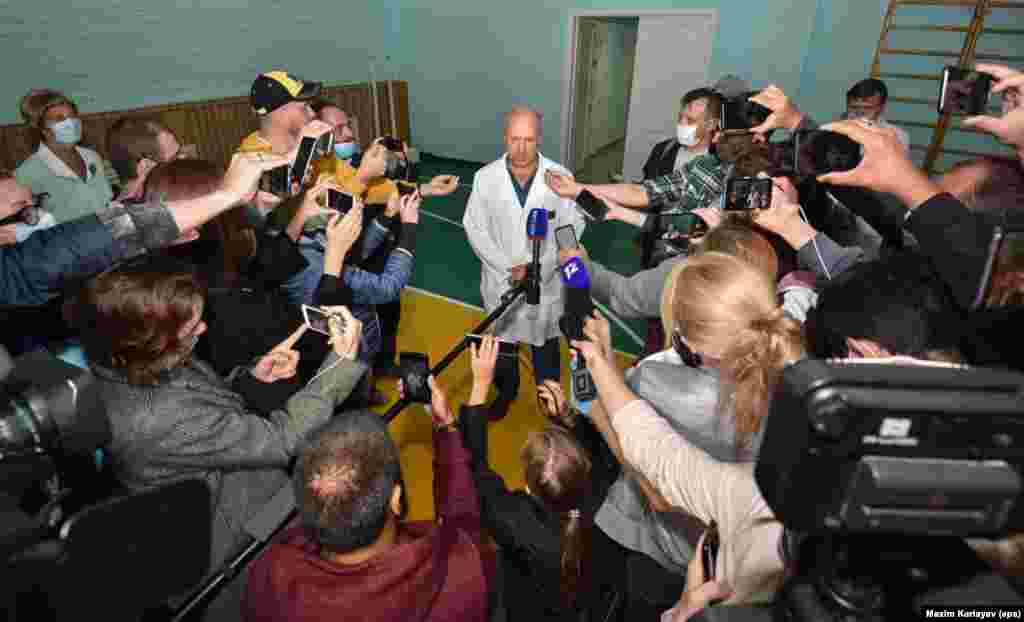
A doctor at an Omsk hospital tells journalists that Navalny had been placed in an induced coma.<br />
&nbsp;<br />
&nbsp;<br />
&nbsp;
15/15 A doctor at an Omsk hospital tells journalists that Navalny had been placed in an induced coma.


Pictures from some of the dozens of encounters Russia’s leading opposition figure has had with police, the courts, and unknown assailants through his years of public activism. Navalny has been jailed more than 10 times and has spent hundreds of days in custody since 2011.
Previous slide
Next slide

In July 2019, Navalny was given a 30-day jail term after calling for unauthorized protests. During that jail sentence, he was taken to a hospital with severe swelling of the face and a rash, and later alleged he was poisoned.

He has been jailed several times in recent years, barred from running for president, and had a bid to run for Moscow mayor blocked.

The head of the legal department of the Anti-Corruption Foundation Navalny founded, Vyacheslav Gimadi, wrote on Twitter, "There is no doubt that Navalny was poisoned for his political position and activity."

With reporting by TASS, ngs55.ru , AP, dpa, Reuters, and AFP
  • 16x9 Image

    RFE/RL

    RFE/RL journalists report the news in 24 languages in 18 countries where a free press is banned by the government or not fully established. We provide what many people cannot get locally: uncensored news, responsible discussion, and open debate.

This item is part of
XS
SM
MD
LG