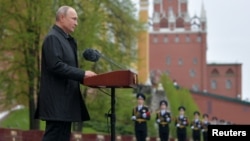
Russian President Vladimir Putin's revisionist article about World War II has been subject to major controversy since its publication in a U.S. journal on June 18. (file photo)
MOSCOW -- When Julia Obertreis, a professor at a university in Bavaria, Germany, checked her e-mail on June 22, she was surprised to see a message from the Russian Embassy in Berlin.
It touted a revisionist article about World War II authored by none other than Russian President Vladimir Putin. Attached to the e-mail was a German translation of Putin's text -- all 9,000 words of it.
What rankled Obertreis most was the direct appeal with which the embassy's message ended.
"The Russian president's article will undoubtedly arouse considerable interest among your readers," read the e-mail, a copy of which Obertreis, of Friedrich-Alexander University, shared with RFE/RL. "With that in mind, we propose that you use Vladimir Putin's article when preparing future lectures on history."
Baffled, Obertreis took to Twitter to register her chagrin over what she saw as an unsolicited attempt to influence her teaching. It turned out the same e-mail had gone out to many other German historians, who took to the platform to likewise make their views clear.
"I'm not sure if I should be laughing or crying," wrote Anke Hilbrenner, a historian of Eastern Europe at Goettingen University.
"Putin is again playing the historian," Martin Aust of Bonn University tweeted.
Revisionist Views
Putin's article, titled The Real Lessons Of The 75th Anniversary Of World War II, has been subject to major controversy since its publication in U.S. journal The National Interest on June 18. It cites archival documents but is riddled with grammar mistakes and odd phrasing. The Kremlin has denied accusations by a Russian historian that a quote attributed to Hitler is a fabrication.
The extended monologue on history reads like a summary of revisionist views Moscow has actively advanced in recent years, as it rails against what it calls Western distortions of World War II and reminds the world of the Soviet role in defeating Nazi Germany -- at the price of almost 27 million lives.
Parade Amid A Pandemic: Russia Holds Massive WWII Victory Day Celebrations
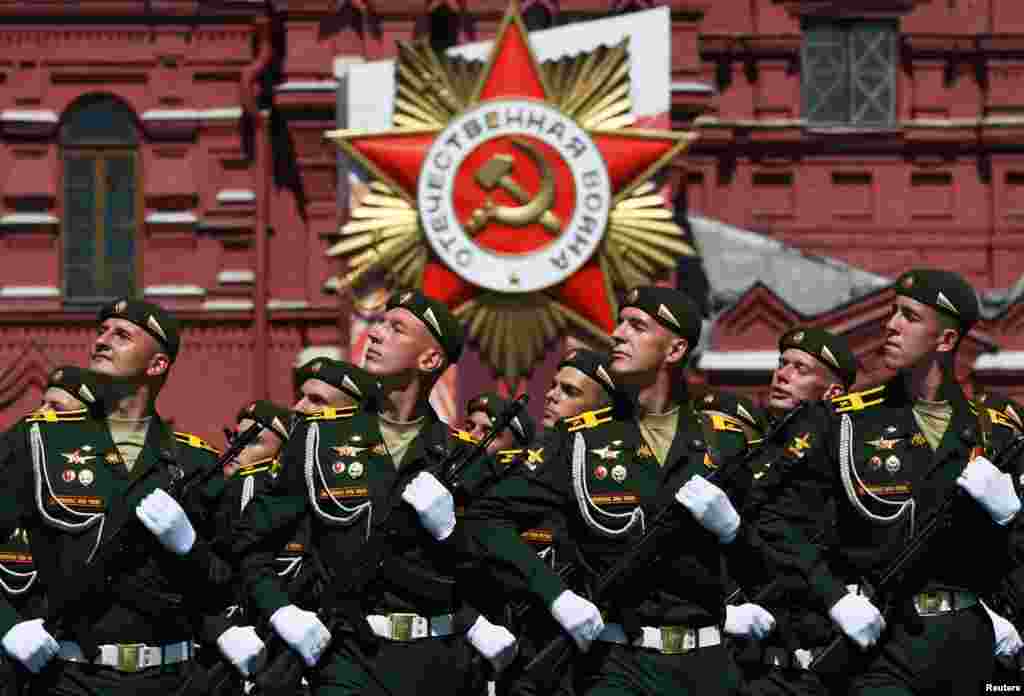
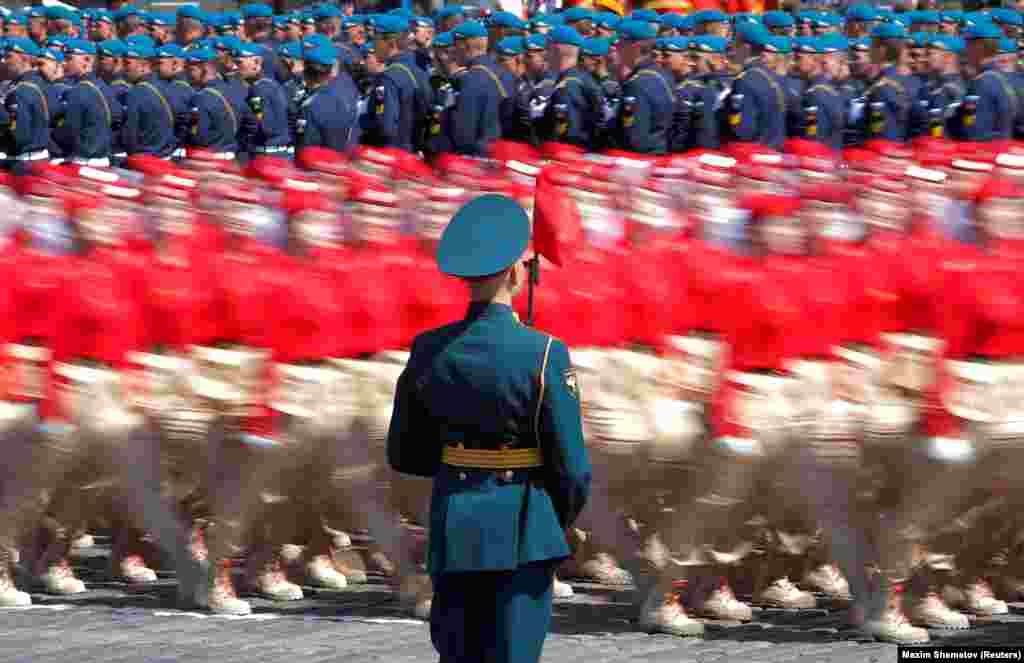
1/20Russian servicemen march during the Victory Day parade in Moscow's Red Square on June 24. The military parade, marking the 75th anniversary of the victory over Nazi Germany in World War II, was scheduled for May 9 but postponed due to the outbreak of the coronavirus.
Amid the ongoing COVID-19 pandemic, Russia staged a massive Victory Day military parade in Moscow on June 24 to commemorate the 1945 defeat of Nazi Germany in World War II. The lavish event was supposed to have been held on May 9 but was postponed due to the outbreak of the coronavirus. Moscow's COVID-19 lockdown measures have since relaxed and President Vladimir Putin went ahead with the parade, seeking to solidify support ahead of a referendum that could pave the way for his extended rule.
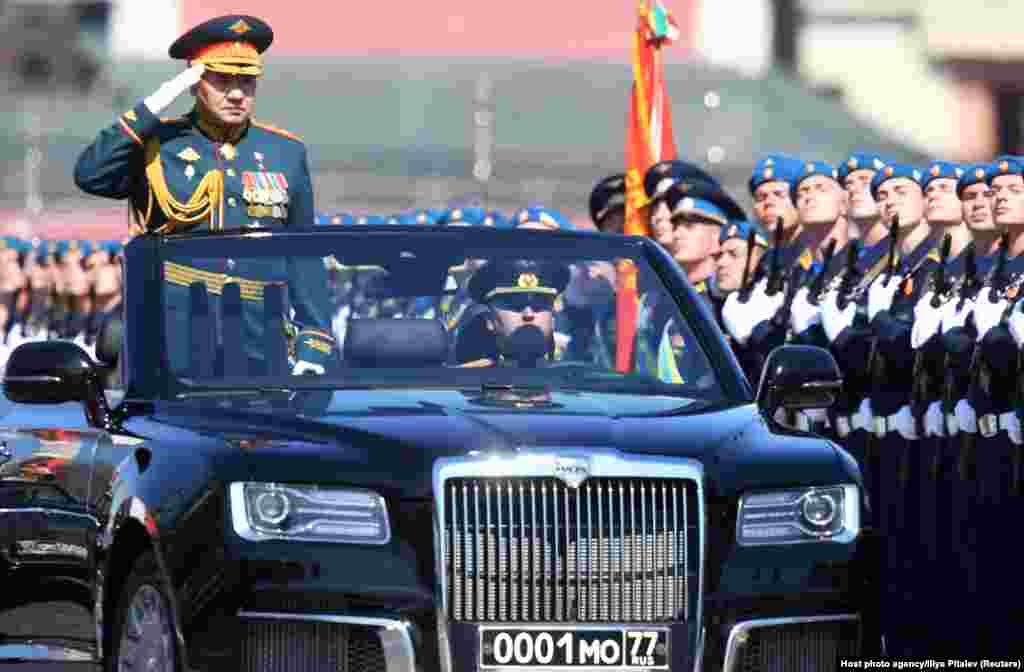
2/20Russian Defence Minister Sergei Shoigu salutes the troops in Red Square.
Amid the ongoing COVID-19 pandemic, Russia staged a massive Victory Day military parade in Moscow on June 24 to commemorate the 1945 defeat of Nazi Germany in World War II. The lavish event was supposed to have been held on May 9 but was postponed due to the outbreak of the coronavirus. Moscow's COVID-19 lockdown measures have since relaxed and President Vladimir Putin went ahead with the parade, seeking to solidify support ahead of a referendum that could pave the way for his extended rule.
3/20T-34 Soviet-era tanks drive during the Victory Day Parade on Red Square in Moscow. The event showcased more than 200 historic and modern military vehicles.
Amid the ongoing COVID-19 pandemic, Russia staged a massive Victory Day military parade in Moscow on June 24 to commemorate the 1945 defeat of Nazi Germany in World War II. The lavish event was supposed to have been held on May 9 but was postponed due to the outbreak of the coronavirus. Moscow's COVID-19 lockdown measures have since relaxed and President Vladimir Putin went ahead with the parade, seeking to solidify support ahead of a referendum that could pave the way for his extended rule.
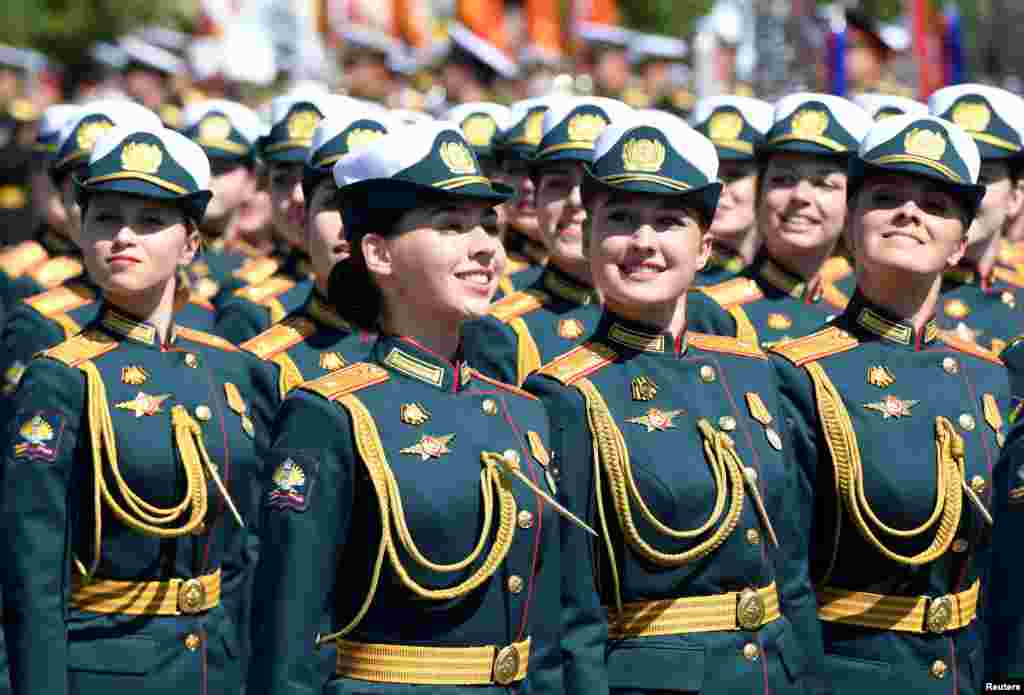
4/20Russian servicewomen march during the Victory Day parade. They were among 14,000 troops from 13 countries who took part in the event. Soldiers taking part had been tested and placed in quarantine ahead of the parade.
Amid the ongoing COVID-19 pandemic, Russia staged a massive Victory Day military parade in Moscow on June 24 to commemorate the 1945 defeat of Nazi Germany in World War II. The lavish event was supposed to have been held on May 9 but was postponed due to the outbreak of the coronavirus. Moscow's COVID-19 lockdown measures have since relaxed and President Vladimir Putin went ahead with the parade, seeking to solidify support ahead of a referendum that could pave the way for his extended rule.
5/20Members of Russia's Youth Army march during the Victory Day parade.
Amid the ongoing COVID-19 pandemic, Russia staged a massive Victory Day military parade in Moscow on June 24 to commemorate the 1945 defeat of Nazi Germany in World War II. The lavish event was supposed to have been held on May 9 but was postponed due to the outbreak of the coronavirus. Moscow's COVID-19 lockdown measures have since relaxed and President Vladimir Putin went ahead with the parade, seeking to solidify support ahead of a referendum that could pave the way for his extended rule.
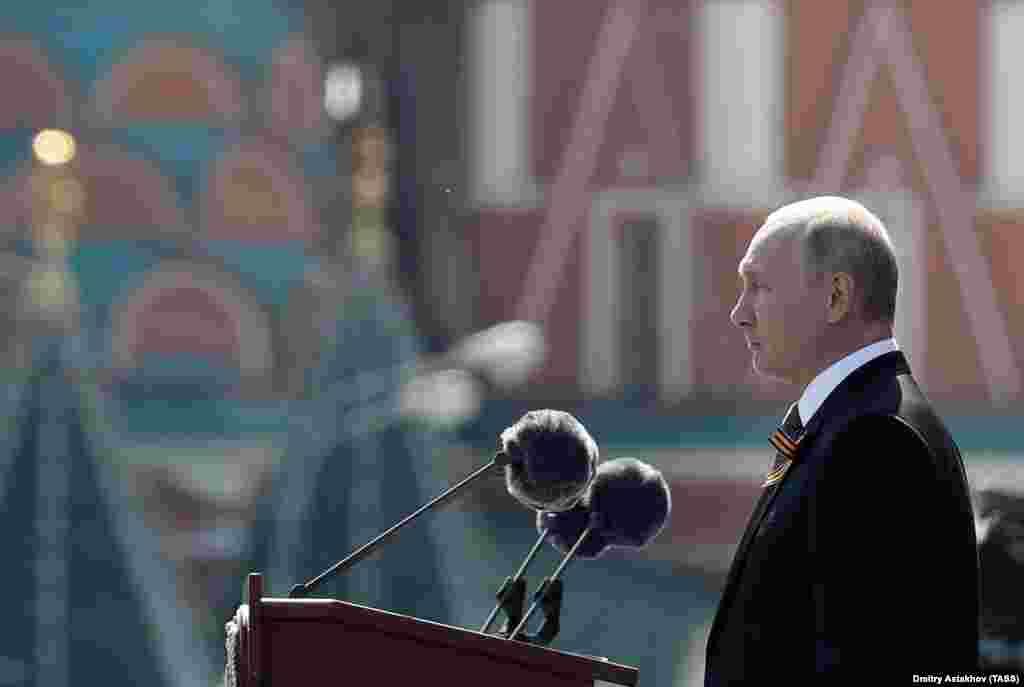
6/20Russian President Vladimir Putin addresses troops at the parade. The event falls ahead of a July 1 national vote on controversial amendments to the Russian Constitution that could allow Putin to stay in power until 2036.
Amid the ongoing COVID-19 pandemic, Russia staged a massive Victory Day military parade in Moscow on June 24 to commemorate the 1945 defeat of Nazi Germany in World War II. The lavish event was supposed to have been held on May 9 but was postponed due to the outbreak of the coronavirus. Moscow's COVID-19 lockdown measures have since relaxed and President Vladimir Putin went ahead with the parade, seeking to solidify support ahead of a referendum that could pave the way for his extended rule.
7/20Moscow's Red Square during the June 24 Victory Day parade. Russian opposition leader Aleksei Navalny estimated that the parade cost at least 1 billion rubles or $14.5 million.
Amid the ongoing COVID-19 pandemic, Russia staged a massive Victory Day military parade in Moscow on June 24 to commemorate the 1945 defeat of Nazi Germany in World War II. The lavish event was supposed to have been held on May 9 but was postponed due to the outbreak of the coronavirus. Moscow's COVID-19 lockdown measures have since relaxed and President Vladimir Putin went ahead with the parade, seeking to solidify support ahead of a referendum that could pave the way for his extended rule.
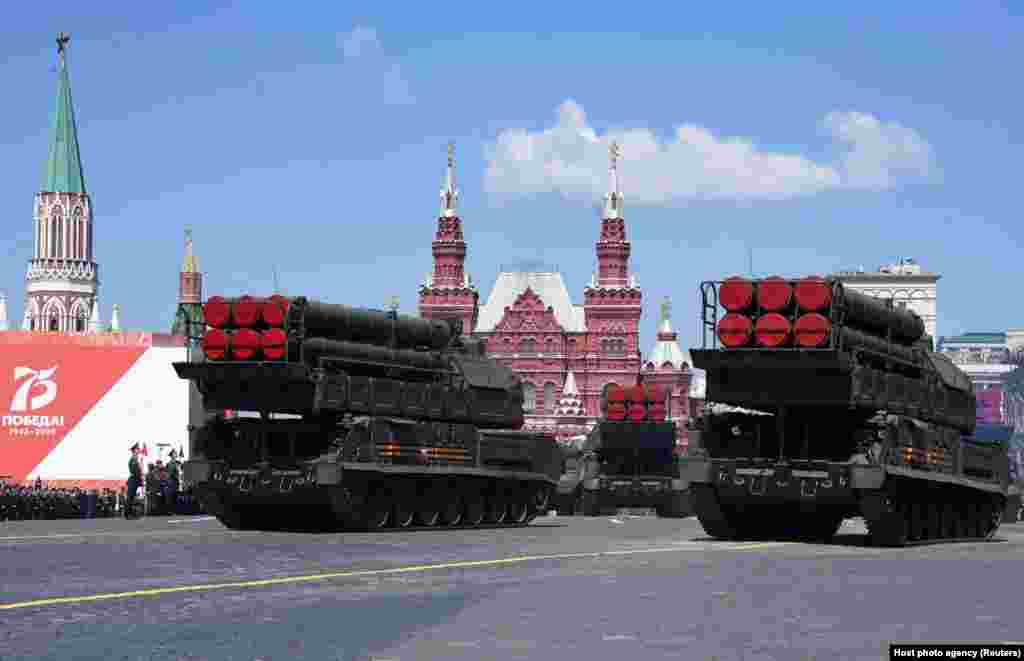
8/20Russia's Buk-M3 missile system was showcased during the Victory Day parade.
Amid the ongoing COVID-19 pandemic, Russia staged a massive Victory Day military parade in Moscow on June 24 to commemorate the 1945 defeat of Nazi Germany in World War II. The lavish event was supposed to have been held on May 9 but was postponed due to the outbreak of the coronavirus. Moscow's COVID-19 lockdown measures have since relaxed and President Vladimir Putin went ahead with the parade, seeking to solidify support ahead of a referendum that could pave the way for his extended rule.
9/20Russian servicemen march during the military parade on Red Square. Russia has begun lifting mass coronavirus restrictions in recent weeks, but new cases remain stubbornly high at more than 7,000 a day.
Amid the ongoing COVID-19 pandemic, Russia staged a massive Victory Day military parade in Moscow on June 24 to commemorate the 1945 defeat of Nazi Germany in World War II. The lavish event was supposed to have been held on May 9 but was postponed due to the outbreak of the coronavirus. Moscow's COVID-19 lockdown measures have since relaxed and President Vladimir Putin went ahead with the parade, seeking to solidify support ahead of a referendum that could pave the way for his extended rule.
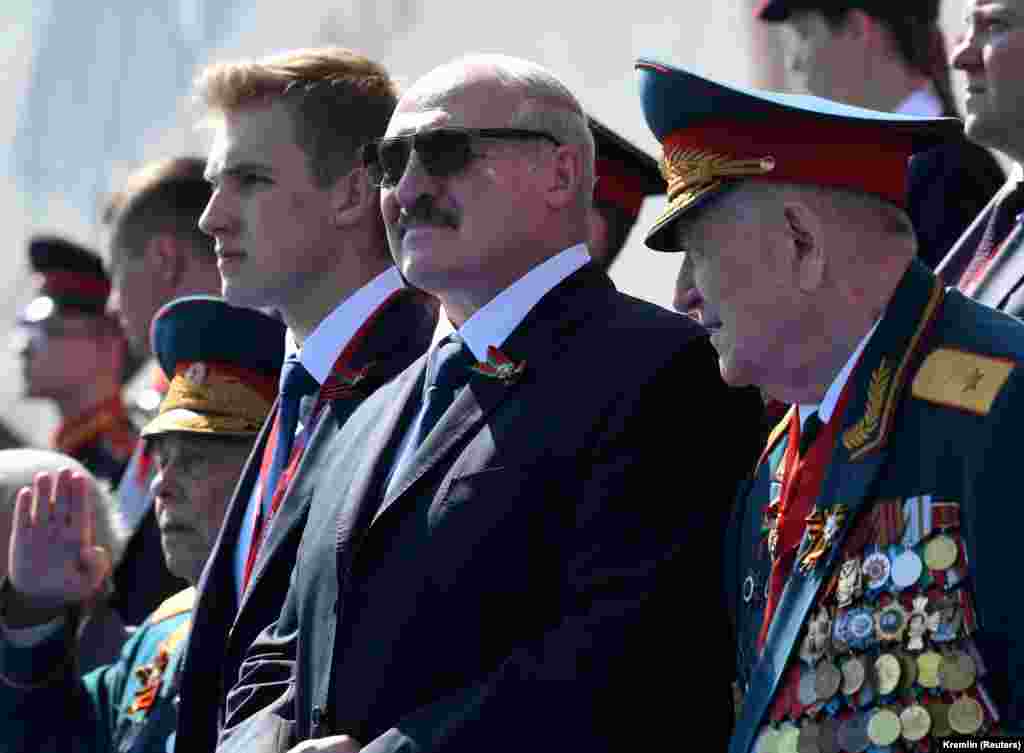
10/20Belarusian President Alyaksandr Lukashenka and his son, Mikalay, attend the Moscow Victory Day Parade on June 24.
Amid the ongoing COVID-19 pandemic, Russia staged a massive Victory Day military parade in Moscow on June 24 to commemorate the 1945 defeat of Nazi Germany in World War II. The lavish event was supposed to have been held on May 9 but was postponed due to the outbreak of the coronavirus. Moscow's COVID-19 lockdown measures have since relaxed and President Vladimir Putin went ahead with the parade, seeking to solidify support ahead of a referendum that could pave the way for his extended rule.
Amid the ongoing COVID-19 pandemic, Russia staged a massive Victory Day military parade in Moscow on June 24 to commemorate the 1945 defeat of Nazi Germany in World War II. The lavish event was supposed to have been held on May 9 but was postponed due to the outbreak of the coronavirus. Moscow's COVID-19 lockdown measures have since relaxed and President Vladimir Putin went ahead with the parade, seeking to solidify support ahead of a referendum that could pave the way for his extended rule.
12/20Russian Su-25 jets release smoke in the red, white, and blue colors of the Russian flag. At least 75 military aircraft took part in the Victory Day celebrations.
Amid the ongoing COVID-19 pandemic, Russia staged a massive Victory Day military parade in Moscow on June 24 to commemorate the 1945 defeat of Nazi Germany in World War II. The lavish event was supposed to have been held on May 9 but was postponed due to the outbreak of the coronavirus. Moscow's COVID-19 lockdown measures have since relaxed and President Vladimir Putin went ahead with the parade, seeking to solidify support ahead of a referendum that could pave the way for his extended rule.
13/20Russian servicemen attend the Victory Day parade. Russia has reported 600,000 coronavirus infections, giving it the third-highest number in the world. The official death toll stands at more than 8,000, but the real number is believed to be much higher.
Amid the ongoing COVID-19 pandemic, Russia staged a massive Victory Day military parade in Moscow on June 24 to commemorate the 1945 defeat of Nazi Germany in World War II. The lavish event was supposed to have been held on May 9 but was postponed due to the outbreak of the coronavirus. Moscow's COVID-19 lockdown measures have since relaxed and President Vladimir Putin went ahead with the parade, seeking to solidify support ahead of a referendum that could pave the way for his extended rule.
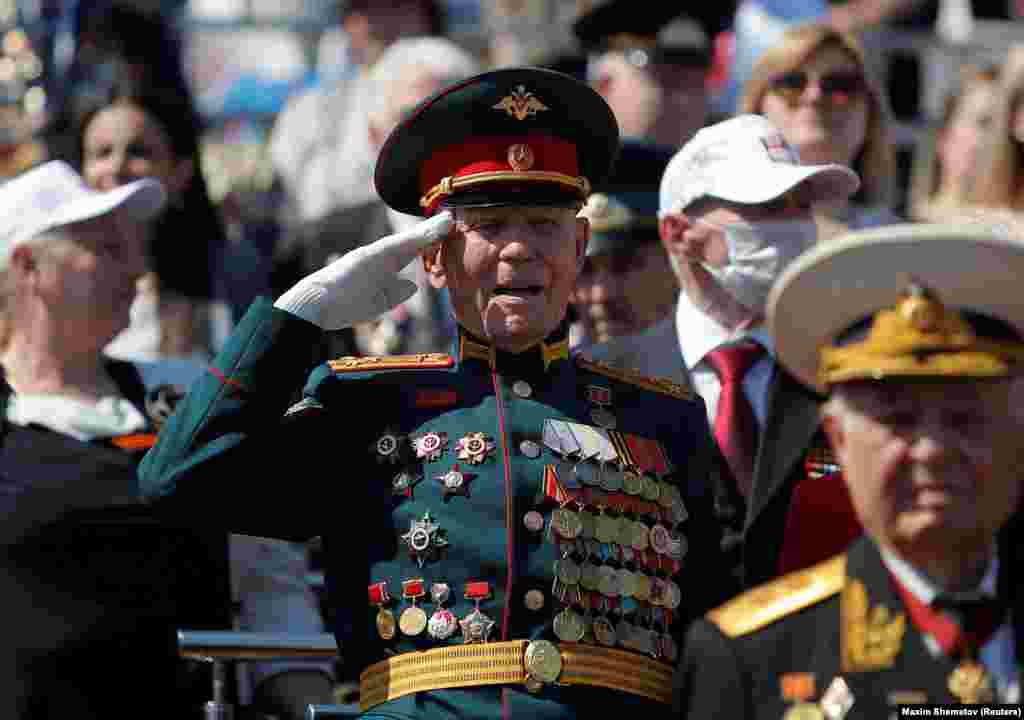
14/20Veterans who attended had been placed under quarantine ahead of the parade.
Amid the ongoing COVID-19 pandemic, Russia staged a massive Victory Day military parade in Moscow on June 24 to commemorate the 1945 defeat of Nazi Germany in World War II. The lavish event was supposed to have been held on May 9 but was postponed due to the outbreak of the coronavirus. Moscow's COVID-19 lockdown measures have since relaxed and President Vladimir Putin went ahead with the parade, seeking to solidify support ahead of a referendum that could pave the way for his extended rule.
15/20The parade commemorated the 1945 defeat of Nazi Germany in World War II.
Amid the ongoing COVID-19 pandemic, Russia staged a massive Victory Day military parade in Moscow on June 24 to commemorate the 1945 defeat of Nazi Germany in World War II. The lavish event was supposed to have been held on May 9 but was postponed due to the outbreak of the coronavirus. Moscow's COVID-19 lockdown measures have since relaxed and President Vladimir Putin went ahead with the parade, seeking to solidify support ahead of a referendum that could pave the way for his extended rule.
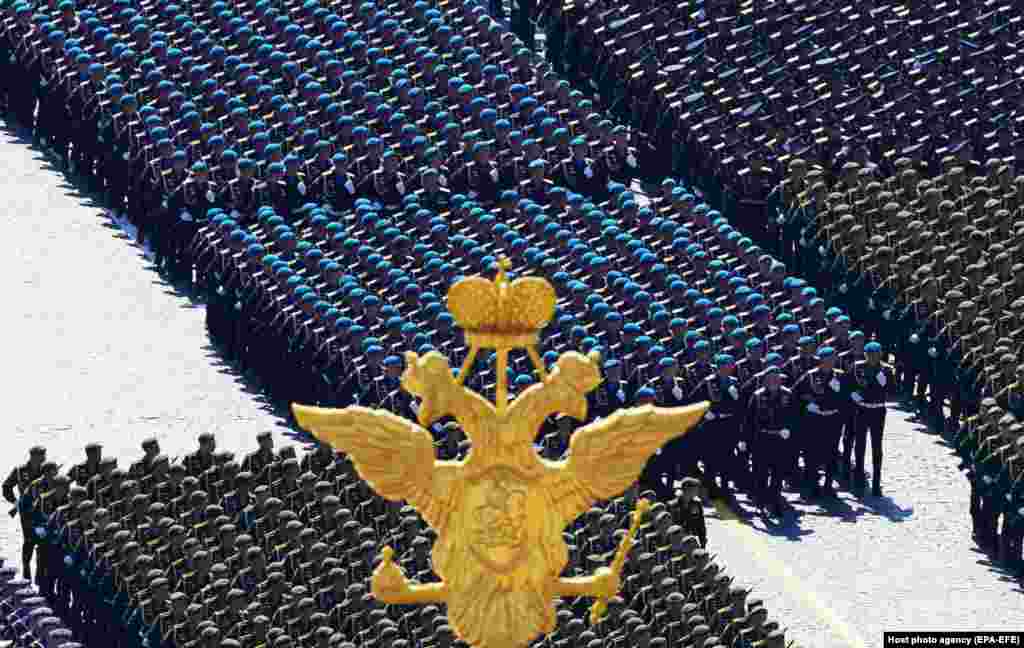
16/20Russian servicemen line up for the Victory Day parade.
Amid the ongoing COVID-19 pandemic, Russia staged a massive Victory Day military parade in Moscow on June 24 to commemorate the 1945 defeat of Nazi Germany in World War II. The lavish event was supposed to have been held on May 9 but was postponed due to the outbreak of the coronavirus. Moscow's COVID-19 lockdown measures have since relaxed and President Vladimir Putin went ahead with the parade, seeking to solidify support ahead of a referendum that could pave the way for his extended rule.
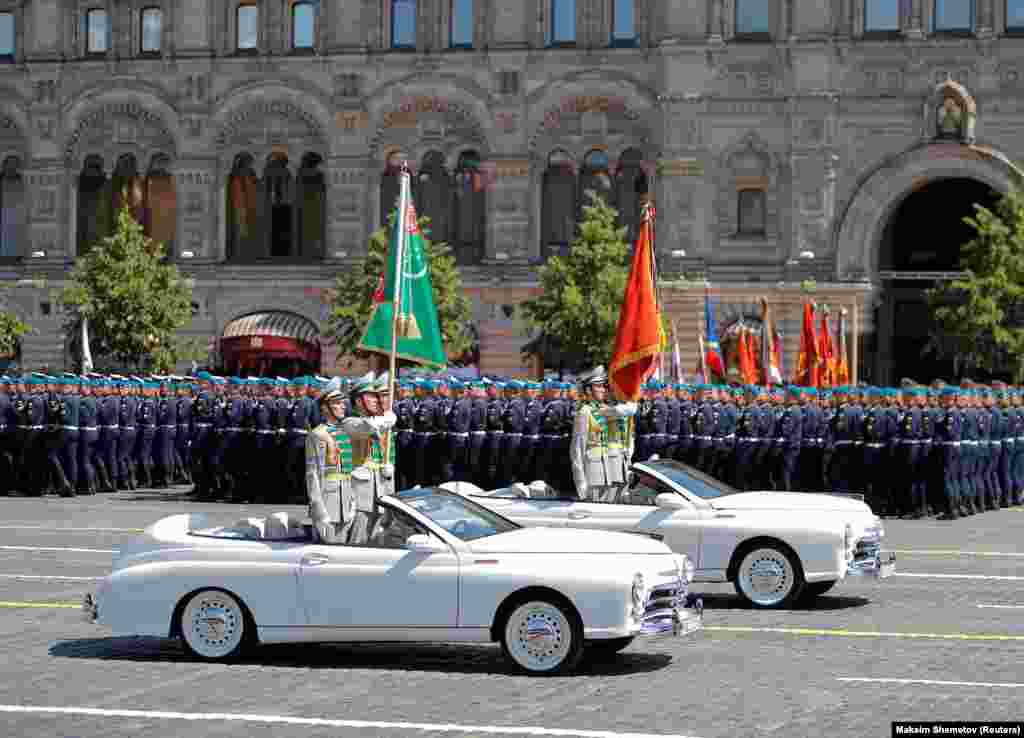
17/20Turkmen servicemen attended Russia's Victory Day parade. Also taking part were forces from Azerbaijan, Armenia, Belarus, China, India, Kazakhstan, Kyrgyzstan, Moldova, Mongolia, Serbia, Tajikistan, and Uzbekistan.
Amid the ongoing COVID-19 pandemic, Russia staged a massive Victory Day military parade in Moscow on June 24 to commemorate the 1945 defeat of Nazi Germany in World War II. The lavish event was supposed to have been held on May 9 but was postponed due to the outbreak of the coronavirus. Moscow's COVID-19 lockdown measures have since relaxed and President Vladimir Putin went ahead with the parade, seeking to solidify support ahead of a referendum that could pave the way for his extended rule.
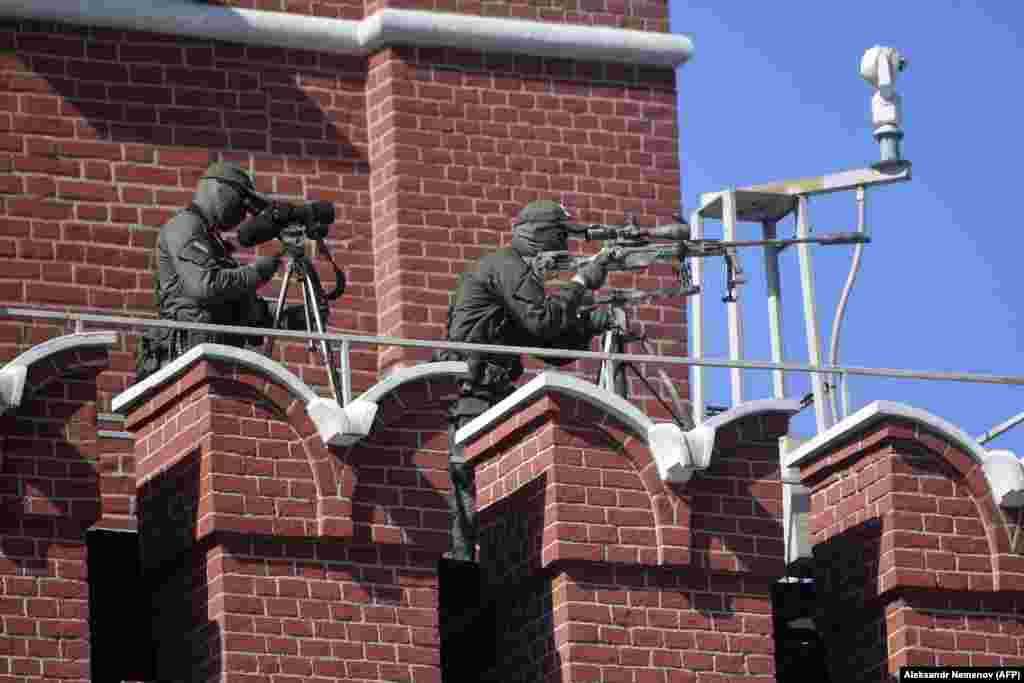
18/20Russian snipers secured the area around the military parade.
Amid the ongoing COVID-19 pandemic, Russia staged a massive Victory Day military parade in Moscow on June 24 to commemorate the 1945 defeat of Nazi Germany in World War II. The lavish event was supposed to have been held on May 9 but was postponed due to the outbreak of the coronavirus. Moscow's COVID-19 lockdown measures have since relaxed and President Vladimir Putin went ahead with the parade, seeking to solidify support ahead of a referendum that could pave the way for his extended rule.
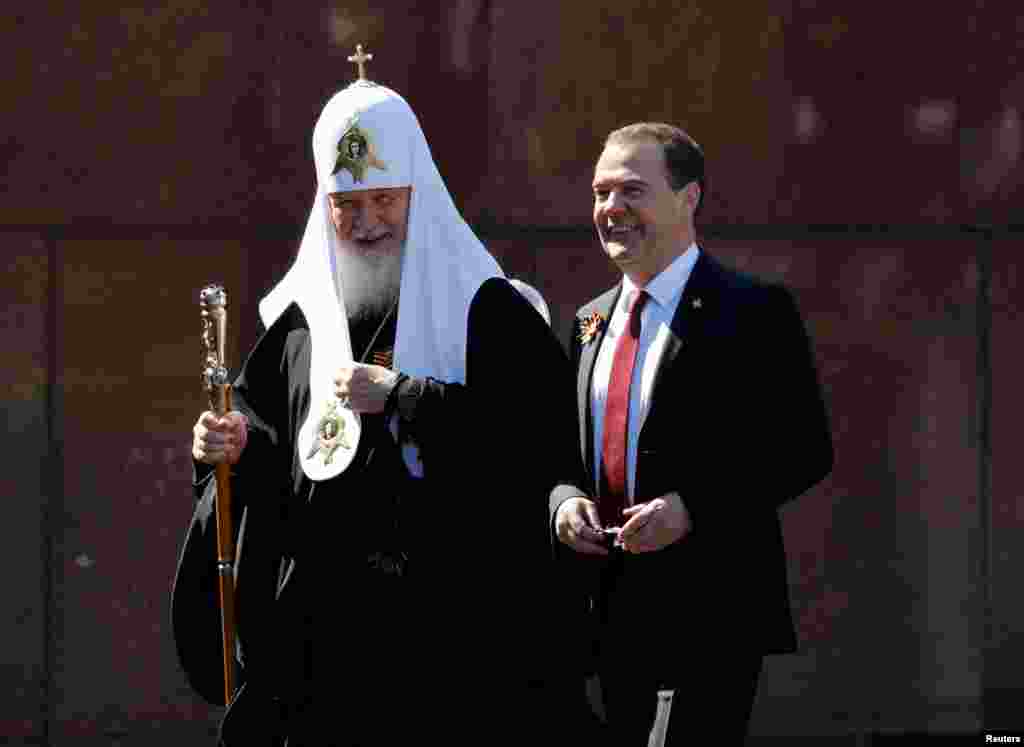
19/20The deputy Head of the Russian Security Council, former President Dmitry Medvedev, and Patriarch Kirill of Moscow and All Russia attend the Victory Day parade.
Amid the ongoing COVID-19 pandemic, Russia staged a massive Victory Day military parade in Moscow on June 24 to commemorate the 1945 defeat of Nazi Germany in World War II. The lavish event was supposed to have been held on May 9 but was postponed due to the outbreak of the coronavirus. Moscow's COVID-19 lockdown measures have since relaxed and President Vladimir Putin went ahead with the parade, seeking to solidify support ahead of a referendum that could pave the way for his extended rule.
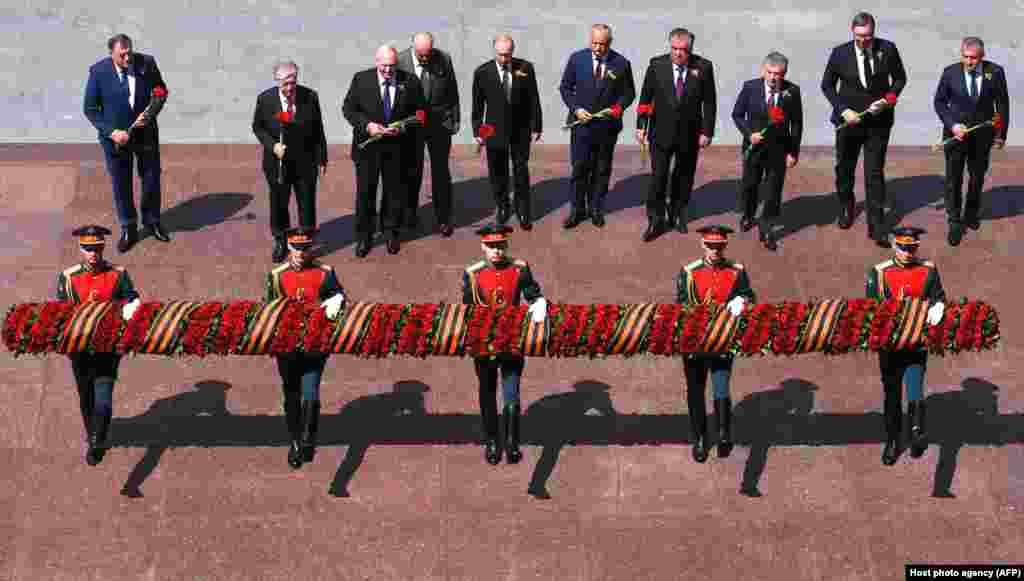
20/20After the parade, Putin laid a wreath at the Tomb of the Unknown Soldier near the Kremlin Wall to honor the memory of those killed in World War II.
Amid the ongoing COVID-19 pandemic, Russia staged a massive Victory Day military parade in Moscow on June 24 to commemorate the 1945 defeat of Nazi Germany in World War II. The lavish event was supposed to have been held on May 9 but was postponed due to the outbreak of the coronavirus. Moscow's COVID-19 lockdown measures have since relaxed and President Vladimir Putin went ahead with the parade, seeking to solidify support ahead of a referendum that could pave the way for his extended rule.
Previous slide
Next slide
The text, the latest in an array of combative Russian public statements on the subject by Putin, incensed governments of the Baltic states for its suggestion that they willingly relinquished sovereignty to occupying Soviet forces. In Warsaw, it prompted condemnation -- but apparently little surprise -- for its claim that Poland was responsible for its double invasion by Nazi Germany and the Soviet Union in 1939, enabled by a secret protocol to the Molotov-Ribbentrop Pact, which Putin justifies as defensive.
'Memory War'
In e-mailed comments to RFE/RL, Aust of Bonn University admitted he was "taken by surprise" when the Russian Embassy's message dropped in his in-box. But he said he viewed Putin's article as part of a memory war that Eastern Europe has waged with Russia in recent years, and was sympathetic to some of its conclusions, including Putin's condemnation of British-French appeasement of Hitler in 1938 and the emphasis on the enormous suffering the German invasion of 1941 inflicted on the Soviet people. But he calls other parts of the text distortions.
"No historian in Germany will subscribe to blaming Poland for World War II. That is completely outlandish," he said. "My guess is that quite a lot of colleagues will use Putin's text as a source that can be studied to learn more about the mechanisms of politics of history in general, and antagonistic memory culture in particular."
But in Russia, the successor state to the Soviet Union, the views Putin expressed enjoy widespread support, with many people angry their country is sometimes overlooked in discussions of the Allied victory over fascism. Commemorative events in the West that fail to mention the Soviet contribution provide fodder for Moscow's claims that a deliberate campaign to rewrite World War II history is under way, and that Russia is its target.
'A Remarkable Event'
Nevertheless, few recipients of the Russian Embassy's circular e-mail appeared to be impressed.
"Usually we understand history as a discourse free of bias," historian Schulze Wessel told Germany's main evening news program, Tagesschau. "But when a president puts pen to paper and lets his article be shared with tenured professors with the request that it be used in history classes, then that is a remarkable event."
In written comments to RFE/RL, Russian Embassy Berlin spokesman Ilya Rozhkov defended the e-mail and said it was "of a purely informational character aimed at helping readers develop an objective view of the material."
Responding directly on Twitter to Obertreis, the history professor who first shared her irritation about their e-mail, the embassy said Putin's article had prompted debate in German society and it was simply sharing it with German experts.
The aim, it said, was to ensure that people make their own conclusions about the article, "and don't rely on foreign assessments."
Matthew Luxmoore is a Moscow-based journalist covering Russia and the former Soviet Union. He has reported for The New York Times in Moscow and has written for The Guardian, Politico, The New Republic, and Foreign Policy. He’s a graduate of Harvard’s Davis Center and a recipient of New York University's Reporting Award and the Fulbright Alistair Cooke Journalism Award.