


Putin Calls For Systemic Change. The 'System' Quickly Responds.
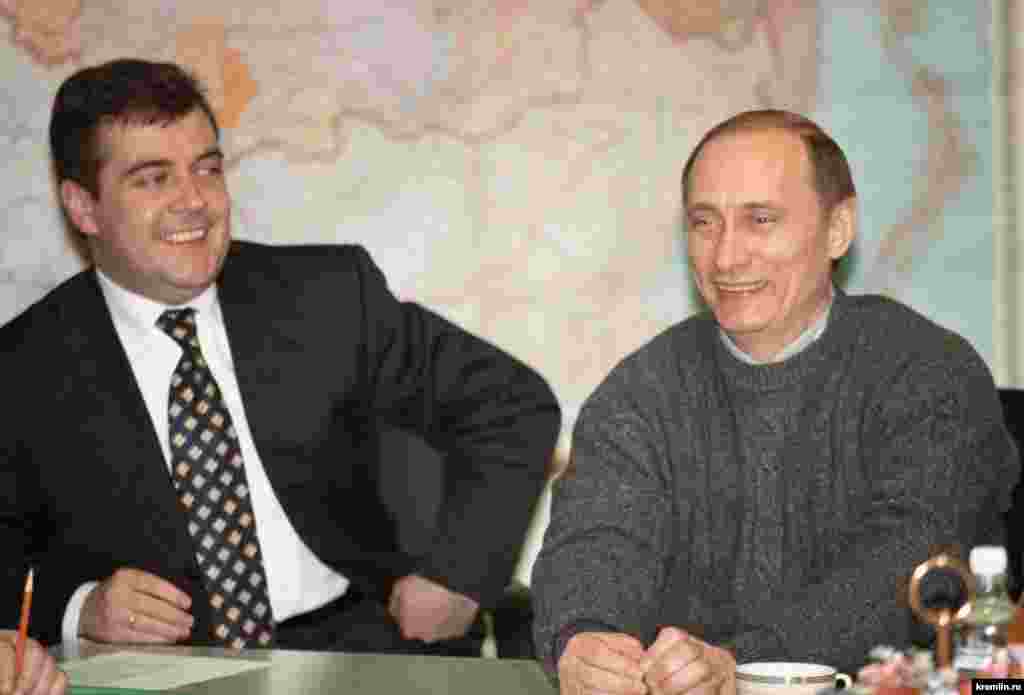
Russian President Vladimir Putin (left) meets with Dmitry Medvedev at the Kremlin in Moscow on January 15.
MOSCOW -- President Vladimir Putin called for "serious changes to the political system" during his state-of-the-nation address on January 15, and the "system" didn't take long to respond.
Within two hours of his speech, Russia's government had resigned, Prime Minister Dmitry Medvedev appeared headed for a new role in the Security Council, and speculation that Putin was laying the groundwork to retain power after his term ends in 2024 was mounting.
Putin had proposed a raft of constitutional changes during his 90-minute speech before hundreds of officials gathered in Moscow's Manezh Exhibition Center, including transferring power to appoint prime ministers from the president to parliament, and limiting the supremacy of international law over Russia's constitution.
Not long after, Medvedev sat alongside Putin during a meeting held after the event and appeared to endorse whatever moves the president had in mind.
"In this context, it's clear that we, as the government of the Russian Federation, should give the president of our country the chance to take all necessary decisions," Medvedev said in announcing his resignation.
Within hours, Putin appointed Mikhail Mishustin, who had been serving as the head of the Federal Tax Service, to replace Medvedev as prime minister, pending State Duma approval.
Medvedev has been tapped to serve in the Security Council as deputy chairman, a new position.
Medvedev, Former President In Putin's Shadow, Resigns As Prime Minister
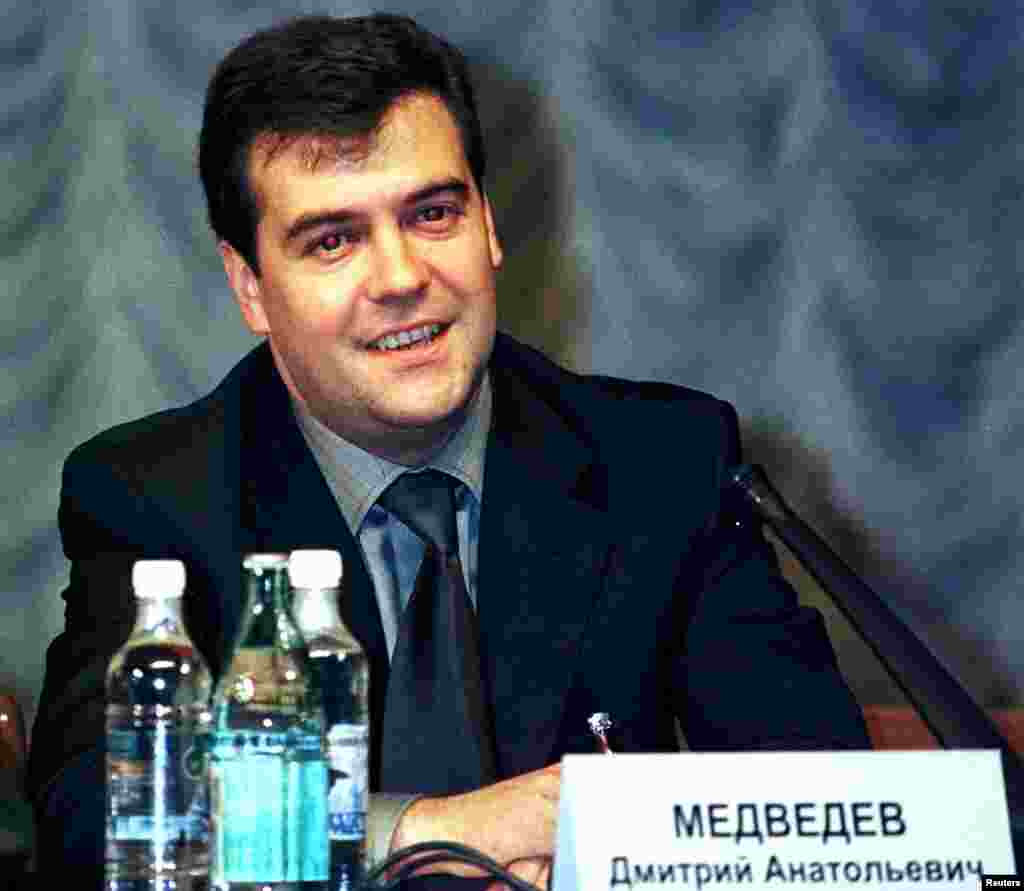
1/19An undated photo shows the young Dmitry Medvedev. He was born in 1965 in St. Petersburg, then known as Leningrad, where he studied and taught law.
Dmitry Medvedev resigned as Russian prime minister on January 15, shortly after President Vladimir Putin announced broad changes to the constitution in his annual state-of-the-nation speech. Medvedev had also served as Russian president, but was widely considered to be part of a "ruling tandem" with Putin.
2/19Medvedev moved into politics in the 1990s in the city government of St. Petersburg, where he worked closely with Putin, pictured here on March 26, 2000. Putin appointed Medvedev to a senior position in Moscow in 1999 when he became prime minister under Boris Yeltsin, then named Medvedev to lead his first presidential campaign the following year.
Dmitry Medvedev resigned as Russian prime minister on January 15, shortly after President Vladimir Putin announced broad changes to the constitution in his annual state-of-the-nation speech. Medvedev had also served as Russian president, but was widely considered to be part of a "ruling tandem" with Putin.
3/19Medvedev, then the acting deputy head of Russia's presidential administration, attends a Gazprom general meeting on June 30, 2000. He was chairman of the gas monopoly's board of directors for several years.
Dmitry Medvedev resigned as Russian prime minister on January 15, shortly after President Vladimir Putin announced broad changes to the constitution in his annual state-of-the-nation speech. Medvedev had also served as Russian president, but was widely considered to be part of a "ruling tandem" with Putin.
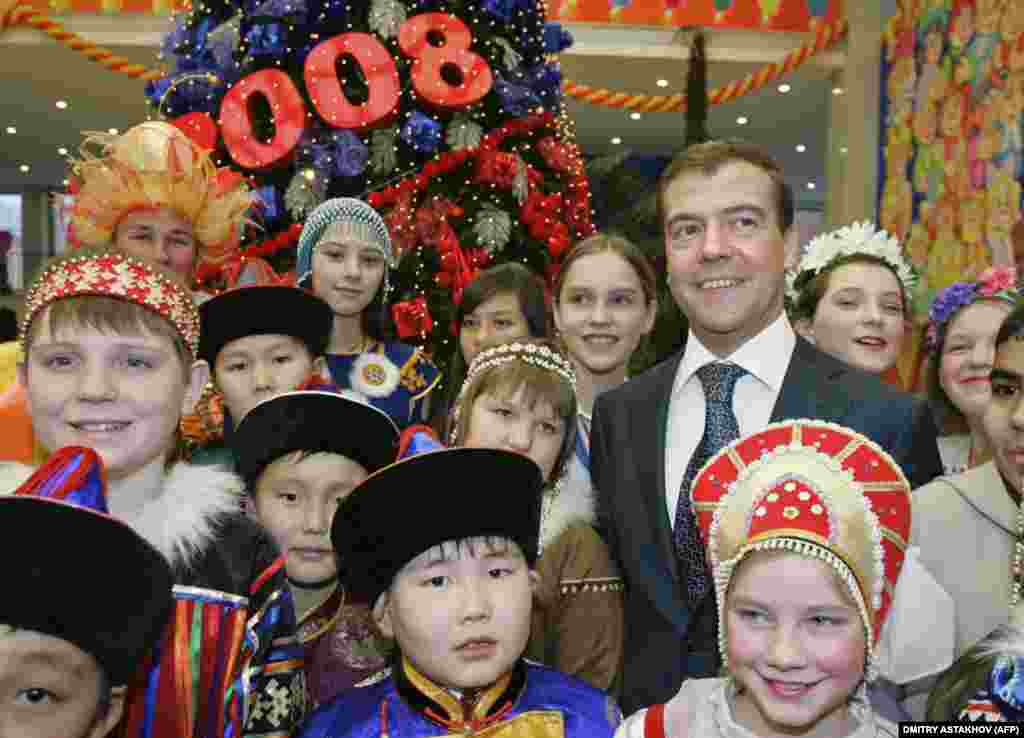
4/19In 2005, Putin appointed Medvedev first deputy prime minister, giving him the power to implement large domestic projects. In this 2007 photo, Medvedev smiles at the All-Russian New Year's Party at the Kremlin.
Dmitry Medvedev resigned as Russian prime minister on January 15, shortly after President Vladimir Putin announced broad changes to the constitution in his annual state-of-the-nation speech. Medvedev had also served as Russian president, but was widely considered to be part of a "ruling tandem" with Putin.
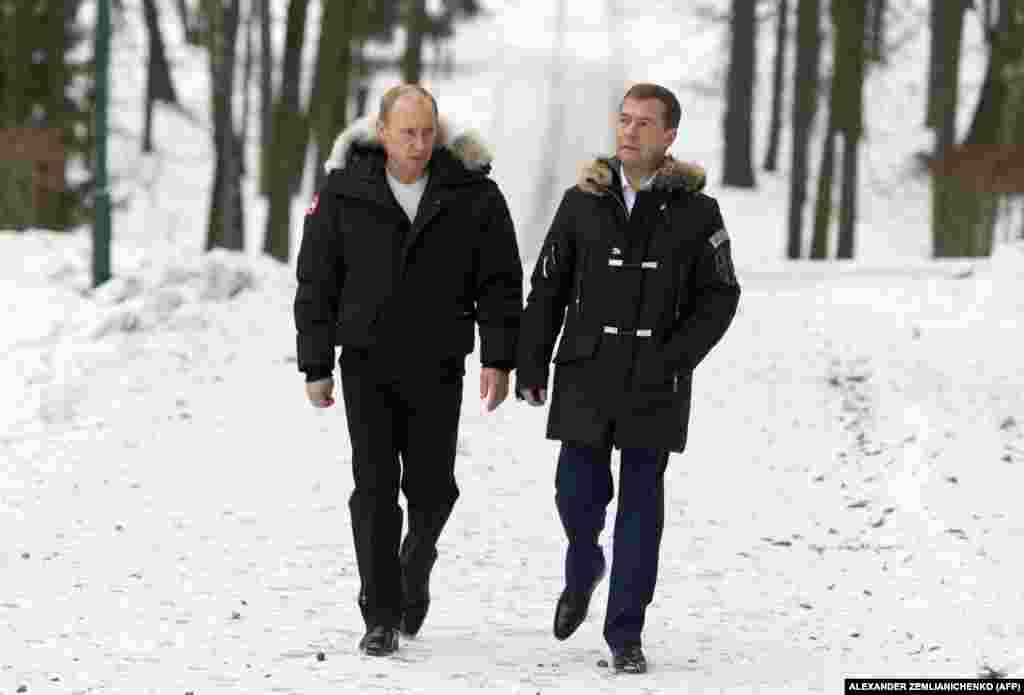
5/19Putin and Medvedev walk outside Moscow on February 29, 2008. When a two-term limit prevented Putin from running for president again in 2008, he named Medvedev, then first deputy prime minister, as his preferred successor.
Dmitry Medvedev resigned as Russian prime minister on January 15, shortly after President Vladimir Putin announced broad changes to the constitution in his annual state-of-the-nation speech. Medvedev had also served as Russian president, but was widely considered to be part of a "ruling tandem" with Putin.
6/19Dmitry Medvedev is sworn in as Russian president in the Kremlin throne room on May 7, 2008. The following day, Medvedev appointed Putin prime minister, as he had promised to do during the election campaign. The pair were sometimes referred to in the press as a "ruling tandem."
Dmitry Medvedev resigned as Russian prime minister on January 15, shortly after President Vladimir Putin announced broad changes to the constitution in his annual state-of-the-nation speech. Medvedev had also served as Russian president, but was widely considered to be part of a "ruling tandem" with Putin.
7/19Medvedev talks with his Belarusian counterpart, Alyaksandr Lukashenka, at a meeting in St. Petersburg of leaders of ex-Soviet states on June 6, 2008.
Dmitry Medvedev resigned as Russian prime minister on January 15, shortly after President Vladimir Putin announced broad changes to the constitution in his annual state-of-the-nation speech. Medvedev had also served as Russian president, but was widely considered to be part of a "ruling tandem" with Putin.
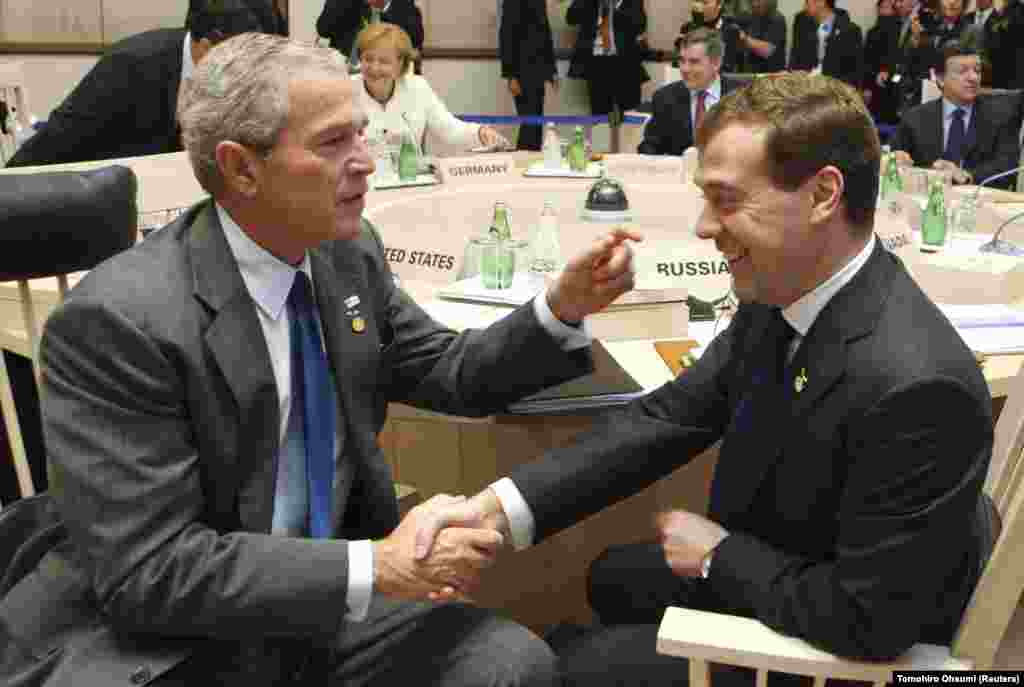
8/19The Russian president meets with U.S. President George W. Bush before the start of a Group of Eight (G8) working session in northern Japan on July 8, 2008. Medvedev cultivated a more pro-Western image than his predecessor, and made gestures toward cracking down on corruption.
Dmitry Medvedev resigned as Russian prime minister on January 15, shortly after President Vladimir Putin announced broad changes to the constitution in his annual state-of-the-nation speech. Medvedev had also served as Russian president, but was widely considered to be part of a "ruling tandem" with Putin.
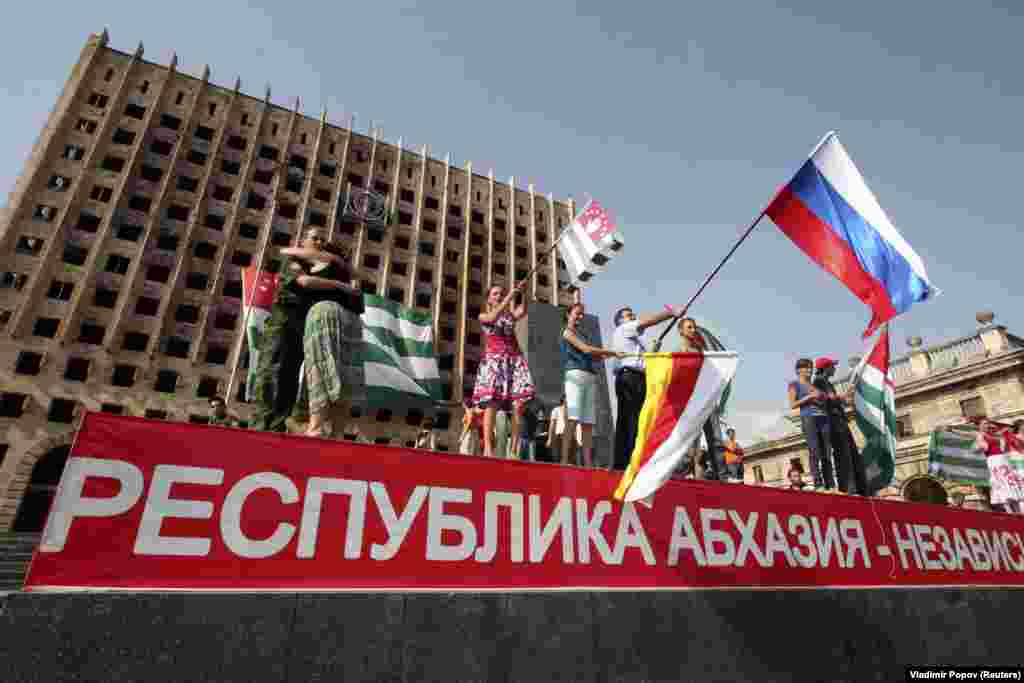
9/19In the first major crisis of Medvedev's presidency, Russia fought a five-day war with Georgia over the breakaway Georgian territories of Abkhazia and South Ossetia. In this photo from August 26, 2008, people in Sukhumi wave flags as they celebrate Moscow's recognition of the territories as independent states.
Dmitry Medvedev resigned as Russian prime minister on January 15, shortly after President Vladimir Putin announced broad changes to the constitution in his annual state-of-the-nation speech. Medvedev had also served as Russian president, but was widely considered to be part of a "ruling tandem" with Putin.
10/19On September 23, 2008, Medvedev poses with reindeer herders in the town of Kanchalan in Russia's Chukotka region.
Dmitry Medvedev resigned as Russian prime minister on January 15, shortly after President Vladimir Putin announced broad changes to the constitution in his annual state-of-the-nation speech. Medvedev had also served as Russian president, but was widely considered to be part of a "ruling tandem" with Putin.
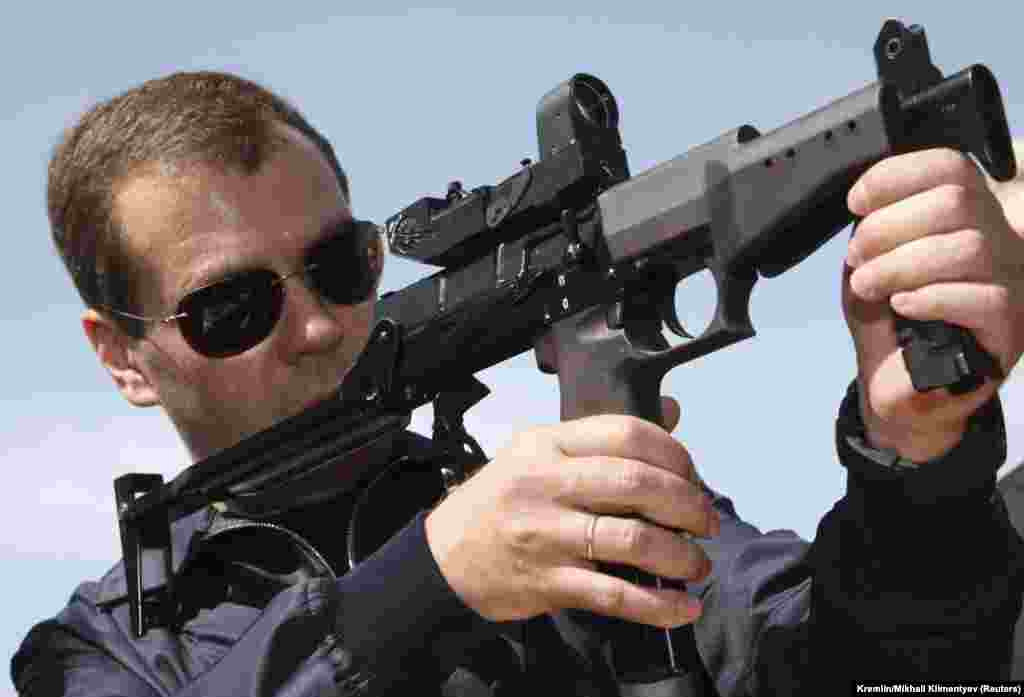
11/19In another photo opportunity, Medvedev takes aim as he visits the Federal Security Service (FSB) Special Task Center in Russia's southern region of Daghestan on June 9, 2009.
Dmitry Medvedev resigned as Russian prime minister on January 15, shortly after President Vladimir Putin announced broad changes to the constitution in his annual state-of-the-nation speech. Medvedev had also served as Russian president, but was widely considered to be part of a "ruling tandem" with Putin.
12/19A matryoshka or Russian nesting doll at a market in St. Petersburg shows Putin lurking behind Medvedev.
Dmitry Medvedev resigned as Russian prime minister on January 15, shortly after President Vladimir Putin announced broad changes to the constitution in his annual state-of-the-nation speech. Medvedev had also served as Russian president, but was widely considered to be part of a "ruling tandem" with Putin.
13/19The two leaders take a fishing trip together on the Volga River in Russia's Astrakhan region on August 16, 2011. Ahead of the presidential election in 2012, Medvedev said he would step aside to allow Putin to become United Russia's candidate. Putin won the election and returned to the presidency on May 7, 2012, naming Medvedev as prime minister the same day.
Dmitry Medvedev resigned as Russian prime minister on January 15, shortly after President Vladimir Putin announced broad changes to the constitution in his annual state-of-the-nation speech. Medvedev had also served as Russian president, but was widely considered to be part of a "ruling tandem" with Putin.
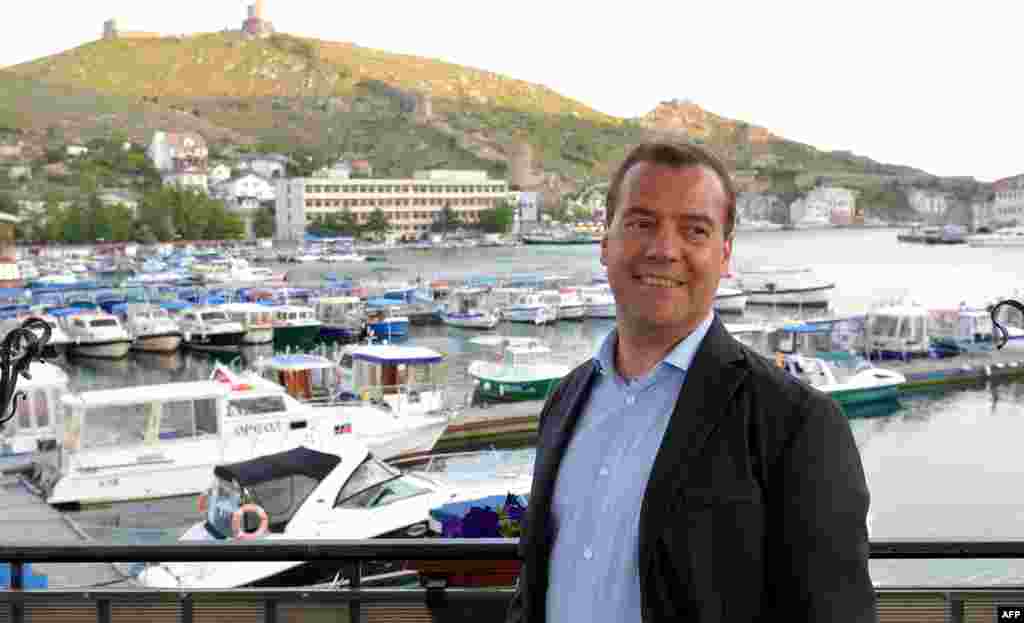
14/19Medvedev, again prime minister, visits the Crimean port of Sevastopol on May 25, 2014. He was the first Russian leader to visit the Crimean Peninsula after it was annexed by Russia in March 2014.
Dmitry Medvedev resigned as Russian prime minister on January 15, shortly after President Vladimir Putin announced broad changes to the constitution in his annual state-of-the-nation speech. Medvedev had also served as Russian president, but was widely considered to be part of a "ruling tandem" with Putin.
15/19People play with a toy duck, adopted as a symbol of Medvedev's alleged wealth, during an anti-corruption rally in St. Petersburg on June 12, 2017. Medvedev became a target of anti-corruption protesters after a video released by opposition leader Aleksei Navalny purported to show his extravagant properties featuring helipads, a ski slope, and a house for ducks.
Dmitry Medvedev resigned as Russian prime minister on January 15, shortly after President Vladimir Putin announced broad changes to the constitution in his annual state-of-the-nation speech. Medvedev had also served as Russian president, but was widely considered to be part of a "ruling tandem" with Putin.
16/19At a September 2, 2018, protest against a proposed increase to the retirement age, an activist's sign shows Putin, Medvedev, and Finance Minister Anton Siluanov with the slogan "They lie to us."
Dmitry Medvedev resigned as Russian prime minister on January 15, shortly after President Vladimir Putin announced broad changes to the constitution in his annual state-of-the-nation speech. Medvedev had also served as Russian president, but was widely considered to be part of a "ruling tandem" with Putin.
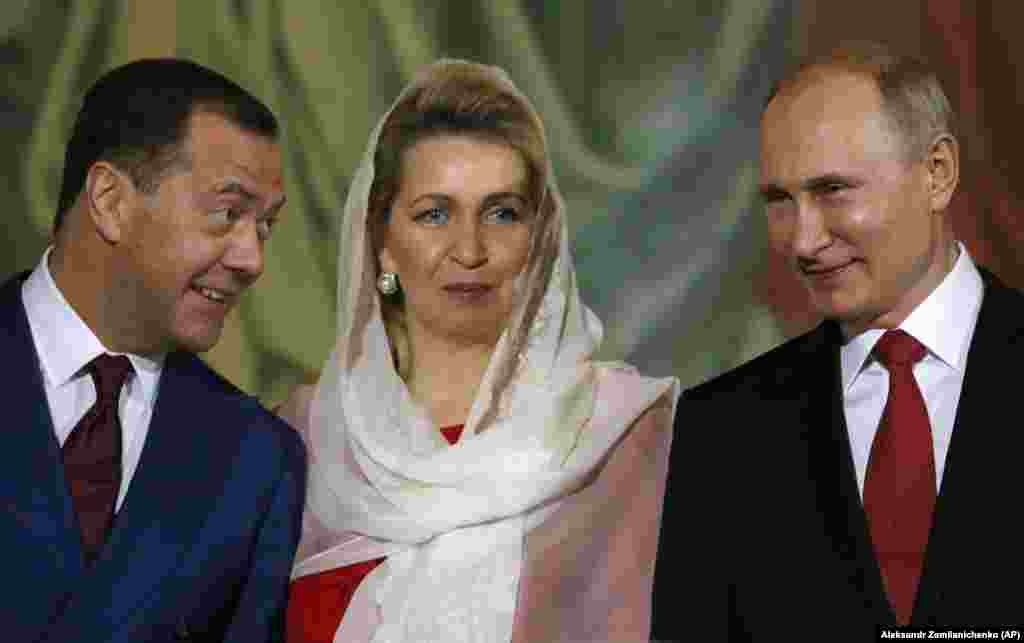
17/19Medvedev and his wife Svetlana attend Easter services alongside President Putin at the Christ the Savior Cathedral in Moscow on April 8, 2018.
Dmitry Medvedev resigned as Russian prime minister on January 15, shortly after President Vladimir Putin announced broad changes to the constitution in his annual state-of-the-nation speech. Medvedev had also served as Russian president, but was widely considered to be part of a "ruling tandem" with Putin.
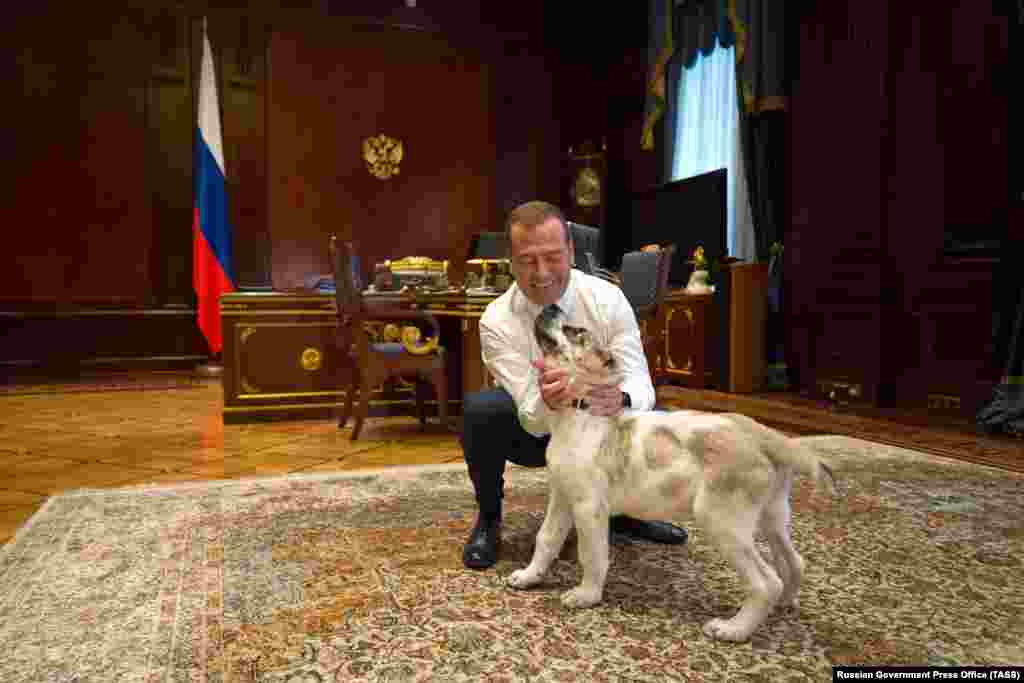
18/19Medvedev plays with a Turkmen shepherd dog, known as an Alabai, that he received as a gift from Turkmen President Gurbanguly Berdymukhammedov on July 17, 2019.
Dmitry Medvedev resigned as Russian prime minister on January 15, shortly after President Vladimir Putin announced broad changes to the constitution in his annual state-of-the-nation speech. Medvedev had also served as Russian president, but was widely considered to be part of a "ruling tandem" with Putin.
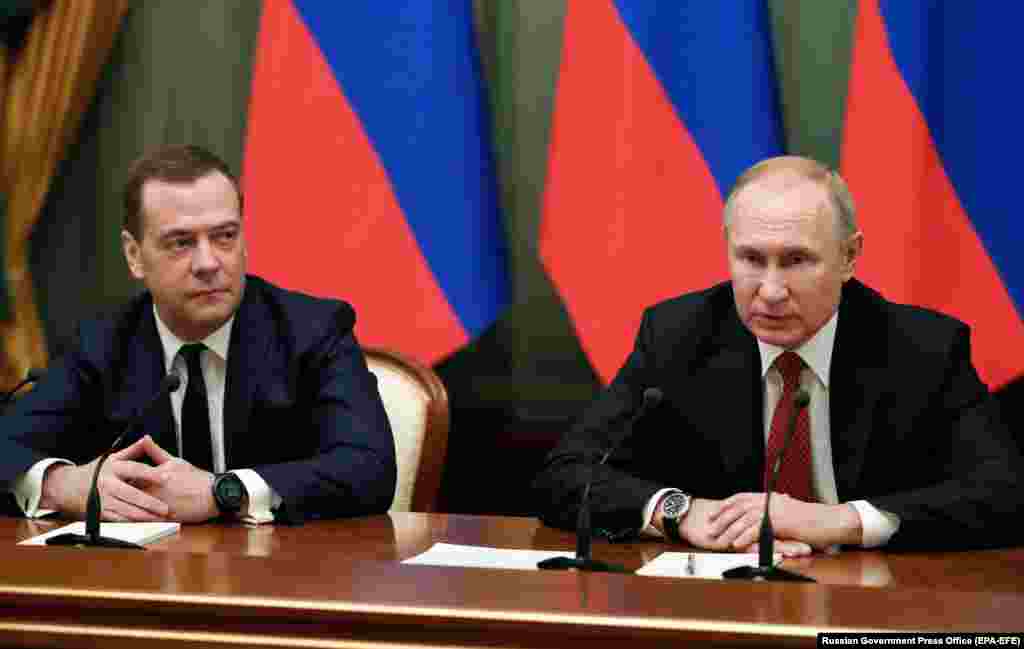
19/19Putin and Medvedev meet with members of the government in Moscow on January 15, 2020. Putin used his annual state-of-the-nation speech to call for a referendum on substantial constitutional amendments that would strengthen parliament's powers before his term ends in 2024. Hours later, Medvedev and his cabinet resigned.
Dmitry Medvedev resigned as Russian prime minister on January 15, shortly after President Vladimir Putin announced broad changes to the constitution in his annual state-of-the-nation speech. Medvedev had also served as Russian president, but was widely considered to be part of a "ruling tandem" with Putin.
Previous slide
Next slide
The question of Putin's post-2024 role in Russia has preoccupied residents and observers of the country since he returned for a fourth presidential term in 2018, his final before the constitution mandates he step down in 2024.
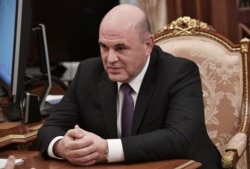
Mikhail Mishustin attends a meeting with Putin at the Kremlin on January 15.
Putin's reelection for a third term in 2012 came after a four-year stint as prime minister allowed him to legally seek a return to the presidency. Medvedev, a protege who temporarily replaced Putin as president, extended the length of Russian presidential terms to six years from four. That enabled Putin to serve two more terms as president, another 12 years in total.
The Kremlin has been coy about its plans beyond 2024, despite widespread expectations that Russia's political future would be decided within its walls.
Following Putin's speech, few observers had any doubt that the changes to come would be significant.
"The power transition has begun," Aleksei Makarkin, deputy head of the Center for Political Technologies, told RFE/RL. "Russia's super-presidential republic will become a presidential one."
By buttressing parliament's role, Makarkin said, Russia was moving toward a greater balance between its various branches of government. But while the president would no longer appoint the prime minster, the office would nonetheless retain sweeping powers, he added, conceding "it's too early" to make strict predictions.
"At the end of the day, this is and remains a risk-averse system of power, the cardinal rule of which is not fixing things that aren't broken," Sam Greene, director of the Russia Institute at King's College in London, said before Medvedev's resignation. "Putin and the elites whose interests he protects know that centralizing power in the presidency works, more or less."
I don't think it will come to a referendum. There are other forms of discussion."
-- Yelena Pamfilova, Central Election Commission
Indeed, Putin specified during his address that "Russia should remain a strong presidential republic," while appearing to circumscribe the powers of his eventual successor. He also made clear that any changes to the constitution will be subject to a referendum.
"The opinion of people -- of our citizens of our nation as the bearer of sovereignty and main source of power -- should be decisive," he said. "Everything is ultimately decided by the people."
The head of Russia's Central Election Commission, Yelena Pamfilova, said she's on standby to organize the vote but suggested the changes may well be implemented without a referendum being held at all.
"I don't think it will come to a referendum. There are other forms of discussion," she told Interfax.
Since Putin's latest reelection, in 2018, to a fourth and apparently final term, several highly placed officials -- including the parliament speaker and Russia's chief justice -- have hinted at the possibility of amending the Russian Constitution in a way that could bestow upon Putin an alternative role at Russia's helm or extend his presidency beyond 2024.
During a marathon press conference in December, Putin also hinted that the constitution could be changed, suggesting the word "consecutive" could be removed from a constitutional clause that states no individual can serve beyond two consecutive presidential terms.
"Your humble servant served two successive terms and then stepped down and had the constitutional right to return to the post of president," he said at the time. "But some of our political scientists and activists do not like this and maybe this could be removed, possibly."
The ambiguous comment immediately prompted Kremlin watchers and Twitter denizens to speculate on what the Russian president meant: Was he paving the way to legally retain power beyond 2024 or circumscribing the powers of his successor?
Returning to that discussion in his state-of-the-nation address, Putin said he agreed that no individual should serve more than two consecutive terms as president, but added: "I don't think it's a fundamental question."
In his speech on January 15, Putin appeared to end speculation that this would be a path he'd follow. But for some, it served as confirmation that he was seeking a way to stay in power beyond his current term, even if he'd no longer, officially, be president.
"He wants to organize a power transition while retaining control over the political situation for the foreseeable future," said Makarkin, citing the example of Nursultan Nazarbaev in Kazakhstan, who resigned in March after nearly 30 years as president but continues to head the ruling party and chair that country's influential Security Council.
Of course, after two decades ruling Russia as either president or prime minister, Putin's statements on the need for a power transition, even if genuine, struck many as hypocritical -- especially when coupled with promises of addressing wage stagnation delivered to a room filled with officials accused of rampant corruption and of holding undeclared assets at home and abroad.
After the president called for reforms to Russia's education system, perhaps the most scathing indictment of the political system he oversees came from Aleksandr Gorbunov, a wheelchair-bound 27-year-old who has emerged as one of Putin's most acerbic critics.
"Billionaires with unlimited power who have ruled the country for 20 years as they like are sitting in the hall promising to arrange hot meals for school students," he wrote.
Matthew Luxmoore is a Moscow-based journalist covering Russia and the former Soviet Union. He has reported for The New York Times in Moscow and has written for The Guardian, Politico, The New Republic, and Foreign Policy. He’s a graduate of Harvard’s Davis Center and a recipient of New York University's Reporting Award and the Fulbright Alistair Cooke Journalism Award.