Russian President Vladimir Putin (left) with his nominee for prime minister, Mikhail Mishustin
Russian President Vladimir Putin has proposed a surprise constitutional shakeup that could keep him in power beyond the end of his term in 2024, and appointed a new prime minister after Dmitry Medvedev and his cabinet resigned.
Putin used his annual state-of-the-nation speech on January 15 to call for a referendum on substantial constitutional amendments that would strengthen parliament's powers ahead of the end of his term in 2024.
"Given that the proposed reforms concern significant changes to the political system, the work of legislative, executive and judicial authorities, I believe it is necessary to hold a plebiscite on the entire package of the proposed amendments to the Russian Constitution," Putin added without specifying any date for a vote.
Hours later, Putin named little-known Federal Tax Service chief Mikhail Mishustin as Russia's new prime minister after Medvedev resigned following the president's announcement.
Mishustin, 53, has worked in the government since 1998 and has been head of the Federal Tax Service since 2010.
Observers said the day's dramatic events are likely preparing the ground for 2024, when Putin, now 67, must leave the presidency. Putin has occupied the presidency or the prime minister's job continuously since 1999, and was reelected in 2018 for a final six-year term under the current constitution.
Announcing the moves in his address to Russia’s Federal Assembly, Putin said the country’s 1993 constitution should be amended, including giving the State Duma -- the lower house of parliament -- the right to name cabinet ministers and the prime minister, a power that currently belongs to the president.
At the same time, Putin said Russia must remain a "strong presidential republic," with the president retaining powers such as the right to dismiss the prime minister and cabinet ministers, as well as naming top defense and security officials.
"This will increase the role and significance of the country's parliament," Putin said.
"For my part, I want to thank you for everything that was done at this stage of our joint work. I want to express satisfaction with the results that have been achieved," Putin said at the meeting with Medvedev and his cabinet.
"Not everything was done, of course, but everything never works out completely," Putin added.
Medvedev announced his government's resignation during the live broadcast of a cabinet meeting with Putin.
"After the [constitutional] changes are adopted, and most likely this will be done after discussions, there will be significant changes…in the balance of power," Medvedev said.
"In that context, we, as the government of the Russian Federation, must provide our country's president with an opportunity to make all necessary decisions and in these conditions, I think the government of the Russian Federation made the proper move to resign," he added.
Russian news agencies said Putin plans to create the position of deputy chairman of the Security Council of Russia and that the post will be offered to Medvedev.
Medvedev, Former President In Putin's Shadow, Resigns As Prime Minister
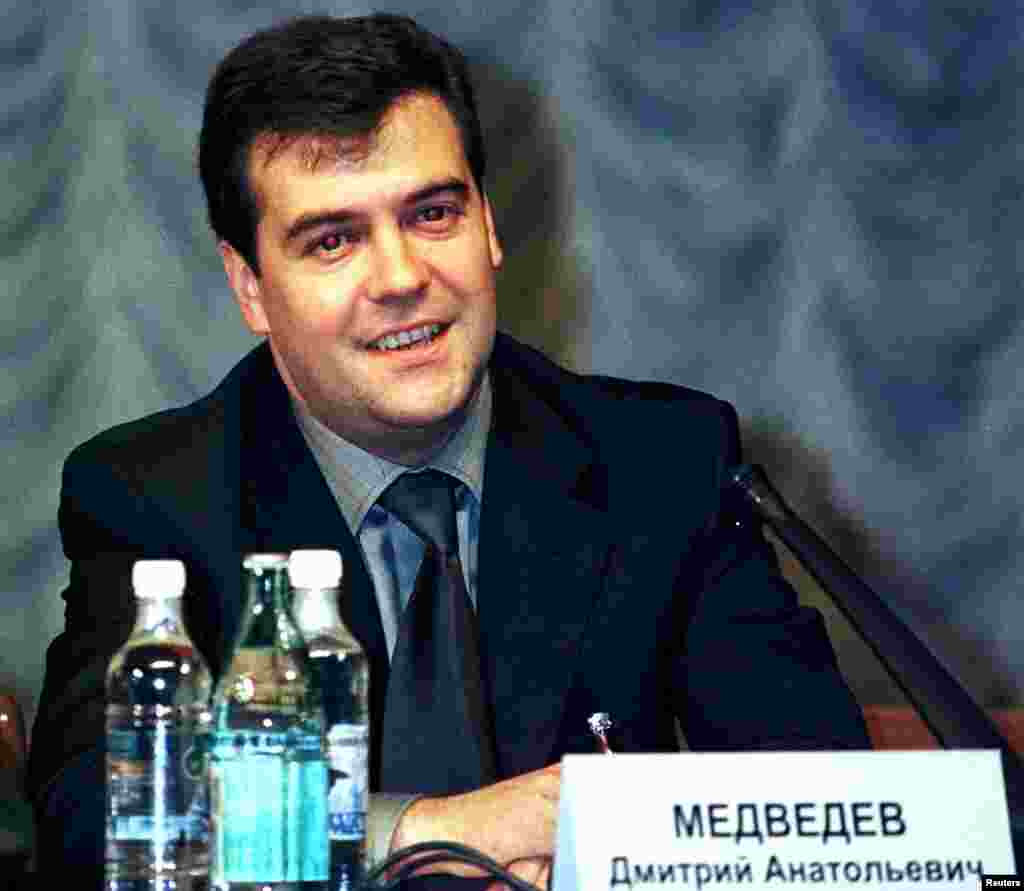
1/19An undated photo shows the young Dmitry Medvedev. He was born in 1965 in St. Petersburg, then known as Leningrad, where he studied and taught law.
Dmitry Medvedev resigned as Russian prime minister on January 15, shortly after President Vladimir Putin announced broad changes to the constitution in his annual state-of-the-nation speech. Medvedev had also served as Russian president, but was widely considered to be part of a "ruling tandem" with Putin.
2/19Medvedev moved into politics in the 1990s in the city government of St. Petersburg, where he worked closely with Putin, pictured here on March 26, 2000. Putin appointed Medvedev to a senior position in Moscow in 1999 when he became prime minister under Boris Yeltsin, then named Medvedev to lead his first presidential campaign the following year.
Dmitry Medvedev resigned as Russian prime minister on January 15, shortly after President Vladimir Putin announced broad changes to the constitution in his annual state-of-the-nation speech. Medvedev had also served as Russian president, but was widely considered to be part of a "ruling tandem" with Putin.
3/19Medvedev, then the acting deputy head of Russia's presidential administration, attends a Gazprom general meeting on June 30, 2000. He was chairman of the gas monopoly's board of directors for several years.
Dmitry Medvedev resigned as Russian prime minister on January 15, shortly after President Vladimir Putin announced broad changes to the constitution in his annual state-of-the-nation speech. Medvedev had also served as Russian president, but was widely considered to be part of a "ruling tandem" with Putin.
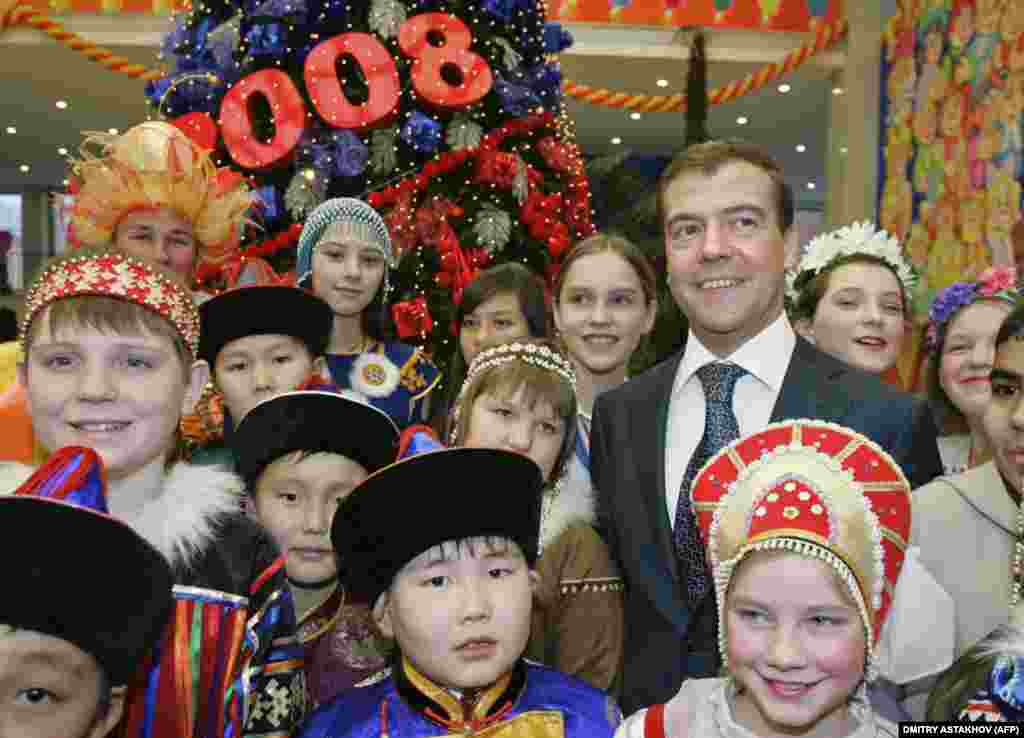
4/19In 2005, Putin appointed Medvedev first deputy prime minister, giving him the power to implement large domestic projects. In this 2007 photo, Medvedev smiles at the All-Russian New Year's Party at the Kremlin.
Dmitry Medvedev resigned as Russian prime minister on January 15, shortly after President Vladimir Putin announced broad changes to the constitution in his annual state-of-the-nation speech. Medvedev had also served as Russian president, but was widely considered to be part of a "ruling tandem" with Putin.
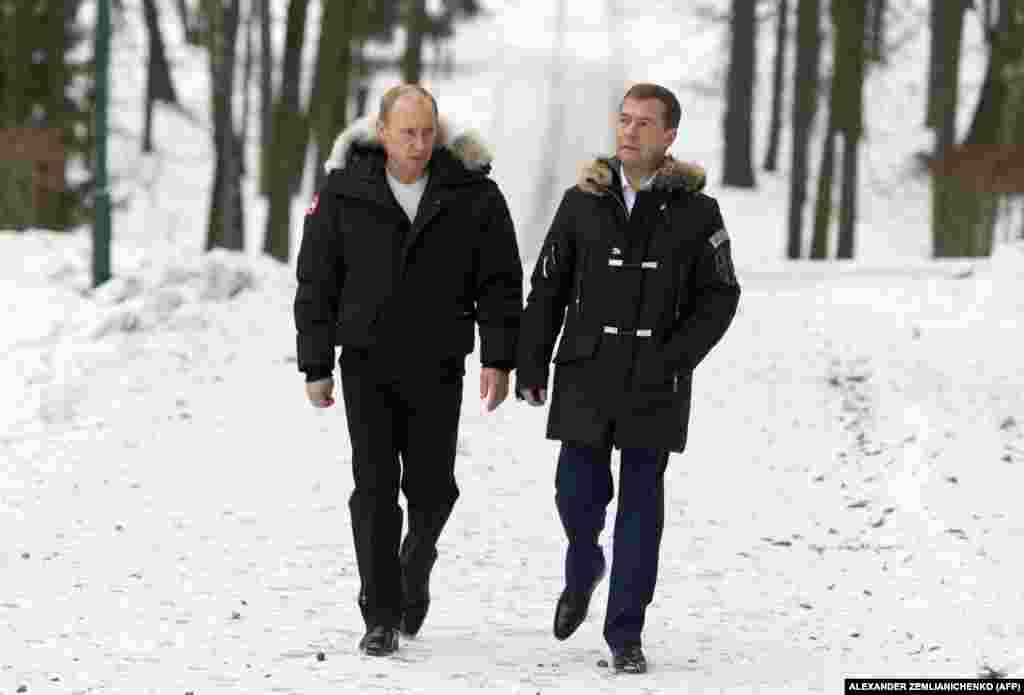
5/19Putin and Medvedev walk outside Moscow on February 29, 2008. When a two-term limit prevented Putin from running for president again in 2008, he named Medvedev, then first deputy prime minister, as his preferred successor.
Dmitry Medvedev resigned as Russian prime minister on January 15, shortly after President Vladimir Putin announced broad changes to the constitution in his annual state-of-the-nation speech. Medvedev had also served as Russian president, but was widely considered to be part of a "ruling tandem" with Putin.
6/19Dmitry Medvedev is sworn in as Russian president in the Kremlin throne room on May 7, 2008. The following day, Medvedev appointed Putin prime minister, as he had promised to do during the election campaign. The pair were sometimes referred to in the press as a "ruling tandem."
Dmitry Medvedev resigned as Russian prime minister on January 15, shortly after President Vladimir Putin announced broad changes to the constitution in his annual state-of-the-nation speech. Medvedev had also served as Russian president, but was widely considered to be part of a "ruling tandem" with Putin.
7/19Medvedev talks with his Belarusian counterpart, Alyaksandr Lukashenka, at a meeting in St. Petersburg of leaders of ex-Soviet states on June 6, 2008.
Dmitry Medvedev resigned as Russian prime minister on January 15, shortly after President Vladimir Putin announced broad changes to the constitution in his annual state-of-the-nation speech. Medvedev had also served as Russian president, but was widely considered to be part of a "ruling tandem" with Putin.
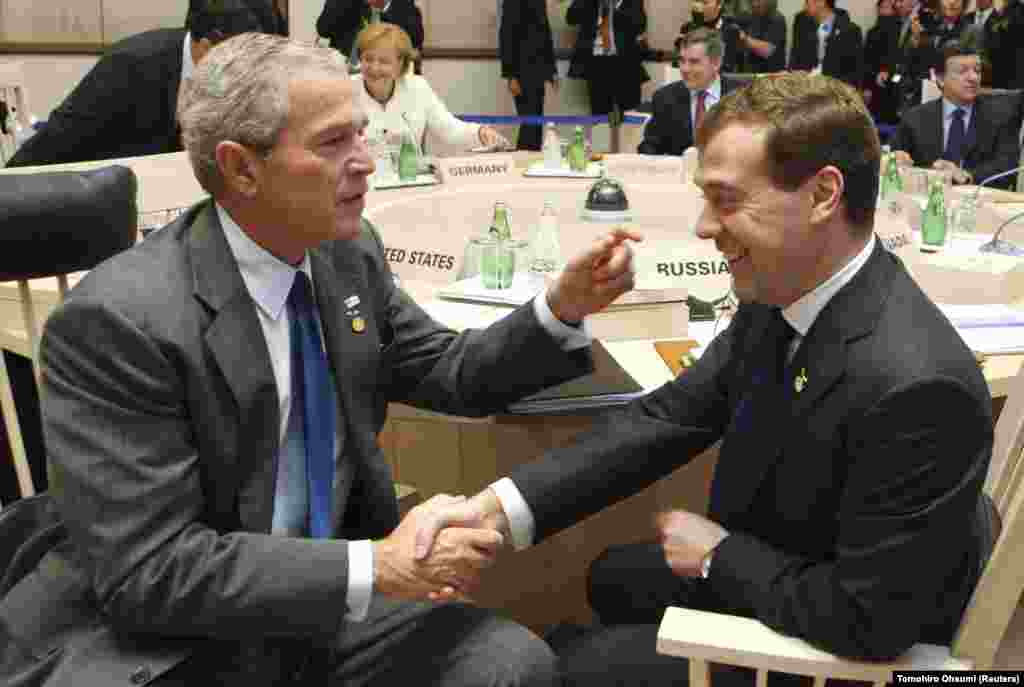
8/19The Russian president meets with U.S. President George W. Bush before the start of a Group of Eight (G8) working session in northern Japan on July 8, 2008. Medvedev cultivated a more pro-Western image than his predecessor, and made gestures toward cracking down on corruption.
Dmitry Medvedev resigned as Russian prime minister on January 15, shortly after President Vladimir Putin announced broad changes to the constitution in his annual state-of-the-nation speech. Medvedev had also served as Russian president, but was widely considered to be part of a "ruling tandem" with Putin.
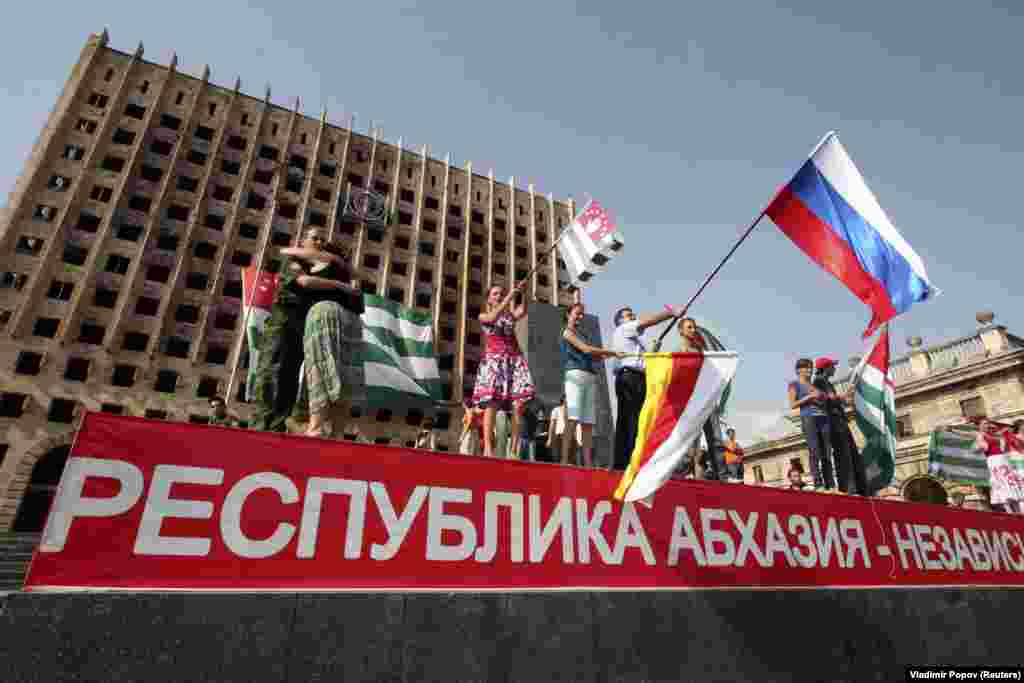
9/19In the first major crisis of Medvedev's presidency, Russia fought a five-day war with Georgia over the breakaway Georgian territories of Abkhazia and South Ossetia. In this photo from August 26, 2008, people in Sukhumi wave flags as they celebrate Moscow's recognition of the territories as independent states.
Dmitry Medvedev resigned as Russian prime minister on January 15, shortly after President Vladimir Putin announced broad changes to the constitution in his annual state-of-the-nation speech. Medvedev had also served as Russian president, but was widely considered to be part of a "ruling tandem" with Putin.
10/19On September 23, 2008, Medvedev poses with reindeer herders in the town of Kanchalan in Russia's Chukotka region.
Dmitry Medvedev resigned as Russian prime minister on January 15, shortly after President Vladimir Putin announced broad changes to the constitution in his annual state-of-the-nation speech. Medvedev had also served as Russian president, but was widely considered to be part of a "ruling tandem" with Putin.
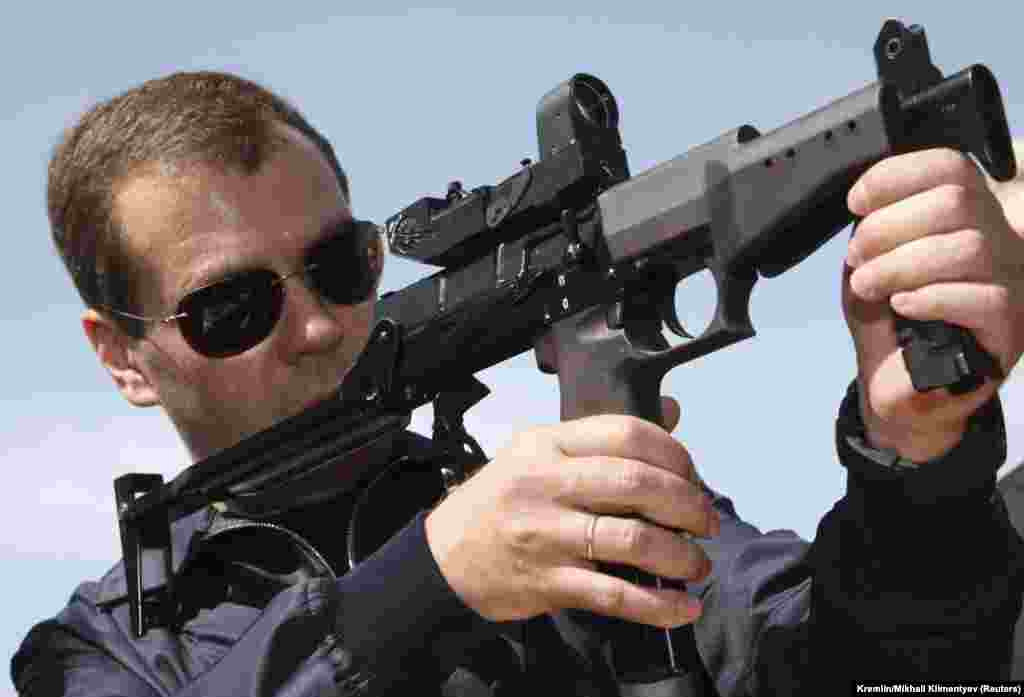
11/19In another photo opportunity, Medvedev takes aim as he visits the Federal Security Service (FSB) Special Task Center in Russia's southern region of Daghestan on June 9, 2009.
Dmitry Medvedev resigned as Russian prime minister on January 15, shortly after President Vladimir Putin announced broad changes to the constitution in his annual state-of-the-nation speech. Medvedev had also served as Russian president, but was widely considered to be part of a "ruling tandem" with Putin.
12/19A matryoshka or Russian nesting doll at a market in St. Petersburg shows Putin lurking behind Medvedev.
Dmitry Medvedev resigned as Russian prime minister on January 15, shortly after President Vladimir Putin announced broad changes to the constitution in his annual state-of-the-nation speech. Medvedev had also served as Russian president, but was widely considered to be part of a "ruling tandem" with Putin.
13/19The two leaders take a fishing trip together on the Volga River in Russia's Astrakhan region on August 16, 2011. Ahead of the presidential election in 2012, Medvedev said he would step aside to allow Putin to become United Russia's candidate. Putin won the election and returned to the presidency on May 7, 2012, naming Medvedev as prime minister the same day.
Dmitry Medvedev resigned as Russian prime minister on January 15, shortly after President Vladimir Putin announced broad changes to the constitution in his annual state-of-the-nation speech. Medvedev had also served as Russian president, but was widely considered to be part of a "ruling tandem" with Putin.
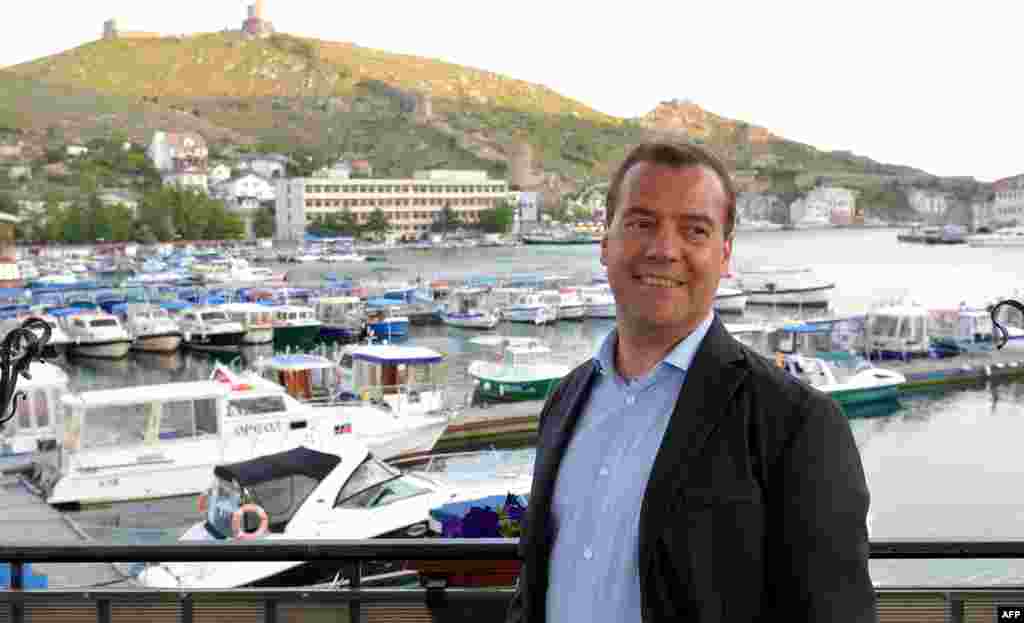
14/19Medvedev, again prime minister, visits the Crimean port of Sevastopol on May 25, 2014. He was the first Russian leader to visit the Crimean Peninsula after it was annexed by Russia in March 2014.
Dmitry Medvedev resigned as Russian prime minister on January 15, shortly after President Vladimir Putin announced broad changes to the constitution in his annual state-of-the-nation speech. Medvedev had also served as Russian president, but was widely considered to be part of a "ruling tandem" with Putin.
15/19People play with a toy duck, adopted as a symbol of Medvedev's alleged wealth, during an anti-corruption rally in St. Petersburg on June 12, 2017. Medvedev became a target of anti-corruption protesters after a video released by opposition leader Aleksei Navalny purported to show his extravagant properties featuring helipads, a ski slope, and a house for ducks.
Dmitry Medvedev resigned as Russian prime minister on January 15, shortly after President Vladimir Putin announced broad changes to the constitution in his annual state-of-the-nation speech. Medvedev had also served as Russian president, but was widely considered to be part of a "ruling tandem" with Putin.
16/19At a September 2, 2018, protest against a proposed increase to the retirement age, an activist's sign shows Putin, Medvedev, and Finance Minister Anton Siluanov with the slogan "They lie to us."
Dmitry Medvedev resigned as Russian prime minister on January 15, shortly after President Vladimir Putin announced broad changes to the constitution in his annual state-of-the-nation speech. Medvedev had also served as Russian president, but was widely considered to be part of a "ruling tandem" with Putin.
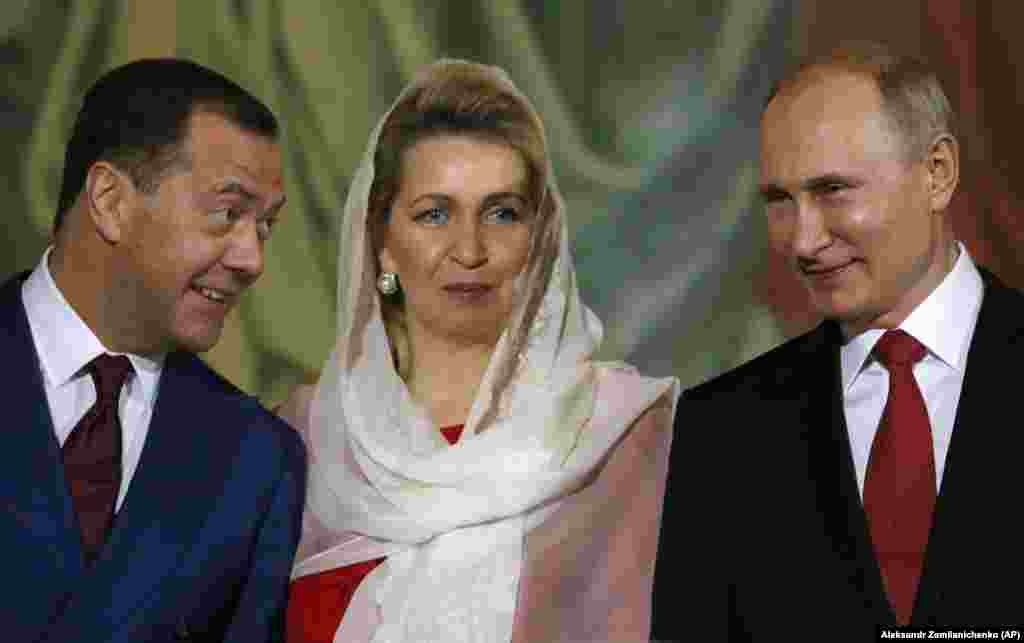
17/19Medvedev and his wife Svetlana attend Easter services alongside President Putin at the Christ the Savior Cathedral in Moscow on April 8, 2018.
Dmitry Medvedev resigned as Russian prime minister on January 15, shortly after President Vladimir Putin announced broad changes to the constitution in his annual state-of-the-nation speech. Medvedev had also served as Russian president, but was widely considered to be part of a "ruling tandem" with Putin.
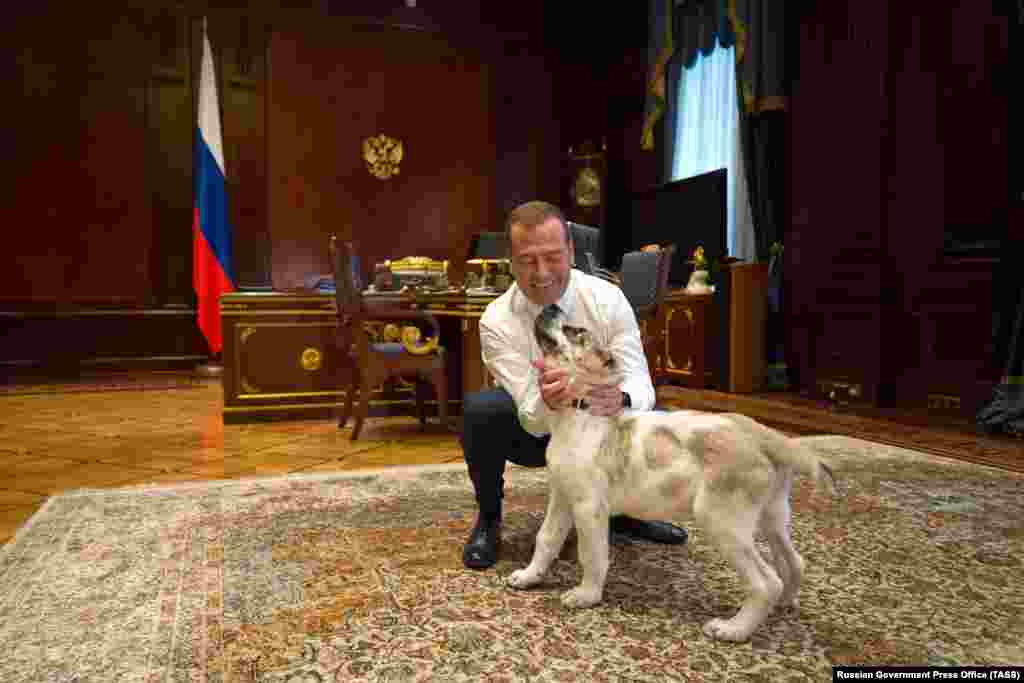
18/19Medvedev plays with a Turkmen shepherd dog, known as an Alabai, that he received as a gift from Turkmen President Gurbanguly Berdymukhammedov on July 17, 2019.
Dmitry Medvedev resigned as Russian prime minister on January 15, shortly after President Vladimir Putin announced broad changes to the constitution in his annual state-of-the-nation speech. Medvedev had also served as Russian president, but was widely considered to be part of a "ruling tandem" with Putin.
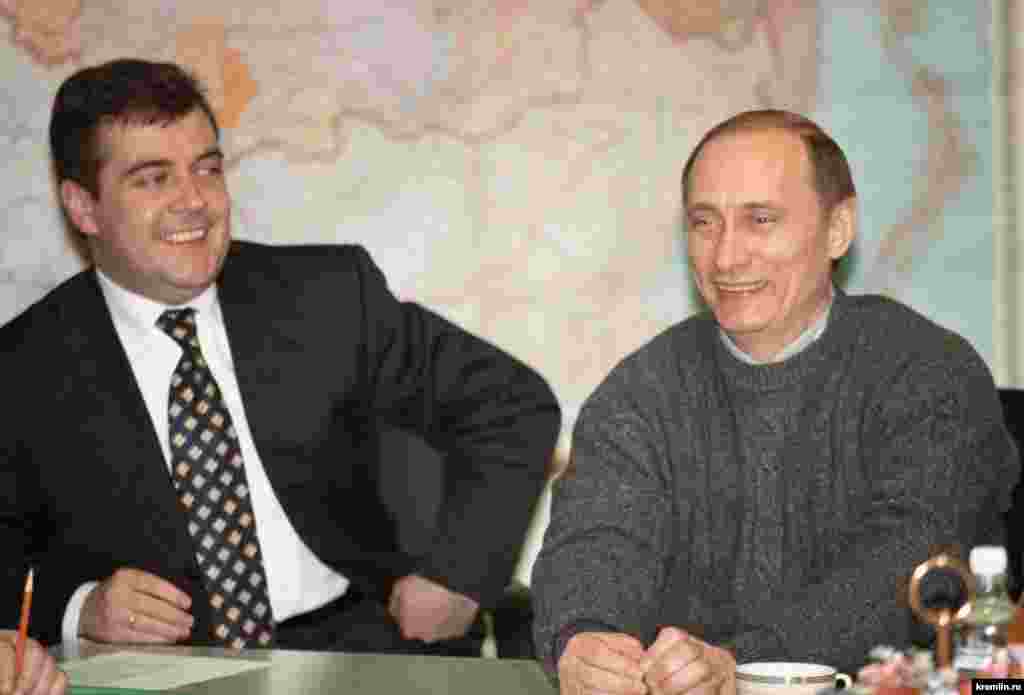
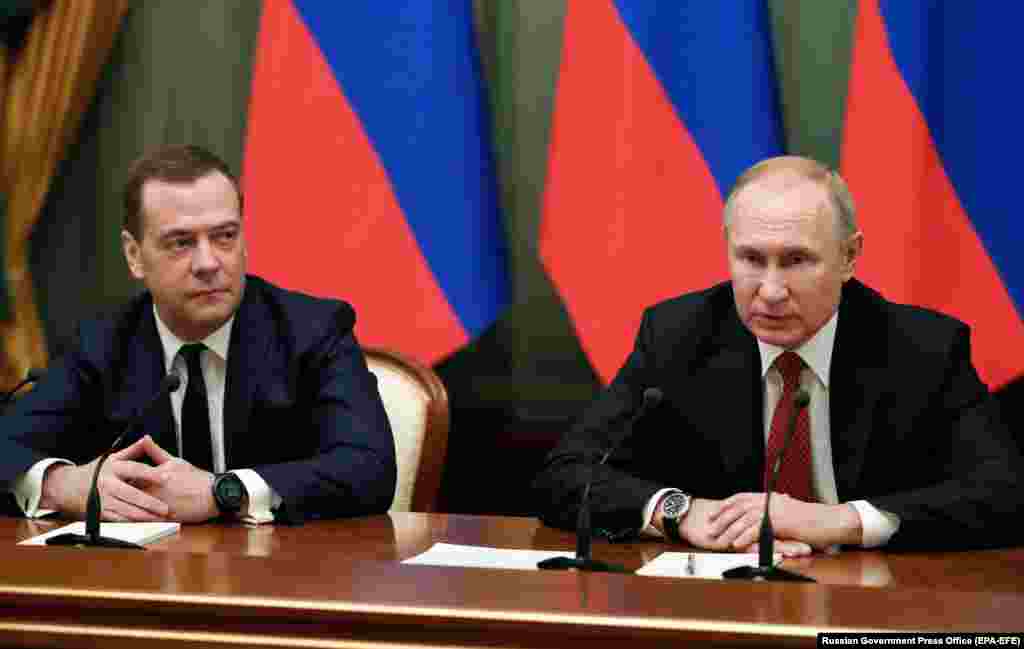
19/19Putin and Medvedev meet with members of the government in Moscow on January 15, 2020. Putin used his annual state-of-the-nation speech to call for a referendum on substantial constitutional amendments that would strengthen parliament's powers before his term ends in 2024. Hours later, Medvedev and his cabinet resigned.
Dmitry Medvedev resigned as Russian prime minister on January 15, shortly after President Vladimir Putin announced broad changes to the constitution in his annual state-of-the-nation speech. Medvedev had also served as Russian president, but was widely considered to be part of a "ruling tandem" with Putin.
Previous slide
Next slide
Observers say that Putin's choice of Mishustin, who lacks any political weight, indicates that the latter will not play an independent role.
Mishustin will face a vote of approval in the Duma within one week.
Russia last conducted a referendum in 1993 when it adopted the constitution under Putin's predecessor, Boris Yeltsin.
Tightening Presidential Requirements
Putin also suggested tightening the requirements for becoming president, saying any future Russian president should have lived in the country for at least 25 years and have no foreign citizenship or residency.
In addition, he also talked about a constitutional change that would enshrine the priority of domestic legislation over international law.
The speech came with the country still under Western sanctions for its actions in Ukraine and Syria, as well as its alleged election meddling in the United States.
The sanctions have hampered the country's economic growth, leading to rising poverty rates and growing discontent highlighted by protests last summer in Moscow.
Aleksei Navalny, Russia's most prominent opposition leader and Kremlin critic, tweeted that Putin's speech clearly signaled his desire to stay in control after his term ends.
"The only goal of Putin and his regime is to stay in charge for life, having the entire country as his personal asset and seizing its riches for himself and his friends," Navalny said.
Navalny said he expected any vote on constitutional changes to be "fraudulent crap."
Social-Spending Measures
The address at Moscow's Manezh exhibition hall is one of three regularly scheduled national appearances that Putin makes each year -- the others being a lavish question-and-answer session with the public and a stage-managed annual press conference.
It is the 16th time Putin has delivered the address before an audience that also includes government ministers, judges from the constitutional and supreme courts, leading regional officials, and other members of the political elite.
In response to public discord, Putin spelled out social-spending measures to counter Russia’s declining population, which he characterized as a "direct threat" to the country’s future, including a nationwide hot-school-meals program.
Putin said low incomes remain an obstacle to increasing the population, now at about 147 million, as the country faces the consequences of the post-Soviet economic collapse that led to a steep drop in the birthrate.
"We need to expedite achievement to meet the large-scale social, economic, and technological challenges our country faces," he said.
"Our society is clearly demonstrating a demand for change. People want development and are trying to make progress in the fields of vocation, knowledge, and well being," Putin said.
In his speech, Putin also boasted about Russian weaponry. He claimed that Russia is leading in the global arms race and is no longer forced to “catch up” to other world powers.
RFE/RL journalists report the news in 24 languages in 18 countries where a free press is banned by the government or not fully established. We provide what many people cannot get locally: uncensored news, responsible discussion, and open debate.