



Latest Comments From President Trump On Iran
Speaking at a meeting with oil and gas executives at the White House on January 9, US President Donald Trump said that "Iran is in big trouble. It looks to me that the people are taking over certain cities that nobody thought was really possible just a few weeks ago."
"We're watching the situation very carefully. I’ve made the statement very strongly that if they start killing people like they have in the past, we will get involved. We will be hitting them very hard where it hurts. That does not mean boots on the ground, but it does mean hitting them very, very hard where it hurts."
Here's our latest news wrap.
We are now closing the live blog for today, but we'll be back again tomorrow morning at 09:00 Central European Time to follow events as they happen.
Good morning. As widespread anti-government protests enter their 14th day, there doesn't seem to be any end to the digital blackout in Iran, according to the independent Internet monitoring organization NetBlocks.
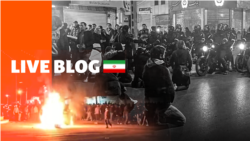
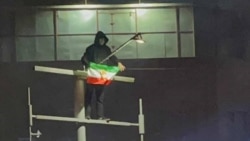
Here's a video recap of last night's events as protesters took to the streets of Tehran on January 9 for the 13th consecutive night of anti-government demonstrations that have spread across the country. News of the latest protests was limited by a nationwide Internet blackout, a move Amnesty International said was intended to conceal human rights violations by Iran’s regime. (Video by RFE/RL's Radio Farda and Margot Buff)


Some more international reaction to the ongoing events in Iran. US Secretary of State Marco Rubio posted this message this morning:
Meanwhile, Pakistan is now advising its citizens to "avoid all unnecessary travel" to Iran:
Thousands Reported Detained, Dozens Dead As Protests Enter 14th day
As the protests in Iran enter their 14th day, there is still no precise information about the number of detainees in different cities.
So far, official judicial and security authorities in Iran have released no explanations regarding the number of detainees, their place of detention, or their condition.
In recent days, hundreds of people have been arrested in connection with the protests in Iran, including teenagers.
Iranian parliamentary deputy Abdolvahed Fayazi, who is a member of the assembly’s education and research commission has confirmed the arrest of children and adolescents. Before the nationwide Internet shutdown, he claimed in an interview with the semi-official ILNA news agency that “the judiciary will deal with them in accordance with the rights of children, adolescents, and youth in the Islamic republic.”
The Human Rights News Agency (HRANA), which covers human rights-related news, has reported that at least 2,311 people were arrested in the first 13 days of the protests and that demonstrations were reported in 512 locations across 180 towns and cities amid a near-total Internet shutdown.
Although there is no precise information available on the number of people killed in the protests, the Iran Human Rights NGO had reported 45 fatalities as of the 12th day of the protests while HRANA said 65 had died. RFE/RL’s Radio Farda has so far confirmed the identities of 35 of those killed, five of whom were adolescents under the age of 18.
Prince Reza Pahlavi, the US-based former crown prince of Iran and a prominent opposition figure, has again issued a message of support on social media for the protesters, telling them that they have “won the admiration of the world with your courage and steadfastness.”
He described their “magnificent presence on the streets” last night as “a tooth-crushing response to the threats of the traitorous and criminal leader of the Islamic republic [Ayatollah Ali Khameini]. I am sure that he saw these images from his hiding place and trembled with fear.”
Pahlavi also called on “workers in key sectors of the economy, especially transportation, oil, gas, and energy to begin a nationwide strike.”
He said such a move would make the protests “more purposeful” by cutting off financial lifelines” in order to “completely bring the Islamic republic and its worn-out and fragile repressive apparatus to its knees.”
He also urged protesters to return to the streets over the weekend, carrying national symbols, and to prepare to occupy and hold city centers by converging from multiple routes and remaining in public spaces.
Pahlavi, whose father -- Iran's last shah Mohammad Reza Pahlavi -- was ousted by the Islamic Revolution in 1979 and died the following year, further appealed to members of the security forces to disrupt the state’s repression from within and said he was preparing to return to Iran to stand with the people at what he described as the imminent victory of a “national revolution.”
Egg And Chicken Prices Soar In Iran As Protests Spread
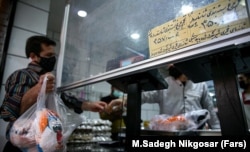
The state-run Mehr News Agency has reported a sudden and sharp increase in the prices of some essential goods on the Iranian market.
According to the report published on January 10, the price of one tray of eggs (approximately 2 kilograms) rose within a single week from 2.85 million rials to 4.8 million rials. The price of chicken also climbed from 1.69 million rials per kilogram at the beginning of last week to between 2.3 million and 3 million rials.
This time last year, the price of chicken was recorded at 820,000 rials, while eggs cost between 1 million and 1.5 million rials.
The sharp rise in the prices of some food staples comes despite earlier statements by the Islamic republic’s government that prices of basic goods would increase by only 20-30 percent following the removal of a state-subsidized exchange rate that had provided importers with cheaper dollars for basic goods.
To compensate for the price increases, the government had implemented a 10 million rial cash subsidy per person in the form of food-voucher credit.
The surge in prices of essential goods has occurred amid Iran’s largest protests in years, with demonstrators calling for the overthrow of the government.
Amnesty International has released a statement on social media, saying that it is investigating "distressing reports that security forces have intensified their unlawful use of lethal force against protesters" in Iran.
The rights organization said on January 10 that this escalation has “led to further deaths and injuries.”
The previous day, Iranian Nobel peace prize winner Shirin Ebadi warned on her Telegram account that security forces in the Islamic republic could be preparing to carry out a “massacre under the cover of a sweeping communications blackout” According to the AFP news agency, she said she had received information that hundreds of people had been taken to a Tehran hospital with “severe eye injuries” caused by pellet gun fire.
Meanwhile, Amnesty International’s technology unit, Amnesty Tech, has said the ongoing Internet shutdown in Iran is being used “to hide horrendous human rights violations” in the restive country.
Filmmakers Warn Of Repression As Iran Cuts Internet Access
Jafar Panahi and Mohammad Rasoulof, two prominent filmmakers opposed to Iran’s government, have issued a joint statement, saying that “following the presence of millions of Iranians in the streets protesting against the Islamic republic, the government has once again resorted to its most blatant tools of repression.”
“Experience has shown that resorting to such measures is intended to conceal the violence inflicted during the suppression of protests,” they wrote on Instagram on January 10.
The two acclaimed directors, who are currently outside Iran, expressed deep concern for the lives of their fellow citizens, as well as for their families, colleagues, and friends.
They called on the international community, human rights organizations, and the media to “to immediately find ways to facilitate access to vital information in Iran by enabling communication platforms, and monitor what is happening.”
Referencing a previous Internet shutdown during protests in Iran in November 2019 -- when authorities cut access for about a week and according to Amnesty International over 300 protesters were killed – Panahi and Rasoulof warned that “history bears witness that silence today will have regretful consequences in the future.”
The Iranian authorities have blocked Internet access and communication channels since the evening of January 8 amid a surge of anti-government protests across the country.