

Israel Looks To 'Historic Turning Point' Against Hezbollah in Lebanon
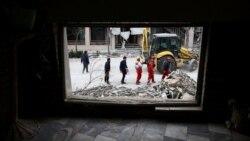
The Israeli military said it has launched a new wave of strikes late on March 27 against Iran-allied Hezbollah targets in Beirut, hours following a previous series of attacks. Israeli Chief of Staff Eyal Zamir said there were "significant plans to continue the operation" against Hezbollah during a visit to troops in southern Lebanon in the evening. "We are at a historic turning point," Zamir said. Israel was pursuing its plan "to fundamentally change the security situation — from Tehran to Beirut," he said.
Special Envoy Witkoff Says US May Hold Talks 'This Week' With Iran
US special envoy Steve Witkoff on March 27 said he believes Tehran will hold talks with Washington "this week," as uncertainty remains over the status of a 15-point US peace plan that Iran has received.
"We think there will be meetings this week. We're certainly hopeful for it," Witkoff told a business forum in Miami, where US President Donald Trump is scheduled to speak later in the day.
Witkoff said the United States is expecting a response from Tehran to the peace plan.
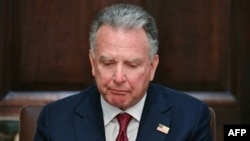
"We have a 15-point plan on the table. We expect the Iranians to respond. It could solve it all," Witkoff said.
Informally, Tehran has responded sharply to the 15-point plan, saying the US conditions were excessive and that it will end the war when it chooses and if its conditions are met, insisting on its right to freely develop its ballistic missile program.
Despite the efforts at a peace deal or cease-fire, the violence continued in the Middle East.
Iranian Foreign Minister Abbas Araqchi on March 27 vowed that Tehran would exact a "HEAVY price for Israeli crimes" after attacks on two of the country's largest steel factories and nuclear sites.
Meanwhile, Israel's military warned that Iran had fired missiles toward the country late on March 27, with air raid sirens heard in Jerusalem and explosions seen in the West Bank city Jericho.
Read more here.
Iran: Ardakan Yellow Cake Factory In Yazd Province Attacked
The Atomic Energy Organization of Iran announced that the Ardakan yellow cake production plant in Yazd Province had been attacked on March 27.
Initial investigations indicate that the strike did not result in any release of radioactive materials outside the complex, the report said.
The Israeli military also confirmed the attack, writing on X: "This facility is the only one of its kind in Iran. At this site, raw materials extracted from the ground are processed into material used for uranium enrichment. This constitutes a significant stage in the nuclear weapons production program of the Iranian regime and is considered the beginning of the production chain required for developing nuclear weapons."
The Saghand yellow cake production plant in Ardakan was put into operation in May 2023. The Islamic republic uses yellow cake in uranium enrichment facilities.
CENTCOM Reports 303 US Soldiers Injured In War With Iran
The US Central Command announced on March 27 that 303 US troops have been wounded since the start of the war with Iran. Most of the injuries were minor, and 273 have returned to duty, according to CENTCOM.
Meanwhile, an unnamed American official told AFP that 10 soldiers have been seriously injured.
CENTCOM previously said that 13 soldiers had been killed in the current US-Israeli war with Iran: seven in the Persian Gulf and six in Iraq.
Rubio Says Iran Operation Expected To Be Complete In 'Weeks'
The United States expects its military operation in Iran to end in "weeks, not months," US Secretary of State Marco Rubio said after a meeting with the other Group of Seven (G7) foreign ministers in France as the US-Israeli war approached it fifth week.
Speaking before departing on March 27, Rubio also said the United States can achieve its goals in Iran without ground troops, and that Iran may seek to set up a toll system for passage through the Strait of Hormuz, which he said would not be acceptable.
He said the United States is "very confident" that it will achieve its objectives "very soon."
Rubio's remarks came as Iran warned of new attacks across the Middle East and urged civilians to avoid areas near US forces, a day after US President Donald Trump extended a deadline for Tehran to open the crucial oil-and-gas transport route until April 6.
To read the full report, click here.
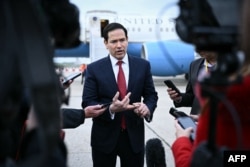
G7 Leaders Call For Immediate Stop To Attacks On Civilian Infrastructure
In a joint statement issued on March 27, foreign ministers from the Group of Seven (G7) have jointly called for an immediate stop to attacks against civilian infrastructure in the US-Israeli war with Iran.
The statement, released on the second day of the G7 meeting between the United States, Britain, Canada, France, Germany, Italy, Japan, and the European Union in Paris, underlined the consequences of the conflict that have fallen on the civilian population across the Middle East.
"There can be no justification for the deliberate targeting of civilians in situations of armed conflict as well as attacks on diplomatic facilities," the foreign ministers said.
The group included US Secretary of State Marco Rubio in attendance for his first face-to-face meeting with G7 leaders since before the current conflict began on February 28. The statement said that leaders were "focused on the value of diverse partnerships, coordination, and supporting initiatives" to reduce global economic tension, "which have direct impacts on our citizens," as they reiterated the need to relaunch secure navigation in the Strait of Hormuz.
The key waterway accounts for around one-fifth of global oil shipments and is effectively closed by Iranian forces, spiking global energy prices.
To read the full report, click here.
Iran Reports Attacks On Arak Nuclear Facility, Steel Factories In Ahvaz, Isfahan
The Arak Heavy Water Complex, known as Khondab, was hit "in two stages" on March 27, according to a local government official.
"The Khondab Heavy Water Complex was targeted in two stages by aggression from the American and Zionist enemy," said Fars news agency, citing Hassan Ghamari, an official in the central Markazi Province.
The Arak Heavy Water Complex is one of Iran's major nuclear facilities and a center for heavy water production. The complex was previously targeted during the 12-day war between Israel and the United States against Iran.
The official said there no danger to the people in the vicinity.
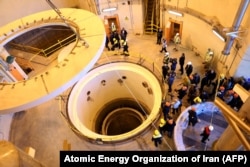
Meanwhile, Iranian media on March 27 reported attacks on steel production plants in the cities of Ahvaz and Isfahan.
Mohammad Ali Zarei, spokesman for the Iranian Ministry of Industry, Mines and Trade, confirmed the attack on the Mobarakeh and Khuzestan Steel complexes in an interview with Tasnim News Agency, which is affiliated with Iran's Islamic Revolutionary Guards Corps (IRGC).
"Some damage has been caused to parts of these two complexes," he said. He did not provide further details about the extent of damage or possible victims.
However, Fars, which is also linked to the IRGC, reported that "an electrical substation and an alloy steel production line" were targeted in the attack on Mobarakeh Steel in Isfahan. At the Khuzestan Steel plant, the company's "storage facilities" were also hit.
Images of huge plumes of smoke rising from steel factories in Isfahan and Ahvaz were also shared on social media.
The Israeli military announced in a statement that its air force had "launched a broad wave of attacks against the infrastructure of the Iranian regime."
The US Could Seize These Three Iranian Islands, Experts Say
US President Donald Trump has warned of possible further action against Kharg Island, a key oil terminal of Iran and a major cog in the country's economic machine.
But experts say three other Iranian islands in the Persian Gulf could also be part of efforts to pressure Tehran into reopening the Strait of Hormuz, a key artery for global oil and gas supplies.
The tiny islands of Abu Musa, Greater Tunb, and Lesser Tunb sit near the mouth of the 39-kilometer-wide waterway, giving them strategic value.
Internationally recognized as part of Iran, the islands are also claimed by the United Arab Emirates (UAE). Tehran gained control of the territories just a day before the creation in 1971 of the UAE, which was until then was an informal British protectorate.
To read the full report, click here.
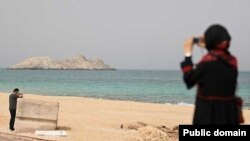
Iran Warns Of New Strikes Day After Trump Extended Deadline To Reopen Strait Of Hormuz
The Iranian military has warned of new attacks across the Middle East and urged civilians in the region to avoid areas near US forces, as US President Donald Trump extended the deadline for Tehran to open the key Strait of Hormuz.
In a statement released on March 27, the Islamic Revolutionary Guards Corps (IRGC) also said it would keep the waterway closed and any potential attempts at transit would face "harsh measures."
"The movement of any vessel 'to and from' ports of origin belonging to allies and supporters of the Zionist-American enemies, to any destination and through any corridor, is prohibited," said the IRGC, which is designated as a terrorist organization by the United States.
Following the IRGC's warning, media reported that three vessels of various nationalities were turned back from the Strait of Hormuz on March 27.
To read the full report, click here.
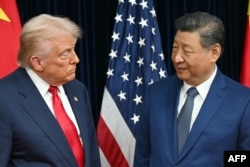
Iran War Will Reshape Dynamics Ahead Of Trump-Xi Summit, Says Former US Official
A long-awaited meeting between US President Donald Trump and Chinese leader Xi Jinping will take place in Beijing on May 14-15 after Trump said Washington asked to delay the summit originally planned for April due to the war with Iran.
The summit in Beijing comes after the two leaders met in South Korea in October 2025 and and follows successive US military action in Venezuela in January and the war with Iran, which began with US-Israeli strikes in late February. While the Trump-Xi meeting is set to focus on lingering trade and economic disputes between Beijing and Washington, the American moves against two Chinese partners add a new geopolitical backdrop.
For a better understanding of how the war in Iran will affect the upcoming summit, RFE/RL spoke with Dennis Wilder, a former top US official focused on China.
To read the full interview, click here.