
Anti-Government Protests Continue Across Tehran
Protesters were out in the streets in many neighborhoods of Tehran on January 8, the twelfth night of anti-government protests. Eyewitnesses told Radio Farda that police used tear gas against the crowds in Tehran’s Yousefabad neighborhood.

Trump: Tehran Will 'Have To Pay Hell' If Authorities Kill Protesters
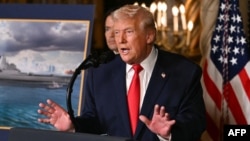
US President Donald Trump has reiterated warnings that Washington was ready to intervene if Tehran killed protesters during the ongoing demonstrations.
Speaking to conservative political commentator and talk show host Hugh Hewitt on January 8, he said that he had let Iranian authorities "know that if they start killing people -- which they tend to do during their riots, they have lots of riots -- if they do it, we're going to hit them very hard." He later added the Iranian government had "been told very strongly that...if they do that, they are going to have to pay hell."
The US President had previously warned the Iranian government about using violence against protesters.
Here's some footage shared on shared on social media, which RFE/RL's Radio Farda has determined shows protesters marching tonight on Tehran's Ayatollah Kashani Boulevard.
The independent Internet observatory NetBlocks is now reporting that parts of Iran are entering a "digital blackout."
And cybersecurity and digital rights expert Amir Rashidi has also been weighing in.
Soleimani Statue Toppled As Iran Protests Gain Momentum
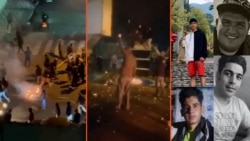
Anti-government protesters in Iran's Fars Province toppled a statue honoring deceased Quds Force commander Qasem Soleimani, the former head of the Quds Force of the Iranian Revolutionary Guards Corps (IRGC), as demonstrations continued for an 11th night on January 7.
With Internet outages being reported across the country, NetBlocks -- an independent digital rights watchdog that monitors global web connectivity, censorship, and cyber shutdowns -- is reporting mass breakdowns in Internet service in Iran.
Iran's Protests Are Gaining Momentum
We have just published a feature by one of our Iran writers, Kian Sharifi, on how the protests are gaining momentum. The tl;dr summary is:

* Protests over Iran’s economic crisis have spread to major cities and small towns, with strikes in bazaars and growing public anger.
* Demonstrators have targeted symbols of the clerical system, including statues of General Qasem Soleimani and the national flag adopted after 1979.
* Security forces have used force but failed to stop large crowds, while authorities have slowed Internet access ahead of planned nationwide strikes.
Read the full piece here.
Filmmakers Condemn The Violence Against Protesters
The Cinema House, Iran's film industry trade union, has said that it "stands in solidarity...with the oppressed people" of Iran.
In a statement, the trade union said,"The streets are the only option left for people who find no escape or outlet to express their protests."
The Cinema House emphasized that "violence against peaceful protesters is neither legitimate, nor legal, nor rational."
In reference to senior officials calling the protesters "rioters," the trade union said that the real "rioters have been profiting from plundering national wealth without any punishment, from untying foreign policy knots, even at the cost of war, and living under the shadow of security."
Meanwhile, 184 Iranian filmmakers have issued a statement supporting the protesters saying, "We condemn the suppression of the people's protests under any pretext."
Shooting at unarmed protesters, the filmmakers said, is "a crime against the right to life and has no justification."
Radio Farda Confirms 25 Deaths So Far
RFE/RL's Radio Farda has so far verified the deaths of 25 protesters. Some human rights groups say the actual number is higher, and that over 2,000 people have been arrested.
Here's a map showing where the protesters were killed:
Video: Protesters Rip Up Iranian Flag In Mashhad
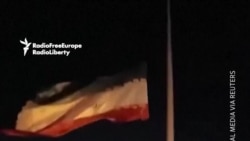
As nationwide protests continued for an 11th night across Iran, protesters in Mashhad tore down the national flag and ripped it to shreds. Iran's current national flag was adopted after the Islamic Revolution in 1979, and critics of the Islamic republic refer to this flag as the regime's flag's, not the country's.