

Nuclear Talks
- By Kian Sharifi and
- RFE/RL's Radio Farda
Is The Deal With Washington Fracturing Iran’s Elite Consensus?
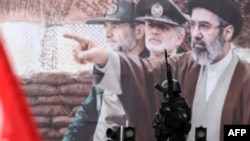
Two unusual incidents within a day of each other have exposed how deeply contested Tehran’s memorandum of understanding (MOU) with Washington has become inside Iran’s own establishment, just months into Mojtaba Khamenei's tenure as supreme leader.
The first challenge came from the Assembly of Experts, the clerical body that oversees the supreme leader. Sixty-three of its 88 members issued a statement on June 29 urging negotiators to hold firm to the "red lines" set by Khamenei. While addressed to the “people of Iran,” the text read more like a direct warning to the negotiating team.
Hours later, the assembly's secretariat scrambled to clarify that the statement did not represent the body's official position, branding it “unusual and unconventional.”
Meanwhile, a day later, state broadcaster IRIB abruptly cut a pre-recorded interview with parliament speaker and lead negotiator Mohammad Baqer Qalibaf mid-answer, right as he was addressing the unfreezing of Iranian assets under the MOU.
The parliament's media office noted the tape had been delivered more than two hours before airtime with no prior coordination sought regarding the cut. The incident instantly fueled speculation that senior executives at IRIB oppose the deal with the United States and are actively seeking to undermine the negotiating team.
Analysts who track Iran's internal factional balance say the two episodes, while different in form, reflect the same underlying reality: With the personal authority of the late Supreme Leader Ayatollah Ali Khamenei no longer available to enforce discipline, domestic institutions are testing how much room they have to shape the narrative.
"We can read two different messages out of this," Babak Dorbeiki, a UK-based political analyst, told RFE/RL’s Radio Farda regarding the assembly statement.
Externally, Dorbeiki said, the pressure serves Mojtaba Khamenei well; rising through a security-brokered succession without an independent power base of his own, it allows him to signal to Washington that his hands are tied, while the statement's unofficial form protects his own room to maneuver. Internally, it signals a sharpening factional competition.
"It's practically the voice of the whole institution," Dorbeiki said of the 63 signatures, suggesting the unofficial rollout may have been deliberate, since a formal institutional statement that blunt would never have cleared the secretariat mid-negotiation.
He framed the deeper contest as a battle between an ideological, security-aligned current in the Islamic Revolutionary Guards Corps (IRGC) that until recently enjoyed outsized influence, and a more pragmatic, realist wing of the establishment now gaining ground.

Hard-liners have been scrutinizing the agreement with the United States, which has in turn been watching how Iranian officials are reacting to it.
They insist Iran should not have negotiated at all and accuse Iranian negotiators of erasing whatever gains were made after the United States and Israel launched a bombing campaign against the Islamic republic on February 28.
More moderate voices, including many conservatives, reject that framing, arguing that the MOU benefits Iran considerably more than it profits the United States.
A central question, according to France-based commentator Reza Alijani, is whether the new supreme leader will fully back his negotiators or, like his father, attempt to keep all factions satisfied.
Alijani noted that while the younger Khamenei's earliest statements after his ascension were dense with self-effacing language, more recent remarks show him asserting that he personally "allowed" the team to negotiate.
Given Khamenei’s relative youth at 56, Alijani argued it will take time for him to command the absolute authority his father once wielded.
Until then, the new leader is likely to preserve his father's conditional, two-track approach to the West: authorizing talks while working to keep hard-line elements anchored inside the system rather than alienated from it.
Ultimately, the fight over the US-Iran deal has ceased to be a simple contest between reformists and hard-liners. Instead, it has become a high-stakes test of just how much independent latitude Iran's institutions -- clerical, military, and media alike -- believe they can now exercise in the absence of a single, undisputed center of authority.
Iran's Hard-Line Preachers Split Over Deal With Washington

The debate over Iran's potential agreement with the United States has spilled beyond the country's political class and into the religious establishments and street gatherings that have long served as the Islamic republic's most loyal base of support.
Since the outbreak of war and the death of Supreme Leader Ayatollah Ali Khamenei in US-Israeli strikes, state-aligned clerics and eulogists have played an outsized role in rallying public support for the Islamic republic and armed forces through nightly gatherings in Tehran's squares and religious pulpits across the country.
But as a preliminary memorandum of understanding with Washington has taken shape, that same base has begun to show fissures and the significance of these divisions runs deeper than a dispute over a single agreement.
For years, the religious pulpit and the street gathering were among the most reliable instruments of political mobilization available to the Islamic republic.
Now, amid a landmark diplomatic process, those same instruments are amplifying the state’s internal contradictions -- at a moment when its new supreme leader has yet to appear in public or be heard on camera at all.
Known in Persian as "maddahan," eulogists lead mourning ceremonies and have long served as key political mobilizers for the Islamic republic.
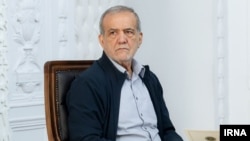
The fault line sharpened after Mojtaba Khamenei, who succeeded his father as the Islamic republic's new supreme leader, issued a statement saying he had "in principle held a different view" on the deal, but had given his permission after President Masud Pezeshkian took personal responsibility for the outcome.
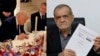
Hard-liners seized on the formulation as a signal that the leadership itself was at best reluctant and used it to justify increasingly public opposition.
Direct Threat To Pezeshkian
Some eulogists have gone further than criticism. In footage that circulated widely online, a "maddah" named Mohammad Ali Bakhshi issued a direct threat to Pezeshkian, warning that if the conditions set by the supreme leader were not met, "we know what to do with a blade and your throat."
The threat drew a sharp public rebuke from a senior presidential spokesman, who called the threat “an affront to the vote of millions of Iranians.”
Reza Narimani, another eulogist close to the establishment, used a recent sermon to attack Pezeshkian over remarks in which the president said the government had provided 20 million barrels of oil to the aerospace division of the Islamic Revolutionary Guards Corps (IRGC) to enable it to fight. Narimani called this framing an insult to the armed forces.
"Is the government going to pass a collection bag around in mourning ceremonies asking people to donate to the army?" he asked. He also claimed the supreme leader had explicitly said he opposed negotiations and a deal, arguing that it was "clear" that no engagement should have taken place.
'Exactly What The Counterrevolution Wants'
Not all preachers have taken that line.
Meysam Motiee, one of the most prominent state-aligned eulogists, turned his fire not on the negotiating team but on those attacking military commanders for agreeing to the interim deal with Washington.

"How can anyone allow themselves to sit under an air conditioner, legs crossed, and address the commanders of the Guards, the army and the security forces with the worst language?" he said. "This is exactly what the counterrevolution wants."
His position drew immediate criticism from hard-line media outlet Raja News, which accused him of targeting protesters in the street rather than holding officials to account.
Behind the scenes, pressure is reportedly being applied from above.
A eulogist named Mohammad Taheri claimed at a recent nightly gathering in Tehran that Khamenei had personally instructed religious figures to tell crowds to avoid saying anything that could weaken the government or the negotiating team -- a claim that, while unverified, carried political weight.
- By Kian Sharifi
Iran Pushes Back Against Trump's Claims About Frozen Assets Amid Anger From Hard-Liners
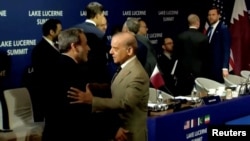
Iran has pushed back against US claims that any frozen Iranian assets released under a framework deal would be used to buy American agricultural products but stopped short of ruling it out, as the proposal sparked a sharp backlash from the country’s hard-liners.
The release of billions in Iranian funds held abroad is part of the memorandum of understanding (MOU) signed by Tehran and Washington on June 17 that aims to end months of war between the foes.
US President Donald Trump said on June 23 that any unlocked Iranian funds would be used to purchase American corn, soybeans, and wheat. The money, he said, would be held "in escrow, controlled by" Washington and spent "exclusively" on American food and medical supplies.
But Iranian Central Bank Governor Abdolnasser Hemmati swiftly denied there was such an obligation. "Based on the signed memorandum, we have no requirement to purchase agricultural inputs from America," he said.
He added that if American prices and quality proved more competitive than other suppliers, "there is no obstacle to purchasing from that country," noting that Iran's Agriculture Ministry had in recent years sourced imports through major American and European companies.
Iranian Foreign Ministry spokesman Esmaeil Baqaei said on June 23 that Tehran would decide how to use any released assets "in whatever way is in the country's interest."
"Therefore, there are no restrictions in this regard," he said.
But Trump appeared to contradict those comments, writing in a Truth Social post on June 24 that some of Iran's frozen assets will be released "to our Farmers and Ranchers" for the "purchase of Corn, Wheat, Soybeans, and more." He added that food is "desperately needed in Iran, and we will be purchasing it for them exclusively from the United States."
'Gifting' Billions To The US
The mere mention of Iran possibly buying US agricultural products using any of its unfrozen funds has angered Iranian hard-liners, and Trump's latest comments are likely to further fuel those divisions.
Raja News, an outlet affiliated with the hard-line Paydari Front political faction, published two editorials on June 23 arguing that the food purchase mechanism violated the MOU signed last week.
Article 11 of the agreement stipulates that frozen funds must be made "fully available" to beneficiaries designated by Iran's Central Bank.
Raja News argued that the proposed US arrangement -- reportedly routing funds through Qatar to pay American suppliers -- amounted to a breach of the agreement before it had even been implemented.
Around $6 billion in Iranian assets are believed to be held in Qatar. Billions more of Iranians funds are frozen in China, Japan, India, and elsewhere.
Raja News criticized Iranian negotiators for agreeing to "gift" billions of dollars to the United States through this mechanism, arguing it would only embolden Washington to commit further breaches of the deal.
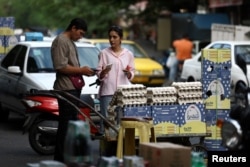
The outlet also recalled a scandal in the 1980s, when HIV-tainted blood products imported from France were blamed for the deaths of hundreds of Iranians suffering from hemophilia. "Is the catastrophe of the contaminated French blood going to be repeated this time in the form of American food?" it asked.
Hard-line cleric Morteza Panahian warned that American corn, soybeans, and canola meal were genetically modified and posed a public health threat.
Foad Izadi, a frequent commentator on state television, argued that US Congressional authorization requirements meant any transaction would effectively be a deal between Qatar and the United States using Iranian money, with Tehran cut out. He said the agreement would effectively place Iranian food safety in American hands.
A Domestic Rift
On the other side, more moderate voices defended the logic of the proposed US arrangement.
Analyst Hossein Dorudian said Iran already imports billions of dollars in food annually.
"If foreign currency resources are freed up, naturally importing food from those resources is routine," he wrote on social media.
He added that buying from the United States carried a strategic benefit: giving American agriculture a stake in the agreement. He accused critics of being motivated less by national interest and more by fear that reduced tensions with Washington would erode their ideological identity.
Journalist Ali Daneshmand also appeared to take a swipe at hard-liners. He posted screenshots showing four members of parliament paying for verified accounts on X -- owned by American businessman Elon Musk -- using what he said were parliamentary funds. "The nation opposes this kind of behavior, not what benefits the people,” he wrote.
The exchange reflected divisions inside Iran since the MOU was signed. It echoes the domestic battles over the 2015 nuclear deal, when hard-line factions accused Iranian negotiators of capitulation while supporters argued diplomacy was the only viable path forward.
Emboldened by a statement last week from Supreme Leader Mojtaba Khamenei, who distanced himself from the MOU, hard-liners have been scrutinizing the agreement.
They insist Iran should not have negotiated at all and accuse Iranian negotiators of erasing whatever gains were made after the United States and Israel launched a bombing campaign against the Islamic republic on February 28.
More moderate voices, including many conservatives, reject that framing, arguing that the MOU benefits Iran considerably more than it profits the United States.
- By Kian Sharifi and
- RFE/RL's Radio Farda
Shadow Of War Deepens Despite 'Progress' In Iran Talks As US Carrier Nears Israel
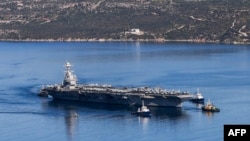
As Iranian and US diplomats concluded a third round of talks in Geneva on February 26 -- described by mediators as a “significant” step toward technical review -- the imminent arrival of the USS Gerald R. Ford carrier strike group in Israel a day later underscored the military brinkmanship shaping the standoff between Washington and Tehran.
The deployment, a massive show of force, serves as a counterweight to the optimistic language surrounding the negotiations.
The juxtaposition of diplomacy and military pressure appears deliberate. According to Mohammad Ghaedi, a lecturer at George Washington University who spoke to RFE/RL’s Radio Farda, US President Donald Trump's administration views the threat of force not as an alternative to diplomacy, but as a mechanism to drive it.

“Even if [these talks] are a last-ditch effort, the United States will not announce it publicly,” Ghaedi said. “That preserves the element of surprise in the event of an attack.”
He added that regardless of whether negotiations collapse, Washington is unlikely to formally declare their end before any potential military action, describing the current naval buildup as a key leverage point.
Ghaedi expressed skepticism about the prospects for a comprehensive breakthrough. While discussions on general principles appear to be advancing, he said a significant gap remains over nonnegotiable details, particularly uranium enrichment levels.
Speaking on February 27, Trump said he was "not happy" with Iran but added that he hadn't yet made a decision on a possible military option, as more talks were expected.
"They’d be smart if they made a deal. No nuclear weapons -- we want no nuclear weapons by Iran and they're not saying those golden words," Trump said.
Fueling speculation, on the same day the United States authorized the departure of nonemergency government personnel and family members from Israel as the carrier group approached.
Separately, US Secretary of State Marco Rubio announced that his department has designated Iran as a state sponsor of wrongful detention -- a newly created label that Tehran is the first ever to receive.
"The Iranian regime must stop taking hostages and release all Americans unjustly detained in Iran, steps that could end this designation and associated actions," Rubio said in a statement.
Speaking aboard Air Force Two, US Vice President JD Vance sought to shape expectations around the administration’s deliberations. While confirming that “potential strike action” is under active consideration, Vance stressed that any conflict would be limited in scope.
“The idea that we’re going to be in a Middle Eastern war for years with no end in sight -- there is no chance that will happen,” Vance told reporters on February 26. He reiterated that the White House prefers a diplomatic outcome but said the final decision depends on Iranian concessions.
Iranian media close to senior officials pushed back.
Nour News, affiliated with Ali Shamkhani, a top adviser to Supreme Leader Ali Khamenei, accused Vance of “feeding misinformation” to Congress about the possibility of a limited war in order to justify granting Trump broad authority in the event of a conflict.
Citing recent remarks by Khamenei, the outlet warned that any attack on Iran -- contained or otherwise -- would trigger a broader regional conflict. It said Washington risks a “dangerous miscalculation” by underestimating Tehran’s capacity to escalate, arguing that a surgical strike would not remain limited.
Ghaedi said the use of force would not eliminate Iran’s nuclear expertise and would likely be intended to compel Tehran back to the negotiating table.
“Any military action must ultimately lead to a point where Iran accepts -- through negotiation and agreement -- to forgo high-level enrichment,” he said.
Roya Maleki of RFE/RL’s Radio Farda contributed to this report.
- By RFE/RL
No Agreement Reached In Latest Round Of US-Iran Talks In Geneva
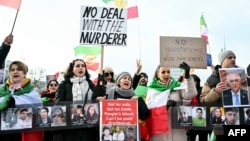
A second round of indirect talks between Iran and the United States over Tehran's nuclear program concluded in Geneva, Switzerland, on February 17 without an agreement.
"Progress was made, but there are still a lot of details to discuss," a US official told RFE/RL. "The Iranians said they would come back in the next two weeks with detailed proposals to address some of the open gaps in our positions.'
Iran's Foreign Minister Abbas Araqchi told his country's state media that the two sides had "reached an understanding" on key issues, but cautioned that it "does not mean that we will reach an agreement soon."
He added that Tehran and Washington will begin work on potential agreement documents but said no date had been set for the next round of talks.
In an interview to Fox News after the end of the February 17 talks, US Vice President JD Vance said that Iran "is not ready yet to recognize [US President Donald] Trump's red lines."
"Iran says it is not seeking nuclear weapons, but we know it is not true," Vance said. "We would very much like to resolve all the issues through a conversation." The vice president added that Trump has "many tools" to prevent the world's most unpredictable regime from acquiring the "world's most dangerous weapon."
Addressing a special session of the Conference on Disarmament at the United Nations after the talks with the United States, Araqchi said Tehran was "hopeful that negotiation will lead to a sustainable and negotiated solution which can serve the interest" of all parties involved.
He added, however, that Iran is "fully prepared to defend itself" against US strikes.
Mediated by Oman, the negotiations aim to resolve the years-long dispute over Iran's nuclear program as the United States continues to amass forces in the Arabian Sea.
President Donald Trump has warned that failure to reach a deal could lead to military strikes.
Iran's Supreme Leader Ayatollah Ali Khamenei shrugged off US threats of military action as Iranian and US negotiators began the talks.
Addressing a crowd of supporters in Tehran, Khamenei suggested that Iran has the capability to sink US warships amassing on its doorstep.
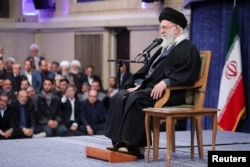
"What's more dangerous than a warship is the weapon that can send it to the bottom of the sea," he said, referring to Iran's missiles.
His comments come a day after Trump hinted at the possibility of military action if diplomacy fails.
"I don't think they want the consequences of not making a deal," Trump told reporters aboard Air Force One on February 16.
"We could have had a deal instead of sending the B-2s in to knock out their nuclear potential. And we had to send the B-2s," he added, referring to the bombing of Iranian nuclear facilities in June 2025.
On February 13, the US president said regime change in Iran would be the "best thing that could happen."
Directly addressing Trump, Khamenei said the president "will not be able to" overthrow the Islamic republic.
Trump said he would be "indirectly" involved in the Geneva talks. This marks the second round of negotiations this year between Tehran and Washington, following talks earlier this month in Muscat.
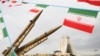
Iran has stated it is willing to submit to a stringent inspection regime of its nuclear facilities in exchange for the lifting of US sanctions. It has also sought to present its sanctions-hit economy as a lucrative investment opportunity for American firms.
However, Tehran has rejected the possibility of negotiating over issues such as its missile program and support for proxies in the region -- red lines the Trump administration insists must be addressed.
The talks were held at the Omani consulate, with mediators exchanging messages between Iranian Foreign Minister Abbas Araqchi and US Special Envoy Steve Witkoff.
Closing The Strait Of Hormuz
With the United States bolstering its military presence on in the Arabian Sea, the Islamic Revolutionary Guards Corps (IRGC) on February 16 kicked off naval drills in the Strait of Hormuz. Iranian media reported the aim was to test the operational readiness of the IRGC Navy against "possible security and military threats."
On February 17, state media announced the temporary closure of parts of the strait for "security precautions."
As tensions with the West escalate, Tehran often threatens to disrupt the strait -- a global chokepoint through which more than 20 percent of the world’s oil supply passes daily.
- By Kian Sharifi
Iran Tests Economic Pitch To Entice Trump Into Deal
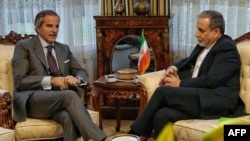
Ahead of new talks with the United States, Iran has floated possible investment opportunities in its lucrative oil and gas industry to entice President Donald Trump into a new nuclear deal that would lift crippling US economic sanctions on Tehran.
Iranian and US negotiators are scheduled to meet in Geneva on February 17 over a deal aimed at curbing Tehran's nuclear program and preventing war as Washington continues to bolster its military presence in the Middle East.
Iran's Deputy Foreign Minister for Economic Diplomacy Hamid Qanbari said on February 15 that potential energy, mining, and aircraft deals were on the table in talks with the United States.
"For an agreement to be sustainable, it is essential that the United States can also benefit in sectors with high and rapid economic returns," Qanbari told the Iran Chamber of Commerce.
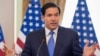
Iranian Foreign Minister Abbas Araqchi used a similar strategy in April 2025 when he pitched Iran's sanctions-hit economy as a "trillion-dollar" investment opportunity amid negotiations with Washington. But just weeks later, the United States joined Israel's bombing campaign against Iran, striking three key nuclear sites.
Ali Vaez, director of the Iran Project at the Brussels-based International Crisis Group, said there is a critical mismatch between Iran's economic incentives and Trump's approach to foreign policy.
Speaking to RFE/RL's Radio Farda, he said Trump is not particularly interested in US companies investing abroad. Instead, he prefers foreign money flowing into the United States -- like when Arab states in the Persian Gulf pledged large investments in the US economy last year.
"Iran tried to play this card last year as well, but it showed that it does not fully understand Trump's style," he said. "Using economic investment as leverage might be appealing to [Trump], but not in the way the Islamic republic has approached it."
Iran's new pitch comes amid reports that the United States and Israel have agreed to increase their economic pressure on Tehran, especially by tightening the noose on its energy sales to China, which purchases nearly 80 percent of Iran's oil exports.
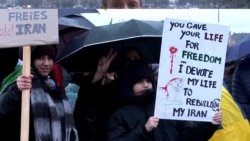
Raz Zimmt, who leads the Iran Program at the Tel Aviv-based Institute for National Security Studies, said Iran would need to make "significant economic and political reforms" to make any sort of US investment viable.
Aside from corruption and the deep involvement of the US-blacklisted Islamic Revolutionary Guards Corps (IRGC), Iran's economy suffers from a lack of transparency, he said.
Iran is among only three countries on the blacklist of the global anti-money laundering watchdog, the Financial Action Task Force.
"There is no reason for [Iran's investment pitch] to resonate" with the United States, Zimmt argued.
Roya Karimi Majd of RFE/RL's Radio Farda contributed to this report.
- By RFE/RL
In Munich, UN Nuclear Chief Says New Inspection Regime With Iran 'Technically Possible'
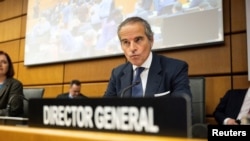
Developing a inspection regime to underpin any new Iran nuclear arrangement is "absolutely possible," though extremely difficult, the head of the United Nations atomic watchdog said.
Speaking at a panel discussion at the Munich Security Conference, Raphael Grossi, of the International Atomic Energy Agency, said Iran's nuclear landscape had changed drastically following the US bombing of Iran's nuclear facilities in Fordow, Isfahan, and Natanz last year.
"This is absolutely possible, and it is terribly difficult, but it is technically possible and it is politically even viable," Grossi said on February 13, referring to the challenge of establishing a credible inspection regime.
The physical infrastructure of Iran's nuclear program has been largely damaged, he said, and that future monitoring would need to focus not only on what remains but on how Tehran's nuclear capabilities could evolve going forward.
Grossi noted that while agency inspectors have returned to Iran and are monitoring all undamaged facilities, they still lack access to sites struck during the bombing.
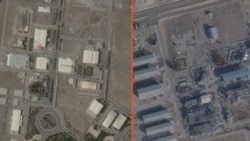
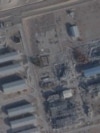
Iran 'Buries' Nuclear Site As Satellite Images Reveal US Military Buildup
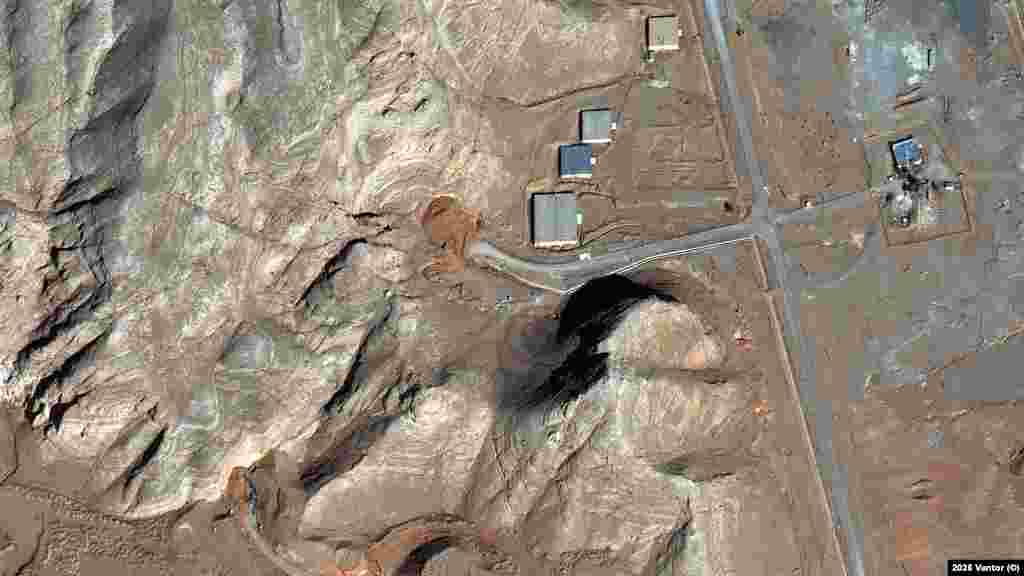
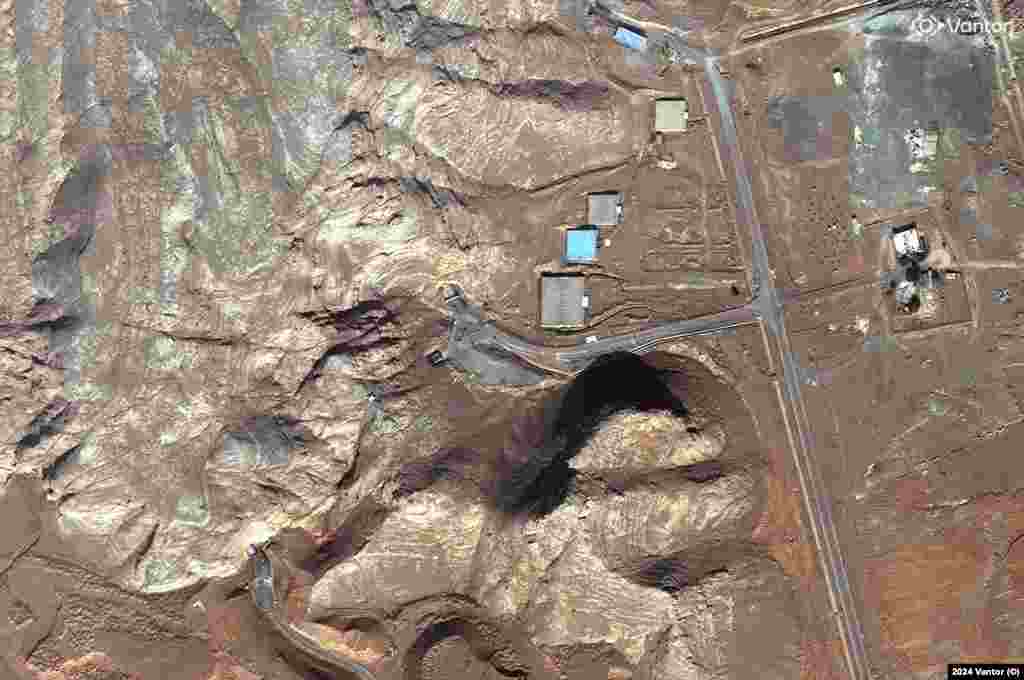
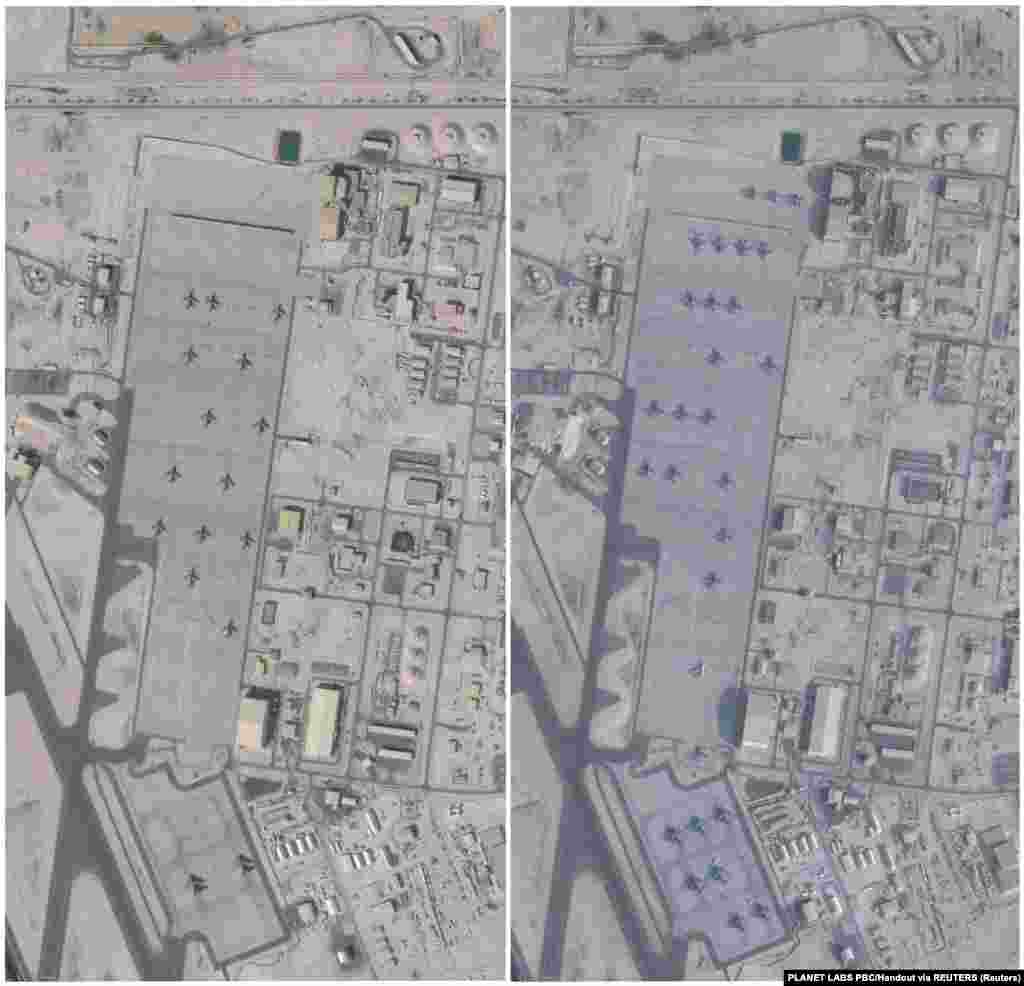
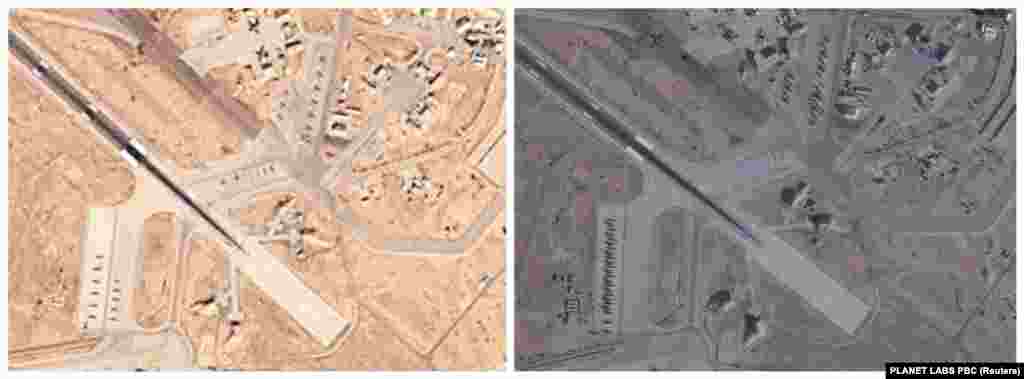
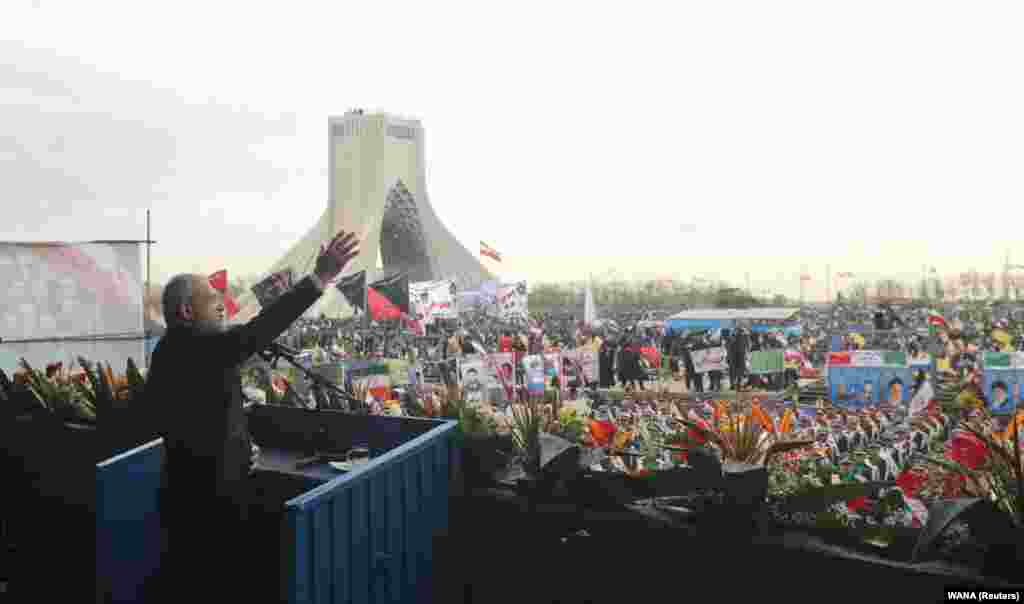
His remarks come as diplomatic engagement between Tehran and Washington continues. The United States, meanwhile, has bolstered its military presence, deploying a second aircraft carrier to the Middle East in preparation for a potential strike.
Grossi underscored the delicate balance facing negotiators: upholding Iran's right to peaceful nuclear activity under the Nuclear Non‑Proliferation Treaty while ensuring robust verification to build confidence and avoid escalation.
"We know perfectly well what needs to be checked and how to check it," he said, adding that light may be visible "at the end of the tunnel" if progress continues.
Iran insists that any agreement with the United States can only focus on the nuclear program, rejecting demands to negotiate restrictions on its ballistic missiles.
White House special envoy Steve Witkoff and Iranian Foreign Minister Abbas Araqchi held indirect talks in Oman on February 6. Both sides said more talks would be held soon, though no date has been set.
- By Kian Sharifi and
- RFE/RL's Radio Farda
Will Iran Budge On Missile Program For A Deal?
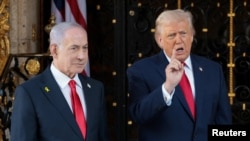
US President Donald Trump publicly emphasized diplomacy with Iran following his February 11 meeting with Israeli Prime Minister Benjamin Netanyahu. But experts say the deeper dispute may center not on Iran’s nuclear program, but on its expanding missile capabilities.
After the meeting, Trump signaled that negotiations with Tehran should continue. Netanyahu, however, has pushed for Iran’s missile program to be formally included in any agreement -- something Tehran has repeatedly rejected.
Speaking to RFE/RL’s Radio Farda, UK-based defense analyst Hossein Aryan argued that Israel’s long-term strategic objective extends beyond the nuclear issue.
“If we look at this issue in a broad picture, Israel’s goal is to drastically reduce Iran’s defensive capabilities, both under the Islamic republic and even in the period after it,” he said.
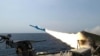
According to Aryan, Israel views Iran’s missile arsenal as its most significant military asset and “its only deterrent capability.”
While other regional states possess ballistic missiles, he said Israeli strategists see Iran’s program as fundamentally different because it has become increasingly indigenous and self-sustaining.
Israeli estimates suggest that, if left unchecked, Iran could expand its arsenal to as many as 8,000 missiles by 2028. Such projections help explain Israeli concerns about future saturation attacks overwhelming missile defense systems.
“That is precisely why Netanyahu’s focus is not currently on the nuclear program, because they believe that part is under control or not presently at a critical stage; his main focus is on stopping Iran’s military and missile machine,” Aryan said.
Iran’s nuclear program suffered a major setback after the United States joined Israel’s aerial campaign against Iran in June 2025, targeting nuclear facilities in Fordow, Isfahan, and Natanz.
No Treaty Banning Missiles
The missile issue presents a major diplomatic obstacle. Tehran insists its conventional missile program is nonnegotiable, and Aryan noted that no binding international treaty has any outright prohibition on missile development.
Frameworks such as the Missile Technology Control Regime (MTCR) and the Hague Code of Conduct are voluntary arrangements rather than enforceable bans.
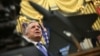
At the same time, Aryan said US military movements near Iran suggest contingency planning if negotiations fail. He characterized the deployments as part deterrence, part pressure tactic.
“Some of this is media shaping, and part of it is brinkmanship -- to push Iran toward diplomacy and extract maximum concessions,” Aryan said. Still, he expressed doubt that such pressure would compel the Islamic republic to scale back or abandon its missile program.
'Deception Operation'
While Trump and Netanyahu share the goal of stopping a nuclear Iran, they differ on the breadth of a potential deal -- at least publicly. Wary of a narrow nuclear agreement, Netanyahu traveled to Washington specifically to ensure missiles are a nonnegotiable part of any US proposal.
Some analysts urge caution in interpreting Trump’s public optimism for diplomacy.
“In my view, Trump’s statements do not necessarily indicate anything specific, and one cannot rely on them with certainty,” said Mohammad Ghaedi, a lecturer at George Washington University.
He suggested that apparent differences between Washington and Israel over what constitutes an acceptable deal could be strategic messaging.
“These remarks may reflect differences between the United States and Israel, but they could also be considered a deception operation, meaning he speaks of gaps and disagreements while simultaneously preparing for a surprise attack,” Ghaedi said.
Although the United States has bolstered its military presence in the region, Ghaedi assessed the likelihood of imminent strikes as relatively low.
Instead, he anticipates intensified sanctions and economic pressure. He pointed to remarks by US Treasury Secretary Scott Bessent at the World Economic Forum in Davos, where Bessent credited sanctions with weakening Iran’s economy and fueling domestic unrest.
Still, Ghaedi said Trump, potentially influenced by regional actors such as Qatar and Turkey, might accept a temporary arrangement, even if Netanyahu insists that any agreement must be permanent and include limits on Iran’s missile program.
Iran and the United States held talks earlier this month in Oman, and negotiations are expected to continue. But Tehran maintains that discussions can focus only on its nuclear program. On February 11, Ali Shamkhani, a senior adviser to Iran’s supreme leader, reiterated that “the missile issue is not in the negotiators’ remit.”
Mohammad Zarghami and Roya Maleki of RFE/RL's Radio Farda contributed to this report.
- By RFE/RL
Fragile US-Iran Talks Salvaged For Oman Summit
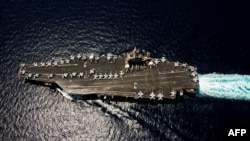
In a dramatic reversal that has kept global markets and regional allies on edge, the United States and Iran have confirmed they will move forward with high-stakes negotiations in Muscat on February 6.
The talks, which appeared to have collapsed late on February 4, represent what is largely seen as a last-chance effort to avert a major military escalation in the Persian Gulf.
The path to the Omani capital was anything but smooth. After a dispute over the venue and the agenda -- with Tehran pushing for a bilateral meeting in Oman and Washington initially insisting on a multilateral summit involving regional powers in Turkey -- the Trump administration briefly called off the engagement.
However, following a flurry of "high-level" messages from at least nine regional partners, including Saudi Arabia and Egypt, the White House relented. While the United States agreed to the change of scenery to Muscat, senior officials emphasized that the change in location does not signal a change in resolve.
Iran Foreign Minister Abbas Araqchi wrote on February 4 that "nuclear talks" were set to be held in Muscat at 10 a.m. local time. A White House official later confirmed to RFE/RL that the meeting would go ahead.
Secretary of State Marco Rubio, speaking from Washington on February 4, made it clear that the United States is not interested in a narrow "nuclear-only" conversation. Rubio confirmed that while the White House is prepared to engage, it has set a high bar for what constitutes a successful meeting.
"In order for talks to actually lead to something meaningful, they will have to include the range of their ballistic missiles, their sponsorship of terror organizations, and the treatment of their own people," Rubio told reporters.
Rubio also drew a sharp line between the Iranian leadership and the public, particularly in the wake of last month's bloody crackdown on nationwide, antiestablishment protests.

"The leadership of Iran at the clerical level does not reflect the people of Iran," he said. "I know of no other country where there’s a bigger difference between the people that lead the country and the people who live there."
'Weird' Country To Talk To
US Vice President JD Vance echoed Rubio’s skepticism, highlighting the inherent difficulty of negotiating with a country where the ultimate decision-maker remains behind a curtain of clerical authority.
In a February 4 interview on The Megyn Kelly Show, Vance described the diplomatic dance as "absurd," pointing out that unlike other world powers, the United States cannot simply call the person truly in charge.
"It’s a very weird country to conduct diplomacy with when you can’t even talk to the person who’s in charge," Vance said, referring to Supreme Leader Ayatollah Ali Khamenei.
Since succeeding Ayatollah Ruhollah Khomeini, the founder of the Islamic republic, as Iran’s supreme leader, Khamenei has not left the country and has almost exclusively met with leaders of country that are either friendly toward Tehran or otherwise not deemed overtly hostile.
As US envoy Steve Witkoff prepares to meet Araqchi, the atmosphere remains combustible. The United States continues to bolster its military presence in the region, and Iran warns that any strike will result in a regional war.
Vance warned that while the Trump prefers a nonmilitary resolution, the clock is ticking.
"If [Trump] feels like the military is the only option, then he’s ultimately going to choose that option," he said.
- By Kian Sharifi and
- Hannah Kaviani
The Key Sticking Points To A US-Iran Deal Aimed At Averting War
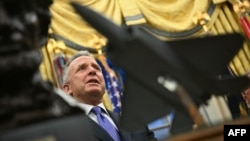
White House special envoy Steve Witkoff and Iranian Foreign Minister Abbas Araqchi will meet on February 6 in a last-ditch attempt to strike a deal aimed at averting war.
US President Donald Trump has deployed major military assets to the Persian Gulf as his administration weighs possible strikes against Tehran.
Iran is attempting to limit the scope of the talks to its nuclear program. But the United States is seeking a deal that would also restrict Iran’s ballistic missiles program and end Tehran’s support for armed groups in the Middle East.
Trump wants a deal because “he prefers it to a war with a large country like Iran,” said Damon Golriz of The Hague University of Applied Sciences.
“If an agreement is reached, it will be in the Islamic republic’s interest -- even an agreement in which the Islamic republic appears, in the public eye, to have surrendered,” he added.
To reach a deal, US and Iranian envoys will have to navigate several sticking points that have scuttled previous negotiations.
No Enrichment, No Stockpile
The United States is demanding that Iran entirely stop enriching uranium and give up its stockpile of around 400-kilograms of highly enriched uranium, steps that would prevent Tehran from building a nuclear weapon.
Iran has previously refused those demands but could make concessions given its weak bargaining position, experts say.
Iran's clerical establishment is at its weakest point in decades, facing unprecedented unrest and an economic collapse at home and a massive US military buildup on its doorstep.
Iran’s nuclear program is also in tatters. The United States bombed Tehran’s key underground enrichment sites in Fordow and Natanz during the 12-day war between Iran and Israel in June.
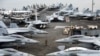
One potential hitch is recovering Iran’s stockpile of highly enriched uranium, which is “mixed with rubble” following US air strikes on underground nuclear sites last year, said Tariq Rauf, former verification chief at the International Atomic Energy Agency (IAEA), the UN nuclear watchdog.
Rauf also pointed out that one of the US "Bunker Buster" bombs used in the bombing failed to explode.
"There is still 2,000-plus kilograms of high explosives sitting down there in Natanz... which could be very unstable and could explode if disturbed," he told RFE/RL’s Radio Farda.
One way to address the enrichment issue is going back to a proposal from May 2025 -- a regional enrichment consortium, allowing Iran to continue enriching uranium but only to low levels suitable for civilian energy purposes.
A consortium is usually established in a country that already has a nuclear program. The only country in the Middle East with an official nuclear program is the United Arab Emirates, but the Gulf state surrendered its right to enrich uranium and imports nuclear fuel from abroad.
Missiles And Proxies
The United States also wants to impose limits on the range and number of Iran’s ballistic missiles that would make it impossible for Tehran to hit Israel.
Iran currently has a 2,000-kilometer limit on the range of its missiles. Its medium-range missiles can hit Israel, while its close-range missiles can strike US military bases in the Persian Gulf region.
The number of Iran’s medium-range missiles is unknown. Israel targeted Iran's missile-production facilities and missile launchers during the war in June. But Iran is believed to still have several thousand close-range ballistic missiles.
Iran has categorically refused any limits on its missile program, which it says is pivotal to its defense.
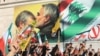
The Islamic republic has also rejected abandoning armed proxies and Tehran-backed militant groups in Lebanon, Iraq, and Yemen. Iran considers its so-called axis of resistance a key part of its deterrence against Israeli and US aggression.
The network largely stayed on the sidelines during Israel’s aerial campaign in June, but analysts suggest it might come to Iran's aid should the talks fail and war with the US breaks out.
Expert Tells RFE/RL Iran Accelerating Construction of Underground Nuclear Site After US Strikes
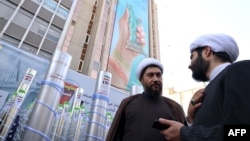
US strikes on three Iranian nuclear sites in June slowed down the nuclear program, likely buried Iran’s stockpile of highly enriched uranium, and effectively paused enrichment activities.
The attacks prompted Iran to reevaluate its nuclear strategy, and after declaring the end of international oversight of its nuclear program due to the expiry of the 2015 nuclear deal in October, Tehran -- which maintains it has never and will not seek to weaponize its nuclear program -- now operates with strategic opacity.
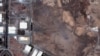
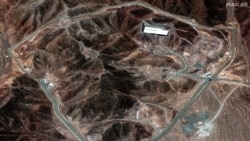
Recent satellite images analyzed by experts at the Washington-based Center for Strategic and International Studies (CSIS) suggest that while there is little to no activity at the three sites in Isfahan, Natanz, and Fordow, Iran has stepped up construction at a site buried in Pickaxe Mountain near Natanz.
Iran began building the facility in 2020 after a fire broke out in the Natanz enrichment facility.
It was initially said to be a centrifuge assembly site, but recent developments suggest that Tehran may be expanding its original plans for the site, according to Joseph Rodgers, a deputy director of the CSIS’s Project on Nuclear Issues.
Rodgers spoke to RFE/RL’s Radio Farda on November 11.
RFE/RL’s Radio Farda: Can you briefly explain what you saw in the satellite images you analyzed?
So, we've acquired recent satellite imagery from the aftermath of the US strikes in June, and we've been monitoring the three sites that the US struck at Isfahan, Natanz and Fordow.
And what we see is that there is not a ton of activity at those sites. In fact, there’s still debris in the road outside of many of the buildings at Fordow and Isfahan, which indicates that there's not an extensive recovery effort to grab, and sort of salvage, materials or equipment from the buildings, because that would require that they drive trucks up and they can't pass through these debris.
But what we do see is just south of Natanz, the construction of an underground facility. And it appears that in the aftermath of the June strikes, construction has really stepped up at this other facility that is called Pickaxe Mountain.
This is the same facility we heard about before the June war.
That's correct. Construction has really stepped up. It appears that they're digging deep into the mountain. There's still underground tunneling going on at Pickaxe Mountain. And there's also the construction of a security perimeter fence. And that might be driven by security concerns about having [Israel’s] Mossad or other intelligence agencies go and put equipment on the mountain. Maybe they try and sneak in and put a seismic monitoring sort of equipment or something in the facility.
Let’s take a step back. Why do you think there’s not much activity at the three sites hit in June?
I think this gets to a broader point about the status of the Iran nuclear program, which I think if I had to use one word to describe, I would describe as limbo.
I think the Iranians are figuring out what to do next with their program. And they've instead banked on constructing facilities like Pickaxe Mountain. Rather than trying to make extensive immediate progress towards rebuilding enrichment facilities or trying to salvage any equipment that was at the sites that the US struck.
It's easier for Iran right now to build facilities that could sort of be used for nuclear activities in the future, but not directly accumulate the political costs of taking immediate action on nuclear activities right now..
You spoke about protective measures Iran is taking at the new site. Didn’t the three sites that were struck by the US have similar security measures?
There are many ways that you can protect a facility against attacks, and there's many types of attacks that you'd want to protect from.
So, at other Iranian nuclear sites, we see, fences, for example, and fortifications around the perimeter of these sites. And that's likely because they're trying to prevent foreign spies from coming in and putting monitoring equipment on the perimeter. Because if you're posting radionuclide detectors or things that could sort of send back information about what's going on at the site, then you need perimeters – fences -- to prevent that.
Additionally, we see at Pickaxe Mountain the construction of really deeply buried tunnels, which fortifies against many of the penetrating bombs that Israel or the US could use. I think, at the tunnel entrances to Pickaxe Mountain, we see fortified entrances that actually have a curve in them. And that curve can prevent, if somebody tries to collapse the tunnel or explode munitions just outside of the tunnel entrance, then the curve will force the blast to hit a wall instead of going deep inside of the mountain with the full explosive force of the shockwave.
There's many different types of fortifications that you use at military sites, and we see many of those signatures at Pickaxe Mountain as well.
Some reports say the Pickaxe Mountain site is planned to be a new enrichment facility. Based on your assessments, what do you think the purpose of this site will be?
In 2020, when Iran started the construction of the site, Iranian leadership said that it was going to be used for centrifuge assembly. So, not an enrichment site, but instead for assembling the centrifuges that they would use at other enrichment sites. However, since the June strikes, we've seen a lot more tunneling into the facility. And that might indicate that Iran has decided to shift additional activities deeper underground.
One outcome is that Iran may choose to shift some of the metallurgy and the construction of some of the activities that were going on at Isfahan. For example, taking yellow cake and making it into uranium hexafluoride, the gas that you use to spend uranium in centrifuges.
I think the worst possible outcome is if Iran is building an undeclared enrichment site at Pickaxe Mountain. But that's all really speculative.
Again, the only thing that officially Iran has stated at the government level is that Pickaxe Mountain is going to be used for centrifuge assembly. And, and that activity used to happen at Natanz, but was subject to sabotage in 2020.
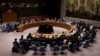
As a signatory to the nuclear Non-Proliferation Treaty (NPT), do you think Iran will begin enriching uranium at an undeclared facility? And if it does, what would that mean for its status as an NPT signatory?
If Iran decides to declare or to pursue undeclared uranium enrichment at a secret site, then that would be a very clear violation of the NPT and it would also result in larger international backlash.
I think that if Iran decides to pursue enrichment at an undeclared level and the United States finds out, then the likelihood of US retaliation is very high.
At the international level with respect to the NPT, only a very small handful of countries have tried to develop undeclared enrichment sites and pursue enrichment. It has turned out very poorly for all of them. So, I don't think that it's a productive way forward for Tehran right now.
But if they decide to, then it's going to be very difficult for them to be successful at a clandestine program. I think it is likely that Israel and the United States would find out fairly quickly.
The Israeli and US strikes were so effective because Mossad has quite clearly deeply penetrated the Iranian nuclear program.
Do you think despite Iran being secretive about this site and building it separately from larger facilities, it will eventually allow inspectors to visit it?
I think that the IAEA [International Atomic Energy Agency] is going to increasingly put pressure on Iran to allow access to Pickaxe Mountain.
The IAEA has requested access for many years and has been told no. But interestingly, when the president of Iran was confronted about three or four weeks ago with some Washington Post reporting on Pickaxe Mountain, he said that we need to allow IAEA inspectors to go visit the site. That might have just been political posturing and a quick response to what was a question he wasn't expecting. But I do think that there is increasing pressure to allow IAEA access.
Any part of a future deal between Iran and the IAEA will certainly involve conversations about Pickaxe Mountain and I think about the status of the former enrichment sites at Fordo and Natanz, as well.
- By Kian Sharifi and
- Mehran Karimi
Anxious Iranians Brace For Impact Of Returning UN Sanctions
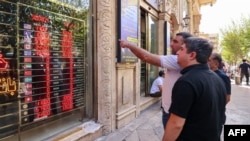
UN sanctions on Iran, lifted under the 2015 nuclear deal, snapped back over the weekend despite Tehran’s efforts to prevent such a move.
Iranian officials call the return of the sanctions “illegal” and insist the public will endure them, but across the political spectrum, debate is already heating up over what the country should do next.
Conservative voices remain defiant. Hamshahri, a newspaper linked to Tehran Municipality, downplayed the sanctions’ impact.
“The enemy is trying to rebrand the same old sanctions through propaganda, making them seem larger and more threatening in people’s minds than they actually are,” wrote chief editor Mohsen Mahdian.
He argued that as long as people remain wary of exaggerated claims, Iran will stay resilient.
The hard-line judiciary echoed this stance. The Tehran Prosecutor’s Office warned the media to exercise caution in reporting, stressing that coverage must not “undermine the public’s sense of security.” Violations, it added, “will be met with appropriate action.”
Meanwhile, reformist commentators question the rationale behind Western demands, such as calls to reduce Iran’s missile range. “Reducing missile capabilities would mean complete surrender and increase the risk of war,” wrote Kiumars Ashtari in Sharq.
Ordinary Iranians Face Rising Hardship
For ordinary Iranians, the return of sanctions hits where it hurts most: their wallets.
“Inflation is out of control, and with the sanctions back, prices are bound to rise,” said one woman in a message to RFE/RL’s Radio Farda. She criticized officials and braced for tougher times ahead. “Curse those who brought us into this situation,” she added.

Another citizen described how families are forced to adjust their spending in a country where the inflation rate in August rose to 42.4 percent.
“People change how they save and how they indulge themselves,” he said. “This puts pressure on markets like gold and the dollar, driving prices up and affecting everything else. In the end, this behavior keeps money from flowing back into the economy.”
These personal experiences highlight a cycle that decades of sanctions have reinforced: ordinary people bear the brunt, while systemic problems remain.
What The Sanctions Mean For Iran
While ordinary Iranians feel the pinch, the newly reinstated UN sanctions mainly target Iran’s military and nuclear programs. They include a full arms embargo, bans on missile and nuclear technology transfers, asset freezes, and travel restrictions for key officials and affiliated organizations.
All UN member states are now required to halt weapons and sensitive technology sales to Iran and block financial transactions connected to its nuclear and missile programs.
The direct economic impact may be limited -- US and EU sanctions have already restricted Iran’s oil exports and access to global finance -- but the UN measures deepen the country’s isolation. Legal arms imports are now impossible, and foreign investment faces even greater hurdles.
Strategically, the sanctions could have a bigger bite than financially. They constrain Iran’s missile program, slow nuclear advances, and limit diplomatic maneuvering with world powers and regional rivals. With nuclear monitoring challenges and rising regional tensions, these restrictions intensify Iran’s diplomatic isolation and raise the risk of military confrontation, particularly with the United States and Israel.
Even in areas like scientific research or military modernization, the sanctions make it harder for Iran to collaborate internationally, forcing it to rely on workarounds with countries like Russia or China -- options that are increasingly risky and limited.
- By Kian Sharifi
Nuclear Inspectors Return To Iran But Unlikely To Stop Snapback Sanctions

Nearly two months after Tehran halted cooperation with the International Atomic Energy Agency (IAEA), the UN's nuclear watchdog has sent inspectors back to Iran just as the country faces the possible re-imposition of sweeping international sanctions.
Iran suspended inspections in July, citing the US and Israeli bombing of key facilities in June. But the inspectors' return is mostly symbolic.
For now, the IAEA's mission -- confirmed by Director General Rafael Grossi -- is largely preparatory, focusing on "practical modalities" for restoring monitoring at scattered facilities, some of which were heavily damaged in the strikes.
Without broader access and cooperation, it is unlikely to delay the looming "snapback" of UN sanctions, which European powers plan to trigger at the end of the month.
Even if the Iran permits site visits, access to sensitive locations such as Fordow, Natanz, and Isfahan -- all struck by the US -- may remain off-limits, limiting the IAEA's ability to verify Iran's nuclear activities.
A deeper obstacle is Iran's stockpile of enriched uranium. Roughly 400 kilograms enriched close to weapons-grade remain unaccounted for, raising alarm in Western capitals.
The E3 -- Britain, France, and Germany -- have made clear that continued sanction relief hinges on three conditions: full resumption of inspections, transparent accounting of uranium stockpiles, and credible engagement in diplomacy with Washington. On the last point, Iran has repeatedly, including just last weekend, refused direct talks with the United States.
On August 27, Iranian Deputy Foreign Minister Kazem Gharibabadi said future cooperation with the IAEA would likely end should the E3 nations trigger the snapback sanctions.
"If this action is taken, the path of interaction we have now opened with the International Atomic Energy Agency will also be completely affected and will probably stop," Gharibabadi told state television.
Also on state TV, Iranian Foreign Minister Abbas Arahchi said that "no final text has been approved on the new cooperation framework with the IAEA and views are being exchanged."
Behnam Taleblu, senior director of the Iran program at the Washington-based Foundation for Defense of Democracies, told RFE/RL's Radio Farda it was "highly unlikely" the Europeans would delay triggering snapback sanctions.
"The only way that could happen," he said, "is if inspectors can fully resume monitoring and if there's real political will in Tehran for diplomacy. In that case, sanctions could be postponed for three to six months…. But I see that as highly unlikely."
Compounding matters is Iran's deep mistrust of the IAEA, which it accuses of political bias and of failing to condemn Israeli and US military actions. Hardline outlets have gone further, with the newspaper Kayhan even calling for Grossi to be "tried and executed" if he sets foot in Iran.
Reza Jamali of RFE/RL's Radio Farda and AFP contributed to this report.
- By Kian Sharifi
What Are 'Snapback' Sanctions On Iran?
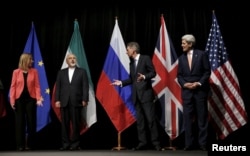
Britain, France, and Germany -- the so-called E3 -- have warned they will trigger an oft-threatened but never-used mechanism at the United Nations that could reimpose global sanctions on Iran. Their deadline: the end of August, unless Tehran makes tangible progress in nuclear talks with the United States.
The "snapback" mechanism is a special process created alongside the 2015 Iran nuclear deal, formally endorsed by UN Security Council Resolution 2231. Its purpose is to ensure that if Iran seriously violates the deal, the international community can swiftly restore the full set of UN sanctions that existed before the agreement without getting bogged down in great-power vetoes or endless negotiations.
Although "snapback" is a nickname rather than a term in the legal text, it has become the common shorthand for the automatic return of sanctions. The E3 have already notified the UN that they are prepared to use it, a step that could dramatically escalate tensions over Iran's nuclear program. The mechanism itself is due to expire on October 18, giving the Europeans only a narrow window to act.
How Do UN Sanctions Snap Back?
The nuclear deal, formally known as the Joint Comprehensive Plan of Action (JCPOA), includes a dispute process. If a participant in the deal, such as the E3 states, believes Iran is in "significant non-performance," they can raise the issue through the JCPOA's built-in mechanisms and ultimately refer it to the UN Security Council.
Once the issue reaches the UNSC, a 30-day clock starts. During those 30 days, the council would need to adopt a new resolution to continue sanctions relief for Iran. If that resolution does not pass in time, the old UN sanctions that were lifted under the 2015 deal automatically come back into force. No further vote is required.
Iranian Foreign Minister Abbas Araqchi has insisted for weeks that the E3's legal authority to trigger the mechanism is "highly questionable" because they demand Iran abandon uranium enrichment -- which he argues runs contrary to the JCPOA.
Their argument is that the E3 are breaking the deal, and therefore no longer parties to it.
But "there is no merit to this argument," said Richard Nephew, who served as the lead sanctions expert for the US team that negotiated the JCPOA.
"There is no mechanism by which another JCPOA participant can kick a JCPOA participant out of the agreement," he told RFE/RL. "The E3 never withdrew like the United States, so they maintain their rights."
Iran has also threatened to respond, including by withdrawing from the nuclear Non-Proliferation Treaty (NPT).
Iranian diplomats will meet their European counterparts on August 28 in a last-ditch attempt to prevent the mechanism from being triggered.
Why It's Called 'Snapback'
A key feature -- and the reason it's called "snapback" -- is that the process cannot be blocked by a veto. Normally, one of the five permanent UNSC members could veto a resolution to impose sanctions. Here, the system is reversed: To keep sanctions relief in place, the council must pass a new resolution.
Any veto of that resolution prevents it from passing, and because the default is that sanctions return if no resolution is adopted within 30 days, a veto actually speeds the snapback rather than stopping it. In practice, once a participant triggers the process, it is very difficult to prevent the old sanctions from coming back.
Iran says it is working with China and Russia -- both permanent members of the UNSC and parties to the JCPOA -- to "stop" the process. That, Nephew says, is not legally possible.
He noted that the only argument Beijing and Moscow can make is that the nuclear deal no longer exists, "but, that's really, really hard to do."
What Sanctions Will Return?
If the snapback process is successful, the UN will restore the six Iran-related Security Council resolutions adopted between 2006 and 2010.
These include wide-ranging restrictions such as a UN conventional arms embargo, measures curbing activities related to ballistic missiles capable of delivering nuclear weapons, and an array of asset freezes, travel bans, and other proliferation-related rules.
In practical terms, this means reinstating a broad, UN-backed legal framework that governments, banks, shippers, insurers, and technology providers take seriously.
Will This Affect Iran Much?
Iranian officials have been downplaying the potential impact of renewed UN sanctions, claiming the effects are exaggerated.
Even though the United States already maintains extensive unilateral sanctions that heavily constrain Iran's economy and energy exports, renewed UN sanctions would still matter.
Nephew argued that Iran's nuclear and missile trade would be hit hardest. "Both of those things will be illegal, along with the dual use imports that Iran will need to rebuild these programs," he said.
Iran's insistence that the sanctions won't hurt much contrasts with its warnings of retaliation if they are reimposed.
"The sanctions cannot be so bad that they'd withdraw from the NPT and so meaningless as to not matter," Nephew said.
- By RFE/RL
Iranian Lawmaker Warns UN Sanctions Could Lead To NPT Withdrawal
An Iranian lawmaker has warned European powers that reimposing UN sanctions against the Islamic republic could compel Iran to withdraw from the nuclear Non-Proliferation Treaty (NPT).
Manouchehr Mottaki, a lawmaker from Tehran and a former foreign minister, said on August 13 the conservative-leaning parliament has its "finger on the trigger on leaving the NPT" if the Europeans "take a step toward" re-imposing UN sanctions.
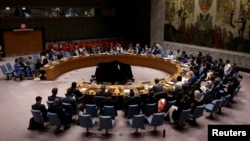
Britain, France, and Germany -- collectively known as the E3 -- have threatened to initiate the process of reinstating UN sanctions if there is no diplomatic breakthrough between Iran and the United States by the end of August.
The so-called snapback of UN sanctions is a provision under the 2015 nuclear deal, formally known as the Joint Comprehensive Plan of Action (JCPOA). UN embargos on arms, banks, and nuclear equipment were lifted a decade ago under the agreement, but they can be reimposed before an October 15 deadline.

A European source told RFE/RL last month that the E3 have offered to extend the deadline once and only if there is meaningful progress in talks between Tehran and Washington.
The Financial Times reported on August 13 that the E3 have informed the UN they are prepared to trigger the snapback mechanism unless Iran returns to the negotiating table.
"The moment they take their request to the UN Security Council, we need 24 hours to approve withdrawal from the JCPOA," Mottaki said.
Iran and the E3 held talks last month in Istanbul at the level of deputy foreign ministers to discuss Tehran's nuclear program. But no dates have been set for further talks and Tehran has given no indication that negotiations with Washington will resume.
However, Iran's president, Masud Pezeshkian, this week slammed critics of dialogue with the United States, saying there was no point in rebuilding nuclear sites damaged in US and Israeli strikes without pursuing diplomacy with Washington.
His comments upset hard-liners, who accused the president of projecting a "weak" image of Iran.
Iran and the United States were scheduled to hold a new round of talks on June 15, but the meeting was scrapped after Israel and the United States bombed Iranian nuclear facilities.
The two sides have yet to agree to meet, with Tehran saying it cannot trust Washington and the White House questioning whether there is any merit in further talks given the damage caused to Iran’s nuclear sites.