


Accessibility links

Breaking News

Back From The Dead: Ukraine Unveils Ruse On Death Of Anti-Putin Neo-Nazi Militia Leader

Listen
5 min

This audio is automated

Learn more

Led by Denis Nikitin, the Russian Volunteer Corps staged cross-border raids in to Russian in 2023 and 2024.

He was the right-wing Russian commander of a notorious Ukrainian-backed paramilitary group, whose cross-border raids in 2023 rattled Russian officials.

Denis Nikitin’s leadership of the Russian Volunteer Corps put him the cross-hairs of Russian officials.

So when reports emerged last week that he had been killed in a drone attack in eastern Ukraine, Russian war bloggers and nationalist commentators were eager to dance on his grave.

Not so fast, according to the enigmatic head of Ukraine’s military intelligence agency: Nikitin, who also uses the name Kapustin or White Rex, is in fact alive. And the $500,000 bounty that Russia put out on his head was purportedly collected by Ukrainians themselves.

The plot involving Nikitin is a small window into some of the psychological warfare, and feint-and-ruse ploys known widely as maskirovka, that Ukrainian forces -- not to mention Russian forces -- have used over the course of Moscow’s nearly four-year-old all-out war on Ukraine.

Prior to the onset of the invasion, Nikitin, a former mixed martial arts fighter, was not widely known outside of neo-Nazi groups and “ultra” soccer hooligans in Russia and elsewhere. He launched a clothing-and-apparel line known as White Rex, a nod to his white nationalist ideology.

His activities in right-wing subculture in Germany drew the attention of law enforcement in North Rhine-Westphalia state, which called him "one of the most influential neo-Nazi activists and the creator of a professional fighting subculture."

About a year after the launch of the Kremlin's February 2022 invasion, a militia group made up mainly of Russians began conducting raids from Ukraine into Russia.

At the time, Russia’s invasion had faltered, and Ukrainian officials were looking to further rewrite the narrative of the war, to both bolster domestic morale but also to show Western backers Kyiv’s capacity for innovative and daring thinking.

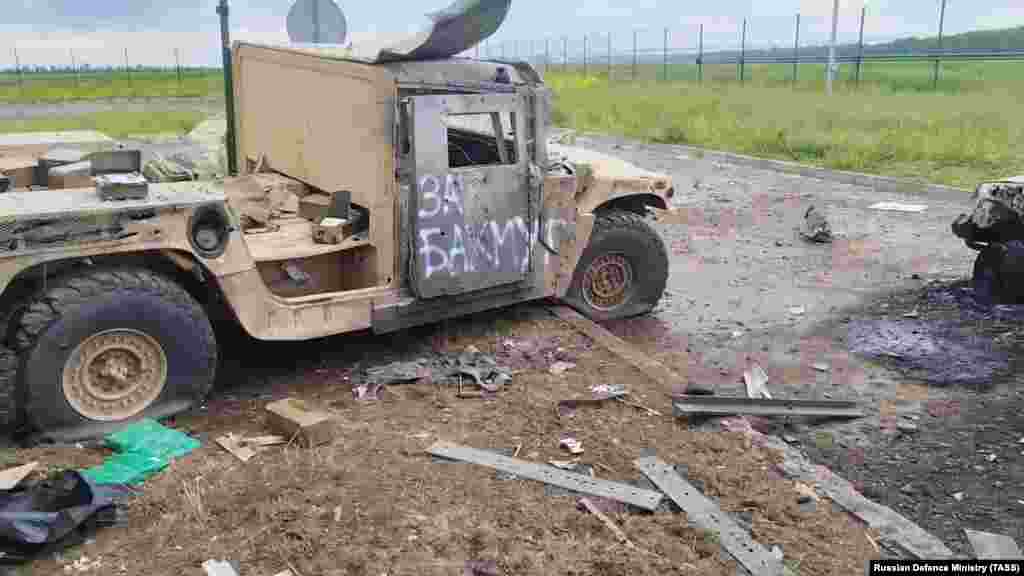
In May 2023, fighters from the Russian Volunteer Corps staged the first of a series of raids into Russia’s Belgorod region. Russia said it had repelled the attack, and it released photographs of US military vehicles -- including Humvees -- that it said were destroyed.

Though Ukraine officials denied involvement, the presence of US-supplied military vehicles by a murky paramilitary prompted concern from the US administration, which at the time was still cautioning restraint from Ukraine.

Other similar militias include the Free Russia Legion.

As Ukraine built up its confidence, and capacity, it sent its own regular forces on cross-border raids early last year.

Humvees, Wreckage After 'Cross-Border Raid' Into Russia
This image, showing U.S.-made Humvees in an apparent explosion crater, is from a video released by Russian authorities on May 23 after what is described as a cross-border raid into Russia's Belgorod region that began a day earlier.
1/8 This image, showing U.S.-made Humvees in an apparent explosion crater, is from a video released by Russian authorities on May 23 after what is described as a cross-border raid into Russia's Belgorod region that began a day earlier.
Photos show damage allegedly caused by Ukrainian-based Russian militants after a suspected armed incursion into Russia's Belgorod region.
A damaged vehicle with &quot;For Bakhmut&quot; spray-painted on its door is seen in a video grab from footage believed to have been taken inside Russia on May 23.&nbsp;<br />
<br />
The raid into Belgorod was reportedly launched by the Russian Volunteer Corps and the Free Russia Legion. Both groups are made up of ethnic Russians who have fought alongside the Ukrainian military against the Russian invasion.
2/8 A damaged vehicle with "For Bakhmut" spray-painted on its door is seen in a video grab from footage believed to have been taken inside Russia on May 23. 

The raid into Belgorod was reportedly launched by the Russian Volunteer Corps and the Free Russia Legion. Both groups are made up of ethnic Russians who have fought alongside the Ukrainian military against the Russian invasion.
Photos show damage allegedly caused by Ukrainian-based Russian militants after a suspected armed incursion into Russia's Belgorod region.
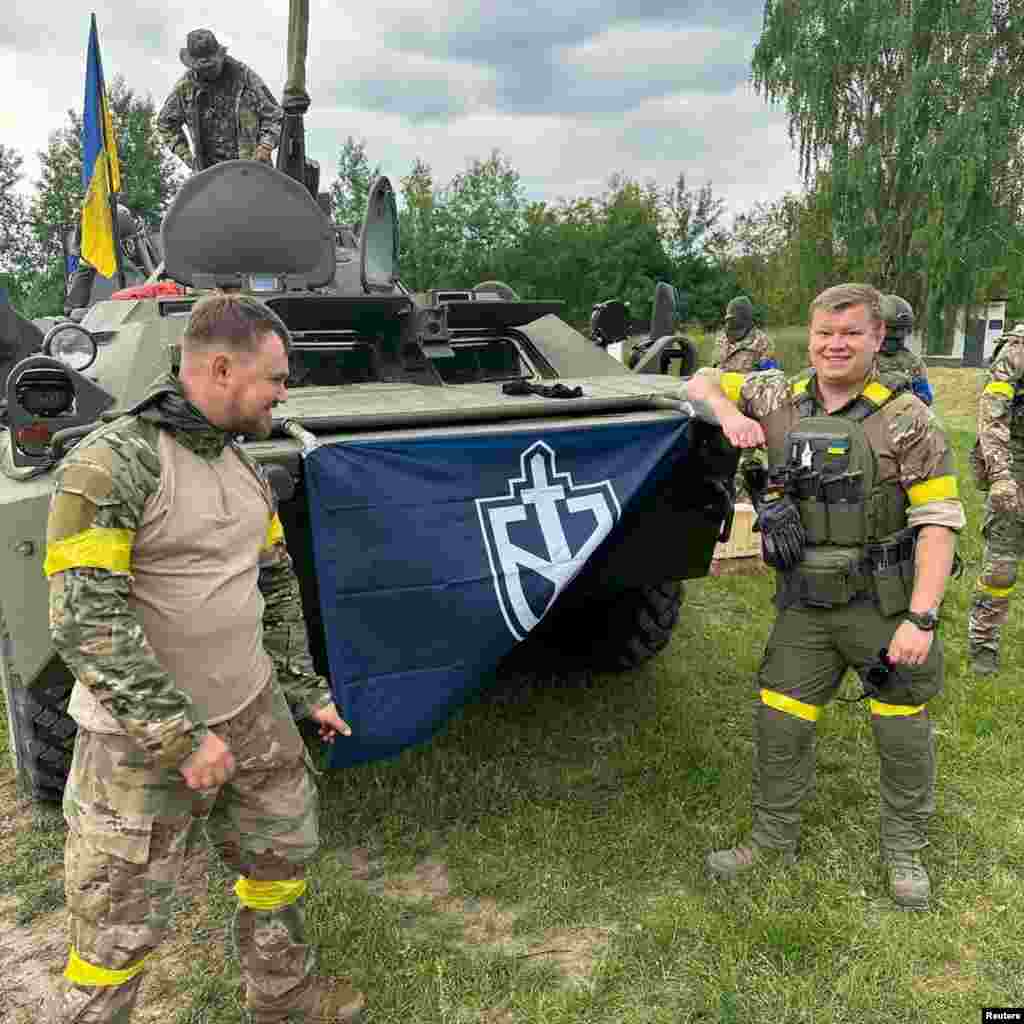
Members of the Russian Volunteer Corps display their flag in an image apparently taken inside Russian territory that was released on May 23.&nbsp;<br />
<br />
Michael Colborne, a journalist with the open-source investigative group Bellingcat, <strong><a href="https://www.vice.com/en/article/3akdpy/anti-putin-militias-celebrating-attacks-on-russia-are-filled-with-neo-nazis">told Vice News</a></strong>&nbsp;that he immediately recognized some of the men allegedly involved in the raid as well-known neo-Nazis.<br />
<br />
&quot;These are people who have literally organized Hitler worship nights, written poems about Hitler, and lead bands whose names and songs are about Hitler,&quot; he said.
3/8 Members of the Russian Volunteer Corps display their flag in an image apparently taken inside Russian territory that was released on May 23. 

Michael Colborne, a journalist with the open-source investigative group Bellingcat, told Vice News that he immediately recognized some of the men allegedly involved in the raid as well-known neo-Nazis.

"These are people who have literally organized Hitler worship nights, written poems about Hitler, and lead bands whose names and songs are about Hitler," he said.
Photos show damage allegedly caused by Ukrainian-based Russian militants after a suspected armed incursion into Russia's Belgorod region.
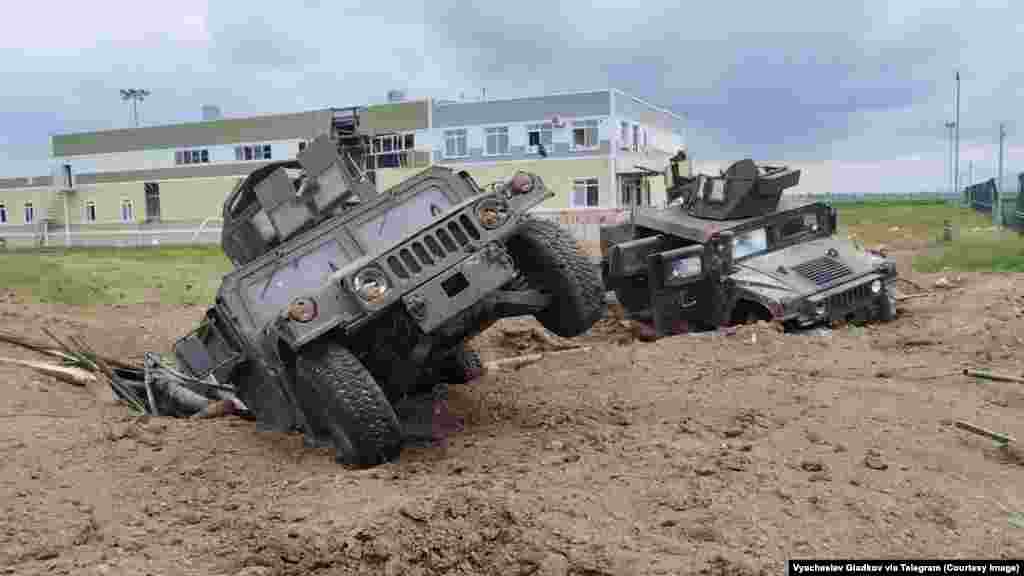
Photos posted to Telegram by Belgorod&#39;s Governor Vyacheslav Gladkov on May 23 showed the apparent aftermath of the raid, including these damaged vehicles.&nbsp;<br />
<br />
The Russian Defense Ministry on May 23 claimed that its troops had surrounded enemy fighters and used &quot;air strikes, artillery fire, and active action by border units&quot; to push back the forces, killing many of them.<br />
<br />
Those claims have not been independently confirmed.&nbsp;
4/8 Photos posted to Telegram by Belgorod's Governor Vyacheslav Gladkov on May 23 showed the apparent aftermath of the raid, including these damaged vehicles. 

The Russian Defense Ministry on May 23 claimed that its troops had surrounded enemy fighters and used "air strikes, artillery fire, and active action by border units" to push back the forces, killing many of them.

Those claims have not been independently confirmed. 
Photos show damage allegedly caused by Ukrainian-based Russian militants after a suspected armed incursion into Russia's Belgorod region.
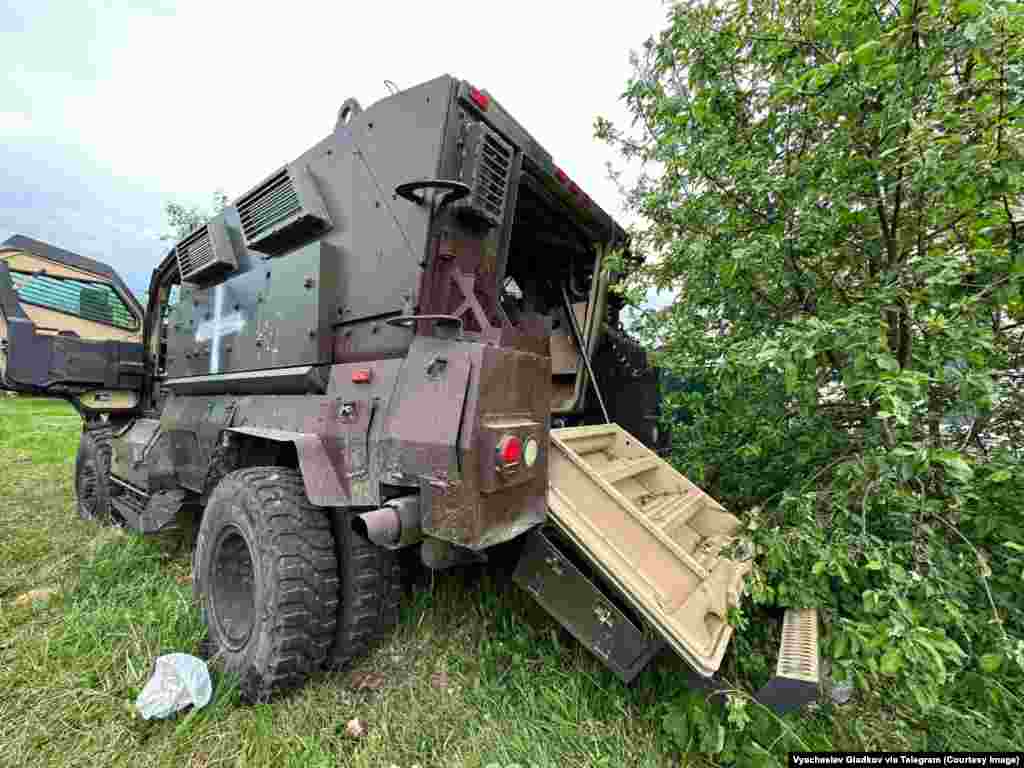
Gladkov&#39;s images included this photo of an American-Israeli-designed MaxxPro MRAP mine-resistant vehicle that was apparently abandoned during fighting in the Belgorod region.<br />
<br />
&quot;We&#39;ve seen some of the reports circulating on social media and elsewhere making claims that U.S.-supplied weapons were used in these attacks. I will say that we&#39;re skeptical at this time of the veracity of these reports,&quot; State Department spokesman Matthew Miller told a media briefing on May 23.<br />
<br />
&quot;As a more general principle, as we&#39;ve said, as I&rsquo;ve said yesterday, we do not encourage or enable strikes inside of Russia, and we&#39;ve made that clear. But as we&#39;ve also said, it is up to Ukraine to decide how to conduct this war,&quot; Miller added.
5/8 Gladkov's images included this photo of an American-Israeli-designed MaxxPro MRAP mine-resistant vehicle that was apparently abandoned during fighting in the Belgorod region.

"We've seen some of the reports circulating on social media and elsewhere making claims that U.S.-supplied weapons were used in these attacks. I will say that we're skeptical at this time of the veracity of these reports," State Department spokesman Matthew Miller told a media briefing on May 23.

"As a more general principle, as we've said, as I’ve said yesterday, we do not encourage or enable strikes inside of Russia, and we've made that clear. But as we've also said, it is up to Ukraine to decide how to conduct this war," Miller added.
Photos show damage allegedly caused by Ukrainian-based Russian militants after a suspected armed incursion into Russia's Belgorod region.
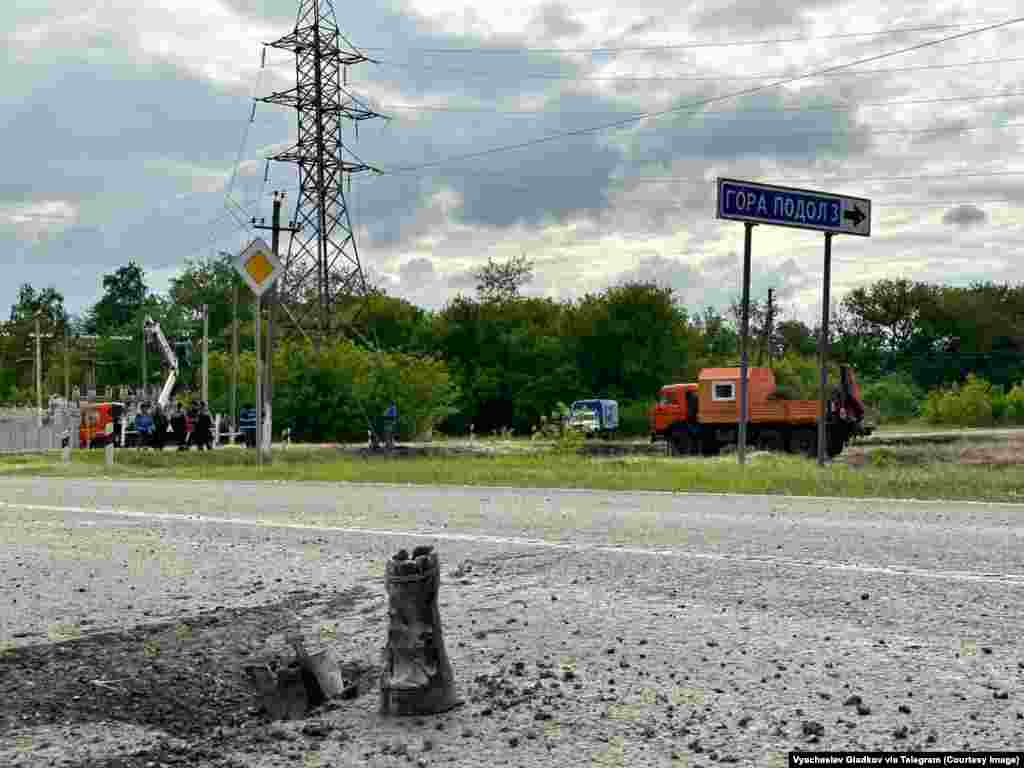
Damage seen near the border town of Gora Podol in the Belgorod region.&nbsp;
6/8 Damage seen near the border town of Gora Podol in the Belgorod region. 
Photos show damage allegedly caused by Ukrainian-based Russian militants after a suspected armed incursion into Russia's Belgorod region.
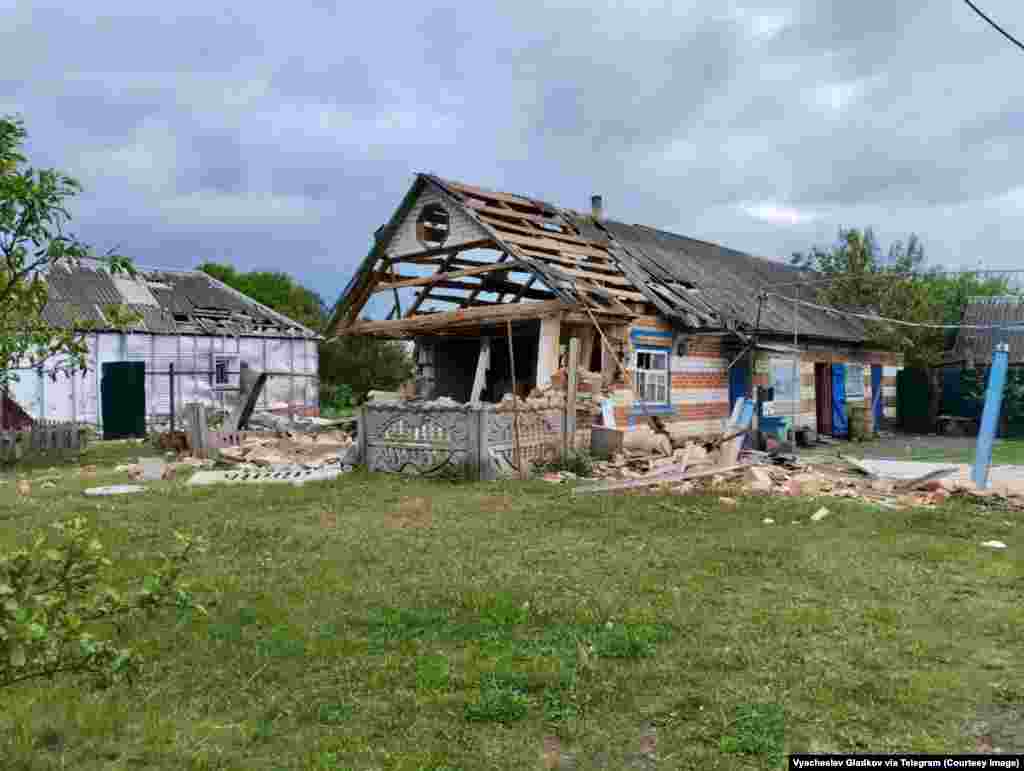
A damaged house in the Belgorod region.&nbsp;<br />
<br />
Andriy Chernyak, from Ukraine&rsquo;s military intelligence directorate, <a href="https://www.ft.com/content/0b57c31b-814d-4554-91d8-d49b066cea69?shareType=nongift"><strong>told the Financial Times</strong> </a>that the Ukrainian military has previously worked with the ethnic Russian fighters, but insisted that Kyiv was not involved in planning the May 22 raid.<br />
<br />
&quot;Of course, we communicate with them. Of course, we share some information...and some might say we even cooperate,&rdquo; Chernyak said.
7/8 A damaged house in the Belgorod region. 

Andriy Chernyak, from Ukraine’s military intelligence directorate, told the Financial Times that the Ukrainian military has previously worked with the ethnic Russian fighters, but insisted that Kyiv was not involved in planning the May 22 raid.

"Of course, we communicate with them. Of course, we share some information...and some might say we even cooperate,” Chernyak said.
Photos show damage allegedly caused by Ukrainian-based Russian militants after a suspected armed incursion into Russia's Belgorod region.
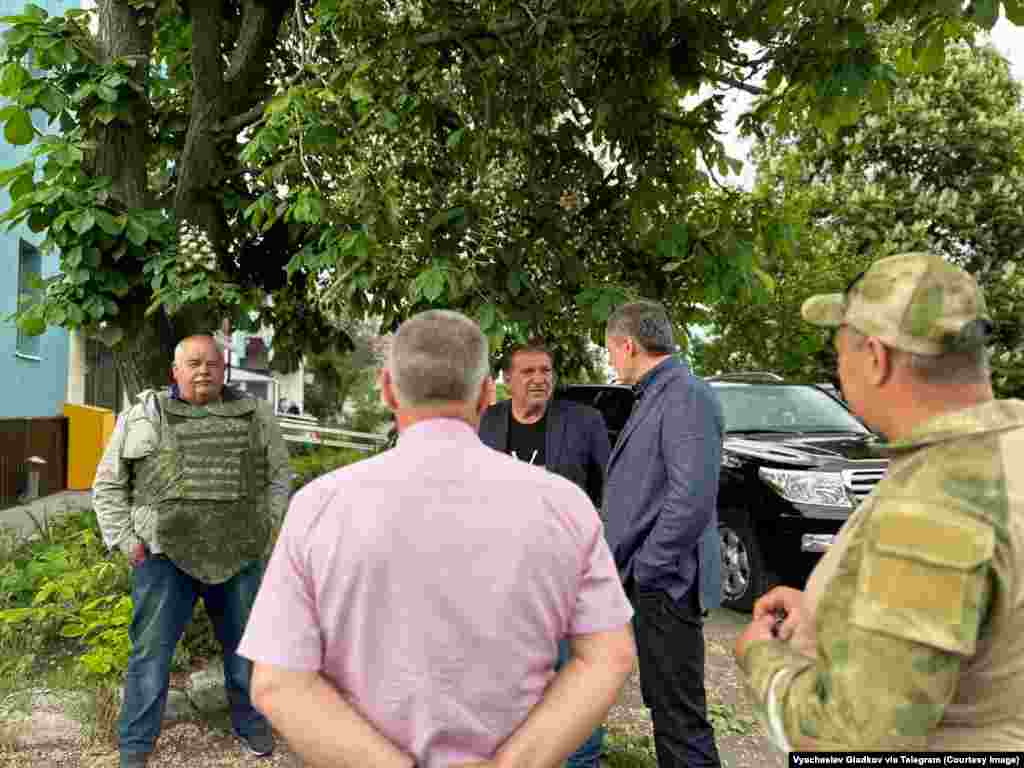
A man wears an armored vest as Belgorod Governor&nbsp;Vyacheslav Gladkov (in blue jacket) meets residents near where fighting took place.&nbsp;<br />
<br />
Leaders of the anti-Kremlin Russian militants say cross-border raids are intended to inspire Russians to rise up against their government.
8/8 A man wears an armored vest as Belgorod Governor Vyacheslav Gladkov (in blue jacket) meets residents near where fighting took place. 

Leaders of the anti-Kremlin Russian militants say cross-border raids are intended to inspire Russians to rise up against their government.
Photos show damage allegedly caused by Ukrainian-based Russian militants after a suspected armed incursion into Russia's Belgorod region.
Previous slide
Next slide

Russia, meanwhile, designated the Volunteer Corps to be a terrorist organization, and tried Nikitin in absentia, sentencing him to life in prison. It also put out a $500,000 reward for information leading to his capture.

On December 27, the Russian Volunteer Corps announced Nikitin had been killed by a Russian drone somewhere in Ukraine’s Zaporizhzhya region. Inside Ukraine, Nikitin was mourned by some as a martyr and a hero. Inside Russia, some bloggers crowed about his death.

Five days later, however, the head of Ukraine’s military intelligence agency, known as the HUR, released a video in which he declared the reports of Nikitin’s death a ruse. The ploy, Lieutenant General Kyrylo Budanov said, was aimed at identifying Russians who were seeking to assassinate Nikitin.

Budanov, who separately was appointed to the powerful position ‍of presidential chief of staff by Volodymyr Zelenskyy, also claimed that the reward money posted by Russia had been obtained, apparently by Ukrainian sources.

“I congratulate you on your return to life. It is always pleasant,” Budanov said in the video. “I am glad that the funds received for ordering your liquidation went to help our struggle.”

Nikitin appeared in Budanov’s video as well, though it was impossible verify when and where it was filmed.

A day later, HUR released another video: footage from a "first-person-view" drone that purported to show a direct hit on Kapustin, standing alongside a white minivan. In fact, the agency said, the video was edited, and was presented to unnamed officials as a way to claim the reward.

The HUR’s embrace of a known neo-Nazi has also raised eyebrows. Among the rationales Russia has claimed in launching its invasion is the assertion that Ukraine’s government is run by Nazis -- a claim with deep historical roots dating well back into the Soviet era.

One of Ukraine’s most capable fighting units, the Azov Brigade, has tried to shed its past reputation as a magnet for far-right extremism, and is now a formal part of Ukraine’s armed forces.

  • 16x9 Image

    RFE/RL

    RFE/RL journalists report the news in 24 languages in 18 countries where a free press is banned by the government or not fully established. We provide what many people cannot get locally: uncensored news, responsible discussion, and open debate.

This item is part of
XS
SM
MD
LG