


Accessibility links

Breaking News
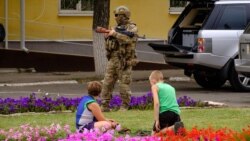
A Ukrainian serviceman stands guard in the city of Schastye in the Luhansk region late last month.

Live Blog: Ukraine In Crisis (Archive)

Final News Summary For September 1, 2017

-- EDITOR'S NOTE: We have started a new Ukraine Live Blog as of September 2, 2017. Find it here.

-- Ukraine says it will introduce new border-crossing rules from next year, affecting citizens of “countries that pose risks for Ukraine.”

-- The Association Agreement strengthening ties between Ukraine and the European Union entered into force on September 1, marking an end to four years of political drama surrounding the accord.

-- The trial of Crimean journalist Mykola Semena will resume later this month after the first hearing in weeks produced little progress toward a resolution of the politically charged case.

*NOTE: Times are stated according to local time in Kyiv (GMT +3)

13:56 26.4.2017

Russian court sentences Crimean Tatar to 12 years in prison:

By RFE/RL's Ukrainian Service

A Russian court has sentenced a Crimean Tatar man to 12 years in prison, drawing swift condemnation from Ukraine for what Kyiv called a politically motivated ruling.

Lawyers for Ruslan Zeytullayev said that in an April 26 verdict, a military court in the Russian city of Rostov-on-Don convicted their client of establishing a cell of the Islamic group Hizb ut-Tahrir in Crimea.

Hizb ut-Tahrir is banned in Russia, which seized control of Crimea from Ukraine in 2014 and has prosecuted many opponents of the takeover -- including members of the Muslim Crimean Tatar community -- on what rights groups say are false charges.

Ukrainian Foreign Ministry spokeswoman Maryana Betsa said the ruling was politically motivated and urged other countries to take Moscow to task over Zeytellayev's trial.

"The so-called ruling is based on fabricated accusations. We demand the release of Zeytullayev," Betsa said on Twitter. "We will [call on] our partners to increase diplomatic pressure on the Russian Federation."

The 12-year sentence came in a retrial that was launched after Russian prosecutors contended that the initial sentence was too lenient.

In September, the same court had convicted Zeytullayev and three other Crimean Tatars of being members of Hizb ut-Tahrir and sentenced them to prison terms ranging from five to seven years.

Prosecutors said at the time that Zeytullayev deserved harsher punishment for being "a founder" of a Hizb ut-Tahrir cell.

Russia has been heavily criticized by international rights groups and Western governments for its treatment of the members of the indigenous Turkic-speaking Crimean Tatar minority since it took over the Black Sea peninsula in March 2014.

Rights activists say Crimean Tatars have been arrested, abducted, and in some cases killed in a campaign to punish the group for largely opposing the takeover and neutralize it as a potential political and social force.

Crimean Tatar self-government organizations have been declared illegal.

Russia seized control of Crimea after sending in troops and staging a referendum considered illegitimate by the United States and a total of 100 UN member states.

The United States, European Union, and other countries imposed sanctions on Russia over the takeover of Crimea and say they will not be lifted until it is returned to Kyiv's control.

14:02 26.4.2017

16:28 26.4.2017

Here's another item from our multimedia department to mark the Chernobyl anniversary:

Russian Photographer Recalls Death, Beauty Inside Chernobyl's Fourth Reactor

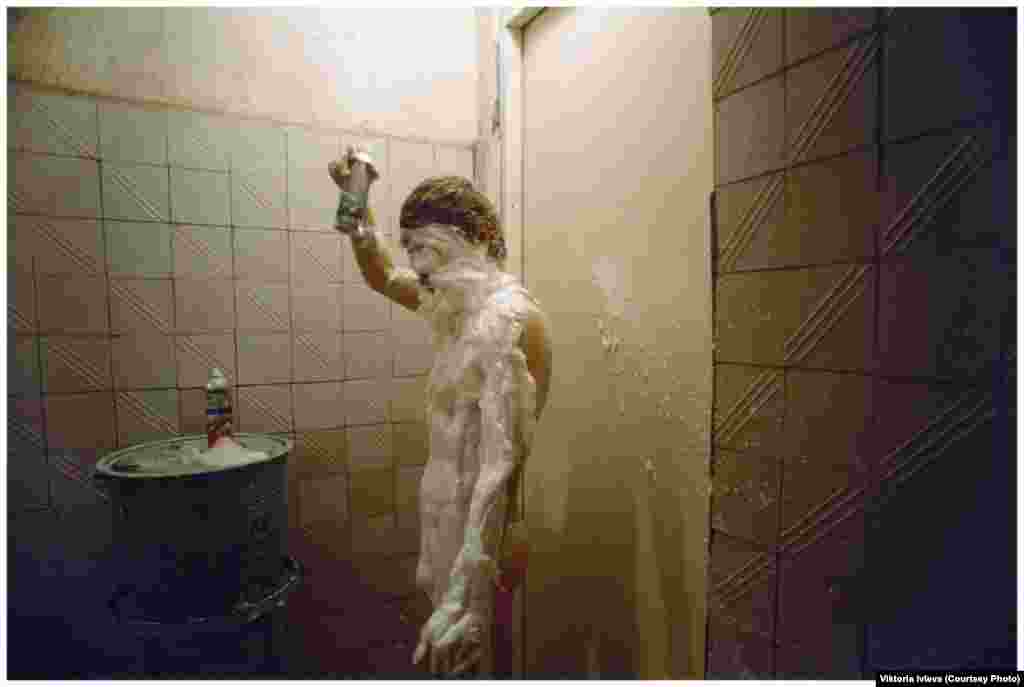
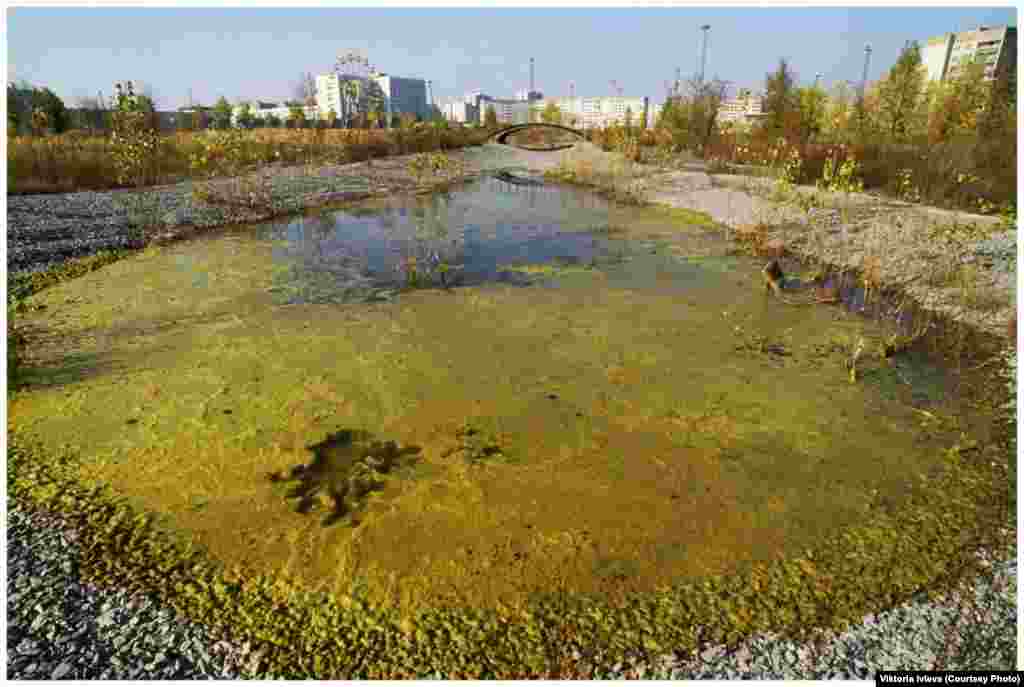
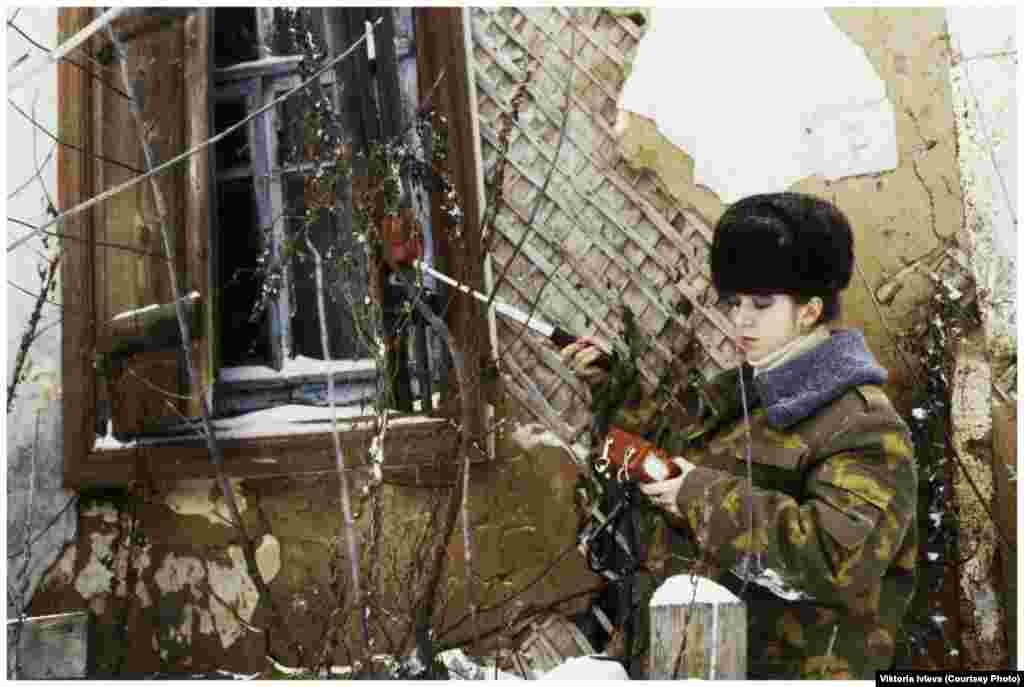
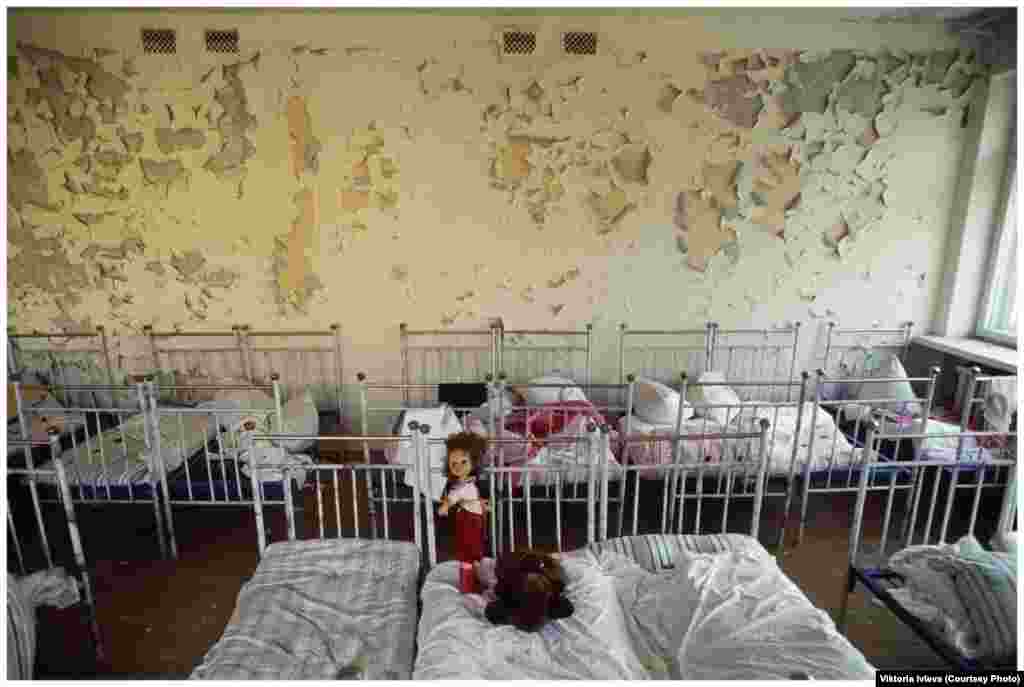
In 1990, photographer Viktoria Ivleva became the first journalist known to have entered the fourth block of the Chernobyl nuclear reactor in Soviet Ukraine, where a deadly explosion and fire on April 26, 1986, triggered the world's worst civilian nuclear accident and sent a radioactive cloud drifting across the Soviet Union and Europe. In an interview with RFE/RL's Belarus Service, Ivleva recalls how she managed to sneak into the destroyed reactor with the help of some scientists in 1990 and discusses the eerie ambience there. (CLICK TO OPEN GALLERY)

Russian Photographer Recalls Death, Beauty Inside Chernobyl's Fourth Reactor

Ivleva says she was able to enter the fourth reactor thanks to physicists she befriended. It wasn't about pulling connections, she says. "Connections and friendship are two different things."
<p>&nbsp;</p>
1/12 Ivleva says she was able to enter the fourth reactor thanks to physicists she befriended. It wasn't about pulling connections, she says. "Connections and friendship are two different things."


In 1990, photographer Viktoria Ivleva became the first journalist known to have entered the fourth block of the Chernobyl nuclear reactor in Soviet Ukraine, where a deadly explosion and fire on April 26, 1986, triggered the world's worst civilian nuclear accident and sent a radioactive cloud drifting across the Soviet Union and Europe. In an interview with RFE/RL's Belarus Service, Ivleva recalls how she managed to sneak into the destroyed reactor with the help of some scientists in 1990 and discusses the eerie ambience there.
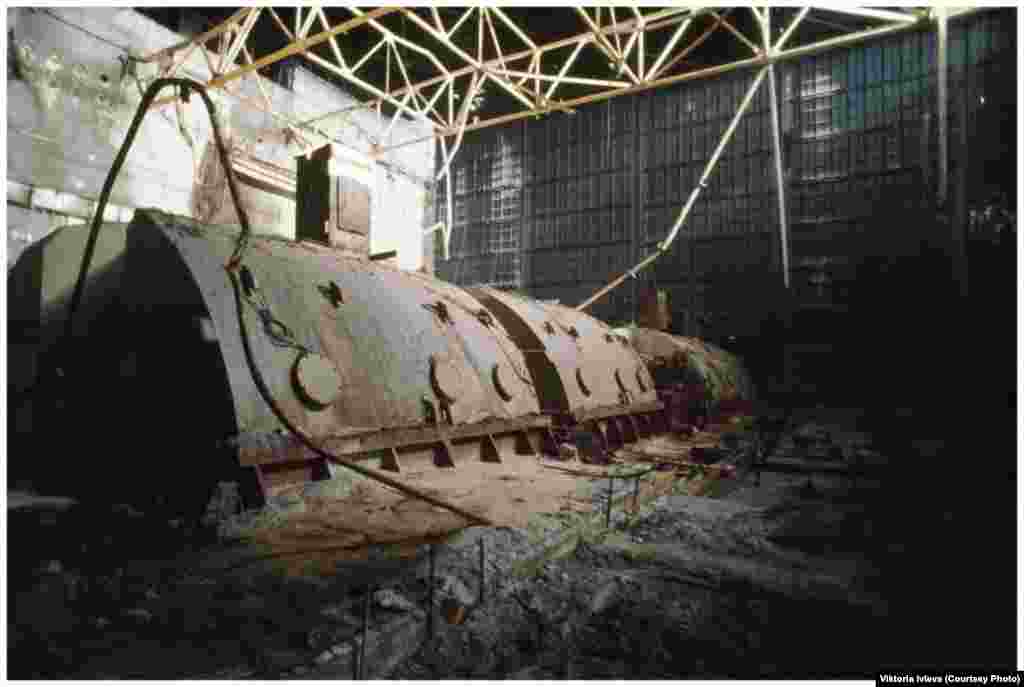
A destroyed machinery hall bears witness to the nuclear accident four years earlier.&nbsp;<span style="font-size: 1em;">&quot;I think Chernobyl played&nbsp;a very important role in the future of the Soviet Union,&quot; Ivleva says. &quot;This tragedy greatly influenced [then-Soviet leader Mikhail] Gorbachev and his attitude toward the union.&quot;</span>
<p align="left">&nbsp;</p>
2/12 A destroyed machinery hall bears witness to the nuclear accident four years earlier. "I think Chernobyl played a very important role in the future of the Soviet Union," Ivleva says. "This tragedy greatly influenced [then-Soviet leader Mikhail] Gorbachev and his attitude toward the union."


In 1990, photographer Viktoria Ivleva became the first journalist known to have entered the fourth block of the Chernobyl nuclear reactor in Soviet Ukraine, where a deadly explosion and fire on April 26, 1986, triggered the world's worst civilian nuclear accident and sent a radioactive cloud drifting across the Soviet Union and Europe. In an interview with RFE/RL's Belarus Service, Ivleva recalls how she managed to sneak into the destroyed reactor with the help of some scientists in 1990 and discusses the eerie ambience there.
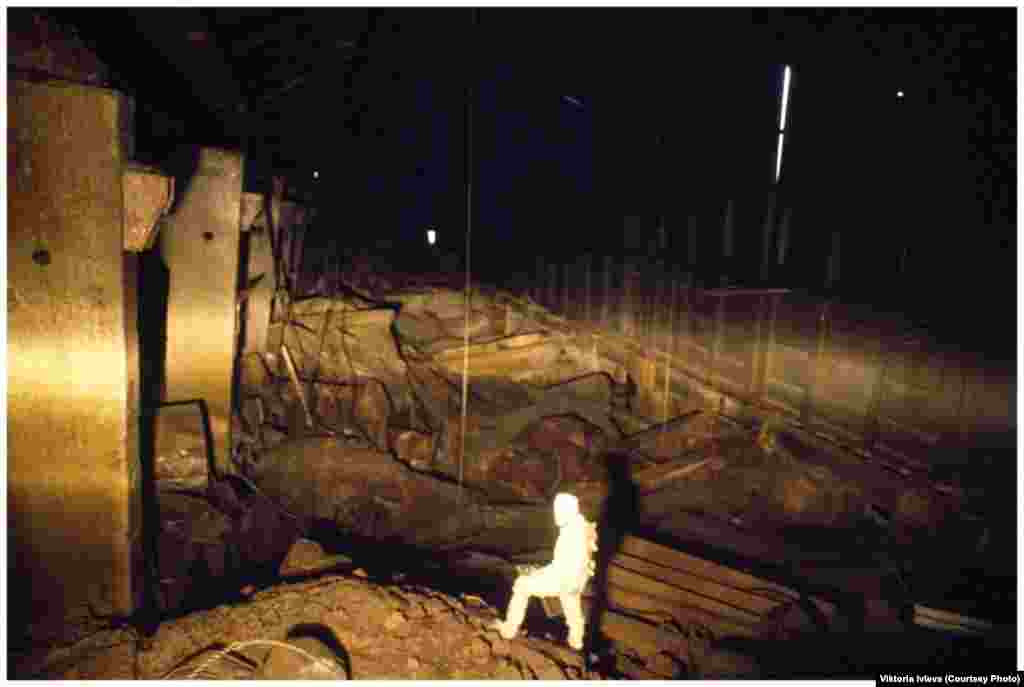
&quot;This was final proof that nature lives by its own laws, and that a cloud does not stop at the border,&quot; she says.
3/12 "This was final proof that nature lives by its own laws, and that a cloud does not stop at the border," she says.
In 1990, photographer Viktoria Ivleva became the first journalist known to have entered the fourth block of the Chernobyl nuclear reactor in Soviet Ukraine, where a deadly explosion and fire on April 26, 1986, triggered the world's worst civilian nuclear accident and sent a radioactive cloud drifting across the Soviet Union and Europe. In an interview with RFE/RL's Belarus Service, Ivleva recalls how she managed to sneak into the destroyed reactor with the help of some scientists in 1990 and discusses the eerie ambience there.
A destroyed machinery hall.&nbsp;Ivleva says she did not sense any fear while shooting inside the reactor. &quot;I felt nothing but curiosity.&quot;
4/12 A destroyed machinery hall. Ivleva says she did not sense any fear while shooting inside the reactor. "I felt nothing but curiosity."
In 1990, photographer Viktoria Ivleva became the first journalist known to have entered the fourth block of the Chernobyl nuclear reactor in Soviet Ukraine, where a deadly explosion and fire on April 26, 1986, triggered the world's worst civilian nuclear accident and sent a radioactive cloud drifting across the Soviet Union and Europe. In an interview with RFE/RL's Belarus Service, Ivleva recalls how she managed to sneak into the destroyed reactor with the help of some scientists in 1990 and discusses the eerie ambience there.
Ivleva says, however, that she was aware of the risks. &quot;I knew that I was embarking on a very dangerous affair, where everything around you speaks of danger. ...&nbsp; I understood that this was not the most beautiful place on Earth.&quot;
5/12 Ivleva says, however, that she was aware of the risks. "I knew that I was embarking on a very dangerous affair, where everything around you speaks of danger. ...  I understood that this was not the most beautiful place on Earth."
In 1990, photographer Viktoria Ivleva became the first journalist known to have entered the fourth block of the Chernobyl nuclear reactor in Soviet Ukraine, where a deadly explosion and fire on April 26, 1986, triggered the world's worst civilian nuclear accident and sent a radioactive cloud drifting across the Soviet Union and Europe. In an interview with RFE/RL's Belarus Service, Ivleva recalls how she managed to sneak into the destroyed reactor with the help of some scientists in 1990 and discusses the eerie ambience there.
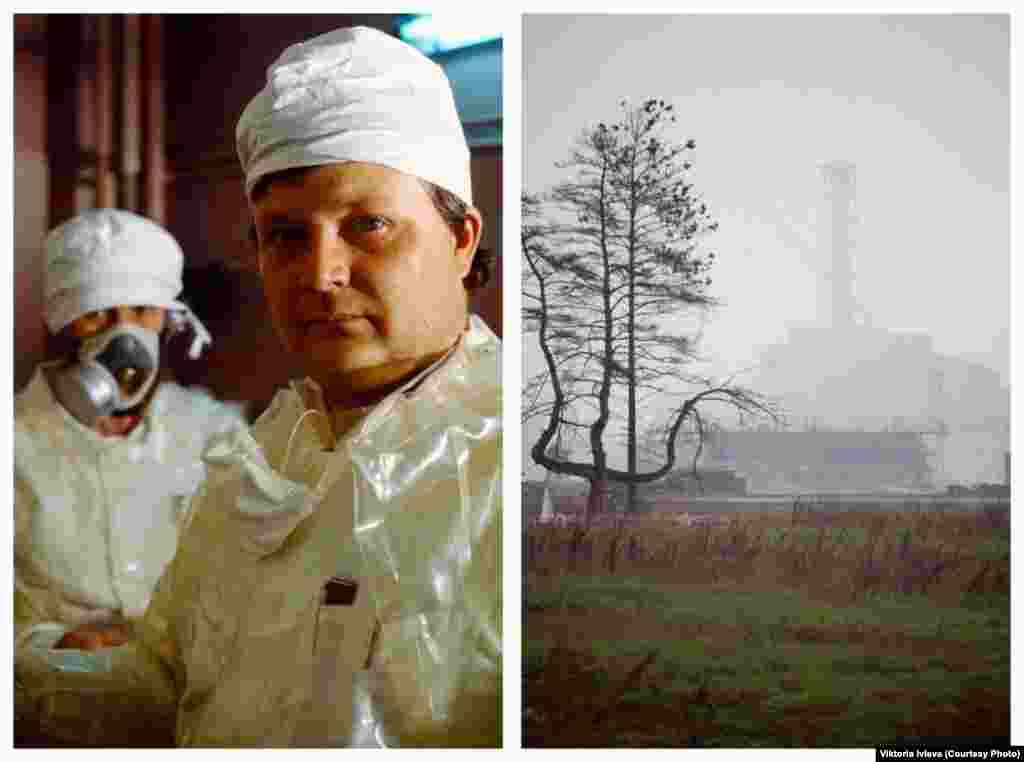
Scientists in special protective clothing (left) and a mutated pine tree against the backdrop of the nuclear plant.&nbsp;<span style="font-size: 1em;">&quot;I was with people who knew very well how and where to go to minimize the danger,&quot; Ivleva says. &quot;It was infinitely interesting, since no journalists had been given access before.&quot;</span>

<p align="left">&nbsp;</p>
6/12 Scientists in special protective clothing (left) and a mutated pine tree against the backdrop of the nuclear plant. "I was with people who knew very well how and where to go to minimize the danger," Ivleva says. "It was infinitely interesting, since no journalists had been given access before."


In 1990, photographer Viktoria Ivleva became the first journalist known to have entered the fourth block of the Chernobyl nuclear reactor in Soviet Ukraine, where a deadly explosion and fire on April 26, 1986, triggered the world's worst civilian nuclear accident and sent a radioactive cloud drifting across the Soviet Union and Europe. In an interview with RFE/RL's Belarus Service, Ivleva recalls how she managed to sneak into the destroyed reactor with the help of some scientists in 1990 and discusses the eerie ambience there.
A destroyed machinery hall. &quot;<span style="font-size: 1em;">I was dressed in special clothes, which made it very difficult to move.&nbsp;Rubber boots, special gloves, the plastic suit.&nbsp;It was not a tour.&quot;</span>
7/12 A destroyed machinery hall. "I was dressed in special clothes, which made it very difficult to move. Rubber boots, special gloves, the plastic suit. It was not a tour."
In 1990, photographer Viktoria Ivleva became the first journalist known to have entered the fourth block of the Chernobyl nuclear reactor in Soviet Ukraine, where a deadly explosion and fire on April 26, 1986, triggered the world's worst civilian nuclear accident and sent a radioactive cloud drifting across the Soviet Union and Europe. In an interview with RFE/RL's Belarus Service, Ivleva recalls how she managed to sneak into the destroyed reactor with the help of some scientists in 1990 and discusses the eerie ambience there.
<strong><a href="http://www.nytimes.com/1991/04/14/magazine/chernobyl-five-years-later-the-danger-persists.html?pagewanted=all" target="_blank">Speaking to The New&nbsp;York Times</a></strong> in 1991, five years after the accident, Ivleva said of the men working inside the reactor when she was shooting photographs:&nbsp;&quot;The guys are my friends now, and I look at them and think, &#39;Oh God, I will soon see them in a coffin.&#39;&quot;
8/12 Speaking to The New York Times in 1991, five years after the accident, Ivleva said of the men working inside the reactor when she was shooting photographs: "The guys are my friends now, and I look at them and think, 'Oh God, I will soon see them in a coffin.'"
In 1990, photographer Viktoria Ivleva became the first journalist known to have entered the fourth block of the Chernobyl nuclear reactor in Soviet Ukraine, where a deadly explosion and fire on April 26, 1986, triggered the world's worst civilian nuclear accident and sent a radioactive cloud drifting across the Soviet Union and Europe. In an interview with RFE/RL's Belarus Service, Ivleva recalls how she managed to sneak into the destroyed reactor with the help of some scientists in 1990 and discusses the eerie ambience there.
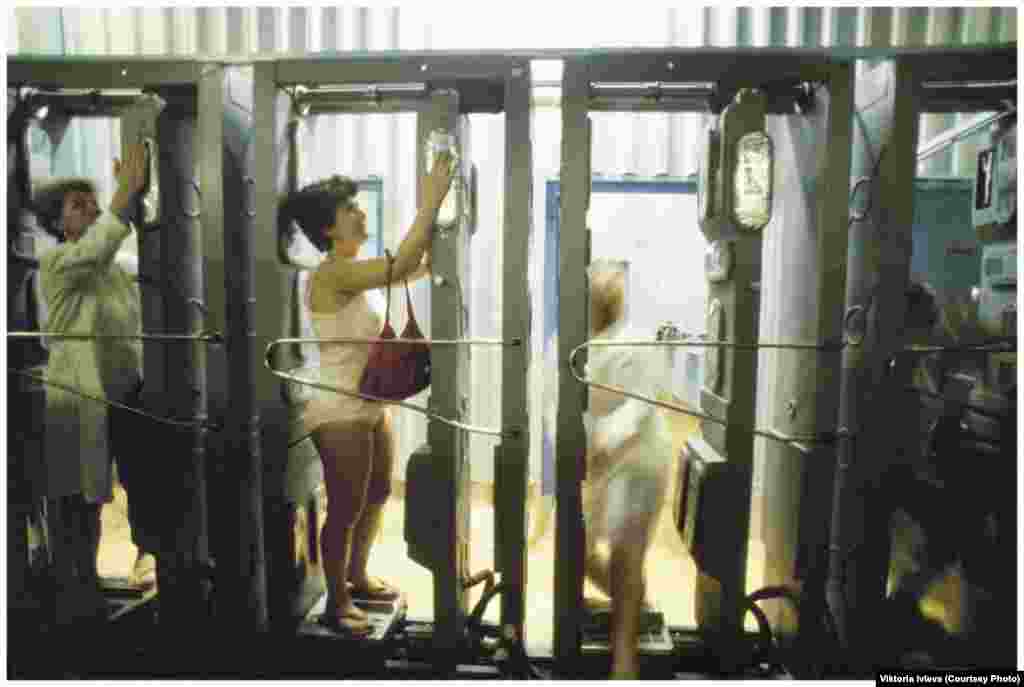
Workers at still functioning units of the power plant are measured for radiation. Ivleva&#39;s work inside the fourth reactor at Chernobyl <strong><a href="https://www.worldpressphoto.org/collection/photo/1992/science-technology/victoria-ivleva" target="_blank">earned her a World Press Photo award</a></strong> in 1992 in the Science and Technology category.
9/12 Workers at still functioning units of the power plant are measured for radiation. Ivleva's work inside the fourth reactor at Chernobyl earned her a World Press Photo award in 1992 in the Science and Technology category.
In 1990, photographer Viktoria Ivleva became the first journalist known to have entered the fourth block of the Chernobyl nuclear reactor in Soviet Ukraine, where a deadly explosion and fire on April 26, 1986, triggered the world's worst civilian nuclear accident and sent a radioactive cloud drifting across the Soviet Union and Europe. In an interview with RFE/RL's Belarus Service, Ivleva recalls how she managed to sneak into the destroyed reactor with the help of some scientists in 1990 and discusses the eerie ambience there.
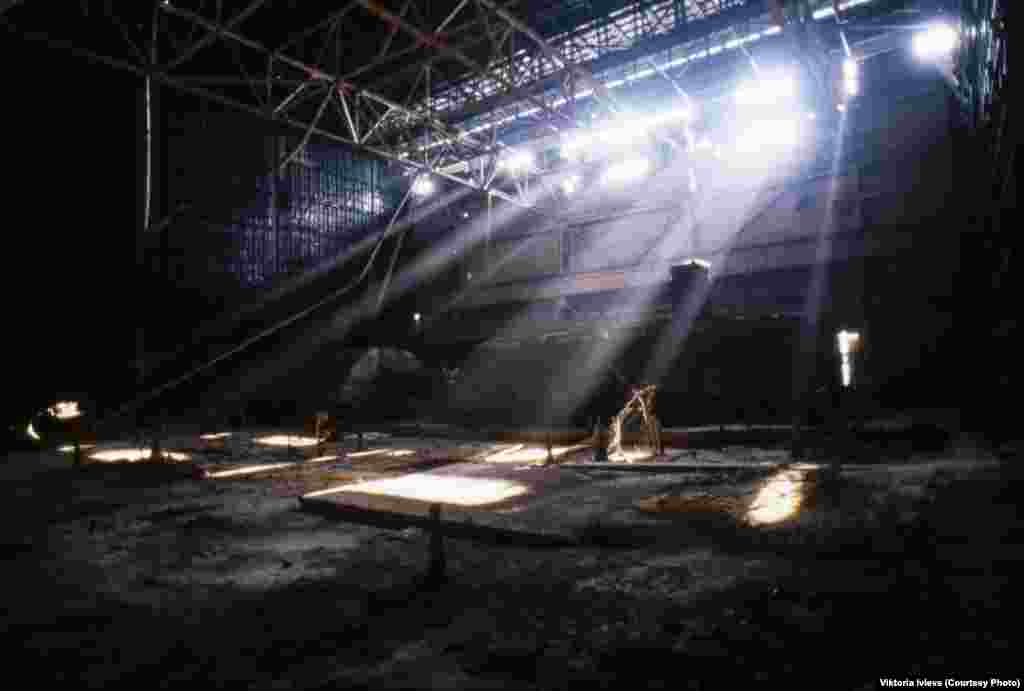
<strong><a href="https://takiedela.ru/2016/04/chaes/" target="_blank">In an essay published last year </a></strong>on the 30th anniversary of the Chernobyl disaster, Ivleva recalled seeing sunbeams streaming through a hole in the&nbsp;sarcophagus&nbsp;encasing the fourth reactor. &quot;The tiny dust particles dancing in these rays transformed this apocalypse into this kind of strange, theatrical beauty,&quot; she says. &quot;Never in my life have I witnessed a scene so beautiful and so deadly.&quot;
10/12 In an essay published last year on the 30th anniversary of the Chernobyl disaster, Ivleva recalled seeing sunbeams streaming through a hole in the sarcophagus encasing the fourth reactor. "The tiny dust particles dancing in these rays transformed this apocalypse into this kind of strange, theatrical beauty," she says. "Never in my life have I witnessed a scene so beautiful and so deadly."
In 1990, photographer Viktoria Ivleva became the first journalist known to have entered the fourth block of the Chernobyl nuclear reactor in Soviet Ukraine, where a deadly explosion and fire on April 26, 1986, triggered the world's worst civilian nuclear accident and sent a radioactive cloud drifting across the Soviet Union and Europe. In an interview with RFE/RL's Belarus Service, Ivleva recalls how she managed to sneak into the destroyed reactor with the help of some scientists in 1990 and discusses the eerie ambience there.
&quot;Because the security guards knew the guys by face, they let all of us in without really paying attention,&quot;&nbsp;Ivleva wrote in her essay last year.
11/12 "Because the security guards knew the guys by face, they let all of us in without really paying attention," Ivleva wrote in her essay last year.
In 1990, photographer Viktoria Ivleva became the first journalist known to have entered the fourth block of the Chernobyl nuclear reactor in Soviet Ukraine, where a deadly explosion and fire on April 26, 1986, triggered the world's worst civilian nuclear accident and sent a radioactive cloud drifting across the Soviet Union and Europe. In an interview with RFE/RL's Belarus Service, Ivleva recalls how she managed to sneak into the destroyed reactor with the help of some scientists in 1990 and discusses the eerie ambience there.
Ivleva noted in her essay that while her photographs from the reactor were published all over the world, only a few were published in the Soviet Union -- in a&nbsp;photography magazine and some black-and-white images in the newspaper Novaya Gazeta. &quot;I am happy that the time has come to publish them all,&quot; she wrote.
12/12 Ivleva noted in her essay that while her photographs from the reactor were published all over the world, only a few were published in the Soviet Union -- in a photography magazine and some black-and-white images in the newspaper Novaya Gazeta. "I am happy that the time has come to publish them all," she wrote.
In 1990, photographer Viktoria Ivleva became the first journalist known to have entered the fourth block of the Chernobyl nuclear reactor in Soviet Ukraine, where a deadly explosion and fire on April 26, 1986, triggered the world's worst civilian nuclear accident and sent a radioactive cloud drifting across the Soviet Union and Europe. In an interview with RFE/RL's Belarus Service, Ivleva recalls how she managed to sneak into the destroyed reactor with the help of some scientists in 1990 and discusses the eerie ambience there.
Previous slide
Next slide

16:50 26.4.2017

16:52 26.4.2017

16:55 26.4.2017

16:58 26.4.2017

17:46 26.4.2017

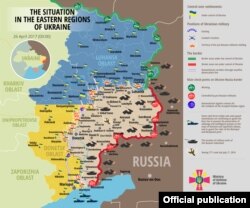
Here is today's map of the latest situation in the Donbas conflict zone, according to the Ukrainian Defense Ministry:
19:17 26.4.2017

19:51 26.4.2017

Ukraine's Eurovision winner ties the knot:

Load more

XS
SM
MD
LG