


Accessibility links

Breaking News
Moscow Court Upholds Extending Pretrial Detention Of Ukrainian Sailors
please wait

No media source currently available

0:00 0:00:56 0:00

WATCH: Moscow Court Upholds Extending Pretrial Detention Of Ukrainian Sailors

Live Blog: A New Government In Ukraine (Archive Sept. 3, 2018-Aug. 16, 2019)

-- EDITOR'S NOTE: We have started a new Ukraine Live Blog as of August 17, 2019. You can find it here.

-- A court in Moscow has upheld a lower court's decision to extend pretrial detention for six of the 24 Ukrainian sailors detained by Russian forces along with their three naval vessels in November near the Kerch Strait, which links the Black Sea and Sea of Azov.

-- The U.S. special peace envoy to Ukraine, Kurt Volker, says Russian propaganda is making it a challenge to solve the conflict in the east of the country.

-- Two more executives of DTEK, Ukraine's largest private power and coal producer, have been charged in a criminal case on August 14 involving an alleged conspiracy to fix electricity prices with the state energy regulator, Interfax reported.

-- A Ukrainian deputy minister and his aide have been detained after allegedly taking a bribe worth $480,000, the National Anti-Corruption Bureau said on Facebook.

*Time stamps on the blog refer to local time in Ukraine

09:58 13.1.2019

09:58 13.1.2019

10:24 13.1.2019

In case you missed it the first time around:

The Destruction Of Ukraine's Nuclear Arsenal

Twenty-five years ago, Ukraine possessed the world’s third-largest nuclear arsenal. It had inherited 175 long-range missiles and more than 1,800 warheads after the collapse of the Soviet Union. Following two years of talks been the United States, Russia, and Ukraine, U.S. President Bill Clinton announced a breakthrough on January 10, 1994. Ukraine had agreed to remove all nuclear weapons from its soil in exchange for assurances that Russia would respect its sovereignty.

The Destruction Of Ukraine's Nuclear Arsenal

Soldiers lay a nuclear warhead in a container on January 4, 1992. Most tactical nuclear weapons were transferred from Ukraine to Russia.
1/17 Soldiers lay a nuclear warhead in a container on January 4, 1992. Most tactical nuclear weapons were transferred from Ukraine to Russia.
Twenty-five years ago, Ukraine possessed the world’s third-largest nuclear arsenal. Following two years of talks been the United States, Russia, and Ukraine, Ukraine agreed to remove all nuclear weapons from its soil in exchange for assurances that Russia would respect its sovereignty.
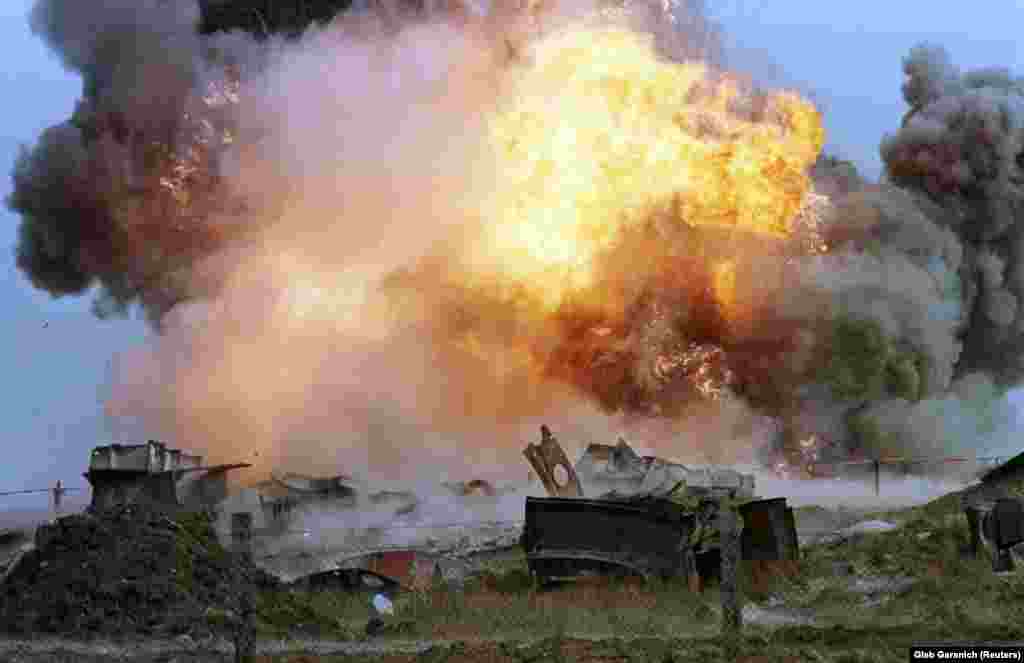
Flames erupt from a blast that demolishes a decommissioned SS-24 nuclear missile at a military base in the southern Ukrainian town of Pervomaysk on September 29, 1998.
2/17 Flames erupt from a blast that demolishes a decommissioned SS-24 nuclear missile at a military base in the southern Ukrainian town of Pervomaysk on September 29, 1998.
Twenty-five years ago, Ukraine possessed the world’s third-largest nuclear arsenal. Following two years of talks been the United States, Russia, and Ukraine, Ukraine agreed to remove all nuclear weapons from its soil in exchange for assurances that Russia would respect its sovereignty.
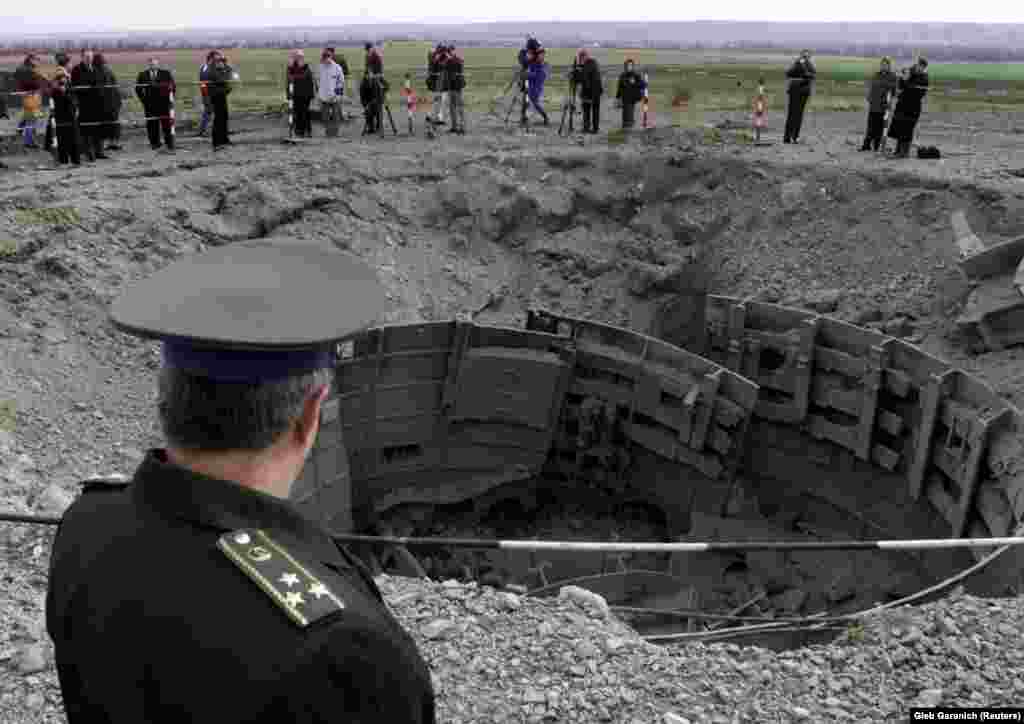
A Ukrainian Army officer inspects a destroyed SS-24 missile silo near the town of Pervomaysk in Ukraine's Mykolayiv region. By the end of 2001, Ukraine had destroyed all of 46 of its intercontinental ballistic missile silos.
3/17 A Ukrainian Army officer inspects a destroyed SS-24 missile silo near the town of Pervomaysk in Ukraine's Mykolayiv region. By the end of 2001, Ukraine had destroyed all of 46 of its intercontinental ballistic missile silos.
Twenty-five years ago, Ukraine possessed the world’s third-largest nuclear arsenal. Following two years of talks been the United States, Russia, and Ukraine, Ukraine agreed to remove all nuclear weapons from its soil in exchange for assurances that Russia would respect its sovereignty.
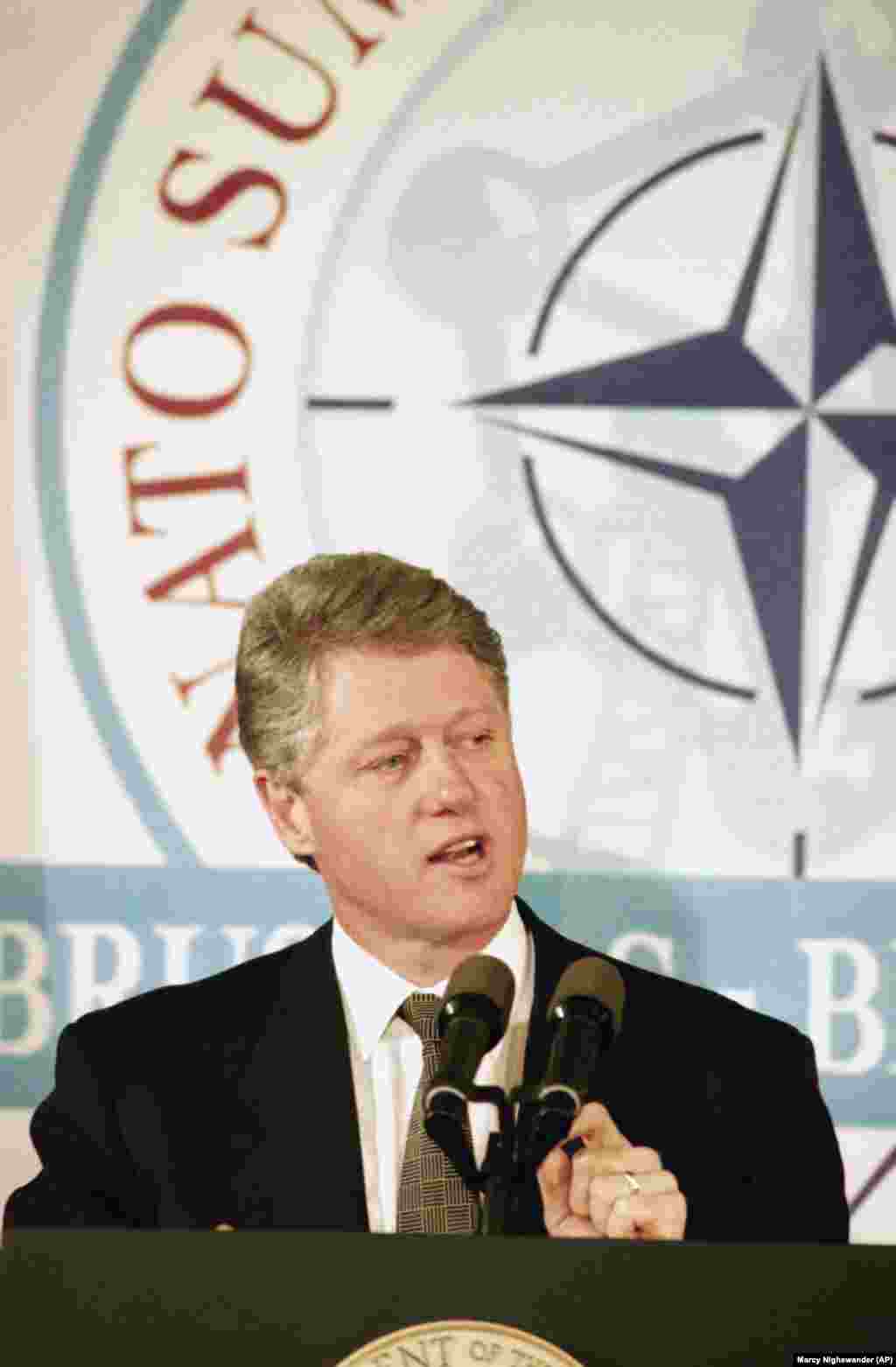
U.S. President Bill Clinton announced a breakthrough in talks between the United States, Russia, and Ukraine at a press conference in Brussels on January 10, 1994. He said Ukraine had agreed to remove all nuclear weapon from its soil, eliminating the world's third-largest nuclear arsenal.
4/17 U.S. President Bill Clinton announced a breakthrough in talks between the United States, Russia, and Ukraine at a press conference in Brussels on January 10, 1994. He said Ukraine had agreed to remove all nuclear weapon from its soil, eliminating the world's third-largest nuclear arsenal.
Twenty-five years ago, Ukraine possessed the world’s third-largest nuclear arsenal. Following two years of talks been the United States, Russia, and Ukraine, Ukraine agreed to remove all nuclear weapons from its soil in exchange for assurances that Russia would respect its sovereignty.
Russian President Boris Yeltsin (left), U.S. President Bill Clinton (center), Ukrainian President Leonid Kuchma, and British Prime Minister John Major (right), sign the Nuclear Nonproliferation Treaty in Budapest, Hungary, on December 5, 1994. Known as the Budapest Memorandum, the agreement officially dismantled Ukraine's nuclear arsenal. 
5/17 Russian President Boris Yeltsin (left), U.S. President Bill Clinton (center), Ukrainian President Leonid Kuchma, and British Prime Minister John Major (right), sign the Nuclear Nonproliferation Treaty in Budapest, Hungary, on December 5, 1994. Known as the Budapest Memorandum, the agreement officially dismantled Ukraine's nuclear arsenal. 
Twenty-five years ago, Ukraine possessed the world’s third-largest nuclear arsenal. Following two years of talks been the United States, Russia, and Ukraine, Ukraine agreed to remove all nuclear weapons from its soil in exchange for assurances that Russia would respect its sovereignty.
Police officers remove a protester from a rally in Kyiv on January 12, 1996. He was attending a demonstration organized by several members of Ukraine's parliament who were opposed to the denuclearization deal. As the protester is being thrown into a police van, he clings to a sign demanding the resignation of former Ukrainian Defense Minister Valeriy Shmarov. 
6/17 Police officers remove a protester from a rally in Kyiv on January 12, 1996. He was attending a demonstration organized by several members of Ukraine's parliament who were opposed to the denuclearization deal. As the protester is being thrown into a police van, he clings to a sign demanding the resignation of former Ukrainian Defense Minister Valeriy Shmarov. 
Twenty-five years ago, Ukraine possessed the world’s third-largest nuclear arsenal. Following two years of talks been the United States, Russia, and Ukraine, Ukraine agreed to remove all nuclear weapons from its soil in exchange for assurances that Russia would respect its sovereignty.
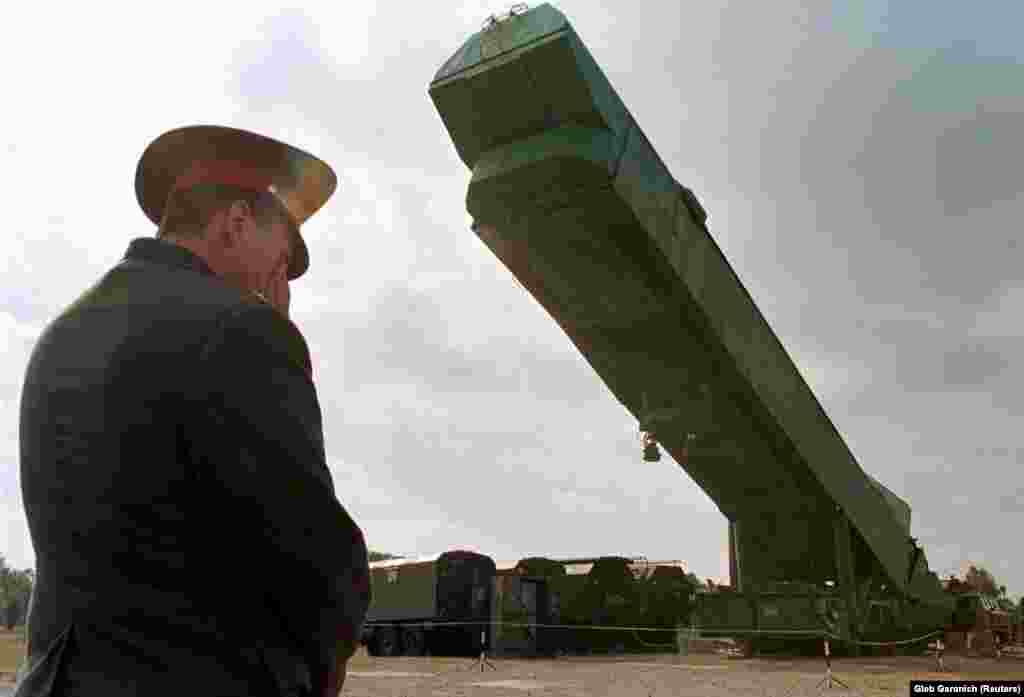
An Ukrainian officer watches a SS-24 nuclear missile booster being removed from its bunker at a military base in southern Ukrainian town of Pervomaysk on September 29, 1998.
7/17 An Ukrainian officer watches a SS-24 nuclear missile booster being removed from its bunker at a military base in southern Ukrainian town of Pervomaysk on September 29, 1998.
Twenty-five years ago, Ukraine possessed the world’s third-largest nuclear arsenal. Following two years of talks been the United States, Russia, and Ukraine, Ukraine agreed to remove all nuclear weapons from its soil in exchange for assurances that Russia would respect its sovereignty.
A worker prepares to dismantle a SS-19 missile at a special decommissioning station in Dnipropetrovsk, Ukraine on July 26, 1996. The station was built with financial aid from the United States.
8/17 A worker prepares to dismantle a SS-19 missile at a special decommissioning station in Dnipropetrovsk, Ukraine on July 26, 1996. The station was built with financial aid from the United States.
Twenty-five years ago, Ukraine possessed the world’s third-largest nuclear arsenal. Following two years of talks been the United States, Russia, and Ukraine, Ukraine agreed to remove all nuclear weapons from its soil in exchange for assurances that Russia would respect its sovereignty.
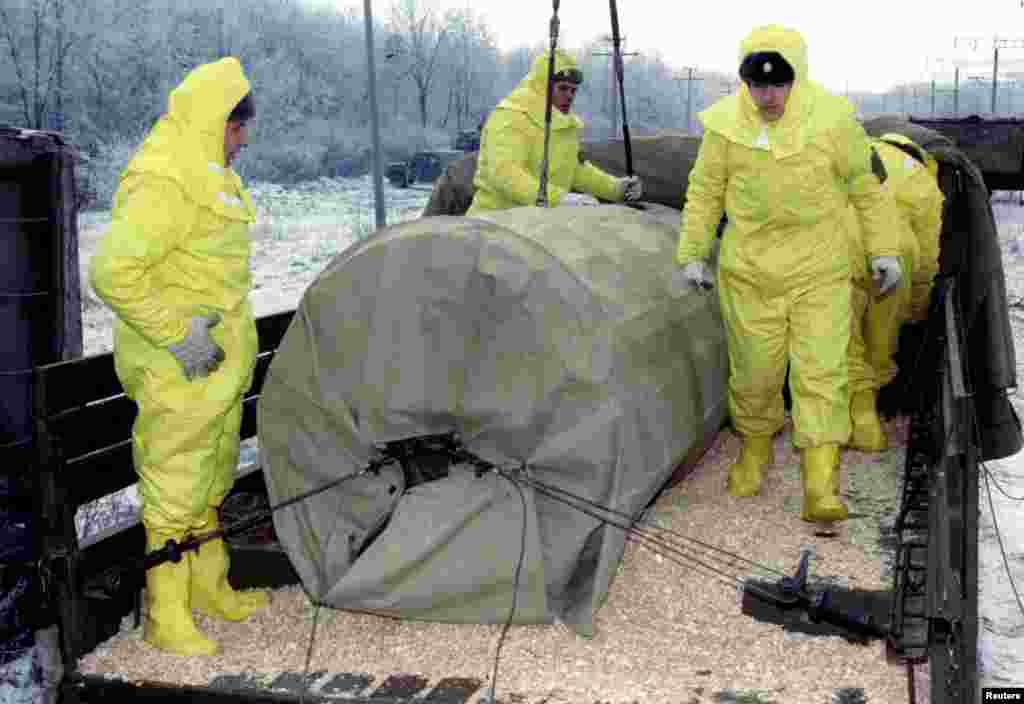
Soldiers practice transferring a nuclear warhead from a rail car onto a truck near the Ukrainian city of Kirovohrad on December 7, 1995. It was part of an exercise to train specialized personnel to cope with potential accidents during the transport of nuclear materials.
9/17 Soldiers practice transferring a nuclear warhead from a rail car onto a truck near the Ukrainian city of Kirovohrad on December 7, 1995. It was part of an exercise to train specialized personnel to cope with potential accidents during the transport of nuclear materials.
Twenty-five years ago, Ukraine possessed the world’s third-largest nuclear arsenal. Following two years of talks been the United States, Russia, and Ukraine, Ukraine agreed to remove all nuclear weapons from its soil in exchange for assurances that Russia would respect its sovereignty.
U.S. Senators Sam Nunn and Richard Lugar turn two tiny keys to initiate the destruction of a former Soviet nuclear missile silo in the formerly top-secret Khmelnitsky military base in central Ukraine on October 23, 1996. The keys once held the power to launch SS-19 missiles at the United States.
10/17 U.S. Senators Sam Nunn and Richard Lugar turn two tiny keys to initiate the destruction of a former Soviet nuclear missile silo in the formerly top-secret Khmelnitsky military base in central Ukraine on October 23, 1996. The keys once held the power to launch SS-19 missiles at the United States.
Twenty-five years ago, Ukraine possessed the world’s third-largest nuclear arsenal. Following two years of talks been the United States, Russia, and Ukraine, Ukraine agreed to remove all nuclear weapons from its soil in exchange for assurances that Russia would respect its sovereignty.
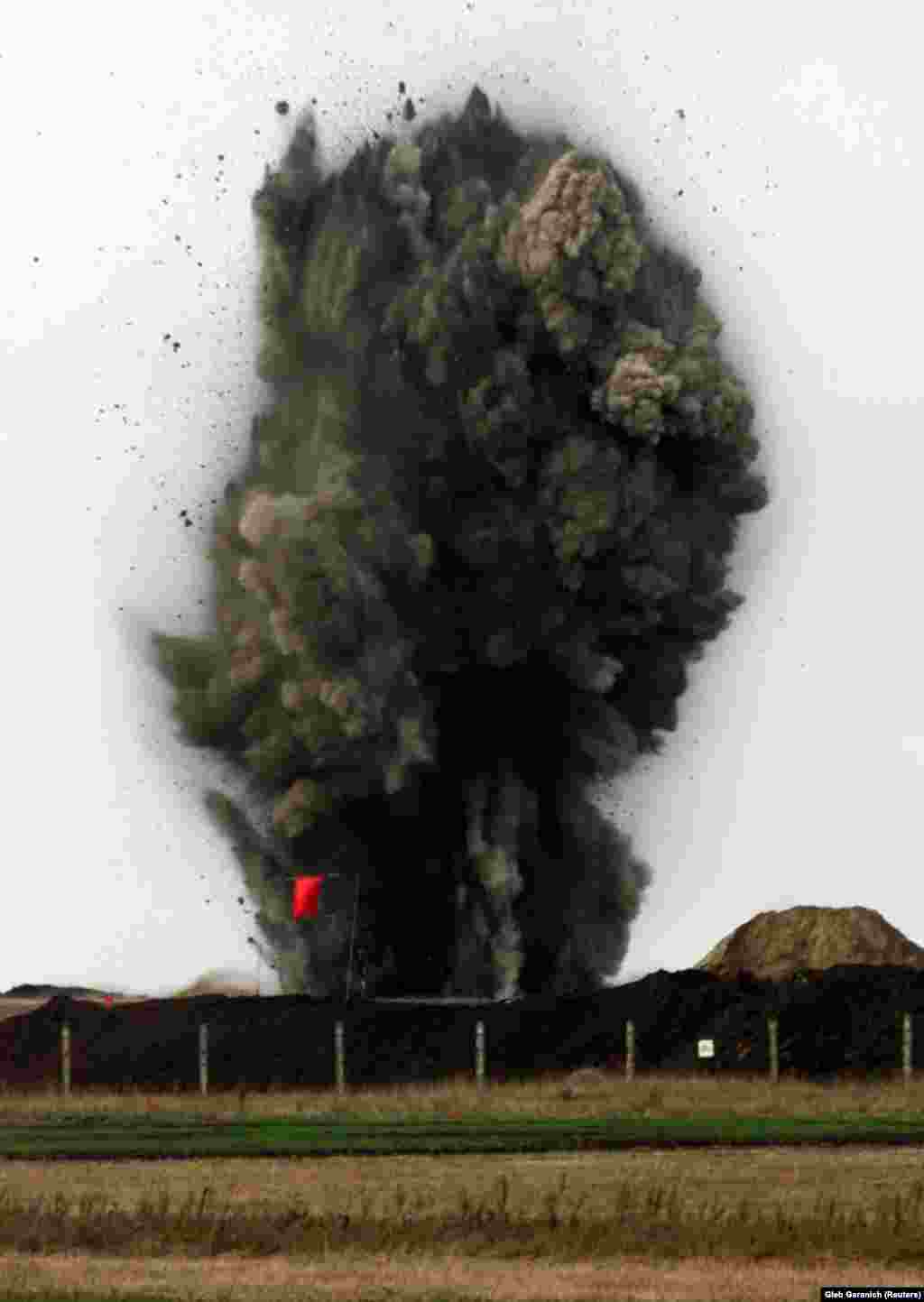
Smoke billows from an explosion that destroyed a missile silo at a military base near Pervomaysk, Ukraine on January 5, 1996.
11/17 Smoke billows from an explosion that destroyed a missile silo at a military base near Pervomaysk, Ukraine on January 5, 1996.
Twenty-five years ago, Ukraine possessed the world’s third-largest nuclear arsenal. Following two years of talks been the United States, Russia, and Ukraine, Ukraine agreed to remove all nuclear weapons from its soil in exchange for assurances that Russia would respect its sovereignty.
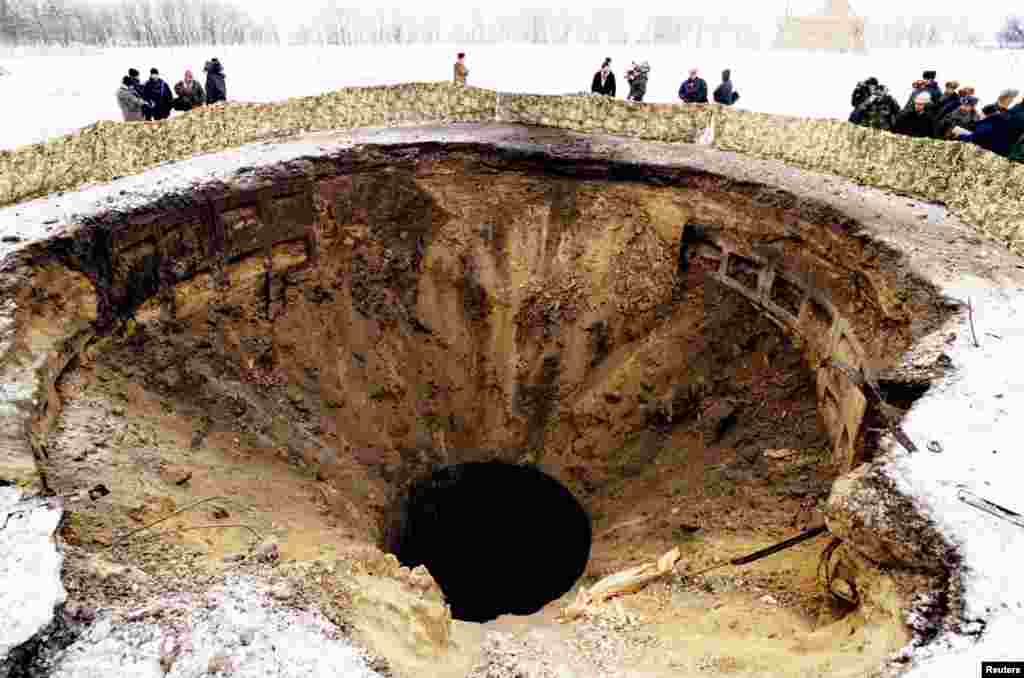
Journalists and military officials from Ukraine, Russia, and the United States inspect a massive crater from a destroyed nuclear missile silo at a military base in Pervomaysk in 1996. Ukraine transferred its last 40 nuclear warheads to Russia that June and officially lost its status as a nuclear power. 
12/17 Journalists and military officials from Ukraine, Russia, and the United States inspect a massive crater from a destroyed nuclear missile silo at a military base in Pervomaysk in 1996. Ukraine transferred its last 40 nuclear warheads to Russia that June and officially lost its status as a nuclear power. 
Twenty-five years ago, Ukraine possessed the world’s third-largest nuclear arsenal. Following two years of talks been the United States, Russia, and Ukraine, Ukraine agreed to remove all nuclear weapons from its soil in exchange for assurances that Russia would respect its sovereignty.
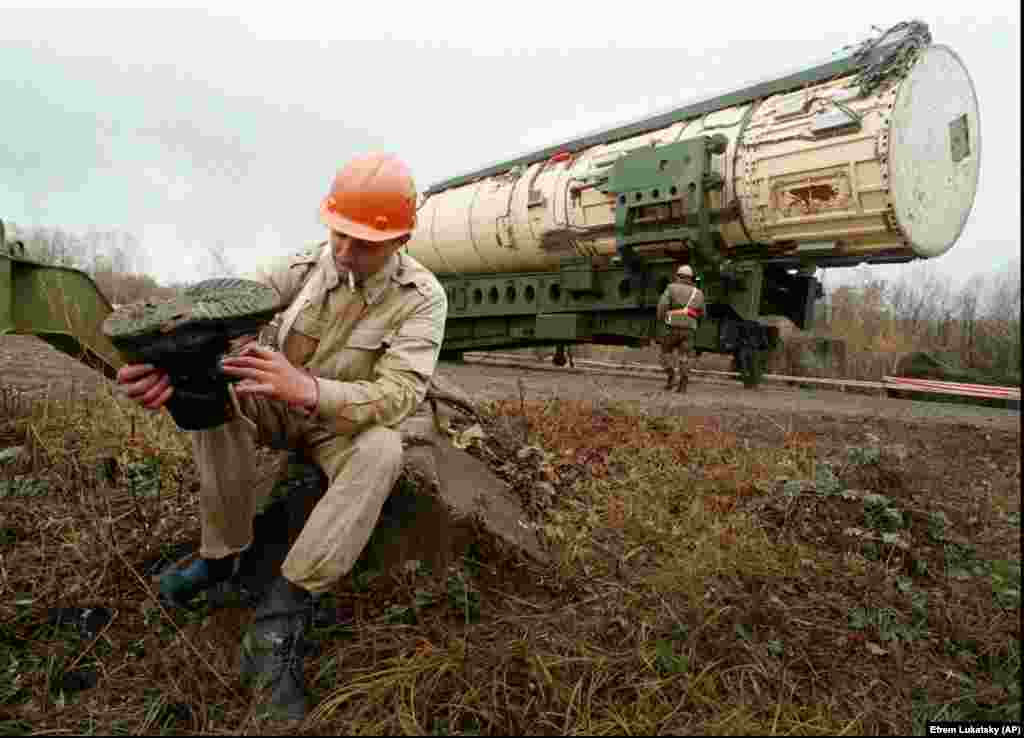
A Ukrainian officer smokes and shakes sand out of his boot before preparing to blow up a missile silo near the town of Derazhnya in central Ukraine, October 23, 1996.
13/17 A Ukrainian officer smokes and shakes sand out of his boot before preparing to blow up a missile silo near the town of Derazhnya in central Ukraine, October 23, 1996.
Twenty-five years ago, Ukraine possessed the world’s third-largest nuclear arsenal. Following two years of talks been the United States, Russia, and Ukraine, Ukraine agreed to remove all nuclear weapons from its soil in exchange for assurances that Russia would respect its sovereignty.
Fuel is pumped out of a Soviet-era SS-19 nuclear missile carrier at a military base in Krasilovo, Ukraine, on May 14, 1997.
14/17 Fuel is pumped out of a Soviet-era SS-19 nuclear missile carrier at a military base in Krasilovo, Ukraine, on May 14, 1997.
Twenty-five years ago, Ukraine possessed the world’s third-largest nuclear arsenal. Following two years of talks been the United States, Russia, and Ukraine, Ukraine agreed to remove all nuclear weapons from its soil in exchange for assurances that Russia would respect its sovereignty.
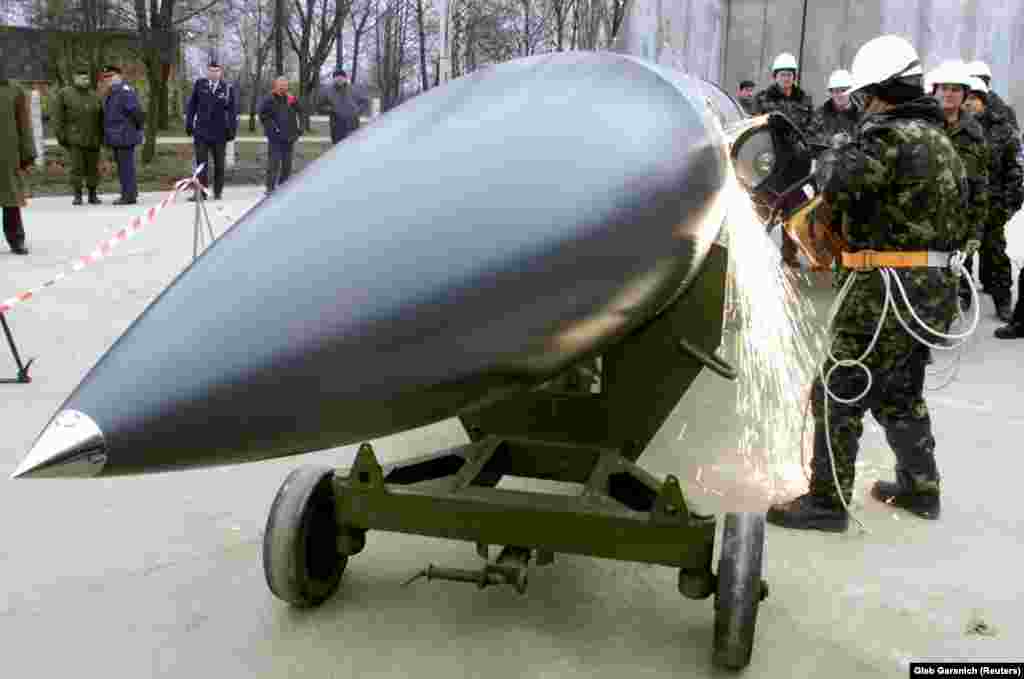
Ukrainian workers cut an air-to-ground X-22 cruise missile into pieces at a military base in the village of Ozerne, on November 6, 2002.
15/17 Ukrainian workers cut an air-to-ground X-22 cruise missile into pieces at a military base in the village of Ozerne, on November 6, 2002.
Twenty-five years ago, Ukraine possessed the world’s third-largest nuclear arsenal. Following two years of talks been the United States, Russia, and Ukraine, Ukraine agreed to remove all nuclear weapons from its soil in exchange for assurances that Russia would respect its sovereignty.
The last SS-24 missile silo being blown up near the Ukrainian town of Pervomaysk on October 30, 2001. In all, 46 SS-24 intercontinental ballistic missile silos were destroyed.
16/17 The last SS-24 missile silo being blown up near the Ukrainian town of Pervomaysk on October 30, 2001. In all, 46 SS-24 intercontinental ballistic missile silos were destroyed.
Twenty-five years ago, Ukraine possessed the world’s third-largest nuclear arsenal. Following two years of talks been the United States, Russia, and Ukraine, Ukraine agreed to remove all nuclear weapons from its soil in exchange for assurances that Russia would respect its sovereignty.
Ukrainian specialists dismantle the last strategic Tupolev Tu-22M3 Backfire nuclear bomber at an airbase outside the Ukrainian city of Poltava on January 27, 2006. After the collapse of the Soviet Union, Ukraine had inherited 60 Tu-22 bombers and 423 X-22 cruise missiles.
17/17 Ukrainian specialists dismantle the last strategic Tupolev Tu-22M3 Backfire nuclear bomber at an airbase outside the Ukrainian city of Poltava on January 27, 2006. After the collapse of the Soviet Union, Ukraine had inherited 60 Tu-22 bombers and 423 X-22 cruise missiles.
Twenty-five years ago, Ukraine possessed the world’s third-largest nuclear arsenal. Following two years of talks been the United States, Russia, and Ukraine, Ukraine agreed to remove all nuclear weapons from its soil in exchange for assurances that Russia would respect its sovereignty.
Previous slide
Next slide

13:09 13.1.2019

15:03 13.1.2019

15:03 13.1.2019

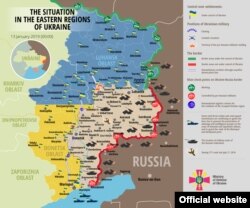
Here is today's map of the security situation in eastern Ukraine, according to the National Security and Defense Council (CLICK TO ENLARGE):
15:06 13.1.2019

The Last Link Of Luhansk
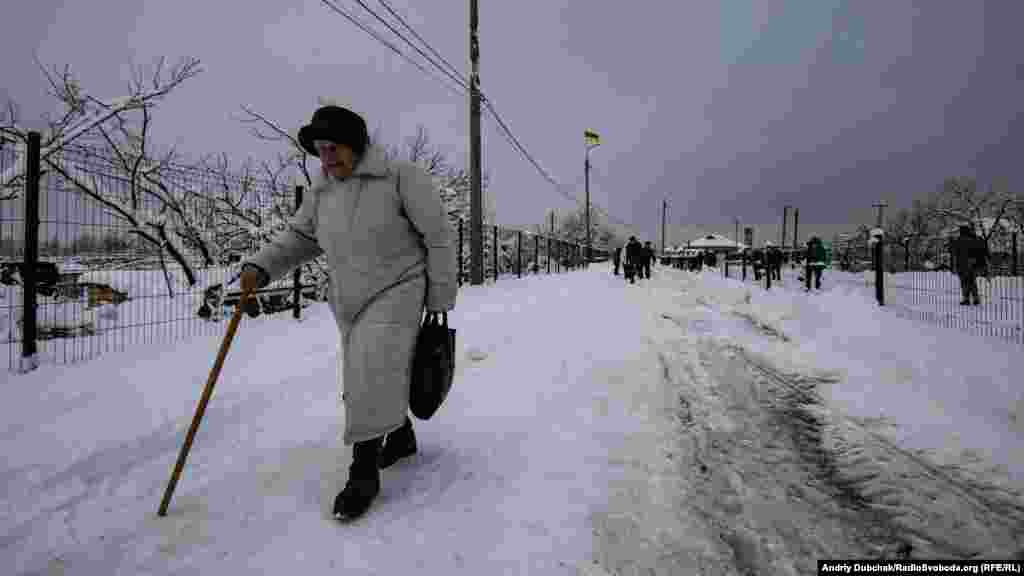
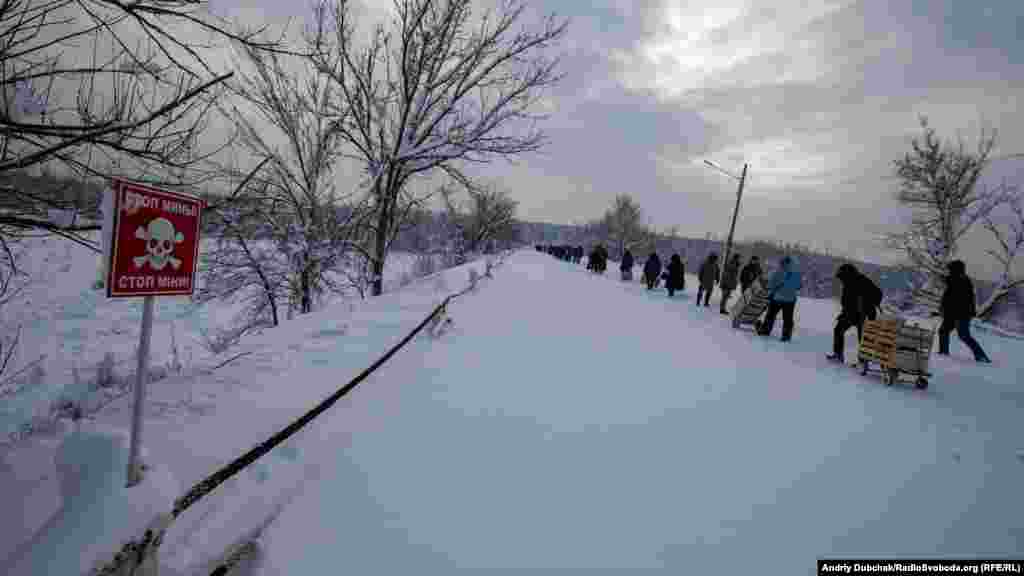
The approach to the checkpoint at Stanytsia Luhanska, on the edge of Kyiv-held territory in the Luhansk region. Fighting in the area continues between Ukrainian forces and Russia-backed separatists in a conflict that has claimed more than 10,000 lives since it began in 2014.
1/17 The approach to the checkpoint at Stanytsia Luhanska, on the edge of Kyiv-held territory in the Luhansk region. Fighting in the area continues between Ukrainian forces and Russia-backed separatists in a conflict that has claimed more than 10,000 lives since it began in 2014.
Crossing through the only corridor that remains open for people in Ukraine's Luhansk region to navigate the so-called line of contact.
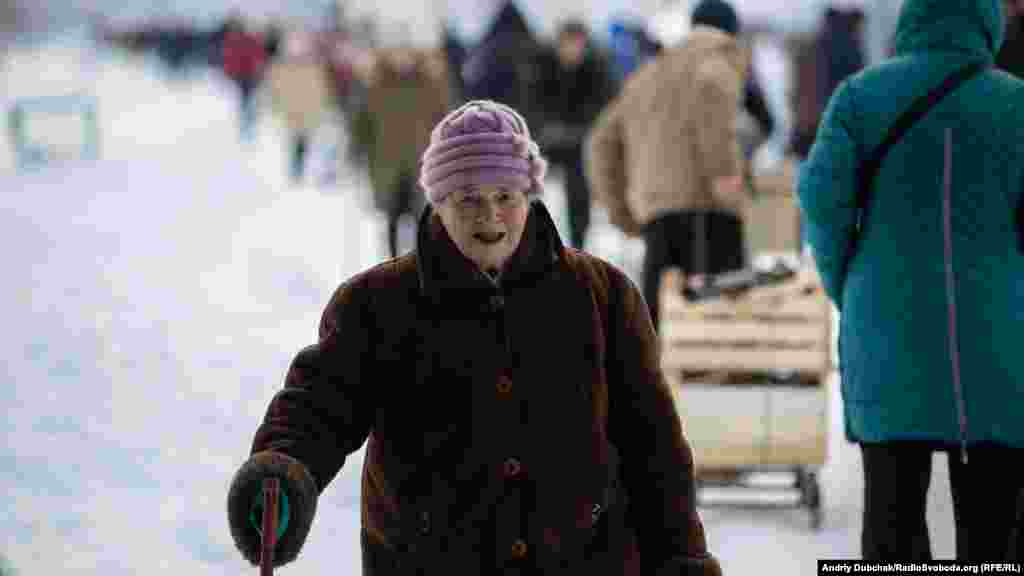
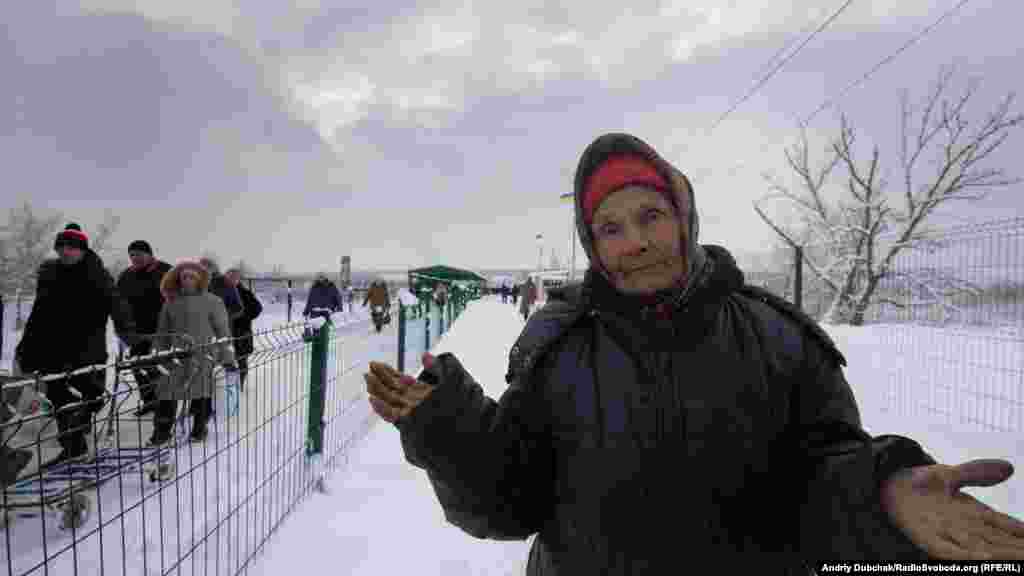
The majority of those making the crossing are retirees from separatist-held territory coming to collect their pensions from Ukraine's central government.
2/17 The majority of those making the crossing are retirees from separatist-held territory coming to collect their pensions from Ukraine's central government.
Crossing through the only corridor that remains open for people in Ukraine's Luhansk region to navigate the so-called line of contact.
Near a checkpoint controlled by the Ukrainian military, a bank machine (right) is in regular use and is refilled with cash each day.
3/17 Near a checkpoint controlled by the Ukrainian military, a bank machine (right) is in regular use and is refilled with cash each day.
Crossing through the only corridor that remains open for people in Ukraine's Luhansk region to navigate the so-called line of contact.
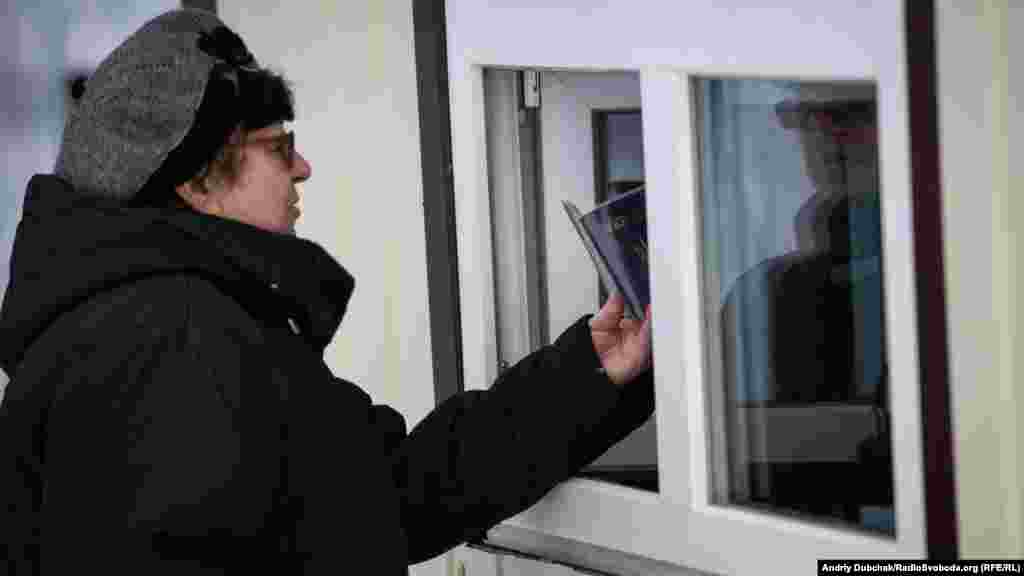
A woman having her passport checked by a Ukrainian official.
4/17 A woman having her passport checked by a Ukrainian official.
Crossing through the only corridor that remains open for people in Ukraine's Luhansk region to navigate the so-called line of contact.
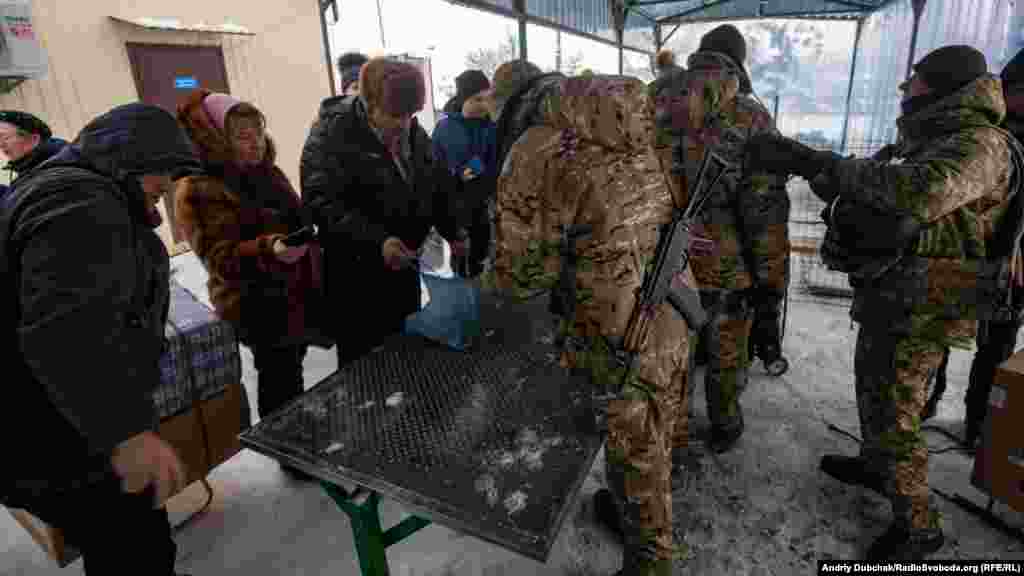
Ukrainian soldiers search belongings before people can begin the long march to separatist-held territory.
5/17 Ukrainian soldiers search belongings before people can begin the long march to separatist-held territory.
Crossing through the only corridor that remains open for people in Ukraine's Luhansk region to navigate the so-called line of contact.
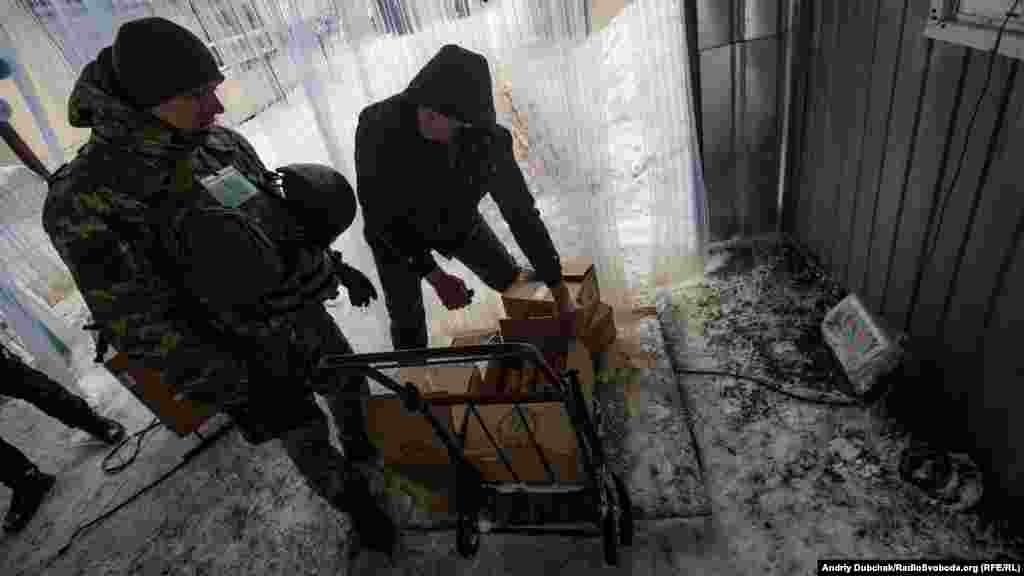
Boxes being weighed on a frosty set of scales. At 74.2 kilograms, this man's load falls just within the 75 kilograms each person is allowed to cross with.
6/17 Boxes being weighed on a frosty set of scales. At 74.2 kilograms, this man's load falls just within the 75 kilograms each person is allowed to cross with.
Crossing through the only corridor that remains open for people in Ukraine's Luhansk region to navigate the so-called line of contact.
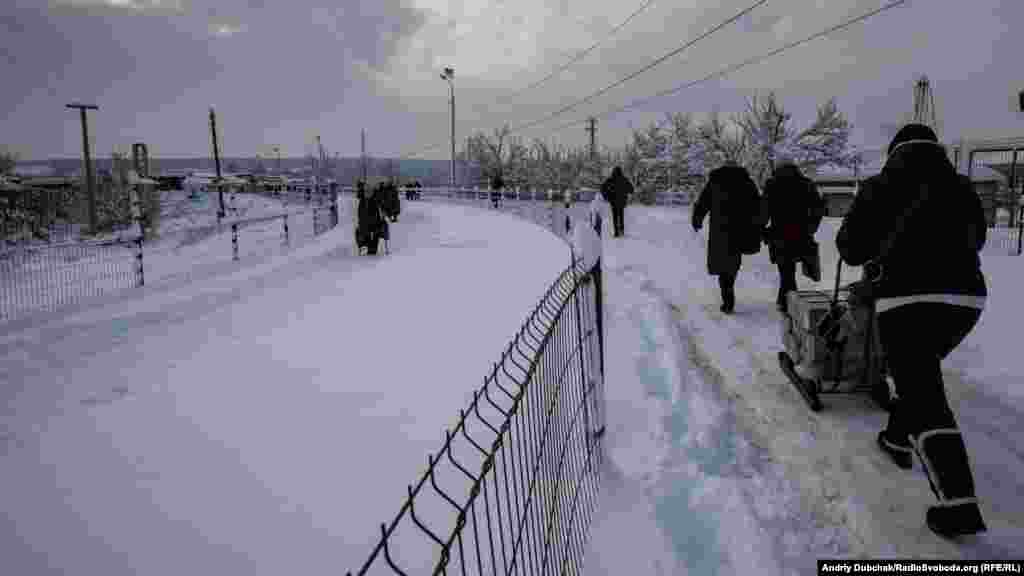
Once the checks are complete, the journey through no-man's land begins. Separatist checkpoints lie nearly 5 kilometers away.
7/17 Once the checks are complete, the journey through no-man's land begins. Separatist checkpoints lie nearly 5 kilometers away.
Crossing through the only corridor that remains open for people in Ukraine's Luhansk region to navigate the so-called line of contact.
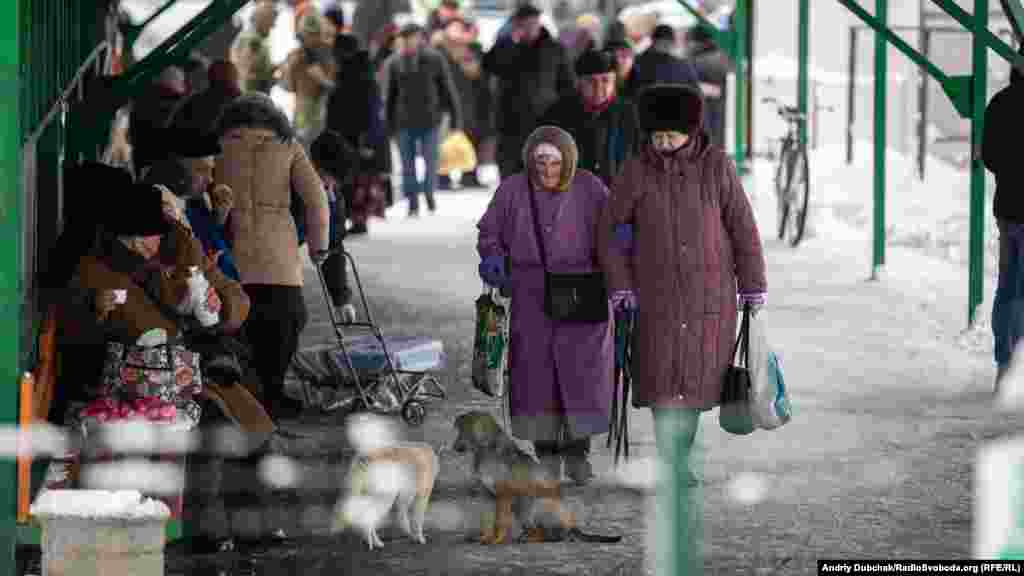
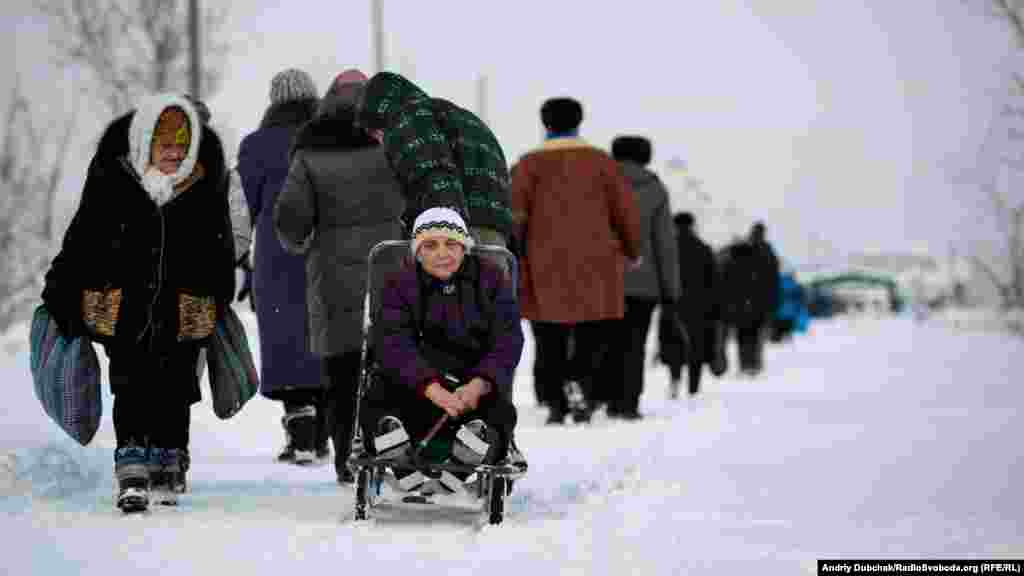
For the mostly elderly people who make the crossing, it's an arduous journey. Around four out of five of those who make the crossing are pensioners.
8/17 For the mostly elderly people who make the crossing, it's an arduous journey. Around four out of five of those who make the crossing are pensioners.
Crossing through the only corridor that remains open for people in Ukraine's Luhansk region to navigate the so-called line of contact.
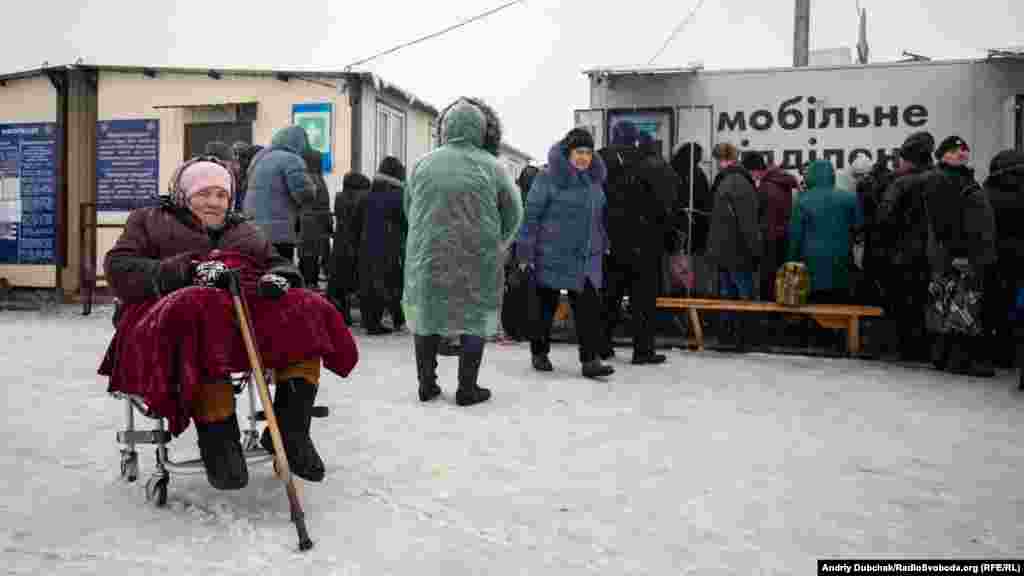
For the frail and disabled, the trip is impossible without enlisting relatives or hiring porters to help.&nbsp;<br />
&nbsp;
9/17 For the frail and disabled, the trip is impossible without enlisting relatives or hiring porters to help. 
 
Crossing through the only corridor that remains open for people in Ukraine's Luhansk region to navigate the so-called line of contact.
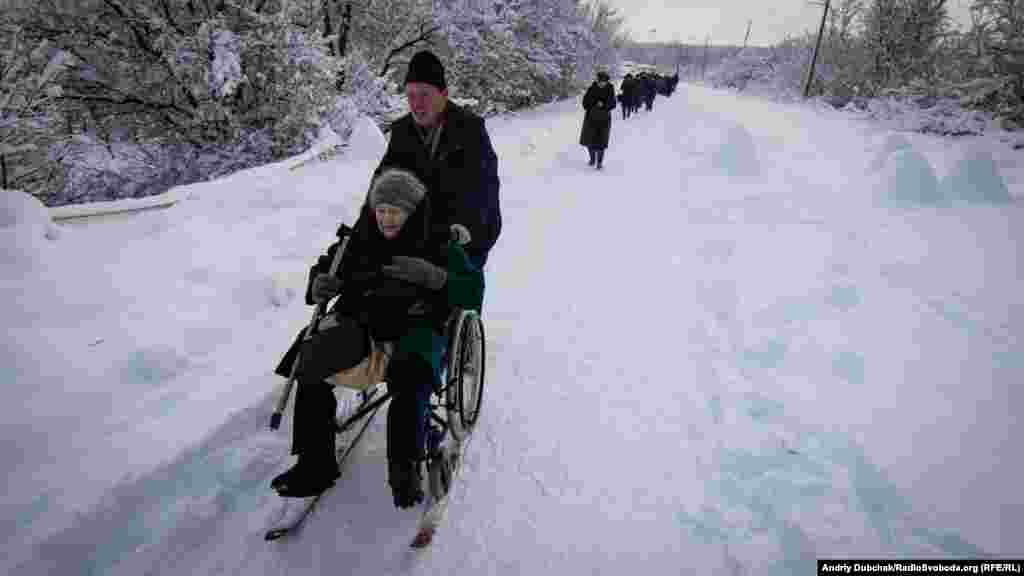
An elderly woman being pushed on her winter-modified wheelchair.&nbsp;
10/17 An elderly woman being pushed on her winter-modified wheelchair. 
Crossing through the only corridor that remains open for people in Ukraine's Luhansk region to navigate the so-called line of contact.
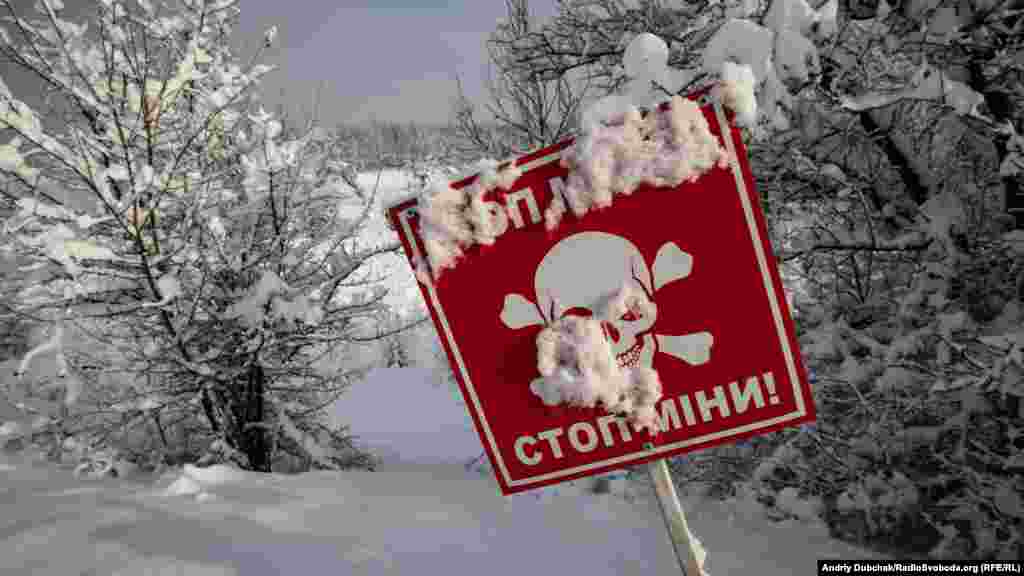
On either side of the pedestrian corridor, land mines lurk beneath the fresh snow.&nbsp;
11/17 On either side of the pedestrian corridor, land mines lurk beneath the fresh snow. 
Crossing through the only corridor that remains open for people in Ukraine's Luhansk region to navigate the so-called line of contact.
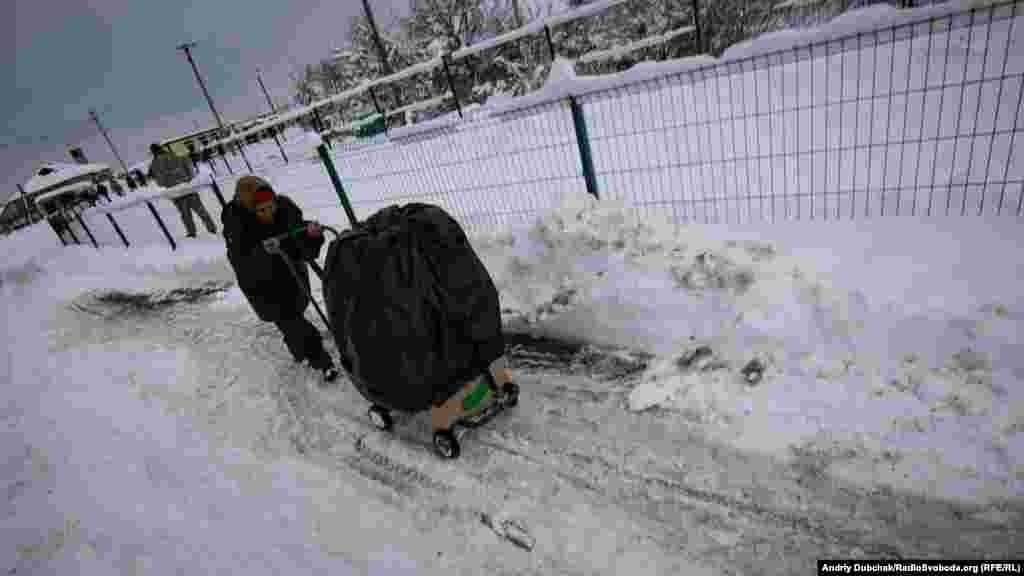
<span>Nina Nikolayevna works</span><span>&nbsp;as a porter, dragging goods between the warring sides. The 79-year-old earns 200-400 hryvnyas ($7-14) per trip, but only one one crossing with cargo is allowed per day.</span>
12/17 Nina Nikolayevna works as a porter, dragging goods between the warring sides. The 79-year-old earns 200-400 hryvnyas ($7-14) per trip, but only one one crossing with cargo is allowed per day.
Crossing through the only corridor that remains open for people in Ukraine's Luhansk region to navigate the so-called line of contact.
Nikolayevna at work, pushing a load of fruits and vegetables through slushy snow toward separatist-held territory. Such fresh items are significantly more expensive in the separatist region.&nbsp;
13/17 Nikolayevna at work, pushing a load of fruits and vegetables through slushy snow toward separatist-held territory. Such fresh items are significantly more expensive in the separatist region. 
Crossing through the only corridor that remains open for people in Ukraine's Luhansk region to navigate the so-called line of contact.
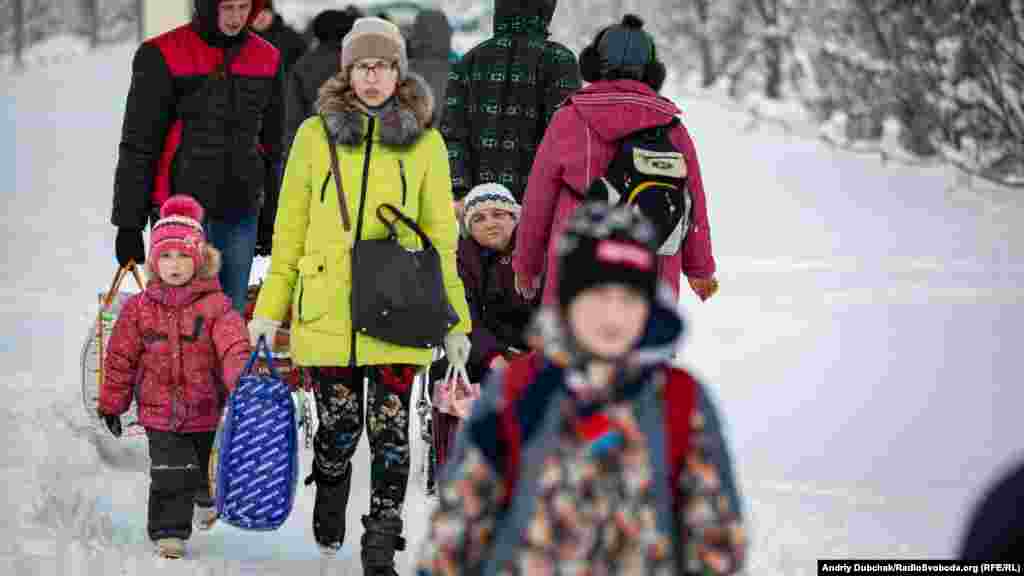
A young family heading toward separatist-held territory.&nbsp;
14/17 A young family heading toward separatist-held territory. 
Crossing through the only corridor that remains open for people in Ukraine's Luhansk region to navigate the so-called line of contact.
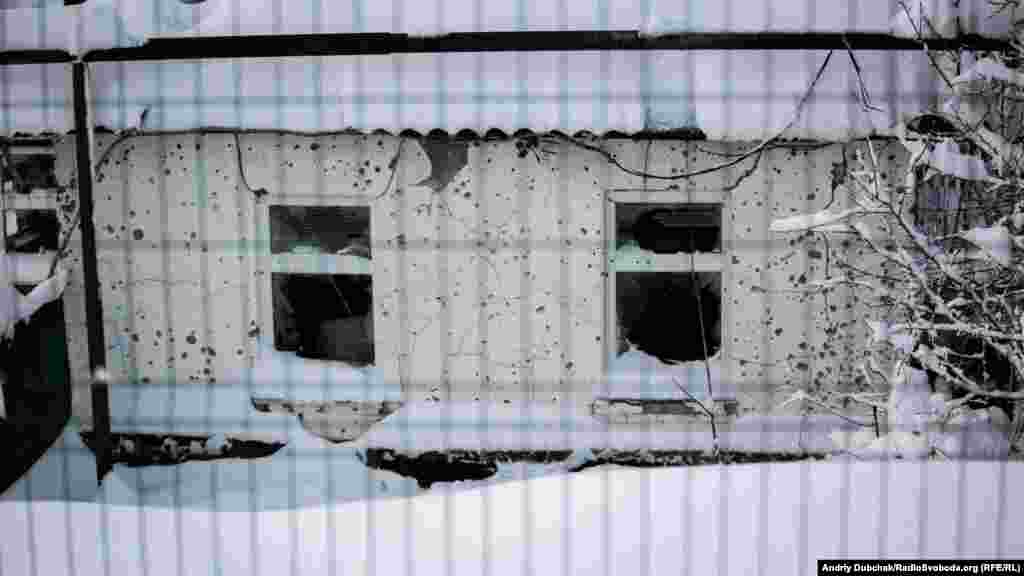
Signs of the heavy fighting that tore the area apart, particularly in the early days of the war, remain alongside the roadway.
15/17 Signs of the heavy fighting that tore the area apart, particularly in the early days of the war, remain alongside the roadway.
Crossing through the only corridor that remains open for people in Ukraine's Luhansk region to navigate the so-called line of contact.
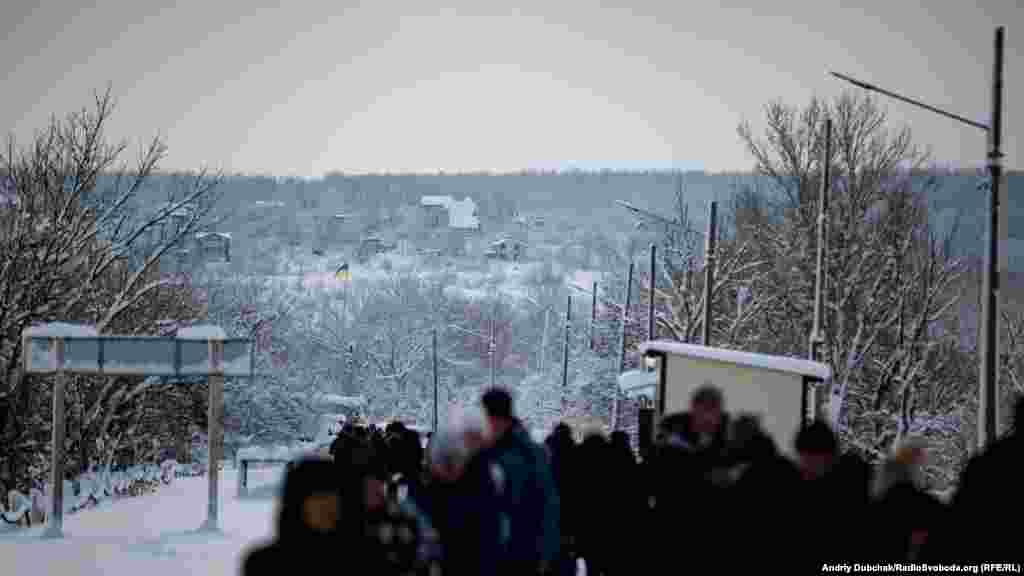
A last Ukrainian flag marks the edge of territory safe for RFE/RL&#39;s correspondents. In the empty houses on the hill, snipers often set up after the &quot;border&quot; closes at 5 p.m. A Ukrainian soldier was wounded by a sniper firing from this hill around one week before RFE/RL visited.<br />
<br />
&nbsp;
16/17 A last Ukrainian flag marks the edge of territory safe for RFE/RL's correspondents. In the empty houses on the hill, snipers often set up after the "border" closes at 5 p.m. A Ukrainian soldier was wounded by a sniper firing from this hill around one week before RFE/RL visited.

 
Crossing through the only corridor that remains open for people in Ukraine's Luhansk region to navigate the so-called line of contact.
The farthest point our photographer walks before returning to government-held territory. A little farther on is a bridge that was destroyed by separatist forces in 2015. There appears to be little political will on either side to fix or replace the bridge.
17/17 The farthest point our photographer walks before returning to government-held territory. A little farther on is a bridge that was destroyed by separatist forces in 2015. There appears to be little political will on either side to fix or replace the bridge.
Crossing through the only corridor that remains open for people in Ukraine's Luhansk region to navigate the so-called line of contact.
Previous slide
Next slide

'Friendship Of The Peoples' Is A Street Divided Between Ukraine, Russia

By Tony Wesolowsky, Anastasia Magazova, and Andriy Dubchak

MILOVE, Ukraine -- Friendship Of The Peoples Street used to be more like a bridge, with the lives of residents in the Ukrainian border town of Milove intersecting with their neighbors just a stone's throw away in Russia's Chertkovo.

But today, a lengthy barbed-wire fence bisects the street, and patrols and checkpoints make clear that the relationship is not what it was.

Russian border guards built the 3-meter-high barrier four months ago, separating families and neighbors who had crossed freely between the two towns for decades.

"See that guy there?" asks Olena with a laugh as she points toward the fence. "He's already standing in Russia."

But the resident of Milove, who gave only her first name, is not joking. Her town lies in Luhansk Oblast, which has been riven by a war in eastern Ukraine between Kyiv and separatist forces. The man she points to is in Rostov Oblast, part of Russia, which is backing separatists in Ukraine's Luhansk and Donetsk regions.

The once-neighborly relationship turned chilly in 2014, when Russia seized Ukraine's Crimean Peninsula and sided with the separatists in Ukraine's eastern Donbas region.

The fighting has claimed more than 10,300 lives and prompted the West to impose sanctions against Russia, which denies involvement in the conflict despite a raft of evidence proving otherwise.

Milove has largely avoided the violence that has plagued other areas of Luhansk, parts of which are controlled by separatists, but Olena says the fence --erected amid deteriorating relations -- has compounded economic hardships for Milove residents.

"Russians bought fruits and vegetables here because they were cheaper and better. Now, small businesses are having a tough time," she says.

READ THE FULL STORY HERE.

19:17 13.1.2019

20:54 13.1.2019

That concludes our live-blogging of the Ukraine crisis for January 13, 2019. Check back here tomorrow for more of our continuing coverage.

11:20 14.1.2019

Load more

XS
SM
MD
LG