





From RFE/RL's news desk:
Putin Rejects Criticism Of His Plan To Grant Russian Citizenship To Ukrainians
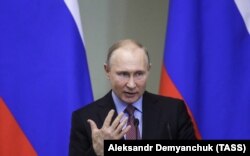
Russian President Vladimir Putin has rejected international criticism about his decision to ease the process of granting Russian citizenship to Ukrainians in territory of eastern Ukraine that is held by Russia-backed separatists.
Putin told journalists in Vladivostok on April 25 that Kyiv's objections to his decree were "strange."
He defended the move, announced on April 24, by claiming that his decree was similar to policies in European Union member states like Romania and Hungary that grant citizenship to "their own ethnic kin living outside their borders."
Putin's decree drew a swift and angry response from Kyiv, the United States, Britain, and the European Union.

Ukraine's foreign minister called it "aggression and interference" in Kyiv's affairs and a Western diplomat told RFE/RL that it was a "highly provocative step" which would undermine the situation in the war-ravaged region known as the Donbas.
President Petro Poroshenko said that with this decree "Russia is torpedoing the peace process in the Donbas."
Ukraine's mission to the United Nations posted on Facebook that Kyiv had "asked that the UN Security Council call a session to discuss Russia's brazen decision to issue Russian passports in the temporarily occupied Ukrainian territory."
The U.S. State Department also criticized Russia's move, saying Moscow "through this highly provocative action, is intensifying its assault on Ukraine’s sovereignty and territorial integrity."
Frozen Conflicts
Critics point to other frozen conflicts in former Soviet republics where Russia has granted citizenship to residents of separatist-held territory in order to choreograph demographic changes over time and justify future military operations.
In 2002, the Kremlin began granting Russian citizenship to residents of Georgia’s breakaway regions of Abkhazia and South Ossetia -- a policy that helped raise the number of Russian passport holders there from about 20 percent to more than 85 percent of the population.
Then, when Russia went to war against Georgia in August 2008, the Kremlin justified its deployment of Russian military forces in Abkhazia and South Ossetia by saying those forces were needed to protect Russia citizens in the separatist regions.
Russian media reports say Russia has also issued its passports to nearly half of the residents of Moldova’s Moscow-backed breakaway region of Transdniester.
That policy has raised concerns in Chisinau that the Kremlin may use a similar argument of defending its citizens in order to justify future Russian military operations in Transdniester.
Russia has maintained a "peacekeeping" force of 1,200 troops in the Transdniester region along the border with southeastern Ukraine since they were deployed there in 1992 in support of Transdniester separatists who were fighting against Moldovan government forces.
NATO describes Russia's protracted military presence in Moldova's frozen conflict as illegal.
NATO and the United Nations General Assembly have both urged Russia to withdraw its military forces from the breakaway Moldovan territory.