




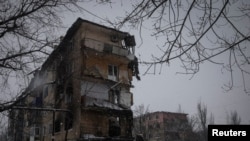
Since Kyiv and its European backers panned a 28-point US proposal for a deal to end Russia’s invasion of Ukraine, warning that it was skewed in Moscow’s favor, Ukraine and the United States have been trying to hash out a revised blueprint known as the 20-point plan.
Following a meeting with Ukrainian President Volodymyr Zelenskyy in Florida on December 28 -- bookended by phone calls with Russian President Vladimir Putin -- US President Donald Trump said that after nearly four years of full-scale war and inconclusive Russia-Ukraine talks earlier in 2025, a deal could be “closer than ever.”
But Trump also said that “one or two very thorny issues” remained, and that a peace pact -- something he has sought avidly since he took office for a second time in January -- might not happen.
Trump was referring to one major sticking point -- territory, particularly in the eastern region known as the Donbas -- and possibly also to the future of the massive Zaporizhzhya power plant, which Russian forces seized shortly after the start of the full-scale invasion in February 2022.
There are other potential barriers to a deal, too, including issues related to security guarantees for Kyiv and a potential referendum in Ukraine on any pact to end Russia’s invasion. Increasingly tough talk from Moscow, meanwhile, has amplified questions about the fate of the 20-point plan and the peace efforts more broadly.
Here’s a look at some of the biggest hurdles to an agreement.
The Donbas
Russia launched the full-scale invasion eight years after it seized Crimea and set off a war in the Donbas -- the Donetsk and Luhansk regions in eastern Ukraine.
Today, Russia controls almost all of Luhansk and more than three-quarters of Donetsk, where it has fallen short of full conquest despite continuous, intense fighting. More than 1.5 million soldiers on both sides have been killed or wounded in the war, according to Western estimates.

The question of control over the part of the Donetsk region that Ukraine still holds, which includes sizable cities and fortifications that could be crucial to turning back further Russian advances, is perhaps the biggest impediment to a peace agreement.
Moscow has long demanded that Ukraine cede the entirety of Donetsk, one of five Ukrainian regions that the Kremlin now baselessly claims belong to Russia, and Putin has repeated several times recently that Russia will take the rest of the province by force if diplomacy does not put it in Moscow’s hands.
Ukraine says it will not formally cede any part of the country and sees no reason to reward Russia’s aggression by handing it, de facto or de jure, a hunk of land it has failed to overrun.
Ukraine and the United States have discussed a potential compromise in which that part of the Donbas would become a demilitarized zone or a free economic zone, with Ukrainian forces withdrawing and Russian troops barred from entering.
Zelenskyy signaled last week that he is open to such a plan, if Ukrainians support it, but that if Ukraine withdraws its troops Russia should do the same, pulling its forces back a comparable distance.
The Kremlin has indicated it would not agree to move its forces backward under any scenario that does not recognize the entirety of the Donbas as Russian and allow it to patrol the area with police and national guard units -- which in some cases are heavily militarized.
Zelenskyy, on the contrary, has suggested that demilitarized areas could be policed by Ukraine, with international forces monitoring the line of contact between the two sides.
The Power Plant
The apparently unfinished 20-point peace framework has not been released publicly, though Zelenskyy outlined it after his talks with Trump at the Mar-a-Lago resort on December 28. Territory was one of the issues he said the US and Ukraine had not yet agreed on; the other was the future of the Zaporizhzhya nuclear power plant.
With six reactors, the plant on the Dnieper River in southeastern Ukraine is Europe’s largest. Seized by Russia in early March of 2022, it is not producing electricity but needs an external power supply -- intermittently jeopardized by attacks -- to cool water and prevent a meltdown.
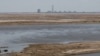
Zelenskyy said the United States has proposed joint management, and profit sharing, by the US, Ukraine, and Russia. Ukraine opposes that and is instead calling for US-Ukrainian control, with the US sending half of the energy produced to Russia if it wishes.
Russia has given no indication it would agree to that, or to any arrangement requiring Moscow to entirely cede control over the plant. The issue is complicated by the fact that Zaporizhzhya is one of the five mainland Ukrainian regions -- along with Donetsk, Luhansk, and Kherson -- that Moscow has claimed since September 2022 belong to Russia.
Other Obstacles
That claim, which is almost universally rejected internationally, also throws up additional potential obstacles to a peace deal. The 28-point proposal stipulated that the front lines in Zaporizhzhya and Kherson would be frozen, but Putin has suggested in recent comments that Russia might try to take the sizable portions of those two regions that it does not now control, including both capitals, if a satisfactory peace deal is not reached.
Also, Ukraine wants Russia to withdraw from other regions where it occupies smaller portions of land -- Sumy, Kharkiv, Dnipropetrovsk, and Mykolayiv -- before a peace deal takes effect. Russia seems unlikely to agree to that without at least gaining control over of the Donbas, or recognition of the Donbas as Russian territory, or both.
Other potential obstacles are inherent in Kyiv’s drive for Western security guarantees that it says are crucial to ensure that a peace deal does not leave Ukraine vulnerable to potential further attacks.
Russia has repeatedly said that troops from NATO countries must not be deployed to Ukraine, and it has demanded a permanent bar on Ukraine joining the alliance -- something that the 20-point plan, as presented by Zelenskyy, does not include. It does call for Western countries to provide Ukraine with “Article 5-like” guarantees, a reference to the NATO treaty’s stipulation that an armed attack on one member is considered an attack on all.
Tough Talk, Tough Talks
Another potential snag: Zelenskyy has said that potential territorial concessions and other aspects of a peace agreement should be put to a popular vote in Ukraine and has called for a cease-fire of at least 60 days to prepare for such a referendum.
Russia has repeatedly rejected calls for a cease-fire, saying that a permanent peace deal is what’s needed. In a marathon televised appearance on December 19, Putin said Moscow could hold its fire for a single day if Ukraine holds elections and allows Ukrainians living in Russia to vote.
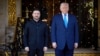
Putin repeated longstanding Russian demands in the 4 ½-hour performance, harshly criticizing Ukraine’s leadership and giving no signal that Moscow is ready to make substantial concessions to end the war. Since then, Russia has sharpened its rhetoric, if anything, and Putin’s spokesman said Moscow would “toughen [its] negotiating position" after what Moscow claims was a Ukrainian attempt to attack a residence frequently used by Putin with dozens of drones. Zelenskyy dismissed the claim as a "lie."
The upsurge of tension could undermine efforts to forge a deal, and Russia’s tough talk underscores a fundamental question: Does Putin want peace? Many analysts say that at least for now, he feels no need to go for a peace pact if he believes it would leave Russia too far short of what they say is one of his main goals in the war: subjugating Ukraine.
In a New Year's address to the nation, Putin voiced confidence in Russia's "victory" in the war and made no mention of peace or the efforts to achieve it.
“The core issue with the current Ukraine peace efforts is that the framework developed between the US and Ukraine -- while incorporating some Russian interests -- remains fundamentally unacceptable to Moscow,” Tatyana Stanovaya, a senior fellow at the Carnegie Russia Eurasia Center who has studied Putin and the Kremlin for years, wrote on X on December 30.

