




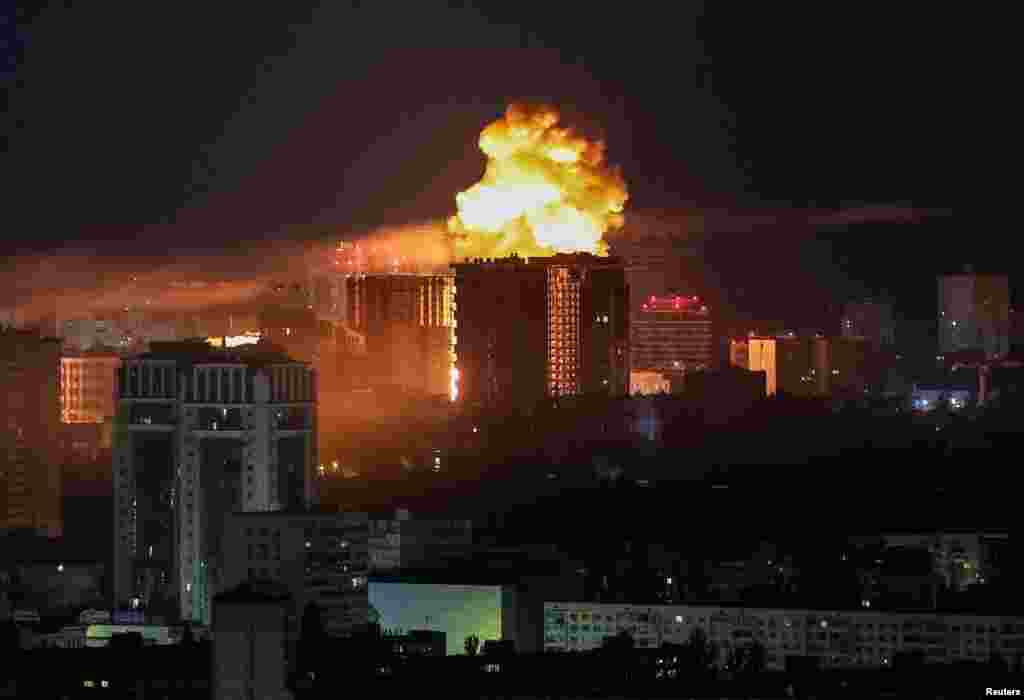
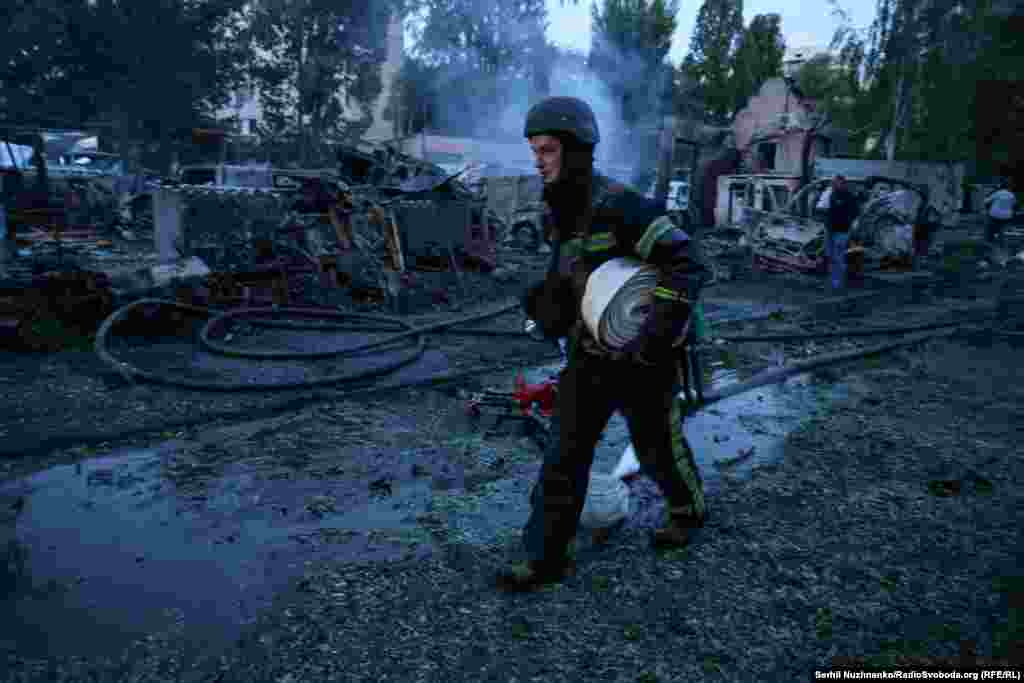
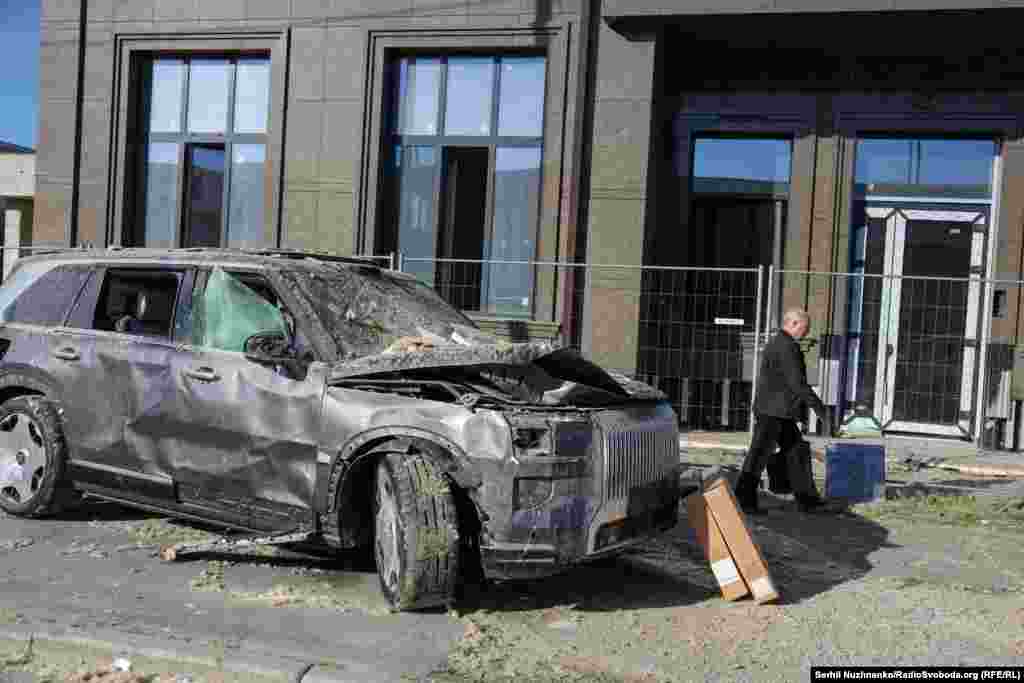
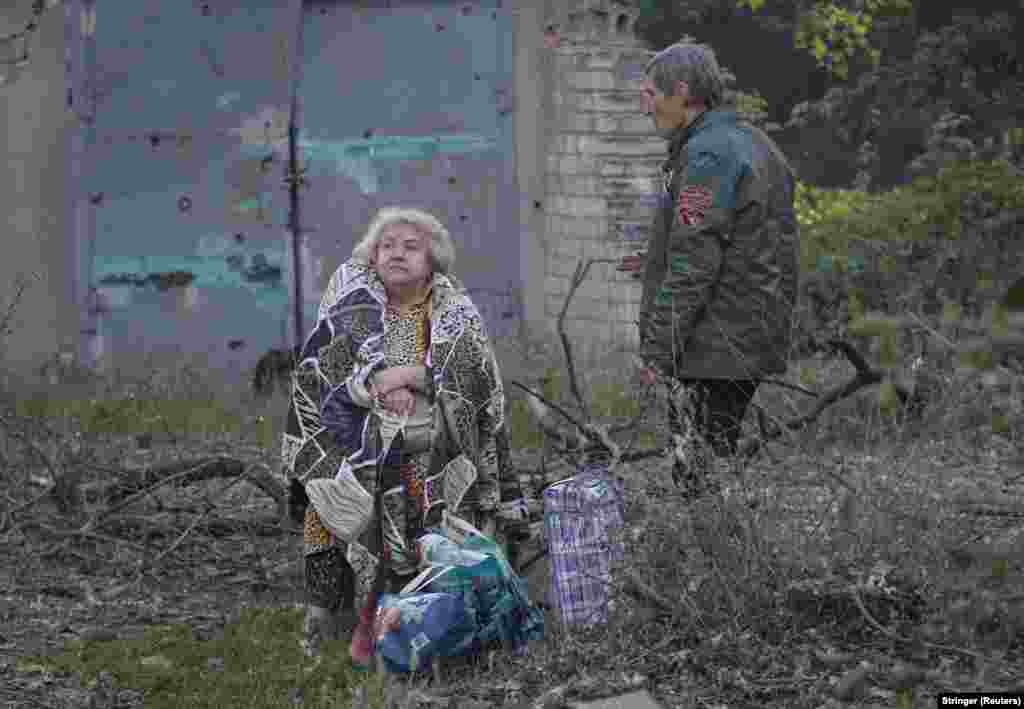
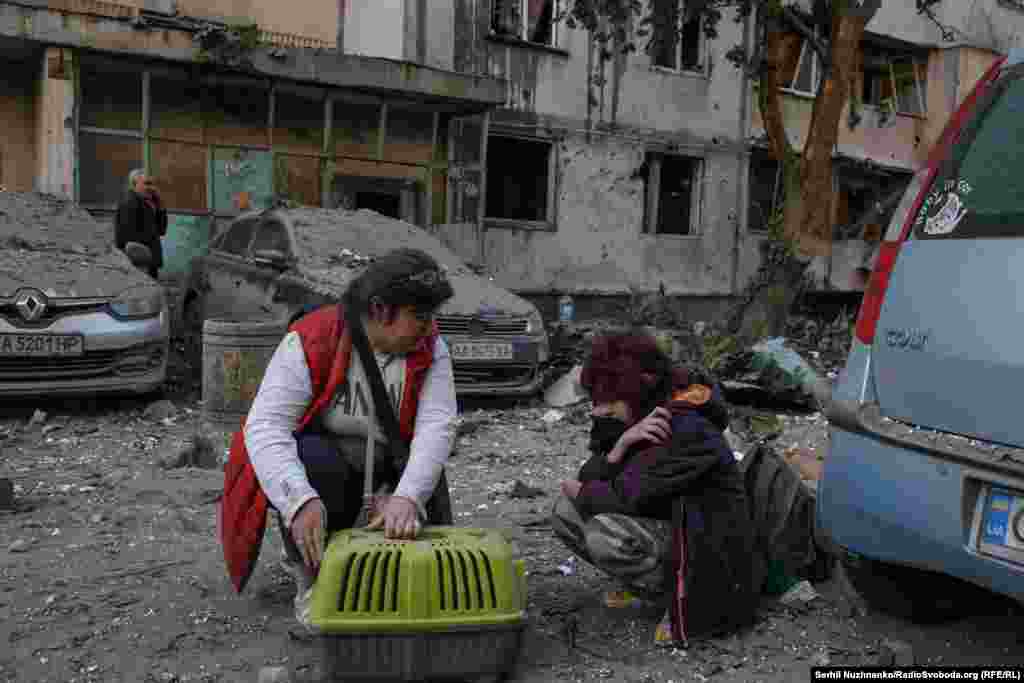
KYIV -- Despite more than four years of full-scale war and repeated attacks on civilian infrastructure, Ukrainians were shocked by the intensity of the latest Russian missile and drone barrage overnight that left death and destruction in Kyiv, Dnipro, and other cities.
The June 2 attack came days after Moscow warned of further strikes on the capital, including against what it called Ukraine's "decision-making centers," and urged foreign citizens and diplomats to leave the city.
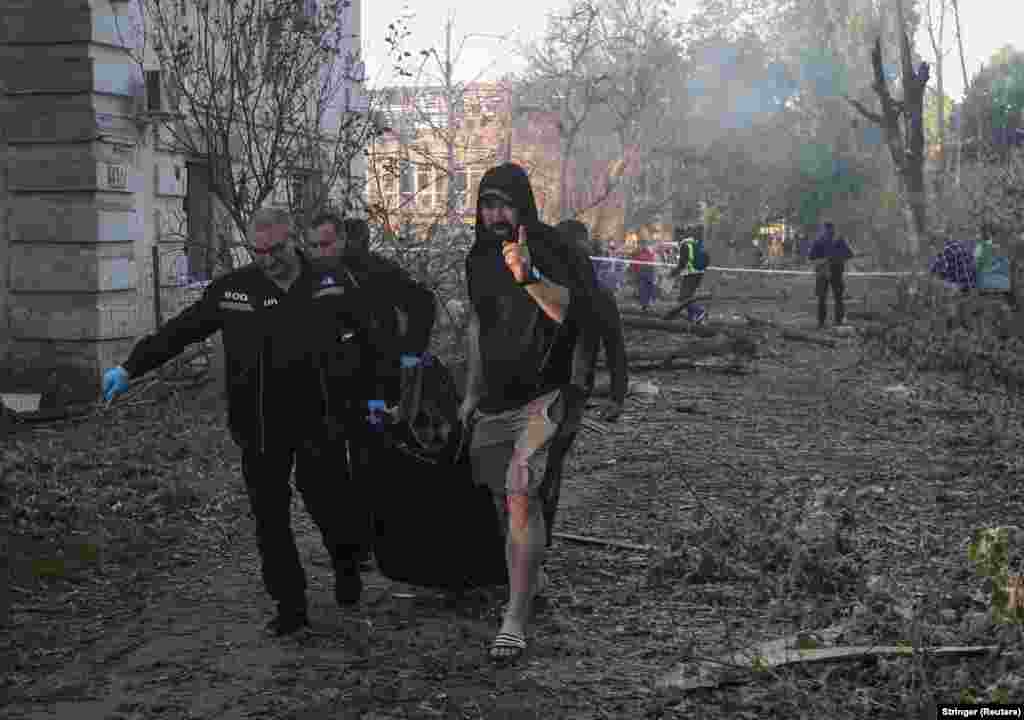
Russia pummeled the Ukrainian capital in a major drone-and-missile assault, the second such attack in less than a month, killing at least six people and wounding more than 70 others, including three children. The southeastern city of Dnipro was also hammered, with 16 people killed.
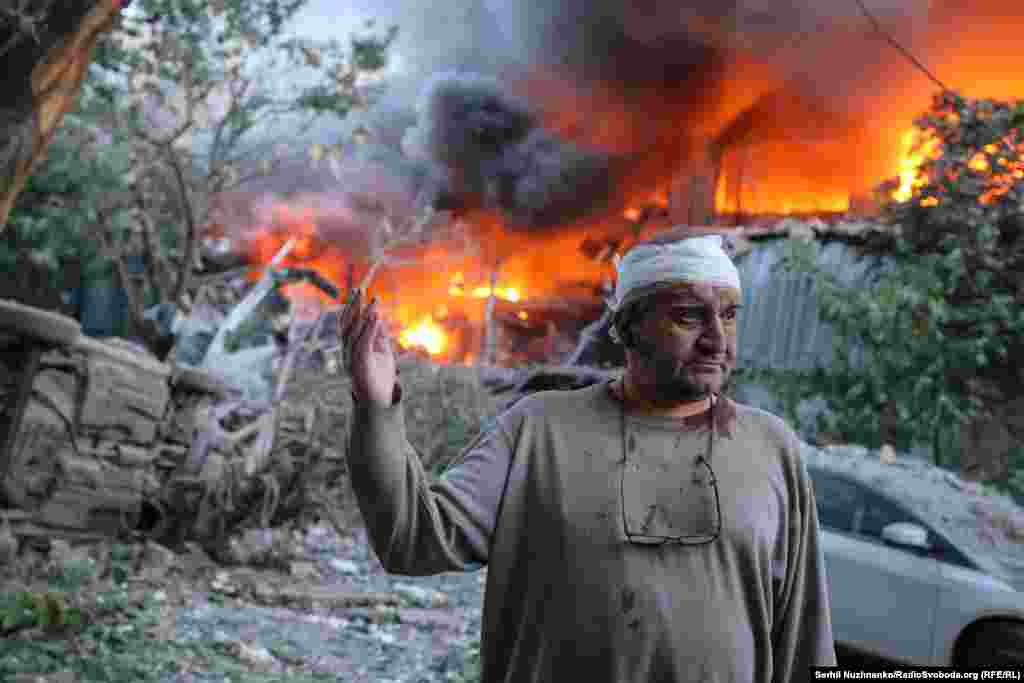
"The blast was so strong that debris ended up in my pockets, and I could barely find my apartment keys," Serhiy, a Kyiv resident who was outside the building at the time of the strike, told RFE/RL at the scene of the attack.
Ukrainians Face The Devastation After Massive Russian Attacks
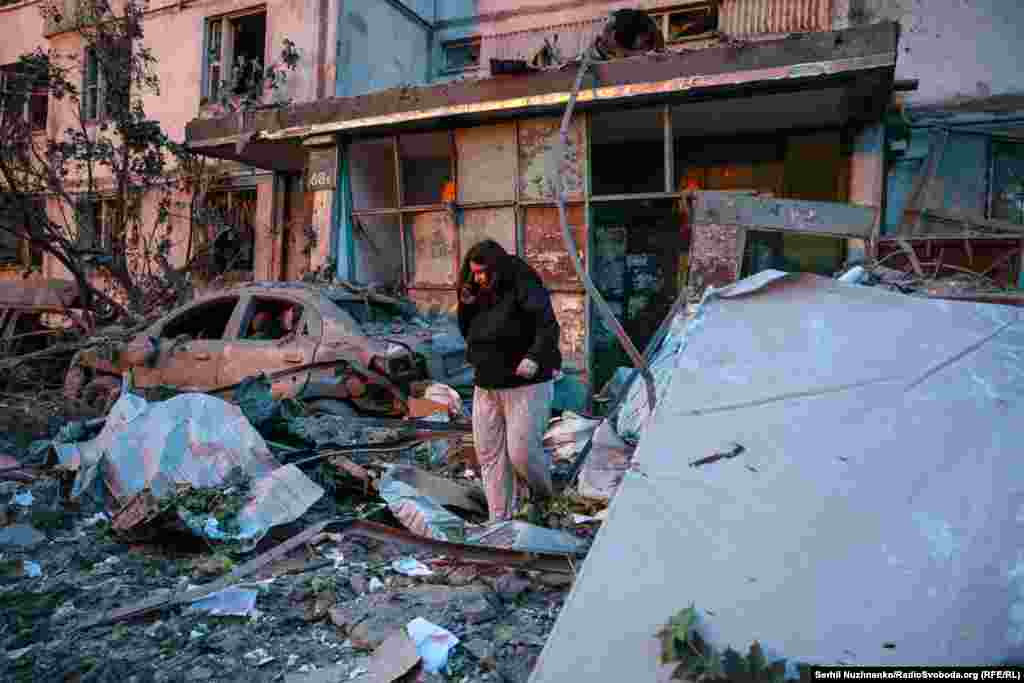
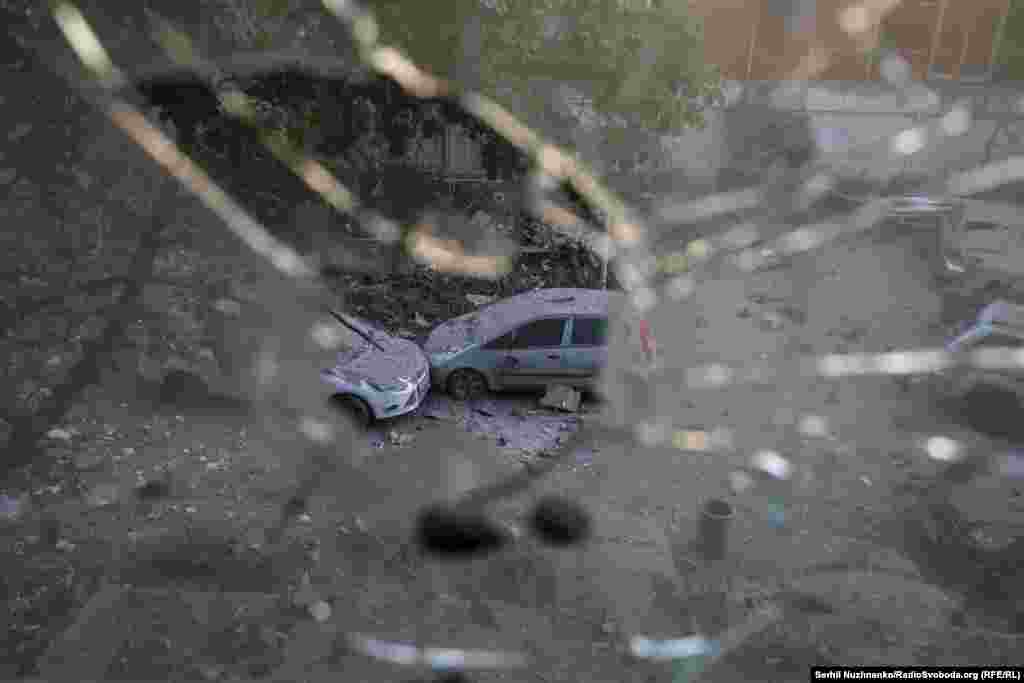
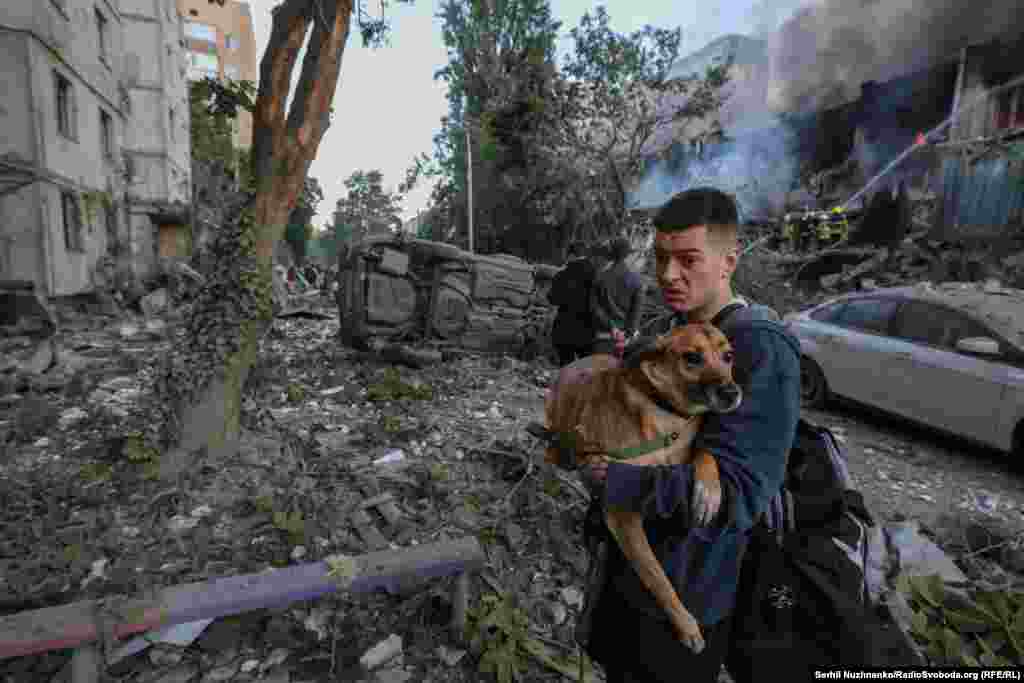
"We were just about to get into the car and leave," said Yulia, another Kyiv resident.
"The blast threw us onto the car," she added.
"It's some kind of incredible miracle," she said, describing how she and her family survived the attack.
Russia Confirms 'Systematic Strikes'
Russia's Defense Ministry confirmed its forces carried out the large-scale strikes using "long-range precision weapons" in response to what it called "terrorist acts" against targets inside Russia, adding that it hit several military facilities in Kyiv and other Ukrainian cities.
"The Russian Armed Forces are carrying out systematic strikes against Ukraine's military infrastructure, including targets in Kyiv and other cities," Kremlin spokesman Dmitry Peskov said during a briefing on June 2.
Russia launched 73 missiles and 656 drones overnight, with strikes recorded at 38 locations across Ukraine, primarily targeting Kyiv, the Ukrainian Air Force said.
In Kyiv, a victim told Current Time that "it was just terrible."
"I'm still shaking, my whole body is shaking. I don't know how to explain it," said Yevhen Dniprovskiy.
"It was absolutely terrifying," a Dnipro resident told RFE/RL, describing the Russian strike on the city. "The building was shaking so violently that I thought it was going to collapse," she added.
Ukrainian President Volodymyr Zelenskyy condemned the deadly attacks, saying "dozens of residential buildings and other purely civilian infrastructure" were damaged.
"A large-scale attack and an absolutely clear statement from Russia: If Ukraine is not protected from ballistic and other missile strikes, these attacks will continue," he wrote in a post on X.
Russia's June 2 strikes relied heavily on ballistic missiles, including Iskander, Kinzhal, S-400, and reportedly North Korean missiles, Ukrainian military expert Pavlo Lakiychuk said in an interview with Current Time.
According to Lakiychuk, defending against Russia's ballistic missile attacks remains extremely difficult, particularly in cities like Kharkiv, Dnipro, and Zaporizhzhya, where flight times are so short that air defenses have virtually no time to react.

'Terror Against Ukraine's Civilians'
Kyiv Mayor Viltali Klitschko reported damage to residential buildings, a clinic, a gas station, vehicles, and other infrastructure across several parts of the capital, with numerous fires, building collapses, and power outages.
"Russia continues terror against Ukraine's civilians," Ukraine's human rights ombudsman Dmytro Lubinets wrote in a post on X.
"The world must act. These attacks must stop. Every day of delay costs lives."
In the eastern city of Dnipro, local authorities said that at least 37 people, including children, were also injured in the attacks.
Emergency services reported six Dnipro residents were missing. Among those killed was a rescuer who was responding to the attack.
Dnipro Mayor Borys Filatov said that "Russian monsters" once again struck a densely populated residential area with at least 49 residential buildings were damaged, seven of them virtually destroyed beyond repair.
"Twenty-three people were hospitalized, including a 13-year-old girl. Doctors described her condition as moderate. Three of the injured are in serious condition," Governor Oleksandr Hanzha wrote in a Telegram post on June 2.
"The Russian attack on the Dnipro cut short the life of a little boy. Rescuers retrieved the body of a child born in 2023 from the rubble of a four-story building damaged by the attack," he added later in a post on Telegram.
In Kharkiv, Ukraine's second-largest city, Russian drone and ballistic missile attacks early on June 2 injured at least six people, including an 11-year-old girl, and caused fires and damage to homes, vehicles, and other buildings, according to Mayor Ihor Terekhov.
"Putin is a war criminal and a loser who has no cards left except terror," Ukrainian Foreign Minister Andriy Sybiha said following Russia's June 2 attack.
"Moscow is losing on the battlefield. No number of missiles can change that," he added.
Sybiha urged partner countries "to act" by boosting military support for Ukraine, increasing pressure on Russia through new sanctions and isolation, and advancing Ukraine's EU accession talks.
"Terrorists in Moscow must realize that their brutal attacks will get them nowhere, that the price for their regime will only increase, and that the only way out for Putin is to end this war immediately," Sybiha wrote in a post on X.
Russian Threats Against Kyiv
On May 25, Russia's Foreign Ministry said that Foreign Minister Sergei Lavrov had warned US Secretary of State Marco Rubio in a call that Moscow was planning to launch "systematic and consistent strikes" against Ukrainian military sites in Kyiv and "relevant decision-making centers."
Lavrov also advised that US citizens and diplomats should be evacuated from Kyiv.

Ukraine's Foreign Ministry condemned the Russian warning as "shameless blackmail" intended to intimidate foreign diplomats and international organizations based in Kyiv.
"Russia wants fear. Panic. The isolation of Ukraine," Katarina Maternova, Ukraine's ambassador to the European Union, said in a post to Facebook. "It will not work."
Foreign diplomats also pushed back against the warning.
Russia has justified its increasing threats by citing an attack on a school dormitory in the Russian-occupied Ukrainian region of Luhansk in May.
Local officials said more than 20 people were killed in the town of Starobilsk. Russian authorities accused Ukraine of deliberately targeting a civilian site.
Ukrainian military officials said their forces had struck the headquarters of a Russian drone unit and rejected allegations that civilian facilities had been targeted.

