


Accessibility links

Breaking News

Digital Dragnet: In Search Of Soldiers For Its War Against Ukraine, Russia Takes Draft Notices Online 

Updated
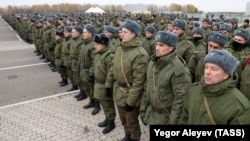
Mobilized Russian citizens line up at an assembly station in Kazan on October 23 before departing for the front lines in Ukraine.

As the first body bags of Russian soldiers drafted in what the Kremlin called a “partial mobilization” began to return home from Ukraine last October, President Vladimir Putin announced that the unpopular call-up he had decreed just weeks earlier would soon come to an end.

“I think that within two weeks all mobilization activities will be completed,” Putin said on October 14, as he said it was nearing the target of 300,000 personnel. "There is nothing additional planned.”

Now, six months later and following massive Russian casualties in battles for Bakhmut and other places in Ukraine’s Donbas region, the Kremlin appears to be paving the way for further call-ups to address its chronic manpower shortage ahead of what could be a major counteroffensive by Kyiv, experts say.

The Russian parliament, which takes its cues from the Kremlin, swiftly passed legislation this week that allows for electronic draft notices, which analysts and critics say could make it much harder for Russians to avoid conscription. Putin signed the bill into law on April 14.

Under the law, the Russian government now considers individuals legally summoned for military duty if a message has been sent to their personal accounts on Gosuslugi, the state public services website, or if their name has appeared on a publicly available online list of those summoned.

The legislation aims to end the decades-old practice of dodging hand-delivered draft notifications, which currently remains the only legal way to summon an individual to a recruitment office.

Simultaneously, the law calls for the creation of an electronic registry of all people required to serve. The registry will collect extensive personal data, such as name, address and passport details, as well as medical, education, tax, criminal, voting, and employment records from numerous government organizations, including the police and communal services agency. The registry will also contain a publicly available list of those who have been summoned for service.

$4,000 To Fight: What Russia's Military Recruitment Looks Like
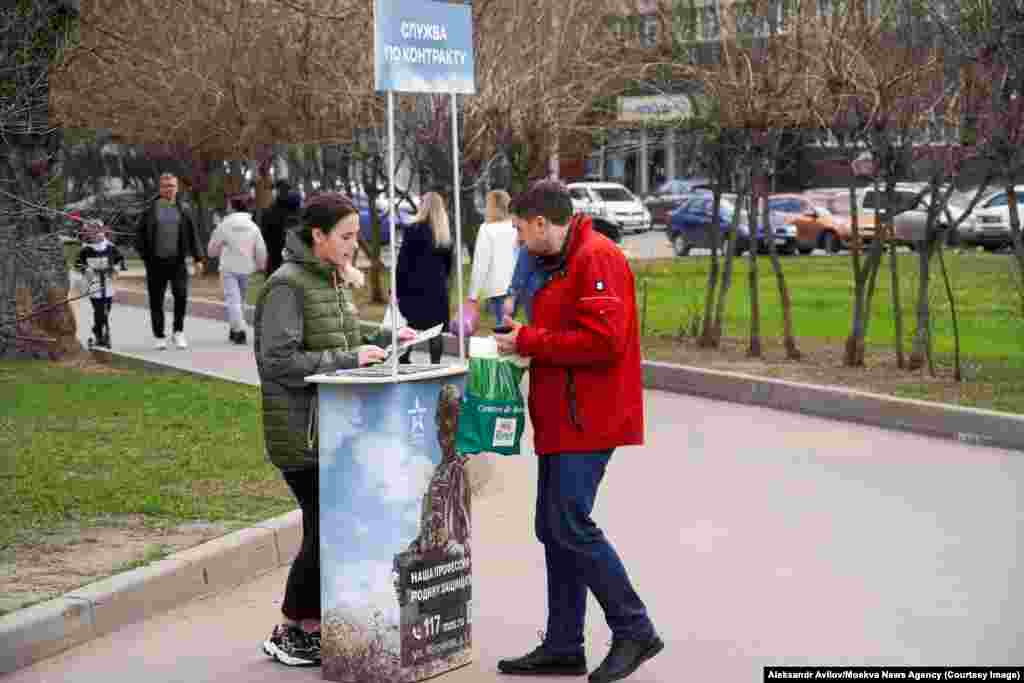
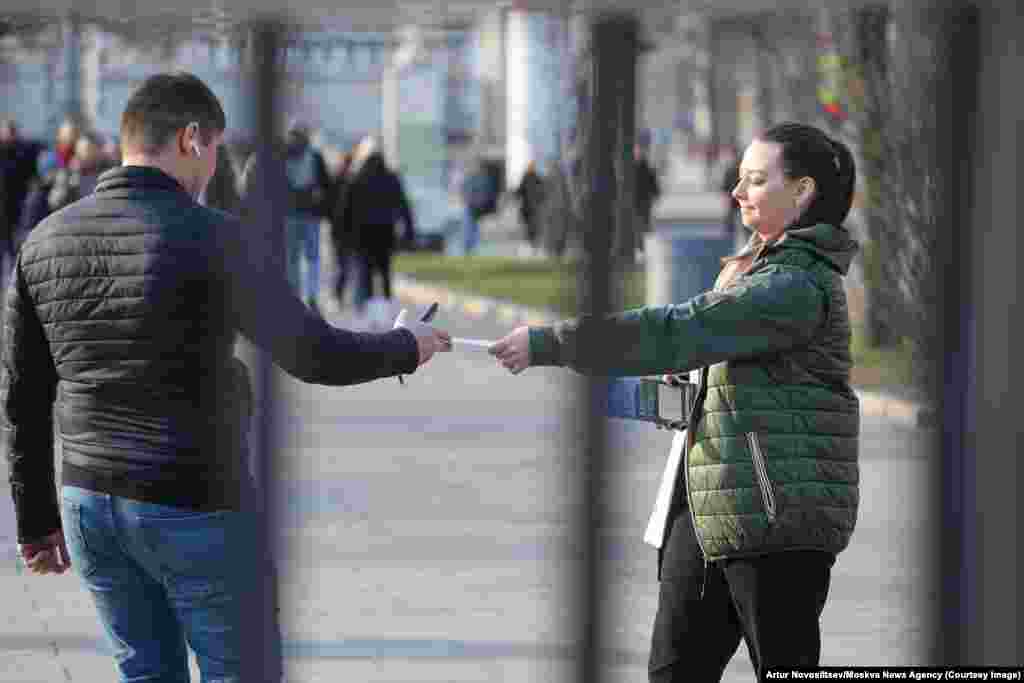
This April 13 photo shows a booth in Moscow offering contracts to those willing to take part in the invasion of Ukraine.
1/7 This April 13 photo shows a booth in Moscow offering contracts to those willing to take part in the invasion of Ukraine.
Recent photos from the streets of Russia show a push to lure men into fighting in Ukraine with lucrative contracts.
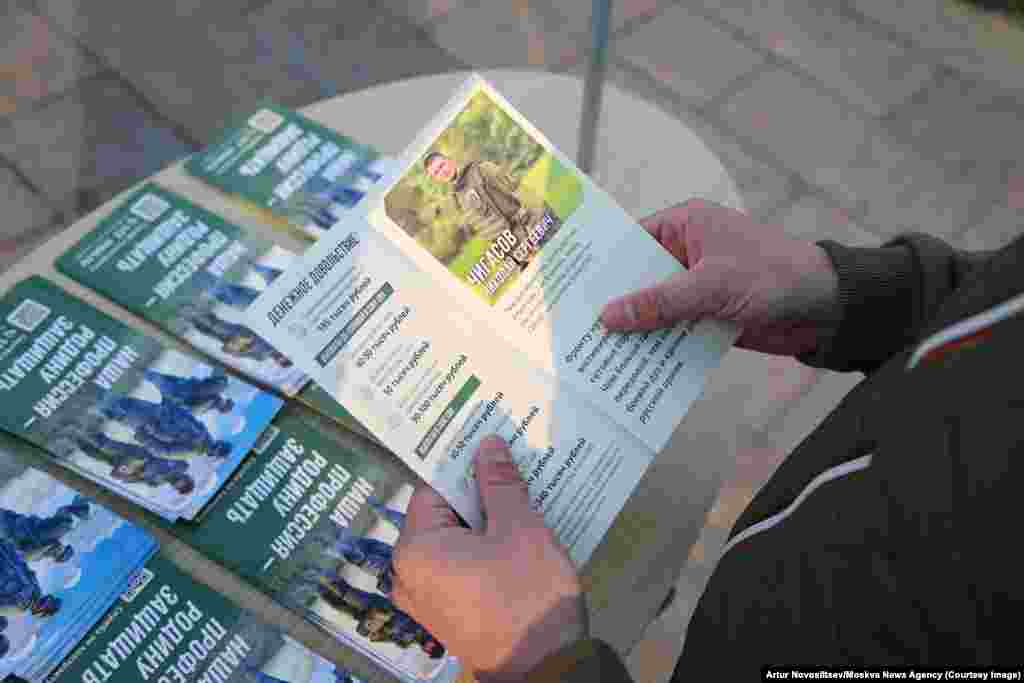
Brochures being handed out by the recruiters claim those who sign up will receive an initial lump-sum payment of 195,000 rubles ($2,390), followed by salaries of up to 340,000 rubles per month ($4,160) to take part in what the Kremlin calls its “special military operation” in Ukraine. 
2/7 Brochures being handed out by the recruiters claim those who sign up will receive an initial lump-sum payment of 195,000 rubles ($2,390), followed by salaries of up to 340,000 rubles per month ($4,160) to take part in what the Kremlin calls its “special military operation” in Ukraine. 
Recent photos from the streets of Russia show a push to lure men into fighting in Ukraine with lucrative contracts.
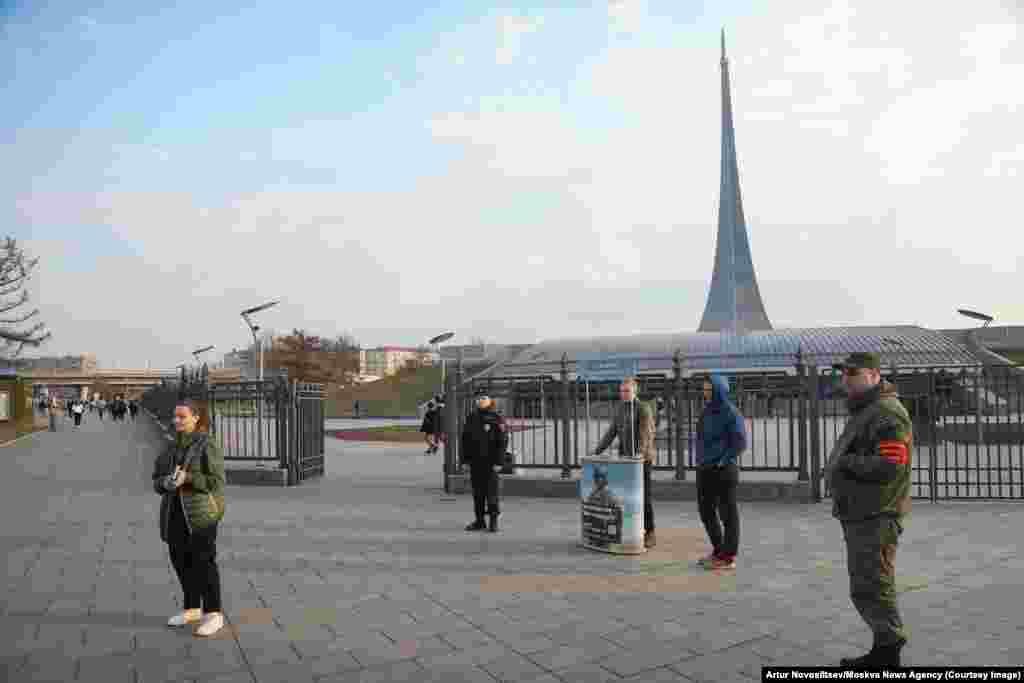
The booths, including this one outside Moscow’s Soviet-era Space Conquerer’s monument, are apparently part of an effort by the Kremlin to boost its foundering invasion of Ukraine without announcing another mass mobilization. 
3/7 The booths, including this one outside Moscow’s Soviet-era Space Conquerer’s monument, are apparently part of an effort by the Kremlin to boost its foundering invasion of Ukraine without announcing another mass mobilization. 
Recent photos from the streets of Russia show a push to lure men into fighting in Ukraine with lucrative contracts.
A September 2022 mobilization resulted in <strong><a href="https://www.bloomberg.com/news/articles/2022-10-04/more-russians-flee-than-join-putin-s-army-after-call-up-for-war?leadSource=uverify%20wall">hundreds of thousands</a></strong> of Russian men fleeing the country to avoid being drafted and sent to fight in Ukraine.<br />
<br />
Multiple reports of <a href="https://www.dailymail.co.uk/news/article-11286327/Russian-conscripts-revolt-border-saying-theyre-treated-cattle-given-zero-training.html#v-4561547402509961657">l<strong>ow morale and chaotic battlefield conditions</strong></a> emerged from those Russians who were sent to the front lines.<br />
<br />
&nbsp;
4/7 A September 2022 mobilization resulted in hundreds of thousands of Russian men fleeing the country to avoid being drafted and sent to fight in Ukraine.

Multiple reports of low morale and chaotic battlefield conditions emerged from those Russians who were sent to the front lines.

 
Recent photos from the streets of Russia show a push to lure men into fighting in Ukraine with lucrative contracts.
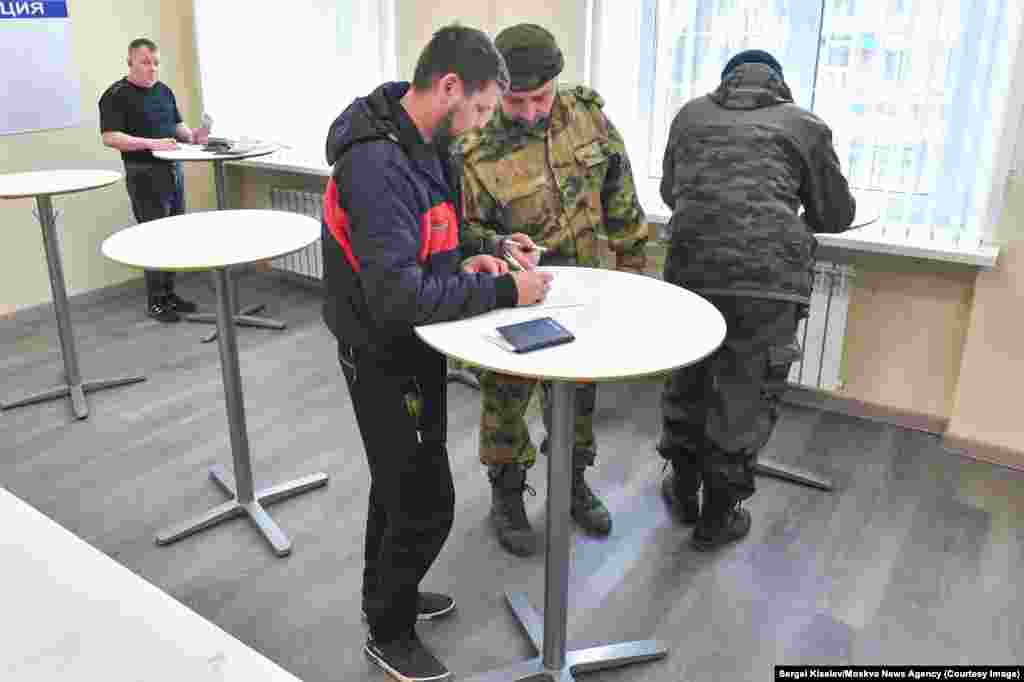
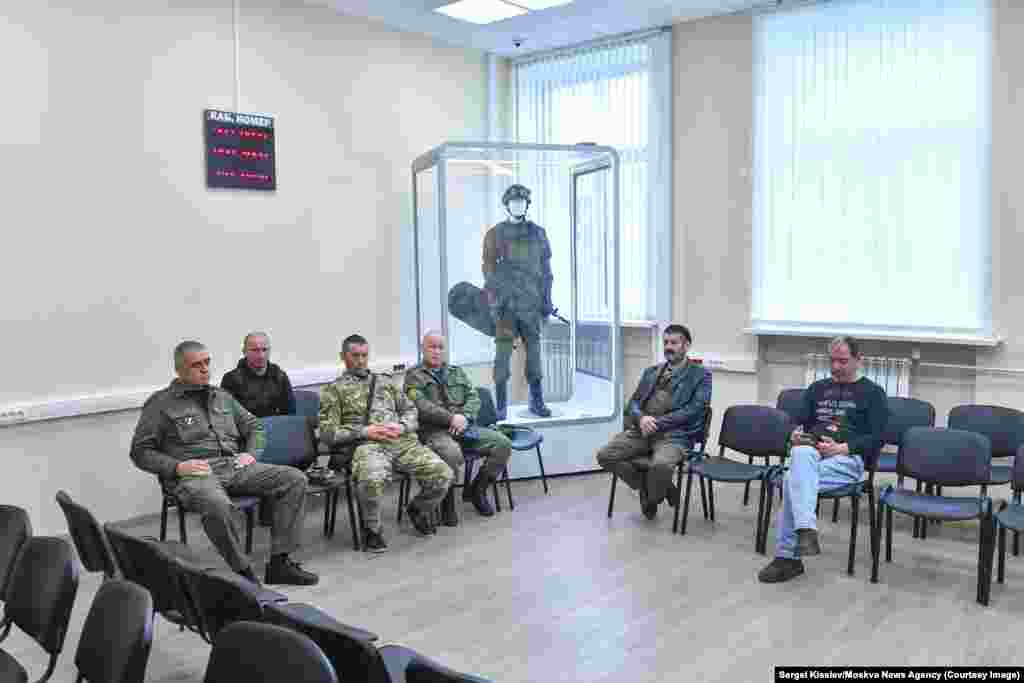
<div>These images from Moscow&nbsp;were taken by photographers from the Kremlin-linked Moskva News Agency and appear to show men signing up for military contracts.<br />
<br />
The caption on this April 3 photo describes the scene as the &ldquo;opening of a selection point for contract service.&rdquo;</div>

<div>
<div>&nbsp;</div>
</div>
5/7
These images from Moscow were taken by photographers from the Kremlin-linked Moskva News Agency and appear to show men signing up for military contracts.

The caption on this April 3 photo describes the scene as the “opening of a selection point for contract service.”
 
Recent photos from the streets of Russia show a push to lure men into fighting in Ukraine with lucrative contracts.
Men inside the Moscow military office.<br />
<br />
Russia&rsquo;s State Duma approved a law on April 10 giving digital conscription call-ups the same legal weight as papers being handed to draftees, making them effectively impossible to escape.
6/7 Men inside the Moscow military office.

Russia’s State Duma approved a law on April 10 giving digital conscription call-ups the same legal weight as papers being handed to draftees, making them effectively impossible to escape.
Recent photos from the streets of Russia show a push to lure men into fighting in Ukraine with lucrative contracts.
A poster advertising paid military service in St. Petersburg on April 12.&nbsp;<br />
<br />
Russian officials have claimed there will be no second mobilization wave. But the tweaked law on conscription has led many to assume another mass call-up may be imminent if the ongoing marketing push to attract paid fighters does not attract sufficient numbers.&nbsp;<br />
&nbsp;
7/7 A poster advertising paid military service in St. Petersburg on April 12. 

Russian officials have claimed there will be no second mobilization wave. But the tweaked law on conscription has led many to assume another mass call-up may be imminent if the ongoing marketing push to attract paid fighters does not attract sufficient numbers. 
 
Recent photos from the streets of Russia show a push to lure men into fighting in Ukraine with lucrative contracts.
Previous slide
Next slide

Now that the bill has become law, Russians between the ages of 18 and 27 who are sent a summons to serve their mandatory one-year military service will not be allowed to leave the country until they report to the military enlistment office.

While the law does not block those who have been summoned for mobilization from leaving the country, Russia had previously stopped some draftees who tried to leave. Moreover, border guards will have access to the online registry of those summoned for service and could potentially stop any individuals on it, experts say.

Men who fail to appear at the military enlistment office within 20 days of receipt of a summons -- regardless if it is for mandatory service by men ages 18-27 or a separate call-up -- will temporarily lose important rights, including the right to buy and sell a home, operate a car, borrow money, or open a business. Regional authorities will also have the right to halt their local benefits, including social payments.

They could also face criminal charges for avoiding the draft.

The Kremlin has described the legislation as an attempt to bring Russia’s archaic military recruitment infrastructure and procedures into the modern world.

'Hidden Mobilization'

Critics say it is a sign the government will mobilize more people, perhaps stealthily rather than in one fell swoop, in order to avoid public resistance and another exodus from Russia like the ones prompted by the invasion of Ukraine and then by the mobilization Putin ordered in September.

“They talk about the digitalization of military registration, sending subpoenas, but in fact this is a law on hidden mobilization,” Valeria Vetoshkina, a lawyer with the human rights group First Department, told Current Time in an interview.

Vetoshkina said the Kremlin is essentially implementing elements of martial law without formally imposing martial law.

Konstantin Sonin, a professor at the University of Chicago’s Graduate School of Public Policy Studies, who is from Russia, recommended people leave the country.

“The reason is simple: Now, any person, regardless of whether he took a summons or not, [or] has an account with Gosuslugi or not, can be arrested and convicted for not going to war,” Sonin said in a Facebook post.

Ukraine Pounds Russian Positions Near Bakhmut As Moscow's Forces Gain Ground

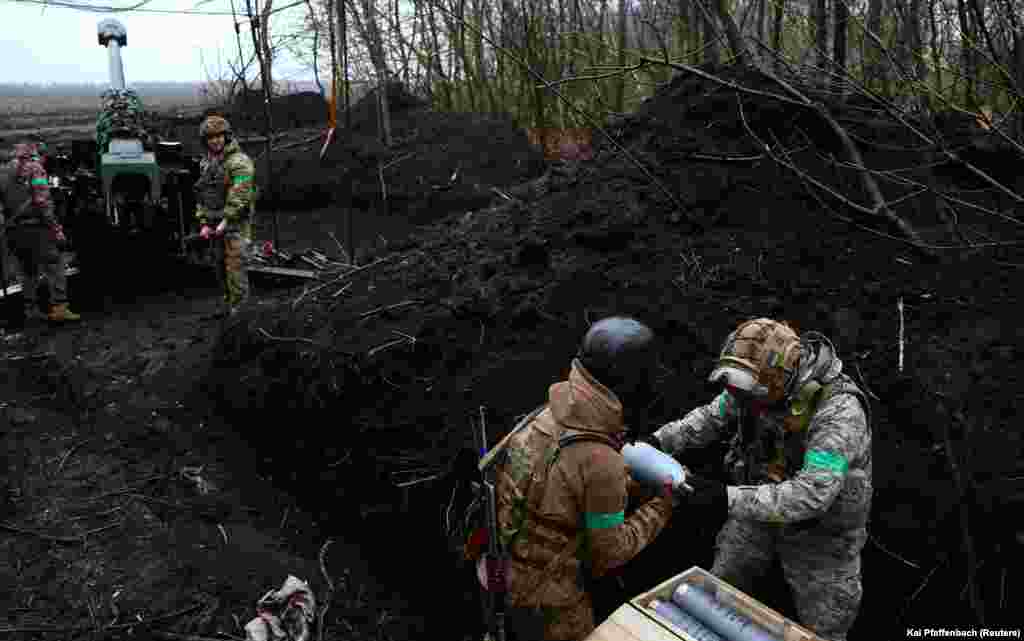
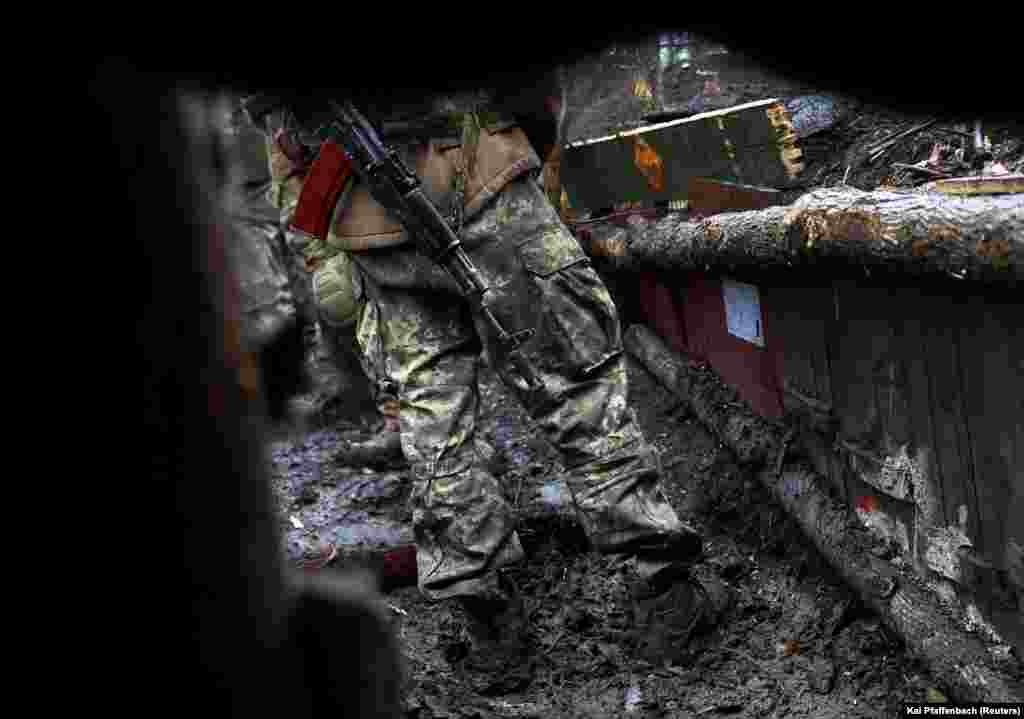
A Ukrainian artillery unit fires onto Russian positions near the ruined city of Bakhmut on April 13.<br />
<br />
The unit commander, Dmytro, said, &ldquo;If we had more weapons able to hit deeper into the enemy positions, we would be more useful in this war.&rdquo;<br />
&nbsp;
1/9 A Ukrainian artillery unit fires onto Russian positions near the ruined city of Bakhmut on April 13.

The unit commander, Dmytro, said, “If we had more weapons able to hit deeper into the enemy positions, we would be more useful in this war.”
 
As the Kremlin's "unrelenting" focus on capturing the ruined eastern Ukrainian city of Bakhmut grinds on at any cost, a Ukrainian artillery unit vows to punish their progress.
In an intelligence update on April 14, Britain claimed that Ukrainian troops were withdrawing from areas in Bakhmut as Moscow renewed intense artillery assaults. RFE/RL has no way to verify the claims.
2/9 In an intelligence update on April 14, Britain claimed that Ukrainian troops were withdrawing from areas in Bakhmut as Moscow renewed intense artillery assaults. RFE/RL has no way to verify the claims.
As the Kremlin's "unrelenting" focus on capturing the ruined eastern Ukrainian city of Bakhmut grinds on at any cost, a Ukrainian artillery unit vows to punish their progress.
Kyiv had appeared likely to abandon Bakhmut at the end of February but announced in March that it would fight on in hopes of inflicting higher casualties on Moscow&#39;s forces.
3/9 Kyiv had appeared likely to abandon Bakhmut at the end of February but announced in March that it would fight on in hopes of inflicting higher casualties on Moscow's forces.
As the Kremlin's "unrelenting" focus on capturing the ruined eastern Ukrainian city of Bakhmut grinds on at any cost, a Ukrainian artillery unit vows to punish their progress.
Kyiv admits that its forces have paid a heavy price in manpower and materials in defending &quot;Fortress Bakhmut,&quot; a city that held around 70,000 people before the war.
4/9 Kyiv admits that its forces have paid a heavy price in manpower and materials in defending "Fortress Bakhmut," a city that held around 70,000 people before the war.
As the Kremlin's "unrelenting" focus on capturing the ruined eastern Ukrainian city of Bakhmut grinds on at any cost, a Ukrainian artillery unit vows to punish their progress.
The Ukrainian military said on April 14 that its forces had&nbsp;<strong><a href="https://www.radiosvoboda.org/a/news-henshtab-vidbyto-49-atak/32363298.html" target="_blank">repelled 49 attacks</a></strong>&nbsp;by invading Russian forces over the previous day as intense fighting continued in and around Bakhmut.<br />
<br />
&nbsp;
5/9 The Ukrainian military said on April 14 that its forces had repelled 49 attacks by invading Russian forces over the previous day as intense fighting continued in and around Bakhmut.

 
As the Kremlin's "unrelenting" focus on capturing the ruined eastern Ukrainian city of Bakhmut grinds on at any cost, a Ukrainian artillery unit vows to punish their progress.
With nearly 80 percent of Bakhmut reportedly under the Kremlin&#39;s control, Kyiv is using its artillery to punish the advancing troops.
6/9 With nearly 80 percent of Bakhmut reportedly under the Kremlin's control, Kyiv is using its artillery to punish the advancing troops.
As the Kremlin's "unrelenting" focus on capturing the ruined eastern Ukrainian city of Bakhmut grinds on at any cost, a Ukrainian artillery unit vows to punish their progress.
&quot;The enemy isn&#39;t giving up on his plans to occupy our territory despite significant losses,&quot; the General Staff of the Armed Forces of Ukraine said in its daily update on April 14. &quot;The fiercest battles continue for Bakhmut and Maryinka,&quot; it added.
7/9 "The enemy isn't giving up on his plans to occupy our territory despite significant losses," the General Staff of the Armed Forces of Ukraine said in its daily update on April 14. "The fiercest battles continue for Bakhmut and Maryinka," it added.
As the Kremlin's "unrelenting" focus on capturing the ruined eastern Ukrainian city of Bakhmut grinds on at any cost, a Ukrainian artillery unit vows to punish their progress.
Taking control of the Bakhmut &quot;meat grinder,&quot; where thousands of soldiers are estimated to have been killed on both sides, would be a largely symbolic victory for Moscow. It would also allow its forces to focus on Ukrainian garrisons around Chasiv Yar and two other cities in the Donetsk region -- Kramatorsk and Slovyansk.
8/9 Taking control of the Bakhmut "meat grinder," where thousands of soldiers are estimated to have been killed on both sides, would be a largely symbolic victory for Moscow. It would also allow its forces to focus on Ukrainian garrisons around Chasiv Yar and two other cities in the Donetsk region -- Kramatorsk and Slovyansk.
As the Kremlin's "unrelenting" focus on capturing the ruined eastern Ukrainian city of Bakhmut grinds on at any cost, a Ukrainian artillery unit vows to punish their progress.
Kyiv says shortages of ammunition and equipment are hindering its ability to launch a counteroffensive.
9/9 Kyiv says shortages of ammunition and equipment are hindering its ability to launch a counteroffensive.
As the Kremlin's "unrelenting" focus on capturing the ruined eastern Ukrainian city of Bakhmut grinds on at any cost, a Ukrainian artillery unit vows to punish their progress.
Previous slide
Next slide

The public reaction to the bill was muted compared to Putin’s surprise mobilization announcement in September. Then, more than 300,000 people fled the country in the days and weeks following, most of them young adults. Roads leading to Kazakhstan and Georgia were clogged with Russian families seeking to escape.

However, there have been no signs of an increase in emigration since the lower house of parliament passed the bill on April 11, experts said.

“The explanation is simple. All who could leave -- who could afford it -- have left,” said Ivan Chuvilyayev, a spokesman for Idite Lesom (Go By The Forest), an organization that helps people avoid the draft.

This marrying of modern information technologies with the authoritarian governance is quite alarming."
-- George Barros, Institute for the Study of War

Chuvilyayev said that many men of military age who are still in Russia “don’t have money, don’t have savings, don’t have passports.”

He called emigration “a luxury, a privilege that many can’t afford.”

Nonetheless, Idite Lesom has received a surge in requests in the last few days from individuals seeking advice about how to leave the country or avoid the draft, he said.

The group’s prior recommendations -- do not open the door to strangers, reside at an address other than the one you are registered at, refuse to accept the paper summons -- have lost their validity with the new law.

Chuvilyayev recommended that potential draftees fill out an official form requesting an alternative to military service. If they are drafted, their request will be reviewed “for a long time” and keep them off the battlefield in the meantime, he said.

George Barros, an analyst at the Institute for the Study of War (ISW), a Washington-based think tank, said the electronic registry is another sign Russia is becoming a more intrusive police state than the Soviet Union.

“This marrying of modern information technologies with the authoritarian governance is quite alarming,” he told RFE/RL.

Manpower Shortages

Military analysts have been saying for months that Russia continues to face manpower shortages and will need to mobilize more men to prevent losing control over more land.

Russia’s armed forces have suffered about 200,000 casualties, according to an intelligence assessment by the United States.

That number may grow fast if Ukraine launches its much anticipated counteroffensive in the coming weeks or months.

They could have all the people in the world, but if they don't fix some of these larger fundamental issues, then they're still not going to have combat power."
-- George Barros, Institute for the Study of War

“Manpower will be a problem for the Russians over time,” Dara Massicot, a military analyst at the RAND Corporation, a U.S. think tank, told RFE/RL. “Their forces will eventually need replenishment this year. The question is how they will do it and whether it will be gradual call-ups or another large round in the summer or fall.”

Though Putin said the mobilization he announced in September would end in November, his decree is still valid, and men have continued to be called up in smaller numbers around Russia. Idite Lesom said Russia has been calling up between 10,000 and 20,000 a month since November, when the mobilization supposedly ended.

Massicot said the new legislation will potentially enable Russia to draft people in a more efficient manner. The call-up last fall was viewed as chaotic and mismanaged, even though it apparently achieved its goal within a short period of time.

Many men who had no military experience, serious health issues, or other reasons barring them from service received draft notices anyway, due to outdated information or other problems.

Police and draft officials kept watch outside the entrances to subways and residential buildings to catch men eligible for mobilization, a cause of public discontent and embarrassment.

The electronic summons and registry, with its detailed profile of potential draftees, could potentially reduce the number of such situations should Russia again move ahead with another large-scale draft.

Barros said he thinks Putin is keeping his options open about carrying out further waves of mobilization.

However, he said Russia’s lack of manpower is only part of the problem on the ground. Russia is struggling to put together competent military units that can execute tasks, among other things, he said.

“They could have all the people in the world, but if they don't fix some of these larger fundamental issues, then they're still not going to have combat power,” Barros said.

  • 16x9 Image

    RFE/RL's Idel.Realities

    Idel.Realities is a regional news outlet of RFE/RL's Tatar-Bashkir Service.

  • 16x9 Image

    Current Time

    Current Time is the Russian-language TV and digital network run by RFE/RL.

  • 16x9 Image

    Todd Prince

    Todd Prince is a senior correspondent for RFE/RL based in Washington, D.C. He lived in Russia from 1999 to 2016, working as a reporter for Bloomberg News and an investment adviser for Merrill Lynch. He has traveled extensively around Russia, Ukraine, and Central Asia.

This item is part of
XS
SM
MD
LG