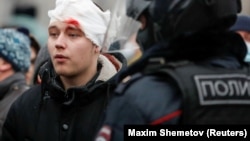
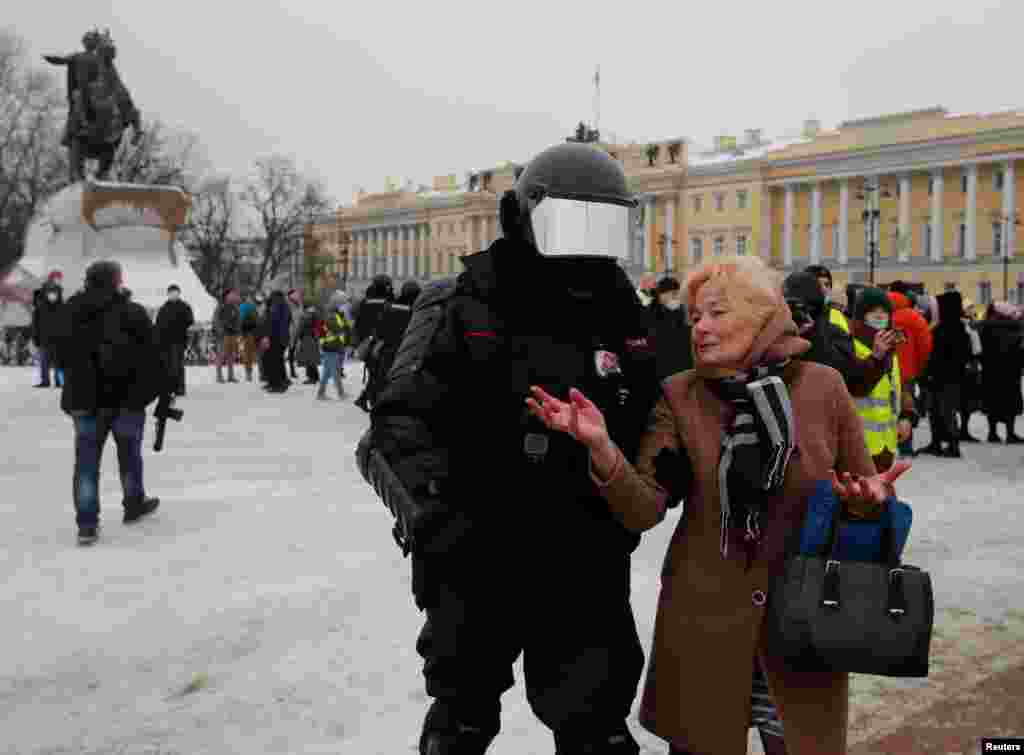
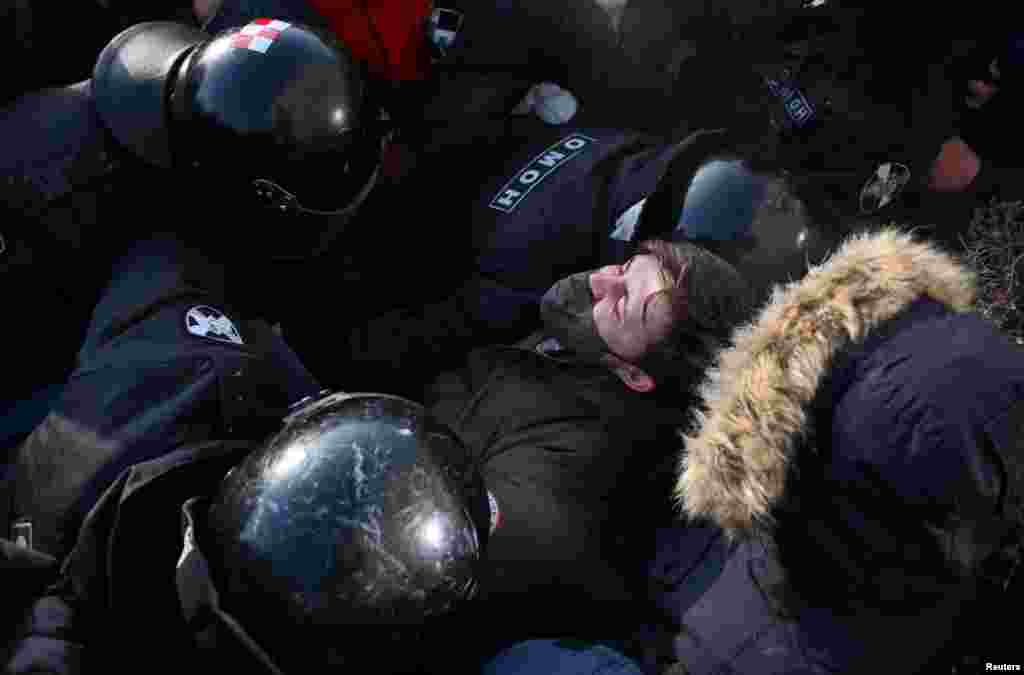
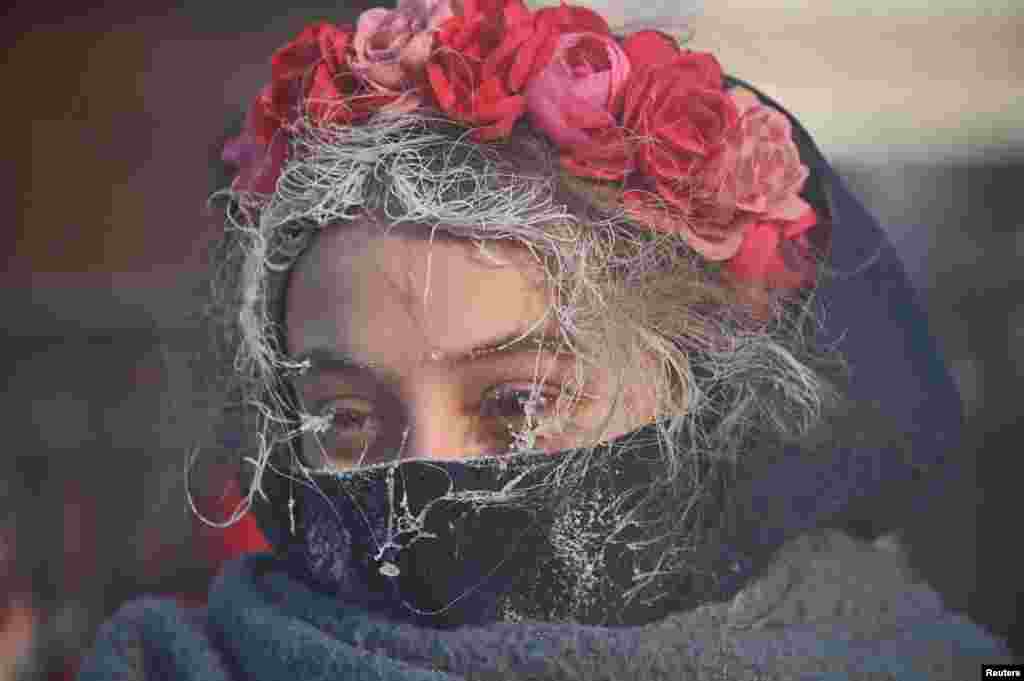
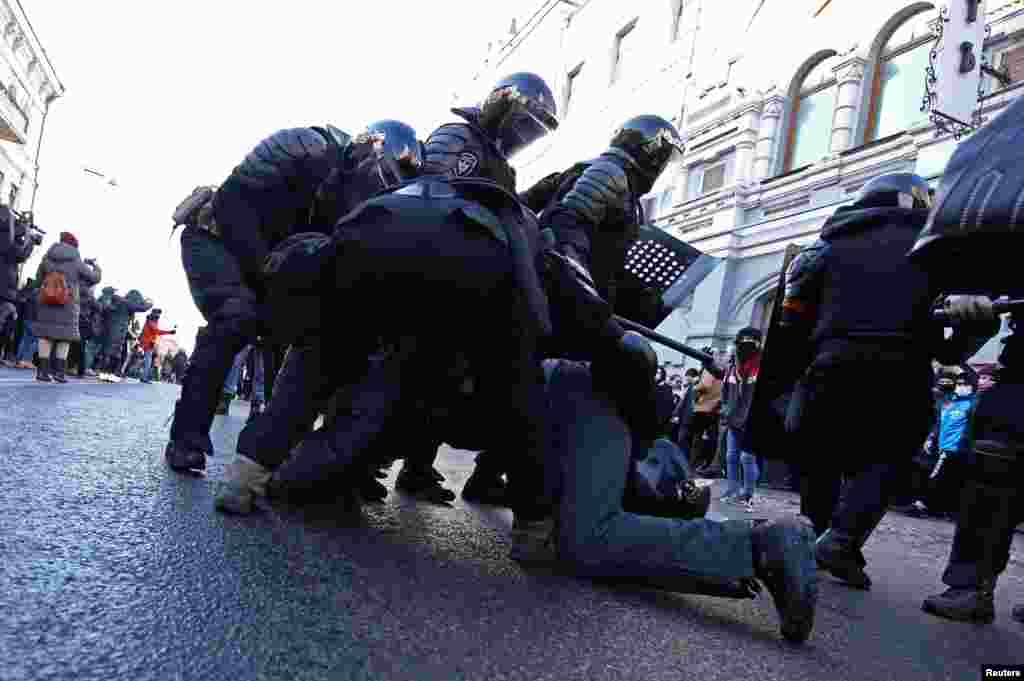
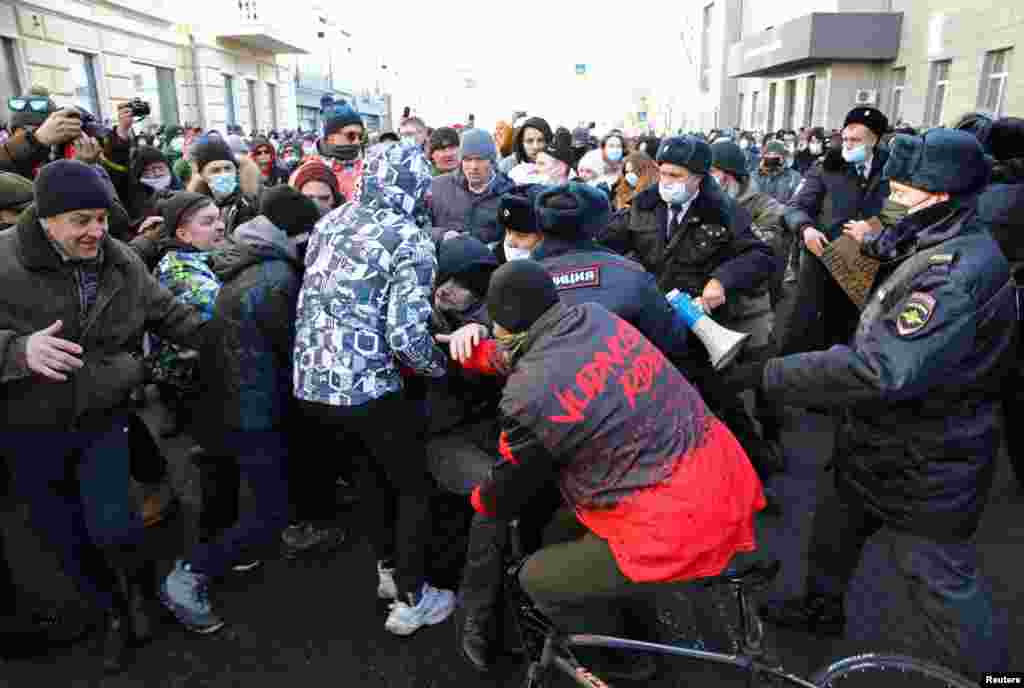
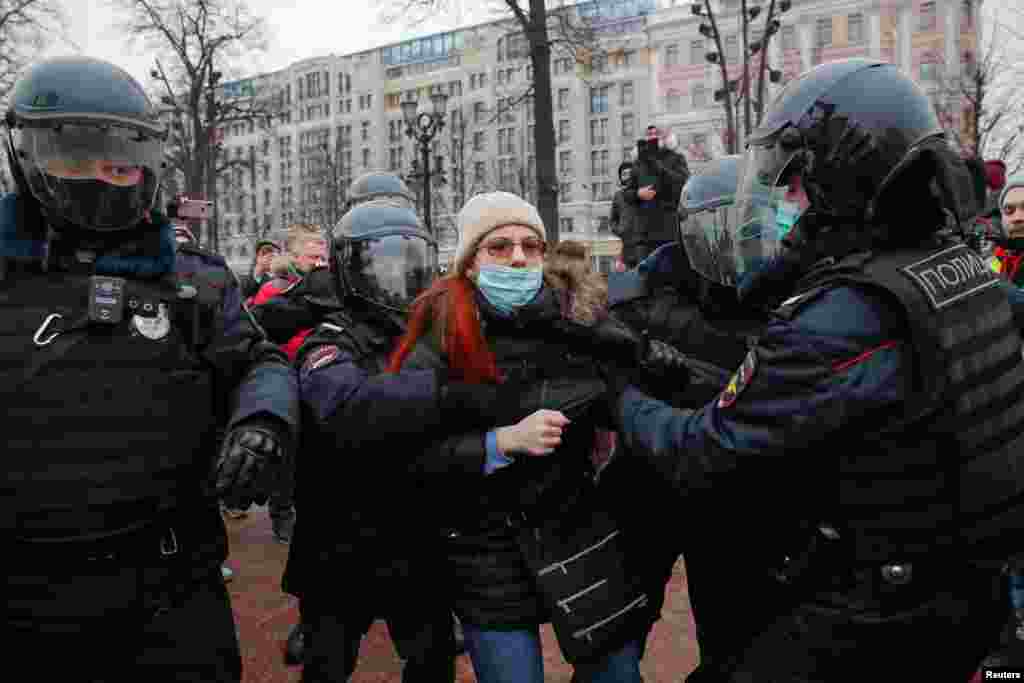
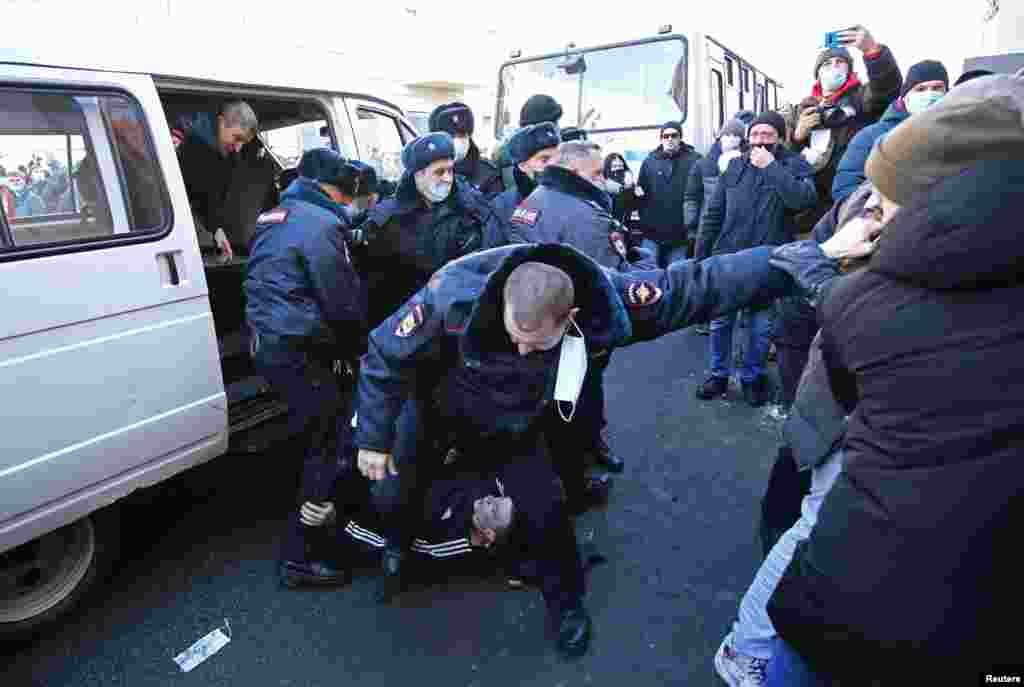
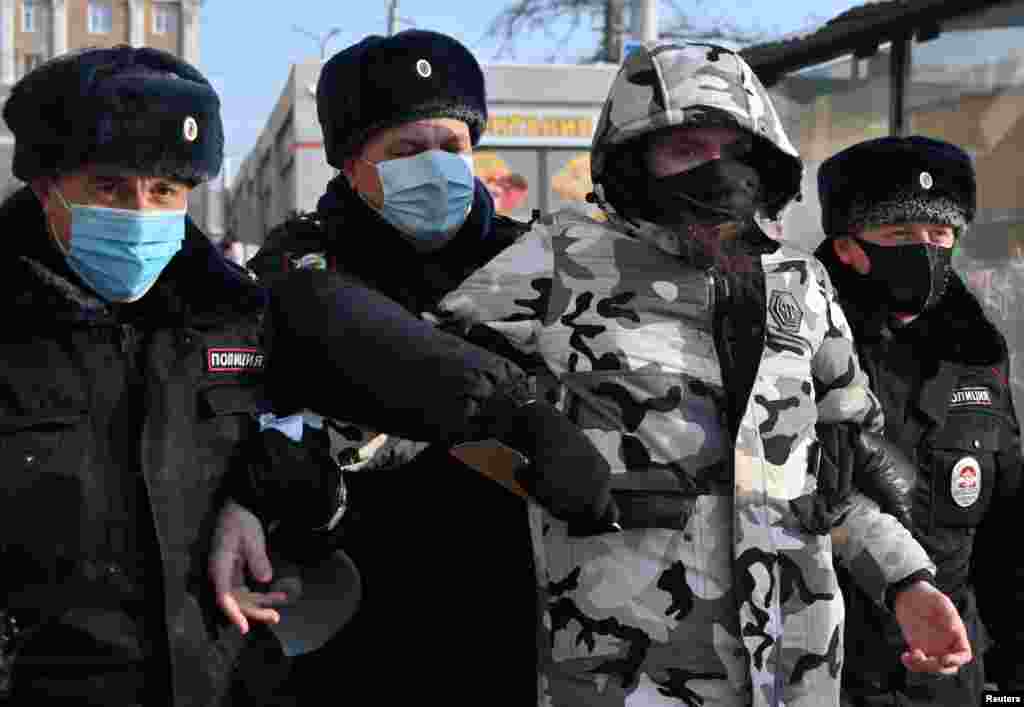
An injured protester looks on as riot police disperse anti-government protests in Moscow on January 23.
The Kremlin has accused the United States of interfering in Russian domestic affairs after U.S. officials in Washington and Moscow criticized the police crackdown on protesters backing jailed Kremlin critic Aleksei Navalny.
The comments by spokesman Dmitry Peskov, made in an interview broadcast on January 24, echoed earlier remarks from the Foreign Ministry, which alleged that the U.S. Embassy had sought to encourage protesters by publishing an alert warning Americans about the location of the Moscow protest.
Tens of thousands of people took to the streets in Moscow, St. Petersburg, and other major cities in support of Navalny, who was jailed a week ago after returning to Russia following his recuperation in Germany for poisoning by a military-grade nerve agent.
"Of course, these publications are inappropriate," Peskov told state TV. "And, of course, indirectly, they are absolutely an interference in our domestic affairs."
It wasn't clear what Peskov was specifically referring to.
IN PHOTOS: Navalny Supporters Brave Police Crackdown To Demand His Release
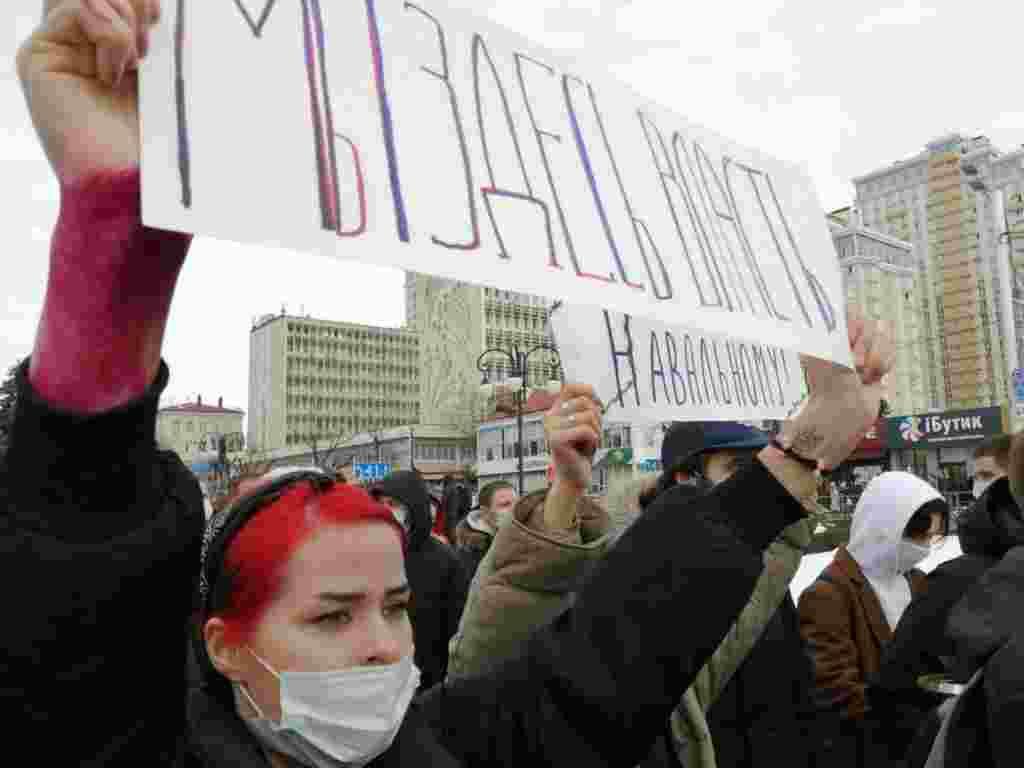
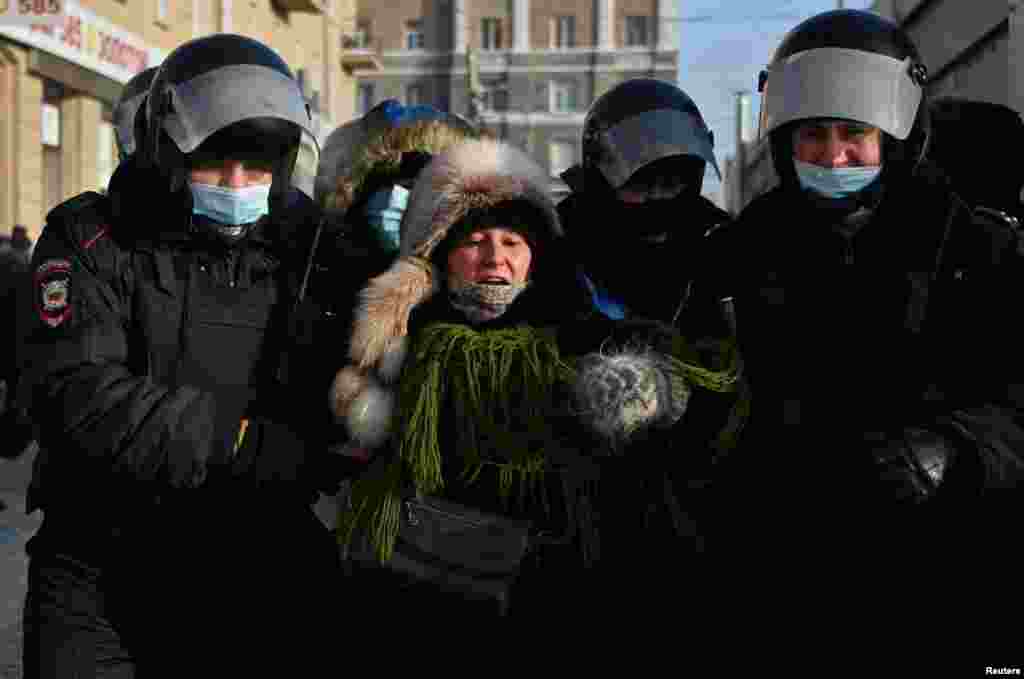
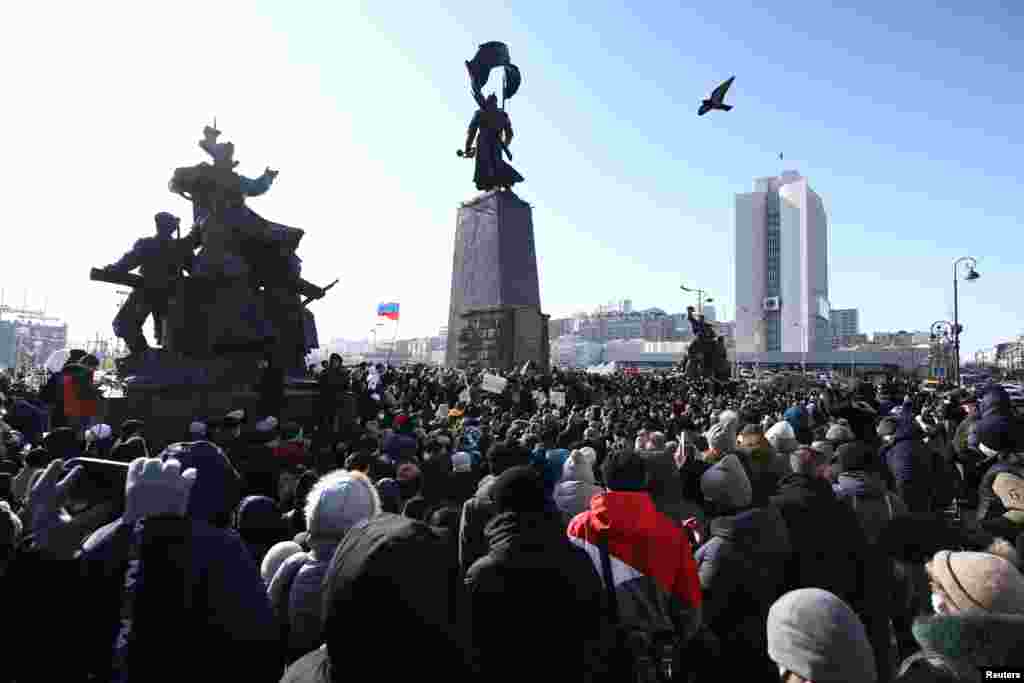
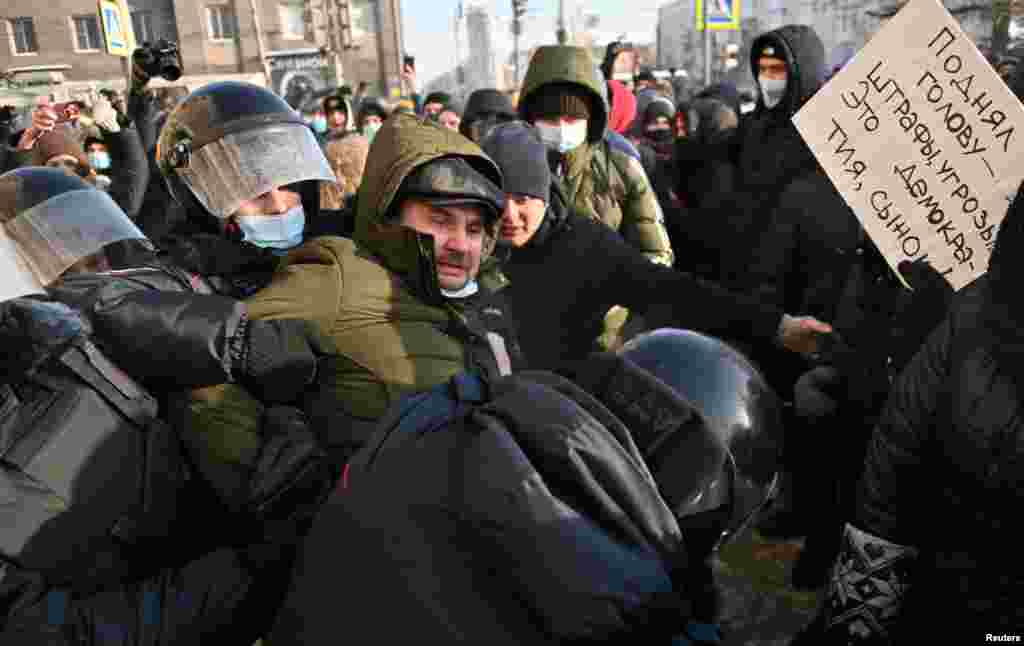
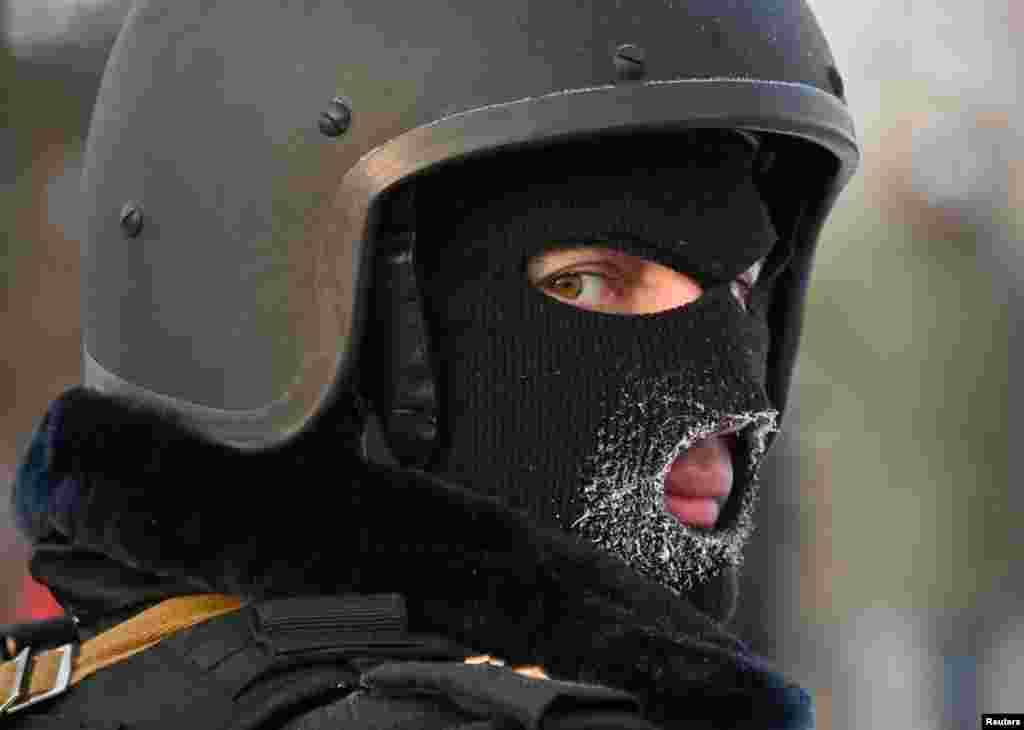
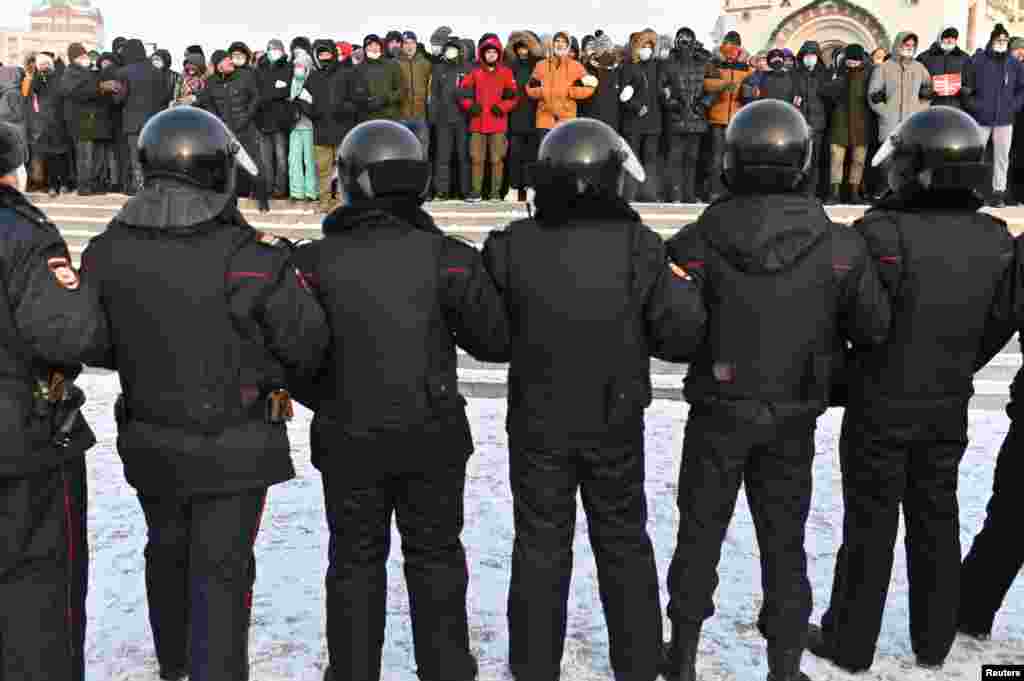
Tens of thousands of demonstrators braved brutally cold weather and police crackdowns across Russia on January 23 to call for the release of opposition politician Aleksei Navalny, a Kremlin critic jailed last week upon returning to Moscow after medical treatment in Germany for poisoning.
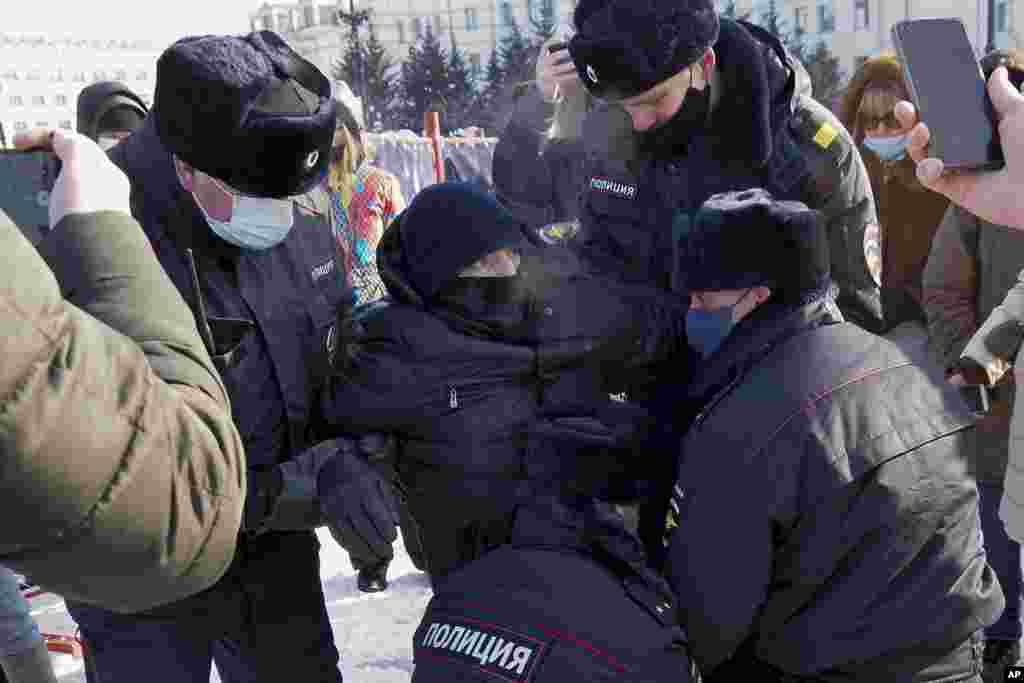
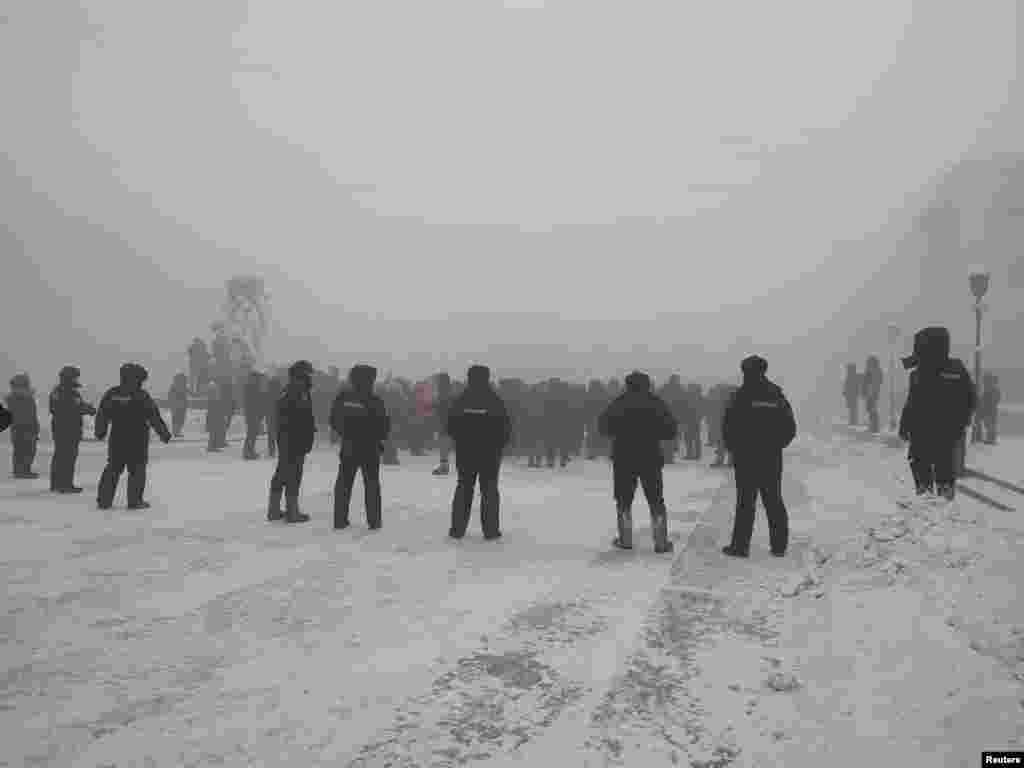
2/23In Khabarovsk, 6,100 kilometers east of Moscow
Tens of thousands of demonstrators braved brutally cold weather and police crackdowns across Russia on January 23 to call for the release of opposition politician Aleksei Navalny, a Kremlin critic jailed last week upon returning to Moscow after medical treatment in Germany for poisoning.
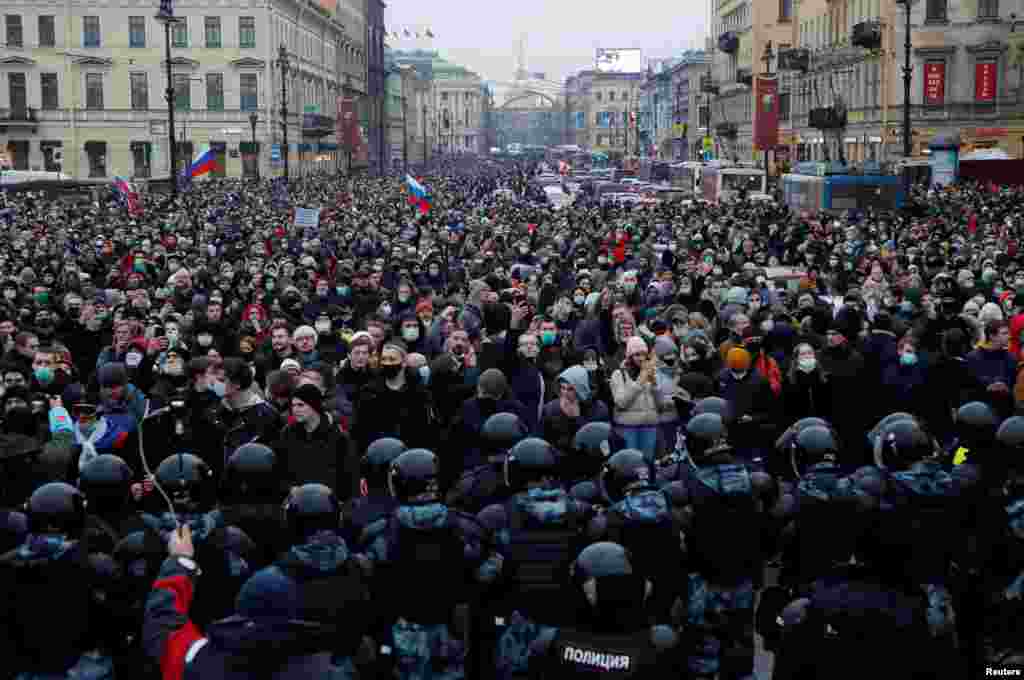
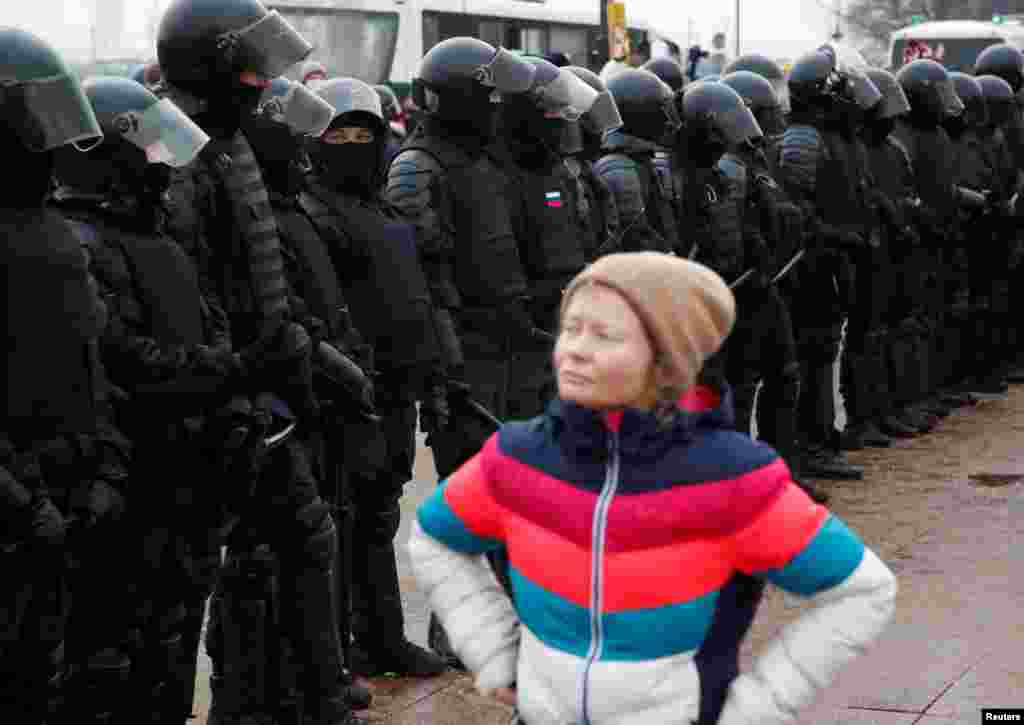
3/23Police block thousands of protesters in St. Petersburg.
Tens of thousands of demonstrators braved brutally cold weather and police crackdowns across Russia on January 23 to call for the release of opposition politician Aleksei Navalny, a Kremlin critic jailed last week upon returning to Moscow after medical treatment in Germany for poisoning.
4/23In Khabarovsk, 6,100 kilometers east of Moscow
Tens of thousands of demonstrators braved brutally cold weather and police crackdowns across Russia on January 23 to call for the release of opposition politician Aleksei Navalny, a Kremlin critic jailed last week upon returning to Moscow after medical treatment in Germany for poisoning.
Tens of thousands of demonstrators braved brutally cold weather and police crackdowns across Russia on January 23 to call for the release of opposition politician Aleksei Navalny, a Kremlin critic jailed last week upon returning to Moscow after medical treatment in Germany for poisoning.
Tens of thousands of demonstrators braved brutally cold weather and police crackdowns across Russia on January 23 to call for the release of opposition politician Aleksei Navalny, a Kremlin critic jailed last week upon returning to Moscow after medical treatment in Germany for poisoning.
Tens of thousands of demonstrators braved brutally cold weather and police crackdowns across Russia on January 23 to call for the release of opposition politician Aleksei Navalny, a Kremlin critic jailed last week upon returning to Moscow after medical treatment in Germany for poisoning.
Tens of thousands of demonstrators braved brutally cold weather and police crackdowns across Russia on January 23 to call for the release of opposition politician Aleksei Navalny, a Kremlin critic jailed last week upon returning to Moscow after medical treatment in Germany for poisoning.
Tens of thousands of demonstrators braved brutally cold weather and police crackdowns across Russia on January 23 to call for the release of opposition politician Aleksei Navalny, a Kremlin critic jailed last week upon returning to Moscow after medical treatment in Germany for poisoning.
Tens of thousands of demonstrators braved brutally cold weather and police crackdowns across Russia on January 23 to call for the release of opposition politician Aleksei Navalny, a Kremlin critic jailed last week upon returning to Moscow after medical treatment in Germany for poisoning.
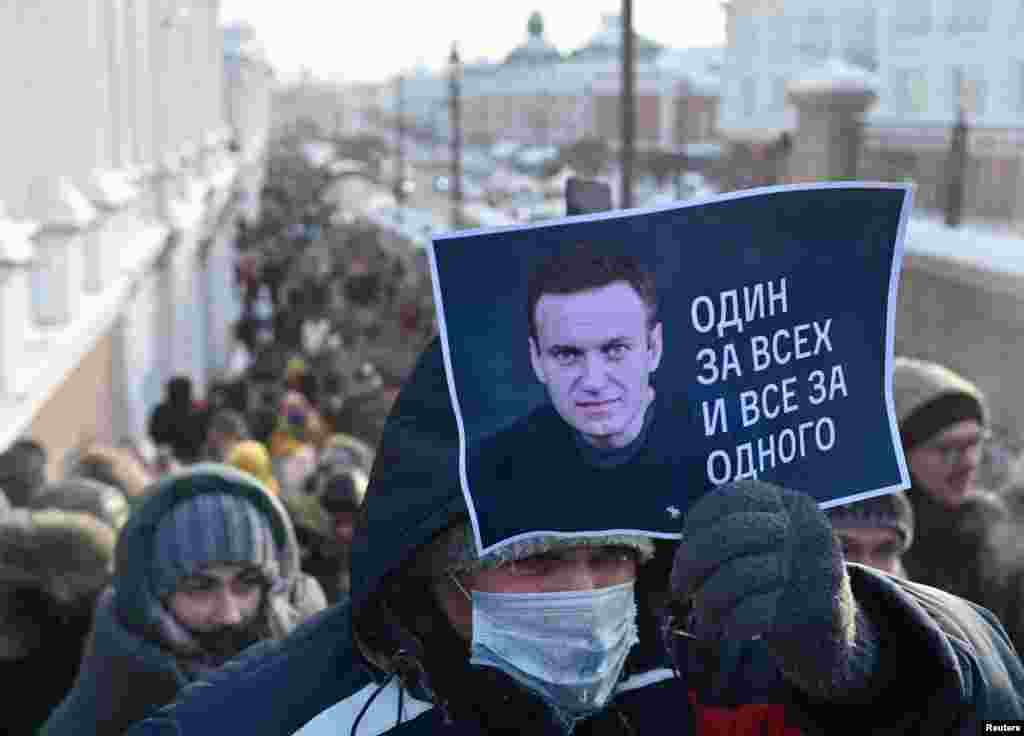
11/23A man holds a placard reading "One for all, all for one" during a rally in Omsk.
Tens of thousands of demonstrators braved brutally cold weather and police crackdowns across Russia on January 23 to call for the release of opposition politician Aleksei Navalny, a Kremlin critic jailed last week upon returning to Moscow after medical treatment in Germany for poisoning.
Tens of thousands of demonstrators braved brutally cold weather and police crackdowns across Russia on January 23 to call for the release of opposition politician Aleksei Navalny, a Kremlin critic jailed last week upon returning to Moscow after medical treatment in Germany for poisoning.
Tens of thousands of demonstrators braved brutally cold weather and police crackdowns across Russia on January 23 to call for the release of opposition politician Aleksei Navalny, a Kremlin critic jailed last week upon returning to Moscow after medical treatment in Germany for poisoning.
Tens of thousands of demonstrators braved brutally cold weather and police crackdowns across Russia on January 23 to call for the release of opposition politician Aleksei Navalny, a Kremlin critic jailed last week upon returning to Moscow after medical treatment in Germany for poisoning.
Tens of thousands of demonstrators braved brutally cold weather and police crackdowns across Russia on January 23 to call for the release of opposition politician Aleksei Navalny, a Kremlin critic jailed last week upon returning to Moscow after medical treatment in Germany for poisoning.
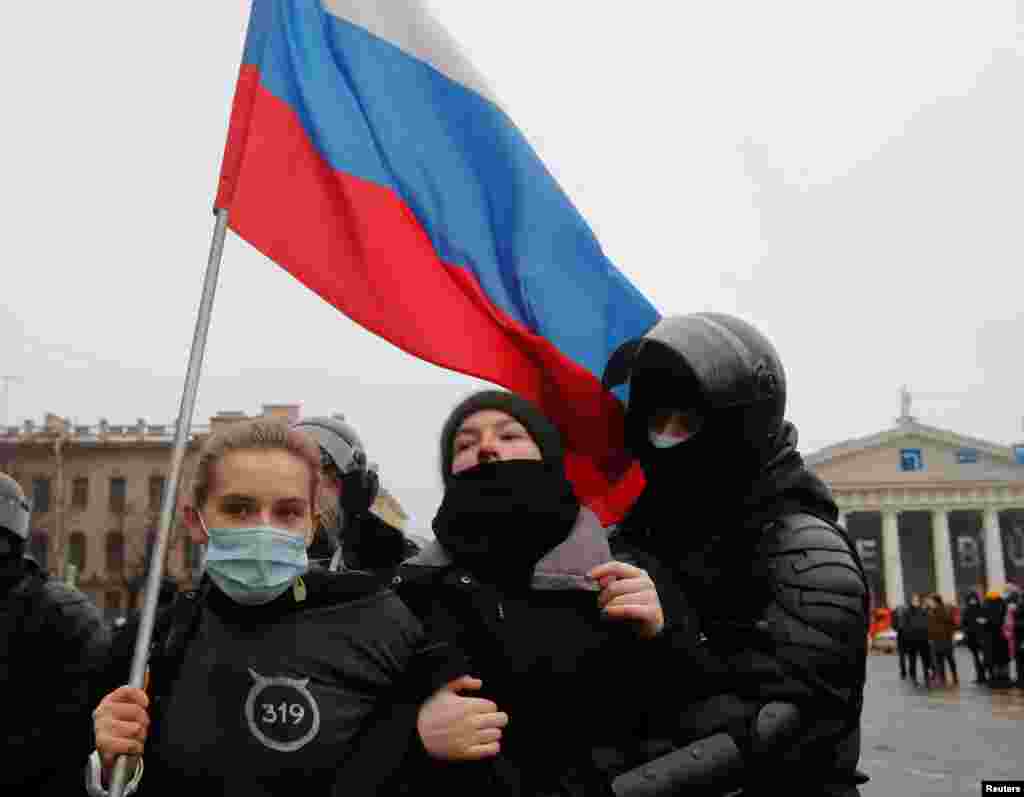
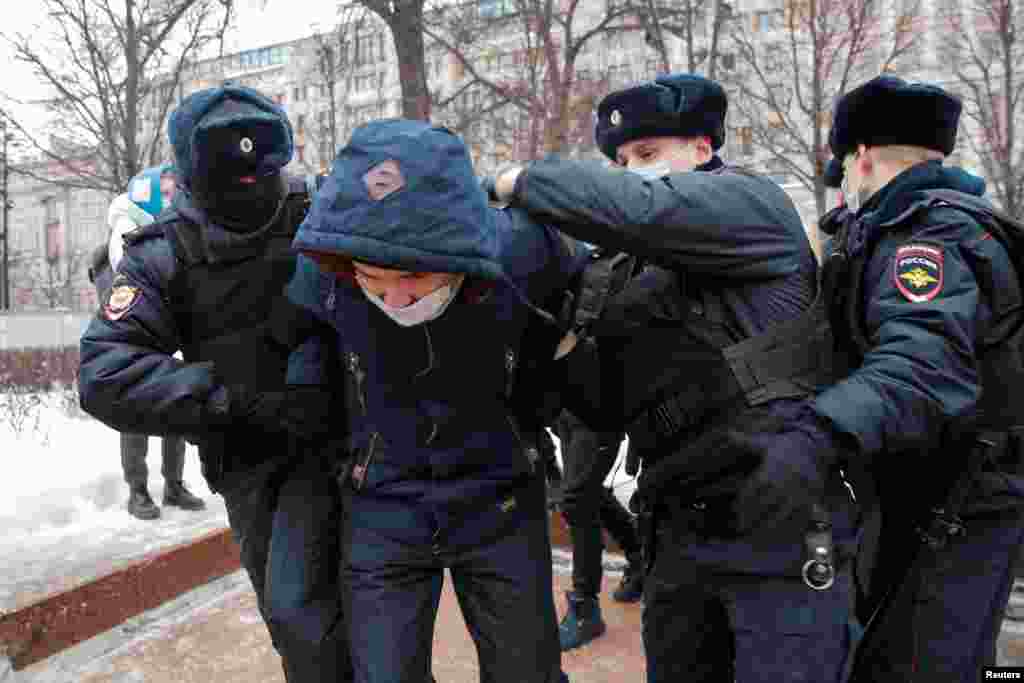
16/23An RFE/RL correspondent in Moscow reported that authorities were arresting individuals as they started to gather in the Russian capital's Pushkin Square ahead of the planned demonstration there.
Tens of thousands of demonstrators braved brutally cold weather and police crackdowns across Russia on January 23 to call for the release of opposition politician Aleksei Navalny, a Kremlin critic jailed last week upon returning to Moscow after medical treatment in Germany for poisoning.
Tens of thousands of demonstrators braved brutally cold weather and police crackdowns across Russia on January 23 to call for the release of opposition politician Aleksei Navalny, a Kremlin critic jailed last week upon returning to Moscow after medical treatment in Germany for poisoning.
Tens of thousands of demonstrators braved brutally cold weather and police crackdowns across Russia on January 23 to call for the release of opposition politician Aleksei Navalny, a Kremlin critic jailed last week upon returning to Moscow after medical treatment in Germany for poisoning.
Tens of thousands of demonstrators braved brutally cold weather and police crackdowns across Russia on January 23 to call for the release of opposition politician Aleksei Navalny, a Kremlin critic jailed last week upon returning to Moscow after medical treatment in Germany for poisoning.
Tens of thousands of demonstrators braved brutally cold weather and police crackdowns across Russia on January 23 to call for the release of opposition politician Aleksei Navalny, a Kremlin critic jailed last week upon returning to Moscow after medical treatment in Germany for poisoning.
Tens of thousands of demonstrators braved brutally cold weather and police crackdowns across Russia on January 23 to call for the release of opposition politician Aleksei Navalny, a Kremlin critic jailed last week upon returning to Moscow after medical treatment in Germany for poisoning.
Tens of thousands of demonstrators braved brutally cold weather and police crackdowns across Russia on January 23 to call for the release of opposition politician Aleksei Navalny, a Kremlin critic jailed last week upon returning to Moscow after medical treatment in Germany for poisoning.
Tens of thousands of demonstrators braved brutally cold weather and police crackdowns across Russia on January 23 to call for the release of opposition politician Aleksei Navalny, a Kremlin critic jailed last week upon returning to Moscow after medical treatment in Germany for poisoning.
Previous slide
Next slide
Ahead of the protests, the U.S. Embassy published an alert on its website as a warning to U.S. citizens about the potential danger for unrest. Such alerts are routine, and neither Peskov nor the Foreign Ministry provided any evidence that the United States played a role in the protests.
"The safety and welfare of U.S. citizens in Russia is our highest priority," an embassy official told RFE/RL. "U.S. embassies and consulates around the world regularly issue safety and security messages to our citizens. This is a common, routine practice of many countries' diplomatic missions."
The U.S. Embassy also published a statement just prior to the start of the Moscow protests that said: "The U.S. supports the right of all people to peaceful protest, freedom of expression. Steps being taken by Russian authorities are suppressing those rights."
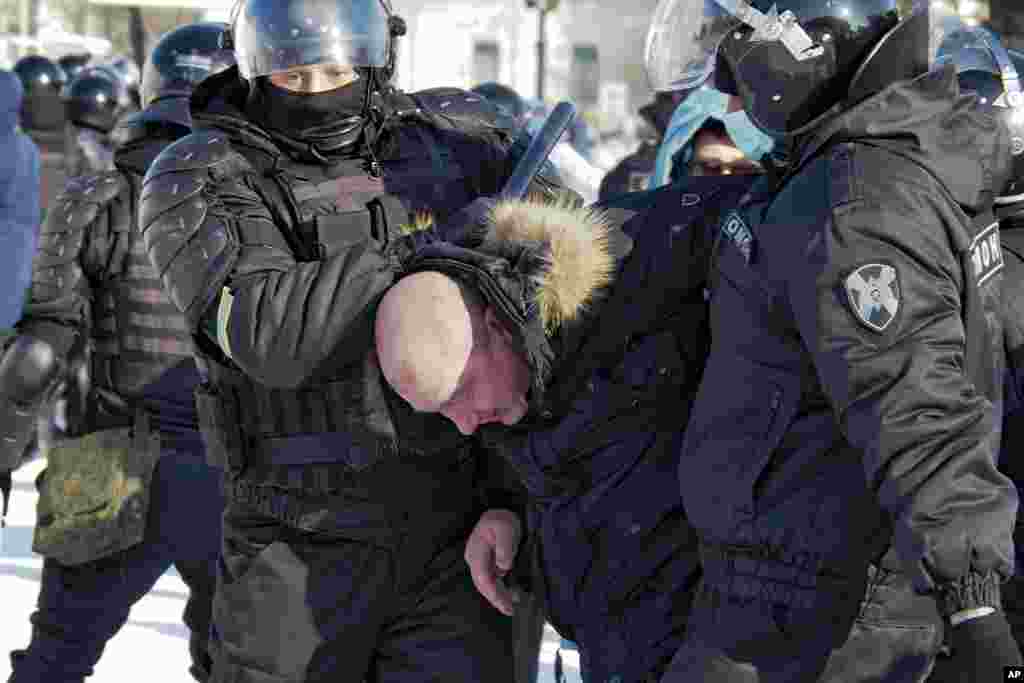
Later, a spokesman for the U.S. State Department condemned the heavy police crackdown, which resulted in the detention of nearly 3,500 Russians nationwide, with nearly half that number coming in Moscow.
Spokesman Ned Price also called on authorities to release Navalny and "credibly investigate his poisoning."
Other Western nations also criticized the Russian government's response. France's foreign minister offered support for the protesters and called for new sanctions.
European Union foreign ministers were scheduled to discuss the bloc's next steps on Russia at a meeting on January 25.
RFE/RL journalists report the news in 24 languages in 18 countries where a free press is banned by the government or not fully established. We provide what many people cannot get locally: uncensored news, responsible discussion, and open debate.