




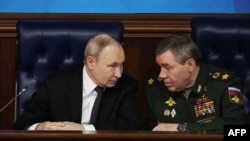
In combative comments at a high-profile military meeting on December 17, Russian President Vladimir Putin referred to unspecified European leaders as “podsvinki,” which roughly translates as young pigs or young swine.
Here’s why he said it.
Ever since 1999, when he called Chechen separatists terrorists and vowed to “wipe them out in the outhouse,” Putin has been using street slang and pungent, derogatory language to get messages across to the West, to the world, and to Russian people.

In the case of his latest comment, Putin was presumably counting on audiences in Russia -- and some elsewhere -- to welcome his words as a slap in the face of the Western leaders who are demonized daily on Russian state TV amid Moscow’s war against Ukraine.
But there’s more to it than that.
Echoing statements he’s made in the past, Putin first pointed out that US President Donald Trump has said Russia would not have launched the full-scale invasion of Ukraine if he, instead of Joe Biden, had been president at the time, in February 2022. And once again, Putin added that Trump may be right about that.

Old Narrative, New Twist
He then claimed without evidence that Biden’s administration “intentionally” fomented the war and said, “I think it’s clear why: Everyone believed they would destroy and dismantle Russia in a short period of time, and the ‘European young swine’ immediately joined the previous American administration in this effort, hoping to profit from our country's collapse.”

Accusing the West of seeking to tear Russia apart and gobble up the pieces has been one of Putin’s main narratives for more than 20 years: Following the hostage seizure at a school in the North Caucasus town of Beslan in 2004, which left more than 330 people dead after a botched rescue operation, Putin suggested that Western countries were helping militants in order to weaken Russia.
But in this case, Putin’s “swine” comment had specific goals beyond repeating that assertion, which many Western leaders say is baseless.
For one thing, it was part of an effort to sow discord between the United States and Ukraine’s European backers at a time when Trump is pressing forward with efforts to broker a peace deal. After the US made a proposal last month that critics said heavily favored Russia, European countries such as Britain, France, and Germany have helped Kyiv seek adjustments that would make a potential pact more agreeable for Ukraine.
Blaming Europe
The word Putin used does not just mean ‘pigs’ or ‘swine.’ It refers to young pigs -- but not cute piglets. Instead, it implies a lack of independence and a tendency to follow. This echoes repeated Russian assertions that EU and NATO countries are not their own masters and are under the thumb of the US -- but in this case, Putin specified he means these countries were beholden to the Biden administration.
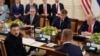
Putin’s remark may also have been aimed to aggravate divisions within Europe, in particular over whether and how strongly the European Union and others, such as Britain, should support Ukraine -- and pressure Russia. Putin spoke one day before an EU summit set to decide on a controversial plan to use frozen Russian assets to lend Ukraine tens of billions of euros to help it withstand the Russian onslaught.
In the same address, Putin repeated his vow that Russia will take Ukrainian territory it considers its own by force if any proposed peace deal that emerges from the current flurry of diplomacy does not meet Moscow’s draconian demands.
So as is often the case with Putin’s remarks, another goal of the “young swine” quip was to blame Europe in advance if the US-led peace efforts falter or fail to deliver a deal that pleases the Kremlin.

