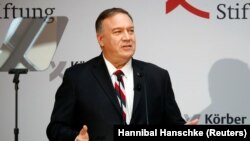
U.S. Secretary of State Mike Pompeo speaking in Berlin on November 8.
U.S. Secretary of State Mike Pompeo has warned of the threat Russia and China pose to democratic freedoms as he urged Western allies to defend their liberty.
Speaking in the German capital on the eve of the 30th anniversary of the fall of the Berlin Wall in 1989, Pompeo said free nations were in a “competition of values” with those who denied the rights of their citizens.
"Western, free nations have a responsibility to deter threats to our people" from governments like China, Russia, and Iran, Pompeo said, speaking meters from where the barrier once stood near the famous Brandenburg Gate.
"The West -- all of us -- lost our way in the afterglow of that proud moment," Pompeo said, referring to the fall of the wall that divided the democratic western part of Berlin from the communist eastern part.
"We thought we could divert our resources away from alliances, and our militaries. We were wrong," he said.
Pompeo is using the two-day trip to shore up relations with European allies that have been shaken by a series of diplomatic and trade conflicts with the United States.
When The Wall Went Up: Berlin 1961
1/10East German troops were prominently deployed following the division of East and West Berlin on August 13, 1961.
Germany is marking the 60th anniversary of the start of construction on the Berlin Wall, which split the nation into two rival political systems and became a symbol of the Cold War that stood for 28 years. (Originally published November 6, 2014)
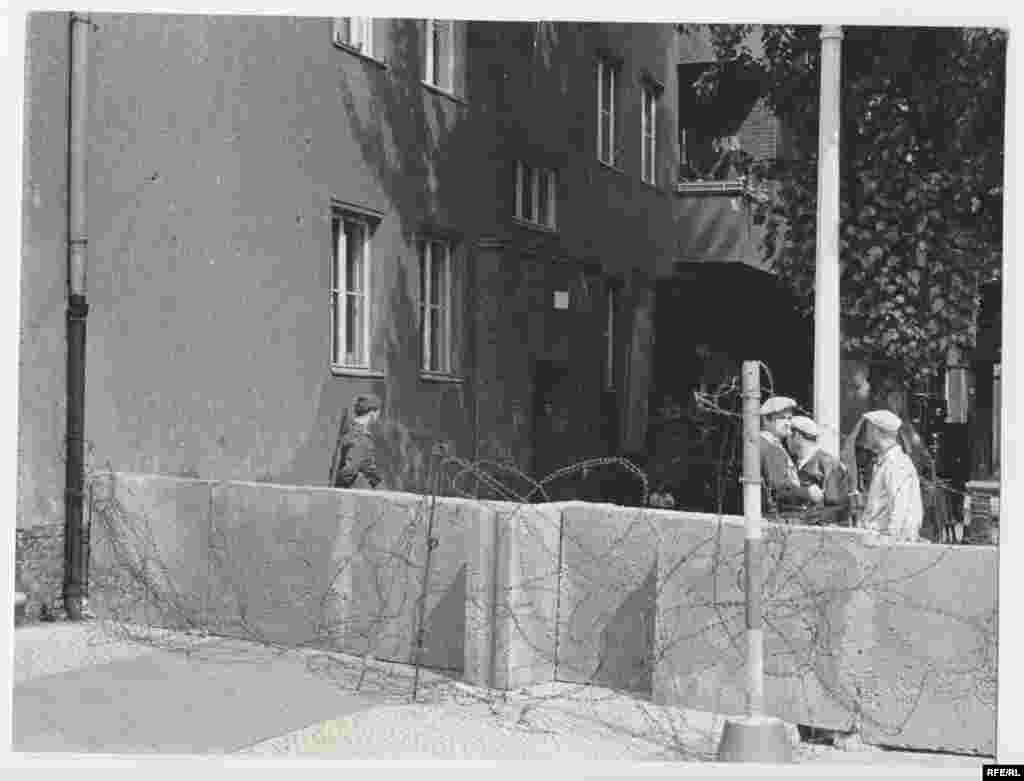
2/10East German police patrol a temporary, prefabricated section of the Berlin Wall.
After midnight on August 13, East German troops began erecting what Communist East German leader Walter Ulbricht called an "anti-fascist protection barrier." Two months earlier, on June 15, he had declared: "Nobody intends to build a wall."
Germany is marking the 60th anniversary of the start of construction on the Berlin Wall, which split the nation into two rival political systems and became a symbol of the Cold War that stood for 28 years. (Originally published November 6, 2014)
3/10A section of the temporary wall snaking through Berlin.
In the first week of the division of Berlin, East German authorities erected a barbed-wire fence, laid concertina wire, and mounted heavily armed patrols. The construction of the real wall would begin in the next week or so.
Germany is marking the 60th anniversary of the start of construction on the Berlin Wall, which split the nation into two rival political systems and became a symbol of the Cold War that stood for 28 years. (Originally published November 6, 2014)
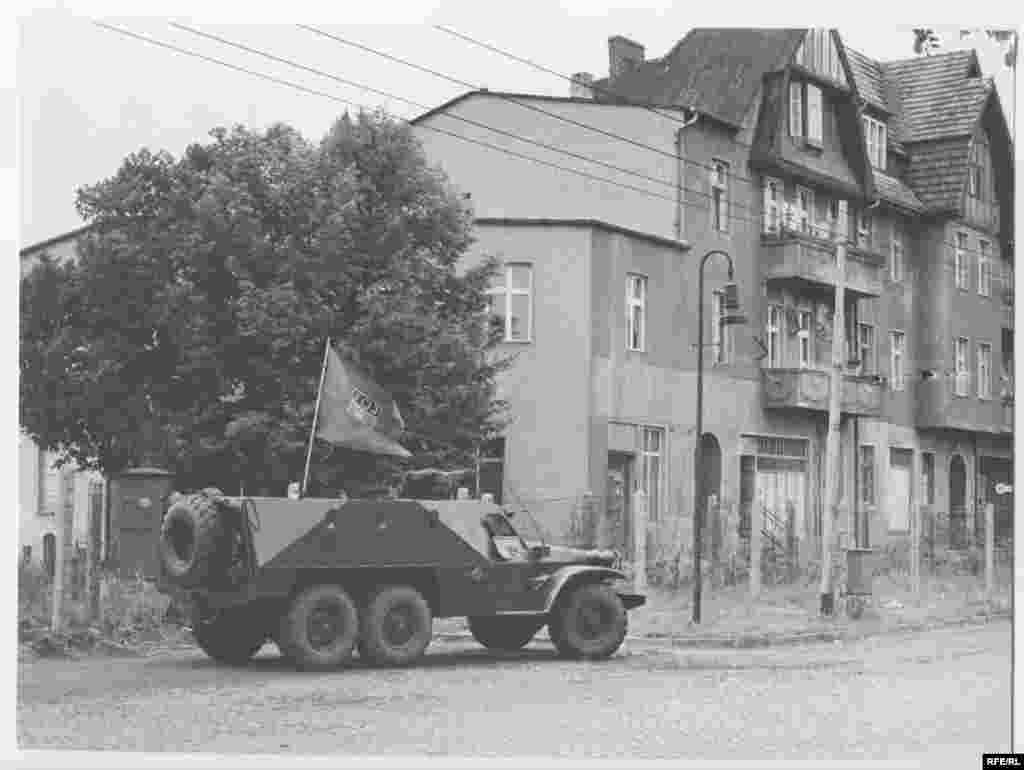
4/10An East German armored car patrols the zonal border between East and West Berlin in mid-August 1961.
Germany is marking the 60th anniversary of the start of construction on the Berlin Wall, which split the nation into two rival political systems and became a symbol of the Cold War that stood for 28 years. (Originally published November 6, 2014)
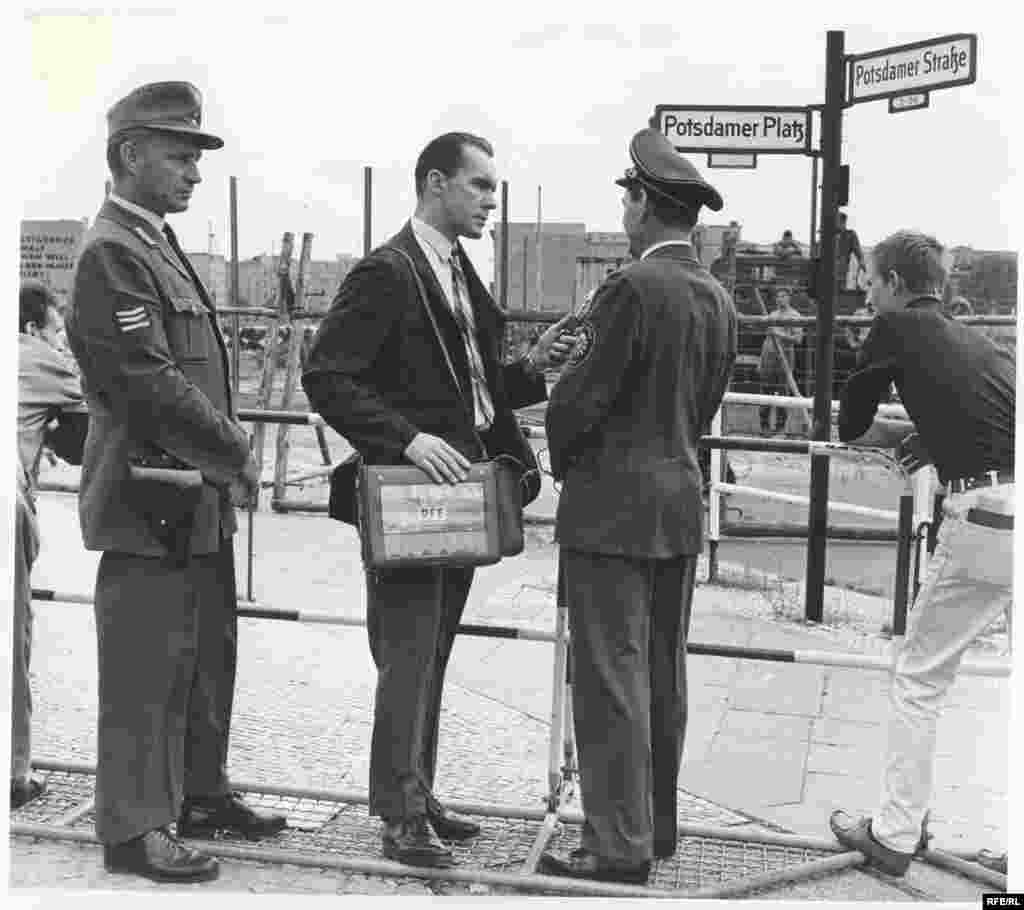
5/10William Marsh, Berlin bureau chief of Radio Free Europe, interviews a police official at Potsdamer Platz.
In the background, East German workers are erecting the permanent wall that bisected Potsdamer Platz and rendered the square a desolate wasteland.
Germany is marking the 60th anniversary of the start of construction on the Berlin Wall, which split the nation into two rival political systems and became a symbol of the Cold War that stood for 28 years. (Originally published November 6, 2014)
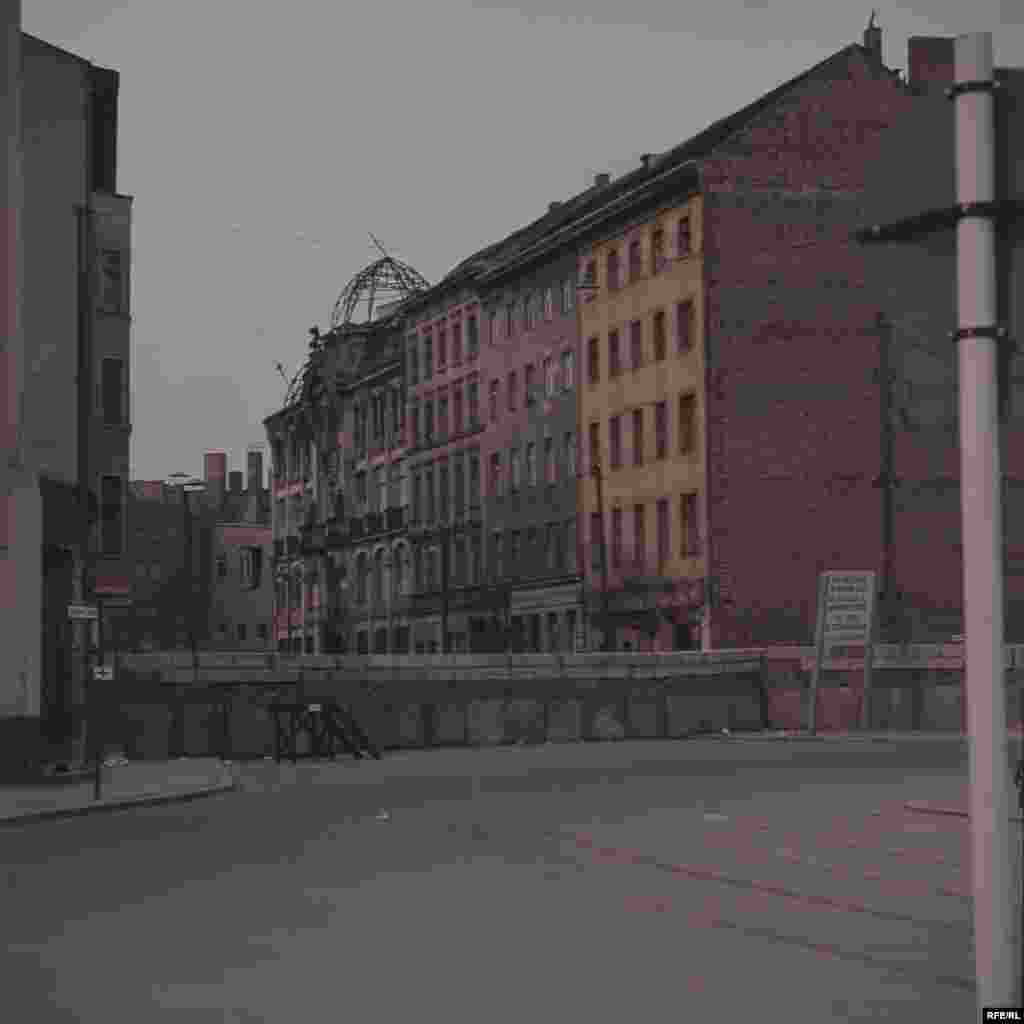
6/10View of the newly constructed Berlin Wall, looking from West to East.
On August 19, 1961, the wall claimed its first life as a man fell to his death trying to climb down from his top-floor apartment in East Berlin's Bernauerstrasse to the pavement below in West Berlin.
Germany is marking the 60th anniversary of the start of construction on the Berlin Wall, which split the nation into two rival political systems and became a symbol of the Cold War that stood for 28 years. (Originally published November 6, 2014)
7/10View of the newly constructed Berlin Wall, looking from West to East.
On August 24, 1961, 24-year-old Guenter Litfin was shot dead as he swam across the River Spree. The incident is generally accepted as the date of the first killing of a would-be escapee by border guards after the wall went up.
Germany is marking the 60th anniversary of the start of construction on the Berlin Wall, which split the nation into two rival political systems and became a symbol of the Cold War that stood for 28 years. (Originally published November 6, 2014)
8/10On August 17, 1962, 18-year-old Peter Fechter bled to death in the no-man's land between East and West Berlin after being shot trying to escape. Western cameramen recorded the scene for nearly an hour before guards took away his body.
Germany is marking the 60th anniversary of the start of construction on the Berlin Wall, which split the nation into two rival political systems and became a symbol of the Cold War that stood for 28 years. (Originally published November 6, 2014)
9/10The wall with the Brandenburg Gate in the background.
On June 12, 1987, near this site, U.S. President Ronald Reagan famously demanded of Soviet leader Mikhail Gorbachev: "Mr. Gorbachev, tear down this wall."
Germany is marking the 60th anniversary of the start of construction on the Berlin Wall, which split the nation into two rival political systems and became a symbol of the Cold War that stood for 28 years. (Originally published November 6, 2014)
10/10Looking through the Brandenburg Gate from West to East Berlin in 1961.
Germany is marking the 60th anniversary of the start of construction on the Berlin Wall, which split the nation into two rival political systems and became a symbol of the Cold War that stood for 28 years. (Originally published November 6, 2014)
Previous slide
Next slide
His trip also comes a day after French President Emmanuel Macron told The Economist magazine that the NATO alliance was suffering a "brain death" due to a lack of coordination between Europe and Washington.
"Today, Russia -- led by a former KGB officer once stationed in Dresden -- invades its neighbors and slays political opponents," Pompeo warned. "In China, the Chinese Communist Party is shaping a new vision of authoritarianism."
Pompeo also took aim at the Nord Stream gas pipeline being built between Russia and Germany, saying it would mean "Europe's energy supplies... depend on [Russian President Vladimir] Putin's whims."