


Complaints Of Abuse Grow As Pakistan Ramps Up Afghan Expulsions
Afghan refugee families arrive on foot to cross the Pakistan-Afghanistan border at Torkham on November 2.
Pakistan opened more border centers on November 3 to hasten the return of tens of thousands of undocumented Afghans, two days after the deadline to leave or face expulsion expired.
But as Pakistan accelerates the forced deportations, many Afghans with valid visas and documents issued by Islamabad to legally remain in the country have complained of being arbitrarily detained, pressured for bribes, or harassed to leave the country.
Some of them were deported or were among the more than 200,000 Afghans who left the country since October 3, when Islamabad announced that undocumented foreigners would have to leave voluntarily by November 1 or face arrests and forced deportations.
“When we show our cards to the police, they say these are not valid and we must leave immediately,” said Shah Wali, an Afghan refugee in the southern Pakistani seaport city of Karachi.
Wali holds a Proof of Registration (PoR) card, which makes his stay in Pakistan legal.
But the young man said he had not worked for months because of police harassment and has paid more than $30 in bribes to the police twice to avoid detention.
Zabiullah, another young Afghan man in Karachi, said he has paid some $300 to police in bribes after they detained him three times.
“I have the PoR card, but they didn’t pay any attention to it and were only interested in robbing and harassing us,” he told RFE/RL's Radio Mashaal.
According to the United Nations, some 1.4 million Afghan refugees have PoR cards. Over 880,000 more have valid visas.
Pakistan's interior minister, Sarfaraz Bugti, said on October 3 that some 1.73 million Afghans in Pakistan had no legal documents to stay.
On October 31, Pakistani caretaker Prime Minister Anwar ul-Haq Kakar said Afghans with valid documents to remain in Pakistan will not be expelled.
“We are not expelling one person among those Afghans,” he told journalists.
Border Crossing Flooded With Afghans Amid Pakistan's Deportation Crackdown
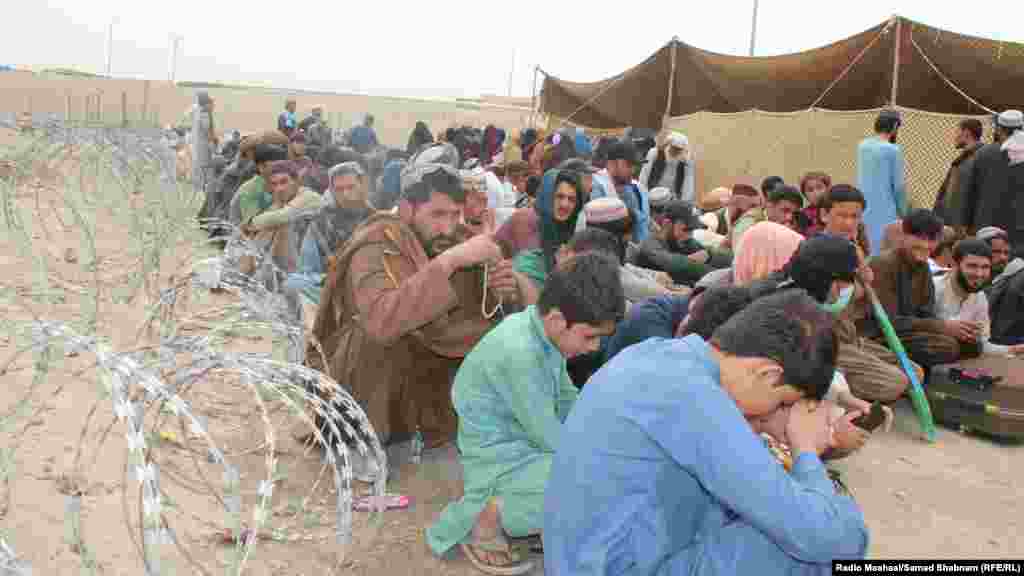
1/8Afghan citizens wait at a holding center set up at the Chaman border crossing along the Pakistan-Afghanistan border in Pakistan's Balochistan Province on November 2.
Thousands of Afghans are seeking to cross into Afghanistan following Islamabad's announcement that all undocumented immigrants in Pakistan must leave the country or face arrest.
Thousands of Afghan refugees swamped the Chaman crossing along the Pakistan-Afghanistan border on November 2, a day after Islamabad's deadline expired for undocumented foreigners to leave Pakistan or face expulsion.
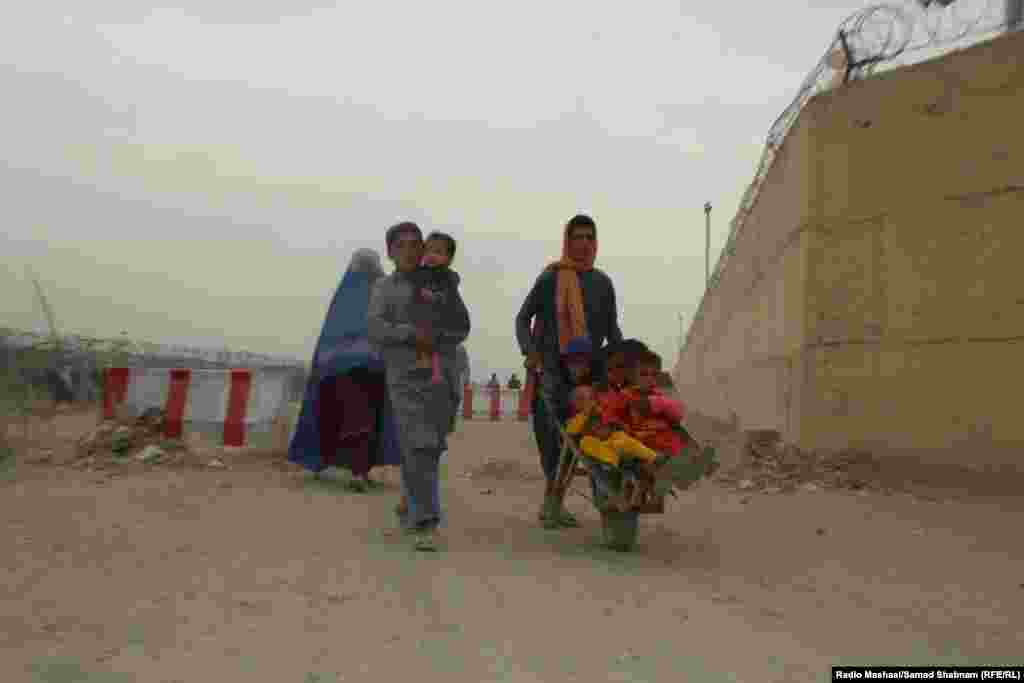
2/8An Afghan boy ferries young children in a wheelbarrow at the border in Chaman, which is also known as the Friendship Gate.
Pakistan is home to more than 4 million Afghan migrants and refugees, about 1.7 million of them undocumented, Islamabad says, although many have lived in Pakistan for their entire lives.
Thousands of Afghan refugees swamped the Chaman crossing along the Pakistan-Afghanistan border on November 2, a day after Islamabad's deadline expired for undocumented foreigners to leave Pakistan or face expulsion.
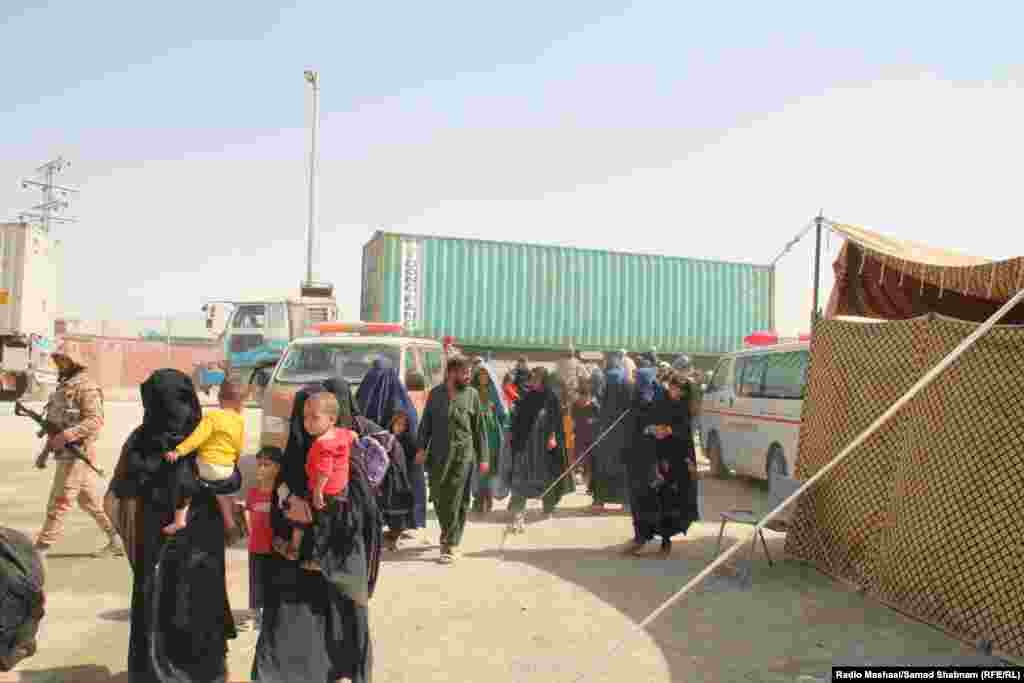
3/8Afghans arrive at the Chaman border crossing.
Islamabad has resorted to threats and abuse to compel the illegal Afghans to leave the country, Human Rights Watch says. Many fled Afghanistan during the decades of armed conflict that the country has suffered since the late 1970s. The Taliban's takeover after the withdrawal of U.S.-led coalition forces in 2021 led to another exodus.
Thousands of Afghan refugees swamped the Chaman crossing along the Pakistan-Afghanistan border on November 2, a day after Islamabad's deadline expired for undocumented foreigners to leave Pakistan or face expulsion.
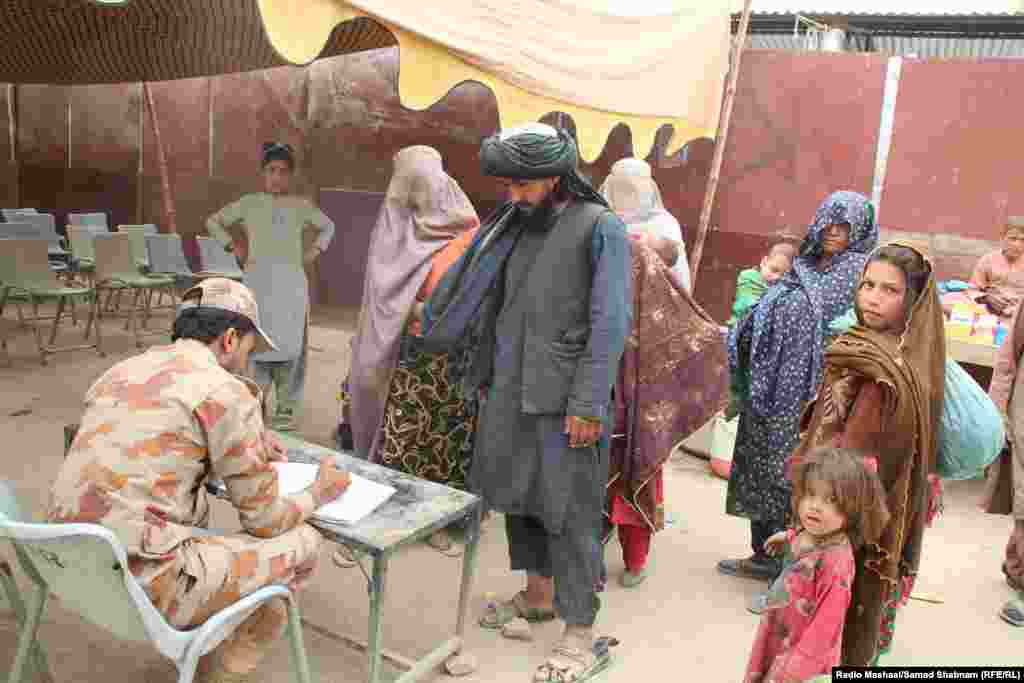
4/8An official checks the documents of an Afghan family.
Thousands of Afghan refugees swamped the Chaman crossing along the Pakistan-Afghanistan border on November 2, a day after Islamabad's deadline expired for undocumented foreigners to leave Pakistan or face expulsion.
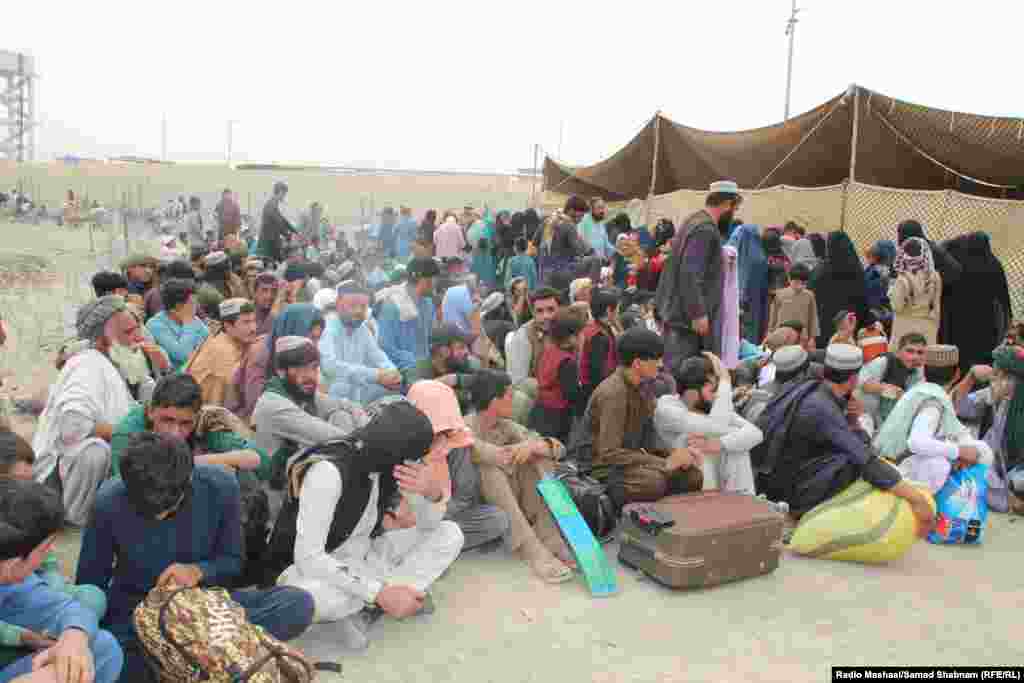
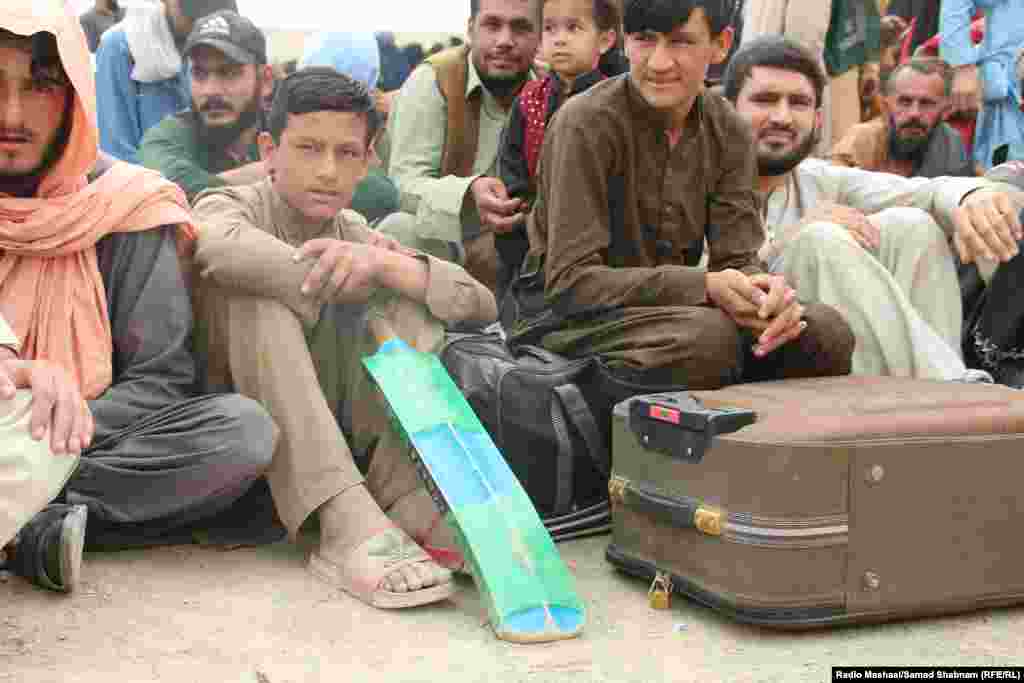
5/8Afghan men and boys sit patiently at the holding center.
Major roads leading to the border crossings were jammed with trucks carrying families and whatever belongings they could carry.
Thousands of Afghan refugees swamped the Chaman crossing along the Pakistan-Afghanistan border on November 2, a day after Islamabad's deadline expired for undocumented foreigners to leave Pakistan or face expulsion.
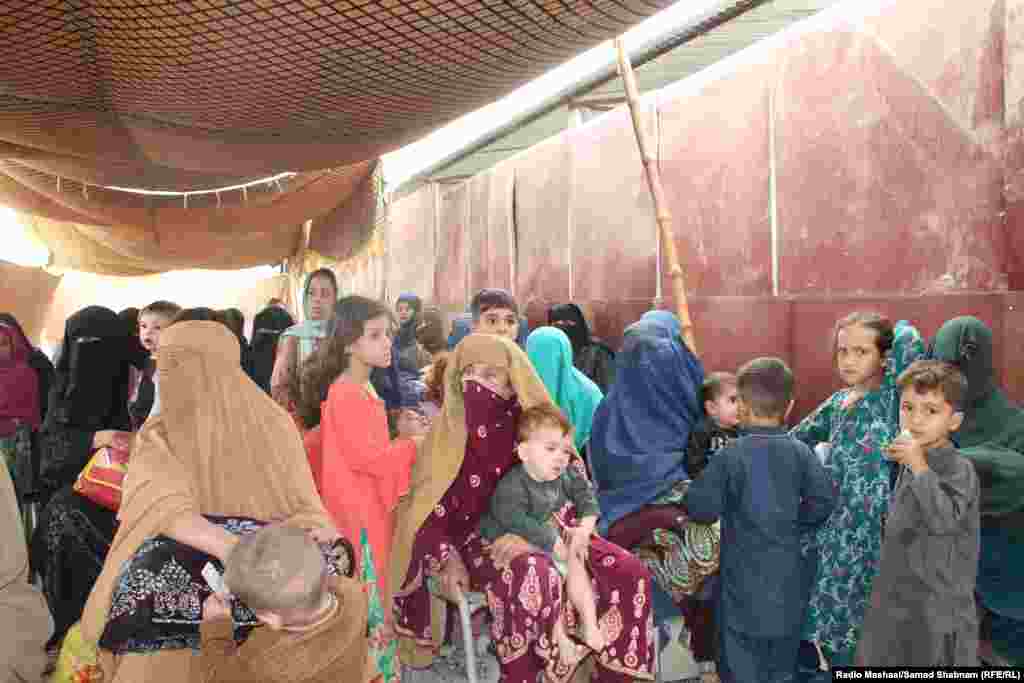
6/8Afghan women and children wait at the center.
Aid agencies warned that the mass movement of people could tip Afghanistan into yet another crisis and expressed "grave concerns" about the survival and reintegration of the returnees, particularly with the onset of winter.
Thousands of Afghan refugees swamped the Chaman crossing along the Pakistan-Afghanistan border on November 2, a day after Islamabad's deadline expired for undocumented foreigners to leave Pakistan or face expulsion.
7/8Many Afghans have run into trouble finding transport that will take them to their final destinations, said Ismatullah, a bus-service operator. "A huge number of people are coming from Karachi but face a shortage of buses and trucks," he said. "Obviously, in such situations, the fares have increased."
Thousands of Afghan refugees swamped the Chaman crossing along the Pakistan-Afghanistan border on November 2, a day after Islamabad's deadline expired for undocumented foreigners to leave Pakistan or face expulsion.
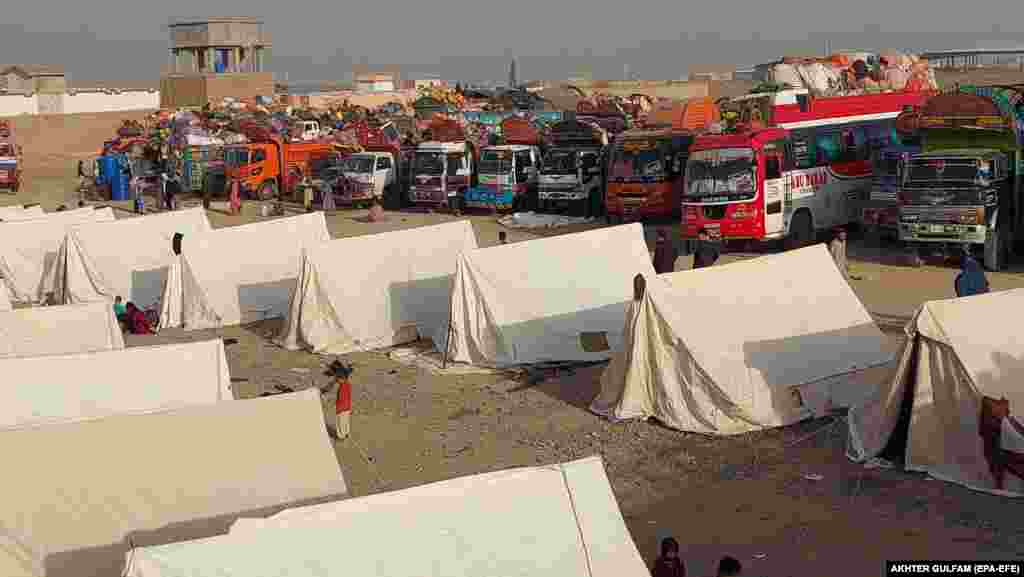
8/8Transportation trucks and buses and Afghans wait at the holding camp near Chaman on November 1.
As of November 2, officials said more than 165,000 Afghans have fled Pakistan, more than 1 million of whom are Afghan nationals who fled following the August 2021 seizure of power in Kabul by Taliban militants.
Thousands of Afghan refugees swamped the Chaman crossing along the Pakistan-Afghanistan border on November 2, a day after Islamabad's deadline expired for undocumented foreigners to leave Pakistan or face expulsion.
Previous slide
Next slide
But Taliban Prime Minister Mullah Mohammad Hassan Akhund accused Islamabad of extensive abuses.
“Why are you demolishing their properties, ruining their business, snatching their money, motorcycles and cars?” he asked in a televised speech on November 3. "It is 100 percent against all principles. Come and talk face to face."
Meanwhile, more reports of the abuse of Afghans in Pakistan are emerging.
A video obtained by Radio Azadi on November 2 shows about a dozen Afghan men detained at a police station in Islamabad. Some of them showed their documents to prove that they were in the country legally. But they were still rounded up and imprisoned.
Abdul Majeed, a relative of two detained Afghan boys, spoke while holding the identity cards of their father outside a police station in the southwestern Pakistani city of Quetta.
“The policemen are acting arbitrarily. It is their will that whoever comes in their sight will be caught.," he said.
Some Pakistani politicians, activists, and human rights campaigners accuse Islamabad of abusing the Afghans to coerce them to leave.
On November 3, a citywide shutdown was observed in Quetta.
Predominantly secular Pashtun political groups -- the Awami National Party, the National Democratic Movement, the Pashtun Tahafuz Movement, and the Pashtunkhwa Milli Awami Party -- called for the strike to protest the forced expulsions of Afghans.

With reporting by Reuters and the AFP and contributions from Abubakar Siddique
RFE/RL's Radio Mashaal is a public-service broadcaster providing a powerful alternative to extremist propaganda in Pakistan's remote tribal regions along the border with Afghanistan.
RFE/RL's Radio Azadi is one of the most popular and trusted media outlets in Afghanistan. Nearly half of the country's adult audience accesses Azadi's reporting on a weekly basis.