The Admiral Kuznetsov aircraft carrier is seen in the PD-50 dry dock in the village of Roslyakovo in 2011.
Four workers have been injured and one remains missing after Russia's only aircraft carrier, the Admiral Kuznetsov, suffered damage when a floating dry dock sank while the vessel was leaving it, officials say.
The waterborne repair station's sinking at an Arctic shipyard early on October 30 was the latest in a series of mishaps involving the Admiral Kuznetsov, which lost two military jets in accidents off the coast of war-torn Syria in 2016.
The PD-50 dry dock had "fully sank" by 3:30 a.m. local time at the 82nd Repair Shipyard in the village of Roslyakovo near the port city of Murmansk, regional Governor Marina Kovtun said on Twitter.
She said that two injured workers were hospitalized and two were treated without hospitalization.
"Unfortunately, one person has not yet been found," Kovtun said, adding that rescue divers were working at the site.
Hours later, authorities said that the divers were suspending their operations for the night due to darkness and that the missing worker had not been found.
Aboard The Admiral Kuznetsov
1/11The 305-meter Admiral Kuznetsov passing within sight of the white cliffs of Dover on October 21. The mission to the Syrian coast of the eastern Mediterranean will be the first-ever combat operation for this troubled relic of the Soviet Union.
On October 21, Russia's only aircraft carrier steamed through the English Channel on its way to Syria. Given the seemingly limited effectiveness of the 305-meter Admiral Kuznetsov, many analysts believe the attention that the vessel is generating is the real aim of its rare, and very public, outing.
2/11During the 1980s, the carrier and her sister craft, Varyag (pictured here), risked becoming stillborn projects as the U.S.S.R. neared collapse. The Varyag remained unfinished by the Soviet and Russian navies and was eventually sold to China, leaving the Kuznetsov as the sole aircraft carrier in the Russian Navy.
On October 21, Russia's only aircraft carrier steamed through the English Channel on its way to Syria. Given the seemingly limited effectiveness of the 305-meter Admiral Kuznetsov, many analysts believe the attention that the vessel is generating is the real aim of its rare, and very public, outing.
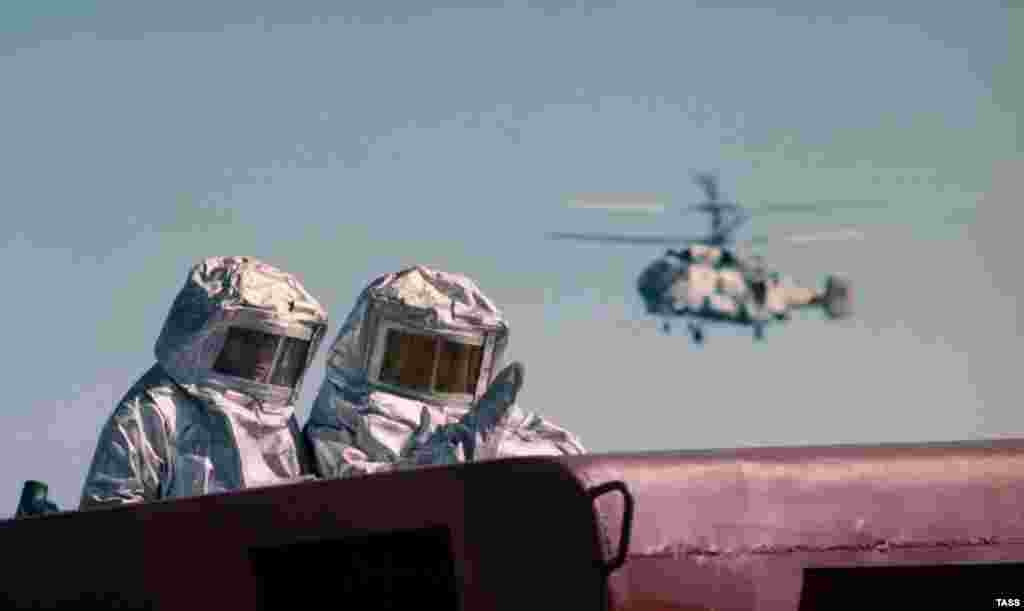
3/11Firefighters aboard the Admiral Kuznetsov. During a 2008-09 deployment, a blaze killed a sailor and then a large oil spill was spotted by the Irish coast guard near the Admiral Kuznetsov. Russia admitted responsibility, but the spill mostly broke up before reaching shore.
On October 21, Russia's only aircraft carrier steamed through the English Channel on its way to Syria. Given the seemingly limited effectiveness of the 305-meter Admiral Kuznetsov, many analysts believe the attention that the vessel is generating is the real aim of its rare, and very public, outing.
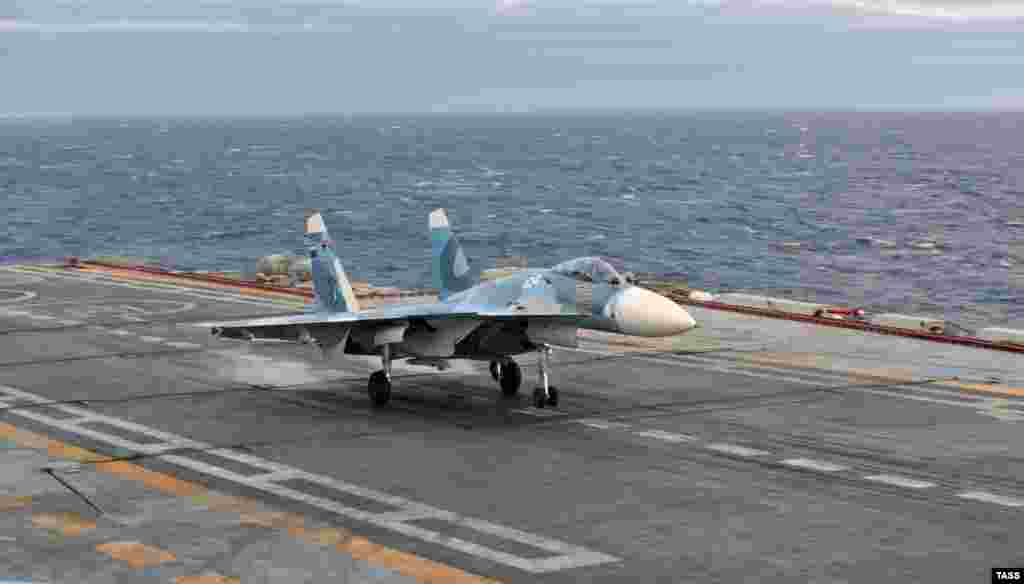
4/11A Sukhoi fighter landing on the deck of the Admiral Kuznetsov. In 2005, a fighter jet plummeted off the end of the carrier after an arresting cable snapped on landing. Both pilots escaped, but the plane plunged into 1-kilometer-deep water.
On October 21, Russia's only aircraft carrier steamed through the English Channel on its way to Syria. Given the seemingly limited effectiveness of the 305-meter Admiral Kuznetsov, many analysts believe the attention that the vessel is generating is the real aim of its rare, and very public, outing.
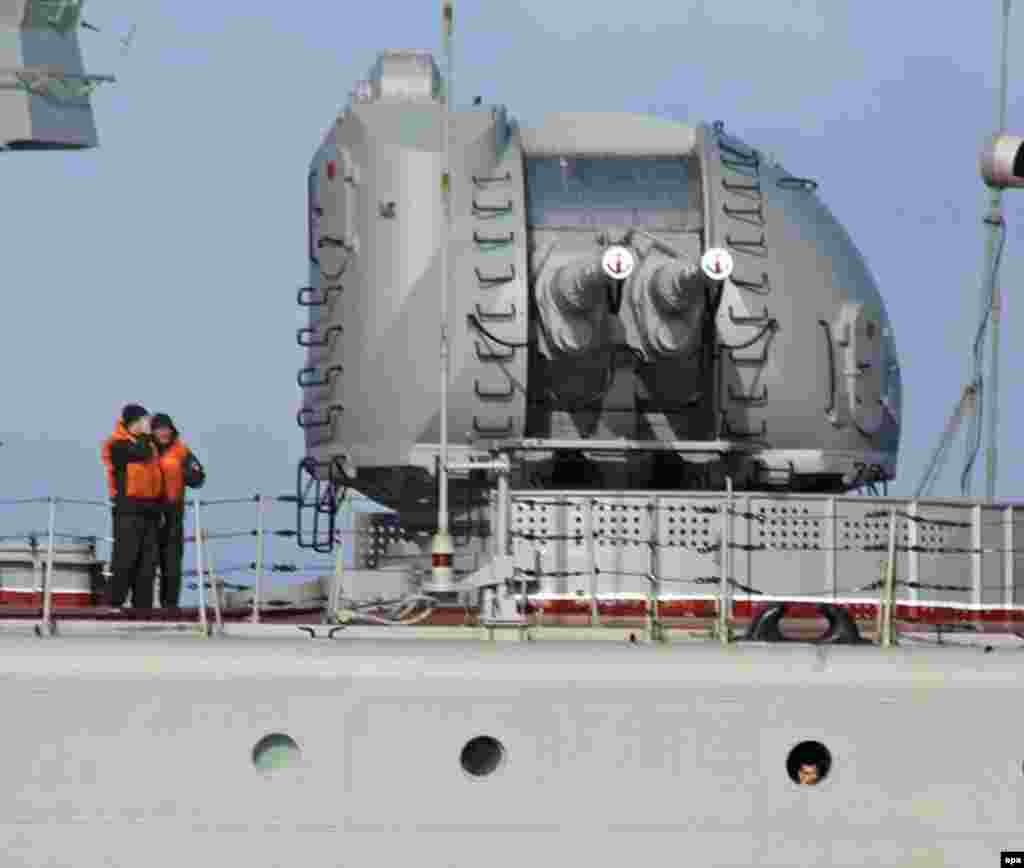
5/11The Admiral Kuznetsov is extremely heavily armed for an aircraft carrier. Along with various heavy guns and antisubmarine missiles, it is equipped with 12 launchers capable of firing nuclear-armed missiles.
On October 21, Russia's only aircraft carrier steamed through the English Channel on its way to Syria. Given the seemingly limited effectiveness of the 305-meter Admiral Kuznetsov, many analysts believe the attention that the vessel is generating is the real aim of its rare, and very public, outing.
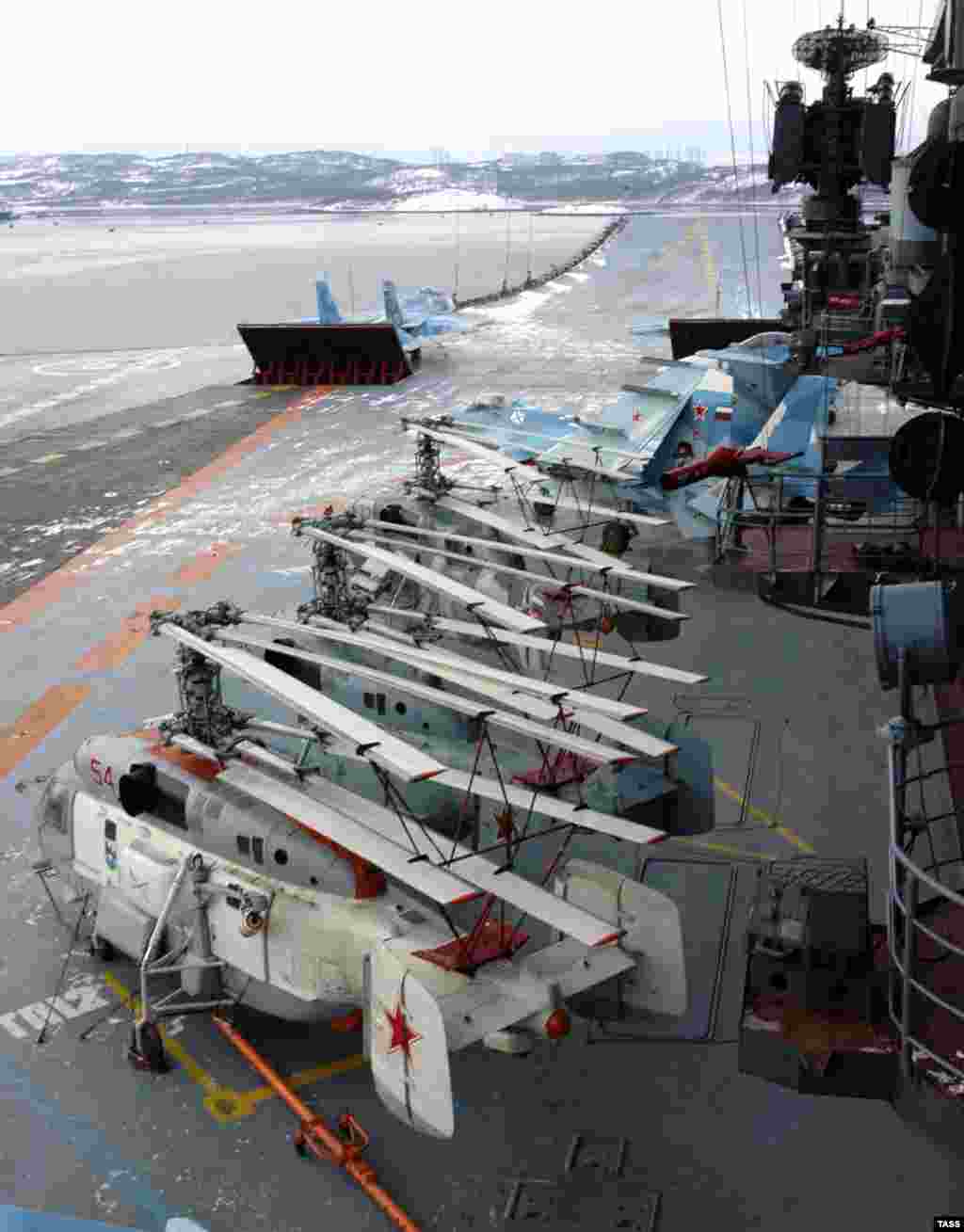
6/11Helicopters and fighter jets on the flight deck of the Admiral Kuznetsov. The carrier is capable of deploying with 52 aircraft aboard. The vessel's air wing, however, is limited by its lack of an aircraft catapult. Most modern aircraft carriers are fitted with a steam-powered catapult that flings aircraft along the deck runway.
On October 21, Russia's only aircraft carrier steamed through the English Channel on its way to Syria. Given the seemingly limited effectiveness of the 305-meter Admiral Kuznetsov, many analysts believe the attention that the vessel is generating is the real aim of its rare, and very public, outing.
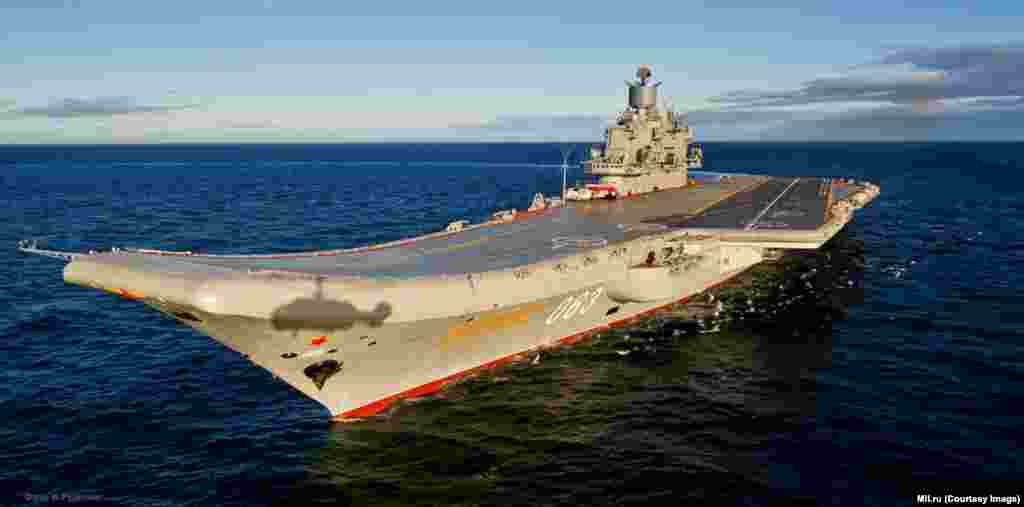
7/11The Admiral Kuznetsov relies on a “ski jump” runway to help lift planes skyward. The distinctive design ensures planes an upward trajectory even when the Admiral Kuznetsov heaves forward, but the lack of a catapult means the planes are limited in the amount of fuel, and weaponry, they can carry.
On October 21, Russia's only aircraft carrier steamed through the English Channel on its way to Syria. Given the seemingly limited effectiveness of the 305-meter Admiral Kuznetsov, many analysts believe the attention that the vessel is generating is the real aim of its rare, and very public, outing.
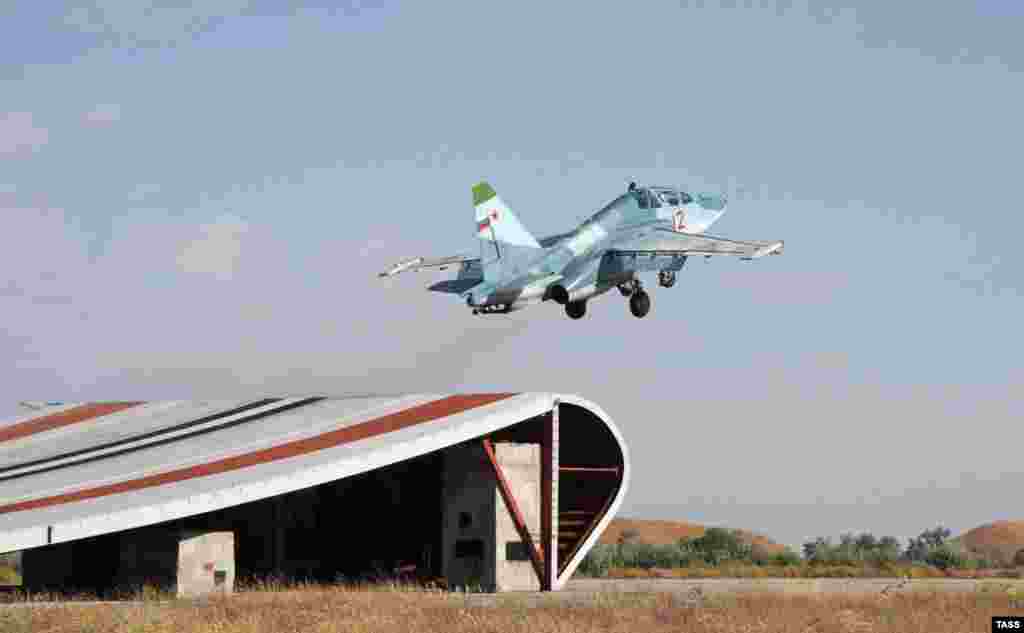
8/11A training ground in Crimea set up to replicate the deck of the Admiral Kuznetsov.
On October 21, Russia's only aircraft carrier steamed through the English Channel on its way to Syria. Given the seemingly limited effectiveness of the 305-meter Admiral Kuznetsov, many analysts believe the attention that the vessel is generating is the real aim of its rare, and very public, outing.
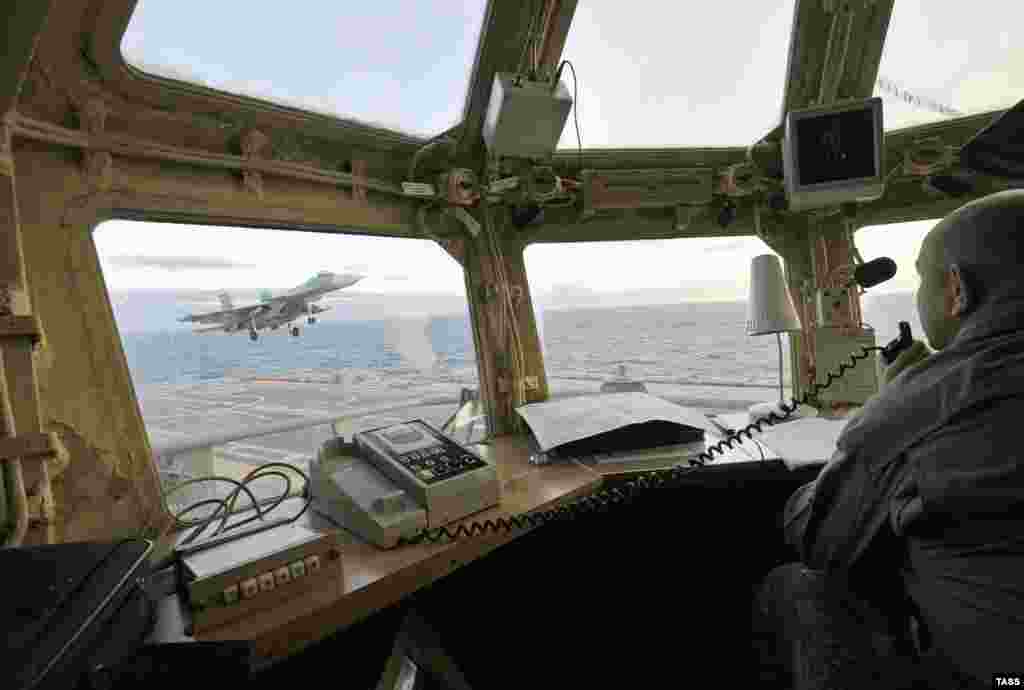
9/11A fighter coming in to land. The deck of the Admiral Kuznetsov has four arrestor cables to hook landing jets. For pilots, catching the second cable is seen as an ideal landing.
On October 21, Russia's only aircraft carrier steamed through the English Channel on its way to Syria. Given the seemingly limited effectiveness of the 305-meter Admiral Kuznetsov, many analysts believe the attention that the vessel is generating is the real aim of its rare, and very public, outing.
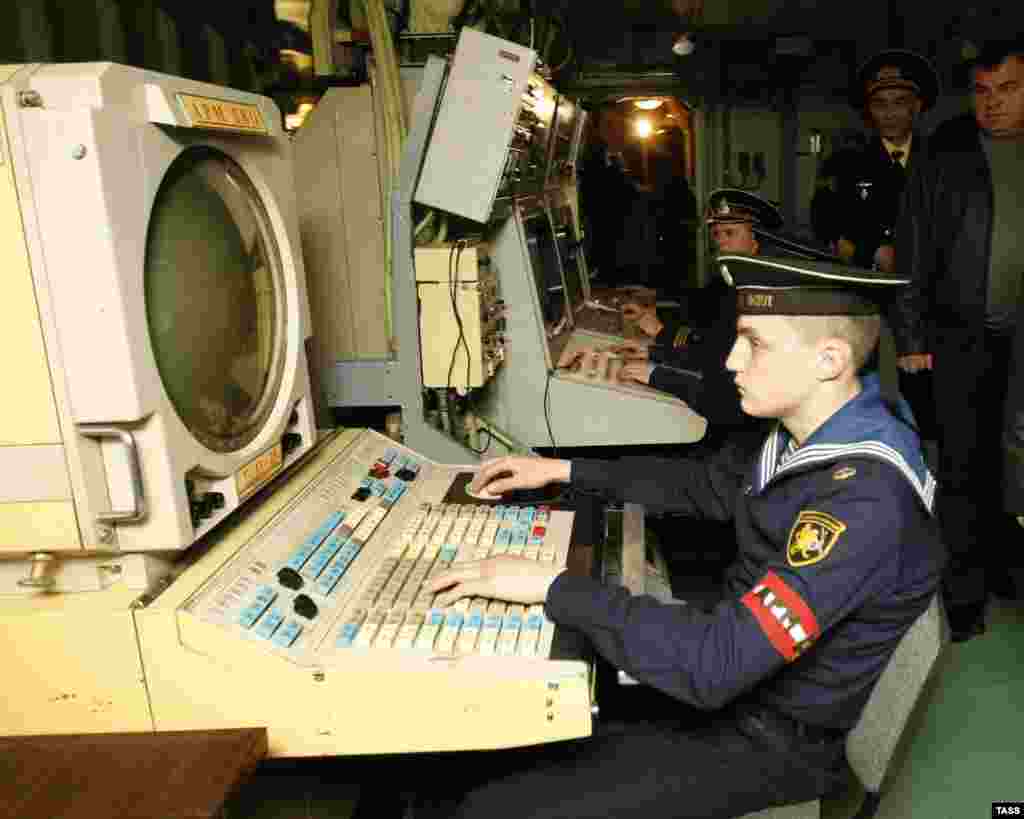
10/11A radar operator aboard the Admiral Kuznetsov. Fully crewed, the vessel is home to 2,626 sailors and air crew. No figures for crew ages are available for the Russian carrier, but the average age aboard a comparable U.S. Nimitz-class aircraft carrier is 19.
On October 21, Russia's only aircraft carrier steamed through the English Channel on its way to Syria. Given the seemingly limited effectiveness of the 305-meter Admiral Kuznetsov, many analysts believe the attention that the vessel is generating is the real aim of its rare, and very public, outing.
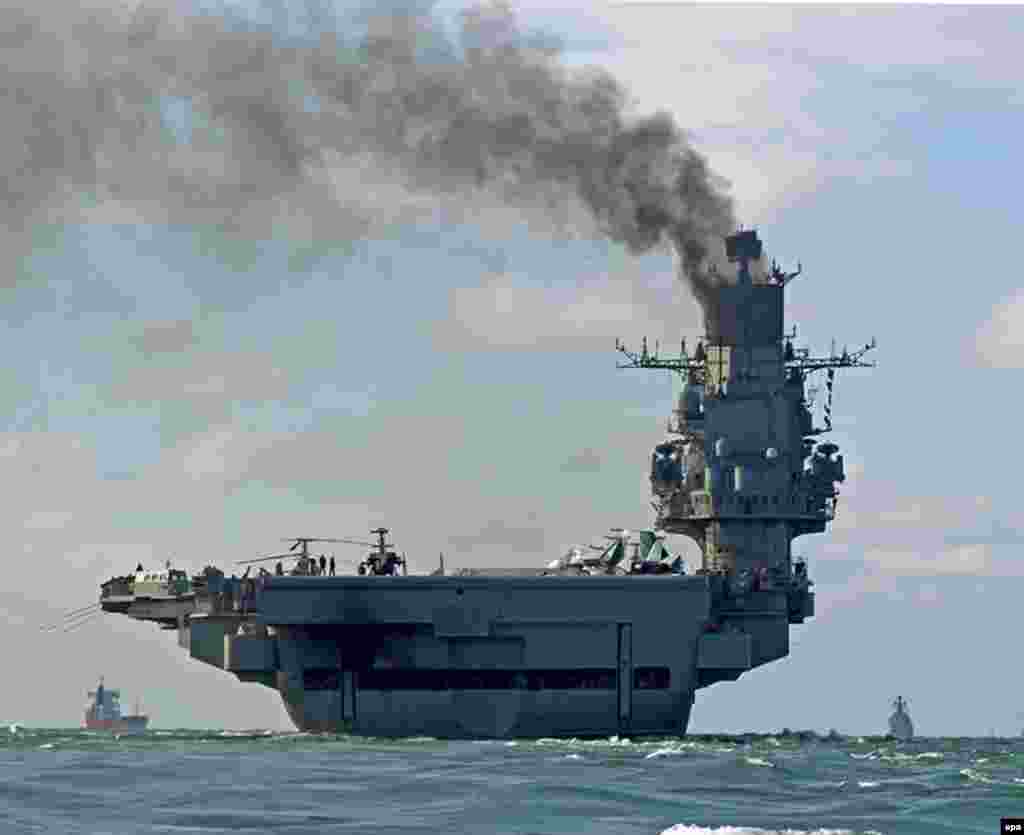
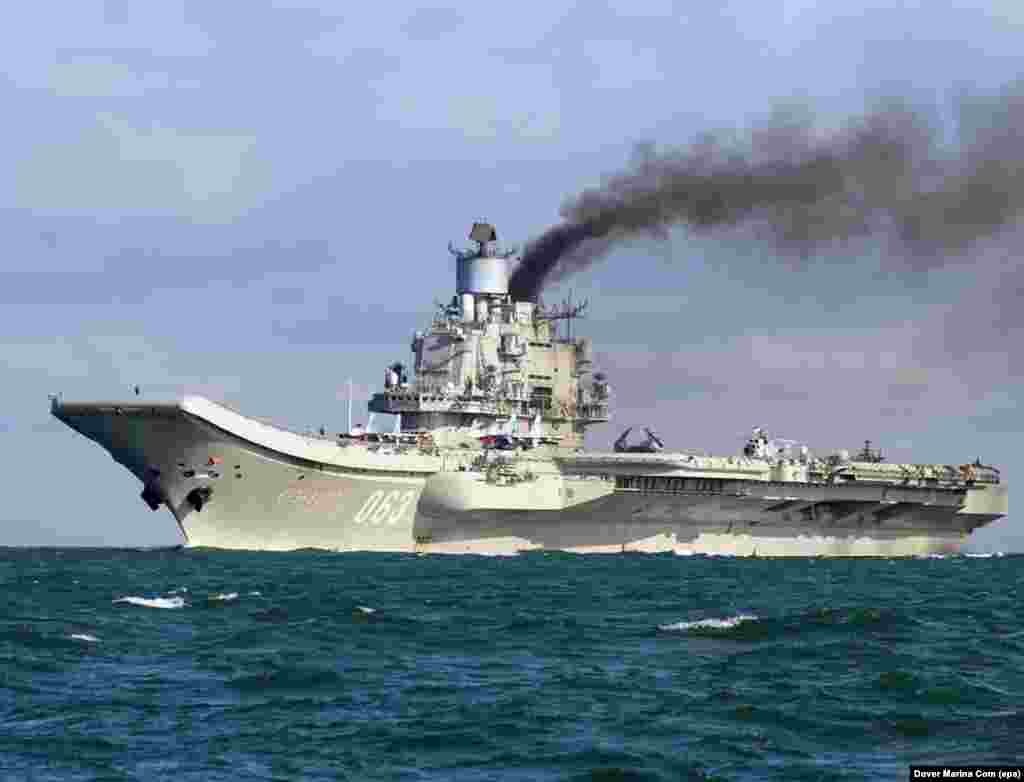
11/11The Admiral Kuznetsov, billowing smoke as it passes through the English Channel on October 21, 2016. The diesel-powered carrier has attracted ridicule on Russian social media for its plume of black exhaust, but the apparent purpose of the vessel's mission to Syria is deadly serious.
On October 21, Russia's only aircraft carrier steamed through the English Channel on its way to Syria. Given the seemingly limited effectiveness of the 305-meter Admiral Kuznetsov, many analysts believe the attention that the vessel is generating is the real aim of its rare, and very public, outing.
Previous slide
Next slide
Originally published October 2016
One of the injured was in very serious condition, said Viktor Rogalyov, the head of the local Disaster Medicine Center.
Kovtun said that rescue divers from the Russian Navy's Northern Fleet were working at the site and that it was "hard to say" what caused the sinking.
Authorities said at least one crane fell when the dry dock sank, damaging the aircraft carrier, but that the damage was above the waterline and was not severe.
Aleksei Rakhmanov, head of the state-run United Shipbuilding Corporation, said experts are assessing the damage but that "the vitally important parts of the aircraft carrier were not affected."
The PD-50 was one of the world's largest dry docks.
Russia sent the 305-meter Admiral Kuznetsov to the Eastern Mediterranean in 2016 as part of its ongoing military campaign in support of Syrian government forces in the Middle Eastern country's devastating war.
An Su-33 military jet crashed while trying to land on the aircraft carrier there in December 2016, and a MiG-29 crashed a few kilometers from the vessel three weeks earlier.
A fire on board the carrier killed a sailor during a 2008-09 deployment, and an oil spill was spotted by the Irish Coast Guard near the vessel afterwards.
RFE/RL journalists report the news in 24 languages in 18 countries where a free press is banned by the government or not fully established. We provide what many people cannot get locally: uncensored news, responsible discussion, and open debate.