


Accessibility links

Breaking News

Second Strike In Days Hits Key Moscow Oil Refinery; EU Sanctions Renewed

Updated
Massive Ukrainian Drone Strike Targets Moscow Region's Largest Fuel Supplier
please wait

No media source currently available

0:00 0:00:58 0:00

Moscow Mayor Sergei Sobyanin said on June 18 that drones had attacked the Moscow Oil Refinery, the largest fuel supplier to the Moscow region.

Sobyanin described the incident as a massive drone attack on the Russian capital, claiming 180 drones had been "shot down on their approach to Moscow."

However, he said that several drones had managed to reach the refinery in the southeastern Kapotnya district and measures were being taken to deal with the consequences.

Also on June 18, EU leaders agreed at their Brussels summit to renew ⁠sanctions against Russia over its war against Ukraine for ⁠another 12 ‌months. Previously, such sanctions were only extended for six months at a time.

'Fully Justified' Attack, Zelenskyy Says

Ukrainian President Volodymyr Zelenskyy has confirmed Ukrainian forces hit the Moscow Oil Refinery for the second time this week.

"This is a fully justified response to Russian attacks on our cities and communities, and another important result of our warriors' work against facilities that sustain Russia's war machine," he wrote in a post on X.

Ukrainian Foreign Minister Andriy Sybiha has also commented on the Moscow attack in a post on X, saying Russia started a war of aggression against Ukraine and has been killing its people for years.

Russia's Defense Ministry said air defense systems intercepted and destroyed 555 Ukrainian drones overnight across multiple regions, including the Moscow region, the Russian-occupied Crimean Peninsula, and the Sea of Azov.

Reports also said debris from intercepted drones fell on the grounds of the nearby Sadovod market, one of Moscow's largest wholesale and retail markets.

According to the Moscow regional governor, a high-rise residential building and a number of private houses were also damaged in the drone attack.

"As a result of a drone attack in the Moscow region, 16 people have been injured, including two children," Andrei Vorobyov said in a Telegram post on June 18.

As Moscow Burns, Russia's Fuel Crisis Spreads
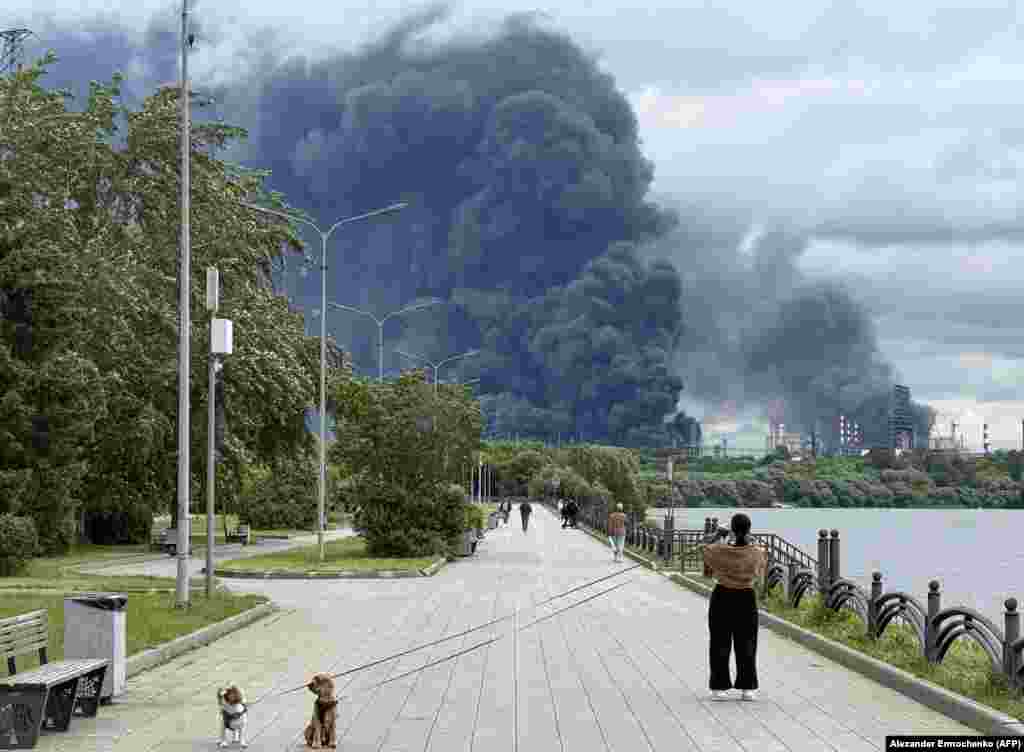
Smoke rises from the Moscow Oil Refinery following a Ukrainian drone attack on June 18.<br><br>The strike came as fuel shortages have spread from the Russian-occupied areas of Crimea and Donetsk in Ukraine into Russia in recent days.<br>
1/8 Smoke rises from the Moscow Oil Refinery following a Ukrainian drone attack on June 18.

The strike came as fuel shortages have spread from the Russian-occupied areas of Crimea and Donetsk in Ukraine into Russia in recent days.
A massive Ukrainian strike on a Moscow oil refinery on June 18 is set to exacerbate a worsening fuel shortage that is spreading throughout Russia.
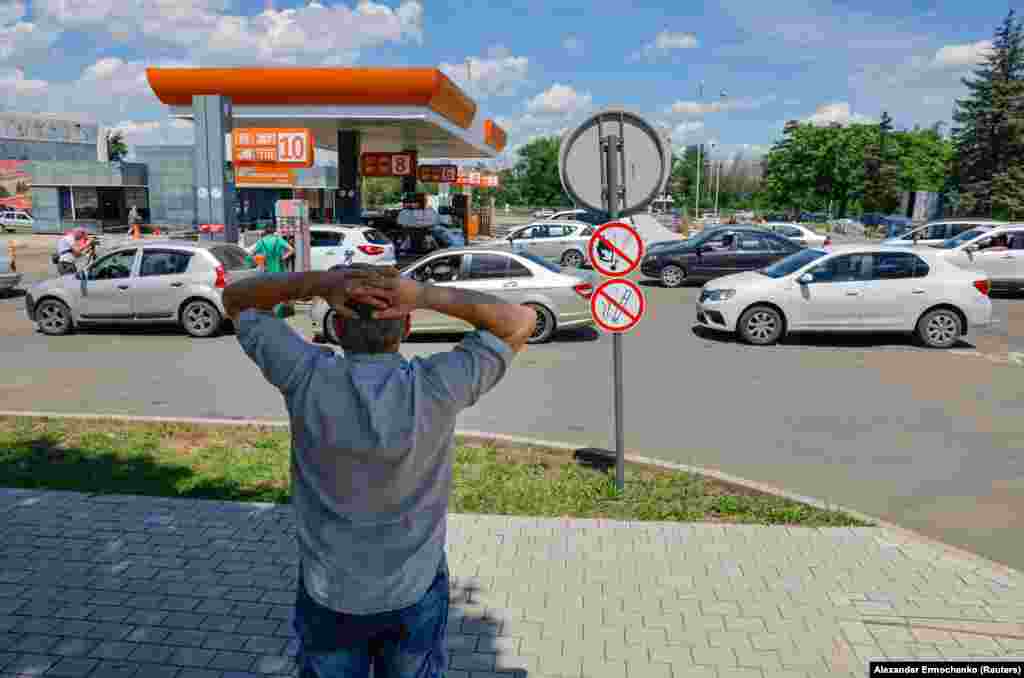
Motorists line up at a fuel station in Donetsk on June 16.<br><br>According to Russian <a href="https://t.me/thebell_io/37906" class="wsw__a"><strong>media reports</strong></a>, scores of regions across Russia and Russian-held territory have imposed limits on how much fuel can be purchased by civilians.
2/8 Motorists line up at a fuel station in Donetsk on June 16.

According to Russian media reports, scores of regions across Russia and Russian-held territory have imposed limits on how much fuel can be purchased by civilians.
A massive Ukrainian strike on a Moscow oil refinery on June 18 is set to exacerbate a worsening fuel shortage that is spreading throughout Russia.
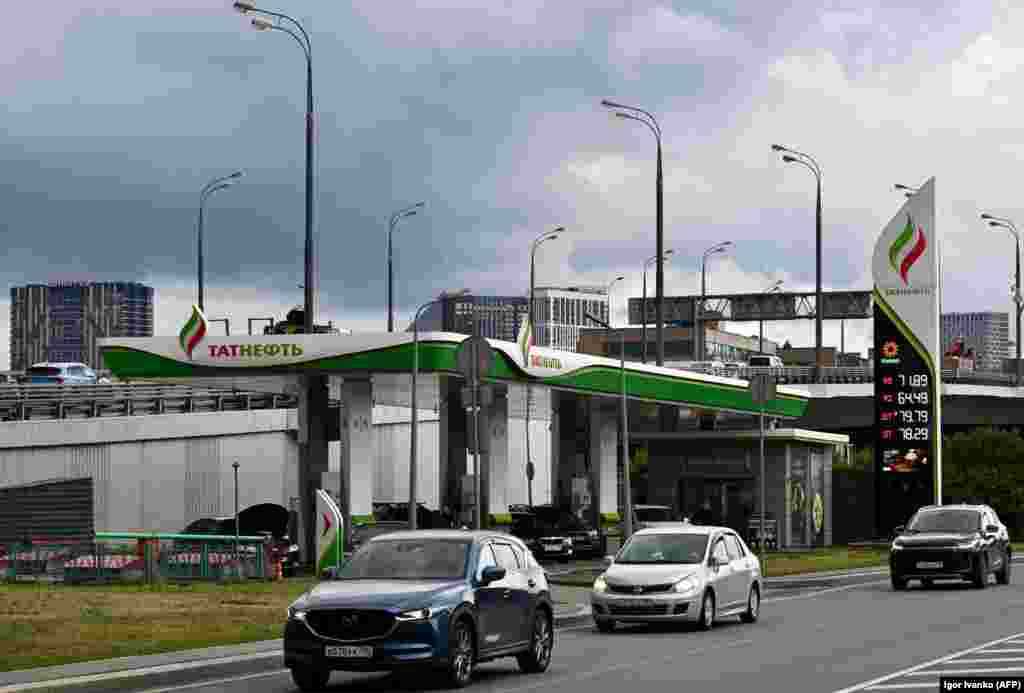
A Tatneft fuel station in Moscow on June 16.<br><br>The Russian oil producer recently <a href="https://www.france24.com/en/live-news/20260616-russian-oil-producer-rations-fuel-as-ukraine-attacks-bite" target="_self" class="wsw__a"><strong>imposed rationing</strong></a> across its hundreds of gas stations throughout Russia, with each customer limited to 30 liters of petrol at a time.
3/8 A Tatneft fuel station in Moscow on June 16.

The Russian oil producer recently imposed rationing across its hundreds of gas stations throughout Russia, with each customer limited to 30 liters of petrol at a time.
A massive Ukrainian strike on a Moscow oil refinery on June 18 is set to exacerbate a worsening fuel shortage that is spreading throughout Russia.
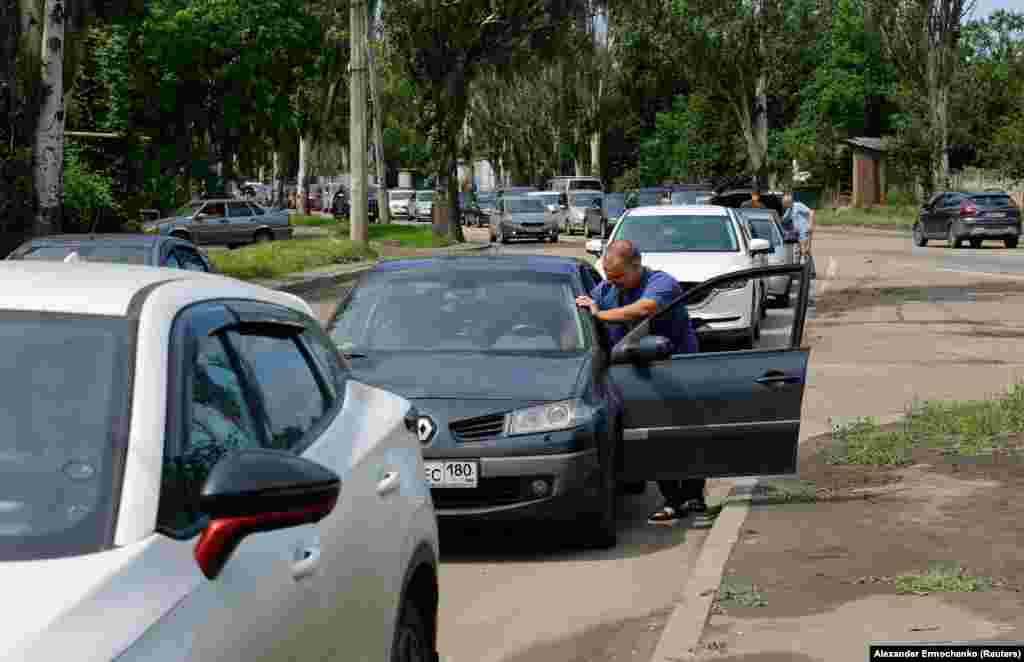
Cars queuing at a gas station in Donetsk on June 16.<br><br>Before the June 18 strikes on the Moscow refinery, Energy Intelligence, a US-based research organization, <a href="https://www.energyintel.com/0000019e-b282-df4c-a5df-b6de49990000" class="wsw__a"><strong>estimated around one-third</strong></a> of Russia’s oil refining capacity has been knocked out by Ukrainian drone strikes. Refining runs in the country are the lowest in 21 years, according to the industry publication.<br>
4/8 Cars queuing at a gas station in Donetsk on June 16.

Before the June 18 strikes on the Moscow refinery, Energy Intelligence, a US-based research organization, estimated around one-third of Russia’s oil refining capacity has been knocked out by Ukrainian drone strikes. Refining runs in the country are the lowest in 21 years, according to the industry publication.
A massive Ukrainian strike on a Moscow oil refinery on June 18 is set to exacerbate a worsening fuel shortage that is spreading throughout Russia.
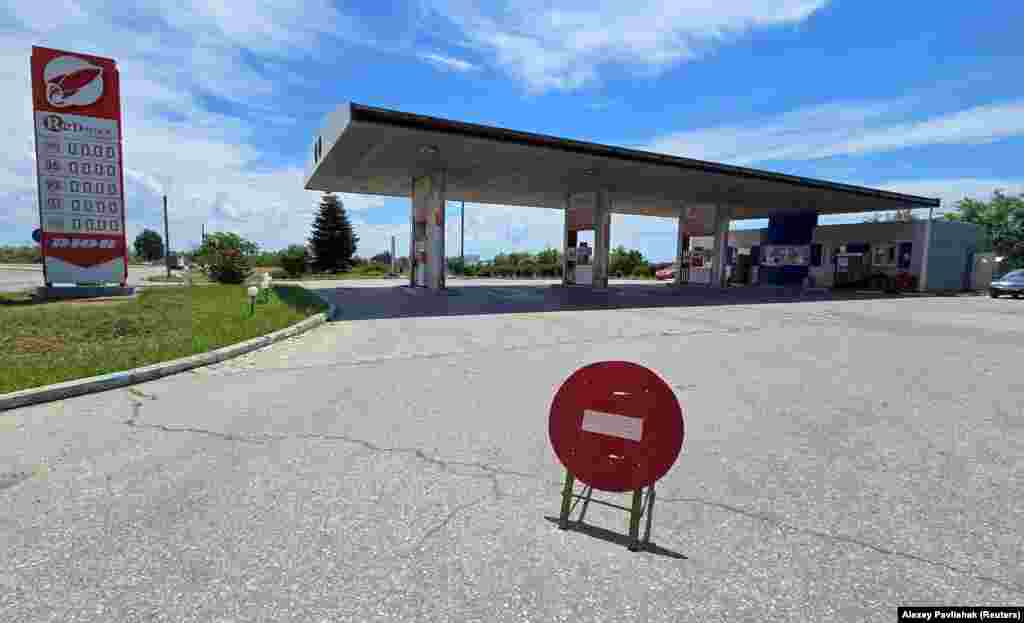
A closed gas station in Yevpatoriya, Crimea, on June 11.<br><br>In Russian-held Crimea, fuel supplies have virtually run dry amid a Ukrainian "middle strike" campaign that has targeted fuel tankers and other logistics hardware on the peninsula.
5/8 A closed gas station in Yevpatoriya, Crimea, on June 11.

In Russian-held Crimea, fuel supplies have virtually run dry amid a Ukrainian "middle strike" campaign that has targeted fuel tankers and other logistics hardware on the peninsula.
A massive Ukrainian strike on a Moscow oil refinery on June 18 is set to exacerbate a worsening fuel shortage that is spreading throughout Russia.
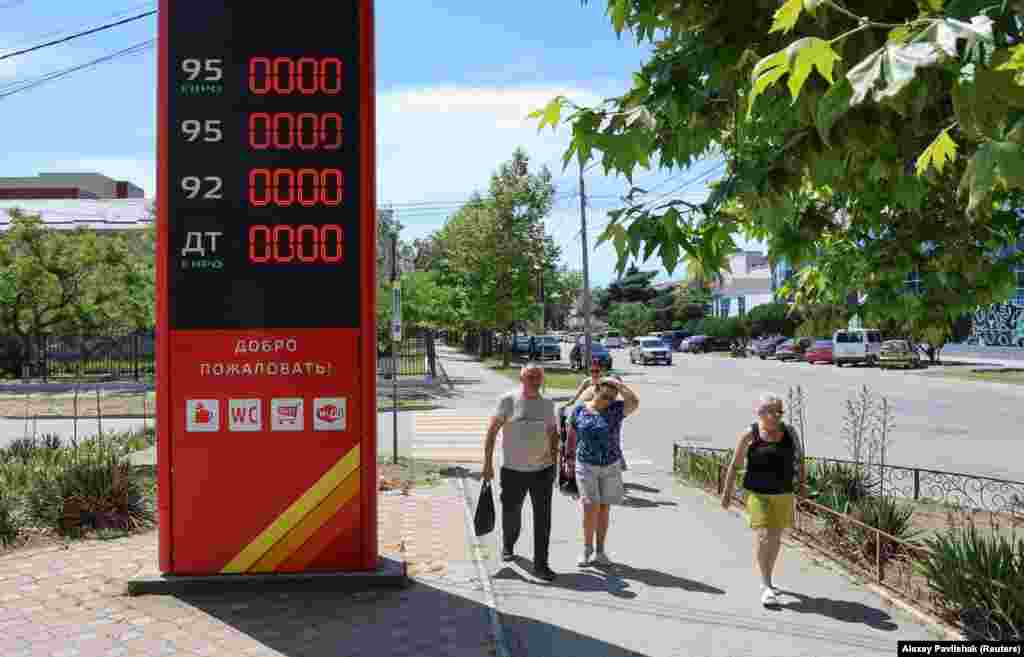
Pedestrians walk past a closed fuel station in Yevpatoriya on June 11.<br><br>In the Krasnodar region of Russia, local authorities have noted shortages exacerbated by drivers from Crimea allegedly filling up in the Russian region before returning to the peninsula.
6/8 Pedestrians walk past a closed fuel station in Yevpatoriya on June 11.

In the Krasnodar region of Russia, local authorities have noted shortages exacerbated by drivers from Crimea allegedly filling up in the Russian region before returning to the peninsula.
A massive Ukrainian strike on a Moscow oil refinery on June 18 is set to exacerbate a worsening fuel shortage that is spreading throughout Russia.
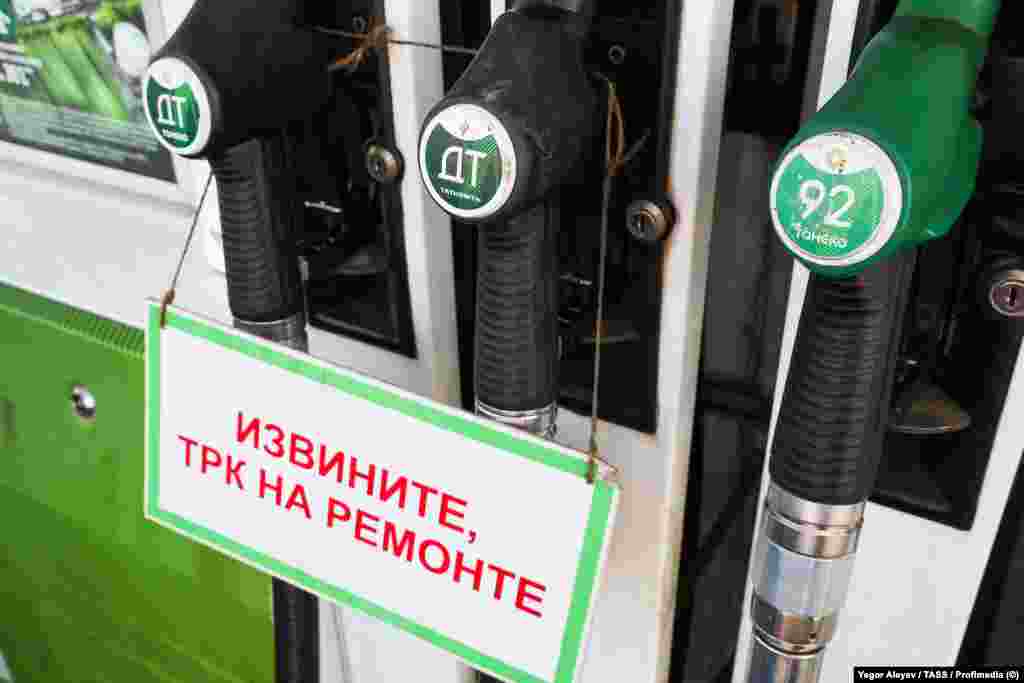
Fuel nozzles with a note that they are undergoing "renovation," at a gas station in Kazan on June 16.<br><br>Russian President Vladimir Putin was in Kazan to host the Association of Southeast Asian Nations (ASEAN) on June 18 and has not commented on the Moscow strikes.
7/8 Fuel nozzles with a note that they are undergoing "renovation," at a gas station in Kazan on June 16.

Russian President Vladimir Putin was in Kazan to host the Association of Southeast Asian Nations (ASEAN) on June 18 and has not commented on the Moscow strikes.
A massive Ukrainian strike on a Moscow oil refinery on June 18 is set to exacerbate a worsening fuel shortage that is spreading throughout Russia.
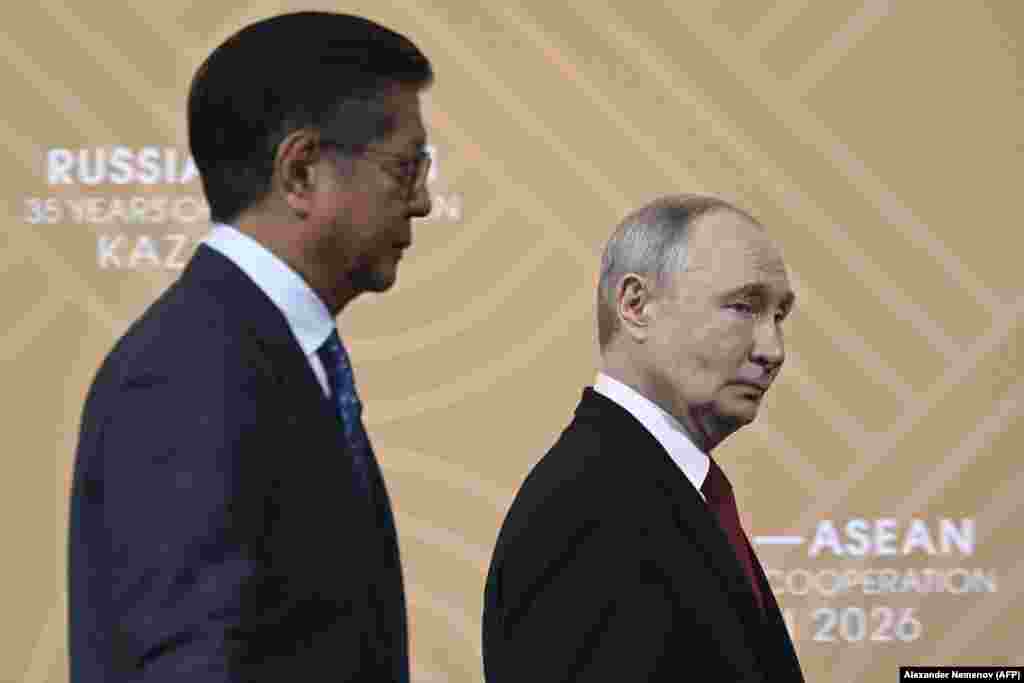
Russia's President Vladimir Putin and Philippine President Ferdinand Marcos Jr. at the ASEAN summit on June 18.<br><br>Kremlin aide Yury Ushakov told reporters in Kazan that it is "categorically incorrect" that the conflict in Ukraine is beginning to shift in Kyiv's favor.
8/8 Russia's President Vladimir Putin and Philippine President Ferdinand Marcos Jr. at the ASEAN summit on June 18.

Kremlin aide Yury Ushakov told reporters in Kazan that it is "categorically incorrect" that the conflict in Ukraine is beginning to shift in Kyiv's favor.
A massive Ukrainian strike on a Moscow oil refinery on June 18 is set to exacerbate a worsening fuel shortage that is spreading throughout Russia.
Previous slide
Next slide

After the attacks, a Kremlin aide suggested they had dimmed the prospect of a face-to-face meeting between Zelenskyy and his Russian counterpart.

"New attacks by the Kyiv regime do not bring any personal contacts with Russian President Vladimir Putin any closer," Yury Ushakov was quoted as saying by Russian media on June 18.

Fires, Thick Smoke

Russian Telegram channels, citing eyewitnesses, reported fires following the attack and thick smoke over the city. Attacks were also reported in Russia's Rostov and Belgorod regions.

The Russian Telegram channel Astra reported that a strike sparked a fire at an oil refinery in Gukovo, in the Rostov region, while a warehouse containing flammable materials was burning in Shebekino, in the Belgorod region.

Authorities in those regions have not provided details about the facilities that were hit.

The Ukrainian military has not yet commented on the attacks.

The Moscow Oil Refinery in Kapotnya was also struck earlier this week, on June 16.

Following that attack, Reuters, citing two anonymous industry sources, reported that the refinery had suspended operations.

According to Reuters' sources, the strike on the refinery, owned by Gazpromneft, the oil subsidiary of state-controlled energy giant Gazprom, and located in southeastern Moscow, damaged the primary processing unit responsible for 53 percent of the plant's capacity.
Ukraine's General Staff said on June 16 that the Moscow refinery plays a role in supplying Russia's military. It said the facility accounts for more than 38 percent of fuel consumption in the Moscow region and supplies aviation fuel to Domodedovo, Vnukovo, Sheremetyevo, and Zhukovsky airports. The refinery usually has an annual processing capacity of more than 12 million tons of oil.

Earlier, RFE/RL's Russian Service, which has been tracking the deployment of new air defense systems in Moscow and the surrounding region, reported that a tower for a Pantsir air defense system had only recently been installed near the refinery but had not yet been equipped with the missile system itself.

Ukrainian forces have regularly targeted facilities in Russia's oil industry.

In late May, Reuters reported that Ukrainian drone attacks had forced nearly all major refineries in central Russia to suspend or reduce production.
Residents of the Belgorod and Ryazan regions, Krasnodar territory and several other parts of Russia have previously complained about shortages of gasoline and diesel fuel.

Fuel sales restrictions have been introduced in a number of regions, including reported limits on gasoline purchases at major filling-station chains in Moscow.

Meanwhile, the Ukrainian Air Force reported on June 18 that Russian forces had attacked Ukraine overnight with seven Iskander-M/S-400 ballistic missiles and 239 strike drones.

An air raid alert was declared in several Ukrainian regions overnight due to the threat of Russian ballistic weapons, and explosions were heard in the capital, Kyiv, central city of Poltava, and eastern city of Dnipro.

According to local authorities, Russian forces attacked two districts in the Poltava region overnight, including an energy facility, causing power outages. One person was injured and hospitalized. In Dnipro, one person was killed and 11 others were injured as the strikes damaged a private facility.

EU Sanctions Renewed

The renewed EU sanctions target Russia's revenue from the international sale of fossil fuels, the country's arms industry, and financial institutions, a spokeswoman for European Council President Antonio Costa said.

The extension of the sanctioned required the unanimous approval of all 27 EU leaders.

Since former Hungarian Prime Minister Viktor Orban -- the Russia-friendly leader who blocked several Ukraine aid initiatives -- was voted out of office earlier this year, Kyiv has seen a new wave of EU support.

Since Russia's initial invasion of Ukraine in 2014, followed by its full-scale invasion of February 2022, the EU has sanctioned more than 2,700 individuals and entities, its website said.

With reporting by dpa
  • 16x9 Image

    RFE/RL's Ukrainian Service

    RFE/RL's Ukrainian Service has seen its audience grow significantly since Russia's full-scale invasion in February 2022 and is among the most cited media outlets in the country. Its bold, in-depth reporting from the front lines has won many accolades and awards. Its comprehensive coverage also includes award-winning reporting by the Donbas.Realities and Crimea.Realities projects and the Schemes investigative unit.

  • 16x9 Image

    RFE/RL's Russian Service

    RFE/RL's Russian Service is a multi-platform alternative to Russian state-controlled media, providing audiences in the Russian Federation with informed and accurate news, analysis, and opinion.

This item is part of
XS
SM
MD
LG