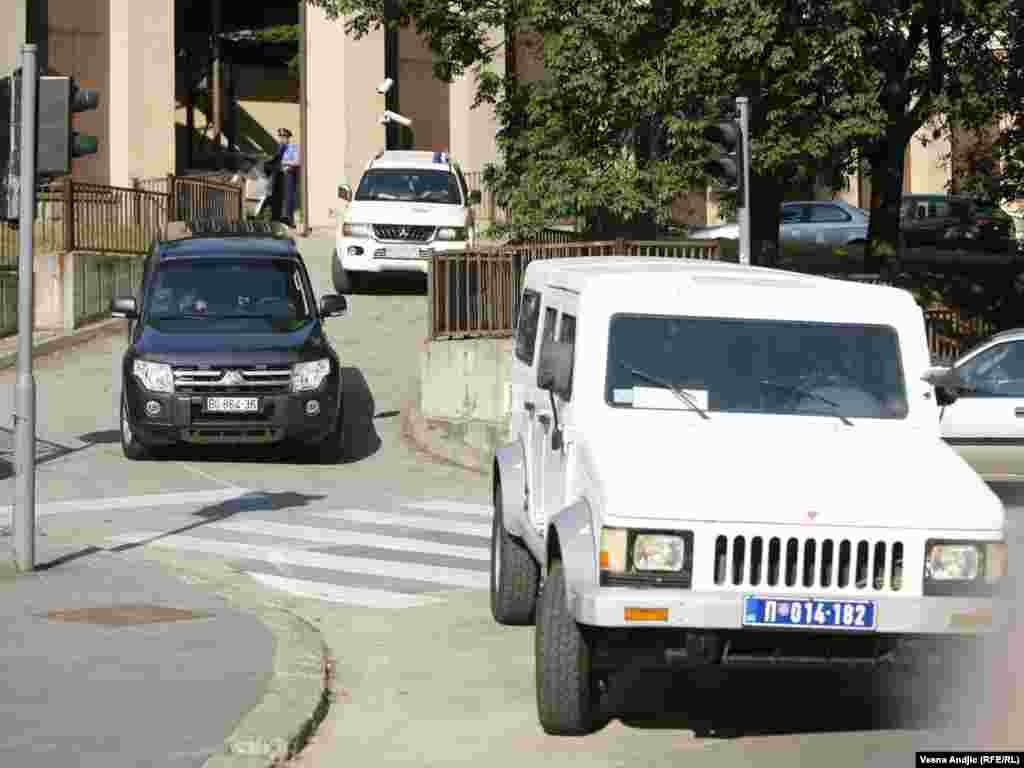
WATCH: On May 31, a Serbian police convoy escorted former Bosnian Serb general Ratko Mladic from a Belgrade court to the airport for extradition to face war crimes charges in The Hague (video by RFE/RL's Balkan Service).
By RFE/RL
BELGRADE/WASHINGTON-- Serbian authorities have extradited Bosnian Serb wartime general Ratko Mladic to the UN-backed International Criminal Tribunal for the former Yugoslavia (ICTY) in The Hague, where he will face genocide, war crimes, and other charges stemming from his role in the Balkan wars of the 1990s.
The extradition follows a court decision on May 27 that declared the 69-year-old fit for transfer to the Netherlands-based international court, despite objections by his lawyer and relatives that he is too frail to stand trial. Then, on May 31, a Belgrade court rejected a similar appeal from Mladic's lawyer and he was shuttled into international custody within hours.
"Ratko Mladic has been extradited during this afternoon to the Hague tribunal," Serbian Justice Minister Snezana Malovic announced at a news conference in Belgrade. "On the basis of the constitution and the laws of the republic of Serbia, as the minister of justice of the government of the Republic of Serbia, I have signed the decision granting the extradition of Ratko Mladic."
Mladic later arrived on a Serbian government jet in the Dutch city of Rotterdam, before a helicopter-escorted convoy transferred him to the tribunal's detention center outside The Hague.
Tribunal spokeswoman Nerma Jelacic said Mladic would be given a list of defense lawyers who could help him through the initial proceedings of the war crimes court and would be examined by a doctor.
She said he would be spending his first night at the detention center in isolation -- standard practice for new arrivals at the prison.
Mladic is expected to make his initial court appearance within a few days, at which time he will be asked to confirm his identity and enter a plea to each of the charges against him.
He may decline to plead to the charges at his first appearance, instead opting to delay a formal response by up to a month.
Mladic has said that he does not recognize the authority of the international court.
The man who was UN tribunal's most-wanted fugitive had spent nearly 16 years on the run before his capture on May 26 in a northern Serbian village.
He is accused of genocide, war crimes, and crimes against humanity for his alleged role in the deaths of some 8,000 Muslim men and boys in the Bosnian town of Srebrenica and the bloody four-year siege of Sarajevo.
The Srebrenica massacre of July 1995 is considered the worst atrocity committed in Europe since World War II.
In announcing his extradition, Malovic said Serbia had fulfilled its "moral and international obligation."
PHOTO GALLERY: The 24 hours leading up to Ratko Mladic's arrival at The Hague to face trial for genocide and other alleged war crimes.
Extraditing Ratko Mladic
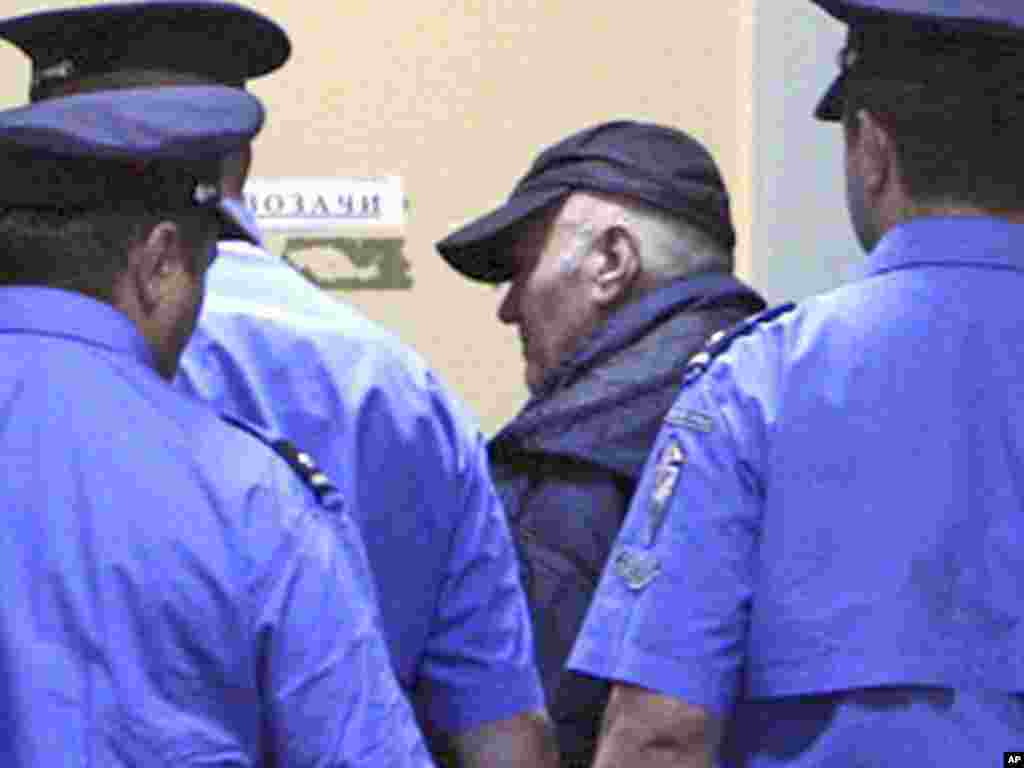
1/16A handout image released by the Serbian government on May 26 of a 69-year-old Ratko Mladic entering a court in Belgrade in police custody. AP photo/Serbian Government
Wartime Bosnian Serb general and indicted war criminal Ratko Mladic was at the center of the storm on May 31, when he was extradited to face an international war crimes tribunal in The Hague over alleged atrocities committed during the 1992-95 war.
2/16A photo provided by "Press" newspaper on May 28 shows Mladic at an undisclosed location in Serbia after his arrest on May 26. EPA photo
Wartime Bosnian Serb general and indicted war criminal Ratko Mladic was at the center of the storm on May 31, when he was extradited to face an international war crimes tribunal in The Hague over alleged atrocities committed during the 1992-95 war.
3/16The Belgrade grave of Ratko Mladic's daughter, Ana, who committed suicide in 1994. Mladic was accompanied to the gravesite ahead of the rejection of his appeal against extradition on May 31. AFP photo by Andrej Isakovic
Wartime Bosnian Serb general and indicted war criminal Ratko Mladic was at the center of the storm on May 31, when he was extradited to face an international war crimes tribunal in The Hague over alleged atrocities committed during the 1992-95 war.
4/16In the heart of Serb-dominated Republika Srpska, in Bosnia, supporters of Ratko Mladic in Banja Luka protested his detention and extradition on May 31 in the hours before the court's rejection of his appeal.
Wartime Bosnian Serb general and indicted war criminal Ratko Mladic was at the center of the storm on May 31, when he was extradited to face an international war crimes tribunal in The Hague over alleged atrocities committed during the 1992-95 war.
5/16A man chants slogans while holding a flag and a photos of Ratko Mladic in Banja Luka. More than 10,000 people gathered in the city center of the Republika Srpska's capital to show their support for Mladic on May 31. AP photo by Amel Emric
Wartime Bosnian Serb general and indicted war criminal Ratko Mladic was at the center of the storm on May 31, when he was extradited to face an international war crimes tribunal in The Hague over alleged atrocities committed during the 1992-95 war.
6/16Mladic supporters in Banja Luka, Republika Srpska, in Bosnia, expressing outrage over his arrest and possible extradition on May 31. Photo by Erduan Katana
Wartime Bosnian Serb general and indicted war criminal Ratko Mladic was at the center of the storm on May 31, when he was extradited to face an international war crimes tribunal in The Hague over alleged atrocities committed during the 1992-95 war.
7/16Serbian forces secure a convoy allegedly carrying Bosnian Serb ex-army chief from court to Belgrades airport. AFP photo by Andrej Isakovic
Wartime Bosnian Serb general and indicted war criminal Ratko Mladic was at the center of the storm on May 31, when he was extradited to face an international war crimes tribunal in The Hague over alleged atrocities committed during the 1992-95 war.
8/16A Serbian government airplane thought to be carrying Ratko Mladic departs from Belgrade, headed for The Netherlands.
Wartime Bosnian Serb general and indicted war criminal Ratko Mladic was at the center of the storm on May 31, when he was extradited to face an international war crimes tribunal in The Hague over alleged atrocities committed during the 1992-95 war.
9/16The white car car thought to be transporting Mladic from the Belgrade court to the airplane to take him to the Hague under heavy protection by Serbian security forces. AP photo by Vadim Ghirda
Wartime Bosnian Serb general and indicted war criminal Ratko Mladic was at the center of the storm on May 31, when he was extradited to face an international war crimes tribunal in The Hague over alleged atrocities committed during the 1992-95 war.
10/16The convoy allegedly carrying Mladic to the airport in Belgrade. He was thought to be inside the white, heavily fortified vehicle. AFP photo by Marko Djokovic
Wartime Bosnian Serb general and indicted war criminal Ratko Mladic was at the center of the storm on May 31, when he was extradited to face an international war crimes tribunal in The Hague over alleged atrocities committed during the 1992-95 war.
11/16The convoy allegedly carrying Mladic arrives at Belgrade airport.
Wartime Bosnian Serb general and indicted war criminal Ratko Mladic was at the center of the storm on May 31, when he was extradited to face an international war crimes tribunal in The Hague over alleged atrocities committed during the 1992-95 war.
12/16The airplane thought to be carrying Mladic from Belgrade touches down at Rotterdam's airport, a short helicopter ride away from the international war crimes tribunal's detention facilities in The Hague. REUTERS photo by Toussaint Kluiters/United Photos
Wartime Bosnian Serb general and indicted war criminal Ratko Mladic was at the center of the storm on May 31, when he was extradited to face an international war crimes tribunal in The Hague over alleged atrocities committed during the 1992-95 war.
13/16A member of the Dutch special forces guard at the Scheveningen prison in The Hague ahead of Mladic's expected arrival on May 31. AFP photo by ANP/Robin Utrecht
Wartime Bosnian Serb general and indicted war criminal Ratko Mladic was at the center of the storm on May 31, when he was extradited to face an international war crimes tribunal in The Hague over alleged atrocities committed during the 1992-95 war.
14/16One of two helicopters believed to be carrying Mladic departs from Rotterdam airport in The Netherlands to deliver him to The Hague and the International Criminal Tribunal for the former Yugoslavia, an institution which has sought him for nearly 16 years on genocide and other alleged atrocities charges. REUTERS photo by Robin van Lonkhuijsen
Wartime Bosnian Serb general and indicted war criminal Ratko Mladic was at the center of the storm on May 31, when he was extradited to face an international war crimes tribunal in The Hague over alleged atrocities committed during the 1992-95 war.
15/16An aerial view taken on May 27 of the Scheveningen detention center near The Hague where defendants are held for proceedings before the International Criminal Tribunal for the former Yugoslavia (ICTY). AFP photo by Robin Utrecht
Wartime Bosnian Serb general and indicted war criminal Ratko Mladic was at the center of the storm on May 31, when he was extradited to face an international war crimes tribunal in The Hague over alleged atrocities committed during the 1992-95 war.
16/16A helicopter believed to be carrying extradited war crimes suspect Ratko Mladic arrives at the Scheveningen prison facility in The Hague on May 31, nearly 16 years after his indictment. REUTERS by Michael Kooren
Wartime Bosnian Serb general and indicted war criminal Ratko Mladic was at the center of the storm on May 31, when he was extradited to face an international war crimes tribunal in The Hague over alleged atrocities committed during the 1992-95 war.
Previous slide
Next slide
"With the extradition of Ratko Mladic to The Hague, [the] Republic of Serbia has fulfilled [a] moral and international obligation and we have proved that we meet our commitments," Malovic said. "Our action represents a clear confirmation that Serbia is sincerely devoted towards completing its cooperation with the [International Criminal Tribunal for the Former Yugoslavia]."
Hero To Some
For years, experts have speculated that ultranationalist factions within Serbia were harboring Mladic.
He is still considered a hero by some, including Bosnian Serb Nenad Batkovic, a former soldier during the Balkan wars who joined thousands of Mladic supporters for a rally in Banja Luka, the capital of Bosnia's Serbian entity, on May 31.
"Mladic is a symbol of freedom for me," Batkovic said. "Mladic is an invincible Serb hero. He is an immortal for the Serb Republic. We will not give up on him. Long live Ratko Mladic!"
Mladic's capture had long been declared by European officials a prerequisite for Serbia to achieve further European integration.
After Serbian special forces apprehended Mladic last week, EU enlargement commissioner Stefan Fuele said that the arrest removed "a great obstacle on the Serbian road to the European Union."
WATCH: Many people in Bosnia welcomed the arrest of Ratko Mladic, the man believed responsible for the worst massacre of the Balkan wars of the 1990s. But relatives of the victims of the Srebrenica killings have found little cause for celebration, even as they welcome the chance to see justice served (video by RFE/RL's Balkan Service).
Justice Minister Malovic said the capture would also have regional benefits.
"Bringing Mladic to justice, it is a satisfaction to the victims and families of all who have been victims of the crimes for which he has been charged before the ICTY," she said. "At the same time, this act represents a message relevant [to] the process of reconciliation in the region."
Far From Over
While international prosecutors say there is ample evidence to convict Mladic, ICTY spokeswoman Jelacic told Reuters that the court proceedings are bound to be complicated.
"It is still a very serious, very complex indictment with very complex charges," Jelacic said. "We now have two charges of genocide instead of one to cover the first year of the war, May 1992 to May 1993 in the first charge, and the second one, obviously, to cover the July 1995 genocide in Srebrenica."
Ratko Mladic (left) with former Bosnian Serb leader Radovan Karadzic in 1995, near the height of the conflict.
The ICTY issued a statement after Mladic's capture in which it called "the arrest of Mladic...a milestone in the Tribunal's history and brings the institution closer to the successful completion of its mandate, with Goran Hadzic remaining the sole fugitive out of a total of 161 indictees."
The tribunal added that proceedings continue for 34 accused war criminals, and that 126 such proceedings have been concluded.
Another prominent war crimes defendant and former close ally of Mladic, onetime Bosnian Serb leader Radovan Karadzic, was captured in 2008 and is standing trial before the ICTY.
While the UN tribunal prepares to hear the Mladic case, many questions remain on the ground in Serbia as to just how he managed to evade capture for so long.
Speaking to RFE/RL in Belgrade, Serbian sociologist Ivan Kuzminovic said that Mladic's capture -- and the boost it gives Serbia in the eyes of the international community -- should not distract from the need to answer those questions.
"This is a kind of reality show which is produced without any funds, and it goes on and on," Kuzminovic said. "The goal [of that show] is to avoid the real questions like this: Where was Ratko Mladic for the last five or six years? Who was protecting him? Who killed the conscripts in the Topcider barracks [in Serbia, where some believed Mladic had previously been hiding]? And what was the role of the Serbian state in providing protection for Mladic?"
In announcing Mladic's capture last week, Serbian President Boris Tadic said a search was under way for "all of those who helped Mladic and other fugitive war crimes suspects" to evade capture -- including, potentially, government officials.
written by Richard Solash in Washington with Milos Teodorovic of RFE/RL's Balkans Service; additional wire reporting
Balkans War Crimes
The Balkans Face Their Wartime Ghosts
Bosnian Serb wartime leader Radovan Karadzic (right) and General Ratko Mladic in 1995










 Ratko Mladic (left) with former Bosnian Serb leader Radovan Karadzic in 1995, near the height of the conflict.
The ICTY issued a statement after Mladic's capture in which it called "the arrest of Mladic...a milestone in the Tribunal's history and brings the institution closer to the successful completion of its mandate, with Goran Hadzic remaining the sole fugitive out of a total of 161 indictees."
Ratko Mladic (left) with former Bosnian Serb leader Radovan Karadzic in 1995, near the height of the conflict.
The ICTY issued a statement after Mladic's capture in which it called "the arrest of Mladic...a milestone in the Tribunal's history and brings the institution closer to the successful completion of its mandate, with Goran Hadzic remaining the sole fugitive out of a total of 161 indictees." Bosnian Serb wartime leader Radovan Karadzic (right) and General Ratko Mladic in 1995