


Accessibility links

Breaking News

Kyrgyzstan Calls On Citizens Not To Travel To Russia

Updated
Central Asian migrant workers in Russia have reportedly found themselves under restrictions and checkups after the terrorist attack. (file photo)

BISHKEK -- Kyrgyzstan has called on its citizens not to travel to Russia, where Central Asian migrant workers and visitors are facing enormous pressure following last week's deadly attack near Moscow that left 139 people dead.

Russian officials said earlier that 11 suspects, including four men who allegedly attacked the Crocus City Hall entertainment center, were detained. Late on March 24, the four men, all ethnic Tajiks, were sent to pretrial detention until at least May 22.

On March 25, three other Tajik men residing in Russia were sent to pretrial detention for at least two months.

The self-exiled leader of the opposition Islamic Renaissance Party of Tajikistan (IRPT), Muhiddin Kabiri, doubts that Tajiks were involved in plotting and implementation of the terrorist attack.

"There were definitely some intelligence agencies and experienced people behind this attack. If the Tajik men were indeed involved in it, then they were most likely used as a tool. They were just second or third-level people in this provocation," Kabiri told RFE/RL on March 25.

Although Russian authorities have not described the suspects as migrant laborers, many of the hundreds of thousands of Tajiks living in Russia are part of the country's migrant labor work force, which Kabiri said has been left vulnerable to various influences since Tajikistan's authoritarian leader, Emomali Rahmon, sidelined and jailed all migrant leaders and lawyers and activists protecting Tajik workers' rights because he saw them as political rivals.

“What is happening to Tajik migrants today -- whether they were involved in this attack or not, or if they’re being targeted [for xenophobic attacks] -- all of these are the result of the…policies of the Tajik government," said Kabiri, who left Tajikistan after his party was banned in 2015 by the Supreme Court as a terrorist organization.

Kyrgyz Foreign Ministry official Bakyt Kadyrov told RFE/RL on March 25 that Russian authorities have been conducting anti-terrorist operations and are therefore increasing their checks of individuals arriving to and leaving Russia after the March 22 attack.

"All [Kyrgyz] diaspora organizations in Russia are being informed about the situation. We do not have information about the length of the anti-terrorist operations [in Russia]. [Kyrgyz] citizens who are blacklisted or broke the law in the past are being barred from entering [Russia]," Kadyrov said, adding that hotlines at the ministry and the Kyrgyz Embassy in Russia are working around the clock.

Russian human rights defender Valentina Chupik told RFE/RL on March 24 that "in the last 36 hours we received 1,018 complaints" from citizens of Kyrgyzstan, Tajikistan, and Uzbekistan who said they were "illegally detained by police."

"Police beat some of them; some were deported from Russia," Chupik said.

Bishkek-based rights defender Aziza Abdirasulova also told RFE/RL that Central Asian migrant workers in Russia had found themselves under restrictions and checkups after the terrorist attack.

Several Kyrgyz nationals told RFE/RL by phone on March 24 that they were detained on their arrival to Moscow’s Sheremetyevo airport and were being held in the airport's detention center along with scores of Central Asian citizens, of which at least 11 were Kyrgyz citizens.

Before-And-After Images Suggest Severe Abuse Of Moscow Terror Suspects
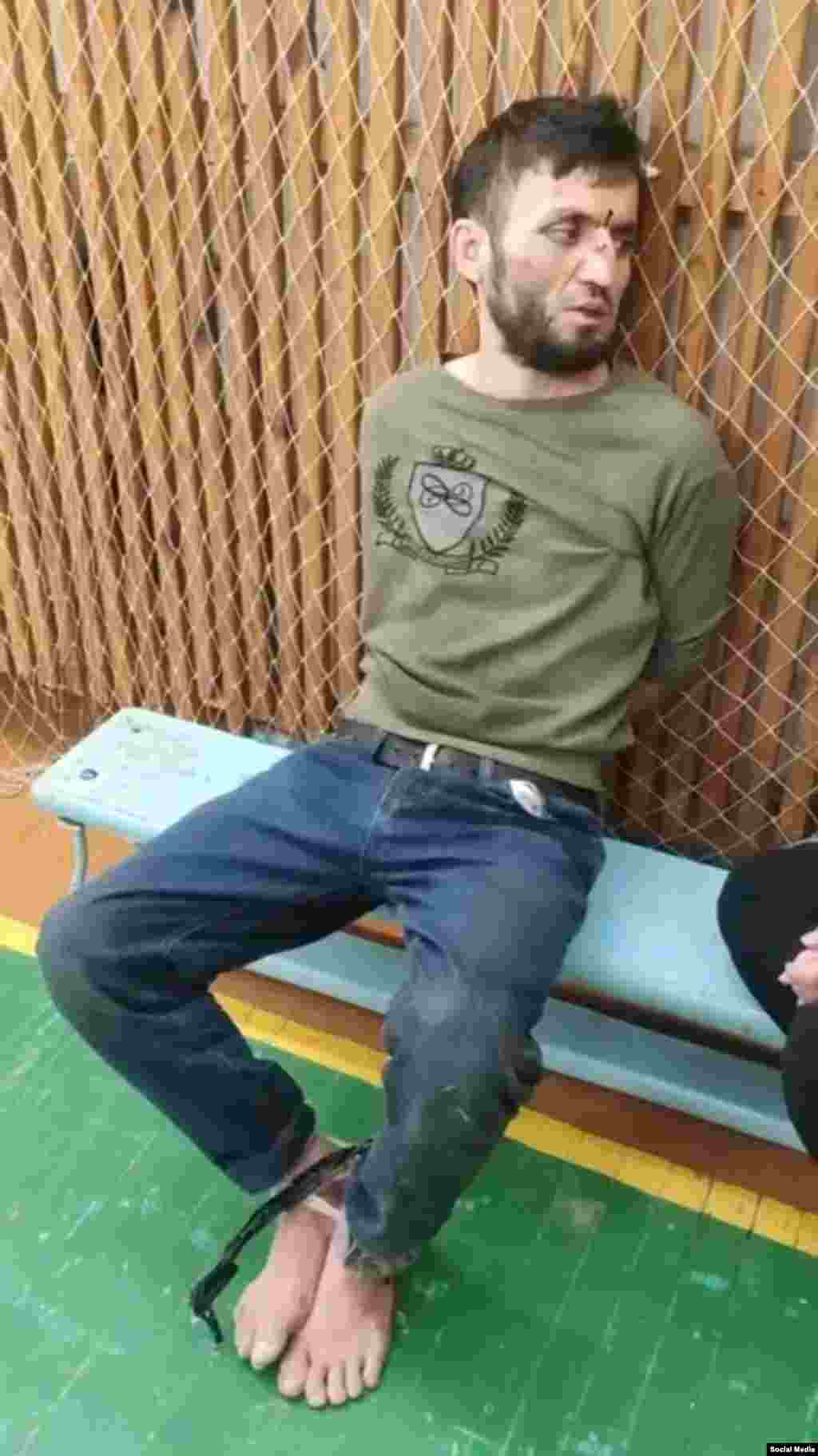
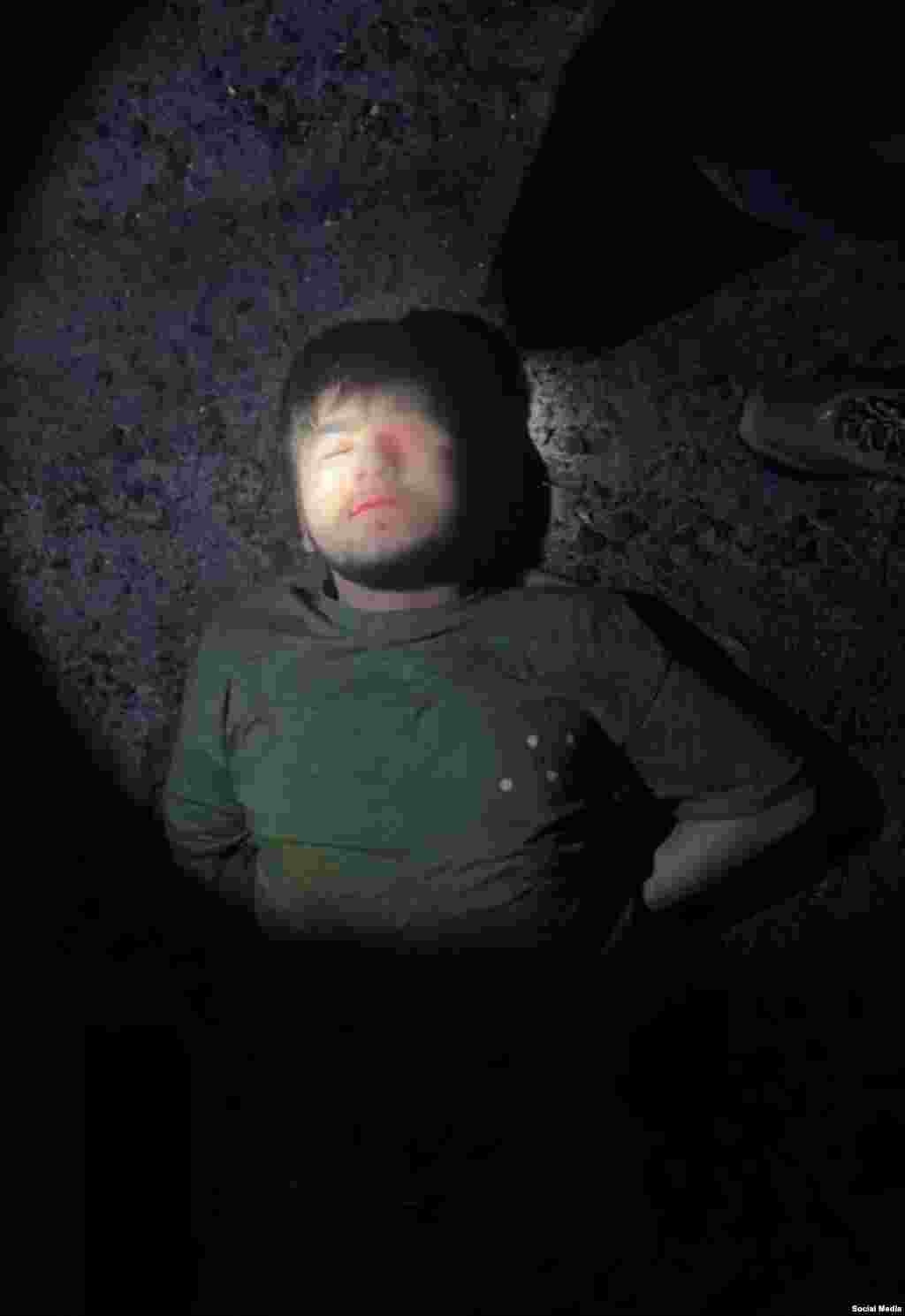
Dalerjon Mirzoev is seen immediately after his capture in the Bryansk region on March 23. He was captured on suspicion of being one of four Tajik nationals involved in the terrorist attack on a concert hall near Moscow on March 22 that left at least 137 dead and more than 180 injured.
1/8 Dalerjon Mirzoev is seen immediately after his capture in the Bryansk region on March 23. He was captured on suspicion of being one of four Tajik nationals involved in the terrorist attack on a concert hall near Moscow on March 22 that left at least 137 dead and more than 180 injured.
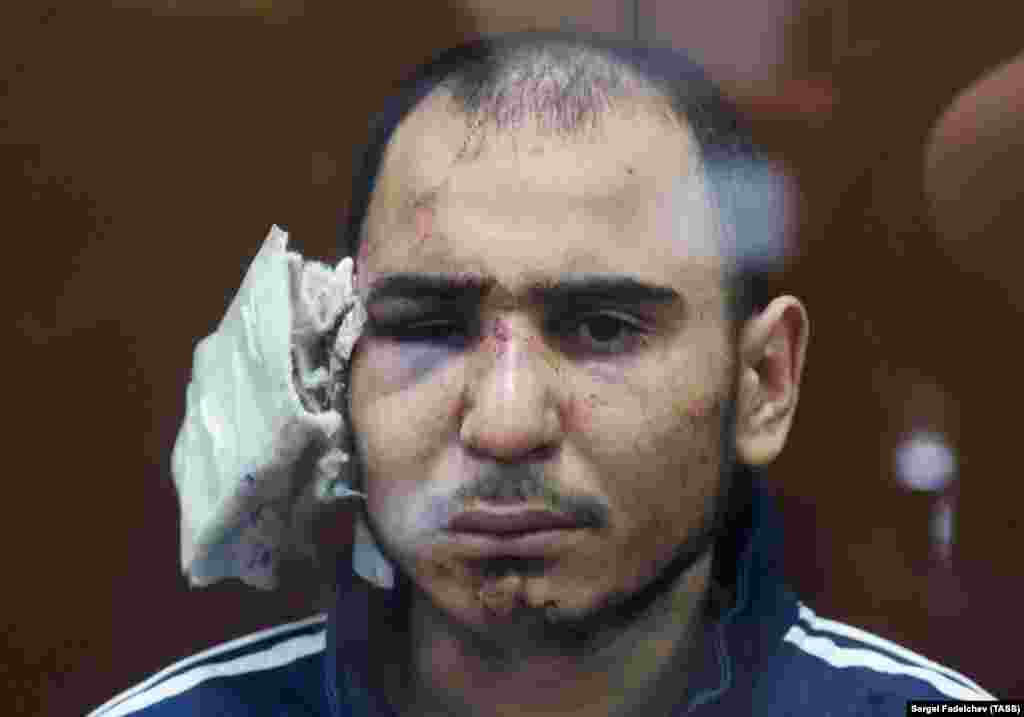
Images taken as four Tajik men suspected of committing the Crocus City Hall shooting near Moscow were apprehended in western Russia on March 23 are starkly different from how the men appeared -- battered and bruised -- in court the following day.
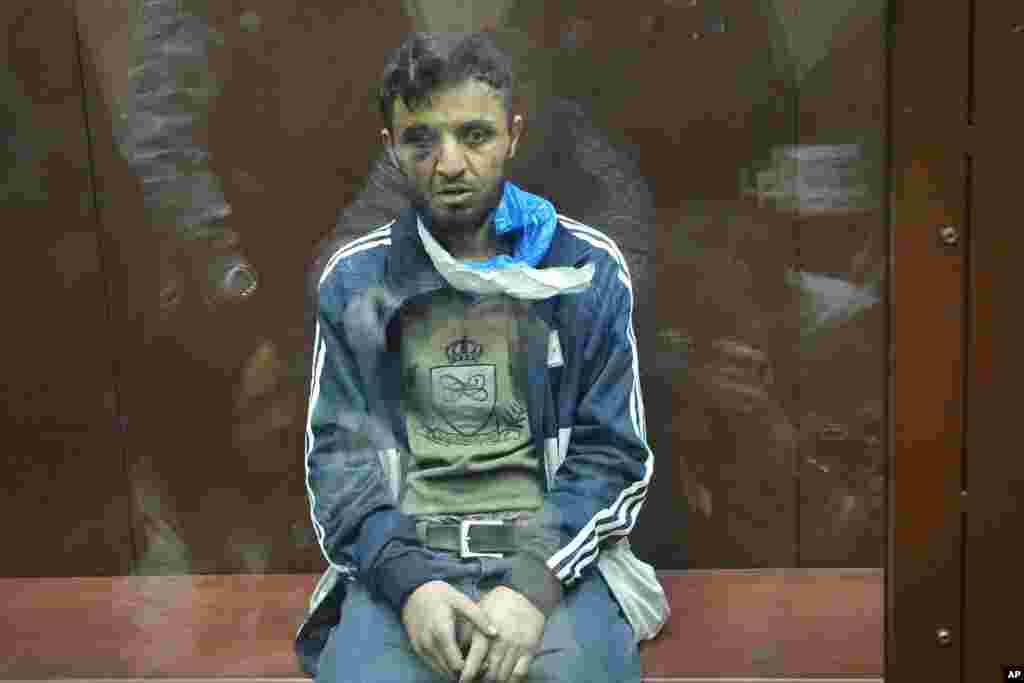
Here is Mirzoev pictured in court in Moscow on March 24 wearing the same long-sleeved T-shirt but sporting signs of being beaten.
2/8 Here is Mirzoev pictured in court in Moscow on March 24 wearing the same long-sleeved T-shirt but sporting signs of being beaten.
Images taken as four Tajik men suspected of committing the Crocus City Hall shooting near Moscow were apprehended in western Russia on March 23 are starkly different from how the men appeared -- battered and bruised -- in court the following day.
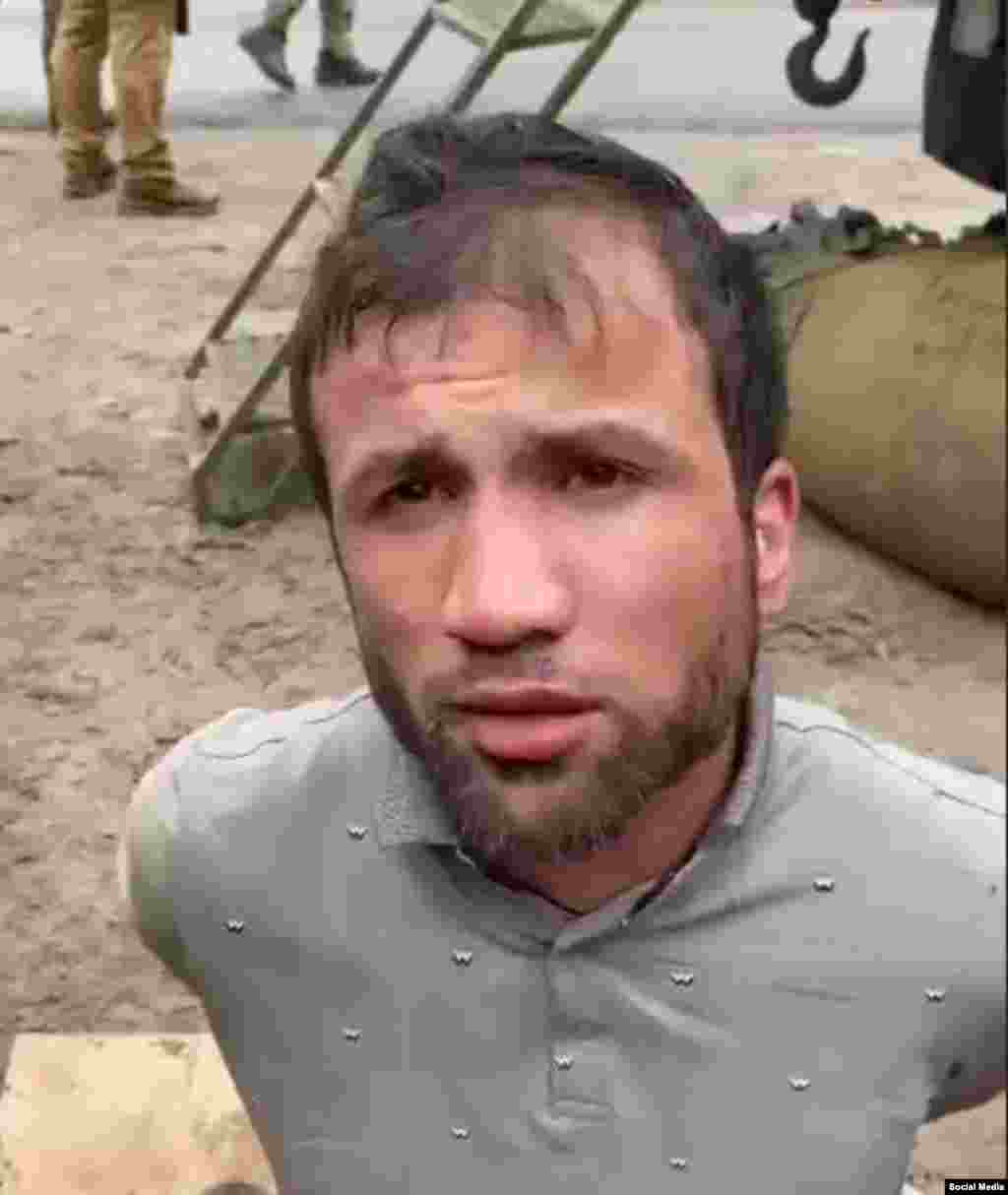
Faridun Shamsiddin is shown apparently unscathed immediately after his capture in the Bryansk region on March 23. 
3/8 Faridun Shamsiddin is shown apparently unscathed immediately after his capture in the Bryansk region on March 23. 
Images taken as four Tajik men suspected of committing the Crocus City Hall shooting near Moscow were apprehended in western Russia on March 23 are starkly different from how the men appeared -- battered and bruised -- in court the following day.
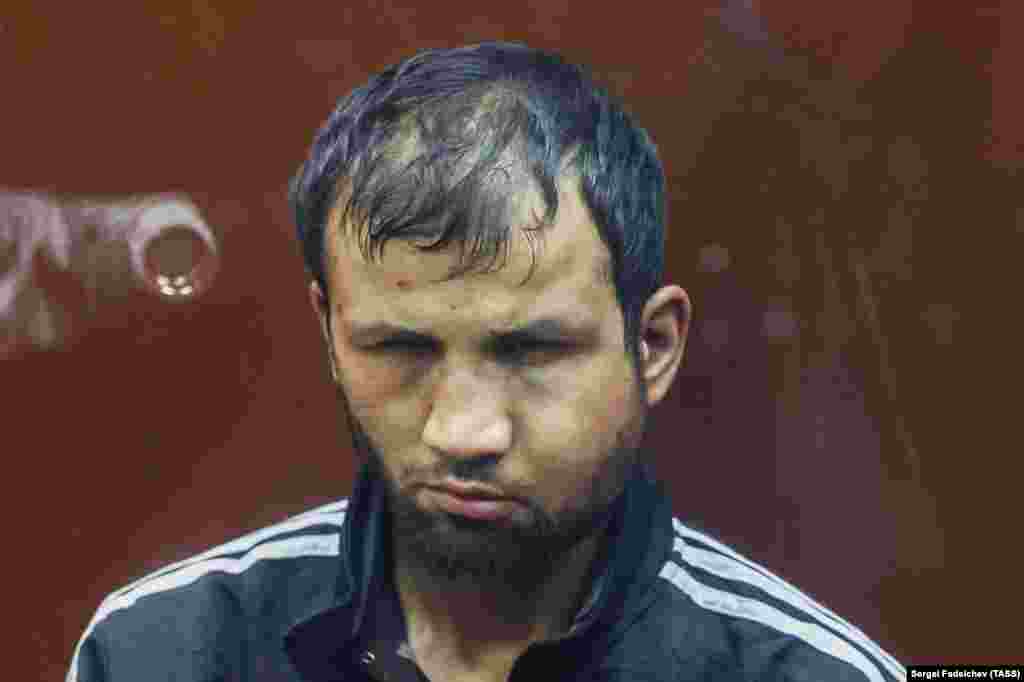
Shamsiddin is seen here pictured in court in Moscow on March 24 with a swollen and bruised face. Earlier, the Tajik man was filmed as he was apparently being tortured by security forces with an electrical cable attached to his genitals.<br />
<br />
Aiden Aslin, a British national who was captured by Russia while fighting for Ukraine during the battle of Mariupol, told RFE/RL that he believes the publication of apparent torture of the terror suspects is intended to &quot;set an example.&quot;<br />
<br />
The former Ukrainian marine says such abuse of suspects yet to be found guilty of any crime is at &quot;the same level&quot; as the extrajudicial violence he says he witnessed while in Russian captivity.&nbsp;
4/8 Shamsiddin is seen here pictured in court in Moscow on March 24 with a swollen and bruised face. Earlier, the Tajik man was filmed as he was apparently being tortured by security forces with an electrical cable attached to his genitals.

Aiden Aslin, a British national who was captured by Russia while fighting for Ukraine during the battle of Mariupol, told RFE/RL that he believes the publication of apparent torture of the terror suspects is intended to "set an example."

The former Ukrainian marine says such abuse of suspects yet to be found guilty of any crime is at "the same level" as the extrajudicial violence he says he witnessed while in Russian captivity. 
Images taken as four Tajik men suspected of committing the Crocus City Hall shooting near Moscow were apprehended in western Russia on March 23 are starkly different from how the men appeared -- battered and bruised -- in court the following day.
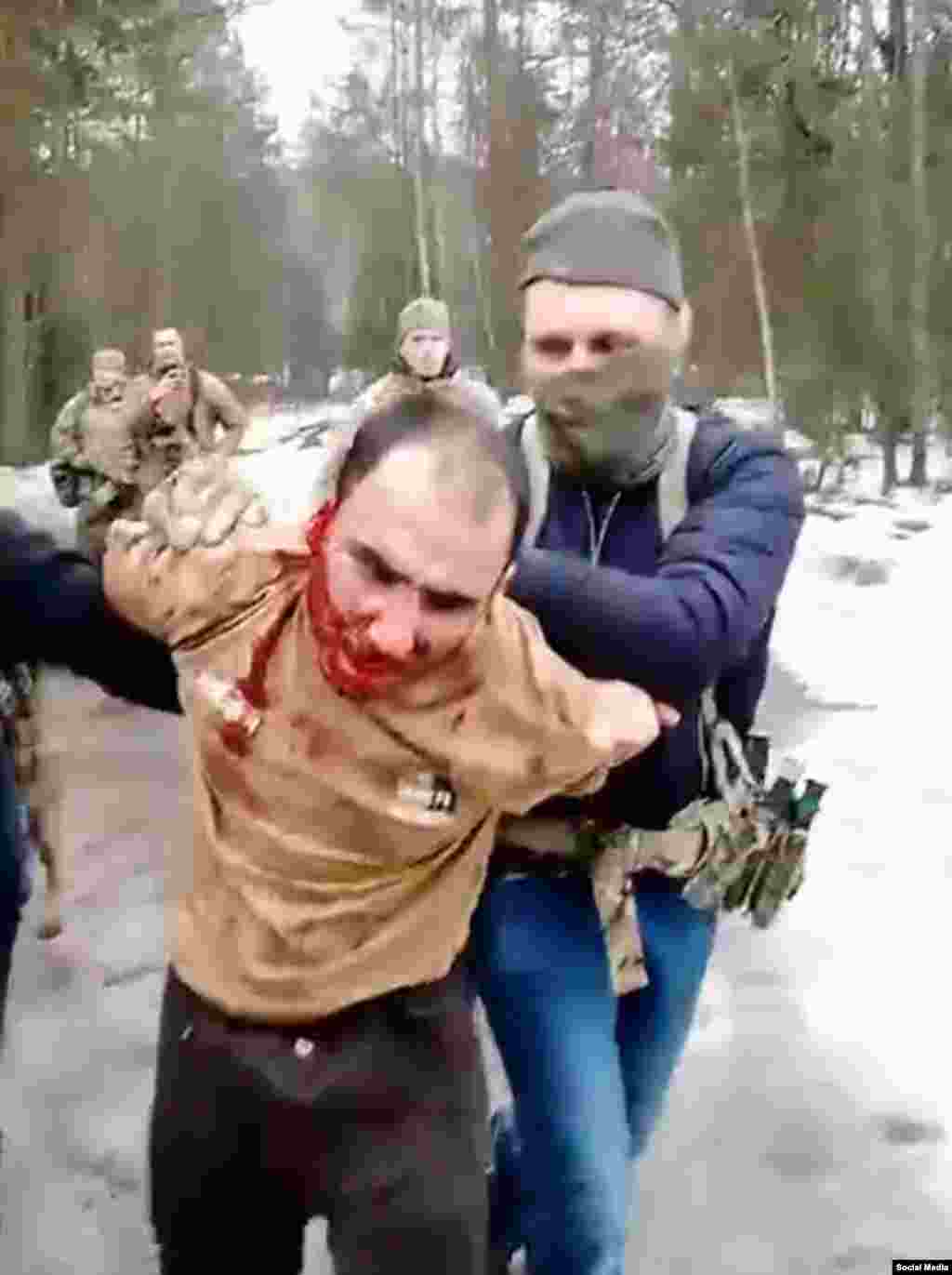
Saidakram Rajabalizoda is seen as he is led away after reportedly having his ear sliced off by uniformed men who caught him in a forest in Russia&#39;s Bryansk region on March 23.<br />
<br />
The Russian Grey Zone Telegram channel, which is connected to the Wagner group, published a video purportedly showing Rajabalizoda&rsquo;s ear being cut off and security agents trying to force him to eat it. A man in the video yells at the suspect: &ldquo;Chew, bastard! I will cut you open and shove it into your mouth.&rdquo;
5/8 Saidakram Rajabalizoda is seen as he is led away after reportedly having his ear sliced off by uniformed men who caught him in a forest in Russia's Bryansk region on March 23.

The Russian Grey Zone Telegram channel, which is connected to the Wagner group, published a video purportedly showing Rajabalizoda’s ear being cut off and security agents trying to force him to eat it. A man in the video yells at the suspect: “Chew, bastard! I will cut you open and shove it into your mouth.”
Images taken as four Tajik men suspected of committing the Crocus City Hall shooting near Moscow were apprehended in western Russia on March 23 are starkly different from how the men appeared -- battered and bruised -- in court the following day.
Rajabalizoda is seen at his March 24 court appearance with his right ear bandaged and showing evidence of being beaten while in detention.&nbsp;
6/8 Rajabalizoda is seen at his March 24 court appearance with his right ear bandaged and showing evidence of being beaten while in detention. 
Images taken as four Tajik men suspected of committing the Crocus City Hall shooting near Moscow were apprehended in western Russia on March 23 are starkly different from how the men appeared -- battered and bruised -- in court the following day.
Muhammadsobir Faizov is pictured after being apprehended on March 23 with an apparently severe eye injury that has been blurred out by Russian media outlets.
7/8 Muhammadsobir Faizov is pictured after being apprehended on March 23 with an apparently severe eye injury that has been blurred out by Russian media outlets.
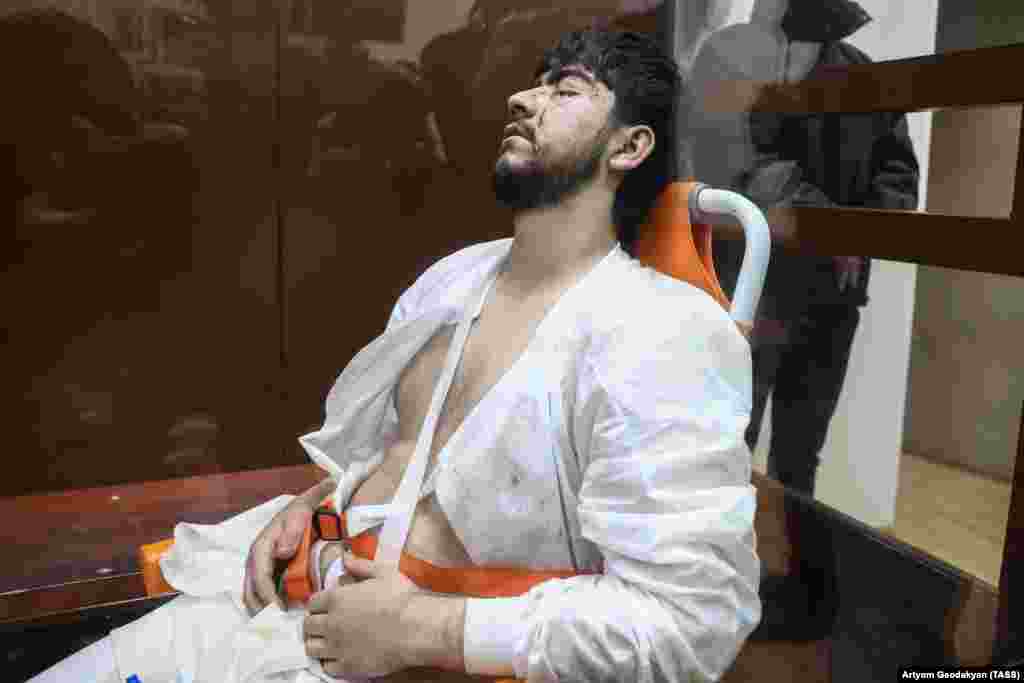
Images taken as four Tajik men suspected of committing the Crocus City Hall shooting near Moscow were apprehended in western Russia on March 23 are starkly different from how the men appeared -- battered and bruised -- in court the following day.
Faizov is seen here at a March 24 court hearing. The terror suspect was wheeled into the courtroom and appeared barely responsive during the appearance.&nbsp;
8/8 Faizov is seen here at a March 24 court hearing. The terror suspect was wheeled into the courtroom and appeared barely responsive during the appearance. 
Images taken as four Tajik men suspected of committing the Crocus City Hall shooting near Moscow were apprehended in western Russia on March 23 are starkly different from how the men appeared -- battered and bruised -- in court the following day.
Previous slide
Next slide

"They put us in some kind of jail. They did not answer our question about the reasons for the detainments. Our documents are in order, but those who came to Moscow for the first time were not allowed to enter the country. There are guys from Tajikistan, Uzbekistan among us. The authorities took away our telephones.... They forced us to sign some papers," one of the detained Kyrgyz nationals told RFE/RL.

The Kyrgyz Embassy in Moscow issued a statement on March 24 saying, "Kyrgyz nationals who had violated Russia's migration regulations in the past will be sent back to Kyrgyzstan by the closest flight to Bishkek."

Meanwhile, the leader of Russian Muslims, Mufti Ravil Gainutdin, said on March 23 that he will hand the For Merit medal during his next Friday sermon to Islam Khalilov, a 15-year-old from Kyrgyzstan who worked in the cloakroom at Crocus City Hall. Khalilov reportedly managed to save more than 100 people by leading them out of the building via the employees' exit during the attack.

  • 16x9 Image

    RFE/RL's Kyrgyz Service

    RFE/RL's Kyrgyz Service is an award-winning, multimedia source of independent news and informed debate, covering major stories and underreported topics, including women, minority rights, high-level corruption, and religious radicalism.

  • 16x9 Image

    RFE/RL's Tajik Service

    RFE/RL’s Tajik Service is a trusted source of local news, attracting audiences with compelling reporting on issues not otherwise covered by Tajikistan’s state-run media.

This item is part of
XS
SM
MD
LG