
Accessibility links

Breaking News

'Bodies Behind Every Car': Witnesses Recount No-Mercy Killings In Iran's Central Cities

Listen
6 min

This audio is automated

Learn more

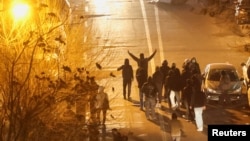
Protests across Iran were violently suppressed by the authorities.

In the industrial and residential suburbs of Iran's central Isfahan Province, three eyewitnesses have described scenes of extraordinary violence during the recent wave of anti-regime protests.

In interviews with RFE/RL's Radio Farda, the eyewitnesses said parts of the province's sprawling suburbs and satellite cities now resembled war zones -- comparable, they said, to cities devastated after occupation during the Iran-Iraq War of the 1980s.

A heavy military and police presence, along with an Internet and communications blackout, has been imposed across Iran since authorities launched a bloody crackdown on antiestablishment protests that erupted on December 28, 2025.

Gutted Mosques, Eerie Calm In Tehran After Unrest
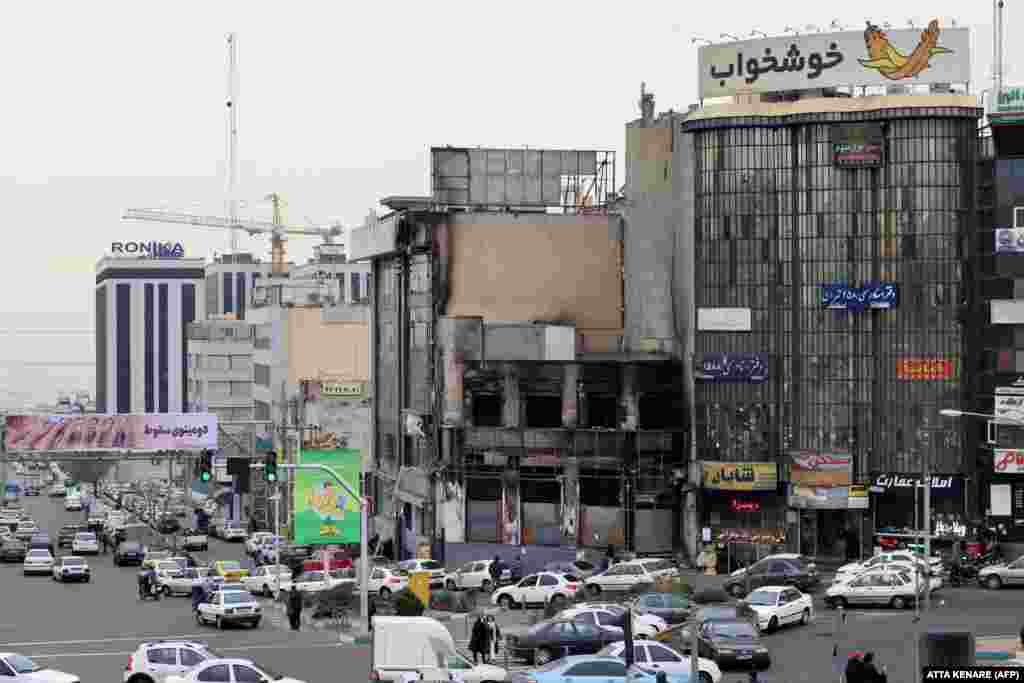
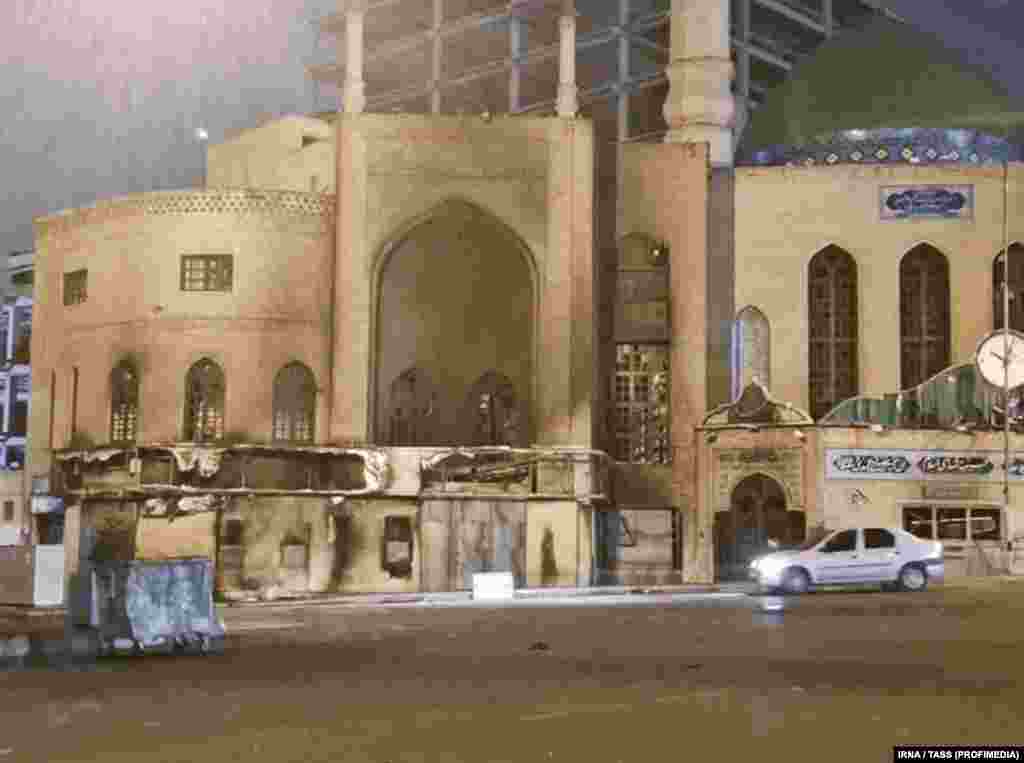
A building in Tehran that was torched during the biggest protests seen in Iran since the Islamic Revolution of 1979.<br><br><br>
1/11 A building in Tehran that was torched during the biggest protests seen in Iran since the Islamic Revolution of 1979.


Photos released on January 19 and 20 show the aftermath in Tehran of massive protests that swept Iran over recent weeks before being crushed by the country's security apparatus.
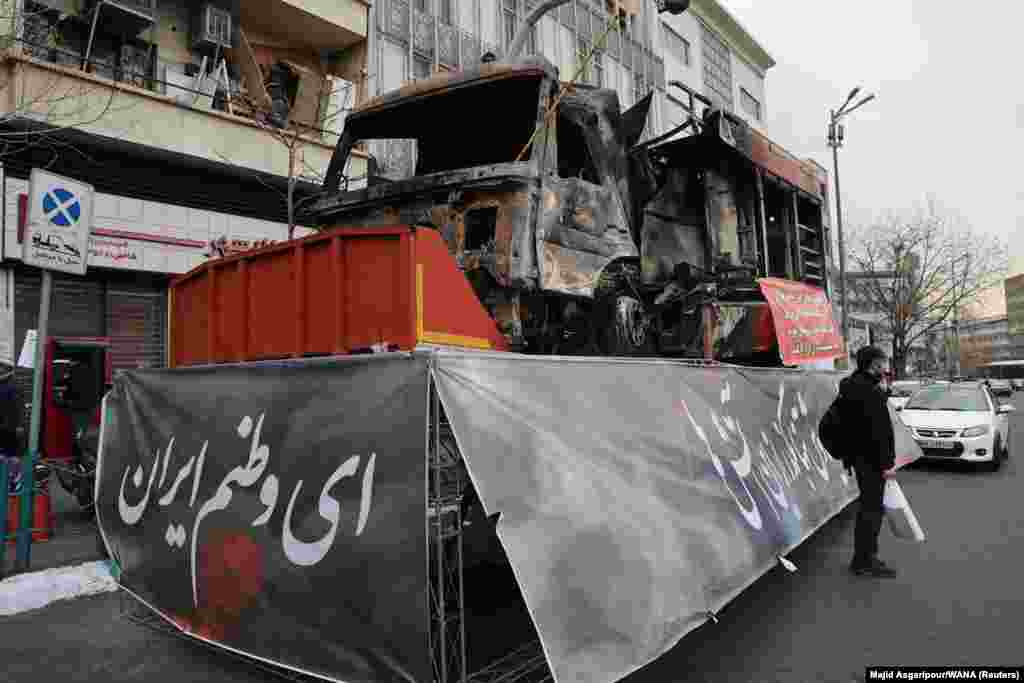
A fire truck that was burned during the unrest on display in Tehran. A Persian banner around the truck says: "Iran, o my country."<br><br>Mass unrest began in Tehran on December 28 amid a collapse in the value of Iran's currency, coupled with surging inflation.<br>
2/11 A fire truck that was burned during the unrest on display in Tehran. A Persian banner around the truck says: "Iran, o my country."

Mass unrest began in Tehran on December 28 amid a collapse in the value of Iran's currency, coupled with surging inflation.
Photos released on January 19 and 20 show the aftermath in Tehran of massive protests that swept Iran over recent weeks before being crushed by the country's security apparatus.
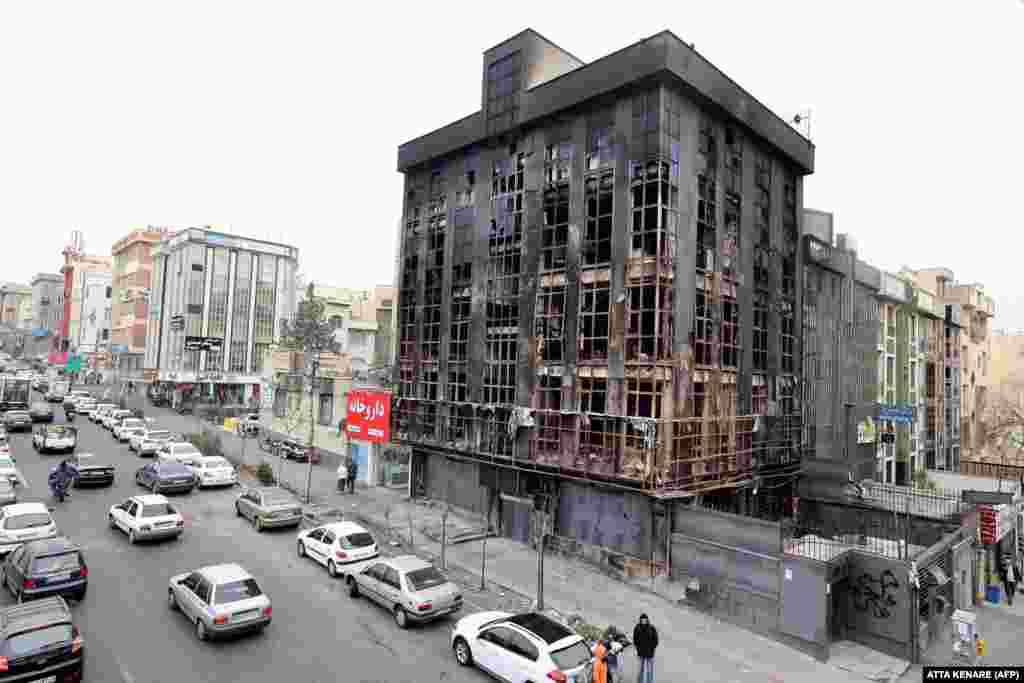
A burned-out building in central Tehran.<br><br>US-based rights group <a href="https://www.en-hrana.org/day-twenty-four-of-the-protests-continued-communications-blackout-and-international-warnings-of-crimes-against-humanity/" target="_blank" class="wsw__a" dir="ltr"><strong>HRANA </strong></a>says more than 4,500 people were killed throughout Iran amid a crackdown on the protests, with tens of thousands arrested.<br><br><br><br>
3/11 A burned-out building in central Tehran.

US-based rights group HRANA says more than 4,500 people were killed throughout Iran amid a crackdown on the protests, with tens of thousands arrested.


Photos released on January 19 and 20 show the aftermath in Tehran of massive protests that swept Iran over recent weeks before being crushed by the country's security apparatus.
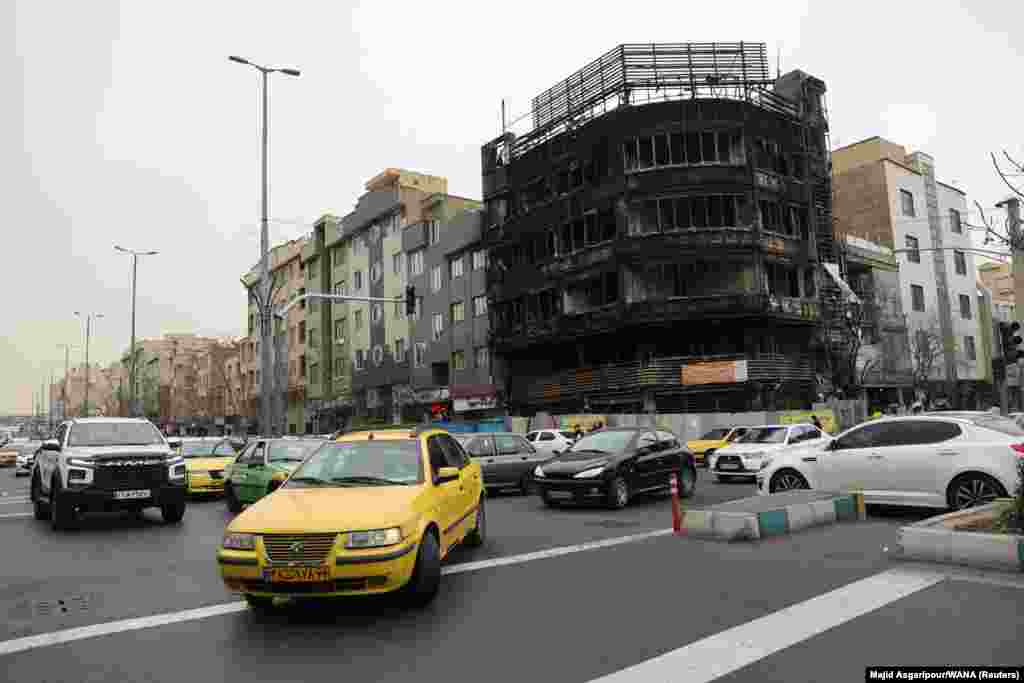
A torched building in Tehran that was linked to Ayandeh Bank, a company that collapsed in October amid corruption allegations.<br><br>Some observers say the bank's demise contributed to the economic storm that precipitated the mass protests.
4/11 A torched building in Tehran that was linked to Ayandeh Bank, a company that collapsed in October amid corruption allegations.

Some observers say the bank's demise contributed to the economic storm that precipitated the mass protests.
Photos released on January 19 and 20 show the aftermath in Tehran of massive protests that swept Iran over recent weeks before being crushed by the country's security apparatus.
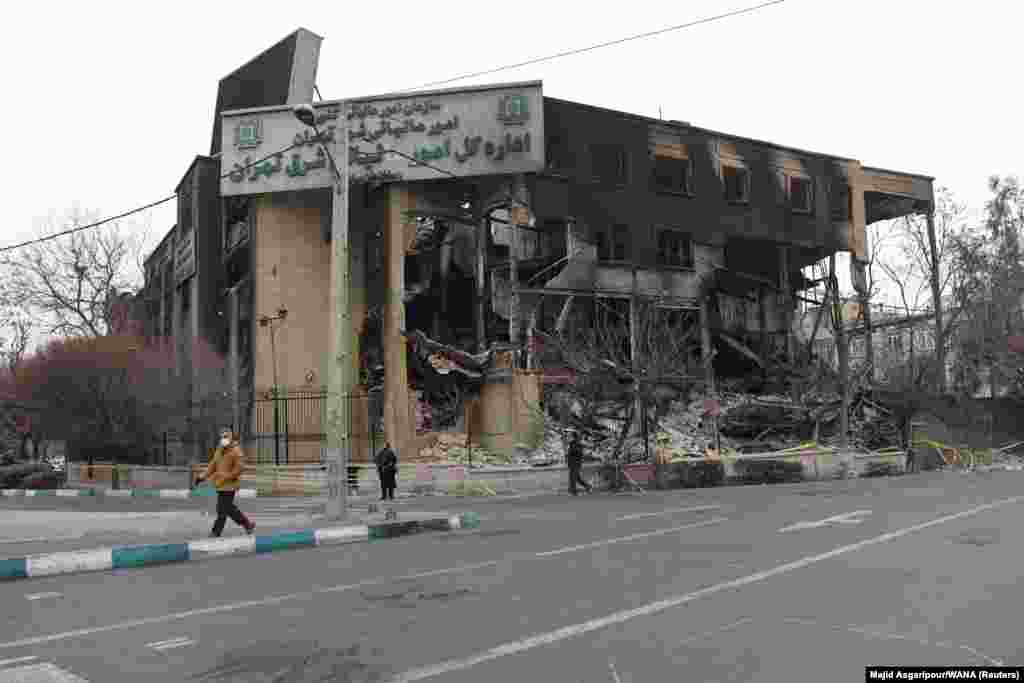
A state tax building in Tehran that was destroyed by fire during the unrest.<br><br>
5/11 A state tax building in Tehran that was destroyed by fire during the unrest.

Photos released on January 19 and 20 show the aftermath in Tehran of massive protests that swept Iran over recent weeks before being crushed by the country's security apparatus.
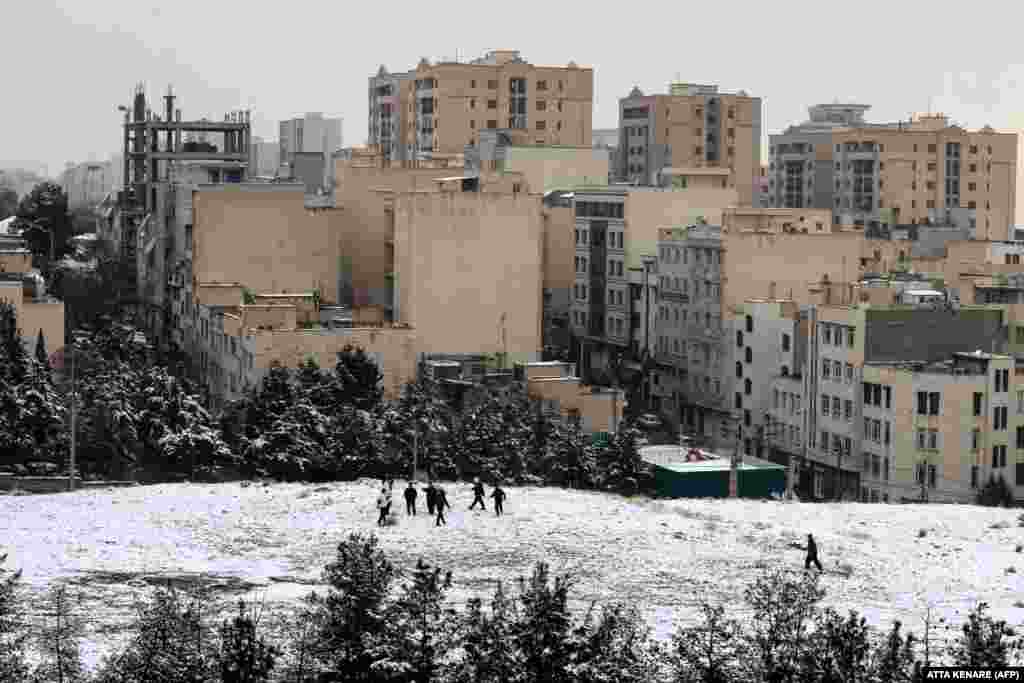
Boys play in the snow in a suburb of Tehran on January 20.<br><br>Images such as this, released by photographers accredited to work in Iran, emphasize a return to normal life after the violence of recent days, but sources <a href="https://www.rferl.org/a/iran-martial-law-protests-security/33653877.html" target="_self" class="wsw__a" dir="ltr"><strong>told RFE/RL's Radio Farda</strong></a> on January 17 that Tehran is effectively under martial law, with people being stopped at random and having their phones inspected for links to the protests.
6/11 Boys play in the snow in a suburb of Tehran on January 20.

Images such as this, released by photographers accredited to work in Iran, emphasize a return to normal life after the violence of recent days, but sources told RFE/RL's Radio Farda on January 17 that Tehran is effectively under martial law, with people being stopped at random and having their phones inspected for links to the protests.
Photos released on January 19 and 20 show the aftermath in Tehran of massive protests that swept Iran over recent weeks before being crushed by the country's security apparatus.
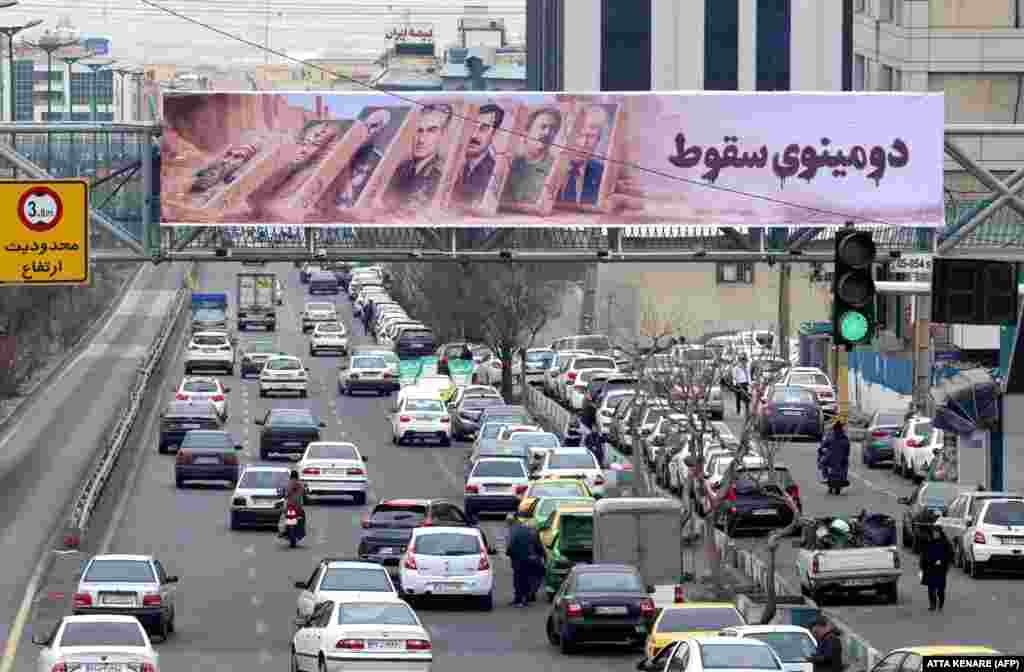
A propaganda banner showing historical leaders and US President Donald Trump. The Persian text says "dominoes fall."
7/11 A propaganda banner showing historical leaders and US President Donald Trump. The Persian text says "dominoes fall."
Photos released on January 19 and 20 show the aftermath in Tehran of massive protests that swept Iran over recent weeks before being crushed by the country's security apparatus.
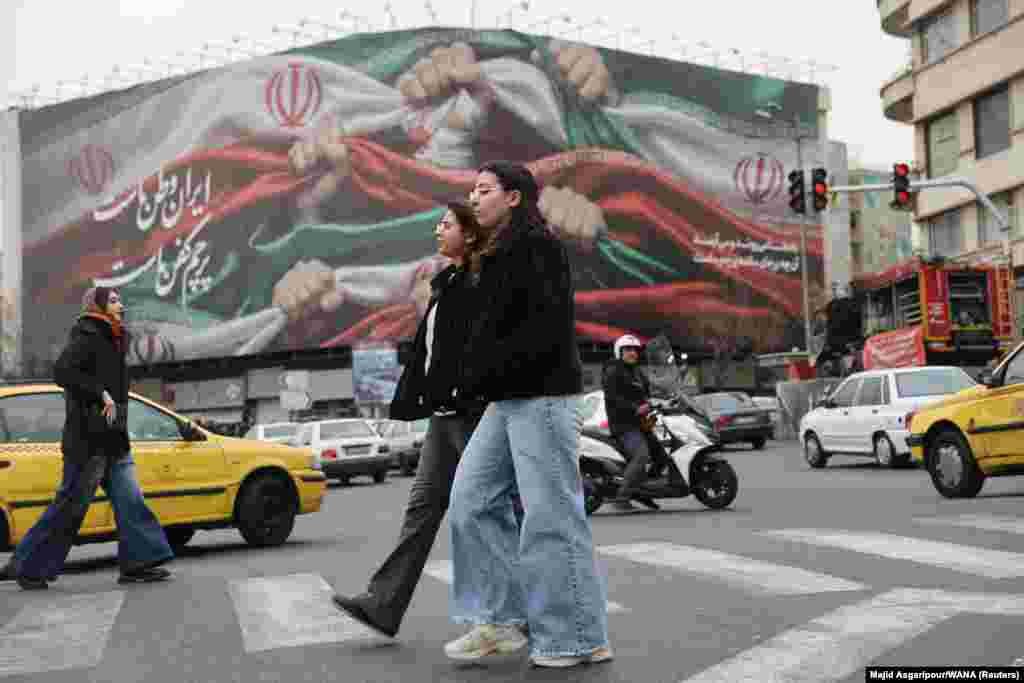
Women walk in Tehran's central Revolution Square. The banner in the background reads: "Iran is our country, its flag our burial shroud."
8/11 Women walk in Tehran's central Revolution Square. The banner in the background reads: "Iran is our country, its flag our burial shroud."
Photos released on January 19 and 20 show the aftermath in Tehran of massive protests that swept Iran over recent weeks before being crushed by the country's security apparatus.
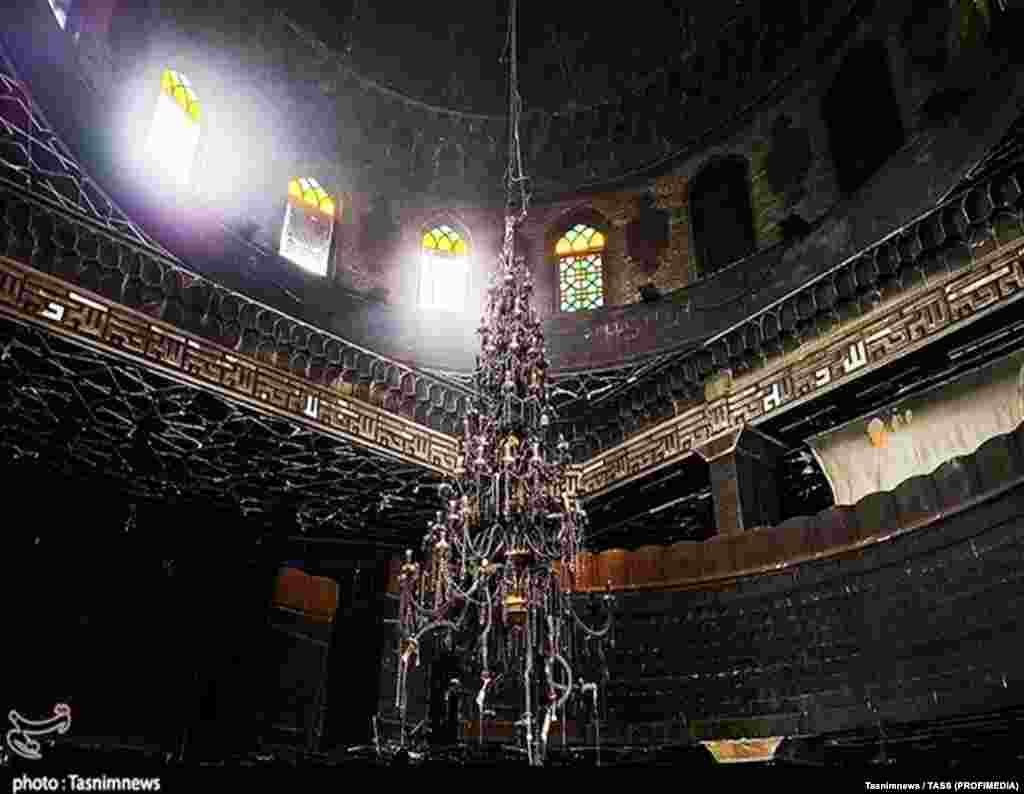
The interior of the Abuzar Mosque in Tehran after it <a href="https://www.reuters.com/video/watch/idRW604112012026RP1/" target="_self" class="wsw__a" dir="ltr"><strong>was targeted</strong> </a>during the mass uprising.<br><br>The mosque was the site of an <a href="https://en.wikipedia.org/wiki/Attempted_assassination_of_Ali_Khamenei" target="_self" class="wsw__a" dir="ltr"><strong>attempted assassination</strong> </a>of Ayatollah Ali Khamenei in 1981. Khamenei was a presidential candidate at the time and now rules the country as Iran's supreme leader.
9/11 The interior of the Abuzar Mosque in Tehran after it was targeted during the mass uprising.

The mosque was the site of an attempted assassination of Ayatollah Ali Khamenei in 1981. Khamenei was a presidential candidate at the time and now rules the country as Iran's supreme leader.
Photos released on January 19 and 20 show the aftermath in Tehran of massive protests that swept Iran over recent weeks before being crushed by the country's security apparatus.
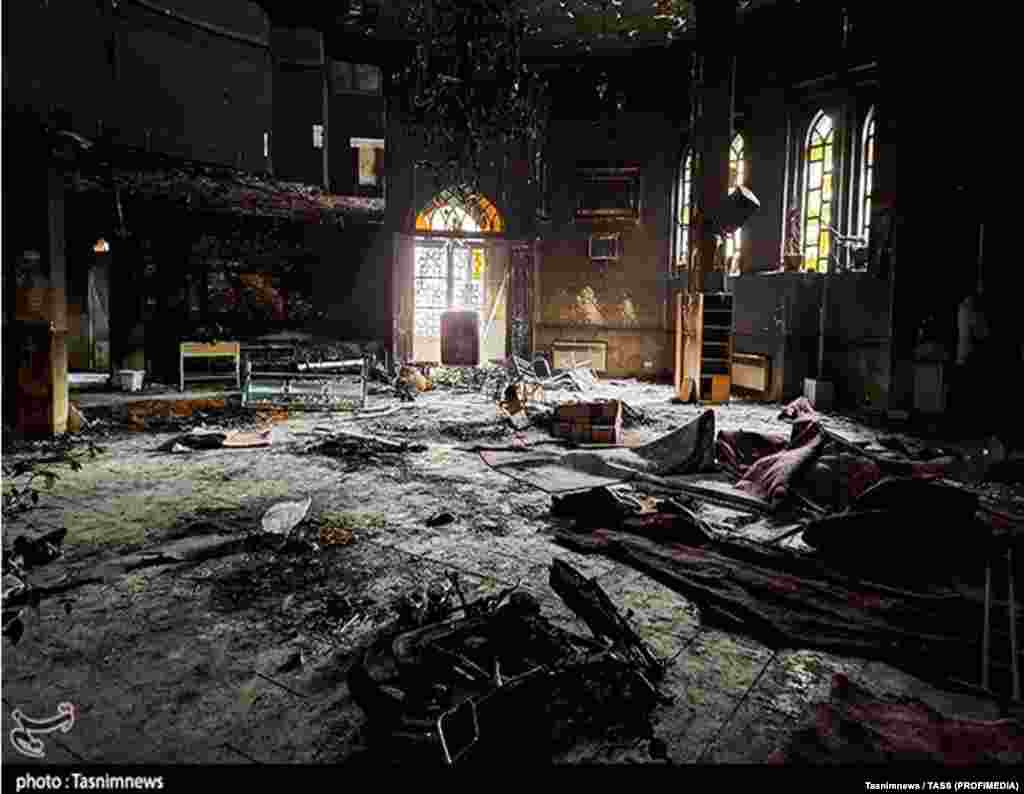
The interior of the gutted Abuzar Mosque.<br><br>Analysts say the targeting of Mosques by protestors is in part due to many such religious buildings <a href="https://www.iranintl.com/en/202404309117" target="_self" class="wsw__a" dir="ltr"><strong>being used as recruitment and training centers</strong></a> for the Basij, a pro-regime paramilitary force.<br>
10/11 The interior of the gutted Abuzar Mosque.

Analysts say the targeting of Mosques by protestors is in part due to many such religious buildings being used as recruitment and training centers for the Basij, a pro-regime paramilitary force.
Photos released on January 19 and 20 show the aftermath in Tehran of massive protests that swept Iran over recent weeks before being crushed by the country's security apparatus.
The fire-damaged Al-Rasul mosque in Tehran that was damaged by fire during the unrest.<br><br>Some say another reason for targeting mosques is the Islamist ideology at the heart of Iran's current government. "Everything the regime does -- every excuse or explanation -- is wrapped in the cloak of religion," one commentator <a href="https://www.ncregister.com/commentaries/fernandez-why-are-mosques-burning-in-tehran" target="_self" class="wsw__a" dir="ltr"><strong>wrote</strong></a>.
11/11 The fire-damaged Al-Rasul mosque in Tehran that was damaged by fire during the unrest.

Some say another reason for targeting mosques is the Islamist ideology at the heart of Iran's current government. "Everything the regime does -- every excuse or explanation -- is wrapped in the cloak of religion," one commentator wrote.
Photos released on January 19 and 20 show the aftermath in Tehran of massive protests that swept Iran over recent weeks before being crushed by the country's security apparatus.
Previous slide
Next slide

Parts of Isfahan -- the second-largest industrial center in Iran after Tehran -- emerged as early flashpoints, where crowds openly called for the return of the Pahlavi monarchy and waved the banned Lion and Sun flag, a symbol the regime regards as a vestige of monarchy and secular nationalism.

Suburbs Under Siege

Yazdanshahr, a residential-urban suburb in the Najafabad area, has been the scene of numerous street protests since January 2. A local resident, speaking to Radio Farda, painted a vivid picture of destruction: bullet marks scarring city walls and doors, bricks torn from facades, shattered windows, and banks and government buildings set ablaze. (RFE/RL is withholding the names of eyewitnesses to safeguard their safety.)

"Yazdanshahr now looks like Khorramshahr after liberation," the witness told Radio Farda, referring to the southwestern Iranian city occupied by Iraqi forces in the 1980s before its recapture in a bloody battle.
Describing the morning after security forces cracked down on protesters, the eyewitness said, "There was a body lying behind every car. They had beaten everyone."

The witness went on to describe security forces indiscriminately firing automatic weapons into crowds, showing no mercy to passersby, shopkeepers, or onlookers watching from rooftops. "They beat anyone who was outside," the witness said, noting that several members of some families were killed.

While RFE/RL cannot independently verify these eyewitness reports, they align closely with other credible accounts emerging from inside Iran.

Identifying The Dead

Around 60 kilometers away in the satellite city of Baharestan, another eyewitness told Radio Farda about the heavy loss of life during the protests, with most of the victims belonging to the Bakhtiari ethnic group.

"I never thought they could cross the line of killing to this extent. I never thought anyone could do such things," the eyewitness said.

After the protests were violently suppressed, Baharestan's gas stations were burned to the ground, leaving residents with no choice but to travel outside the area to purchase fuel.

In the Isfahan suburb of Shahinshahr, the eyewitness described how heavily armed security forces "targeted the old and the young, men and women, and even fired live rounds at the wounded and the dead."
More Videos Emerge Of Iranian Protesters Met With Deadly Force
please wait

No media source currently available

0:00 0:01:36 0:00

US-based rights group HRANA says its confirmed death toll from the Iranian protests has now climbed past 4,500, with more than 9,000 cases under review. Different activist groups have put the death toll far higher, but the internet blackout has made independent verification difficult.

Like many other residents, the eyewitness visited the local Bagh Rezvan cemetery -- the largest in the city of Isfahan, about 12 kilometers east of the center -- to identify and claim the bodies of their loved ones. "The bodies were piled up, with blood visible from many of them. To identify them, we had to pick up the bodies ourselves, one by one, and move them aside to see the one underneath," the eyewitness said.

The faces of the dead were horrific, the witness added -- covered in heavy bruising and mangled beyond recognition by severe beatings and gunshot wounds. Among the bodies identified at the cemetery were those of children aged between about 10 and 16 years old.

The events of recent weeks had profoundly shifted the eyewitness's perspective. When the US and Israel attacked Iran in June 2025, the witness said they were deeply upset by what they saw as aggression against the country. Now, however, they told Radio Farda that the Iranian people were unable to confront the government's "thugs" on their own. Iranians abroad, the witness added, "are unable to understand the calamity that has befallen the Iranian people during the crackdown."

Climate Of Fear

A third eyewitness, who lives in Foladshahr -- a suburb and satellite city in the greater Isfahan metropolitan area -- told Radio Farda that there was so much fear that "no one dares to go out on the streets after three or four in the afternoon, even to buy medicine." Before dark, heavily armed plainclothes security forces prowled the streets, chanting "Heydar Heydar," a Shia rallying cry used to intimidate protesters.

The crackdown has had a chilling effect on residents. People no longer dare complain about water and electricity cuts or soaring food prices.

Even if they did, it would be hard to get their messages out to the outside world. The authorities have gone through neighborhoods removing satellite dishes, the Foladshahr resident said, in addition to cutting Internet and phone services.

"They want people...to be completely isolated," the eyewitness told Radio Farda, "so that they can bring whatever harm they want upon them."

  • 16x9 Image

    RFE/RL's Radio Farda

    RFE/RL's Radio Farda breaks through government censorship to deliver accurate news and provide a platform for informed discussion and debate to audiences in Iran.

This item is part of
XS
SM
MD
LG