
Accessibility links

Breaking News

'We Are Not Terrorists!': Kazakh Protesters Try To Make Their Voices Heard Amid The Chaos

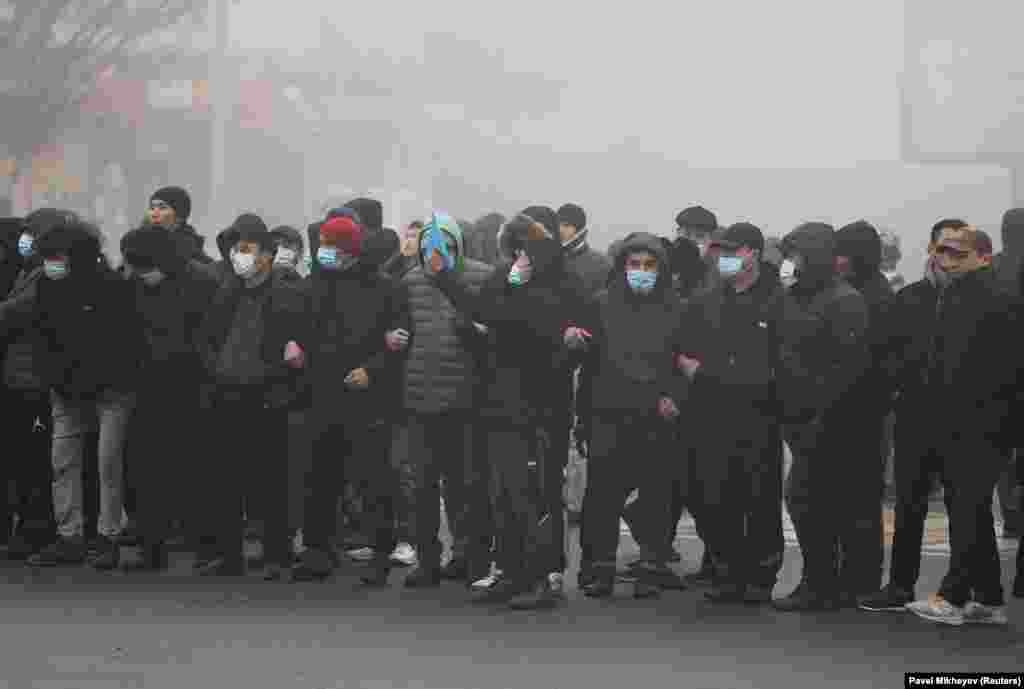
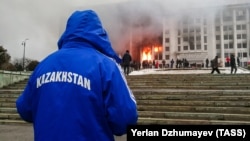
Protesters rally on January 5 outside the Almaty mayor’s office, which was on fire.

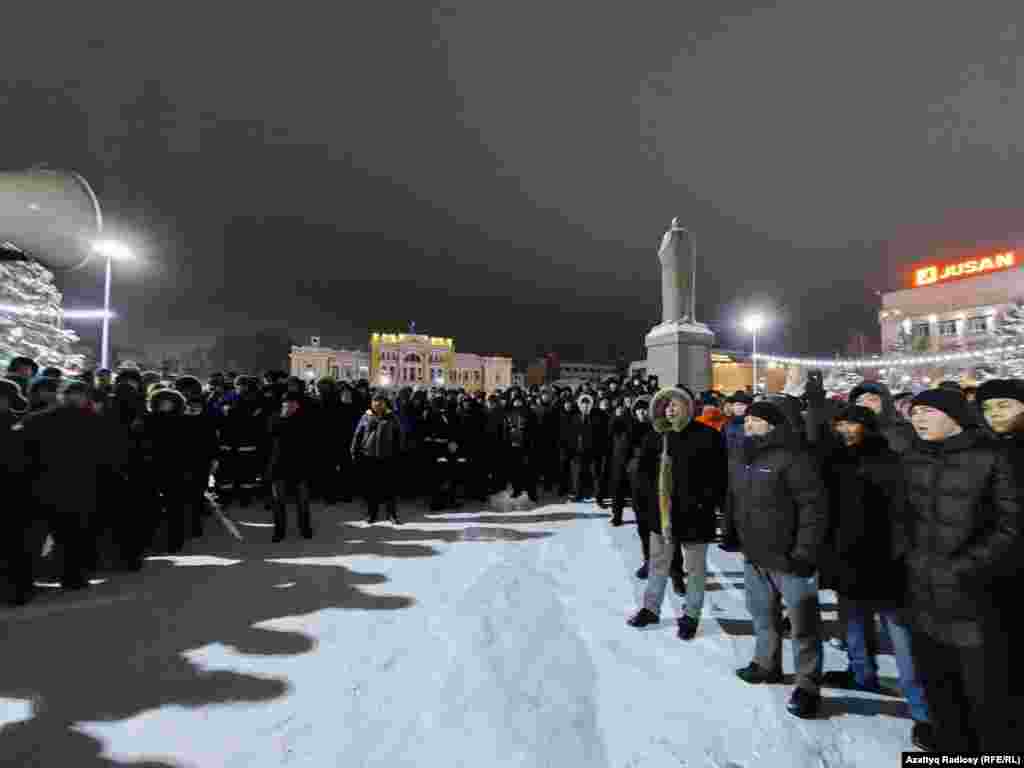
ALMATY/NUR-SULTAN, Kazakhstan -- Aigerim Tuleuzhanova, an activist with Kazakhstan’s unregistered Democratic Party, was in a crowd of some 200 protesters at Almaty’s Republic Square on January 6 when a group of soldiers opened fire with live ammunition.

The large crowd was standing within view of the Almaty mayor’s office, which was still smoldering after being set ablaze by an angry mob the previous day, when the shooting began.

But the bloody incident has gone unreported because with access to the Internet severed across the country and mobile-phone services cut by the state-run KazakhTelecom, the voices of the protesters in Kazakhstan have effectively been silenced in international media reports.

That has left the government’s version of events as the dominant narrative -- despite the lack of any evidence supporting President Qasym-Zhomart Toqaev’s claim that the protests have been driven by “international terrorist bands who had undergone special training abroad.”
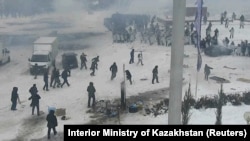
Demonstrators clash with police in Aqtobe on January 5.

To be sure, there was gunfire near Republic Square on January 6 amid reports of ongoing clashes between security troops and armed demonstrators.

The Interior Ministry says it “liquidated” more than 26 “armed criminals” and arrested more than 3,000 people in recent days. It said 18 police and national guard troops had been killed. Some reports claim dozens of demonstrators have died since the protests began.

Tuleuzhanova insisted in an interview with RFE/RL’s Kazakh Service that those who were fired upon at Almaty’s Republic Square shortly after sundown on January 6 were young, unarmed Kazakh activists.

Attempting to push back on Toqaev’s narrative, the group had unfurled banners declaring “We are not terrorists!” and “Toqaev: Don’t shoot us!”
From the "crisis center" -- the temporary place Tuleuzhanova’s group had set up on the square for protesters to gather -- the group had earlier announced its demands.

They called for the complete resignation of Toqaev’s government along with the creation of an interim administration headed by a representative of civil society.

To bolster security amid the chaos, they demanded the immediate deployment of foreign peacekeepers from the Collective Security Treaty Organization (CSTO) -- the Russian-led security group that also includes Armenia, Belarus, Kazakhstan, Kyrgyzstan, and Tajikistan. Interestingly, Toqaev also requested and has since received CSTO troops.

The protesters also called for the formation of local militia units to protect people from what they described as “provocateurs.”

In fact, the demands of demonstrators have proliferated as the protests have spread across the country since a low-key January 2 demonstration was staged in western Kazakhstan against fuel price hikes.

One key demand by many people for democratic reforms would force regional officials to have to take part in elections instead of being appointed by the presidential administration in the capital, Nur-Sultan.

But critics note that Kazakhstan has never had an election deemed as “free and fair” by Western observers since the collapse of the Soviet Union in 1991.

In the January 2021 legislative elections, no opposition groups were voted into the Kazakh parliament. That’s because attempts to register for that vote by opposition groups like the Democratic Party and Nurzhan Altaev’s El Tiregi (National Reliance) party were all rejected.

The only officially registered political party that calls itself opposition, the All-National Social Democratic Party, boycotted the vote as a sham.

Rights activists say Toqaev’s administration has effectively removed all legal ways for citizens to participate in politics -- leaving Kazakhs without any political intermediaries to resolve the country’s economic problems.
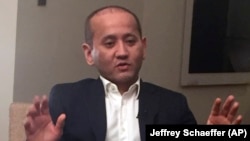
Former Kazakh banker Mukhtar Ablyazov (file photo)

Mukhtar Ablyazov, leader of the Democratic Choice of Kazakhstan (DVK) movement that was banned in 2018 as an “extremist” group, rejects Toqaev’s claims of “foreign-trained terrorists” being behind the protests.

Ablyazov, the fugitive former head of Kazakhstan's BTA Bank who has been accused of crimes in Kazakhstan and Britain, says Toqaev is trying to distract attention from the fact that Kazakhstan’s unrest is the result of internal problems created by the government.

Activist Marat Turumbetov told RFE/RL that is why he was protesting at Republic Square on January 6.

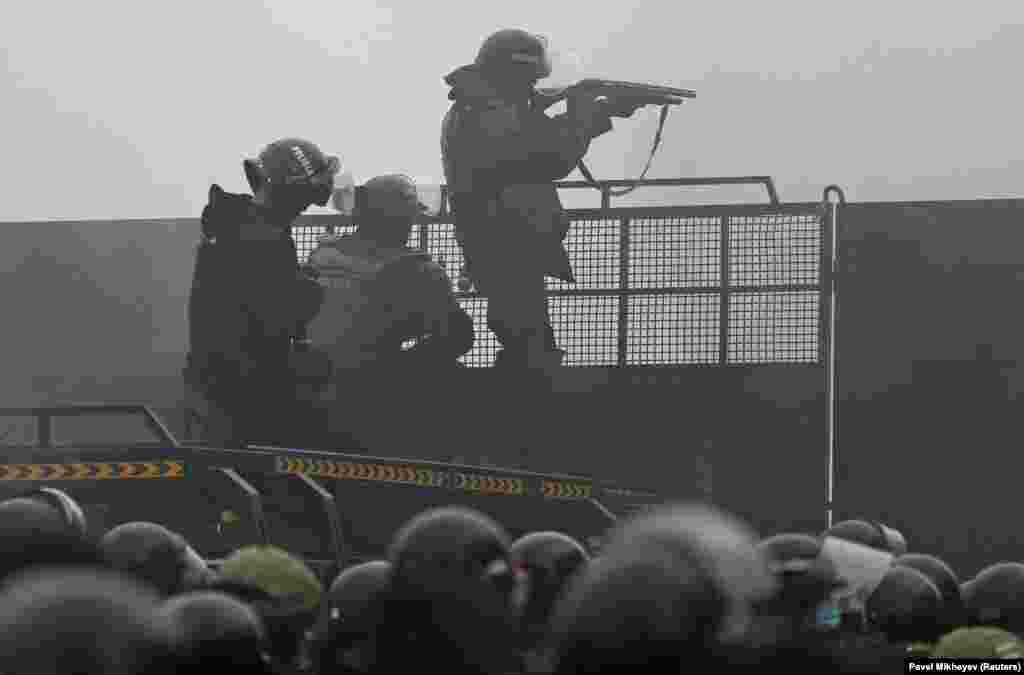
Shortly after sunset, Turumbetov says the troops that approached Republic Square in armored personnel carriers from Nazarbaev Avenue opened fire on the crowd using machine guns and live ammunition.
What's Behind The State Of Emergency And Protests Erupting Across Kazakhstan?
please wait

No media source currently available

0:00 0:03:18 0:00

Bella Orynbetova, an activist living near the square, counted five police patrol cars, three armored personnel carriers, and military trucks with dozens of soldiers advancing along Satpaev Street to the square.

Other nearby residents said they could hear grenades exploding and bullets whizzing through the air.

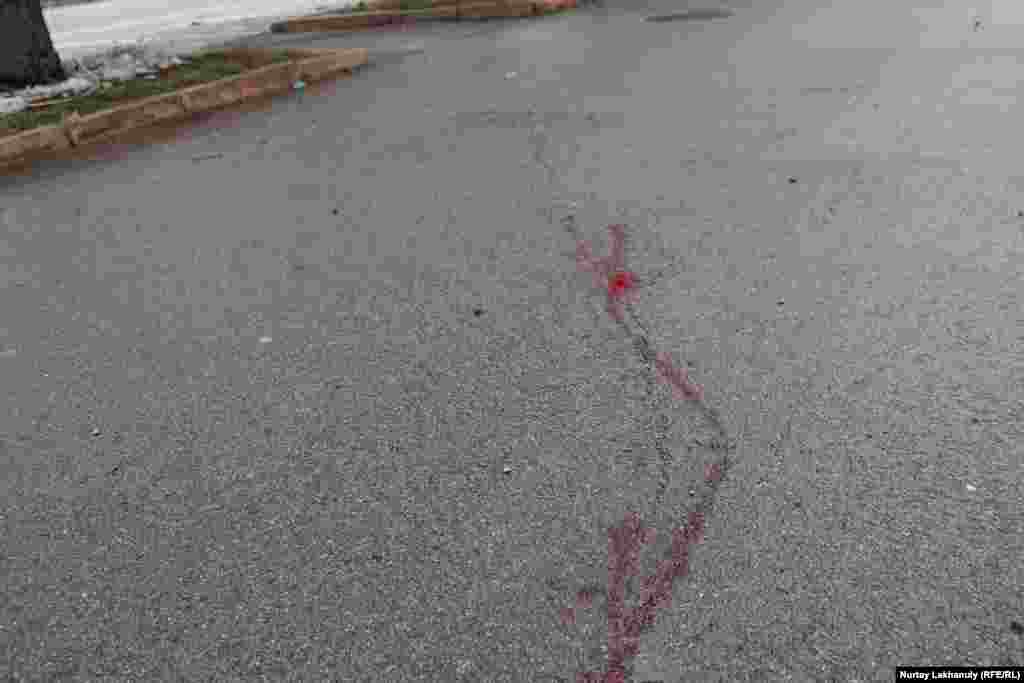
RFE/RL correspondents report that one 20-year-old man was shot in the chest and died while others tried to transport him to a hospital.

Turumbetov says he also counted five other wounded demonstrators on the square who were waiting to be taken to a hospital. But he said there were no ambulances for them.

Within an hour, the troops cleared the demonstrators from Republic Square, along with the temporary headquarters they had set up.

But correspondents report that sporadic gunfire and explosions continued throughout the night in central Almaty.

In Photos: Fiery Protests Continue Across Kazakhstan
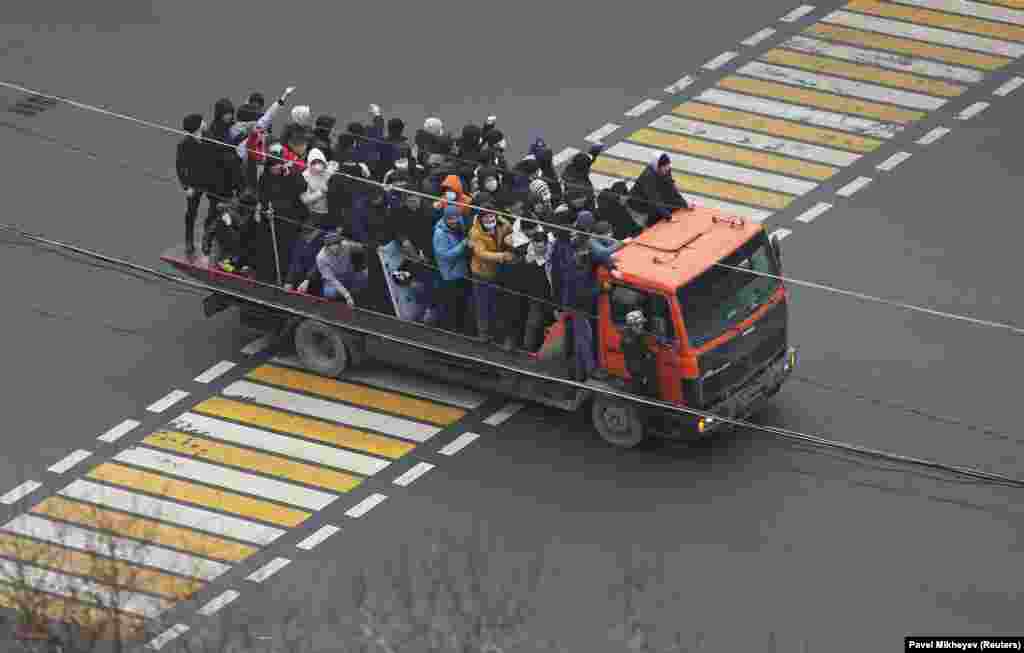
Demonstrators ride a truck in Almaty on January 5. One of the men is carrying a stick, another holds what appears to be a riot policeman's shield. 
1/18 Demonstrators ride a truck in Almaty on January 5. One of the men is carrying a stick, another holds what appears to be a riot policeman's shield. 
Protests in Kazakhstan that first broke out on January 2 after a sharp hike in prices for liquefied petroleum gas (LPG) are intensifying. On January 5, a government building was set ablaze, and military vehicles moved into downtown Almaty.
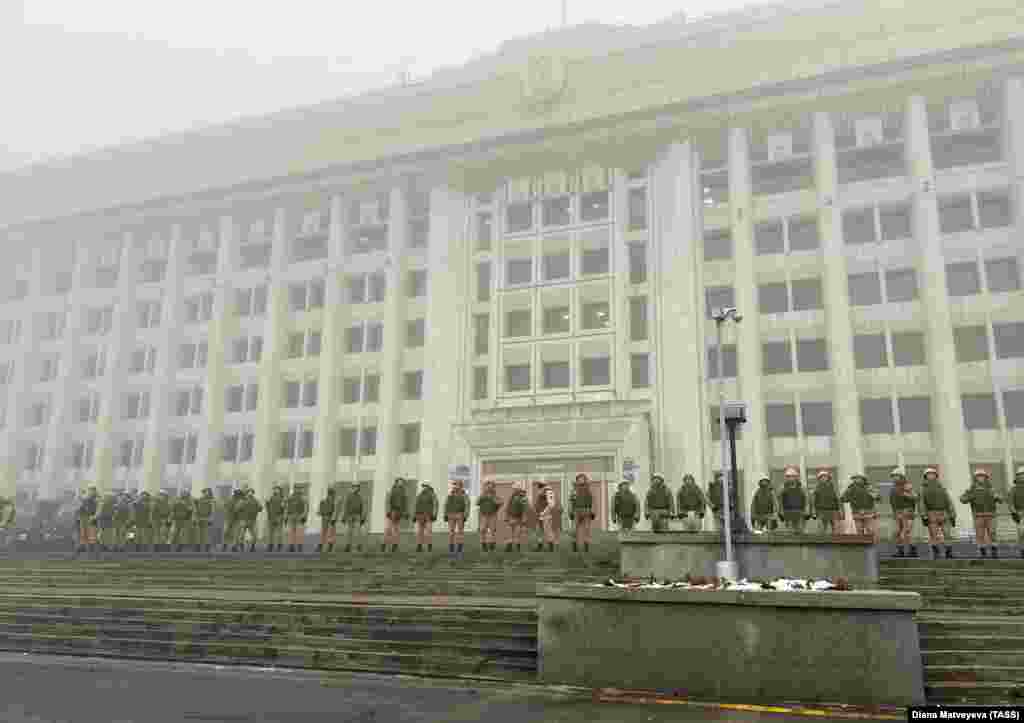
A line of Kazakh security forces in front of a government building in Almaty on January 5.
2/18 A line of Kazakh security forces in front of a government building in Almaty on January 5.
Protests in Kazakhstan that first broke out on January 2 after a sharp hike in prices for liquefied petroleum gas (LPG) are intensifying. On January 5, a government building was set ablaze, and military vehicles moved into downtown Almaty.
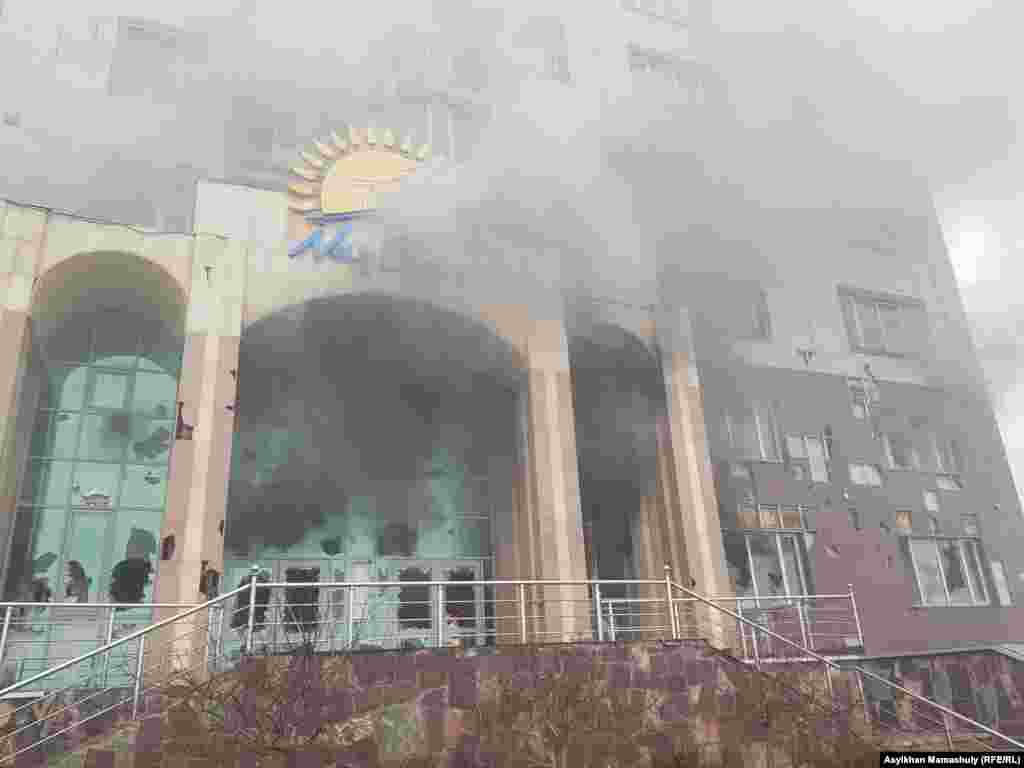
A building housing an Almaty office of Nur Otan, Kazakhstan's ruling political party, burns on January 5. It is not know how the fire started. RFE/RL's Kazakh Service reports that the building was left to smolder, with no policemen or fire trucks seen nearby when this photo was taken. 
3/18 A building housing an Almaty office of Nur Otan, Kazakhstan's ruling political party, burns on January 5. It is not know how the fire started. RFE/RL's Kazakh Service reports that the building was left to smolder, with no policemen or fire trucks seen nearby when this photo was taken. 
Protests in Kazakhstan that first broke out on January 2 after a sharp hike in prices for liquefied petroleum gas (LPG) are intensifying. On January 5, a government building was set ablaze, and military vehicles moved into downtown Almaty.
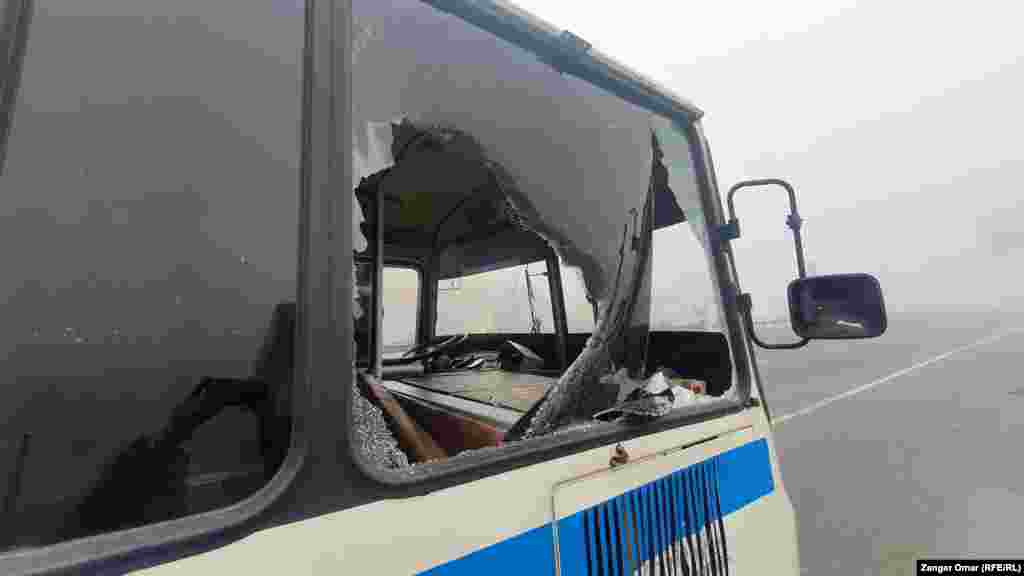
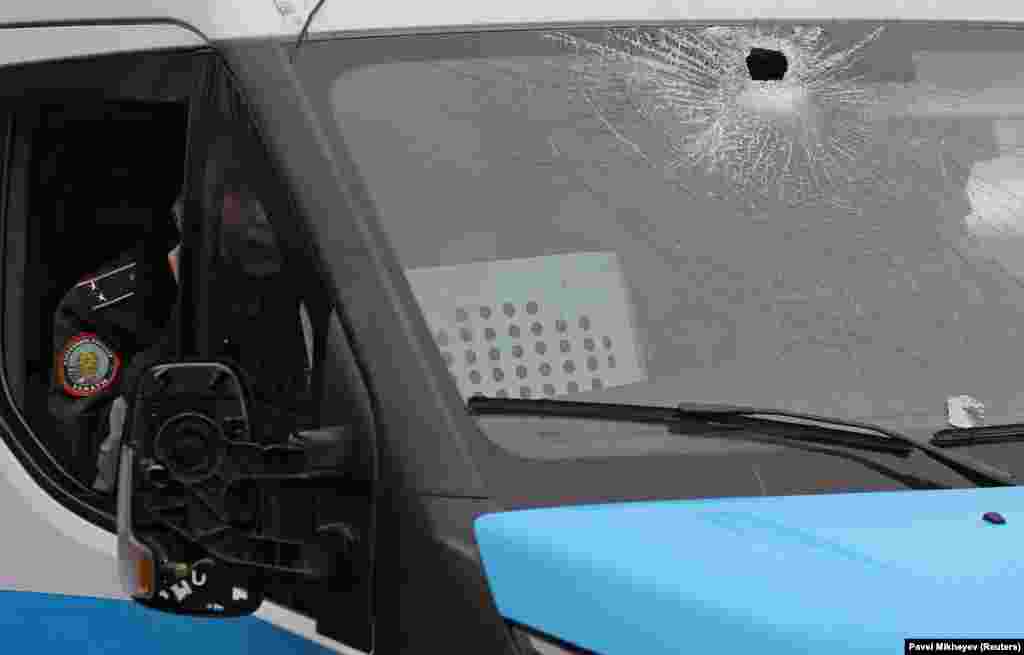
A police vehicle with its window smashed, seen in Almaty on January 5. 
4/18 A police vehicle with its window smashed, seen in Almaty on January 5. 
Protests in Kazakhstan that first broke out on January 2 after a sharp hike in prices for liquefied petroleum gas (LPG) are intensifying. On January 5, a government building was set ablaze, and military vehicles moved into downtown Almaty.
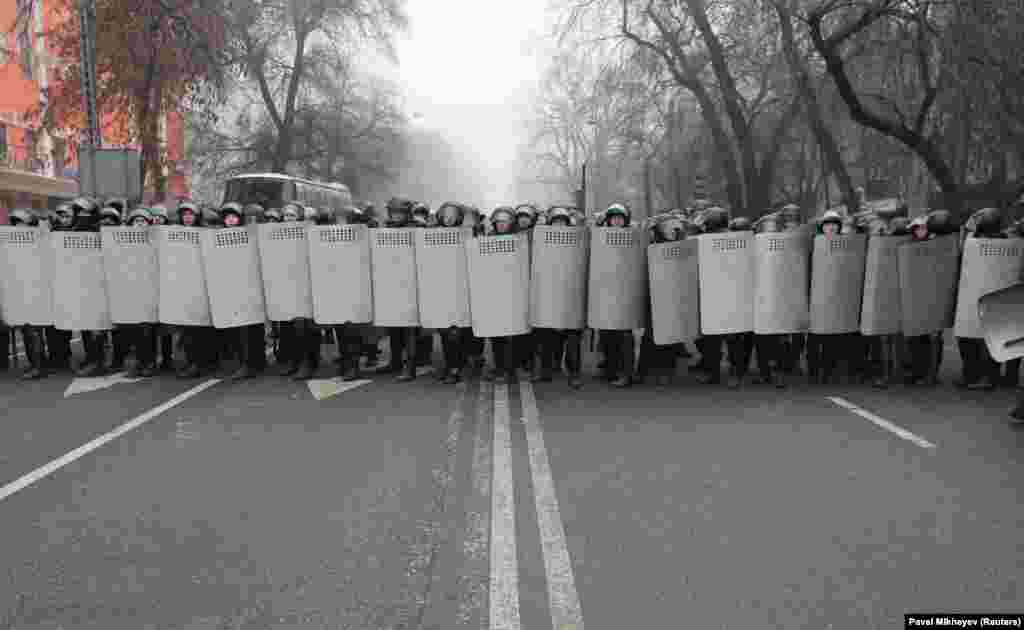
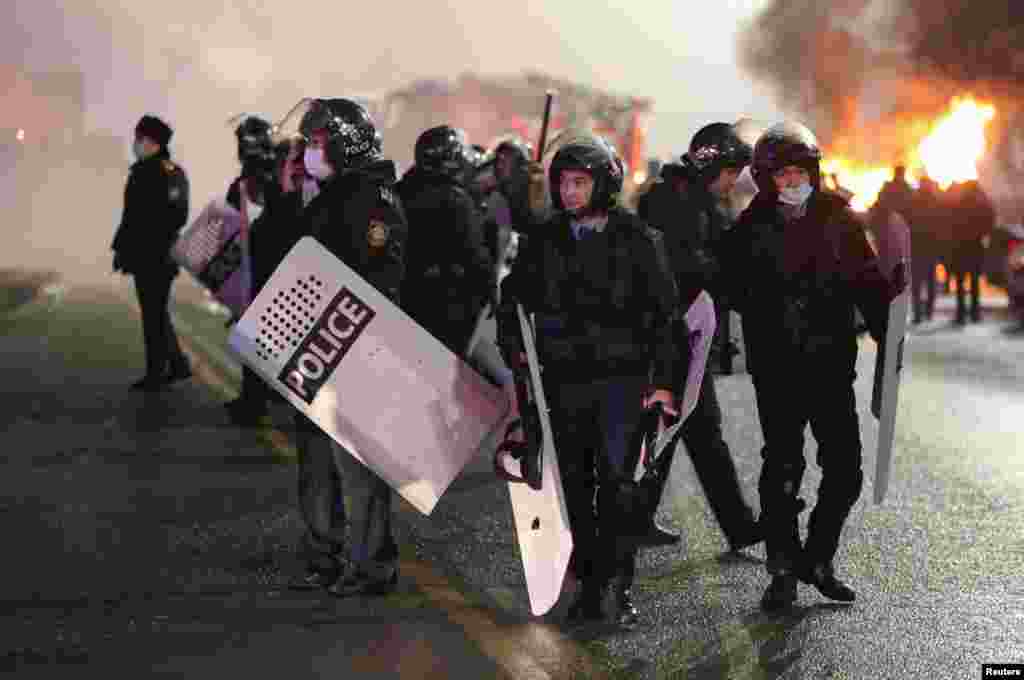
Police form a wall of shields in Almaty on January 5. 
5/18 Police form a wall of shields in Almaty on January 5. 
Protests in Kazakhstan that first broke out on January 2 after a sharp hike in prices for liquefied petroleum gas (LPG) are intensifying. On January 5, a government building was set ablaze, and military vehicles moved into downtown Almaty.
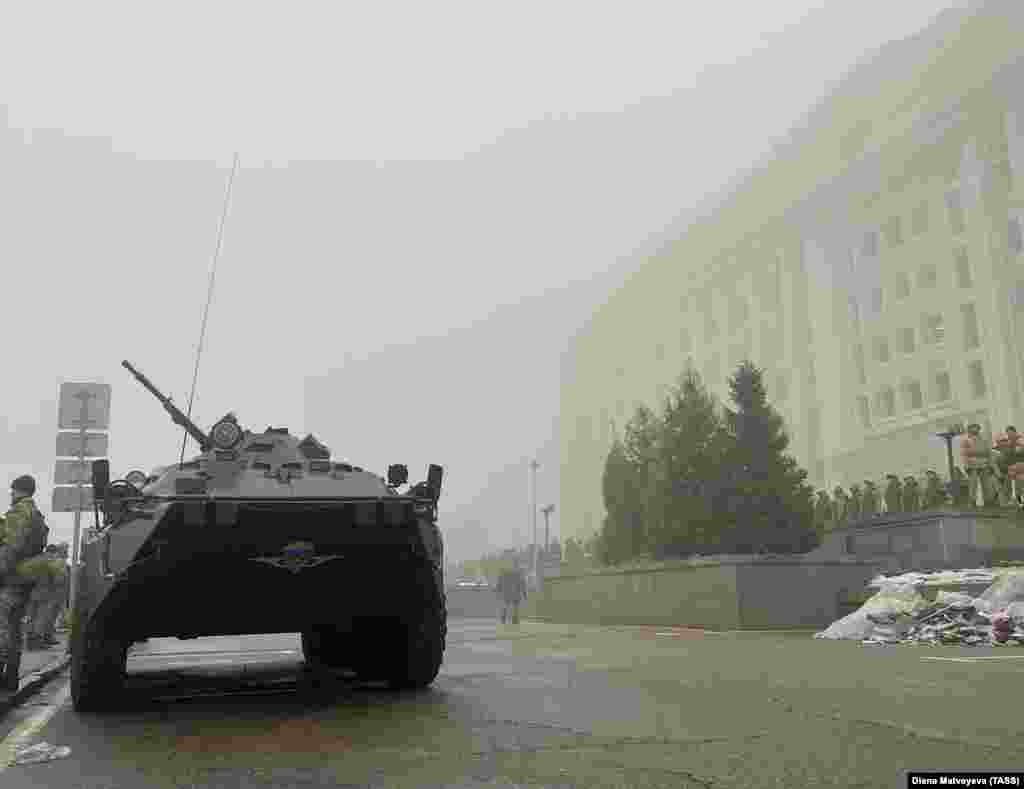
A military vehicle in central Almaty on January 5. 
6/18 A military vehicle in central Almaty on January 5. 
Protests in Kazakhstan that first broke out on January 2 after a sharp hike in prices for liquefied petroleum gas (LPG) are intensifying. On January 5, a government building was set ablaze, and military vehicles moved into downtown Almaty.
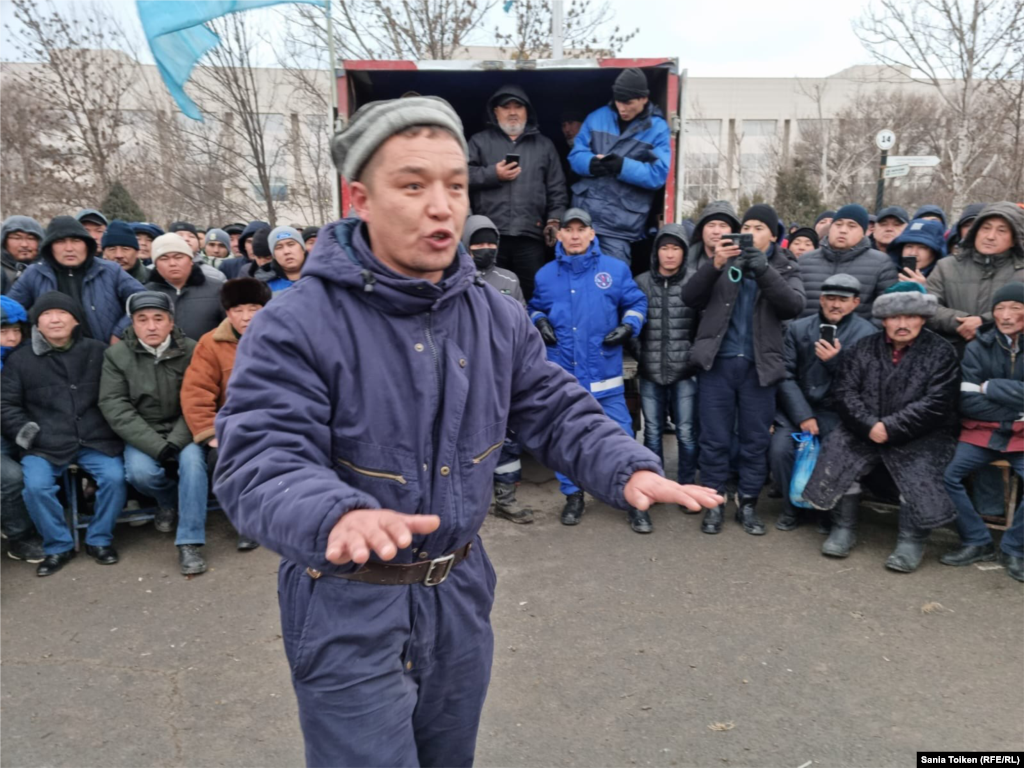
A man addresses a protest outside the mayor's office in Aqtau on January 5. 
7/18 A man addresses a protest outside the mayor's office in Aqtau on January 5. 
Protests in Kazakhstan that first broke out on January 2 after a sharp hike in prices for liquefied petroleum gas (LPG) are intensifying. On January 5, a government building was set ablaze, and military vehicles moved into downtown Almaty.
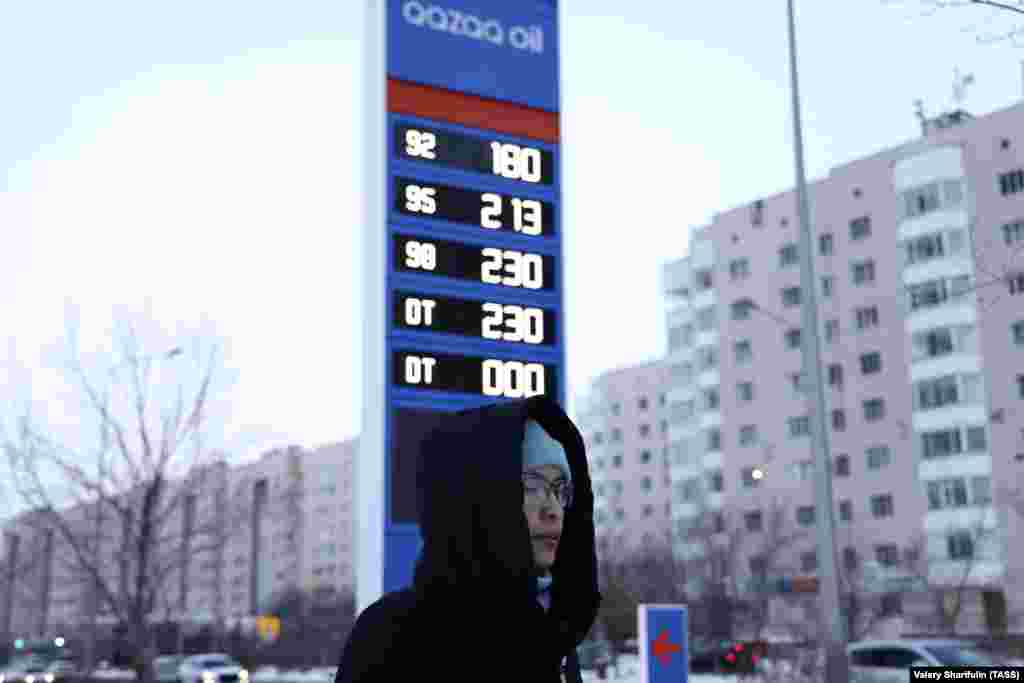
The price board at a gas station seen in Nur-Sultan on January 5. The issue of gas prices for liquefied petroleum gas is a critical issue for many Kazakhs as most cars in the west of the Central Asian country run on this fuel. 
8/18 The price board at a gas station seen in Nur-Sultan on January 5. The issue of gas prices for liquefied petroleum gas is a critical issue for many Kazakhs as most cars in the west of the Central Asian country run on this fuel. 
Protests in Kazakhstan that first broke out on January 2 after a sharp hike in prices for liquefied petroleum gas (LPG) are intensifying. On January 5, a government building was set ablaze, and military vehicles moved into downtown Almaty.
A policeman inside a damaged vehicle in Almaty on January 5. 
9/18 A policeman inside a damaged vehicle in Almaty on January 5. 
Protests in Kazakhstan that first broke out on January 2 after a sharp hike in prices for liquefied petroleum gas (LPG) are intensifying. On January 5, a government building was set ablaze, and military vehicles moved into downtown Almaty.
Demonstrators link arms in Almaty on January 5. 
10/18 Demonstrators link arms in Almaty on January 5. 
Protests in Kazakhstan that first broke out on January 2 after a sharp hike in prices for liquefied petroleum gas (LPG) are intensifying. On January 5, a government building was set ablaze, and military vehicles moved into downtown Almaty.
A Kazakh riot policeman aims a weapon at protesters from a barricade in Almaty. 
11/18 A Kazakh riot policeman aims a weapon at protesters from a barricade in Almaty. 
Protests in Kazakhstan that first broke out on January 2 after a sharp hike in prices for liquefied petroleum gas (LPG) are intensifying. On January 5, a government building was set ablaze, and military vehicles moved into downtown Almaty.
A protest rally in the city of Oral in western Kazakhstan on January 5. 
12/18 A protest rally in the city of Oral in western Kazakhstan on January 5. 
Protests in Kazakhstan that first broke out on January 2 after a sharp hike in prices for liquefied petroleum gas (LPG) are intensifying. On January 5, a government building was set ablaze, and military vehicles moved into downtown Almaty.
Blood seen on Almaty's central Republic Square on January 5. 
13/18 Blood seen on Almaty's central Republic Square on January 5. 
Protests in Kazakhstan that first broke out on January 2 after a sharp hike in prices for liquefied petroleum gas (LPG) are intensifying. On January 5, a government building was set ablaze, and military vehicles moved into downtown Almaty.
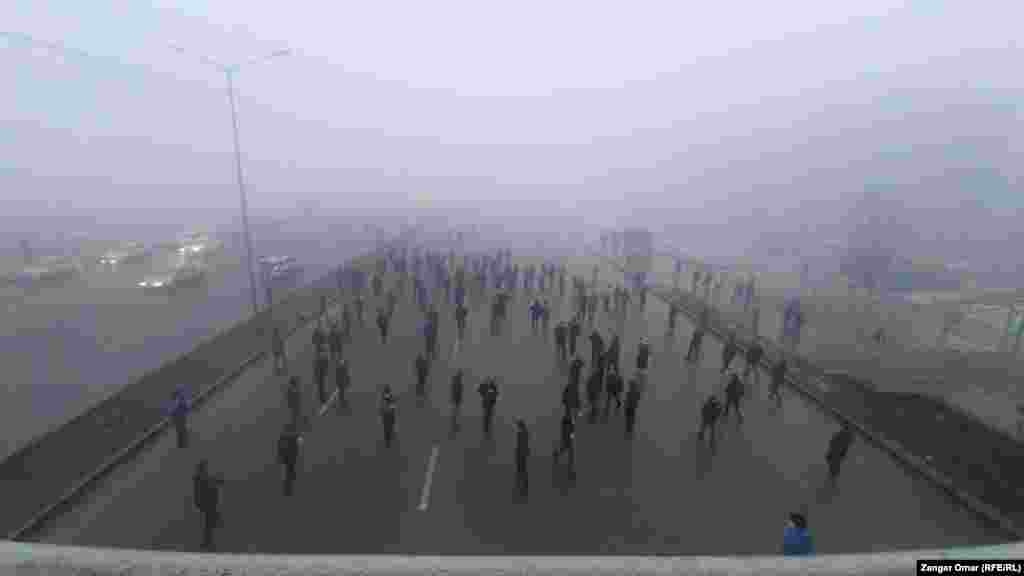
Demonstrators walk along Almaty's central Rayimbek Avenue on January 5. 
14/18 Demonstrators walk along Almaty's central Rayimbek Avenue on January 5. 
Protests in Kazakhstan that first broke out on January 2 after a sharp hike in prices for liquefied petroleum gas (LPG) are intensifying. On January 5, a government building was set ablaze, and military vehicles moved into downtown Almaty.
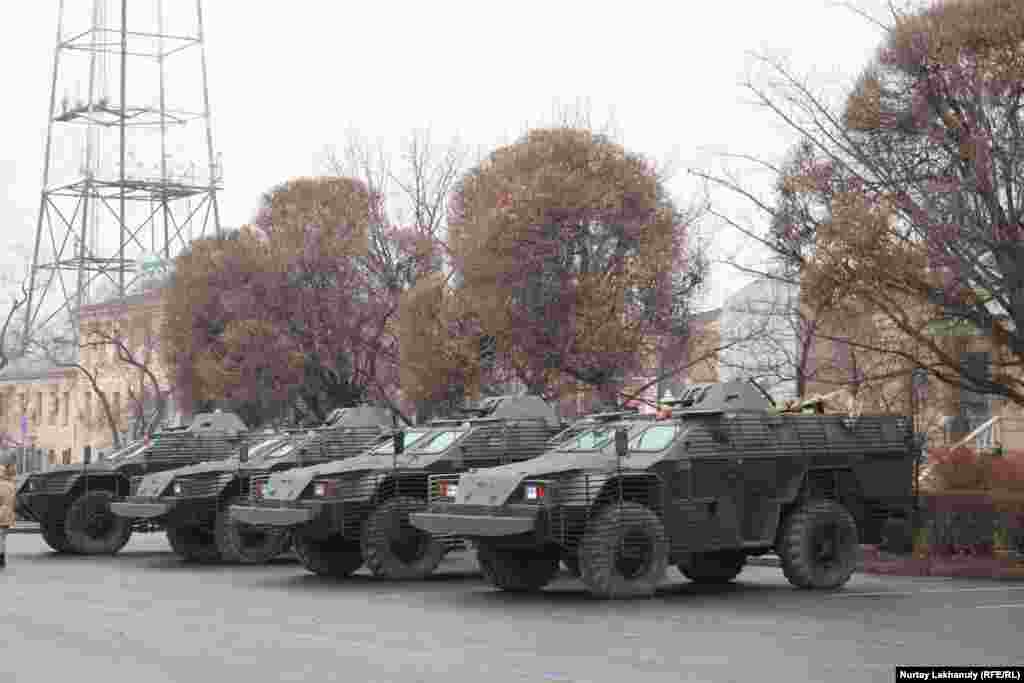
A row of armored vehicles on Almaty's Republic Square on January 5. 
15/18 A row of armored vehicles on Almaty's Republic Square on January 5. 
Protests in Kazakhstan that first broke out on January 2 after a sharp hike in prices for liquefied petroleum gas (LPG) are intensifying. On January 5, a government building was set ablaze, and military vehicles moved into downtown Almaty.
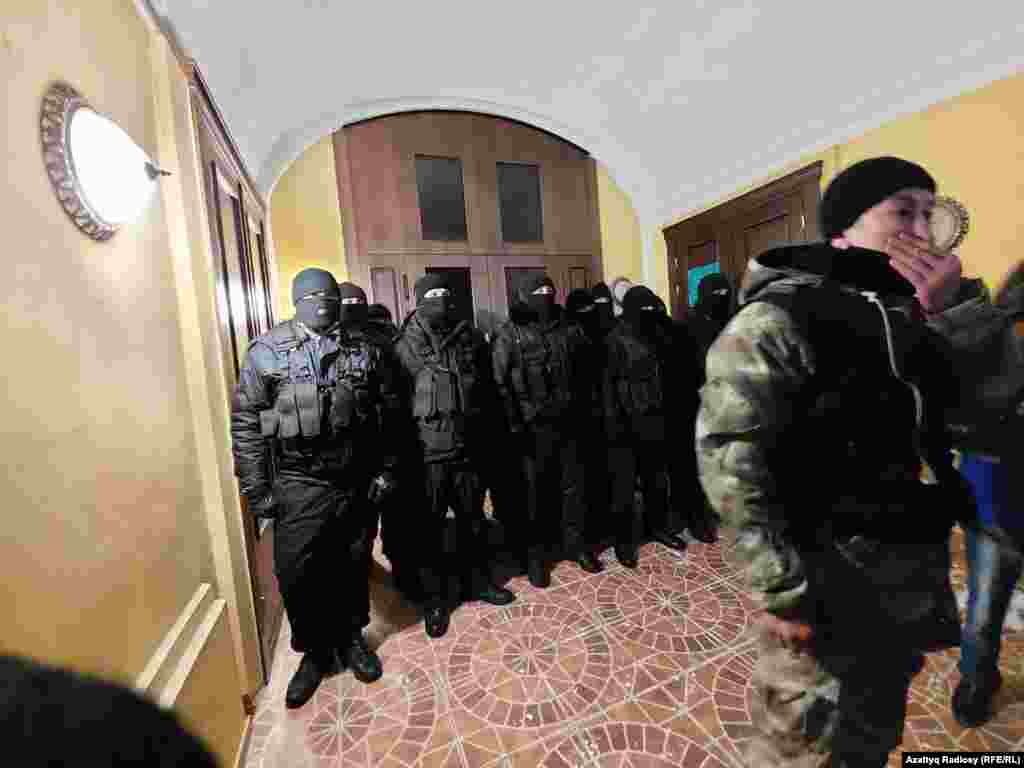
Law enforcement officers guarding a government building in the early morning of January 5. In a video address to the nation on January 4, Kazakh President Qasym-Zhomart Toqaev said the government would not fall and called for “mutual trust and dialogue rather than conflict."
16/18 Law enforcement officers guarding a government building in the early morning of January 5. In a video address to the nation on January 4, Kazakh President Qasym-Zhomart Toqaev said the government would not fall and called for “mutual trust and dialogue rather than conflict."
Protests in Kazakhstan that first broke out on January 2 after a sharp hike in prices for liquefied petroleum gas (LPG) are intensifying. On January 5, a government building was set ablaze, and military vehicles moved into downtown Almaty.
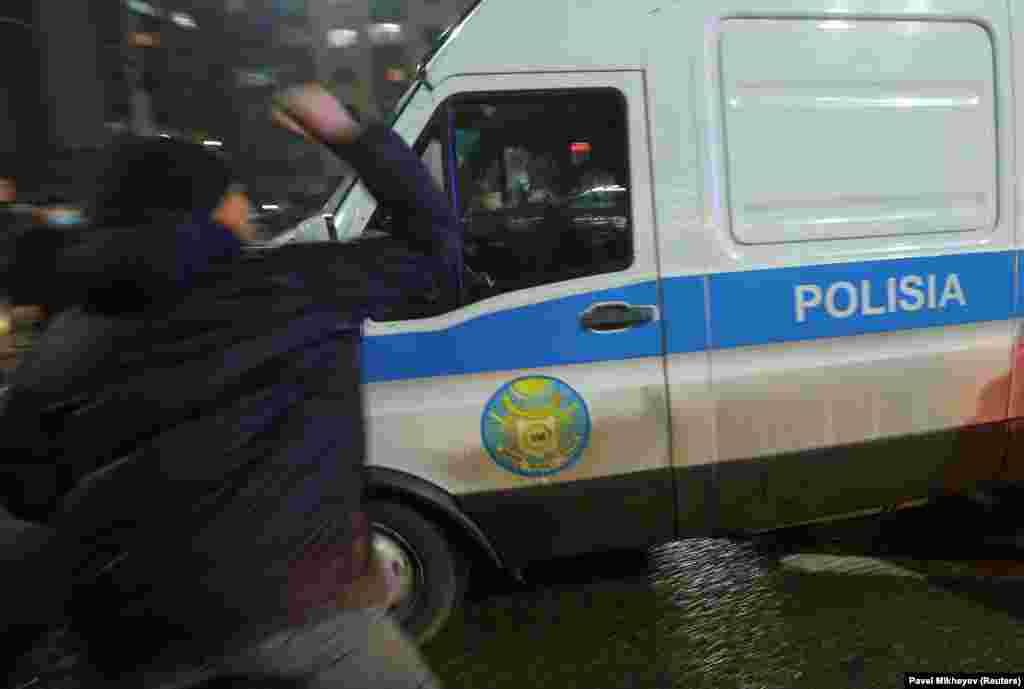
Protesters attack a police van in Almaty as protests turned violent overnight on January 4-5. Police vehicles were set ablaze, and multiple arrests made. 
17/18 Protesters attack a police van in Almaty as protests turned violent overnight on January 4-5. Police vehicles were set ablaze, and multiple arrests made. 
Protests in Kazakhstan that first broke out on January 2 after a sharp hike in prices for liquefied petroleum gas (LPG) are intensifying. On January 5, a government building was set ablaze, and military vehicles moved into downtown Almaty.
Kazakh police in Almaty on the night of January 4-5. On January 5, Kazakhstan's government resigned. Current members of the government will continue their duties until a new administration is formed. 
18/18 Kazakh police in Almaty on the night of January 4-5. On January 5, Kazakhstan's government resigned. Current members of the government will continue their duties until a new administration is formed. 
Protests in Kazakhstan that first broke out on January 2 after a sharp hike in prices for liquefied petroleum gas (LPG) are intensifying. On January 5, a government building was set ablaze, and military vehicles moved into downtown Almaty.
Previous slide
Next slide

In a statement condemning the incident, UN High Commissioner for Human Rights Michelle Bachelet noted reports that said “intense shooting” had erupted on January 6 between “the military and armed individuals in front of Almaty’s city hall” near Republic Square.

Bachelet urged all involved -- “including security forces, protesters, and others” -- to “refrain from violence and to seek a peaceful resolution” to their grievances.

“International law is clear,” Bachelet said. “People have the right to peaceful protest and freedom of expression. At the same time, protesters, no matter how angry or aggrieved they may be, should not resort to violence against others.”

Bachelet also reminded the Kazakh authorities that lethal force, in particular live ammunition, should only be used as a last resort against specific individuals to address an imminent threat of death or serious injury.

PHOTOS: Russian Troops Depart For Kazakhstan As Soldiers In Almaty Open Fire
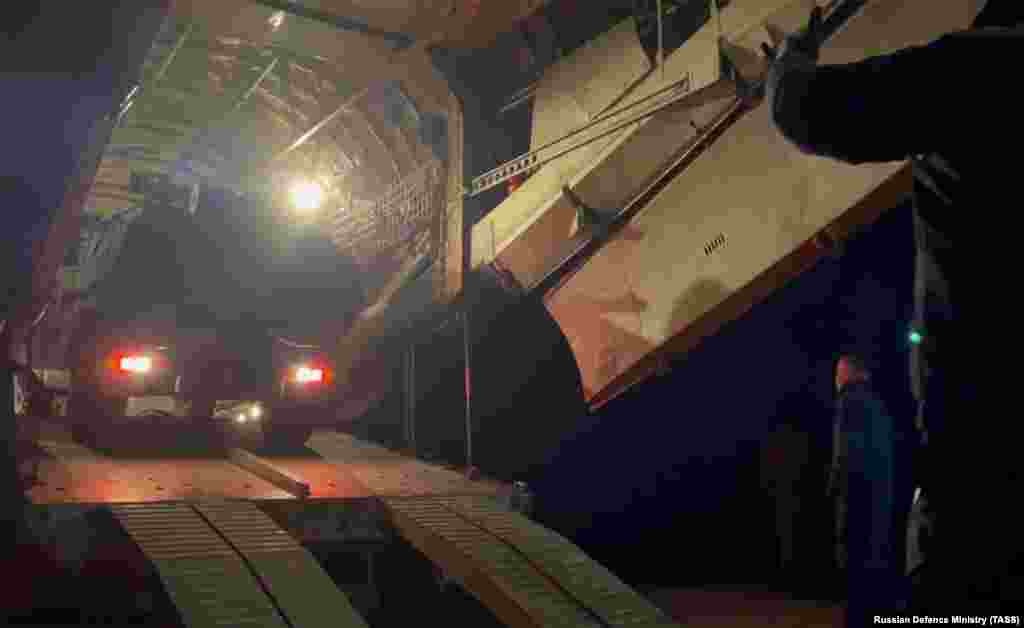
A vehicle being unloaded from a Russian transport plane at an unspecified location in Kazakhstan on the evening of January 6.
1/16 A vehicle being unloaded from a Russian transport plane at an unspecified location in Kazakhstan on the evening of January 6.
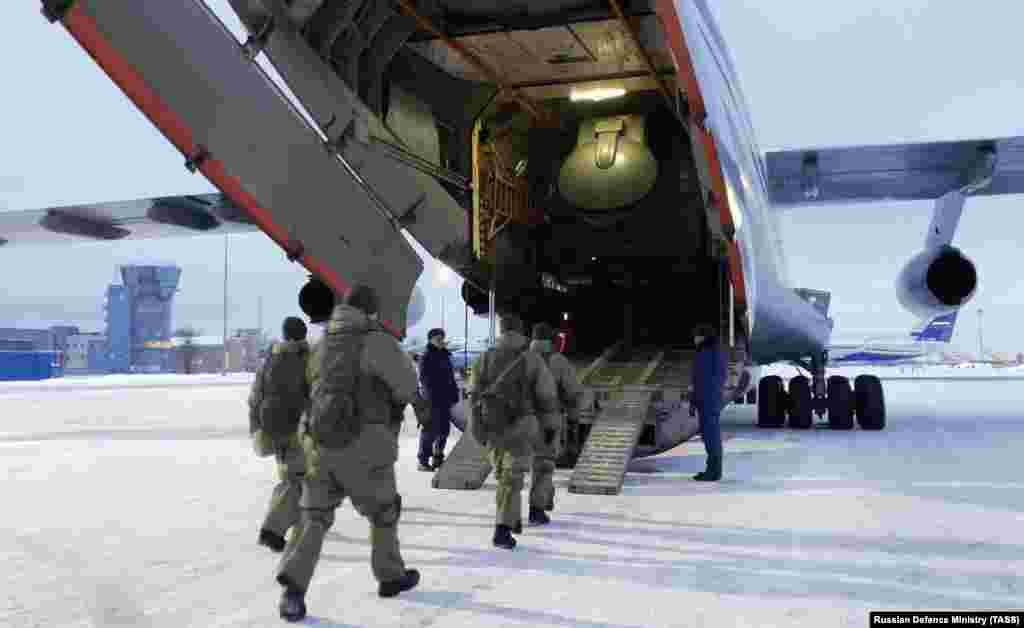
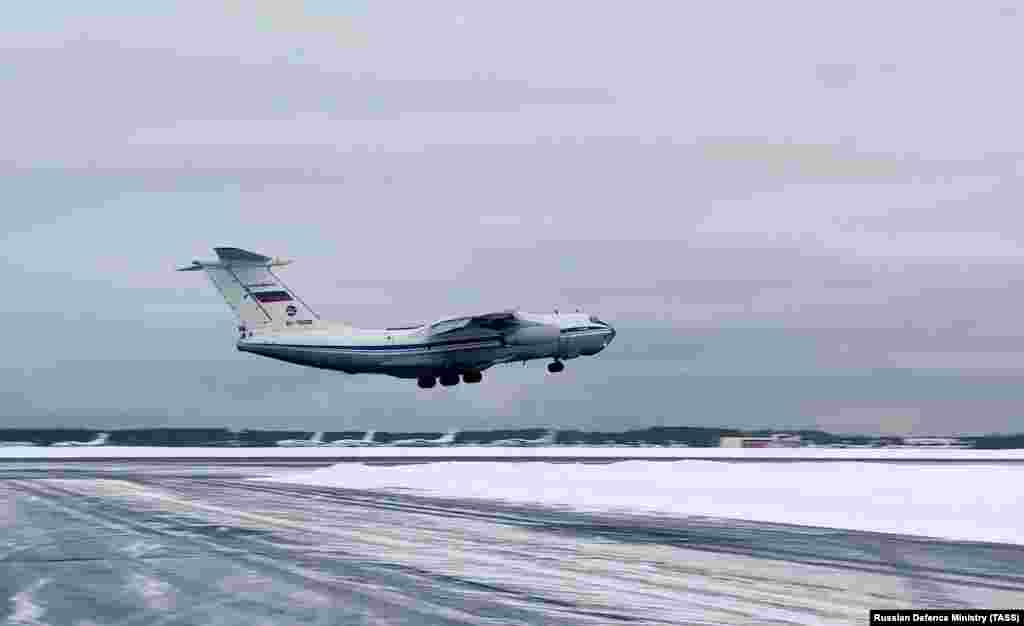
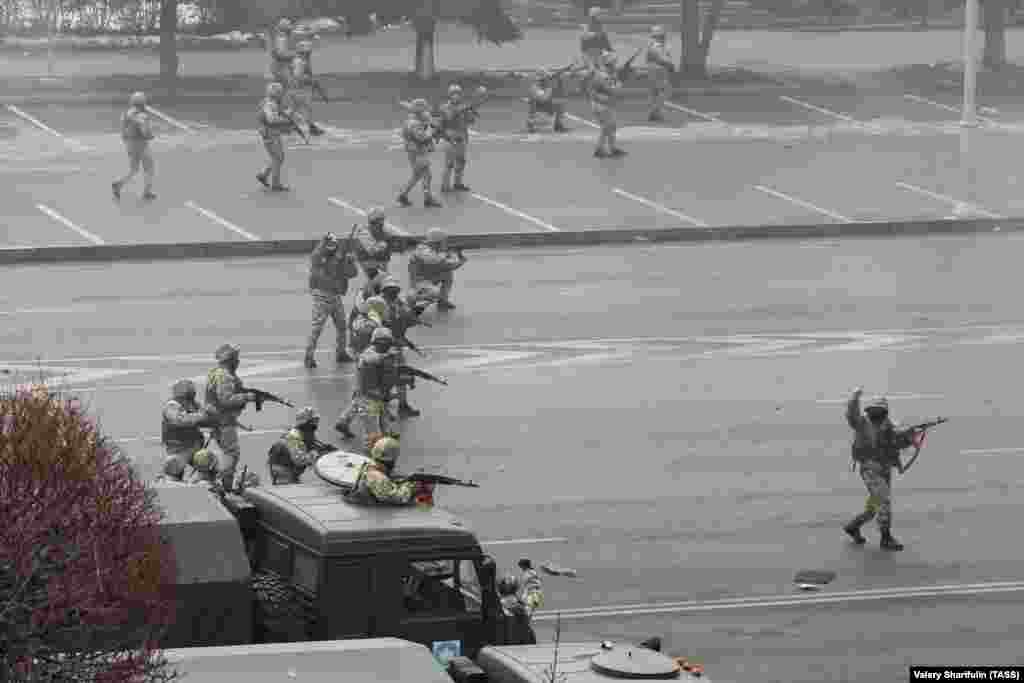
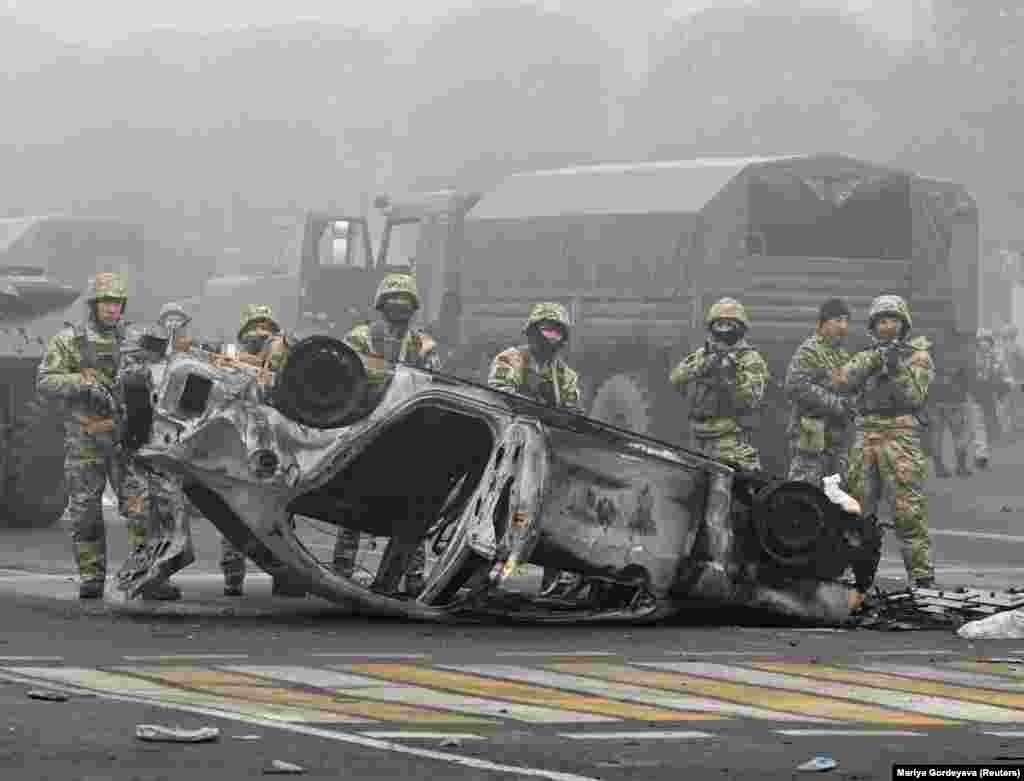
Images released by the Russian military show troops departing for Kazakhstan amid deadly anti-government protests in the Central Asian country. January 6 also saw scores of unidentified military personnel shooting automatic weapons in downtown Almaty.
Russian airborne troops bound for Kazakhstan board a transport plane at Chkalovsky Airfield, northeast of Moscow, on January 6. A day earlier, Kazakh President Qasym-Zhomart Toqaev appealed for the intervention of the Collective Security Treaty Organization (CSTO), blaming foreign-trained "terrorist" gangs for the unrest sweeping his country.
2/16 Russian airborne troops bound for Kazakhstan board a transport plane at Chkalovsky Airfield, northeast of Moscow, on January 6. A day earlier, Kazakh President Qasym-Zhomart Toqaev appealed for the intervention of the Collective Security Treaty Organization (CSTO), blaming foreign-trained "terrorist" gangs for the unrest sweeping his country.
Images released by the Russian military show troops departing for Kazakhstan amid deadly anti-government protests in the Central Asian country. January 6 also saw scores of unidentified military personnel shooting automatic weapons in downtown Almaty.
A Russian Ilyushin IL-76 transport aircraft carrying troops departing for Kazakhstan from Chkalovsky Airfield. The CSTO is a military alliance of Russia, Armenia, Belarus, Kazakhstan, Kyrgyzstan, and Tajikistan. 
3/16 A Russian Ilyushin IL-76 transport aircraft carrying troops departing for Kazakhstan from Chkalovsky Airfield. The CSTO is a military alliance of Russia, Armenia, Belarus, Kazakhstan, Kyrgyzstan, and Tajikistan. 
Images released by the Russian military show troops departing for Kazakhstan amid deadly anti-government protests in the Central Asian country. January 6 also saw scores of unidentified military personnel shooting automatic weapons in downtown Almaty.
Unidentified military personnel fire their weapons in the center of Almaty on January 6. In video of this scene, the man at right appears to be signaling to stop shooting after a sustained burst of gunfire from the formation.
4/16 Unidentified military personnel fire their weapons in the center of Almaty on January 6. In video of this scene, the man at right appears to be signaling to stop shooting after a sustained burst of gunfire from the formation.
Images released by the Russian military show troops departing for Kazakhstan amid deadly anti-government protests in the Central Asian country. January 6 also saw scores of unidentified military personnel shooting automatic weapons in downtown Almaty.
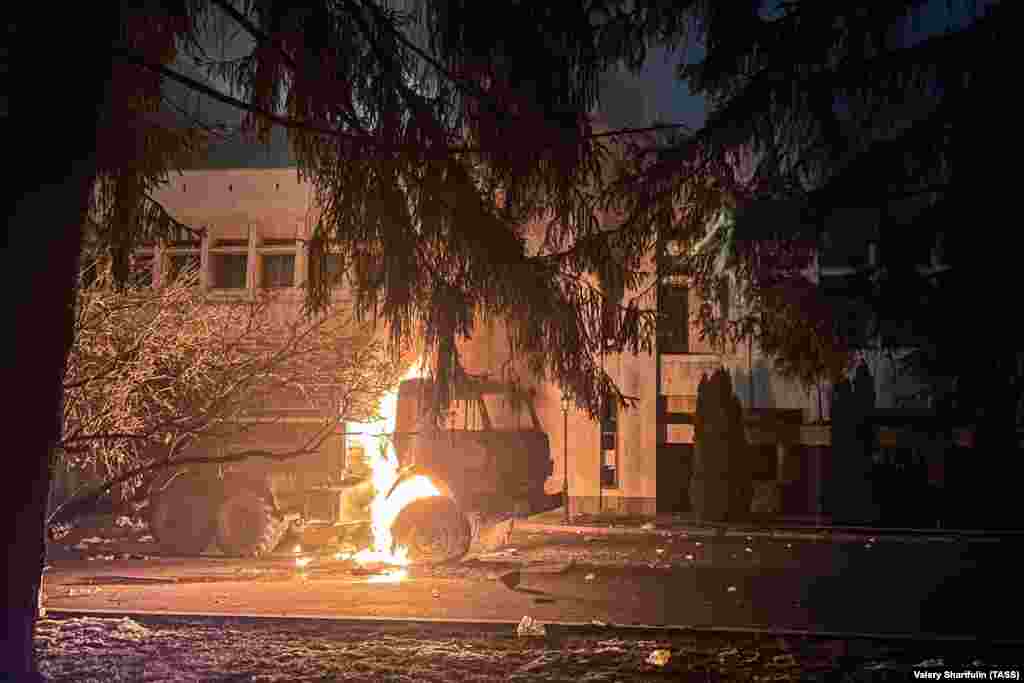
A truck burns next to the mayor's office in Almaty on the evening of January 5. There was violence and looting overnight in the city after massive anti-government protests swept much of the country. 
5/16 A truck burns next to the mayor's office in Almaty on the evening of January 5. There was violence and looting overnight in the city after massive anti-government protests swept much of the country. 
Images released by the Russian military show troops departing for Kazakhstan amid deadly anti-government protests in the Central Asian country. January 6 also saw scores of unidentified military personnel shooting automatic weapons in downtown Almaty.
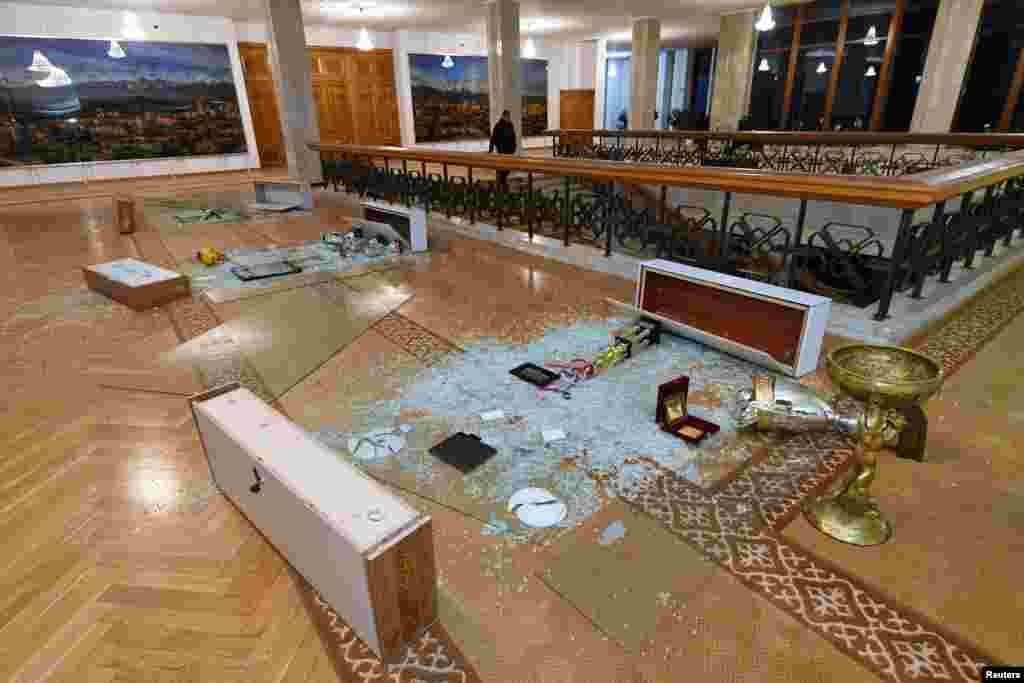
Damage inside the Almaty mayor's office on January 5. 
6/16 Damage inside the Almaty mayor's office on January 5. 
Images released by the Russian military show troops departing for Kazakhstan amid deadly anti-government protests in the Central Asian country. January 6 also saw scores of unidentified military personnel shooting automatic weapons in downtown Almaty.
The mayor's office in central Almaty burns on January 6 after being stormed and ransacked by protesters a day earlier.
7/16 The mayor's office in central Almaty burns on January 6 after being stormed and ransacked by protesters a day earlier.
Images released by the Russian military show troops departing for Kazakhstan amid deadly anti-government protests in the Central Asian country. January 6 also saw scores of unidentified military personnel shooting automatic weapons in downtown Almaty.
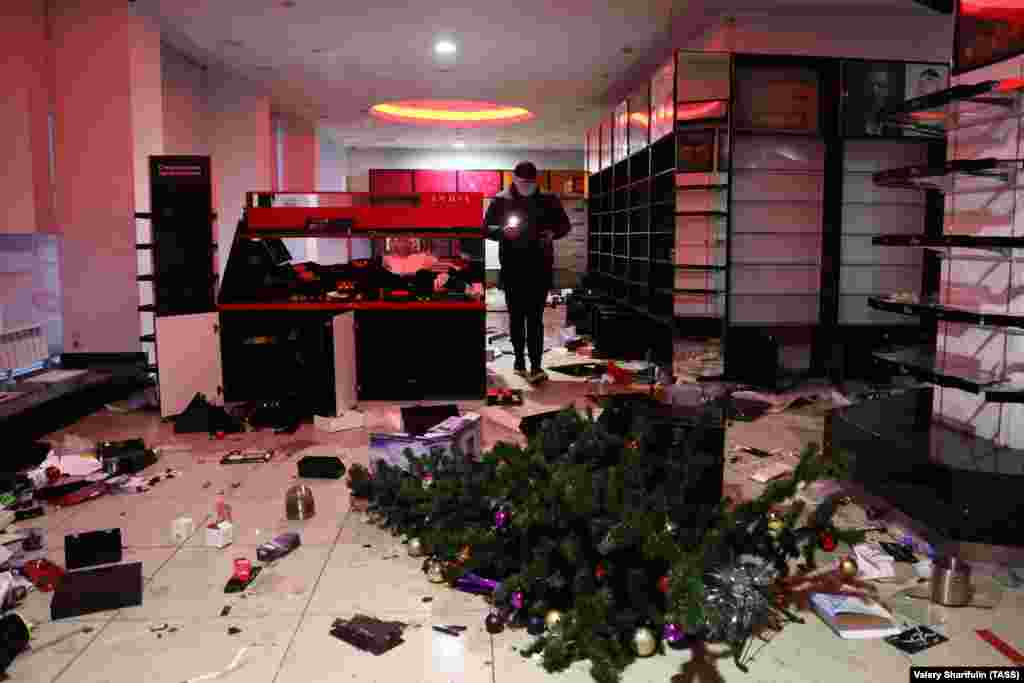
A toppled Christmas tree inside a looted store in Almaty. 
8/16 A toppled Christmas tree inside a looted store in Almaty. 
Images released by the Russian military show troops departing for Kazakhstan amid deadly anti-government protests in the Central Asian country. January 6 also saw scores of unidentified military personnel shooting automatic weapons in downtown Almaty.
A man watches the Almaty office of Kazakhstan's state broadcaster burn on January 6. 
9/16 A man watches the Almaty office of Kazakhstan's state broadcaster burn on January 6. 
Images released by the Russian military show troops departing for Kazakhstan amid deadly anti-government protests in the Central Asian country. January 6 also saw scores of unidentified military personnel shooting automatic weapons in downtown Almaty.
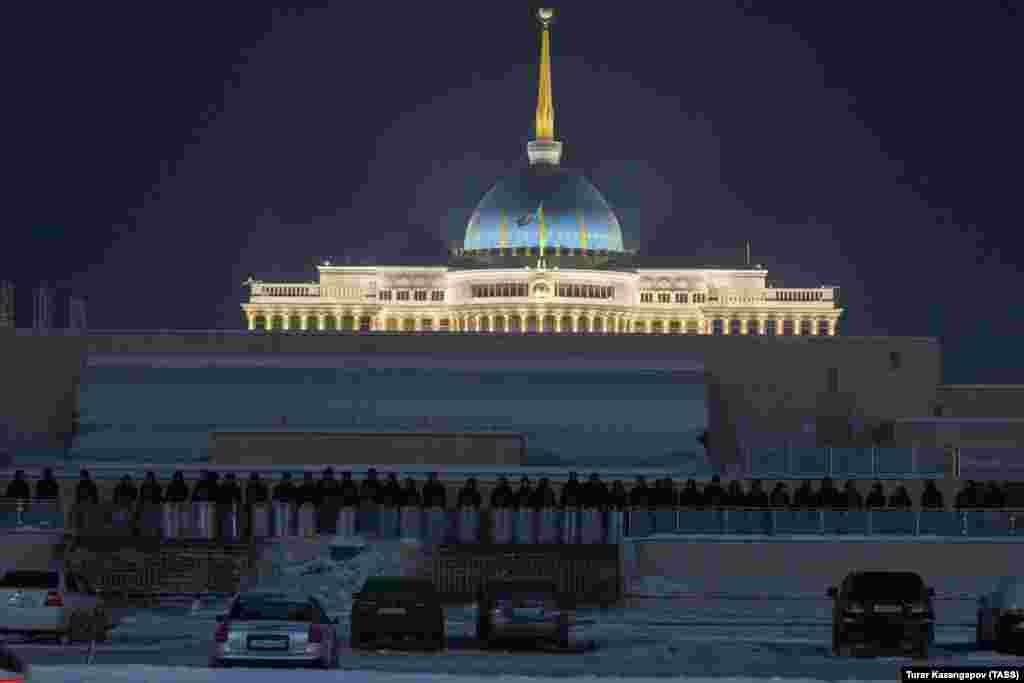
A wall of security forces lines the perimeter of the presidential palace in Nur-Sultan. The Kazakh capital city has been relatively quiet as deadly violence has swept Almaty. 
10/16 A wall of security forces lines the perimeter of the presidential palace in Nur-Sultan. The Kazakh capital city has been relatively quiet as deadly violence has swept Almaty. 
Images released by the Russian military show troops departing for Kazakhstan amid deadly anti-government protests in the Central Asian country. January 6 also saw scores of unidentified military personnel shooting automatic weapons in downtown Almaty.
Troops in Almaty's main Republic Square on January 6. 
11/16 Troops in Almaty's main Republic Square on January 6. 
Images released by the Russian military show troops departing for Kazakhstan amid deadly anti-government protests in the Central Asian country. January 6 also saw scores of unidentified military personnel shooting automatic weapons in downtown Almaty.
The mayor's office in Almaty burning on the evening of January 5. 
12/16 The mayor's office in Almaty burning on the evening of January 5. 
Images released by the Russian military show troops departing for Kazakhstan amid deadly anti-government protests in the Central Asian country. January 6 also saw scores of unidentified military personnel shooting automatic weapons in downtown Almaty.
Protesters wearing military-style helmets in Almaty on January 5. 
13/16 Protesters wearing military-style helmets in Almaty on January 5. 
Images released by the Russian military show troops departing for Kazakhstan amid deadly anti-government protests in the Central Asian country. January 6 also saw scores of unidentified military personnel shooting automatic weapons in downtown Almaty.
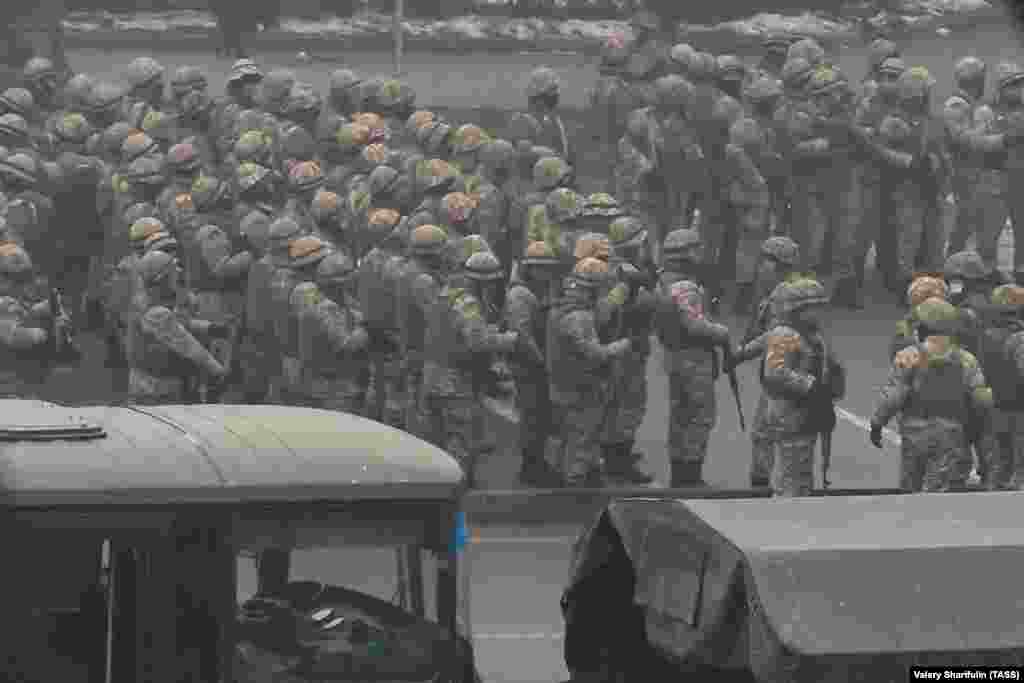
Scores of unidentified soldiers gather as gunfire rings out in central Almaty on January 6. 
14/16 Scores of unidentified soldiers gather as gunfire rings out in central Almaty on January 6. 
Images released by the Russian military show troops departing for Kazakhstan amid deadly anti-government protests in the Central Asian country. January 6 also saw scores of unidentified military personnel shooting automatic weapons in downtown Almaty.
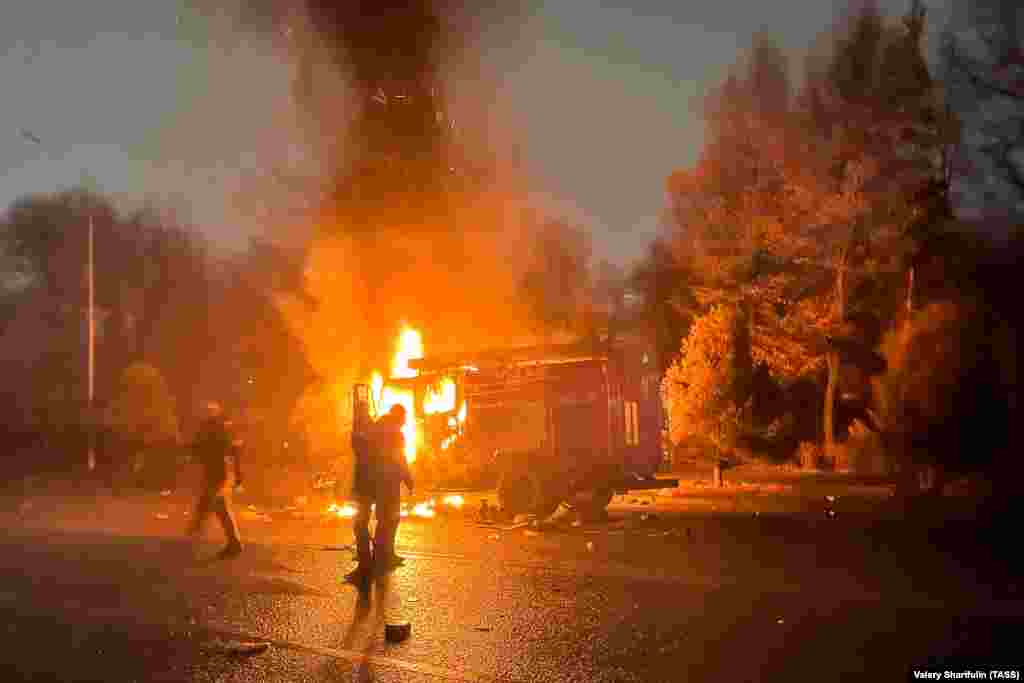
A fire truck burns in Almaty on January 5. 
15/16 A fire truck burns in Almaty on January 5. 
Images released by the Russian military show troops departing for Kazakhstan amid deadly anti-government protests in the Central Asian country. January 6 also saw scores of unidentified military personnel shooting automatic weapons in downtown Almaty.
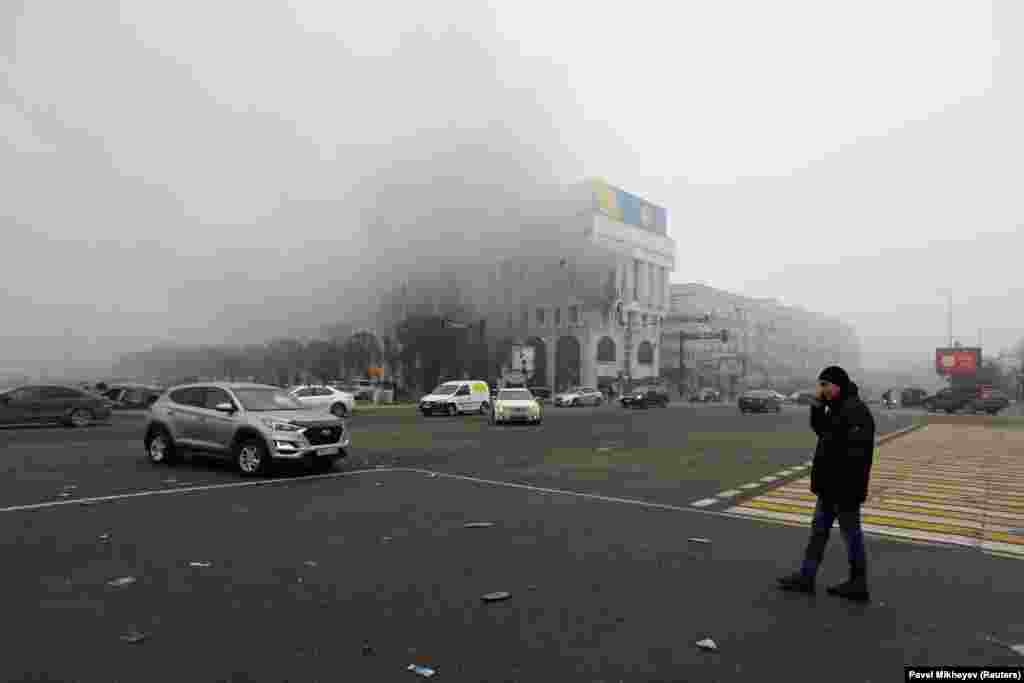
A man walks past the French House perfume store in Almaty on January 6. 
<p>Security forces in Kazakhstan say they have killed dozens of anti-government rioters in Almaty. The authorities say 12&nbsp;members of the security forces have been killed and 353 injured in the unrest, which was sparked by a doubling in the cost of liquefied petroleum gas (LPG).</p>
16/16 A man walks past the French House perfume store in Almaty on January 6. 

Security forces in Kazakhstan say they have killed dozens of anti-government rioters in Almaty. The authorities say 12 members of the security forces have been killed and 353 injured in the unrest, which was sparked by a doubling in the cost of liquefied petroleum gas (LPG).

Images released by the Russian military show troops departing for Kazakhstan amid deadly anti-government protests in the Central Asian country. January 6 also saw scores of unidentified military personnel shooting automatic weapons in downtown Almaty.
Previous slide
Next slide

But on January 7, authorities in Nur-Sultan doubled down on Toqaev’s claim that the protests across the country were the work of foreign-trained “terrorist gangs.”

Kazakhstan’s Interior Ministry’s statement on the Almaty shootings claimed early on January 7 that Republican Square had been cleared of “criminal groups.”

Meanwhile, Toqaev himself announced on January 7 that he had given an order to Kazakh police and the army to "shoot-to-kill without warning."

Toqaev also rejected the idea of talks with protesters, saying it was not possible to negotiate with criminals and murderers.

Written by Ron Synovitz in Prague with reporting by RFE/RL's Kazakh Service correspondents in Almaty and Nur-Sultan.
  • 16x9 Image

    Ron Synovitz

    Ron Synovitz is a senior correspondent for RFE/RL.

  • 16x9 Image

    RFE/RL's Kazakh Service

    RFE/RL's Kazakh Service offers informed and accurate reporting in the Kazakh and Russian languages about issues that matter in Kazakhstan, while providing a dynamic platform for audience engagement and the free exchange of news and ideas.

This item is part of
XS
SM
MD
LG