

Accessibility links

Breaking News

The Consequences Of Inviting Russian-Led CSTO Troops Into Kazakhstan

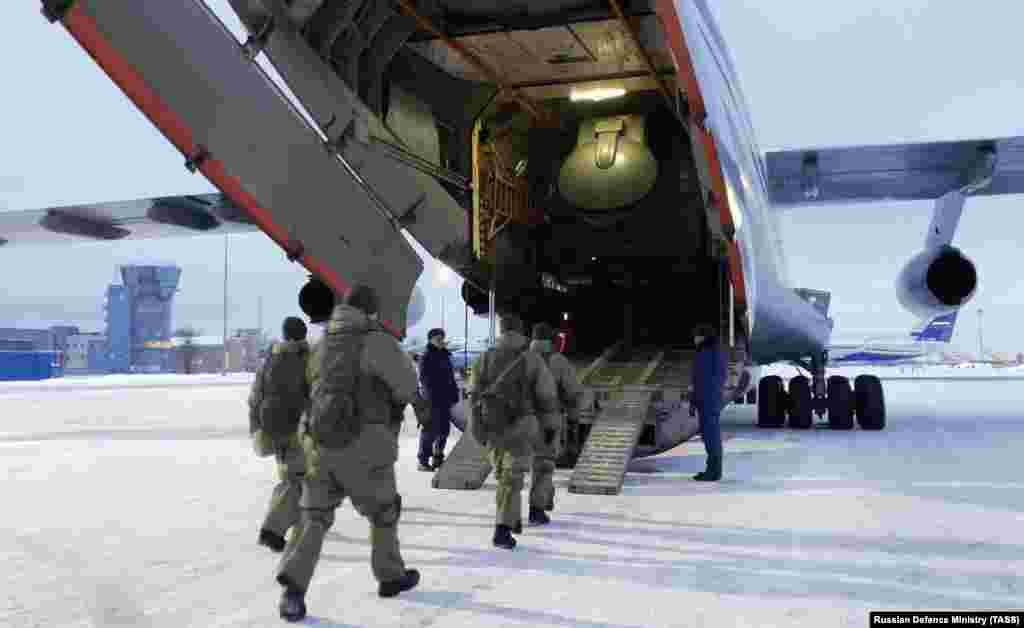
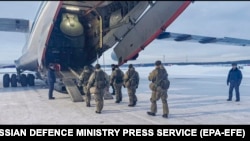
Russian servicemen board a military aircraft on their way to Kazakhstan, at an airfield outside Moscow on January 6.

Sparked by a small protest over a fuel price increase in the western oil town of Zhanaozen a few days earlier, angry crowds flooded the streets and squares of Kazakhstan’s major towns and cities on January 5, shouting their discontent with the authoritarian government's domestic policies.

Alarmed by the scale of the demonstrations, President Qasym-Zhomart Toqaev quickly ordered fuel prices to be lowered, special commissions created to resolve economic problems, and accepted the resignation of his government.

But the protests only intensified and Toqaev decided to change his narrative of the unfolding events.
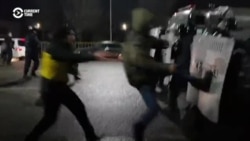
What's Behind The State Of Emergency And Protests Erupting Across Kazakhstan?
please wait

No media source currently available

0:00 0:03:18 0:00

The people responsible for the protests were “international terrorist bands who had undergone special training abroad and their attack on Kazakhstan should be seen as an act of aggression," the president told Kazakhs in a televised address.

Toqaev then appealed for help from the Collective Security Treaty Organization (CSTO), a Russian-led alliance of six former Soviet republics (Russia, Armenia, Belarus, Kyrgyzstan, Tajikistan, and Kazakhstan) created in 1992.

The CSTO had never deployed its forces to intervene in a conflict in another country. But when Toqaev appealed for help, the CSTO agreed.
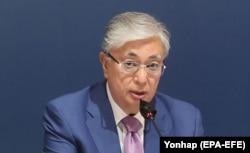
Kazakh President Qasym-Zhomart Toqaev (file photo)

Russian troops quickly landed in Kazakhstan on January 6, with more coming from the other CSTO countries.

The CSTO stayed out of the 2005, 2010, and 2020 revolutions in Kyrgyzstan, the June 2010 interethnic violence in southern Kyrgyzstan, the Nagorno-Karabakh conflict between Armenia and Azerbaijan in autumn 2020, and did not attempt to intervene or mediate in the brief border fighting between Kyrgyzstan and Tajikistan in late April 2021 -- even though all of the CSTO defense officials were meeting in the Tajik capital, Dushanbe, at the time.

According to Article 4 of the CSTO Charter, the organization will only send troops to help a member state whose territory or sovereignty is threatened by an external force.

None of the aforementioned conflicts in CSTO member states met that criterion.

But none of the countries involved share a 7,000-kilometer border with Russia, as Kazakhstan does, so Toqaev’s carefully crafted phrasing to include international "terrorist bands" trained abroad was deemed sufficient to invoke CSTO aid for his besieged government.

PHOTOS: Russian Troops Depart For Kazakhstan As Soldiers In Almaty Open Fire
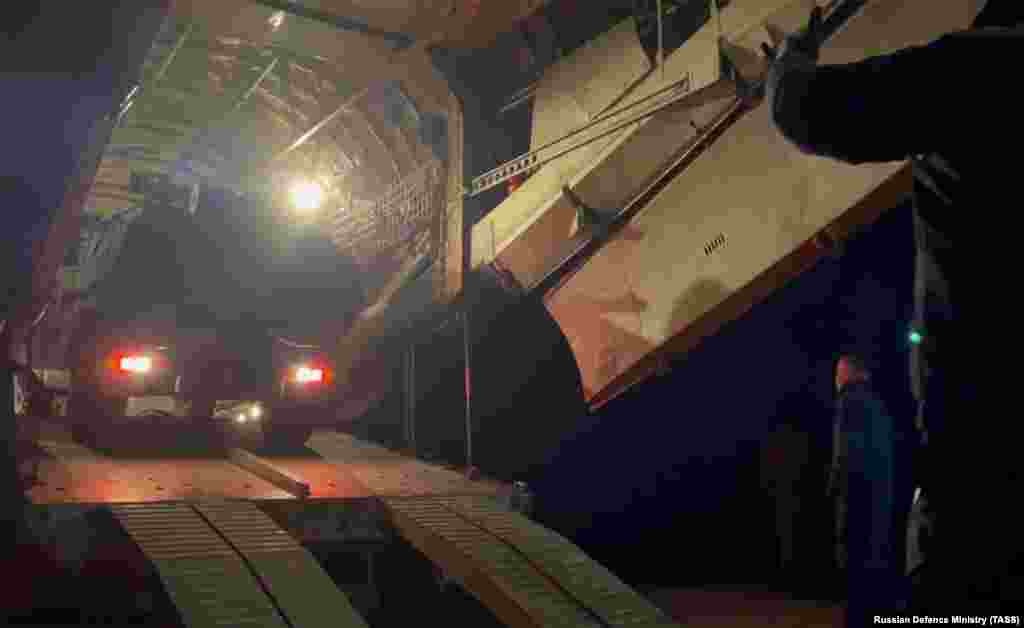
A vehicle being unloaded from a Russian transport plane at an unspecified location in Kazakhstan on the evening of January 6.
1/16 A vehicle being unloaded from a Russian transport plane at an unspecified location in Kazakhstan on the evening of January 6.
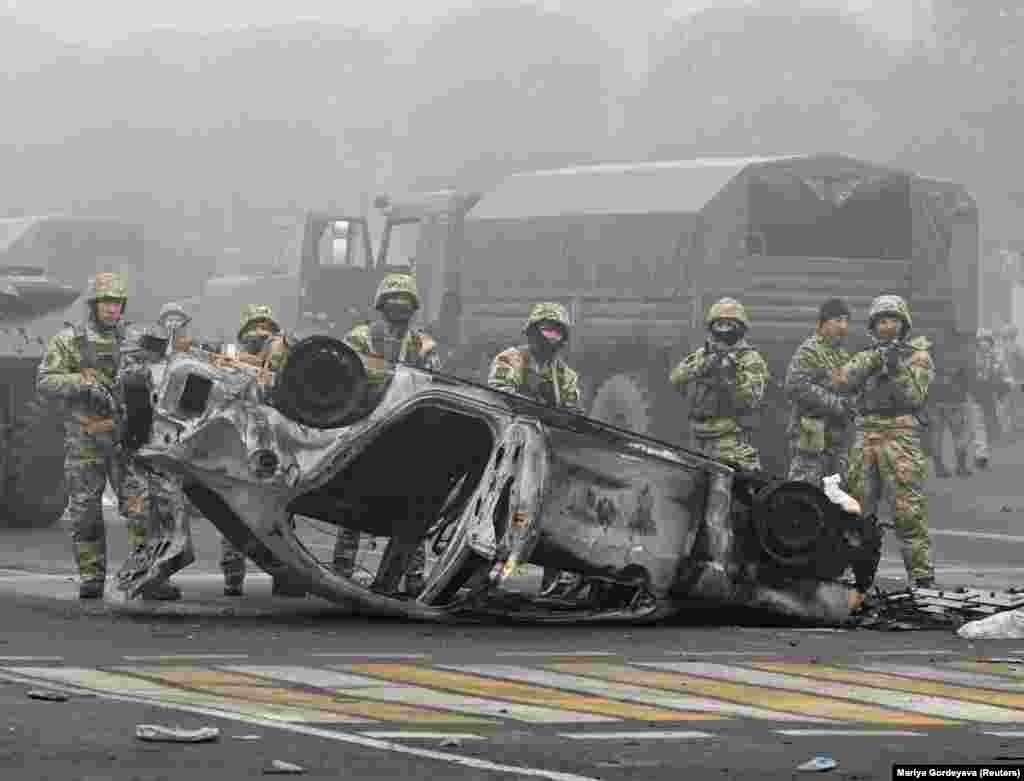
Images released by the Russian military show troops departing for Kazakhstan amid deadly anti-government protests in the Central Asian country. January 6 also saw scores of unidentified military personnel shooting automatic weapons in downtown Almaty.
Russian airborne troops bound for Kazakhstan board a transport plane at Chkalovsky Airfield, northeast of Moscow, on January 6. A day earlier, Kazakh President Qasym-Zhomart Toqaev appealed for the intervention of the Collective Security Treaty Organization (CSTO), blaming foreign-trained "terrorist" gangs for the unrest sweeping his country.
2/16 Russian airborne troops bound for Kazakhstan board a transport plane at Chkalovsky Airfield, northeast of Moscow, on January 6. A day earlier, Kazakh President Qasym-Zhomart Toqaev appealed for the intervention of the Collective Security Treaty Organization (CSTO), blaming foreign-trained "terrorist" gangs for the unrest sweeping his country.
Images released by the Russian military show troops departing for Kazakhstan amid deadly anti-government protests in the Central Asian country. January 6 also saw scores of unidentified military personnel shooting automatic weapons in downtown Almaty.
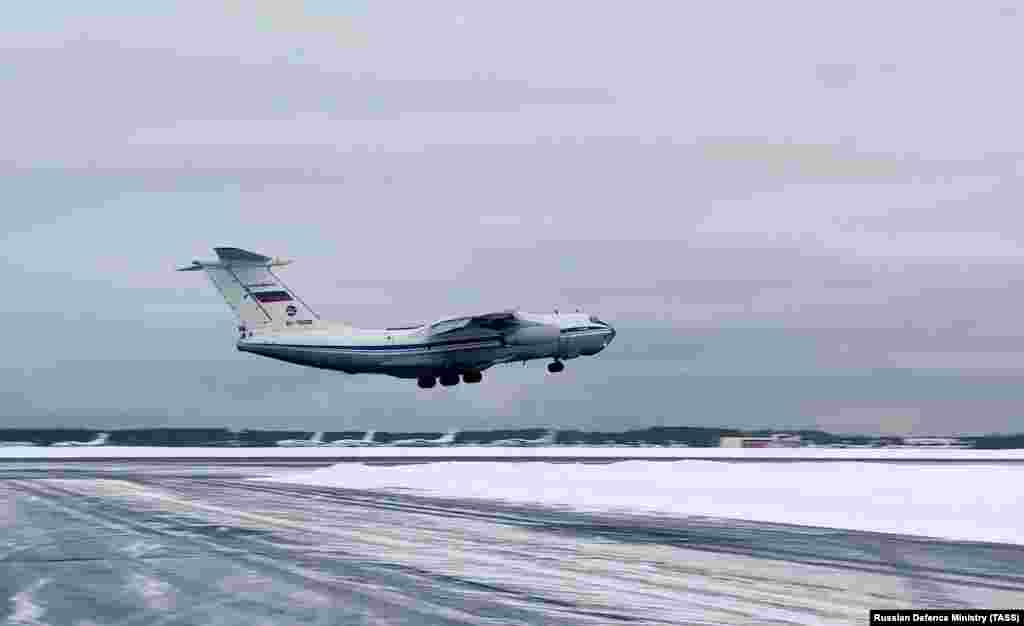
A Russian Ilyushin IL-76 transport aircraft carrying troops departing for Kazakhstan from Chkalovsky Airfield. The CSTO is a military alliance of Russia, Armenia, Belarus, Kazakhstan, Kyrgyzstan, and Tajikistan. 
3/16 A Russian Ilyushin IL-76 transport aircraft carrying troops departing for Kazakhstan from Chkalovsky Airfield. The CSTO is a military alliance of Russia, Armenia, Belarus, Kazakhstan, Kyrgyzstan, and Tajikistan. 
Images released by the Russian military show troops departing for Kazakhstan amid deadly anti-government protests in the Central Asian country. January 6 also saw scores of unidentified military personnel shooting automatic weapons in downtown Almaty.
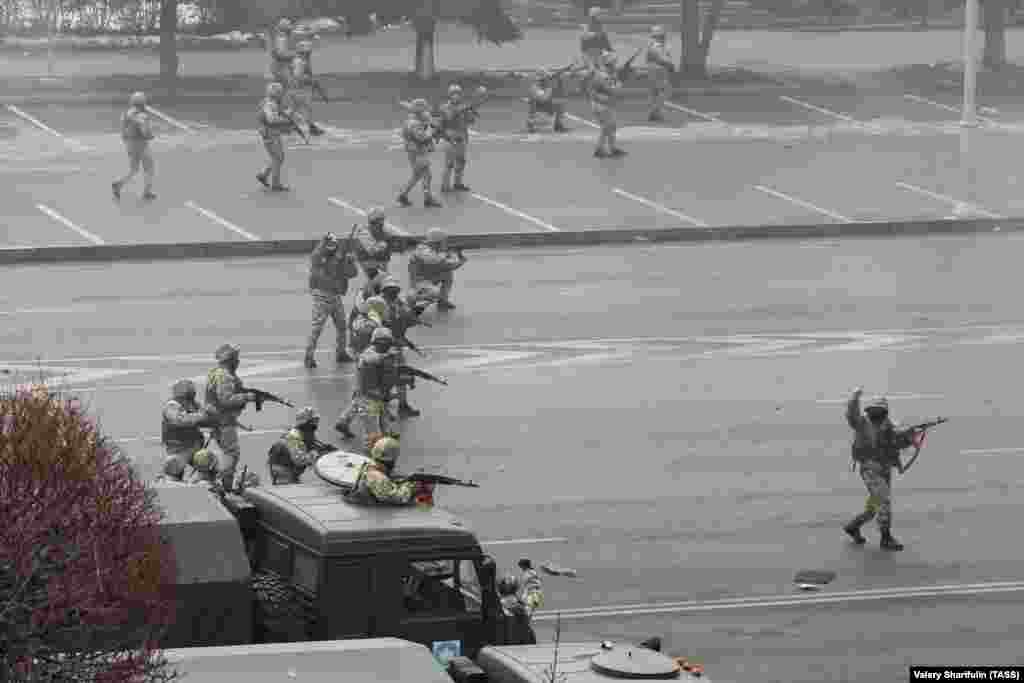
Unidentified military personnel fire their weapons in the center of Almaty on January 6. In video of this scene, the man at right appears to be signaling to stop shooting after a sustained burst of gunfire from the formation.
4/16 Unidentified military personnel fire their weapons in the center of Almaty on January 6. In video of this scene, the man at right appears to be signaling to stop shooting after a sustained burst of gunfire from the formation.
Images released by the Russian military show troops departing for Kazakhstan amid deadly anti-government protests in the Central Asian country. January 6 also saw scores of unidentified military personnel shooting automatic weapons in downtown Almaty.
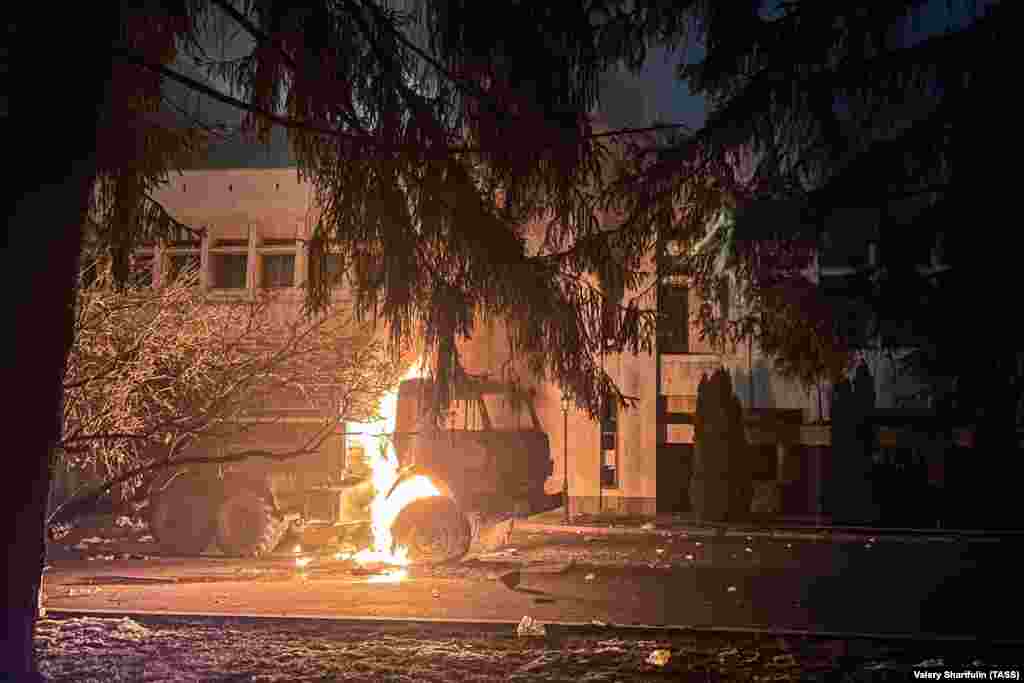
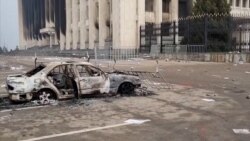
A truck burns next to the mayor's office in Almaty on the evening of January 5. There was violence and looting overnight in the city after massive anti-government protests swept much of the country. 
5/16 A truck burns next to the mayor's office in Almaty on the evening of January 5. There was violence and looting overnight in the city after massive anti-government protests swept much of the country. 
Images released by the Russian military show troops departing for Kazakhstan amid deadly anti-government protests in the Central Asian country. January 6 also saw scores of unidentified military personnel shooting automatic weapons in downtown Almaty.
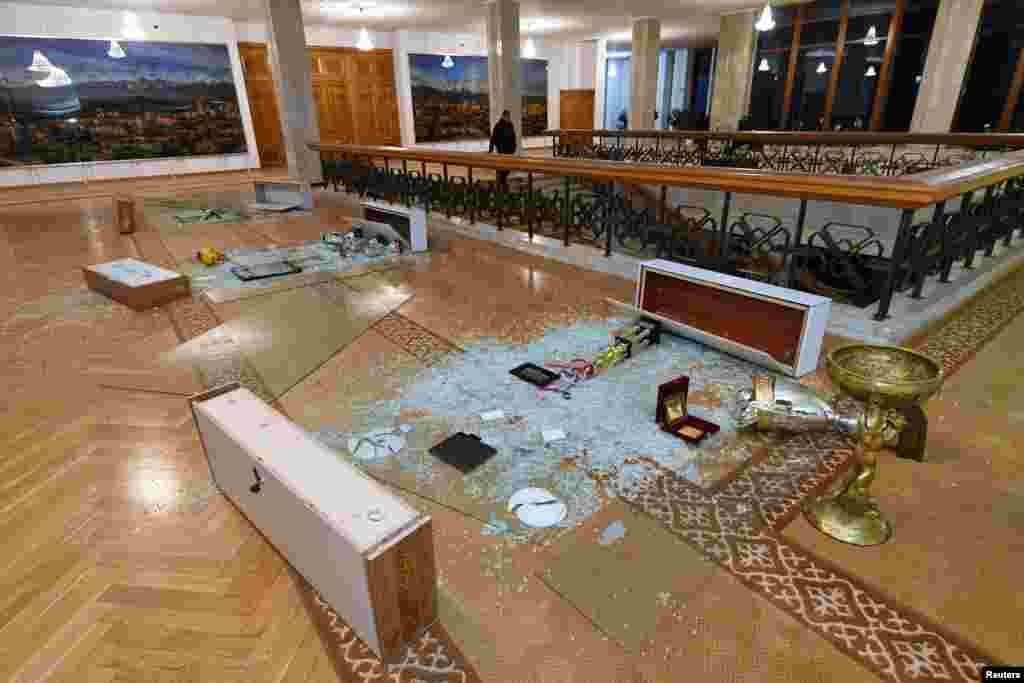
Damage inside the Almaty mayor's office on January 5. 
6/16 Damage inside the Almaty mayor's office on January 5. 
Images released by the Russian military show troops departing for Kazakhstan amid deadly anti-government protests in the Central Asian country. January 6 also saw scores of unidentified military personnel shooting automatic weapons in downtown Almaty.
The mayor's office in central Almaty burns on January 6 after being stormed and ransacked by protesters a day earlier.
7/16 The mayor's office in central Almaty burns on January 6 after being stormed and ransacked by protesters a day earlier.
Images released by the Russian military show troops departing for Kazakhstan amid deadly anti-government protests in the Central Asian country. January 6 also saw scores of unidentified military personnel shooting automatic weapons in downtown Almaty.
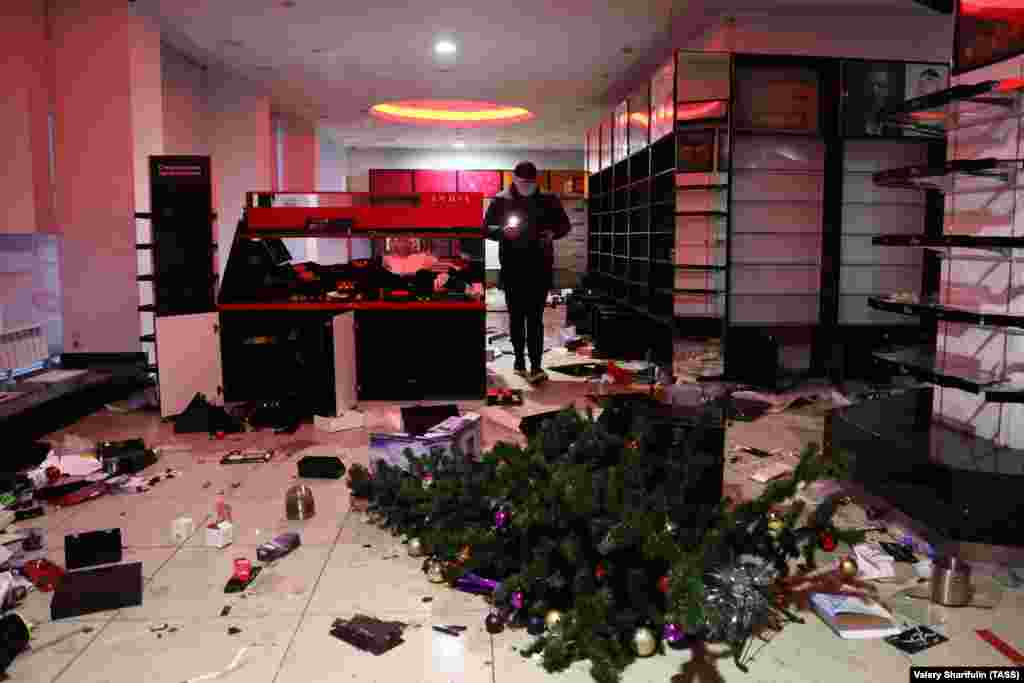
A toppled Christmas tree inside a looted store in Almaty. 
8/16 A toppled Christmas tree inside a looted store in Almaty. 
Images released by the Russian military show troops departing for Kazakhstan amid deadly anti-government protests in the Central Asian country. January 6 also saw scores of unidentified military personnel shooting automatic weapons in downtown Almaty.
A man watches the Almaty office of Kazakhstan's state broadcaster burn on January 6. 
9/16 A man watches the Almaty office of Kazakhstan's state broadcaster burn on January 6. 
Images released by the Russian military show troops departing for Kazakhstan amid deadly anti-government protests in the Central Asian country. January 6 also saw scores of unidentified military personnel shooting automatic weapons in downtown Almaty.
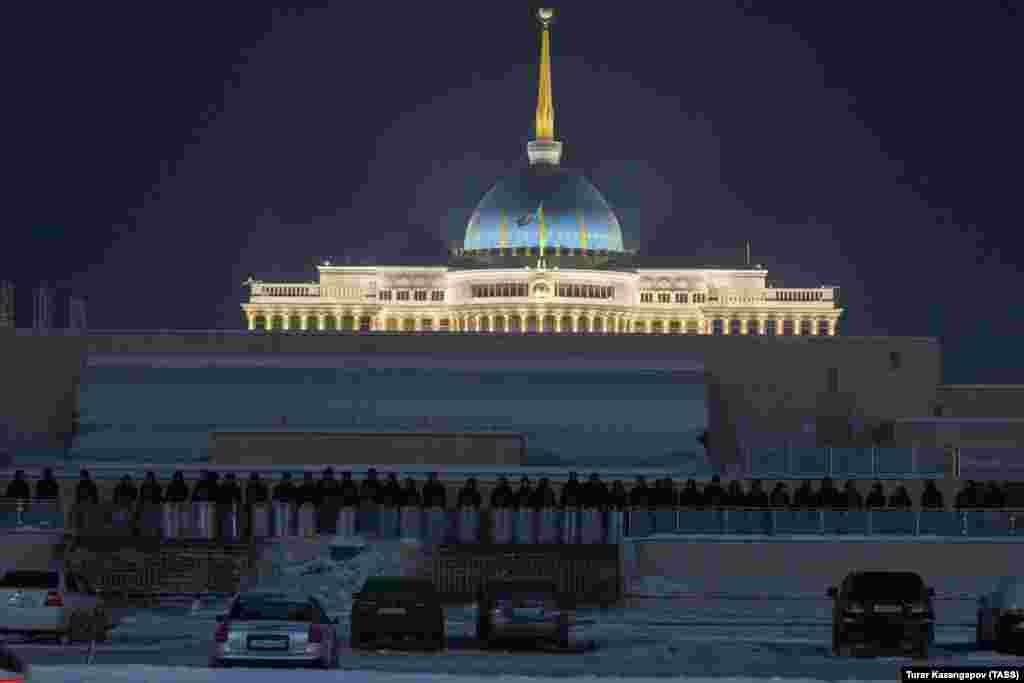
A wall of security forces lines the perimeter of the presidential palace in Nur-Sultan. The Kazakh capital city has been relatively quiet as deadly violence has swept Almaty. 
10/16 A wall of security forces lines the perimeter of the presidential palace in Nur-Sultan. The Kazakh capital city has been relatively quiet as deadly violence has swept Almaty. 
Images released by the Russian military show troops departing for Kazakhstan amid deadly anti-government protests in the Central Asian country. January 6 also saw scores of unidentified military personnel shooting automatic weapons in downtown Almaty.
Troops in Almaty's main Republic Square on January 6. 
11/16 Troops in Almaty's main Republic Square on January 6. 
Images released by the Russian military show troops departing for Kazakhstan amid deadly anti-government protests in the Central Asian country. January 6 also saw scores of unidentified military personnel shooting automatic weapons in downtown Almaty.
The mayor's office in Almaty burning on the evening of January 5. 
12/16 The mayor's office in Almaty burning on the evening of January 5. 
Images released by the Russian military show troops departing for Kazakhstan amid deadly anti-government protests in the Central Asian country. January 6 also saw scores of unidentified military personnel shooting automatic weapons in downtown Almaty.
Protesters wearing military-style helmets in Almaty on January 5. 
13/16 Protesters wearing military-style helmets in Almaty on January 5. 
Images released by the Russian military show troops departing for Kazakhstan amid deadly anti-government protests in the Central Asian country. January 6 also saw scores of unidentified military personnel shooting automatic weapons in downtown Almaty.
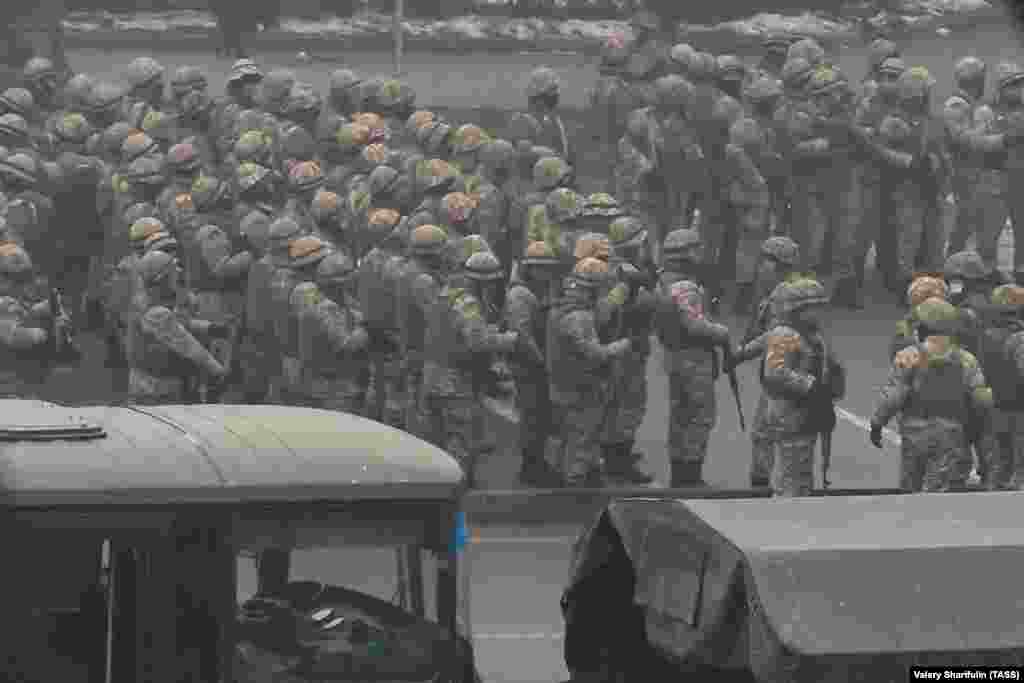
Scores of unidentified soldiers gather as gunfire rings out in central Almaty on January 6. 
14/16 Scores of unidentified soldiers gather as gunfire rings out in central Almaty on January 6. 
Images released by the Russian military show troops departing for Kazakhstan amid deadly anti-government protests in the Central Asian country. January 6 also saw scores of unidentified military personnel shooting automatic weapons in downtown Almaty.
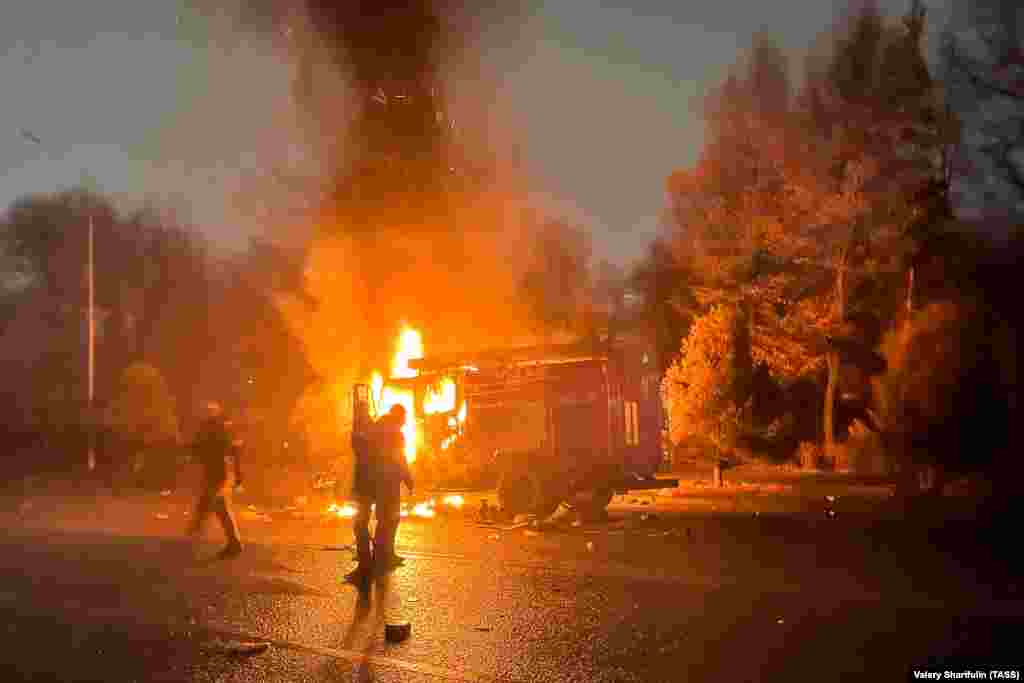
A fire truck burns in Almaty on January 5. 
15/16 A fire truck burns in Almaty on January 5. 
Images released by the Russian military show troops departing for Kazakhstan amid deadly anti-government protests in the Central Asian country. January 6 also saw scores of unidentified military personnel shooting automatic weapons in downtown Almaty.
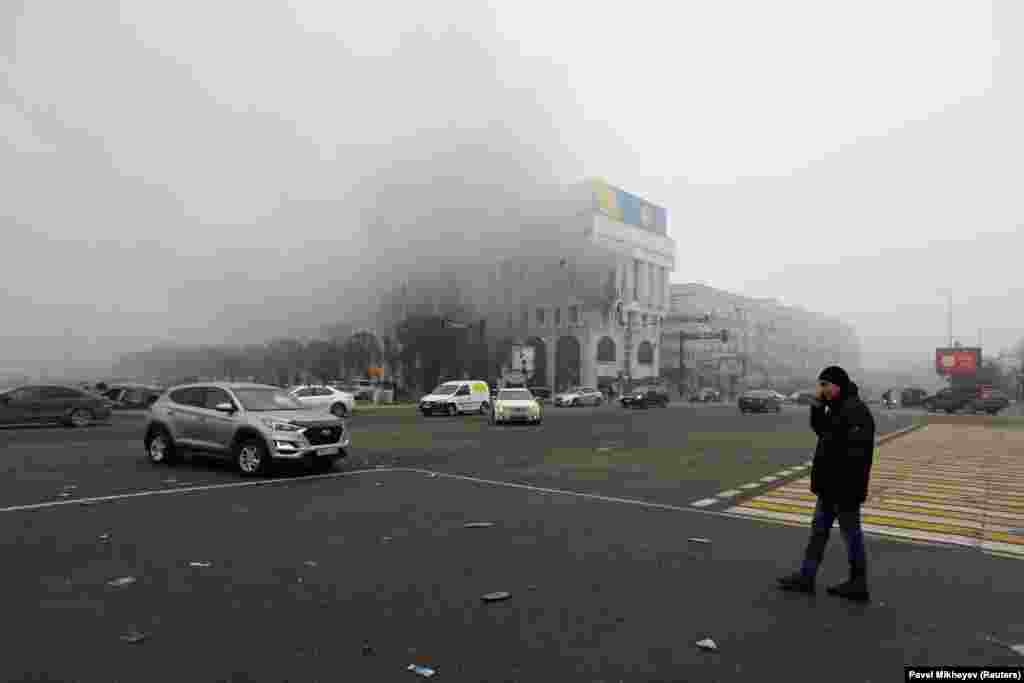
A man walks past the French House perfume store in Almaty on January 6. 
<p>Security forces in Kazakhstan say they have killed dozens of anti-government rioters in Almaty. The authorities say 12&nbsp;members of the security forces have been killed and 353 injured in the unrest, which was sparked by a doubling in the cost of liquefied petroleum gas (LPG).</p>
16/16 A man walks past the French House perfume store in Almaty on January 6. 

Security forces in Kazakhstan say they have killed dozens of anti-government rioters in Almaty. The authorities say 12 members of the security forces have been killed and 353 injured in the unrest, which was sparked by a doubling in the cost of liquefied petroleum gas (LPG).

Images released by the Russian military show troops departing for Kazakhstan amid deadly anti-government protests in the Central Asian country. January 6 also saw scores of unidentified military personnel shooting automatic weapons in downtown Almaty.
Previous slide
Next slide

The move might help Toqaev’s government hold onto power, but the arrival of foreign troops on Kazakh soil is likely to be unpopular among many Kazakhs and will be an indelible stain on Toqaev’s reputation.

Kazakhstan recently held ceremonies to mark the 35th anniversary of Zheltoqsan, the time in December 1986 when Soviet troops came to Kazakhstan to crush large protests against the dismissal of the longtime Soviet-era leader of the republic, Dinmukhamed Kunaev, and his replacement -- Gennady Kolbin -- who had never worked in Kazakhstan before he was appointed head of the Kazakh Soviet Socialist Republic.

Officially, several people were killed in the violence but people who were there say the number of dead was in the hundreds for which Kazakhs hold Moscow responsible.

Swift Criticism

Toqaev’s appeal for CSTO troops was swiftly criticized.

Former U.S. Ambassador to Kazakhstan William Courtney wrote on Twitter that “Kazakhstan's people know this is a popular uprising against corrupt tyranny, not an ‘act of aggression’ by ‘foreign-trained terrorist gangs.’"

In a separate tweet, Courtney suggested that “Russian military intervention in Kazakhstan is likely to alienate its people. They have come to prize their country’s sovereignty and independence,” and “intervention could undermine three decades of friendly relations between the two neighbors.”

Nargis Kassenova, a native Kazakh who works at Harvard University's Davis Center for Russian and Eurasian Studies, said Toqaev’s call to the CSTO for aid was a “horrible decision” that will “undermine [his] chance to gain legitimacy."

As if to emphasize these points, after Toqaev announced he was seeking CSTO intervention, RT Editor in Chief Margarita Simonyan said on Twitter that “Of course we should help. We absolutely should help. But there are several conditions to make -- recognize Crimea (as Russian territory), return the Cyrillic alphabet, (and institute) Russian as a second state language, like in Kyrgyzstan…"

Kyrgyzstan is a CSTO member and, so far, the only country not to have announced its contribution to what is being called by some a “peacekeeping force” for Kazakhstan.

The issue sparked hot debate in Kyrgyzstan’s parliament on January 6.

Deputy Iskhakh Masaliev, who once headed Kyrgyzstan’s Communist Party, said he was against the idea of sending Kyrgyz troops to Kazakhstan.

"As I understand the meaning of this organization (CSTO) and its responsibilities, the military can be used only if there is an external threat to one or another CSTO member," he said.
Fear And Hunger: Reporters In Kazakhstan Describe Tense Mood
please wait

No media source currently available

0:00 0:02:52 0:00

Kyrgyz political analyst Aida Alymbaeva said Toqaev’s move to call in the CSTO to prop up his government “creates a precedent for the authoritarian leaders of Central Asia.”

There were even protesters outside the Kyrgyz parliament calling for deputies not to send soldiers to Kazakhstan.

A vote on the issue was postponed due to a lack of quorum, but deputies planned to return on January 7 to make a decision.

Reforma party leader Klara Sooronkulova said deputies will inevitably approve the troop deployment because Kyrgyz President Sadyr Japarov is in favor of it. That makes it almost certain that a majority of deputies will back the proposal due to there being a majority of pro-government deputies in the parliament.
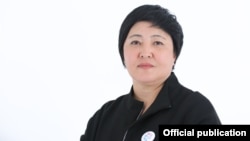
Kyrgyz politician Klara Sooronkulova (file photo)

But Sooronkulova was skeptical of the need for any foreign troops in Kazakhstan.

“Toqaev says that these are terrorists, but this is not true” Sooronkulova said. “If these are terrorists then why are members of the [Kazakh] military going over to their side?”

Russia is reportedly sending 3,000 soldiers to Kazakhstan, Belarus some 500, Tajikistan 200, and Armenia 70, with Kyrgyzstan set to decide on January 7.

According to Russian and Kazakh officials, the CSTO troops will be used to guard strategic facilities, not to participate in what Kazakh authorities are calling an “anti-terrorist” operation.

But many inside and outside Kazakhstan will see the placement of foreign troops in the country as sacrificing its sovereignty and an example of the Toqaev government's weakness, which carries with it ramifications for the future when Russia will remind Toqaev of the service it has rendered and told what loyalty the Kremlin expects.

  • 16x9 Image

    Bruce Pannier

    Bruce Pannier is a Central Asia analyst and appears regularly on the Majlis podcast for RFE/RL.

This item is part of
XS
SM
MD
LG