



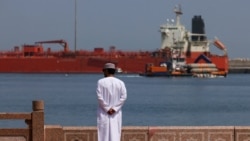
Arab States Condemn Direct, Proxy Iranian Attacks
Six Arab states strongly condemned Iran's direct and proxy attacks as violations of sovereignty, international law, and the UN Charter.
In a joint statement on March 25, Qatar, Kuwait, the United Arab Emirates, Bahrain, Saudi Arabia, and Jordan condemned attacks by Iran-backed Iraqi factions targeting regional countries and infrastructure.
The states urged the Iraqi government to take the necessary measures to stop militias operating from its territory and to avoid further escalation.
The statement also denounced Iran-linked sleeper cells and Hezbollah-affiliated groups, reaffirming the right to self-defense in order to protect sovereignty, security and stability.
German Defense Chief Calls Iran War 'Catastrophe' To Global Economies
German Defense Minister Boris Pistorius on March 26 said a diplomatic solution to the Iran war was needed "as soon as possible," calling the conflict a "catastrophe."
"This war is a catastrophe for the world's economies. The impact is absolutely evident already now..." he said during a meeting with Australian counterpart Richard Marles in Canberra.
"We have not been consulted before, nobody asked us before, it's not our war, and therefore we don't want to get sucked into that war, to make it crystal clear," Pistorius said.

Pistorius said if a cease-fire is agreed, Germany would discuss an operation to secure the peace, especially the freedom of navigation through the Strait of Hormuz, the important oil transit waterway that Iran has effectively blocked, although Tehran is now allowing selection countries to pass through.
While assailing Tehran's hard-line regime, Germany has also been unusually critical of the United States for its war with Iran.
German President Frank-Walter Steinmeier this week called US President Donald Trump’s decision to go to war with Iran a “disastrous mistake” that violates international law.
Trump Says Iranians Negotiating -- But They're Afraid To Admit It
US President Donald Trump on March 25 said Tehran was taking part in peace talks, despite official denials, because Iranian negotiators are afraid they will be killed by their "own people."
"They are negotiating, by the way, and they want to make a deal so badly. But they're afraid to say it, because they figure they'll be killed by their own people," Trump told a dinner for Republican members of Congress.
"They're also afraid they'll be killed by us."

Iranian Foreign Minister Abbas Aragchi earlier in the day said that "we do not intend to negotiate," although he acknowledged Tehran was reviewing a US proposal passed along by Pakistan.
Trump again said Iran was being "decimated" by US and Israeli forces in the war, now in its fourth week.
The White House said earlier that Trump was ready to "unleash hell" if Tehran did not admit defeat and accept the terms of the US peace proposal.
Read more here.
Australia To Ban Visitors From Iran For 6 Months Amid War At Home
Australia is banning visitors from Iran from entering the country for the next six months, saying the war in their home country would increase the chances of them not returning when their visas were up. Some 7,200 Iranians hold tourist visas and could be affected by the decision, officials said.
Home Affairs Minister Tony Burke said the order would apply to all Iranians on tourist visas for the next six months, a move the government said was in the national interest amid rapidly changing global conditions.
Russia Sending Drones, Medicine, Food To Iran: FT
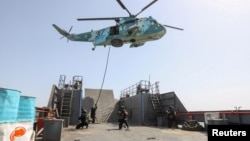
The Financial Times reports that Russia is close to completing a phased shipment of drones, medicine, and food to Iran as the Kremlin looks to keep its ally afloat amid its war with the United States and Israel.
The FT on March 25 cited Western Intelligence reports that detailed Moscow's secret collaboration with Tehran.
"Senior Iranian and Russian officials began secretly discussing delivering drones days after Israel and the US attacked Tehran, two officials briefed on the intelligence said. The processing of deliveries began in early March and was expected to be completed by the end of the month," the report stated.
Asked about the situation, Kremlin spokesman Dmitry Peskov said: “There are a lot of fakes going around right now. One thing is true — we are continuing our dialogue with the Iranian leadership.”
"A senior western official said Moscow was stepping in to shore up not only the Iranians’ fighting capabilities but also to underwrite the broader political stability of Tehran’s regime," the FT added.
Gulf States, Jordan Demand Iraq To Crack Down On Armed Pro-Iran Groups
Five Gulf countries and Jordan have issued a joint statement demanding that Iraq act to stop attacks from its territory by armed pro-Iran groups. The statement was signed by Saudi Arabia, the United Arab Emirates, Qatar, Kuwait, Bahrain, and Jordan. Some groups in Iraq belonging to the pro-Tehran Islamic Resistance in Iraq claim to have carried out "dozens" of drone and rocket attacks against "the enemy" in Iraq and the Middle East, without identifying their specific targets. Iraq has been drawn unwillingly into the Iran war across its border. Pro-Iran groups have been launching attacks against US-linked sites while the Tehran-backed fighters have themselves been hit by airstrikes they blame on Israel and the United States.
Pentagon Signs Deals With Defense Firms To Raise Munitions Production
The Pentagon on March 25 said it reached agreements with defense contractors to put missile production "on a wartime footing" as US forces continue to use munition stocks at a rapid level in the Mideast war.
US forces and defense forces in Israel and other Gulf states have made extensive use of interceptor missiles to counter Iranian retaliatory attacks, raising concerns about stockpile levels.
The goal is to put the "industrial base on a wartime footing," the Pentagon said in a statement.
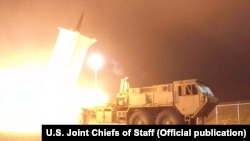
Lockheed Martin and BAE Systems agreed to a fourfold increase in production of "seeker heads," a key component for the THAAD anti-missile system.
Lockheed Martin also agreed to accelerate production of Precision Strike Missiles (PrSM) tactical ballistic missiles used for the first time in the current war against Iran.
Meanwhile, Honeywell Aerospace agreed to increase production of "critical components for America's munitions stockpile," including navigation systems, the statement said.
Iran’s Araqchi Says Tehran Is Reviewing US Proposals But Is Not In Talks
Iranian Foreign Minister Abbas Araqchi said that no talks are being held with the United States but added that senior authorities are reviewing US proposals, seemingly indicating that Tehran has not rejected a US peace plan outright at this point.
In an interview shown on Iranian state television on March 25, Araqchi said that an exchange of messages though intermediators “does not mean negotiations with the US” and that Iran has no intention of holding such talks.
Araqchi’s remarks were broadcast hours after Tehran delivered a chilly response via state television to a reported US 15-point plan to end the US-Israeli war with Iran, saying that the US conditions are excessive and that Tehran will end the war only if its conditions are met.
The interview was broadcast shortly after White House spokeswoman Karoline Leavitt said that US President Donald Trump is prepared to hit Iran harder and “unleash hell” if Iranian authorities “fail to understand that they have been defeated militarily.”
Despite Iran’s denials, Leavitt said that talks with Iran “continue” and that they are “productive.” Trump said on March 24 that that the United States was “talking to the right people in Iran,” but did not identify its interlocutors.
Iran has released its own list of conditions for an end to the war, some of which contradict US positions. Key sticking points appear to include control over the Strait of Hormuz, Iran’s nuclear and missile programs, and the US military presence in the Gulf region.
White House Ready To 'Unleash Hell' If Iran Does Not Accept Defeat
The White House urged Iran to recognize that it has been “defeated” by the United States and Israel, warning that President Donald Trump is ready to "unleash hell" on Iran if it does not accept that.
"If Iran fails to accept the reality of the current moment, if they fail to understand that they have been defeated militarily...President Trump will ensure they are hit harder than they have ever been hit before," White House press secretary Karoline Leavitt told a briefing on March 25.
Trump “does not bluff and he is prepared to unleash hell. Iran should not miscalculate again," she said.
Leavitt spoke after Iran appeared to have dismissed a 15-point US plan to end the war, which began with US and Israeli air strikes on February 28.
A response delivered via Iranian state television said that US conditions are excessive and that Tehran will end the war when it chooses and if its conditions are met.
While senior Iranian officials have denied Tehran is in talks with the United States, Leavitt said: "Talks continue. They are productive, as the president said on Monday (March 23), and they continue to be."
Iranian Military Source Says Tehran Could Open New Front In Crucial Bab Al-Mandab Strait
The Tasnim news agency, which is close to the Islamic Revolutionary Guards Corps, has quoted an unnamed Iranian military source as saying that if the United States launched a ground attack on Iranian islands, "another front" will open in the Bab Al-Mandab Strait.
The Bab Al-Mandab Strait is a narrow passage for ships entering or exiting the Red Sea, whose Yemeni coastline is largely controlled by the Houthi rebels, an armed group backed by Iran and a US-designated terrorist organization.
There has been speculation that US troops could seize Kharg Island, which serves as Iran's main oil export outlet. US troops destroyed military infrastructure on the island in March 13 air strikes.
Houthi rebels had been targeting commercial ships in the strait and the Red Sea after the start of the Gaza War in October 2023.
These attacks stopped a few months after the inauguration of Donald Trump as president in January 2025, following heavy US and Israeli air strikes on Houthi positions, and then negotiations mediated by Oman.
Iranian officials have repeatedly denied that the Houthis follow Tehran's orders regarding attacks on shipping.
"The Bab Al-Mandab Strait is considered one of the world's strategic straits, and Iran has both the will and the ability to produce a completely credible threat against it," the military source cited by Tasnim said.
Following the US and Israeli attacks that began on February 28, Iran has effectively halted passage through the Strait of Hormuz by carrying out attacks on ships and tankers.