



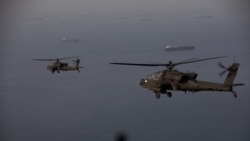
Iranian Media Say Tehran Has Not Decided On Fresh Talks Participation
Iranian state-affiliated media have not yet confirmed that Tehran will send its delegation for a new round of negotiations with the United States, announced by President Donald Trump.
Iran's Fars News Agency, which is close to the Islamic Revolutionary Guards Corps (IRGC), reported that no final decision on Iran's participation in the second round of talks has been made, but suggested it could not be ruled out.
The agency added that its sources viewed the conditions for the talks as not "particularly positive" and that Tehran would not consider meeting in Islamabad if the US blockade of the Strait of Hormuz continued.
The semi-official Tasnim News Agency also reported that Iran has "no current plan to send a negotiating delegation."
Official Iranian news agency IRNA went further, saying Tehran rejected participation in the talks: "Iran stated that its absence from the second round of talks stems from what it called Washington's excessive demands, unrealistic expectations, constant shifts in stance, repeated contradictions, and the ongoing naval blockade, which it considers a breach of the ceasefire."
Earlier in the day, Trump said US negotiators would arrive on April 20 to resume efforts to end the war, little more than a week after earlier talks in the Pakistani capital ended without agreement.
Security Reportedly Tightened In Islamabad
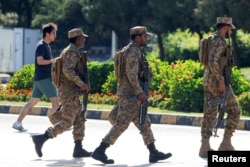
Security was visibly tightened in Islamabad on April 19 ahead of expected new talks between the United States and Iran, the AFP news agency reports.
US President Donald Trump said US negotiators would arrive on April 20 to resume efforts to end the war, little more than a week after earlier talks in the Pakistani capital ended without agreement.
Authorities announced road closures and traffic restrictions in Islamabad and nearby Rawalpindi.
AFP journalists also reported checkpoints, barricades and armed guards around major hotels, including the Serena Hotel in the Pakistani capital, where the last round of talks took place.
An Islamabad city official posted on X earlier on April 19 to say that public and heavy transport had been "suspended until further orders" and that citizens were "earnestly requested to cooperate with the security agencies."
With reporting by AFP
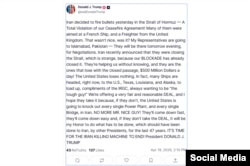
Trump Says US Negotiators Returning To Pakistan, Claims Iran Committed 'Total Violation' Of Cease-Fire

US President Donald Trump says US representatives are returning to Islamabad for renewed talks with Iran, while accusing Tehran of a “Total Violation” of the current cessation of hostilities, claiming that Iranian forces allegedly opened fire in the Strait of Hormuz at a French vessel and a British freighter.
In a Truth Social post on April 19, he said negotiations were due to begin in the Pakistani capital on April 20.
Trump also claimed that Iran’s threat to close the strait was redundant because a US naval blockade of Iranian ports had “already closed it.”
He urged Tehran to accept what he called a “very fair and reasonable DEAL,” warning that otherwise the United States would strike Iranian infrastructure, including power plants and bridges.
A cease-fire that started on April 8 is due to expire on April 22.
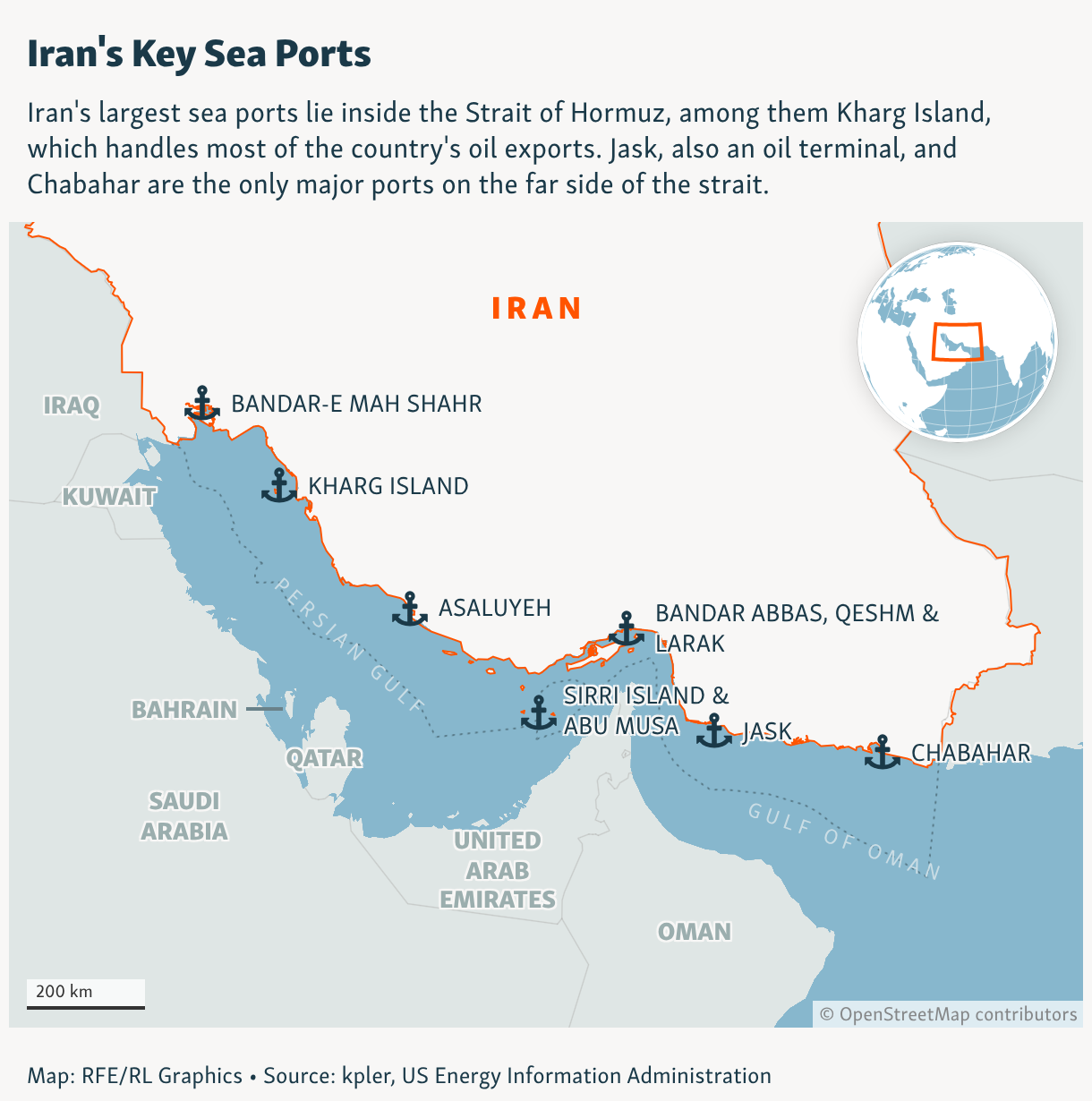
Iran Claims It Forced 2 Tankers To Change Course In Hormuz Strait
Iran’s armed forces reportedly turned back two tankers attempting to transit the Strait of Hormuz on April 19 after issuing warnings, according to Reuters.
Citing the semiofficial Tasnim news agency, which is close to the Islamic Revolutionary Guards Corps, Reuters said the Botswana- and Angola-flagged vessels were forced to change course over what the Iranian report described as “unauthorized transit” of the crucial waterway, which usually accounts for around one fifth of the global oil trade.
Report: Iran Arrests Two Foreigners Over Alleged Starlink Imports
Four people, including two foreign nationals, were arrested in northwestern Iran on accusations of belonging to a “U.S.-Israel-linked espionage network,” Reuters reported on April 19, citing the semiofficial Tasnim news agency.
The report said the foreigners were accused of importing satellite Internet equipment such as Starlink, possession of which is illegal in Iran, where a near-total digital blackout remains in place.
Reuters added that hundreds of Iranians have been arrested for allegedly "cooperating with enemy states" since the start of the the US-Israeli war with Iran.
Tehran Says 44,750 Building Units Damaged, Promises Compensation
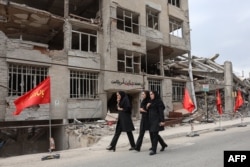
The head of the Tehran Crisis Management Organization (TCMO) said on April 19 that 44,750 building units in Tehran were damaged during the war and that the government would compensate losses to those properties, including household belongings, repairs, and damaged vehicles.
The pledge came after a government spokesperson said earlier this week that “existing economic realities” meant the state lacked the resources to compensate civilians whose homes were damaged in the war.
According to TCMO chief Ali Nasiri, most residential damage can be resolved through “minor repairs.”
For heavily damaged units, planned support includes hotel accommodation or rental housing, repair payments, shopping cards for household appliances, and compensation for damaged vehicles.
Nasiri also said the government would cover compensation for damaged furniture and household goods.
Earlier, Tehran Mayor Alireza Zakani had also pledged that the municipality would cover “all costs” of rebuilding homes damaged in the war.
Iran Gives Professors Internet Access As Public Blackout Continues
Iran says some university professors will begin receiving restored access to the international Internet while the wider public remains under a nationwide blackout that has passed its 50th day.
The Iranian science ministry said on April 19 that access for academics would start with professors, with other researchers to be added later.
Officials said the names of eligible professors had been sent to the communications ministry for a phased reconnection.
Selected professional groups have also regained or are close to regaining access, but authorities have remained silent on when ordinary citizens will be reconnected.
At present, the only group widely known in the country as having “white SIM cards” -- a term used for specially privileged mobile access -- consists of a limited number of government supporters who are able to use the Internet.
With Iran's digital shutdown now lasting more than 1,200 hours, critics say most ordinary Iranians cannot earn income online or contact relatives through Internet-based apps.
Iranian Judiciary Wants Faster Trials 'Outside The Normal Process'
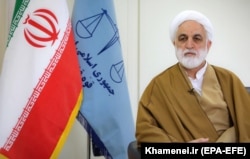
The head of Iran’s judiciary, has again ordered courts to handle detainees’ cases “outside the normal process” and with greater speed.
In remarks in a newly released video, Gholamhossein Mohseni Ejei said cases involving alleged collaborators with the “aggressor enemy” should not follow ordinary procedures.
Ejei said the judiciary had adopted a “wartime posture,” urging officials to return files the same day and, when necessary, question suspects in prison to accelerate indictments.
Since the US-Israeli with Iran began, state media have reported daily arrests of alleged spies and traitors, while rights groups have raised alarm over executions and rapid trials.
Reports have also emerged of “online trials” being held in the country and rapid verdicts being issued.
Iran Says More Than 3,400 Killed In War
Iran's state-funded Foundation of Martyrs and Veterans Affairs says that more than 3,400 people were killed in the country during the war with the United States and Israel.
The semiofficial ISNA news agency quoted the head of the foundation, Ahmad Musavi, as saying that 3,468 “martyrs” had died in the recent conflict.
The figure, released during a two-week cease-fire, was higher than a previous official toll of 3,375 issued on April 12.
The US-based Human Rights Activists News Agency (HRANA) earlier estimated at least 3,636 deaths, including 1,701 civilians.
Independent verification of casualty numbers remains difficult in Iran because of reporting restrictions.
With reporting by RFE/RL's Radio Farda and AFP
Life Of Jailed Iranian Nobel Peace Prize Winner Narges Mohammadi 'In Serious Danger'

The brother of jailed Iranian Nobel Peace Prize winner Narges Mohammadi has told RFE/RL's Radio Farda that her life is "in serious danger" following a heart attack she suffered in prison last month.
Hamid Reza Mohammadi said his sister was being denied medical care and suffering from "vision problems, nausea, blood-pressure issues, and chest pain."
Narges Mohammadi has spent much of the last decade behind bars as a result of her human rights activism. She was most recently arrested in December, during a memorial ceremony in the northeastern city of Mashhad .
"After her arrest in Mashhad, because of blows she received to the head, she was already in bad condition," her brother said.
Following her arrest, she was given a new prison sentence of 7 ½ years, her foundation said in February. In April, her husband, Taghi Rahmani, told Radio Farda that her health had significantly deteriorated in prison.
Hamid Reza said she was now being held in Zanjan prison, some 330 kilometers west of the capital, Tehran.
"Lawyers and the family have been trying to at least send her to a specialist in Tehran for treatment, but that too was prevented," he said. "They do not allow Narges to see a trusted specialist."
The Norwegian Nobel Committee issued a statement in February calling on Iran to end what it called the "cruel abuse" of Mohammadi, and to release her immediately.
Read more here.