



US, Britain Emphasize Commitment To Safe Navigation In Strait Of Hormuz
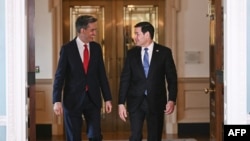
US Secretary of State Marco Rubio and British Foreign Secretary Ed Miliband met in Washington on August 5 and emphasized their countries' commitment to ensuring safe passage through the Strait of Hormuz and preventing Iran from ever acquiring or developing a nuclear weapon.
According to a statement from the US State Department, the two sides also discussed the importance of Europe playing a greater role in ensuring the security of the vital waterway.
The development came as Iranian officials said Tehran was close to reaching a deal with Oman to establish a safe route through the Strait of Hormuz, while warning against "third-party" intervention in the negotiations.
The continued disruption of traffic through the strait has been a major source of tension in the war between the United States and Iran and has complicated diplomatic efforts to end the wider conflict in the Middle East.
Cost Of Energy Consumption In Iran Have 'Increased 3 To 4 Times'
Reports from Iran indicate that the cost of electricity consumption in July this year increased three to four times compared to the previous month.
Iranian media said a family who received a bill of around 300,000 tomans in June were faced with a bill of 800,000 tomans in July.
A spokesman for the electricity industry, Mustafa Rajabi-Mashadi, responded by saying that "there was no sudden increase in tariffs, and the heavy bills are mainly due to subscribers going beyond their consumption patterns."
According to Rajabi-Mashadi, the "consumption pattern" is determined based on the consumption of 75 percent of subscribers in each region, and subscribers who consume less than this pattern benefit from subsidies and receive rewards for efficient consumption.
The increase in electricity costs comes at a time when temperatures are extremely high in many parts of Iran. At the same time, Iranian citizens are facing sharp increases in the prices of essential goods and services due to the consequences of the war and rising inflation.
Iran, Oman Make Progress On Strait Of Hormuz Route Agreement, Tehran Says
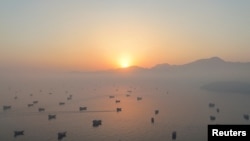
Iran and Oman made progress on August 5 in talks on a shipping route through the Strait of Hormuz, agreeing on the route's geographical coordinates, Iranian Foreign Ministry spokesman Esmail Baqaei said.
Tehran and Muscat have been in talks for the past couple of months, discussing various aspects of the proposed route, Baqaei said, adding that the two countries have nearly finalized a joint announcement, "provided that certain third parties do not obstruct the process."
Earlier in the day, US President Donald Trump said the vital waterway would be reopened "soon," threatening to hit Iran "very hard" if Tehran refuses to negotiate its reopening. "They understand that. I have no choice," he added.
Speaking to Fox News, Trump also said that "very good discussions" were underway with Iranian authorities. However, Iran's state news agency IRNA reported that, according to the country's Foreign Ministry, no talks had been held between Washington and Tehran in recent days.
However, Baqaei said any agreement between Iran and Oman on a safe route through the Strait of Hormuz would not, by itself, guarantee security there.
The effective closure of the strait has long been one of the central issues in the war between the United States and Iran and one of the main obstacles to a negotiated settlement aimed at ending the broader conflict in the Middle East.
From the early days of the war, Tehran kept access to the waterway restricted, disrupting global oil markets and sending prices soaring.
In the following months, it also sought to impose a toll on vessels passing through the Strait, a move that the United States described as unacceptable.
With reporting by Reuters and Fox News.
US Lifts Sanctions On Iraqi Airline Accused Of Links To IRGC
The United States has lifted sanctions imposed on the Iraqi airline Fly Baghdad (FBA). The company had previously been placed on the sanctions list due to suspected ties to Iran's Islamic Revolutionary Guards Corps (IRGC).
According to an August 5 update on the US Treasury Department's website, sanctions on Fly Baghdad and two of its aircraft have been lifted, but sanctions on Bashir Abdulkadhim Alwan Al-Shabani, who was previously identified as the owner of the company, remain in place.
In January 2024, Washington sanctioned the company, its aircraft, and its owner, saying it was assisting the IRGC's Quds Force and its proxy groups in Iraq, Syria, and Lebanon.
A US Treasury official, speaking on condition of anonymity, told RFE/RL's Radio Farda that the company had been removed from the sanctions list after going through an administrative review process.
"FBA has demonstrated major changes to their operations such that their listing is no longer warranted," the official said. "This is not indicative of any shift in US policy toward the Government of Iran, the Islamic Revolutionary Guard Corps-Quds Force, any designated terrorist organization, or any person who supports or acts on behalf of any of these.
"Today’s removal was done as part of the normal administrative process upon review of the specifics related to FBA."
Turkey, Iraq Plan To Boost Alternative Oil Route To Strait Of Hormuz
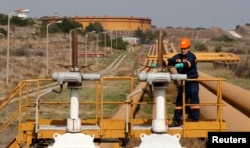
Turkish Energy Minister Alparslan Bayraktar said the disruption of shipping through the Strait of Hormuz shows that the world needs alternative routes for transporting oil and that Ankara is in talks with Iraq to expand new energy export corridors.
Speaking to the state broadcaster TRT, Bayraktar said Turkey and Iraq are discussing the construction of a pipeline from the Silopi-Habur border crossing to Basra, allowing part of Iraq's oil, as well as oil from Gulf countries, to reach global markets without relying entirely on the Strait of Hormuz.
He said that, in the first phase, up to 750,000 barrels of Iraqi crude per day could be transported to the Turkish Mediterranean port of Ceyhan via the existing Iraq-Turkey pipeline.
According to Bayraktar, the current capacity of the route is 1.5 million barrels per day, and Turkey has proposed expanding the infrastructure and extending it to Basra, increasing capacity up to 2.5 million barrels per day.
Bayraktar said around 20 million barrels of oil pass through the Strait of Hormuz daily and that continued tensions in the waterway have underscored the need for reliable alternative energy export routes.
He added that, in the future, in addition to Iraqi crude, the corridor could also be used to export oil from Kuwait and other Gulf states.
National Iranian Oil Company's Accounts Frozen Over Debts
Iran's Bank of Industry and Mines has frozen the bank accounts of the National Iranian Oil Company (NIOC) over outstanding debts.
According to the Fars news agency, the move comes despite the country's budget law, which defers the NIOC's debt repayments until the end of the current fiscal year in Iran
The dispute follows an earlier complaint by NIOC's deputy for tax affairs, who told the Tasnim news agency that the Iranian Tax Administration had imposed penalties on all of the company's transactions and sales.
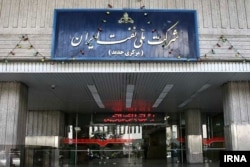
The official said the fine amounted to 287 trillion tomans ($1.7 billion), adding: "Because this amount was not included in the budget of the NIOC, which is a state-owned enterprise, it is simply impossible to pay."
The official also said that "under higher-level government directives, the NIOC's exports are not subject to public disclosure, yet the Tax Administration imposed the penalties without taking these factors into account."
The news website Emtedad, referring to the freezing of NIOC's bank accounts, criticized the decision, writing that while the world's major oil companies are turning geopolitical crises into unprecedented profits and adding billions of dollars to their balance sheets, Iran's largest oil company is struggling with financial constraints and frozen bank accounts.
Iran's oil and gas sector remains subject to extensive international sanctions over the Tehran's nuclear program, development of ballistic missiles, and support for proxy groups across the Middle East.
Qashqavi: Iran Rejects Southern Corridor Through Strait of Hormuz
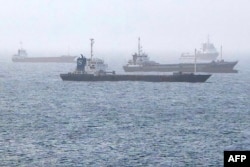
An Iranian official said that Tehran rejects the "US-imposed" southern corridor through the Strait of Hormuz.
Hassan Qashqavi, spokesman for the Iranian parliament's National Security and Foreign Policy Commission, said the United States had sought to impose the southern corridor through "pressure and threats" and "in violation of Clause 5 of the 14-point Islamabad memorandum of understanding."
According to Mizan news agency, which is run by Iran's judiciary, Qashqavi added that the corridor "would not serve Iran's national security and national interests" and that Tehran had therefore explicitly conveyed its opposition to the Omani side.
Iran has said only Tehran and Muscat have the right to determine the structure and management of the strategically important international waterway. However, Iran has repeatedly attacked ships attempting to transit the Strait of Hormuz near Omani waters with Oman's permission.
Qashqavi also said that the situation in the Strait of Hormuz "will not return to pre-war conditions."
His remarks come as the administration of US President Donald Trump said an agreement to reopen the strategic waterway could be finalized by August 5.
Trump has warned that if Iran refuses to reach an agreement, the country will suffer "heavy blows."
US Treasury Secretary Scott Bessent said on August 4 that a deal with Iran on opening the Strait of Hormuz is near.
"We are in talks with the Iranians, and I think there is a chance we may have a deal today or tomorrow to open the Strait and move towards a more normalized position in this conflict," Bessent in a live interview on CNBC.
UKMTO: Drone Strikes Vessel Near Near Bab el-Mandeb Strait
The United Kingdom's Maritime Trade Operations (UKMTO) center said it had received a report of an incident 9 nautical miles northwest of Al Mokha on the Red Sea coast, near the Bab el-Mandeb Strait.
According to the report, a drone struck the vessel, causing a fire on board. UKMTO added that the crew of the oil tanker had been safely evacuated.
The report said the vessel later sank in the area off the coast of Yemen.
No group has yet claimed responsibility for the attack.
UN 'Alarmed' By Rise In Executions And Death Sentences In Iran
UN Human Rights Chief Volker Turk expressed alarm over Iran's surge in executions and death sentences since March, urging the authorities to immediately halt all executions and move toward the abolition of the death penalty.
Since March 19, at least 56 people have been executed on national security-related charges, including 27 individuals in cases linked to protests earlier this year, Turk said in a media statement on August 5. He added that more than 100 others are at risk of execution on similar charges.
Iran's persistent lack of fair trials and due process, including torture-induced confessions, public and rushed executions, and death sentences issued after brief closed-door hearings, is deeply troubling, the UN human rights chief said.
"The death penalty is incompatible with the right to life and irreconcilable with human dignity. Such punishment has no place in our world," Turk concluded.
Trump: Strait Of Hormuz Deal Could Come 'Tomorrow Or The Next Day'
US President Donald Trump said a deal to reopen the Strait of Hormuz could be reached "tomorrow or the next day," adding that progress has been made in the negotiations.
Trump's comments came after Axios reported, citing sources, that the United States, Iran, and Oman are close to reaching an interim agreement to reopen the Strait of Hormuz, the narrow waterway through which roughly one-fifth of the world's seaborne oil trade usually passes, with an announcement reportedly planned for August 5.
"They called me and they said, 'Please, let's talk.' They want to talk," Trump said, referring to the Iranian side.
"They want to make a deal. They do not want to be hit," Trump told reporters before departing from Los Angeles aboard Air Force One for Las Vegas.
He also described the latest round of negotiations positively, saying, "They had a very good day. The negotiations were good."