


Accessibility links

Breaking News

Massive Rally In Belarus Calls For End Of Lukashenka's Rule

Updated
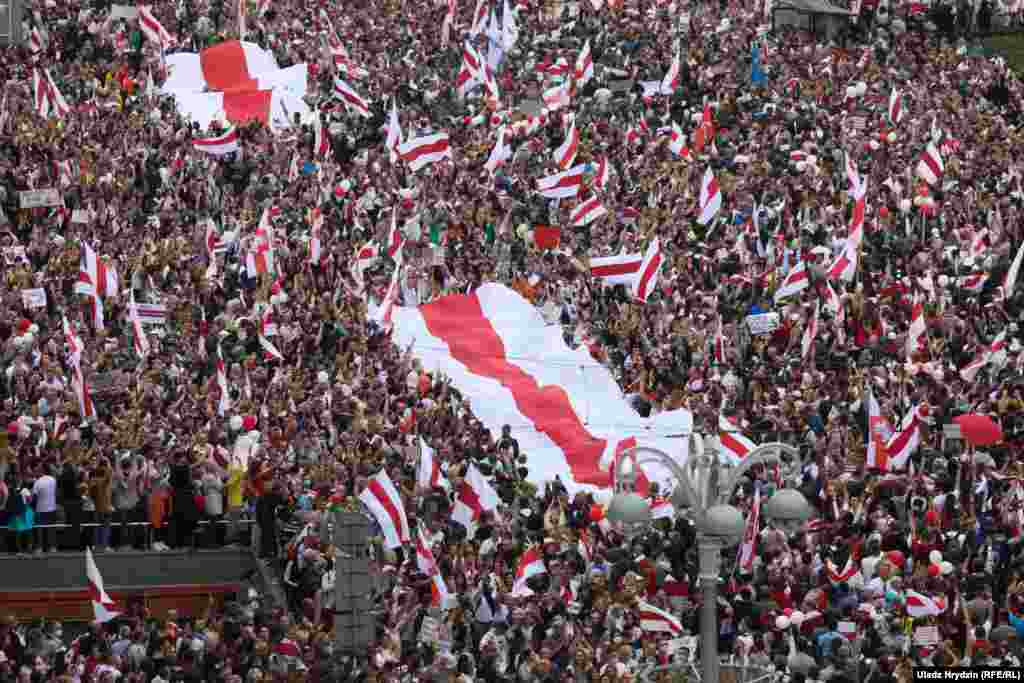
More than 100,000 people are estimated to have taken to the streets of Minsk on August 23.

MINSK -- A sea of protesters packed the streets of Minsk on August 23 for a massive rally against the disputed reelection of President Alyaksandr Lukashenka and a postelection crackdown amid a heavy security presence in the Belarusian capital and fresh warnings from the army.

The crowd, estimated at more than 100,000 people, filled the city center for what was billed as the March of New Belarus as protests entered a 15th day in the Eastern European country of 9.5 million.
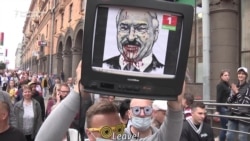
Massive March In Belarus Challenges Lukashenka
please wait

No media source currently available

0:00 0:02:32 0:00

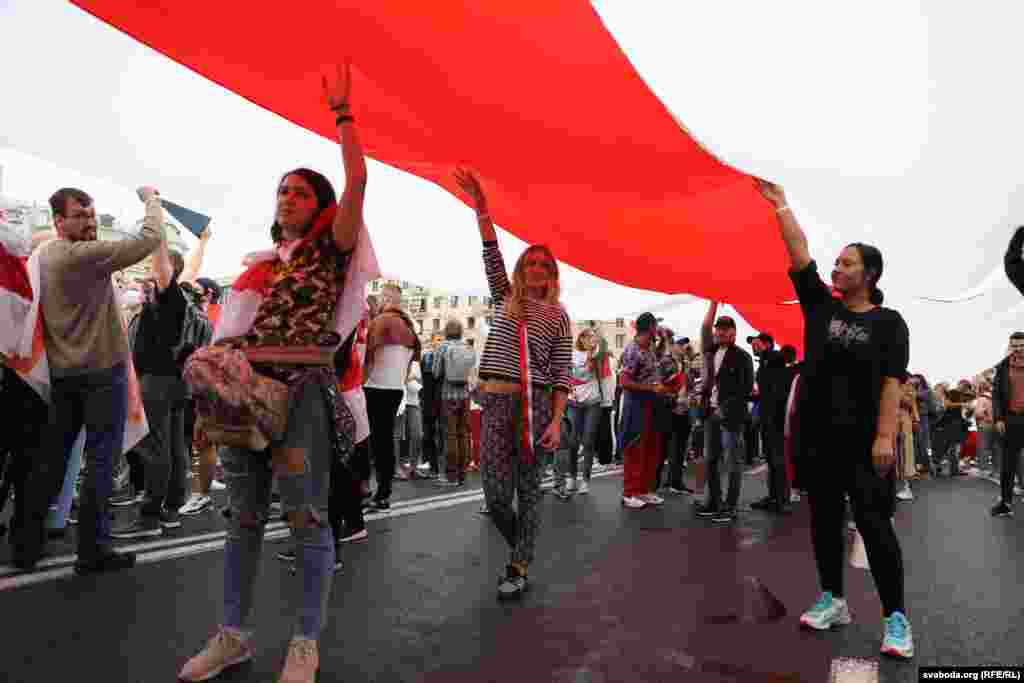
The mass of protesters gathered on Independence Square, waving white and red Belarusian flags and unfurling long banners with white and red stripes.

Protesters chanted "Leave!" and “Get out!” as they called for Lukashenka to step down after 26 years of authoritarian rule.

Large protests were also held in other cities including Brest and Hrodno, as well as outside the country in Lithuania, where a 30-kilometer human chain was formed from Vilnius to the border with Belarus.

Users of network operators had problems connecting to the internet, in another attempt by authorities to clamp down on information.

By evening, people began dispersing without clashes with riot police, in the latest instance of protesters trying to end their mobilization peacefully.

The Ministry of Interior said no one was detained.

After the protest largely ended, a video posted on Telegram showed Lukashenka in a helicopter flying over the city.

"They fled like rats," said the authoritarian leader, who was seen stepping off the helicopter at the presidential palace wearing a bulletproof vest and carrying a rifle.

Lukashenka has ordered the military into full combat readiness, raising the prospect that the army may unleash a much-feared bloody crackdown to suppress unprecedented street protests.

Describing the protesters as "fascists," the Defense Ministry said in a statement that the memorials, specifically those dedicated to victims of World War II, must not be desecrated. The ministry warned against any violation of peace and order in such places, writing in all capital letters, "You will have the army to deal with now, not the police."

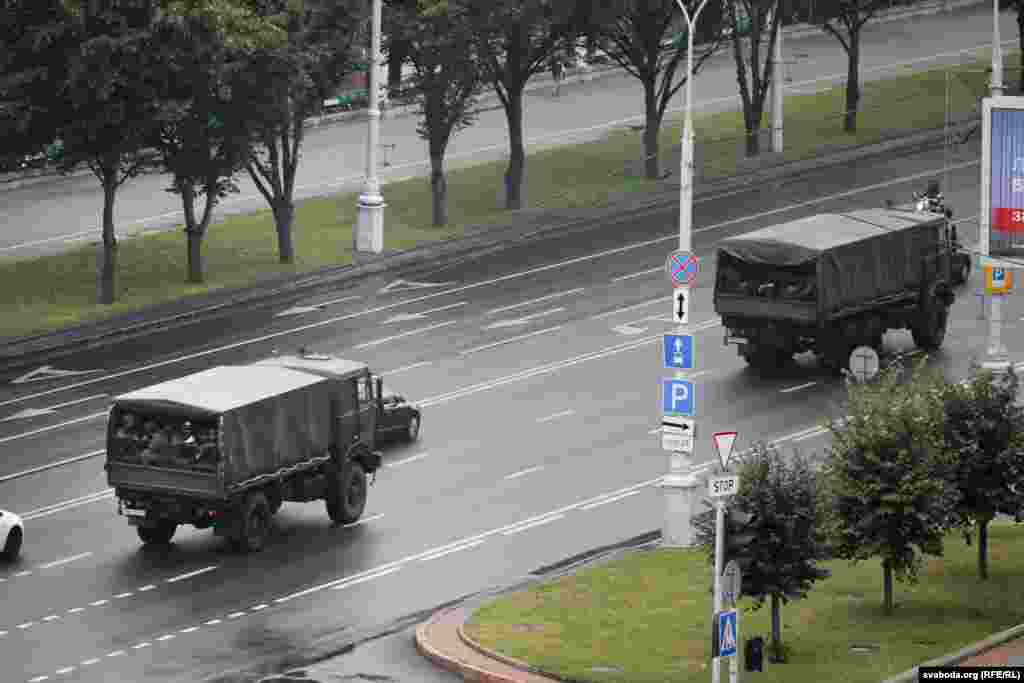
The statement came as army personnel were spotted being transported into Minsk in military transporters, just a day after Lukashenka ordered the military to take “stringent measures” against what he described as foreign-backed plans for a "color revolution" in the country.

Huge Crowds Rally Against Lukashenka In Minsk

People began filling the streets of the city as they made their way toward the central Independence Square for the 15th day of protests against President Alyaksandr Lukashenka. 
1/16 People began filling the streets of the city as they made their way toward the central Independence Square for the 15th day of protests against President Alyaksandr Lukashenka. 
The protests were sparked by results from an August 9 election that gave Lukashenka just over 80 percent of the vote, a figure that immediately prompted accusations of rigged balloting.
2/16 The protests were sparked by results from an August 9 election that gave Lukashenka just over 80 percent of the vote, a figure that immediately prompted accusations of rigged balloting.
The demonstrations seem to have become the greatest challenge yet to 26 years of authoritatian rule under Lukashenka. Public discontent with the man dubbed "the last dictator in Europe" has been on the rise as a result of Belarus's contracting economy and the president's controversial handling of the coronavirus crisis, which he has dismissed as "mass hysteria." 
3/16 The demonstrations seem to have become the greatest challenge yet to 26 years of authoritatian rule under Lukashenka. Public discontent with the man dubbed "the last dictator in Europe" has been on the rise as a result of Belarus's contracting economy and the president's controversial handling of the coronavirus crisis, which he has dismissed as "mass hysteria." 
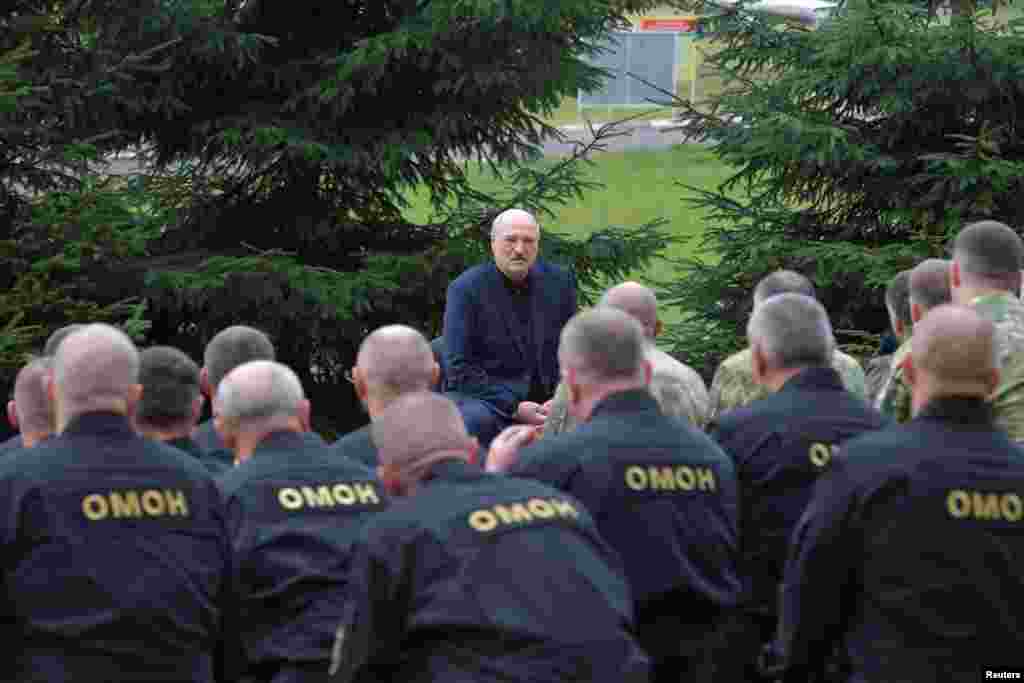
Lukashenka meets with law enforcement and security services on August 21, two days before the planned mass demonstration in Minsk. He has described the wave of protests as part of "a plan for a color revolution with the agitation of the internal political situation in the country." He also vowed to take  "the most stringent measures" to protect the country's borders from what he called foreign interference. 
4/16 Lukashenka meets with law enforcement and security services on August 21, two days before the planned mass demonstration in Minsk. He has described the wave of protests as part of "a plan for a color revolution with the agitation of the internal political situation in the country." He also vowed to take  "the most stringent measures" to protect the country's borders from what he called foreign interference. 
On the morning of the protest on August 23, several military transporters were spotted bringing army personnel into Minsk
5/16 On the morning of the protest on August 23, several military transporters were spotted bringing army personnel into Minsk
The Defense Ministry issued a statement the same day describing the protesters as "fascists," and saying that it had deployed forces to protect war memorials from being desecrated. The ministry warned that the army would "deal with" what it described as any violation of peace and order in such places.
6/16 The Defense Ministry issued a statement the same day describing the protesters as "fascists," and saying that it had deployed forces to protect war memorials from being desecrated. The ministry warned that the army would "deal with" what it described as any violation of peace and order in such places.
The heavy presence of security forces did not seem to deter the demonstrators, however, even though more than 7,000 have been detained and hundreds beaten amid a crackdown by authorities since protests erupted after the election. 
7/16 The heavy presence of security forces did not seem to deter the demonstrators, however, even though more than 7,000 have been detained and hundreds beaten amid a crackdown by authorities since protests erupted after the election. 
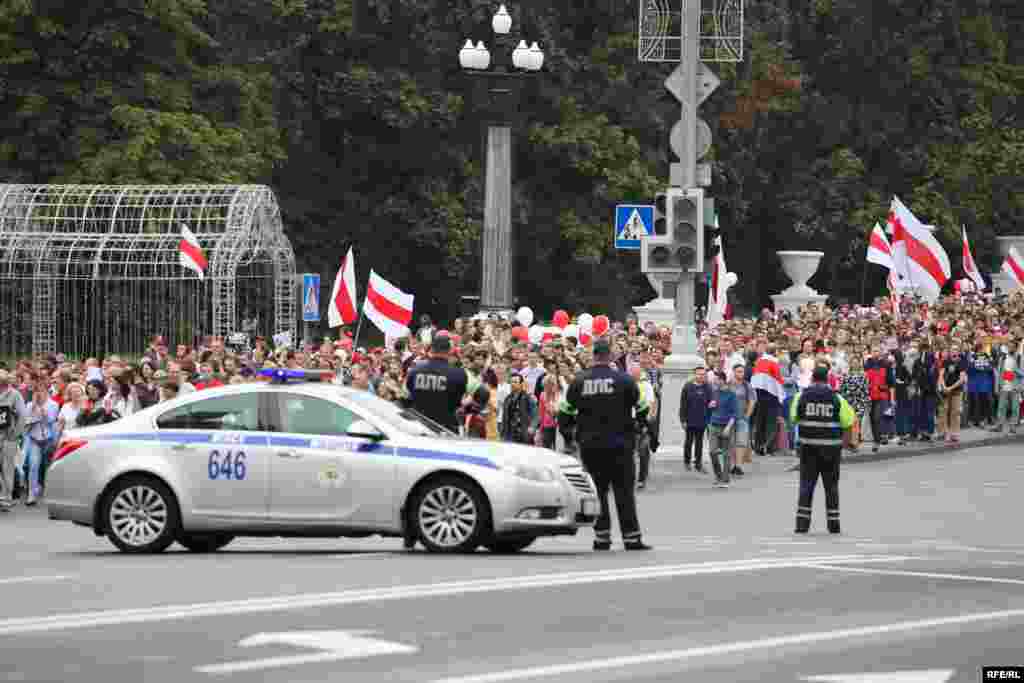
Police watch as protesters make their way toward the central rallying point on Independence Square. 
9/16 Police watch as protesters make their way toward the central rallying point on Independence Square. 
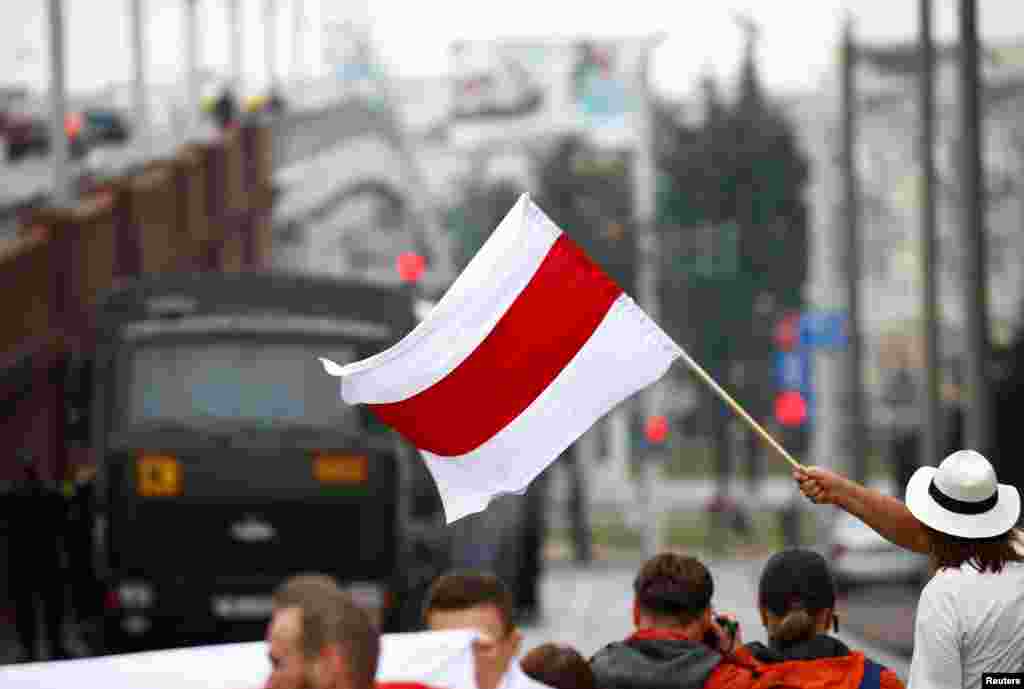
Many of the demonstrators were waving red-and-white flags and banners, which have become a symbol of the protest movement. 
10/16 Many of the demonstrators were waving red-and-white flags and banners, which have become a symbol of the protest movement. 
The flag was used by the Belarusian Democratic Republic in 1918 before the country became part of the Soviet Union. It was also <strong><a href="https://www.rferl.org/a/understanding-the-belarusian-flags/30792159.html" target="_blank">independent Belarus&#39;s official flag</a></strong> from 1991 to 1995, before a different state banner was introduced under Lukashenka.&nbsp;
11/16 The flag was used by the Belarusian Democratic Republic in 1918 before the country became part of the Soviet Union. It was also independent Belarus's official flag from 1991 to 1995, before a different state banner was introduced under Lukashenka. 
More than 100,000 people are estimated to have attended the protest rally in Minsk on August 23.&nbsp;
12/16 More than 100,000 people are estimated to have attended the protest rally in Minsk on August 23. 
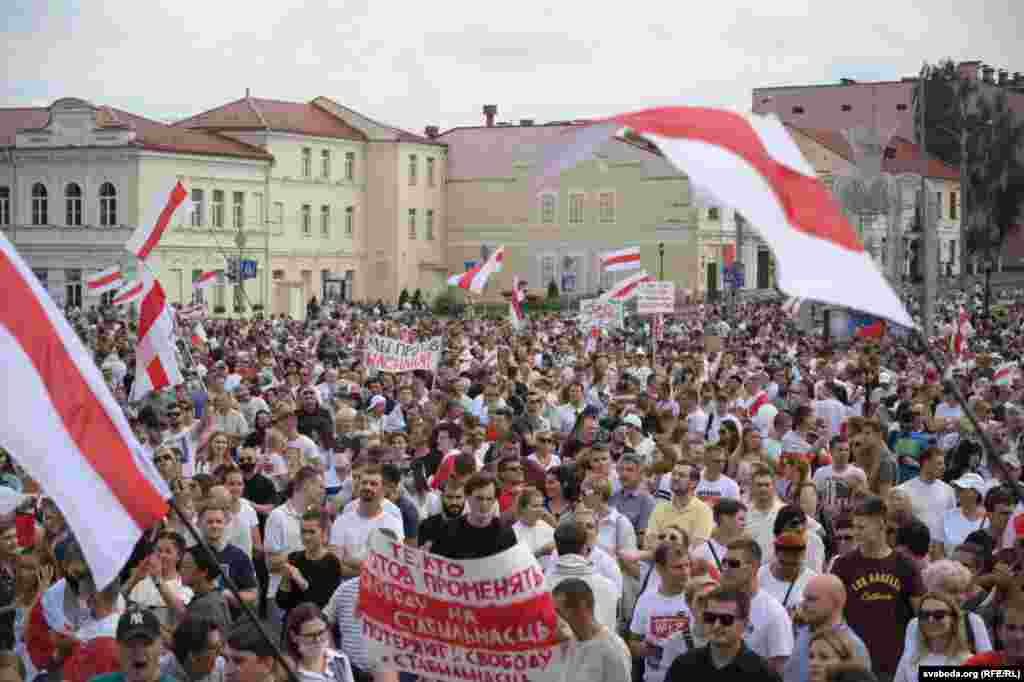
Anti-government protests were also held elsewhere in Belarus on August 23, such as this mass rally in the western city of Hrodna.&nbsp;
14/16 Anti-government protests were also held elsewhere in Belarus on August 23, such as this mass rally in the western city of Hrodna. 
People take pictures of the protesters as they pass by their window in central Minsk.&nbsp;
15/16 People take pictures of the protesters as they pass by their window in central Minsk. 
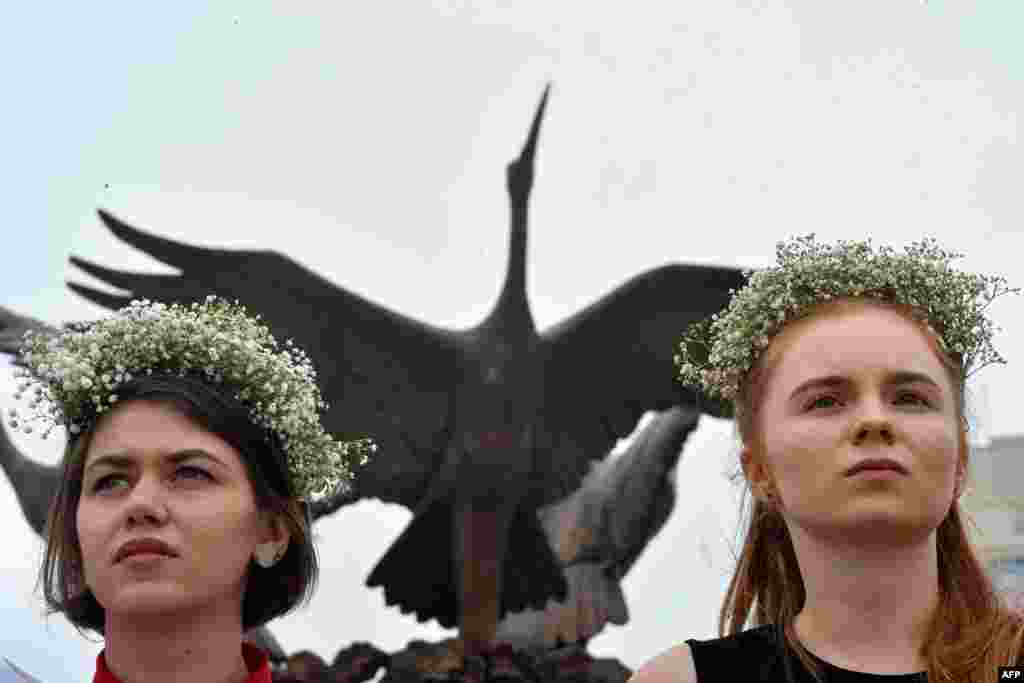
Two women in traditional headgear take part in the protest on Independence Square.&nbsp;
16/16 Two women in traditional headgear take part in the protest on Independence Square. 
Previous slide
Next slide

Protests have been taking place on the streets of Belarus since Lukashenka, in power since 1994, was declared the winner of the August 9 poll by a landslide. More than 7,000 have been detained and hundreds beaten by police. The EU and the United States have criticized the vote and condemned the postelection crackdown.

Beatings, Rape Threats, And Searching For The Missing In Belarus
please wait

No media source currently available

0:00 0:03:47 0:00

Svyatlana Tsikhanouskaya, the opposition candidate who left for Lithuania after the election and claimed to have won from 60 to 70 percent of the vote, said on August 22 that Belarusians must "struggle for their rights" and not be distracted by Lukashenka’s claims that the country was under military threat.

"We are people of Belarus and we are a majority and we will not step away. We are not afraid of them any more," she told AFP news agency from Lithuania, where she fled following the election.

Tsikhanouskaya will meet on August 24 with U.S. Deputy Secretary of State Stephen Biegun in Lithuania, as the United States and Europe deepen their diplomatic involvement to end the crisis.

Russian Foreign Minister Sergei Lavrov on August 23 accused Belarusian opposition members who left Belarus of seeking "bloodshed," according to the RIA-Novosti news agency.

He added that Moscow was calling for the launch of a genuinely broad national dialogue in Belarus and said Russia would accept any decision of the Belarusian authorities with regard to dialogue with the opposition.

Crisis In Belarus
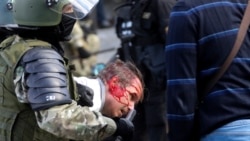
Read our coverage as Belarusian strongman Alyaksandr Lukashenka continues his brutal crackdown on NGOs, activists, and independent media following the August 2020 presidential election.

But he said the Belarusian people "will decide for themselves how to get out of this situation."

He also said there are "clear signs of a normalization" in Belarus, and a proposal on constitutional reform was "a quite promising path."

The opposition this week established a coordination council to negotiate the transition of power, in a move Belarusian authorities have described as an attempt to illegally seize power.

Meanwhile, the Nasha Niva media site said the body of Mikita Kryutsov was found in a forest near Minsk with signs of multiple beatings. He was reported missing after taking part in protests in Minsk on August 12.

So far, two people have been confirmed killed in the postelection protests.

With reporting by Current Time, Belsat, AP, Reuters, and AFP
  • 16x9 Image

    RFE/RL's Belarus Service

    RFE/RL's Belarus Service is one of the leading providers of news and analysis to Belarusian audiences in their own language. It is a bulwark against pervasive Russian propaganda and defies the government’s virtual monopoly on domestic broadcast media.

This item is part of
XS
SM
MD
LG