


Accessibility links

Breaking News

Belarus Accused Of Sabotaging Lithuanian Airspace As EU Moves Toward New Sanctions

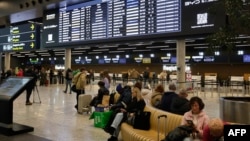
Vilnius airport has had to temporarily shut down several times in recent months due to the incursion of Belarusian weather balloons over Lithuanian airspace.

The European Union is finally moving closer to sanctioning Belarus for the release of weather balloons over Lithuania in recent months.

These airspace violations have caused the EU member state to shut its largest airports several times, and in November it moved to temporarily seal its border with its southeastern neighbor.

According to Lithuanian officials who spoke to RFE/RL on condition of anonymity, a total of 315 unauthorized balloons have entered the country from Belarus since June, peaking in October with 71 airspace incursions.

Able to easily reach high altitudes and thereby making it harder for them to be spotted by radar, most of the balloons are used for smuggling knockoff Belarusian-made cigarettes. The balloons can also "double" as sabotage tools by forcing the closure of airports for safety reasons.

Between October and December, the two biggest Lithuanian airports -- in the capital, Vilnius and in the central city of Kaunas -- had to temporarily shut down 15 times, affecting over 320 flights and more than 45,000 passengers.

An incident involving one balloon resulted in Vilnius airport being shut down for nearly 12 hours in early December.

Lithuania brought the issue to the attention of Brussels in late October, and the European Union’s foreign policy chief, Kaja Kallas, issued a statement condemning Belarus's "persistent and provocative actions against the EU and its member states."

But no Brussels sanctions were issued immediately, notably as Vilnius didn't press the EU to go down that route at first.

Border Closure

Instead, Lithuania attempted another move: shutting the 700-kilometer border with its neighbor.

On October 29, all crossings to Belarus were essentially closed for regular traffic, with exemptions only for transit to the Russian exclave of Kaliningrad as well as for diplomats, European Union and NATO citizens, and European haulers returning from Belarus to the EU.

When the number of balloons decreased somewhat in November, Lithuania decided to re-open the border again on November 19.
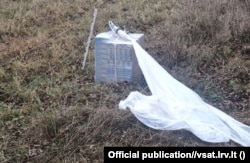
One of the Belarusian weather balloons intercepted by Lithuanian border guards in November

Lithuanian diplomats told RFE/RL off the record that this move was a "sign of goodwill" to see if Minsk would stop the balloons.

It didn't really work as Vilnius airport has once again been forced to shut down twice a week on average since then. According to Lithuanian diplomats, the balloons now appear to be specifically targeting the country's main international airport and connection to the outside world.

On top of that, roughly 1,000 Lithuanian-registered trucks have been stranded on the Belarusian side of the border since its closure. Vilnius says the trucks have been ordered to move to dedicated parking lots, with a daily charge of 120 euros ($140) per truck and any failure to pay resulting in their being confiscated.

At the end of November, Lithuanian Foreign Minister Kestutis Budrys sent a letter to Kallas, seen by RFE/RL, asking the EU for help in getting these trucks back. The EU's power is rather limited as diplomatic relations with Minsk have been cut to a minimum since the crackdown that ensued following the Belarusian presidential election in 2020, which was widely condemned as being rigged.

Expanding Sanctions

But Brussels has at least one tool and that will be used imminently: an expansion of the EU's sanctions regime on Belarus to include the possibility of targeting those who send balloons into Lithuania.

The EU has long had sanctions in place against strongman Aleksandr Lukashensko's regime. However, these affect people and companies involved in human rights violations such as repression of the opposition and civil society, officials in Minsk who have backed Russia's war on Ukraine, or those involved in the "instrumentalization of migrants," whereby Belarus has been accused of moving African and Asian migrants to the EU's borders to destabilize neighboring countries.

On Poland's Border, A Continued Pushback Against Migrants 'Weaponized' By Belarus
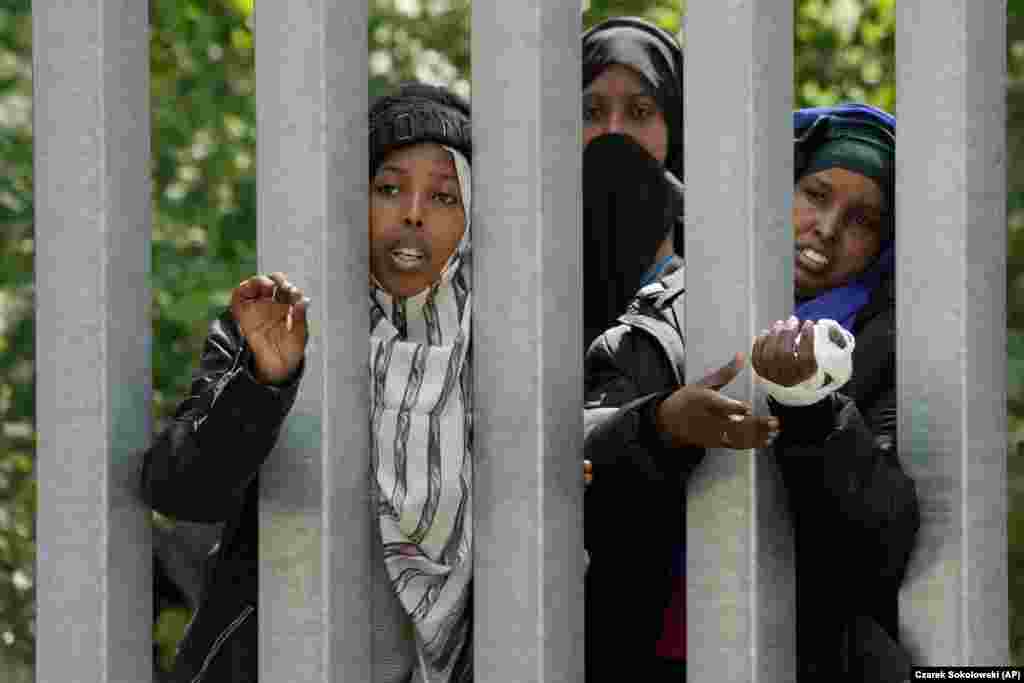
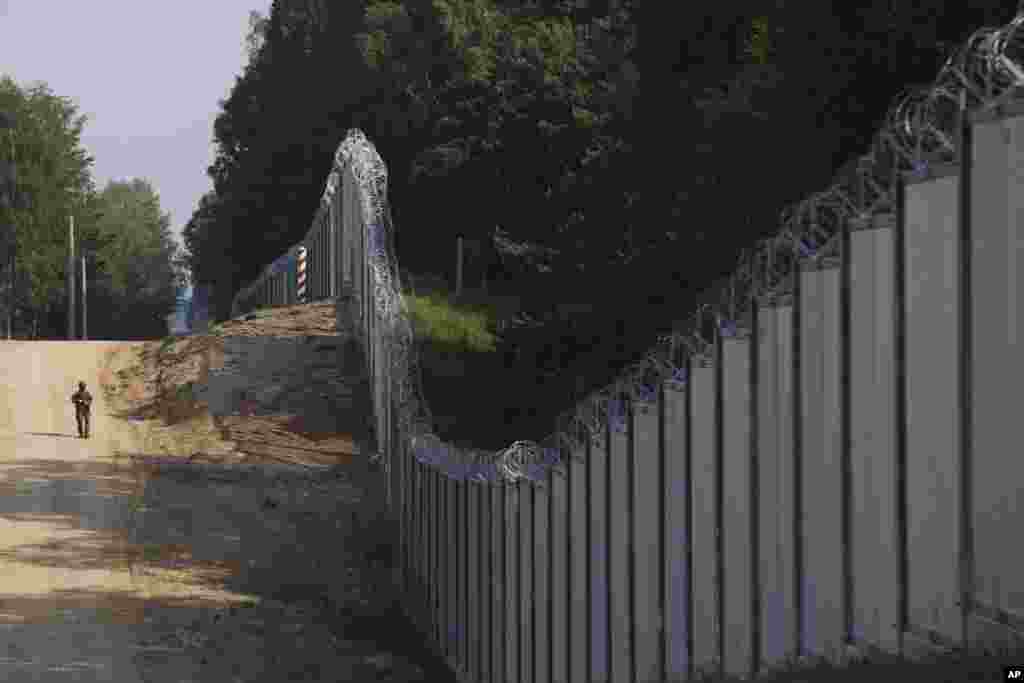
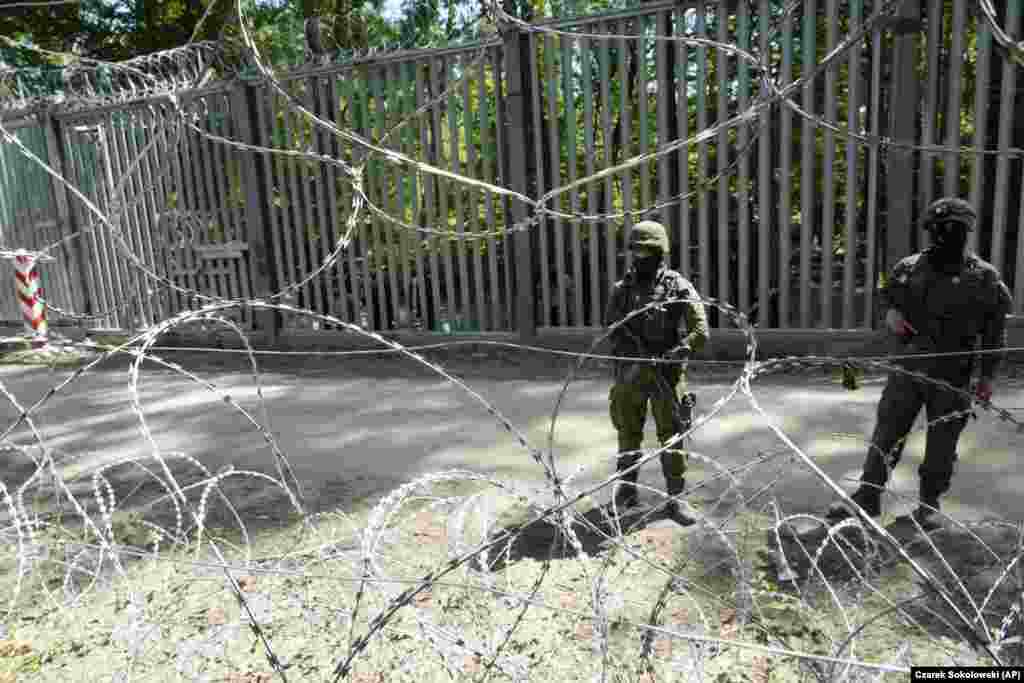
Migrants are blocked from entering Poland by metal barriers erected along the border with Belarus in the Bialowieza Forest on May 29.<br />
<br />
Poland says neighboring Belarus and its main supporter, Russia, are behind a surge in migrants from Belarus toward the European Union in a move to create a crisis.<br />
<br />
<br />
&nbsp;
1/9 Migrants are blocked from entering Poland by metal barriers erected along the border with Belarus in the Bialowieza Forest on May 29.

Poland says neighboring Belarus and its main supporter, Russia, are behind a surge in migrants from Belarus toward the European Union in a move to create a crisis.


Migrants who have trekked to former Soviet countries from as far away as the Middle East and Africa have become pawns in an effort by Russia and Belarus to destabilize Europe, claims Polish Prime Minister Donald Tusk.
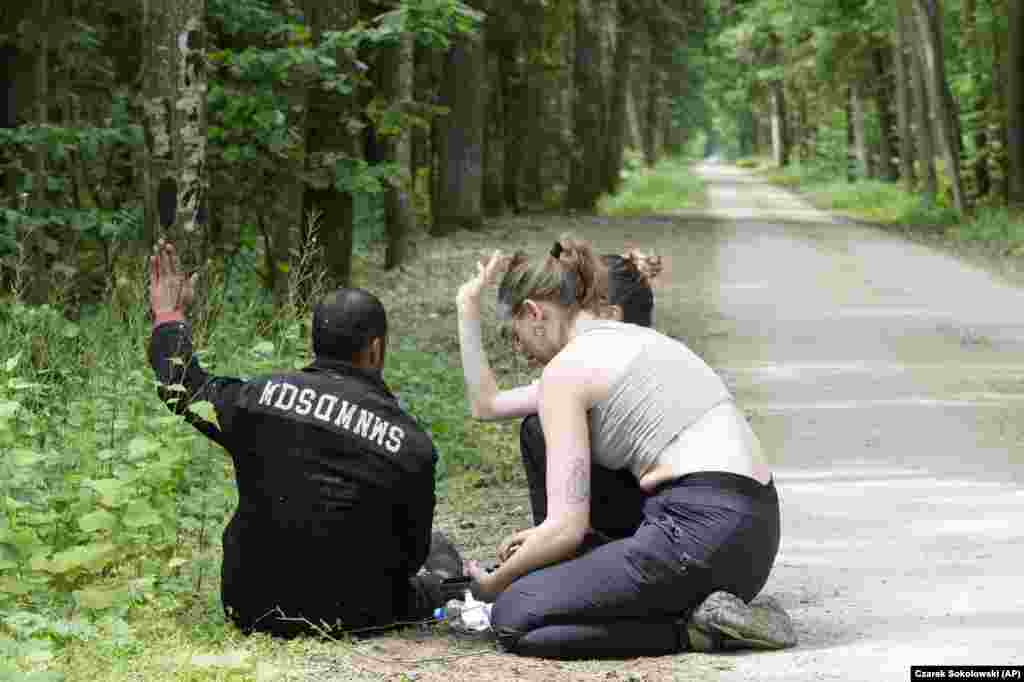
Polish activists provide aid to an Algerian migrant who reached Poland&#39;s territory in the Bialowieza Forest.<br />
<br />
The number of attempted illegal border crossings from Belarus into EU-member Poland has shot up in recent months to almost 400 a day from only a handful a day earlier this year, Polish officials say.<br />
&nbsp;
2/9 Polish activists provide aid to an Algerian migrant who reached Poland's territory in the Bialowieza Forest.

The number of attempted illegal border crossings from Belarus into EU-member Poland has shot up in recent months to almost 400 a day from only a handful a day earlier this year, Polish officials say.
 
Migrants who have trekked to former Soviet countries from as far away as the Middle East and Africa have become pawns in an effort by Russia and Belarus to destabilize Europe, claims Polish Prime Minister Donald Tusk.
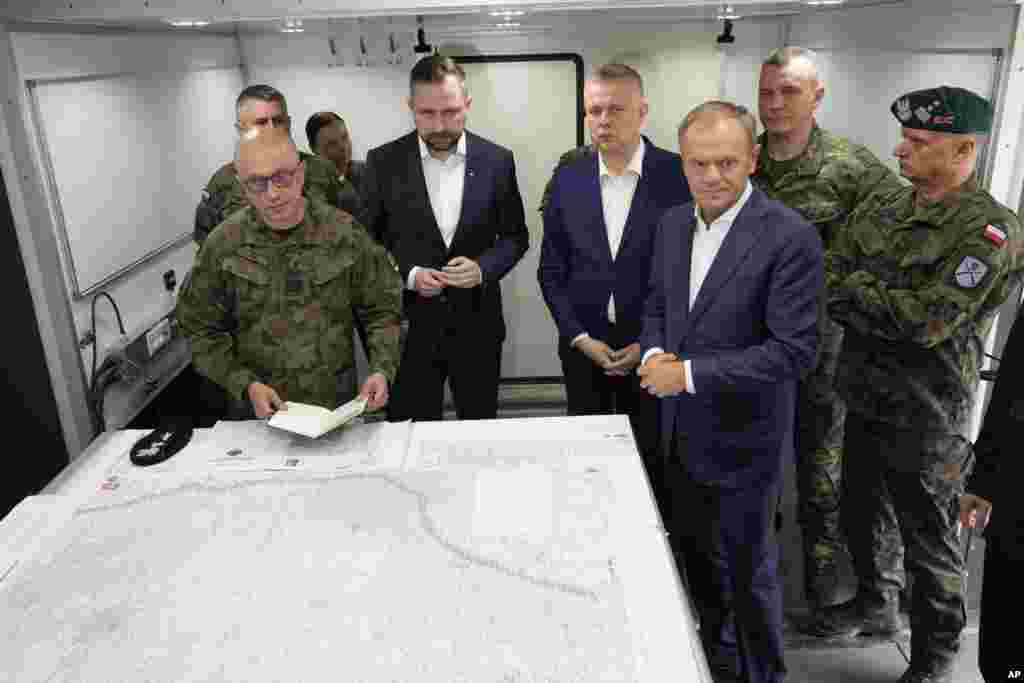
Poland&#39;s Prime Minister Donald Tusk (front right), Defense Minister Wladyslaw Kosiniak-Kamysz (center) and Interior Minister Tomasz Siemoniak (center right) visit troops in Dubicze Cerkiewna, eastern Poland, on May 29.<br />
<br />
&ldquo;We are not dealing with (just) any asylum seekers here, we are dealing with a coordinated, very efficient -- on many levels -- operation to break the Polish border and attempts to destabilize the country,&rdquo; Tusk said.
3/9 Poland's Prime Minister Donald Tusk (front right), Defense Minister Wladyslaw Kosiniak-Kamysz (center) and Interior Minister Tomasz Siemoniak (center right) visit troops in Dubicze Cerkiewna, eastern Poland, on May 29.

“We are not dealing with (just) any asylum seekers here, we are dealing with a coordinated, very efficient -- on many levels -- operation to break the Polish border and attempts to destabilize the country,” Tusk said.
Migrants who have trekked to former Soviet countries from as far away as the Middle East and Africa have become pawns in an effort by Russia and Belarus to destabilize Europe, claims Polish Prime Minister Donald Tusk.
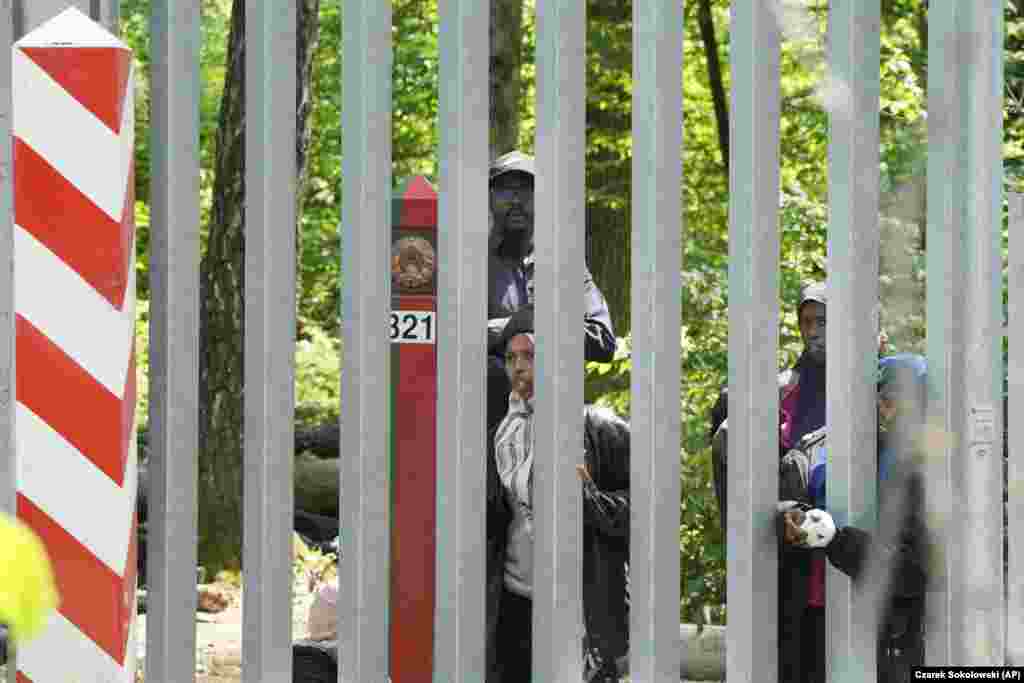
Tusk&#39;s visit to the border follows a serious <a href="https://apnews.com/article/poland-border-belarus-stabbing-migrants-057cc8f58424b1c82c1f760800019f4c" target="_blank">knife attack</a> on a soldier near the village of Dubicze Cerkiewne when a migrant reached between the bars of the more than 5-meter-high barrier and stabbed a soldier in the ribs. Security forces were unable to detain the attacker because he was on the Belarusian side of the barrier, officials said.&nbsp;
4/9 Tusk's visit to the border follows a serious knife attack on a soldier near the village of Dubicze Cerkiewne when a migrant reached between the bars of the more than 5-meter-high barrier and stabbed a soldier in the ribs. Security forces were unable to detain the attacker because he was on the Belarusian side of the barrier, officials said. 
Migrants who have trekked to former Soviet countries from as far away as the Middle East and Africa have become pawns in an effort by Russia and Belarus to destabilize Europe, claims Polish Prime Minister Donald Tusk.
Poland&rsquo;s border guards have decried the increasingly aggressive behavior by some migrants on the Belarus side of the border.&nbsp;<br />
<br />
Poland has reintroduced a 200-meter buffer zone following the attack on the soldier on the frontier and said it would use &quot;all available means&quot; to defend the NATO nation&#39;s border.
5/9 Poland’s border guards have decried the increasingly aggressive behavior by some migrants on the Belarus side of the border. 

Poland has reintroduced a 200-meter buffer zone following the attack on the soldier on the frontier and said it would use "all available means" to defend the NATO nation's border.
Migrants who have trekked to former Soviet countries from as far away as the Middle East and Africa have become pawns in an effort by Russia and Belarus to destabilize Europe, claims Polish Prime Minister Donald Tusk.
For the past several years, EU authorities have accused authoritarian&nbsp;<a href="https://apnews.com/article/european-union-alexander-lukashenko-lithuania-minsk-united-nations-28b4c0ca00074caa1fff8384f5539811">Belarusian President Alexander Lukashenko of weaponizing migration</a>&nbsp;by luring people to his country to find an easier entry point into the bloc than the more dangerous routes across the Mediterranean Sea.
6/9 For the past several years, EU authorities have accused authoritarian Belarusian President Alexander Lukashenko of weaponizing migration by luring people to his country to find an easier entry point into the bloc than the more dangerous routes across the Mediterranean Sea.
Migrants who have trekked to former Soviet countries from as far away as the Middle East and Africa have become pawns in an effort by Russia and Belarus to destabilize Europe, claims Polish Prime Minister Donald Tusk.
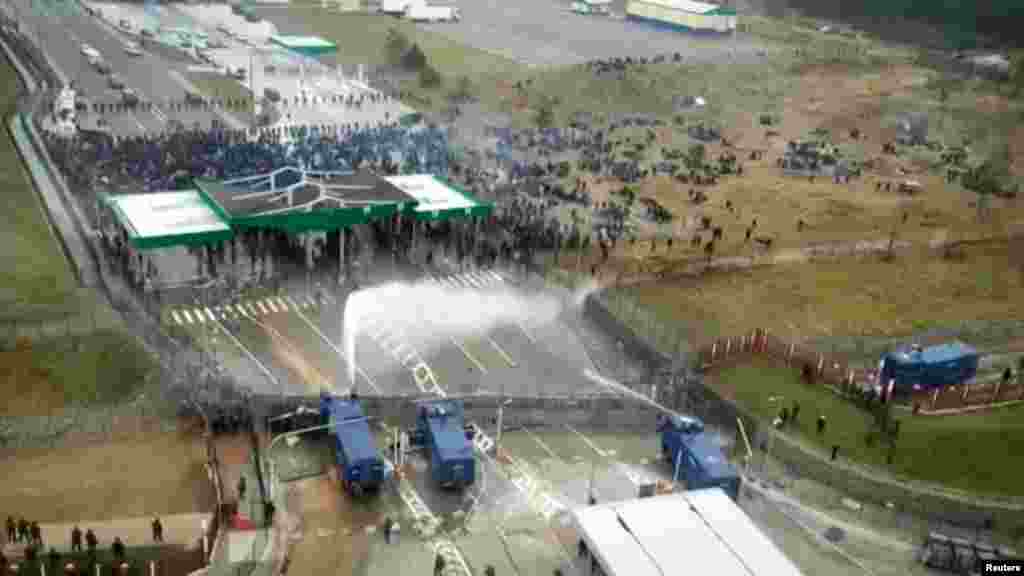
In November 2021, serious clashes broke out (pictured) between migrants and Polish border guards at the Poland-Belarus border near Grodno, Belarus.<br />
<br />
Some 2,000 migrants were at the frontier in makeshift camps in the freezing weather, but only about 100 were believed to be involved in attacking the Polish forces at the crossing, said Border Guard spokeswoman Anna Michalska.&nbsp;<br />
<br />
<br />
&nbsp;
7/9 In November 2021, serious clashes broke out (pictured) between migrants and Polish border guards at the Poland-Belarus border near Grodno, Belarus.

Some 2,000 migrants were at the frontier in makeshift camps in the freezing weather, but only about 100 were believed to be involved in attacking the Polish forces at the crossing, said Border Guard spokeswoman Anna Michalska. 


Migrants who have trekked to former Soviet countries from as far away as the Middle East and Africa have become pawns in an effort by Russia and Belarus to destabilize Europe, claims Polish Prime Minister Donald Tusk.
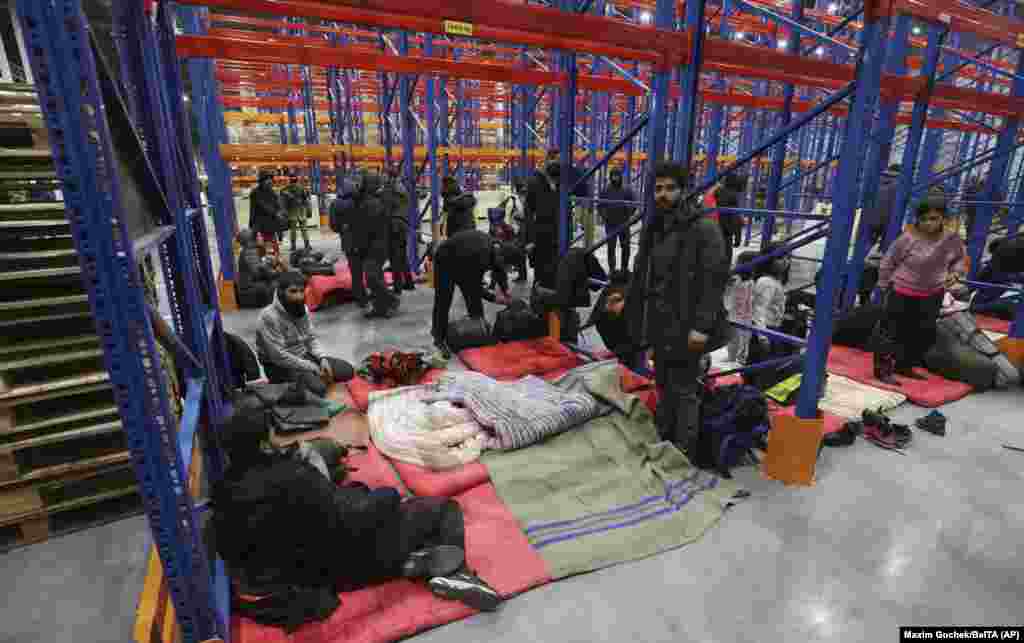
Migrants settle for the night in a logistics center at the Belarus-Poland border near Grodno, Belarus, on November 16, 2021.<br />
<br />
<a href="https://www.hrw.org/news/2021/11/24/belarus/poland-abuse-pushbacks-border" target="_blank">Human Rights Watch</a>&nbsp;accused Belarusian authorities of manufacturing the crisis &quot;without regard for the human consequences.&quot;
8/9 Migrants settle for the night in a logistics center at the Belarus-Poland border near Grodno, Belarus, on November 16, 2021.

Human Rights Watch accused Belarusian authorities of manufacturing the crisis "without regard for the human consequences."
Migrants who have trekked to former Soviet countries from as far away as the Middle East and Africa have become pawns in an effort by Russia and Belarus to destabilize Europe, claims Polish Prime Minister Donald Tusk.
Poland has also been criticized by human rights groups for pushing migrants back into Belarus and not allowing them to apply for asylum.<br />
<br />
&ldquo;There is no room for negotiation. Poland&rsquo;s border must be protected,&rdquo; Tusk said.
9/9 Poland has also been criticized by human rights groups for pushing migrants back into Belarus and not allowing them to apply for asylum.

“There is no room for negotiation. Poland’s border must be protected,” Tusk said.
Migrants who have trekked to former Soviet countries from as far away as the Middle East and Africa have become pawns in an effort by Russia and Belarus to destabilize Europe, claims Polish Prime Minister Donald Tusk.
Previous slide
Next slide

The proposal, seen by RFE/RL, would allow the EU to sanction people and organizations that threaten "the sovereignty or independence of one or several of its Member States." It does so by covering anyone involved in "planning, directing, engaging in, directly or indirectly, supporting, or otherwise facilitating any actions targeted at the functioning of democratic institutions, economic activities or services of public interest."

According to the draft text, such actions include "unauthorized entry into the territory of a Member State, including its airspace," as well as "the disruption of the functioning of critical infrastructure."

Expected to be approved by all EU member states before Christmas, this measure would allow Lithuania (and others) to start blacklisting more Belarusians.

Speaking at Belarus's State Security Council in Minsk on December 9, Lukashenko called on Lithuania to "stop kicking up a fuss" and to engage in direct talks with Minsk instead.

"There is no need to involve Americans, Russians, or Ukrainians. That trick won’t work. This issue is solely a subject for our bilateral talks and relations,” he said.

Vilnius has also shared other proposed restrictive measures with Brussels that it wants to impose on Minsk going forward.

These include a full transaction ban on 10 Belarusian banks, targeting nitrogen fertilizers on top of already sanctioned Belarusian potash, and slapping an EU import ban on Belarusian rapeseed oil and salt.

  • 16x9 Image

    Rikard Jozwiak

    Rikard Jozwiak is the Europe editor for RFE/RL in Prague, focusing on coverage of the European Union and NATO. He previously worked as RFE/RL’s Brussels correspondent, covering numerous international summits, European elections, and international court rulings. He has reported from most European capitals, as well as Central Asia.

This item is part of
XS
SM
MD
LG