





Russia's capture of a massive steel plant in the port city of Mariupol where hundreds of soldiers ended their fight after a grueling siege will represent a symbolic victory for the Kremlin at this stage of its invasion of Ukraine rather than a significant military breakthrough, analysts say.

Russia had already controlled Mariupol since mid-April with the exception of the 11-square-kilometer Azovstal plant, where hundreds of fighters were holding out in underground tunnels and bunkers, in the process becoming an icon of Ukraine's dogged resistance to its more powerful neighbor.
Military analysts say that Ukraine's armed forces had no realistic chance of rescuing the fighters, the last bastion of resistance in the devastated city after nearly three months of full-scale war following the Russian invasion on February 24.
Mariupol, the second-largest city in the Donetsk region, lies on a strategic swath of land on the Sea of Azov coast that stretches from the Russian border in the east to the isthmus that links mainland Ukraine to Russian-controlled Crimea -- a potential "land-bridge" giving Russia overland access to the peninsula.

Ukraine announced on May 16 that it had called on its troops at Azovstal to stop resisting. The Defense Ministry said that 264 fighters, including 53 who were severely wounded, left the plant and were taken to Russian-controlled territory. Russia, which gave slightly different numbers, said they had "laid down their arms and surrendered."
On May 18, the Russian military said that an additional 694 Ukrainian soldiers at Azovstal had surrendered over the previous 24 hours. Ukrainian authorities have not confirmed that.
"In practical terms, the end of the siege at Azovstal does not alter the trajectory of the war very much," Robert Person, an associate professor of international relations at the U.S. Military Academy at West Point, told RFE/RL.



"In controlling the rest of Mariupol, which Russia has done for several weeks now, the Kremlin already had its land bridge to Crimea. Azovstal doesn’t really tip the balance there," said Person, who does not speak for the U.S. Defense Department.
'Maximum Domestic Propaganda'
The fighters at Azovstal tied down thousands of Russian troops for weeks, giving Ukraine's military time to fight and repel Russian forces in other arenas of the war such as the areas around Kyiv, the capital, and Kharkiv, the eastern city that is the country's second-largest.
"Although [Russian President Vladimir] Putin will squeeze maximum domestic propaganda value out of capture of Mariupol, it is a Pyrrhic victory that comes at enormous cost. The protracted fight for the city has drained Russia's military of significant manpower, weapons, and equipment," Person said.
Weary Residents Look On In Occupied Mariupol As Russia Holds Victory Day Celebrations
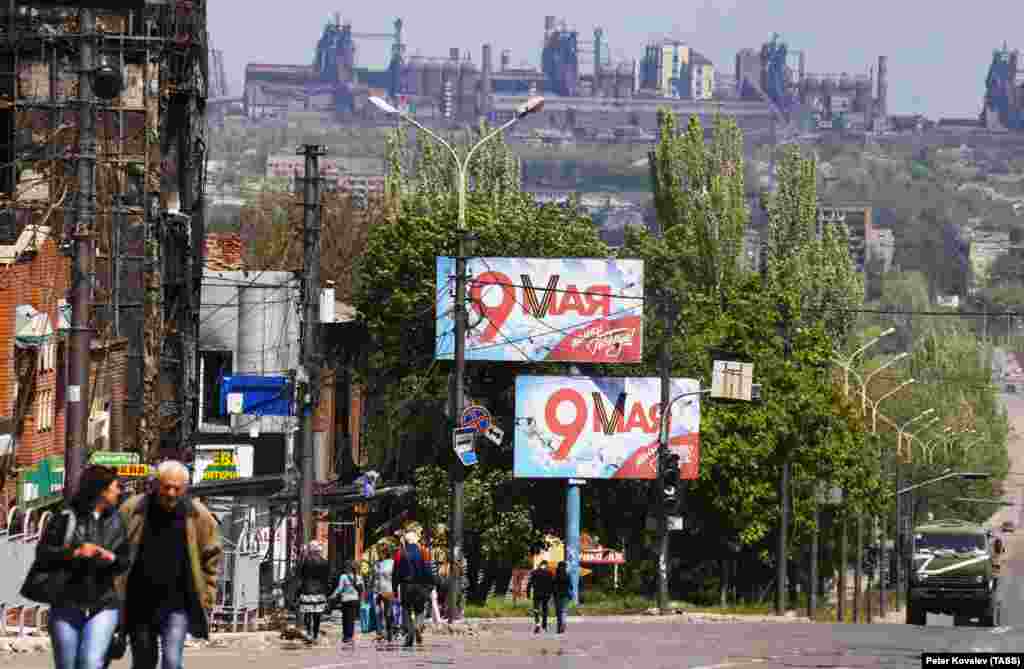
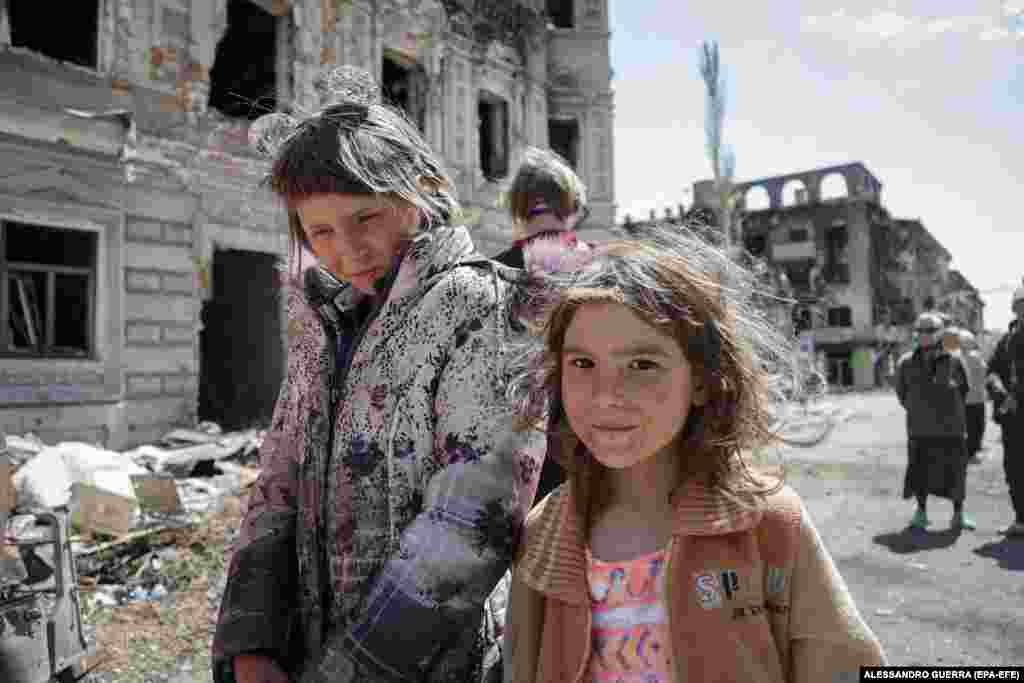
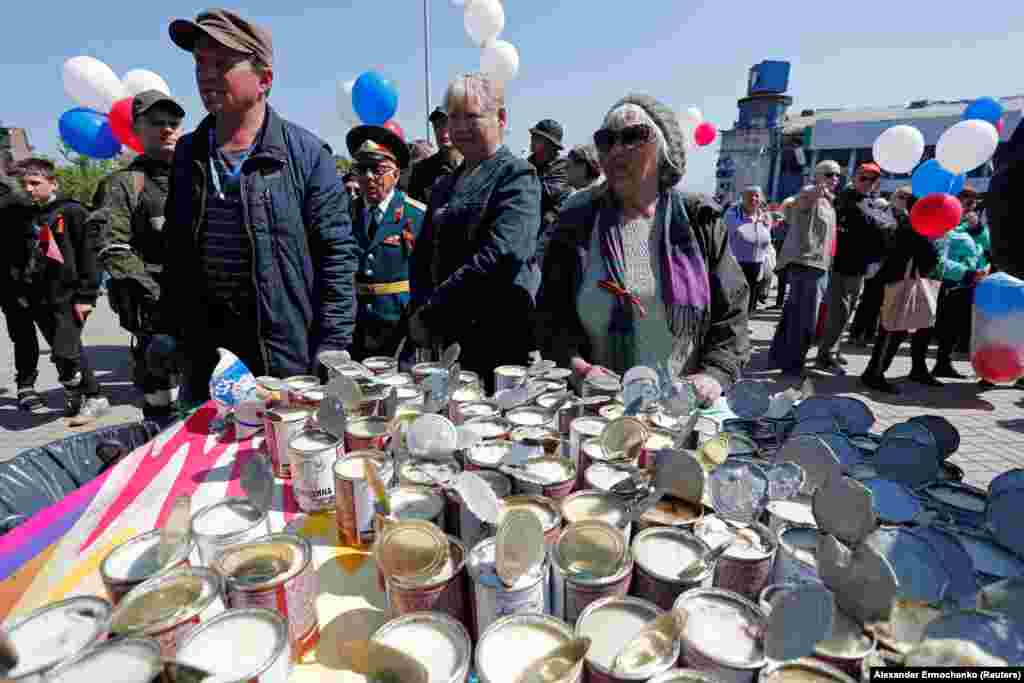
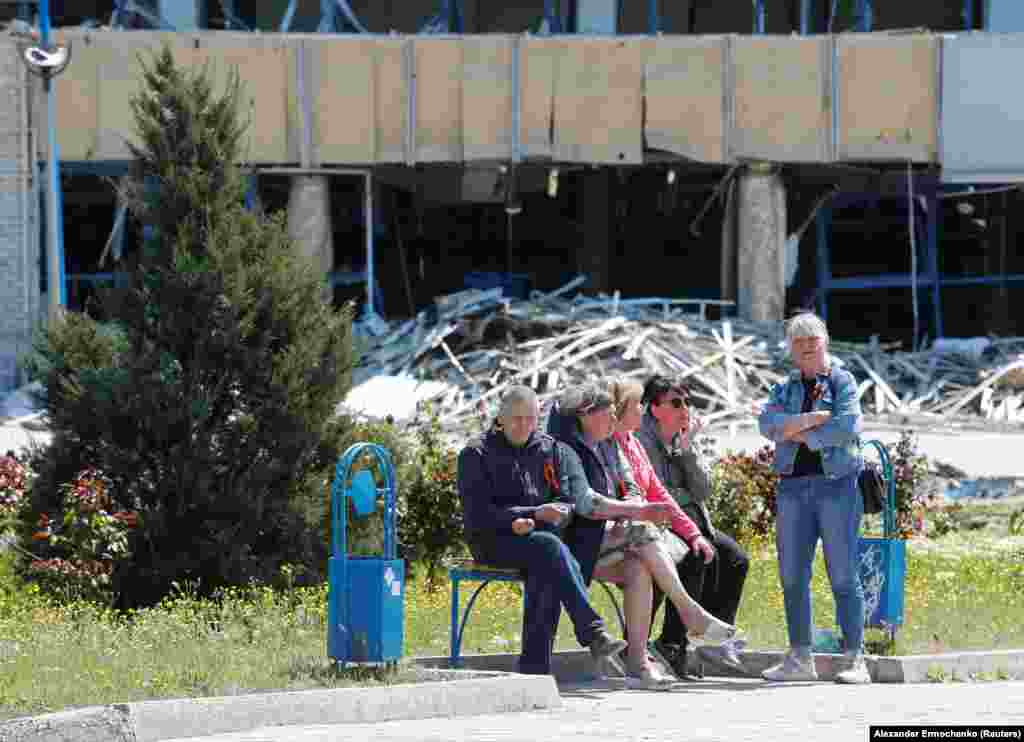
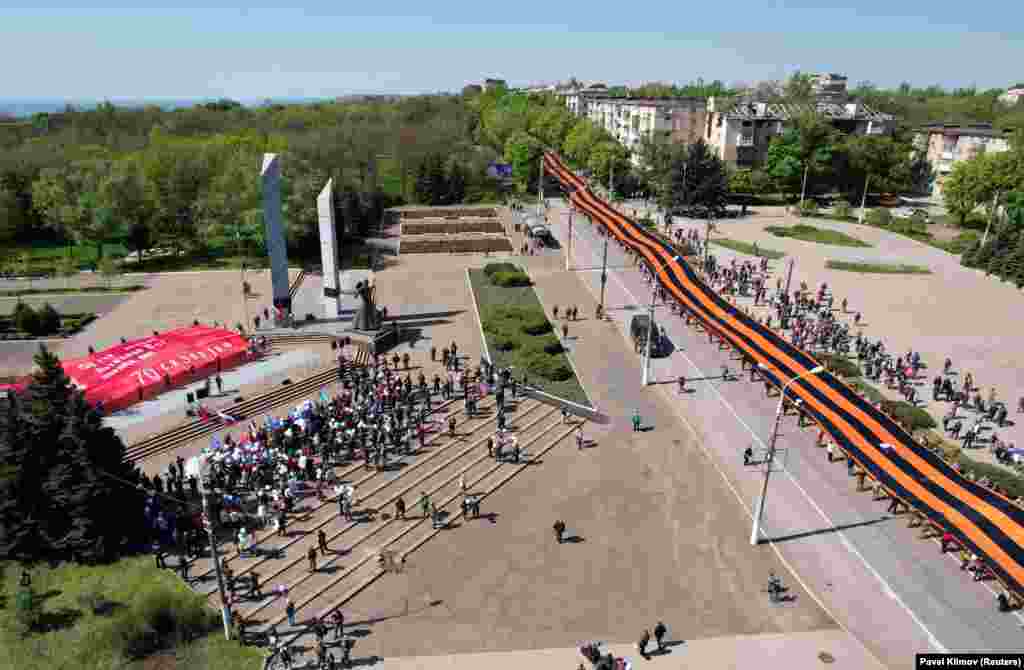
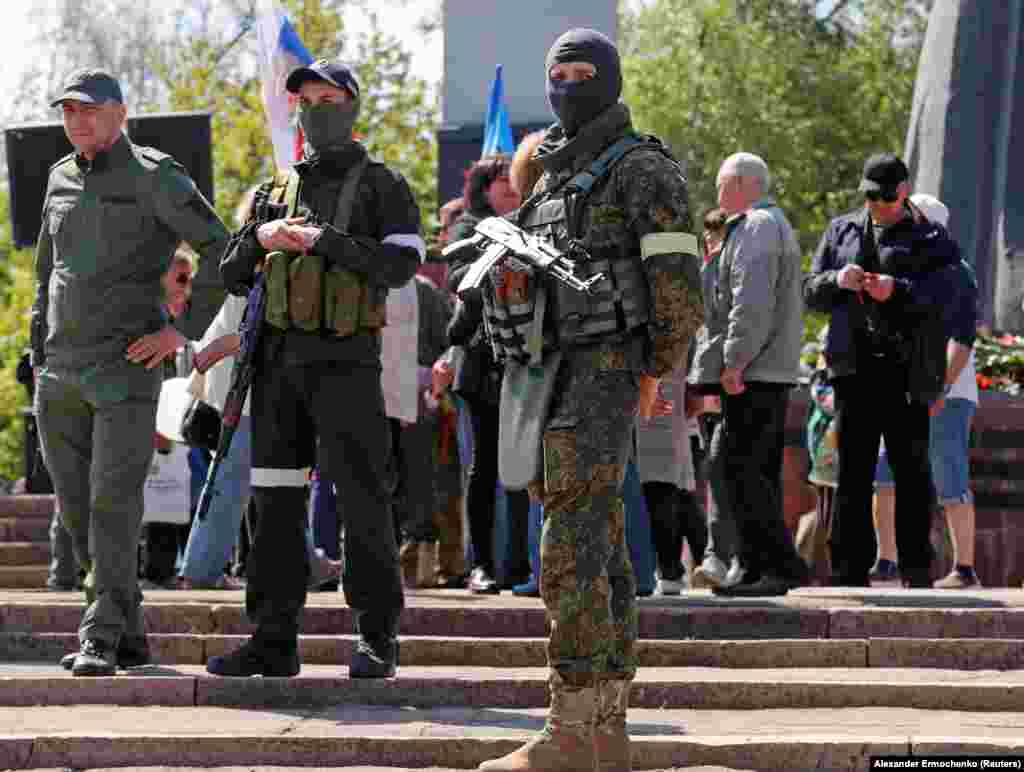
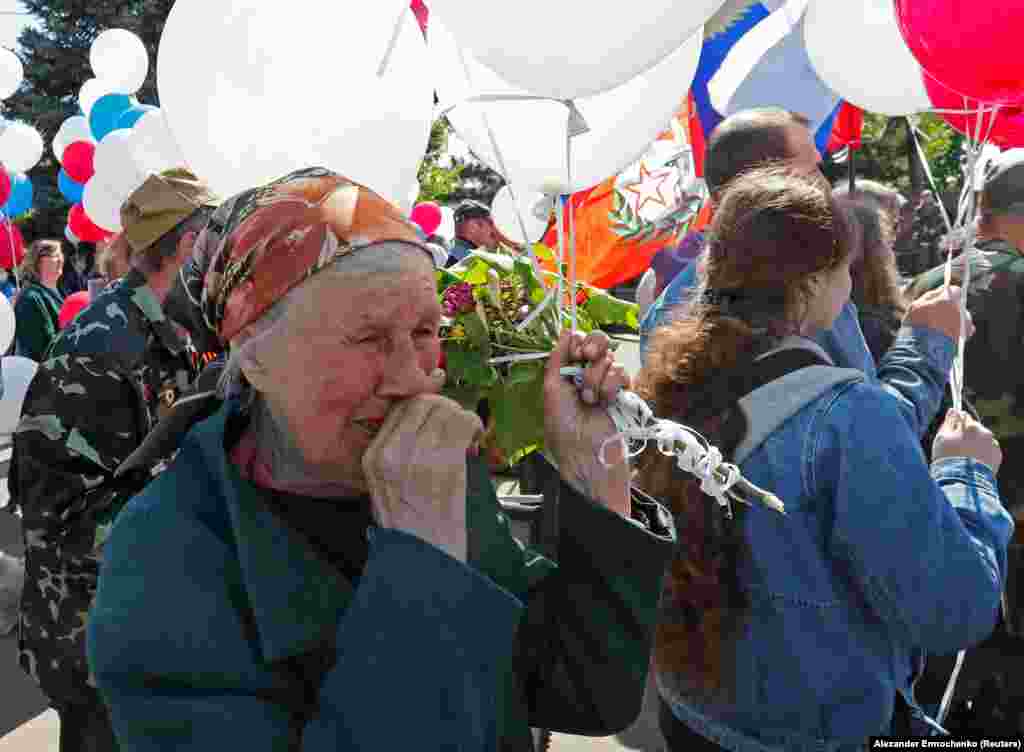

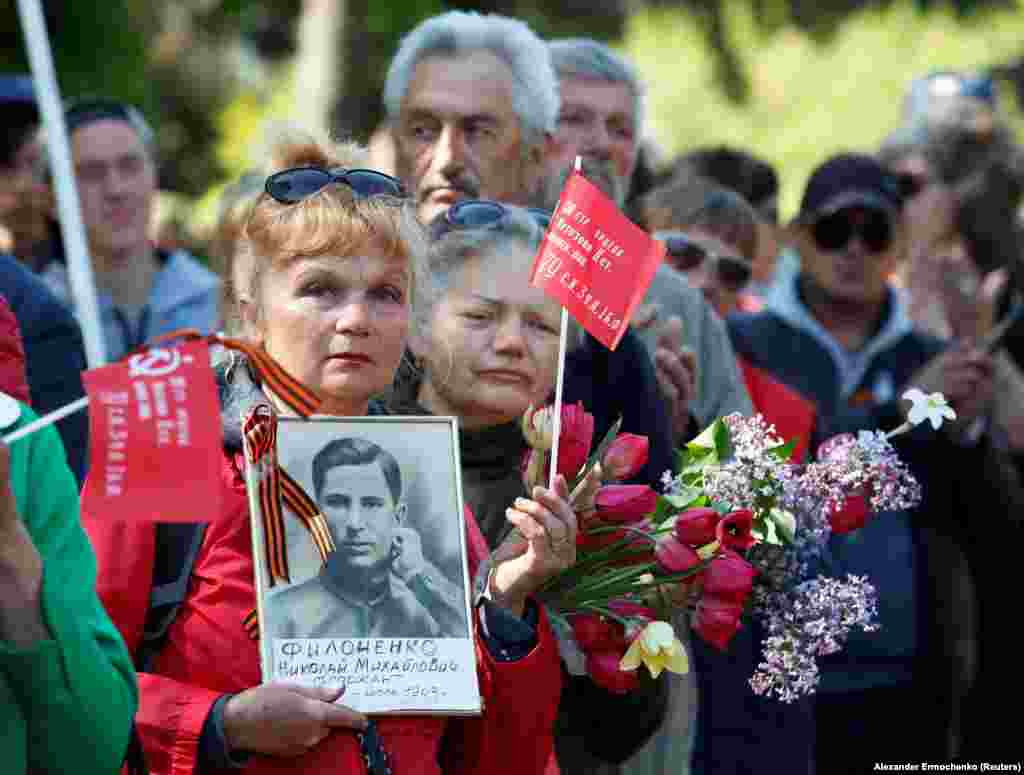
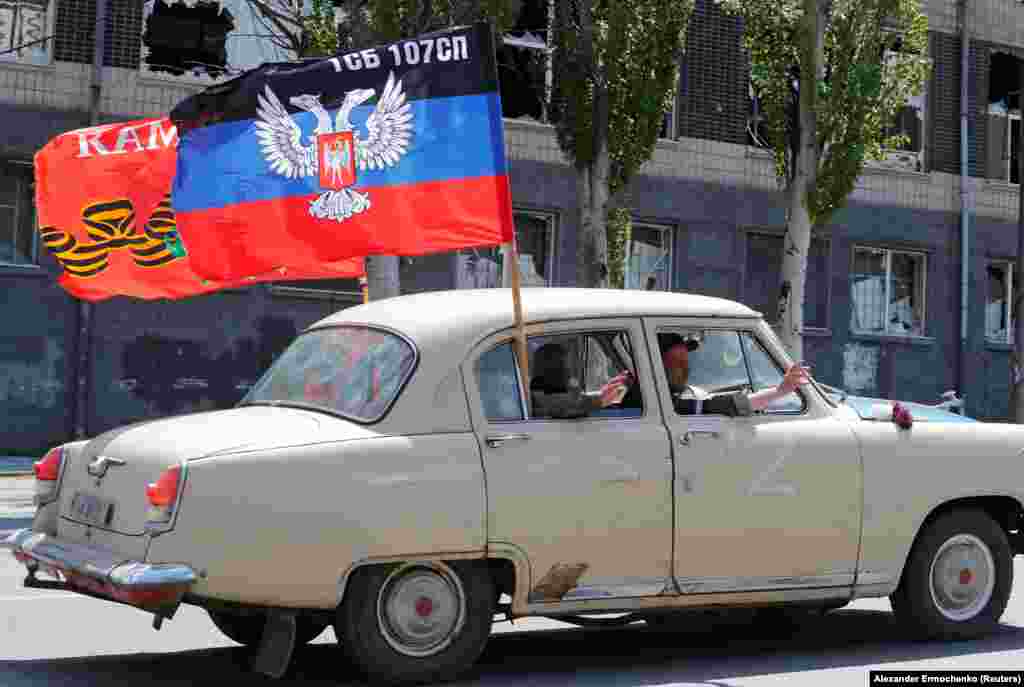
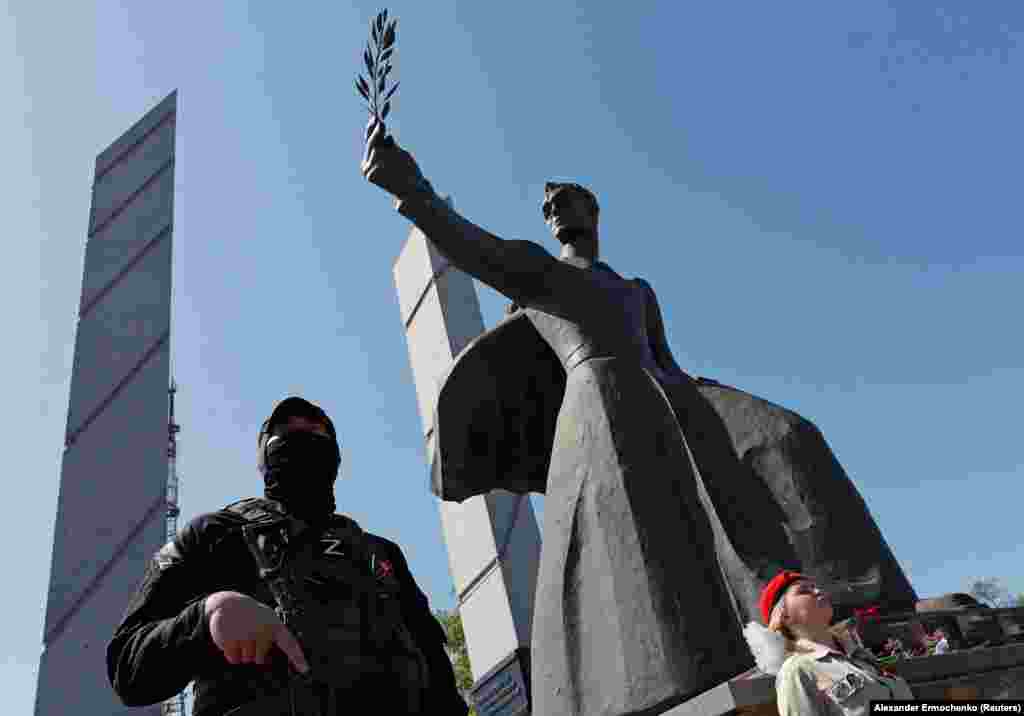
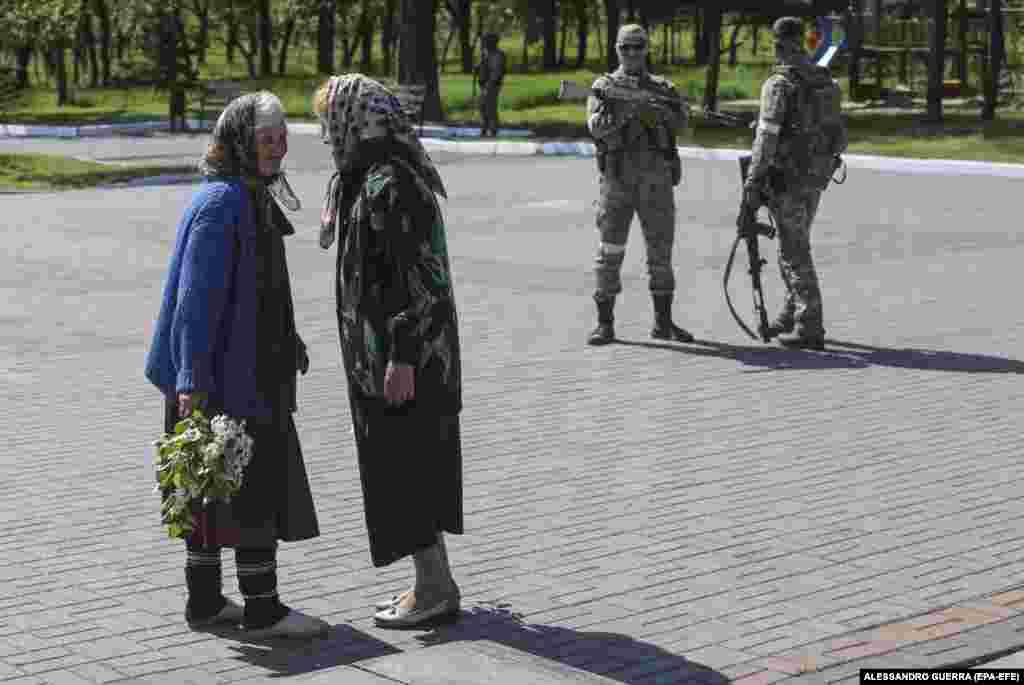
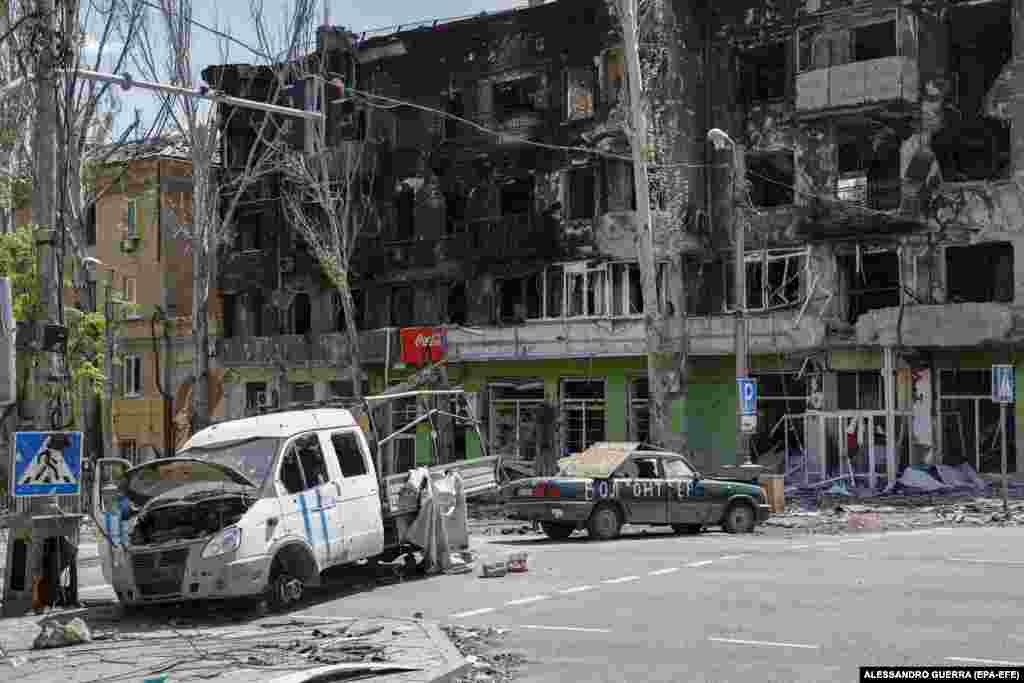
The Ukrainian military leadership said the Azovstal defenders forced Moscow to maintain some 20,000 troops in Mariupol, though some reports indicate the number was significantly lower. Russia had already begun to move troops out of Mariupol as Azovstal became the last bastion of resistance.
The defenders had been running low on food and water as well as medicine and surgical equipment. Their fate became the subject of nightly news at home and abroad with pleas to let them go.
"The presence of those forces in Azovstal was a symbol that Ukraine hadn't completely lost the campaign and remained a problem that the Russians had to deal with," said Stephen Flanagan, an expert at the RAND Corporation, a U.S.-based think tank.
'A Series Of Defeats'
Officials, analysts, and Western intelligence agencies say that Putin had expected Russian forces to quickly capture Kyiv and other key Ukrainian cities when he ordered the invasion, and that he and his close associates believed the Russian troops would in many cases be welcomed with open arms.
Instead, Russian forces have faced fierce resistance and suffered heavy casualties and material losses. They retreated across the border in the north after failing to take Kyiv, have been unable to seize Kharkiv, and are struggling in their offensive in the Donetsk and Luhansk regions, the area known as the Donbas.
Russian forces may have suffered one of their biggest defeats in battle when dozens of vehicles, including tanks, and possibly hundreds of soldiers were wiped out by Ukrainian forces while trying to cross a river.
"After a series of defeats, this is something that will certainly be a big plus for Putin," said Glen Howard, president of the Washington-based Jamestown Foundation. "A big part of this war is about propaganda."
Mariupol, much of which has been razed by Russian bombardments, is the largest Ukrainian city that Russia has captured since it launched the large-scale invasion. On April 21, Putin declared the city "liberated" even though hundreds of Ukrainian troops were still holding out inside.
Russia continued to pound the factory, including allegedly with incendiary bombs, to force the fighters to capitulate.
Ukraine may have sought to hold off on ending its resistance at Azovstal until after Russia celebrated Victory Day to deny Putin the opportunity to use it as a propaganda tool on the May 9 holiday commemorating Nazi Germany’s defeat in World War II.
The Azov Factor
But Russia may now present the capture of Mariupol and te troops in Azovstal --- many of them from Ukraine's prominent Azov Battalion -- as a major victory.
Putin has used the far-right background of the battalion in attempts to underpin his false claim that Ukraine is run by "Nazis," one of the main assertions he has employed to justify the invasion.
The Azov Battalion was formed in May 2014, weeks after war erupted between Russian-backed separatist forces and the Ukrainian government in the Donbas following Moscow seizure of Crimea.

Comprised of volunteers, it has roots in far-right extremist ideology and the United States, the largest backer of Ukraine's armed forces, had banned weapons from going to Azov members and forbidden them from participating in U.S.-led military training because of their far-right ideology.
Azov and other volunteer battalions that were then outside the military ranks did much of the heavy fighting in the early days of the war in the Donbas, preventing the Kremlin-backed forces from capturing Mariupol at the time. Azov was officially incorporated into Ukraine's National Guard later in 2014.
Although they form only a minuscule fraction of Ukraine's fighting forces and have no political power, Putin has played on the unit's far-right background, telling Russia's populace that the men it has sent to fight in Ukraine are there to rid their neighbor of neo-Nazis.
Some analysts have said they expect Russian authorities to parade the soldiers from Azovstal on state TV and use them to advance the Kremlin's false narratives.
Ukrainian Deputy Defense Minister Hanna Malyar expressed hope that the fighters would be exchanged for Russian prisoners of war held by Ukraine.
But Vyacheslav Volodin, the Putin ally and ruling United Russia party member who is speaker of the lower house of the Russian parliament, said without evidence that there were "war criminals" among the Azovstal defenders and that they should not be exchanged but tried.
Military Impact
Beyond the symbolism, the takeover will have a military impact, but analysts say it will be limited.
"I don't expect this to open things up in a big way for the Russians but it will help them out -- more supplies, more equipment flowing in more easily, freeing up some troops that they can use in the offensive to the north," said Mark Cancian, a retired U.S. Marine Corps colonel.
"Most of the Russian forces in Mariupol have already been sent in that direction, but now Russia will be able to send much of the remaining forces," said Cancian, who is now a senior adviser at the Washington-based Center for Strategic and International Studies, told RFE/RL.
Russia will also be able to open the Mariupol port to allow supplies and equipment to flow into the city and on to Russian forces in the Donbas, which is now the main focus of Russia's offensive.
"Mariupol has an excellent port that will help Russian logistics, which have been terrible during this campaign," Cancian said.
Ukrainian officials said a sunken Ukrainian ship and mines are preventing Russian forces from reopening the port right away, however. Howard, of the Jamestown Foundation, says it could take months for Russia to get the port operational for military use.
Russia seized control of the smaller Sea of Azov port city of Berdyansk in March and is using it to supply its forces.

As for the symbolic or propaganda value of the end of Ukraine's resistance at the steel plane, the "clock is ticking," Person said.
"Putin will be able to capitalize on this success until Russian forces face their next major setback, after which Azovstal will be a distant memory for most Russians," he said. "But for Ukrainians, the memory of the siege of Mariupol will serve as a rallying cry for generations to come."