


Accessibility links

Breaking News

Azerbaijan Extends Deadline For Armenia To Withdraw From Key District Under Karabakh Truce

Updated
Russian Peacekeepers Find Armenians Leaving Occupied Districts, Burning Homes Behind Them
please wait

No media source currently available

0:00 0:02:19 0:00

WATCH: Russian Peacekeepers Find Armenians Leaving Occupied Districts, Burning Homes Behind Them

Azerbaijan has agreed to extend a deadline for Armenia to withdraw from a district as part of a peace agreement that ended a six-week war over the breakaway Nagorno-Karabakh region.

"Azerbaijan agreed to prolong the deadline for the withdrawal from Kalbacar of Armenian armed forces and of illegal Armenian settlers until November 25," Hikmat Hajiyev, an aide to Azerbaijani President Ilham Aliyev, told a news conference in Baku on November 15.

He said Aliyev had agreed on “humanitarian grounds” to grant an Armenian request for the delay following mediation by Russian President Vladimir Putin.

Armenia was due to complete its withdrawal from Kalbacar (known as Karvachar in Armenian) on November 15.

Hajiyev said the timetable for the Armenian withdrawal from the Aghdam region on November 20 and the Lachin district by December 1 remains unchanged.

Residents of Kalbacar, a district in Azerbaijan that was controlled for decades by ethnic Armenians, have been leaving their homes since the peace deal was signed on November 10.

Some residents set their homes on fire before leaving, RFE/RL’s Armenian Service reported.

Kalbacar was populated mostly by ethnic Azeris before they were expelled by Armenians in the 1990s war following the breakup of the Soviet Union, and a majority of the homes being abandoned previously belonged to Azeris.

Before it was ceded to Azerbaijan, Armenians flocked to the Dadivank monastery for a final visit. Russian peacekeepers were positioned near the monastery on November 14.

Left Behind? Churches, Monasteries Due For Handover To Azerbaijan
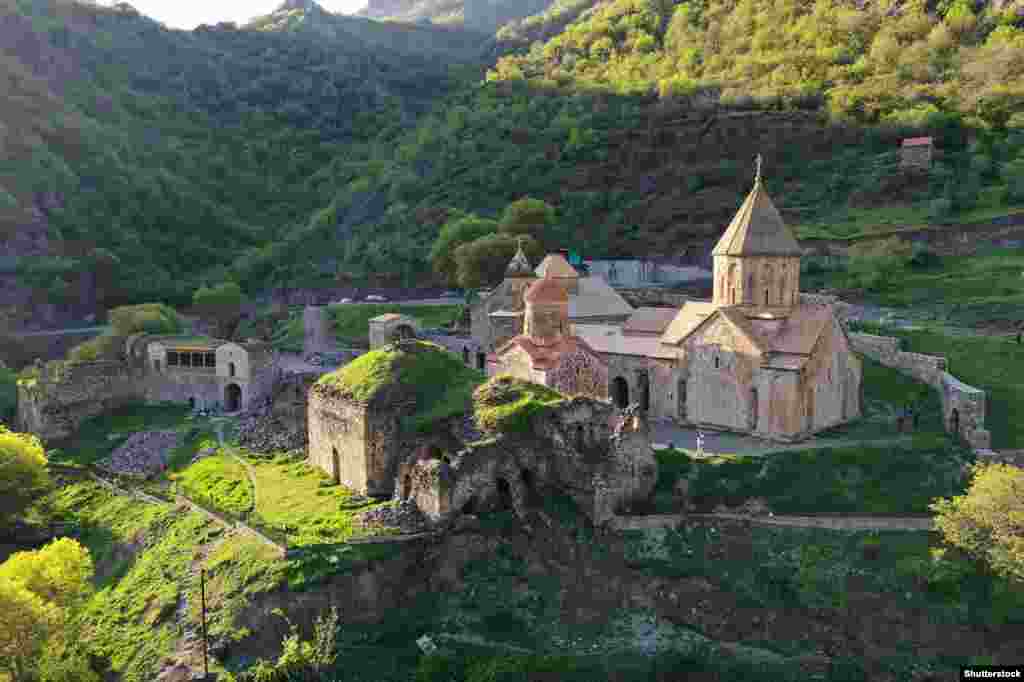
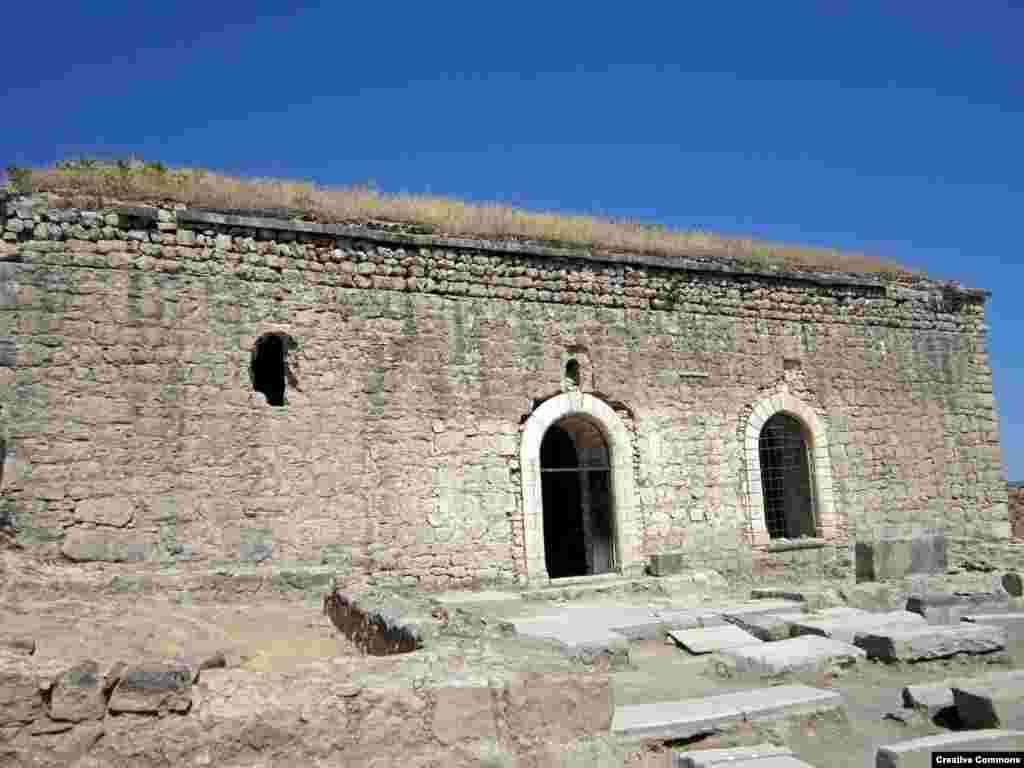
<strong><a href="https://en.wikipedia.org/wiki/Dadivank">Dadivank</a></strong>, a monastery in the Shahumian region near Nagorno-Karabakh
1/18 Dadivank, a monastery in the Shahumian region near Nagorno-Karabakh
Several historic churches and Christian monuments are in territory either captured or due to return to Azerbaijani control in a controversial new cease-fire agreement that ended the recent conflict in Nagorno-Karabakh.
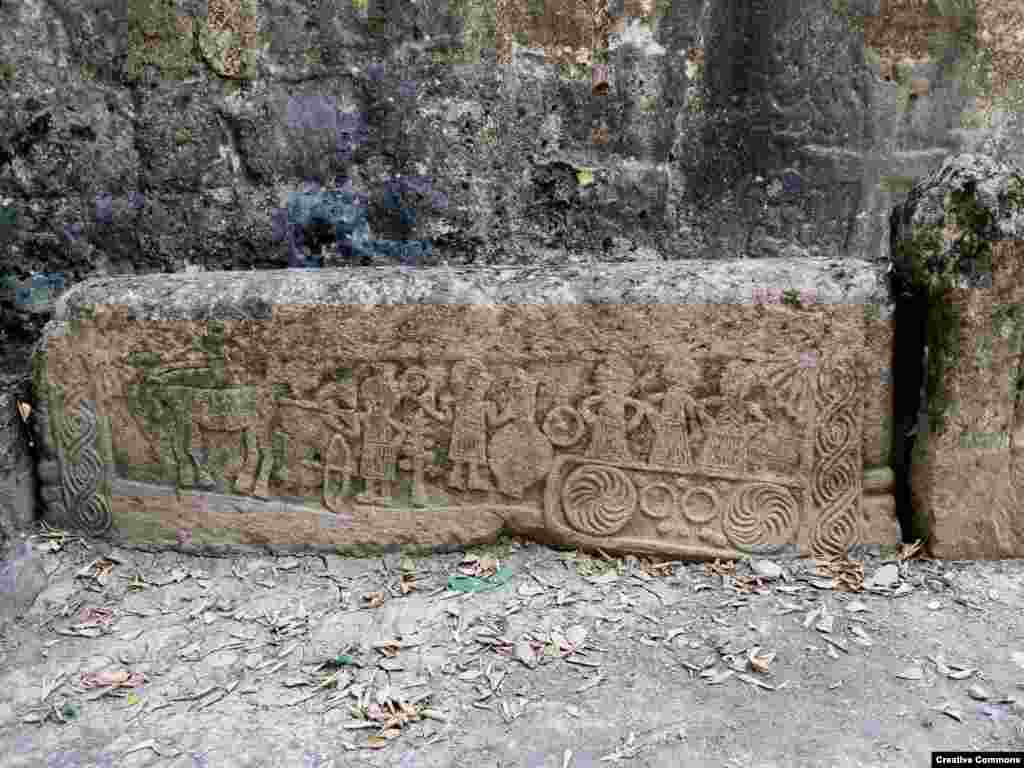
Details of a stone carving and Armenian script inside Dadivank. The monastery was completed in the 13th century.<br />
&nbsp;
2/18 Details of a stone carving and Armenian script inside Dadivank. The monastery was completed in the 13th century.
 
Several historic churches and Christian monuments are in territory either captured or due to return to Azerbaijani control in a controversial new cease-fire agreement that ended the recent conflict in Nagorno-Karabakh.
The<strong>&nbsp;<a href="https://en.wikipedia.org/wiki/Tsitsernavank_Monastery">Tsitsernavank monastery</a></strong>, on an isolated mountainside of Kashatagh Province
3/18 The Tsitsernavank monastery, on an isolated mountainside of Kashatagh Province
Several historic churches and Christian monuments are in territory either captured or due to return to Azerbaijani control in a controversial new cease-fire agreement that ended the recent conflict in Nagorno-Karabakh.
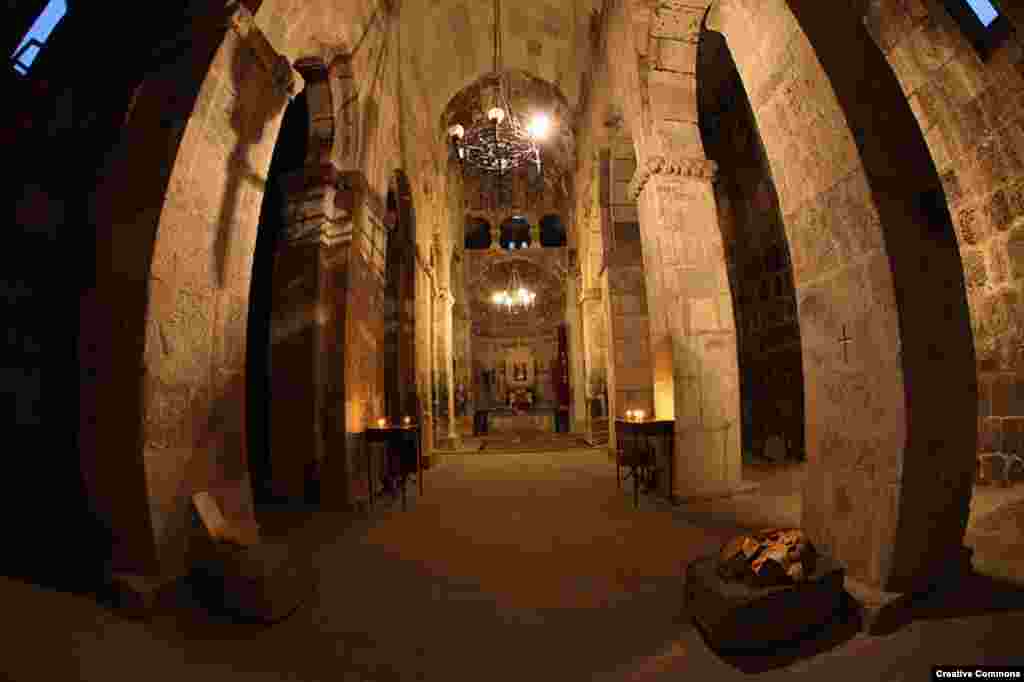
The interior of Tsitsernavank, which is estimated to have been built in the 5th or 6th century.<br />
&nbsp;
4/18 The interior of Tsitsernavank, which is estimated to have been built in the 5th or 6th century.
 
Several historic churches and Christian monuments are in territory either captured or due to return to Azerbaijani control in a controversial new cease-fire agreement that ended the recent conflict in Nagorno-Karabakh.
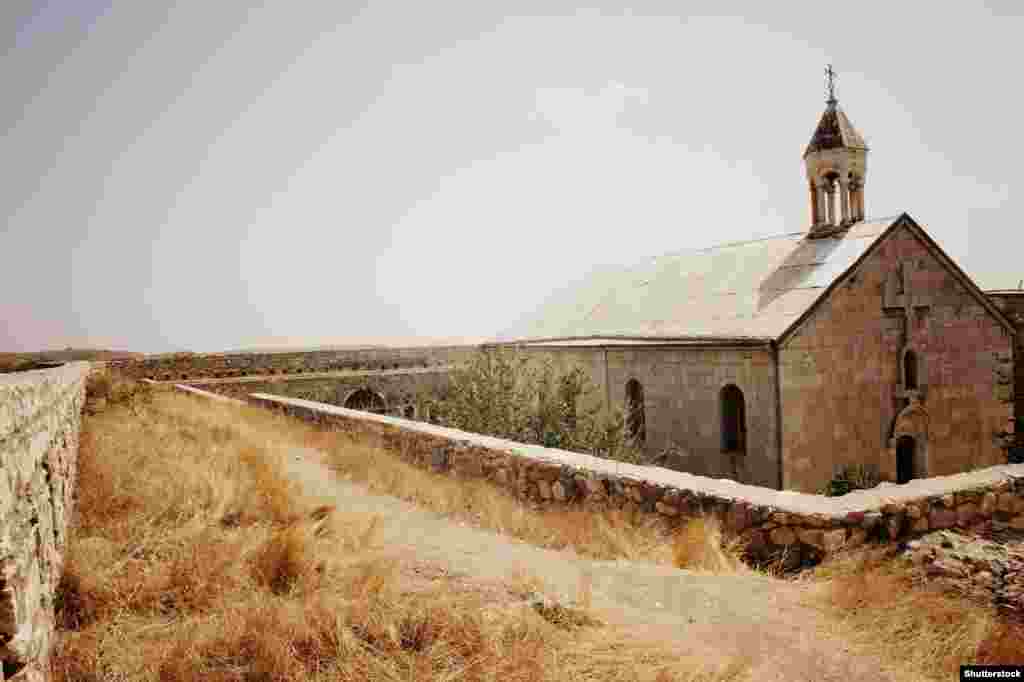
The&nbsp;<strong><a href="https://en.wikipedia.org/wiki/Amaras_Monastery">Amaras monastery</a></strong>, a heavily fortified complex near Sos village in the Khojavend district<br />
&nbsp;
5/18 The Amaras monastery, a heavily fortified complex near Sos village in the Khojavend district
 
Several historic churches and Christian monuments are in territory either captured or due to return to Azerbaijani control in a controversial new cease-fire agreement that ended the recent conflict in Nagorno-Karabakh.
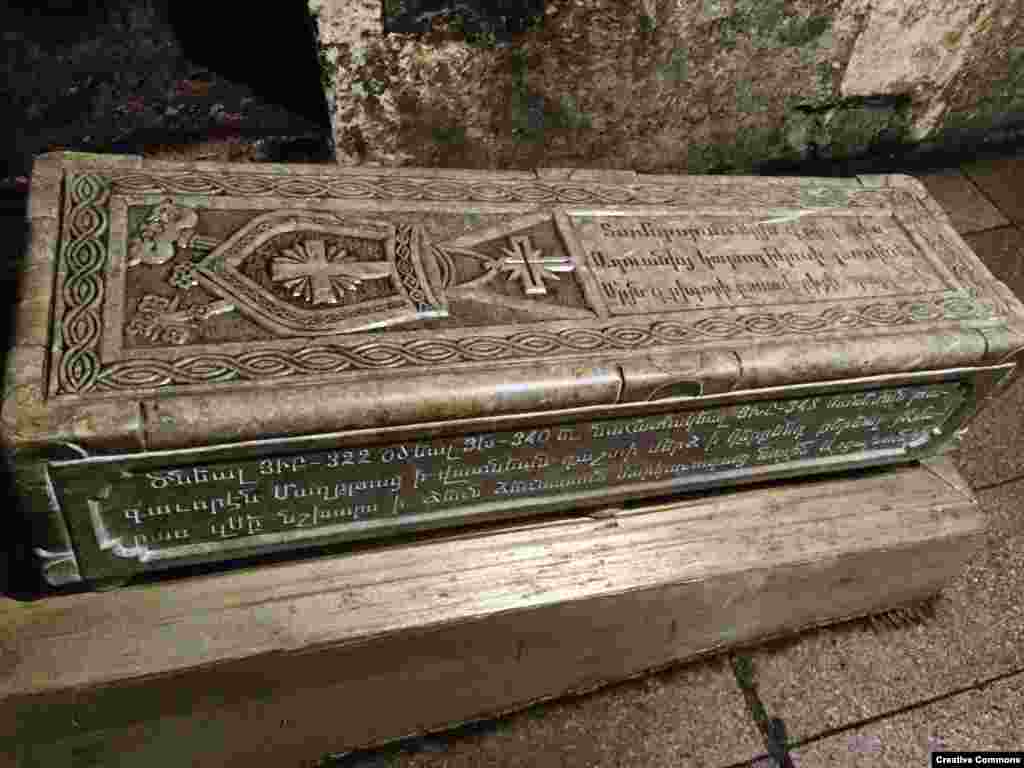
A sarcophagus inside the Amaras monastery that is said to hold the remains of St. Grigoris, the grandson of the man who converted Armenia&rsquo;s king to Christianity in A.D. 301. The Amaras monastery is believed to have been founded in the 4th century.<br />
&nbsp;
6/18 A sarcophagus inside the Amaras monastery that is said to hold the remains of St. Grigoris, the grandson of the man who converted Armenia’s king to Christianity in A.D. 301. The Amaras monastery is believed to have been founded in the 4th century.
 
Several historic churches and Christian monuments are in territory either captured or due to return to Azerbaijani control in a controversial new cease-fire agreement that ended the recent conflict in Nagorno-Karabakh.
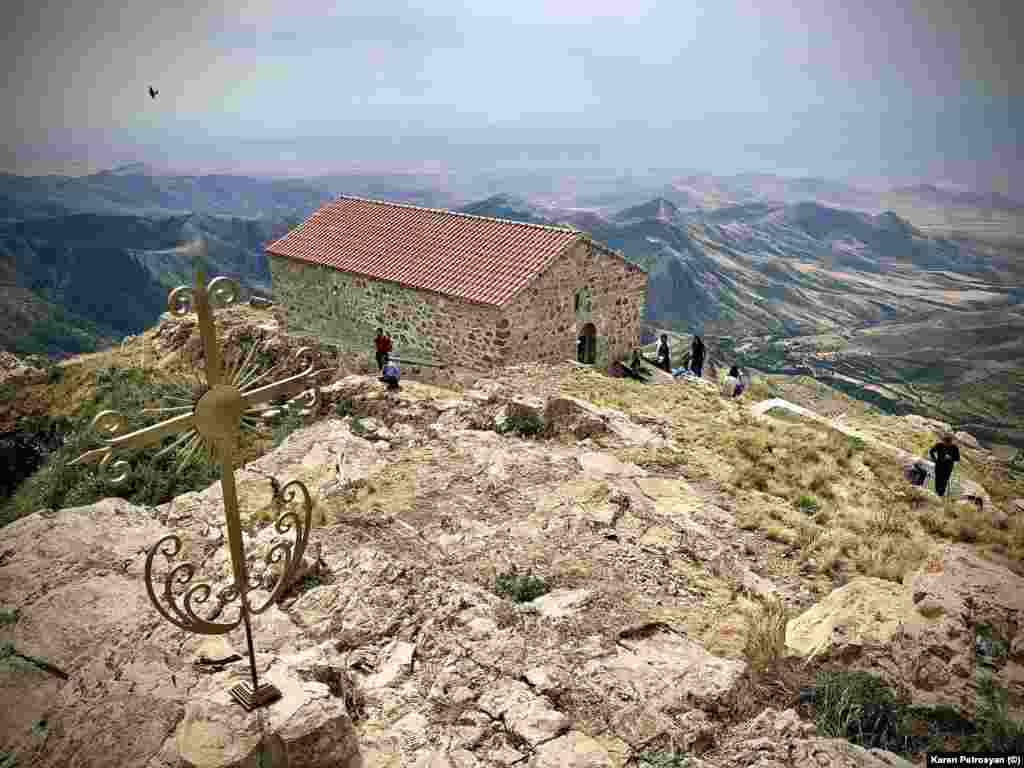
<a href="https://en.wikipedia.org/wiki/Katarovank"><strong>Katarovank</strong>,</a> a monastery on a mountaintop in the Hadrut region&nbsp;
7/18 Katarovank, a monastery on a mountaintop in the Hadrut region 
Several historic churches and Christian monuments are in territory either captured or due to return to Azerbaijani control in a controversial new cease-fire agreement that ended the recent conflict in Nagorno-Karabakh.
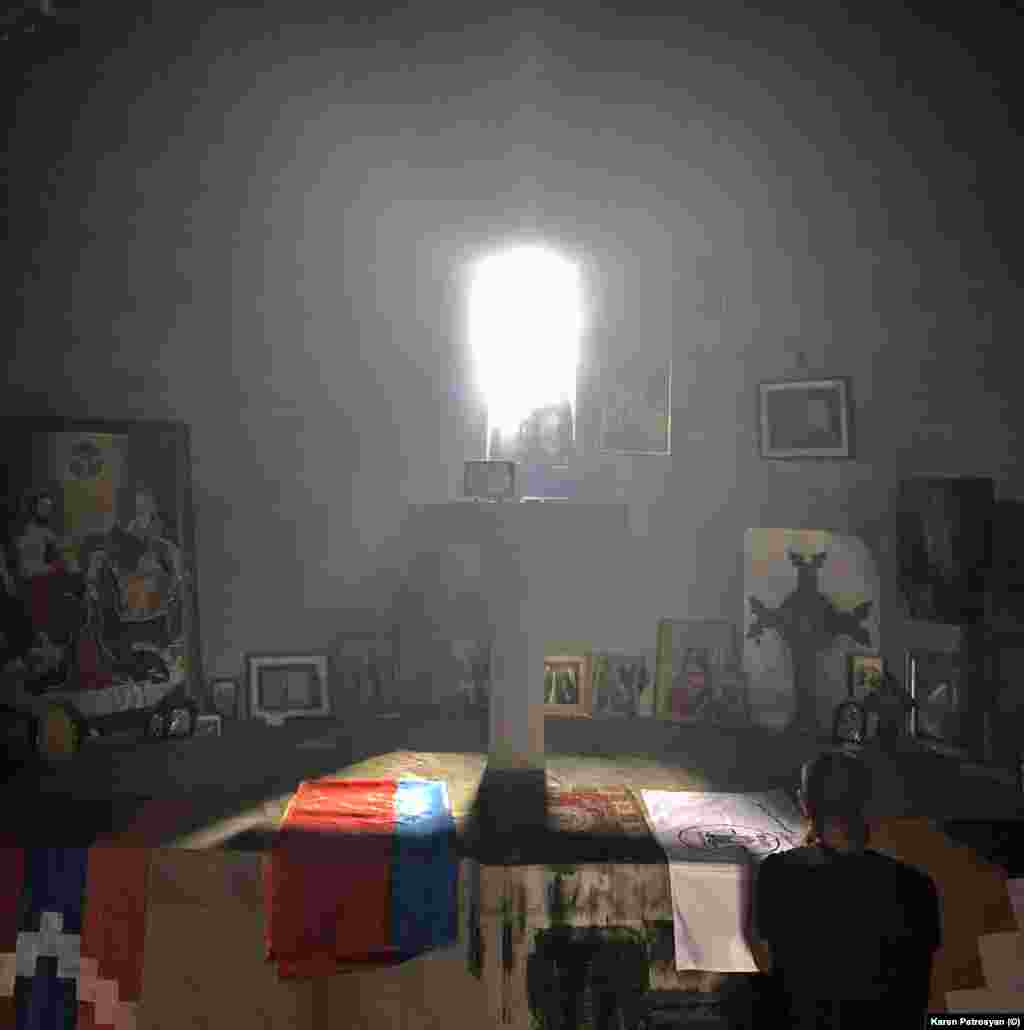
Visitors pray inside the Kataro monastery, which was completed in the 17th century.<br />
&nbsp;
8/18 Visitors pray inside the Kataro monastery, which was completed in the 17th century.
 
Several historic churches and Christian monuments are in territory either captured or due to return to Azerbaijani control in a controversial new cease-fire agreement that ended the recent conflict in Nagorno-Karabakh.
<strong><a href="https://en.wikipedia.org/wiki/Kanach_Zham">Kanach Zham</a></strong>, a church in Shushi/Susa, the strategically vital town recently captured by Azerbaijani forces.<br />
&nbsp;
9/18 Kanach Zham, a church in Shushi/Susa, the strategically vital town recently captured by Azerbaijani forces.
 
Several historic churches and Christian monuments are in territory either captured or due to return to Azerbaijani control in a controversial new cease-fire agreement that ended the recent conflict in Nagorno-Karabakh.
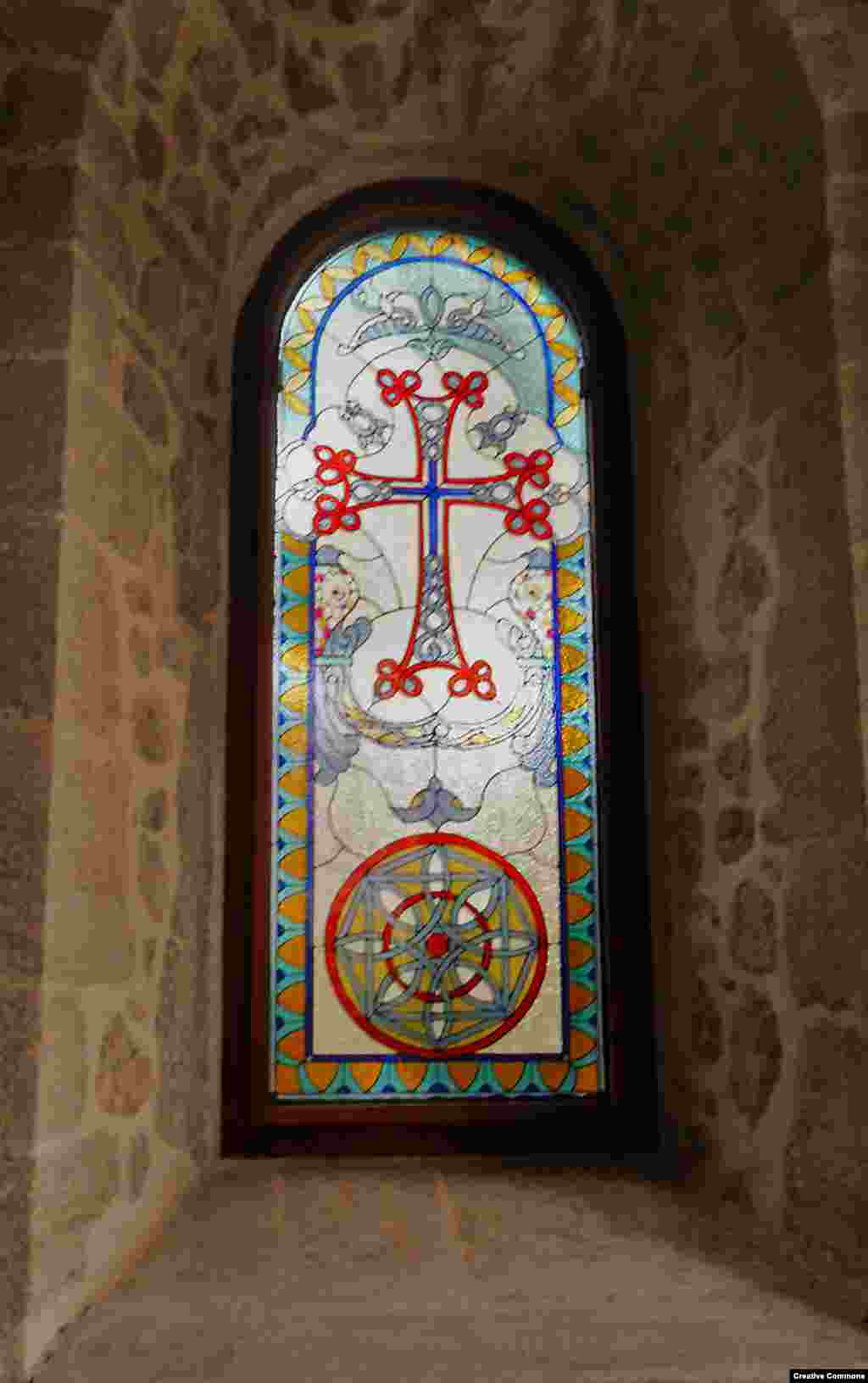
Light shines through a stained-glass window inside Kanach Zham. The church was built in 1818.<br />
&nbsp;
10/18 Light shines through a stained-glass window inside Kanach Zham. The church was built in 1818.
 
Several historic churches and Christian monuments are in territory either captured or due to return to Azerbaijani control in a controversial new cease-fire agreement that ended the recent conflict in Nagorno-Karabakh.
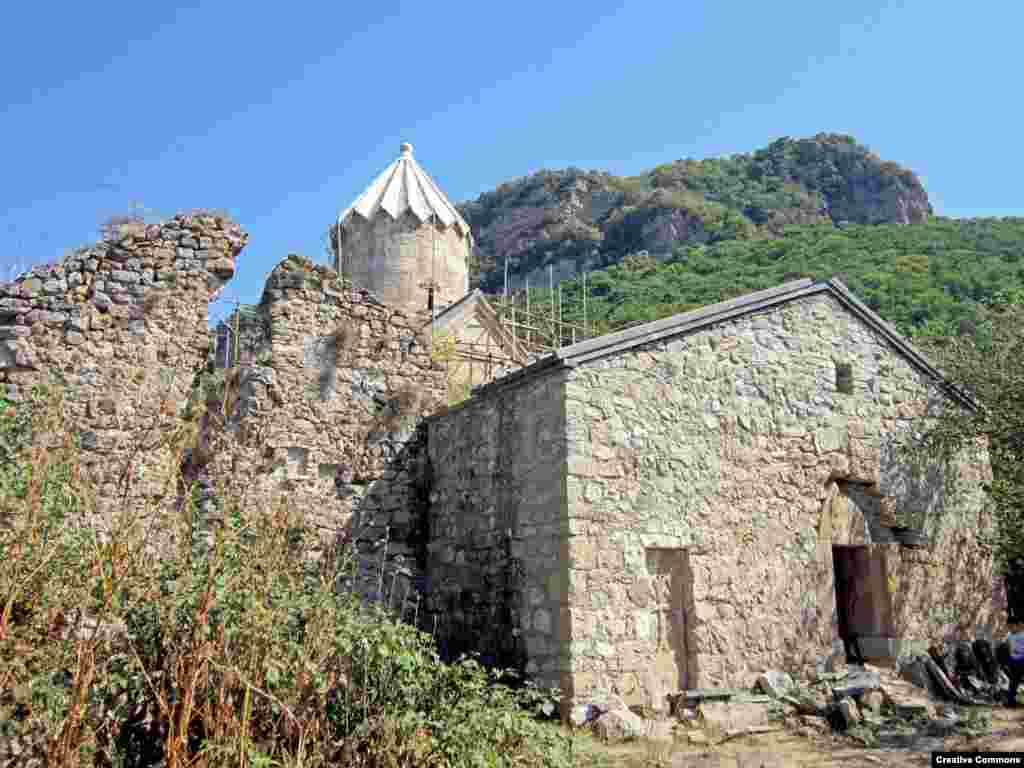
<strong><a href="https://hy.wikipedia.org/wiki/%D4%B3%D5%BF%D5%B9%D5%A1%D5%BE%D5%A1%D5%B6%D6%84">Gtichavank</a></strong>, a monastery in the Hadrut region<br />
&nbsp;
11/18 Gtichavank, a monastery in the Hadrut region
 
Several historic churches and Christian monuments are in territory either captured or due to return to Azerbaijani control in a controversial new cease-fire agreement that ended the recent conflict in Nagorno-Karabakh.
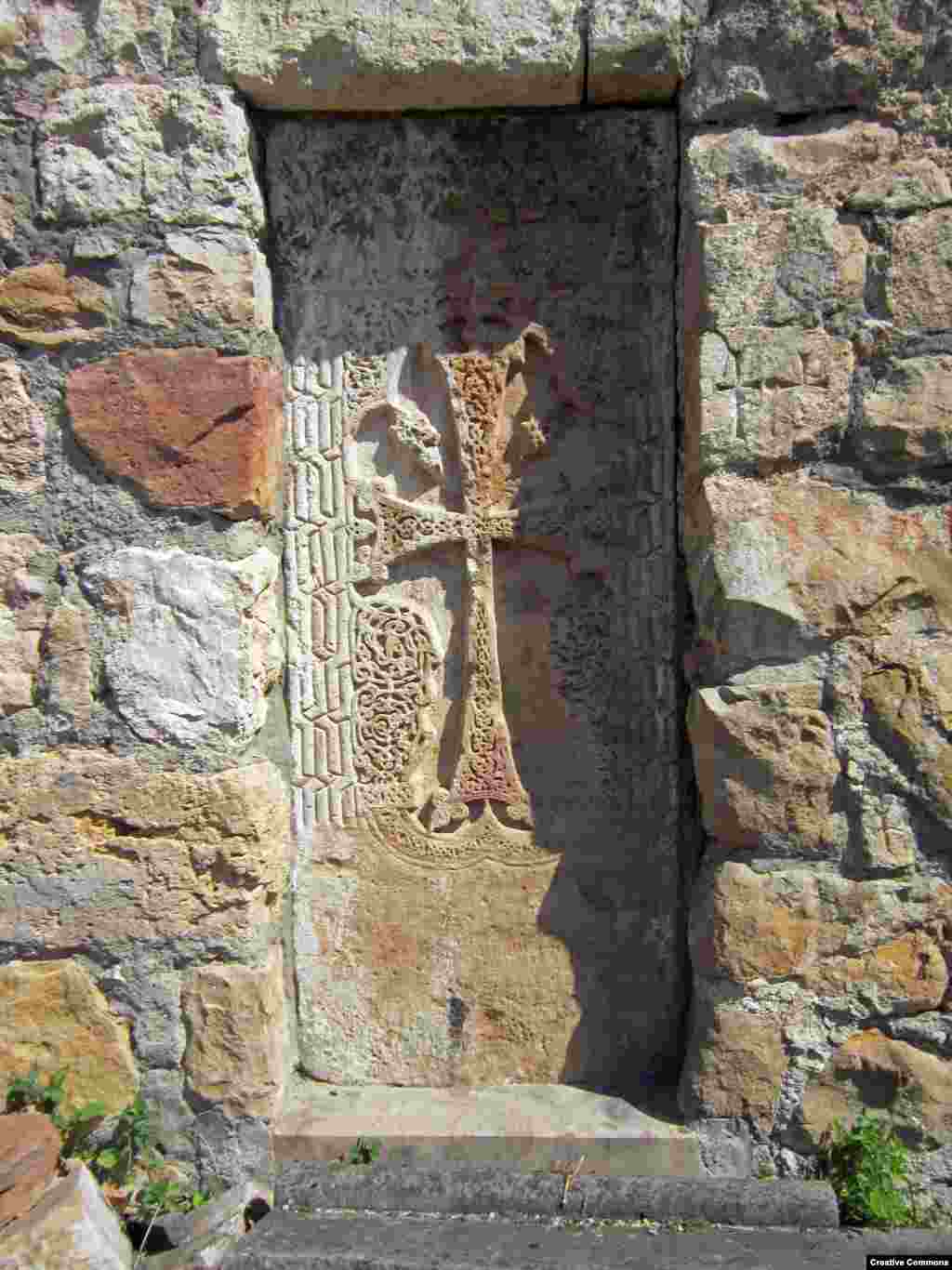
A detail of a carved stone cross (visible just right of center in the previous photo) near the entrance to Gtichavank. The monastery was completed in 1248.<br />
&nbsp;
12/18 A detail of a carved stone cross (visible just right of center in the previous photo) near the entrance to Gtichavank. The monastery was completed in 1248.
 
Several historic churches and Christian monuments are in territory either captured or due to return to Azerbaijani control in a controversial new cease-fire agreement that ended the recent conflict in Nagorno-Karabakh.
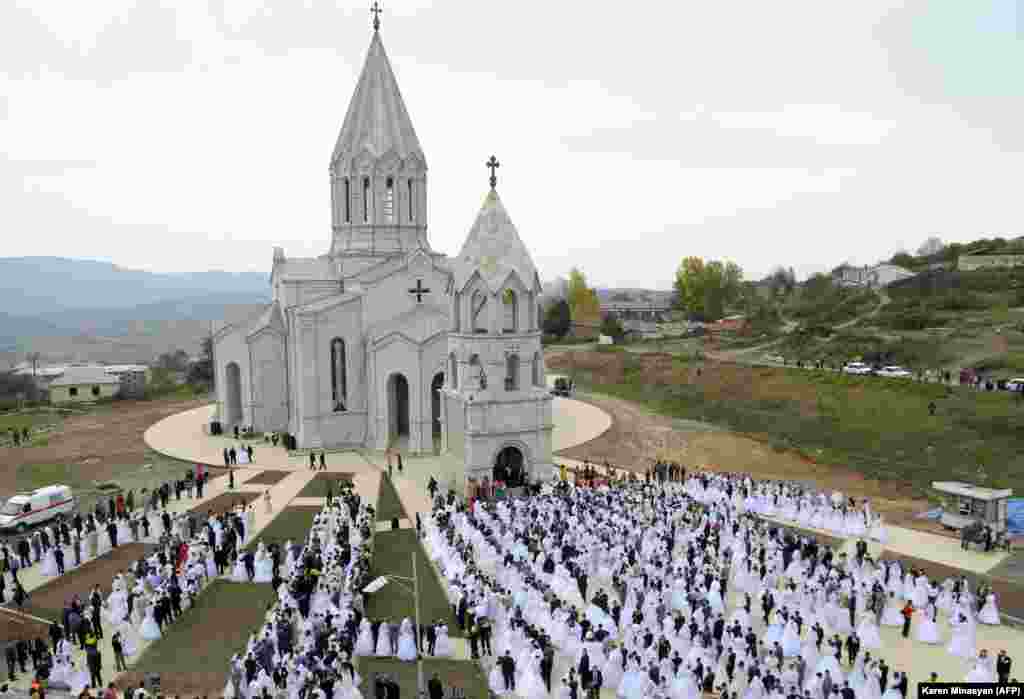
<strong><a href="https://en.wikipedia.org/wiki/Ghazanchetsots_Cathedral">Ghazanchetsots</a></strong>, which is considered to be the cathedral of Shushi/Susa. The photo was taken in 2008 during a mass wedding ceremony.
13/18 Ghazanchetsots, which is considered to be the cathedral of Shushi/Susa. The photo was taken in 2008 during a mass wedding ceremony.
Several historic churches and Christian monuments are in territory either captured or due to return to Azerbaijani control in a controversial new cease-fire agreement that ended the recent conflict in Nagorno-Karabakh.
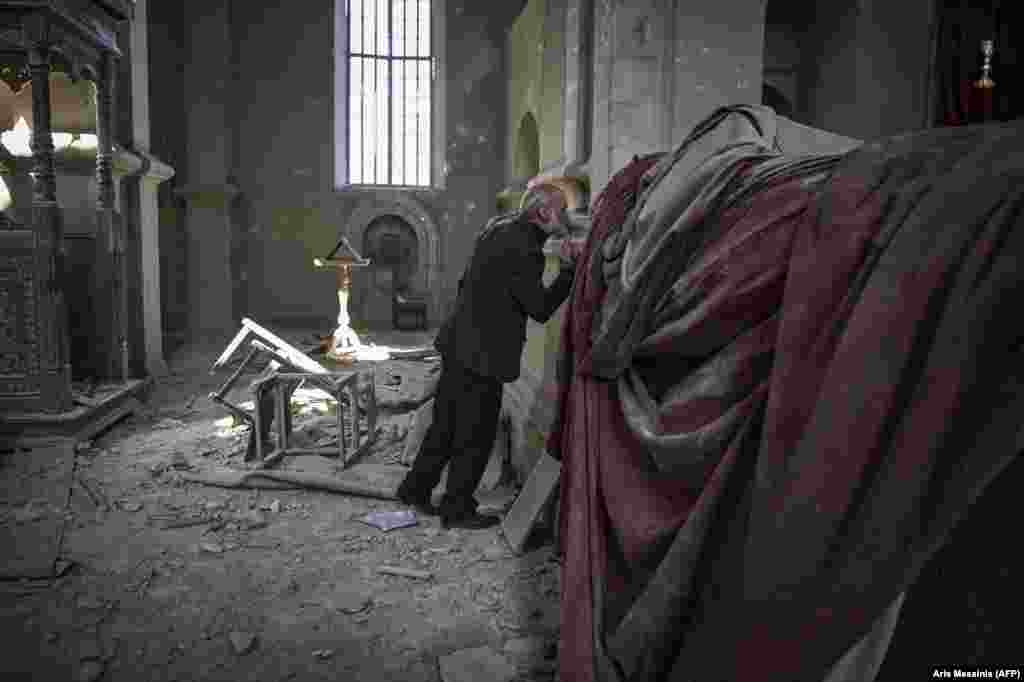
The interior of Ghazanchetsots after it was damaged by Azerbaijani artillery in October. The cathedral was completed in 1887.<br />
&nbsp;
14/18 The interior of Ghazanchetsots after it was damaged by Azerbaijani artillery in October. The cathedral was completed in 1887.
 
Several historic churches and Christian monuments are in territory either captured or due to return to Azerbaijani control in a controversial new cease-fire agreement that ended the recent conflict in Nagorno-Karabakh.
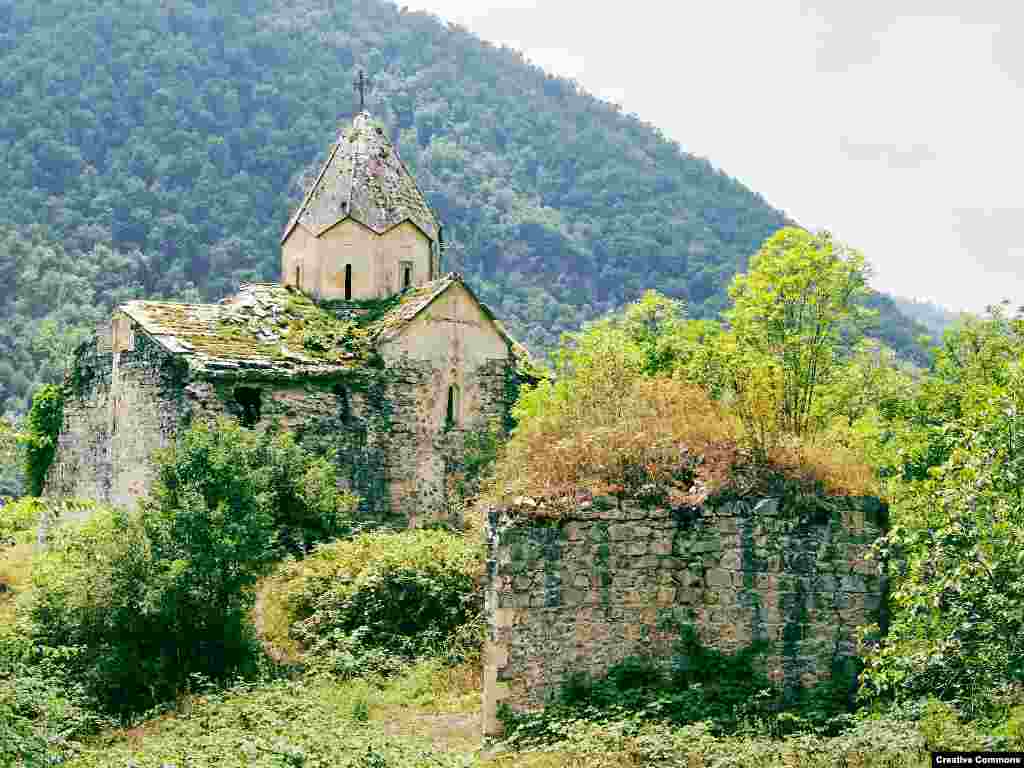
The&nbsp;<strong><a href="https://hy.wikipedia.org/wiki/%D4%B5%D6%80%D5%AB%D6%81_%D5%84%D5%A1%D5%B6%D5%AF%D5%A1%D5%B6%D6%81">Yeritsmankants monastery</a></strong> in the forested Martakert region
15/18 The Yeritsmankants monastery in the forested Martakert region
Several historic churches and Christian monuments are in territory either captured or due to return to Azerbaijani control in a controversial new cease-fire agreement that ended the recent conflict in Nagorno-Karabakh.
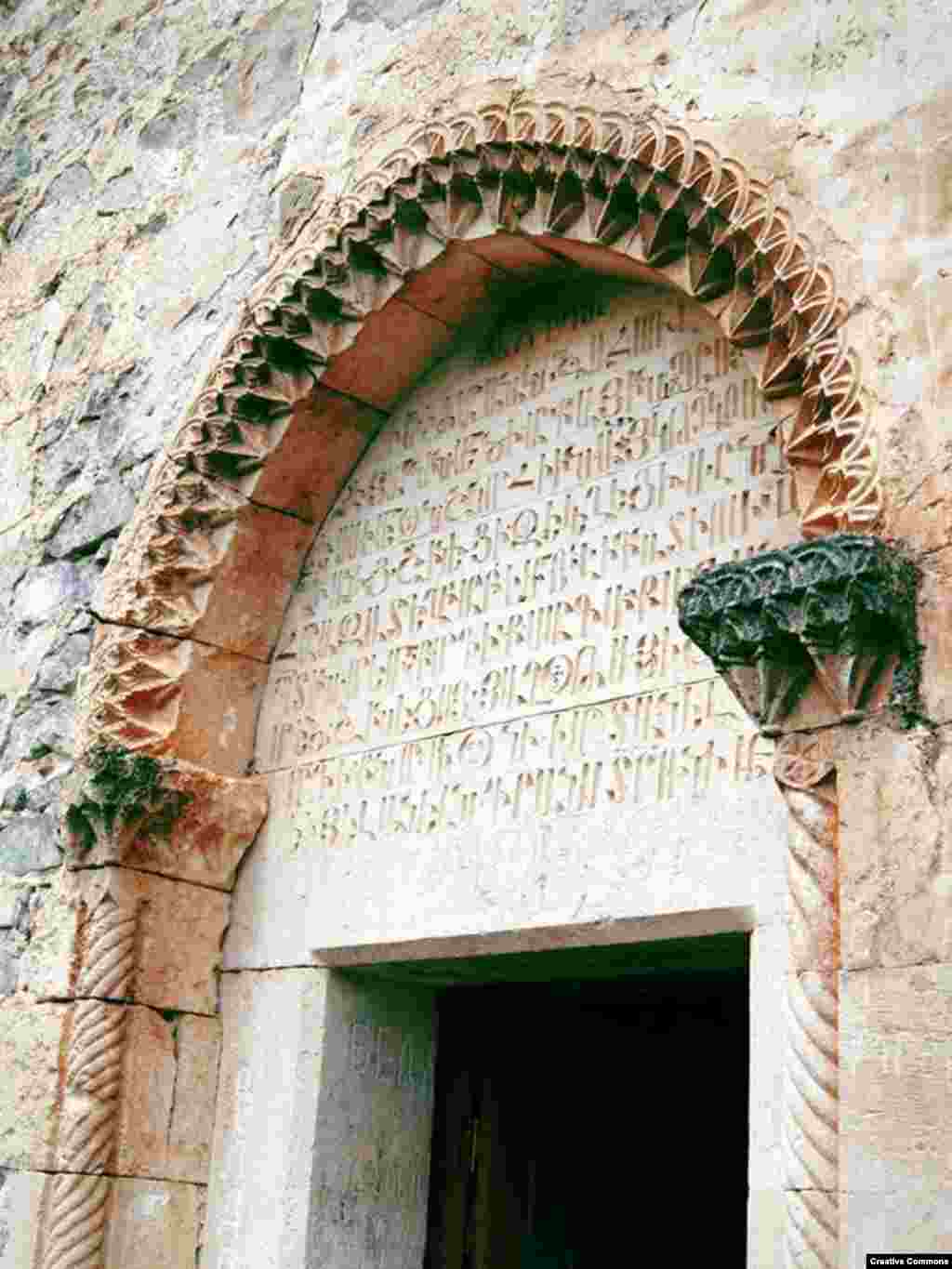
Armenian script towers over the door at an entrance to the Yeritsmankants monastery. The partially ruined monastery was built in 1691.<br />
&nbsp;
16/18 Armenian script towers over the door at an entrance to the Yeritsmankants monastery. The partially ruined monastery was built in 1691.
 
Several historic churches and Christian monuments are in territory either captured or due to return to Azerbaijani control in a controversial new cease-fire agreement that ended the recent conflict in Nagorno-Karabakh.
<strong><a href="https://hy.wikipedia.org/wiki/%D5%8D%D5%B8%D6%82%D6%80%D5%A2_%D5%80%D5%B8%D5%BE%D5%B0%D5%A1%D5%B6%D5%B6%D5%A5%D5%BD_%D5%A5%D5%AF%D5%A5%D5%B2%D5%A5%D6%81%D5%AB_(%D5%8F%D5%B8%D5%B2)">St. Hovhannes Church</a></strong>, in the Hadrut region
17/18 St. Hovhannes Church, in the Hadrut region
Several historic churches and Christian monuments are in territory either captured or due to return to Azerbaijani control in a controversial new cease-fire agreement that ended the recent conflict in Nagorno-Karabakh.
A stone carving lies in the courtyard of St. Hovhannes. The church is believed to have been built in the 13th century.<br />
&nbsp;
18/18 A stone carving lies in the courtyard of St. Hovhannes. The church is believed to have been built in the 13th century.
 
Several historic churches and Christian monuments are in territory either captured or due to return to Azerbaijani control in a controversial new cease-fire agreement that ended the recent conflict in Nagorno-Karabakh.
Previous slide
Next slide

The Kremlin said that Putin told Aliyev on November 14 to protect Christian shrines in the parts of Nagorno-Karabakh that will be under the control of Azerbaijan, a majority Muslim nation.

Aliyev vowed to safeguard the Christian shrines, a statement released by his press service said.

A key part of the Russia-brokered peace deal includes Armenia's return of Kalbacar and two other districts over the next 2 1/2 weeks. Like Kalbacar, those districts have been held by Armenian separatists since a war that ended in 1994.

While ending fighting that killed more than 2,000 soldiers and civilians on both sides, the deal announced on November 10 was rejected by many Armenians because it allows Azerbaijan to keep a sizable chunk of Nagorno-Karabakh, along with surrounding areas captured during the fighting.

Vision Of Hell: The Aftermath Of Fighting Around Key Nagorno-Karabakh City
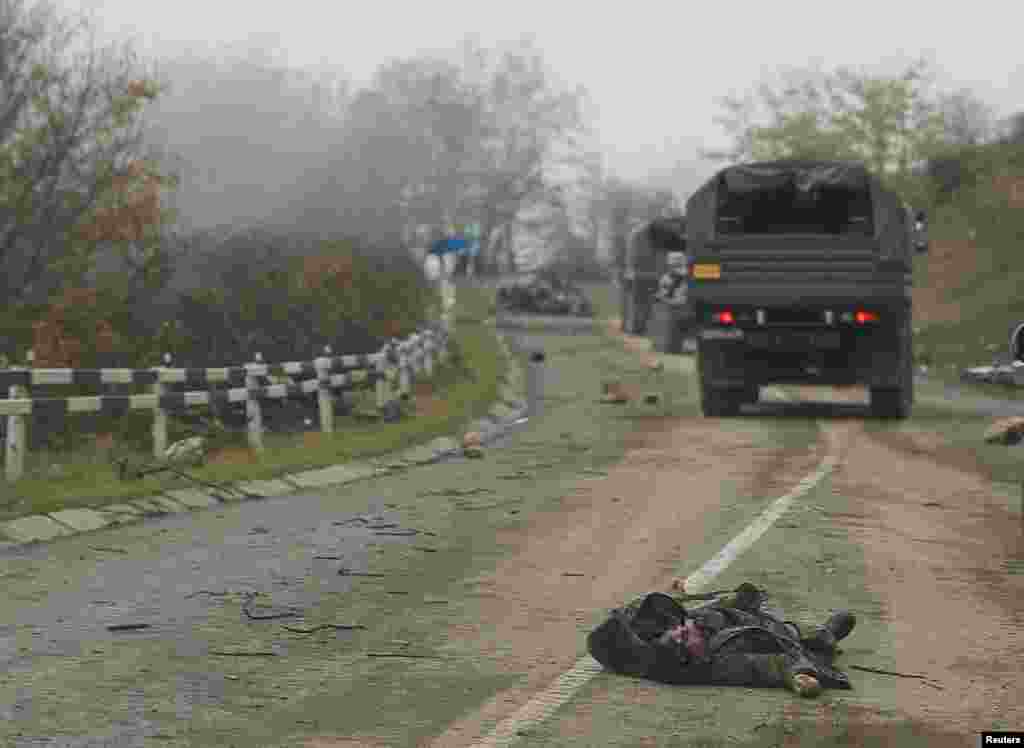
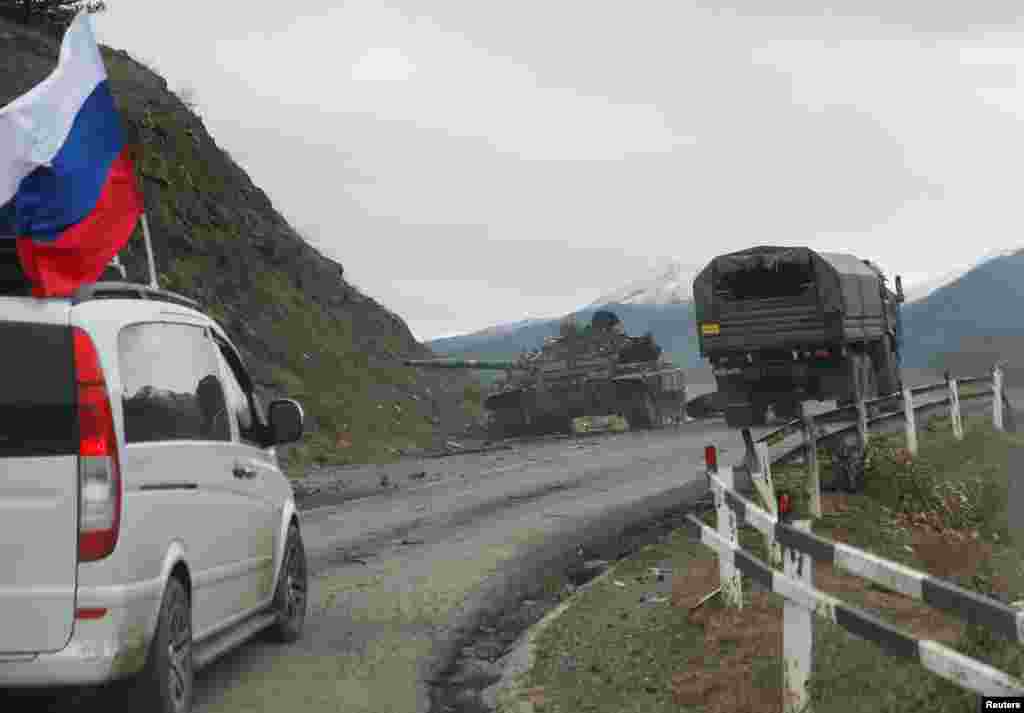
A body lies on the road near Shushi (known as Susa in Azeri). The pictures in this gallery were shot from a convoy of Russian peacekeepers driving near the town on November 13. The insertion of Russian peacekeepers into the region was part of a cease-fire agreement between Azerbaijan and Armenia made on November 9.&nbsp;
1/12 A body lies on the road near Shushi (known as Susa in Azeri). The pictures in this gallery were shot from a convoy of Russian peacekeepers driving near the town on November 13. The insertion of Russian peacekeepers into the region was part of a cease-fire agreement between Azerbaijan and Armenia made on November 9. 
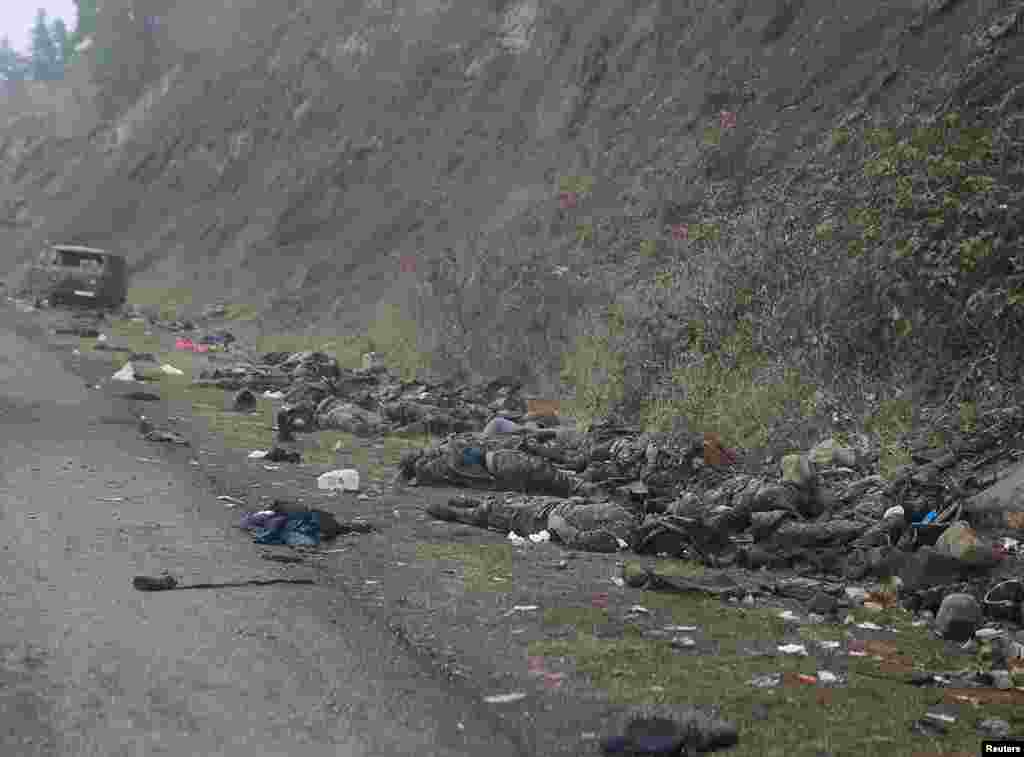
Shocking images captured by a photographer for Reuters in a convoy of Russian peacekeepers show heavy casualties in the fighting between Azerbaijani and ethnic Armenian forces in the battle for Shushi/Susa. (WARNING: DISTURBING CONTENT)
Piles of bodies on the roadside near the town of Shushi/Susa, which was captured by Azerbaijani forces on November 8. RFE/RL was not able to confirm the nationality of the dead fighters in the photographs taken from the convoy.&nbsp;
2/12 Piles of bodies on the roadside near the town of Shushi/Susa, which was captured by Azerbaijani forces on November 8. RFE/RL was not able to confirm the nationality of the dead fighters in the photographs taken from the convoy. 
Shocking images captured by a photographer for Reuters in a convoy of Russian peacekeepers show heavy casualties in the fighting between Azerbaijani and ethnic Armenian forces in the battle for Shushi/Susa. (WARNING: DISTURBING CONTENT)
3/12
Shocking images captured by a photographer for Reuters in a convoy of Russian peacekeepers show heavy casualties in the fighting between Azerbaijani and ethnic Armenian forces in the battle for Shushi/Susa. (WARNING: DISTURBING CONTENT)
4/12
Shocking images captured by a photographer for Reuters in a convoy of Russian peacekeepers show heavy casualties in the fighting between Azerbaijani and ethnic Armenian forces in the battle for Shushi/Susa. (WARNING: DISTURBING CONTENT)
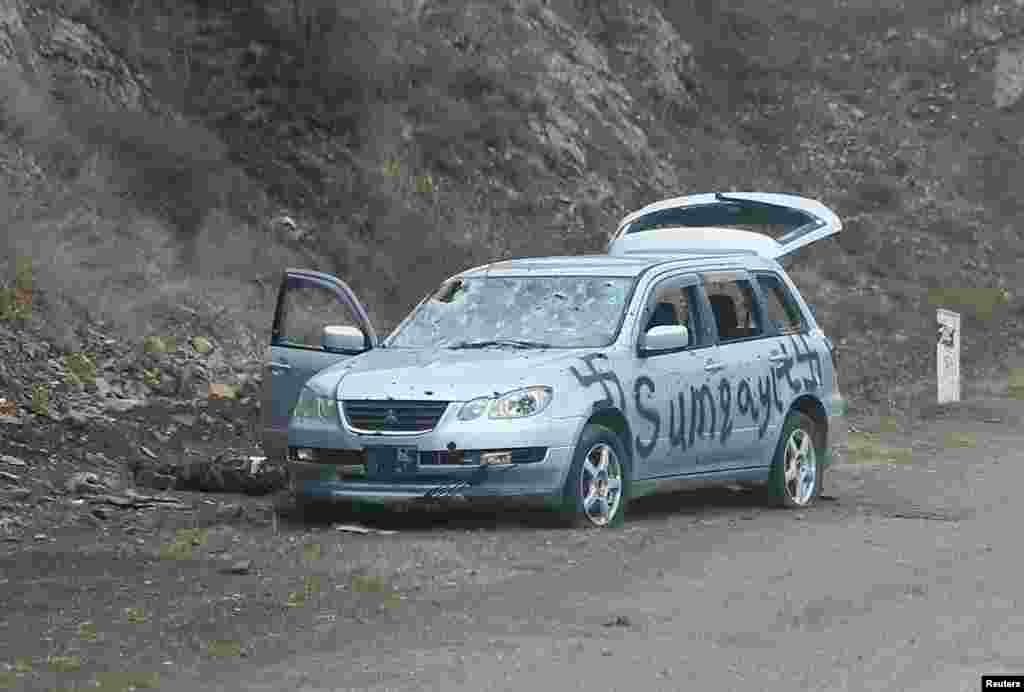
A car spray-painted with swastikas and the word &quot;Sumqayit.&quot;&nbsp;<br />
<br />
The Azerbaijani town of Sumqayit was the scene of an infamous massacre in 1988, when dozens of ethnic Armenians were killed amid unrest over Nagorno-Karabakh.&nbsp;
5/12 A car spray-painted with swastikas and the word "Sumqayit." 

The Azerbaijani town of Sumqayit was the scene of an infamous massacre in 1988, when dozens of ethnic Armenians were killed amid unrest over Nagorno-Karabakh. 
Shocking images captured by a photographer for Reuters in a convoy of Russian peacekeepers show heavy casualties in the fighting between Azerbaijani and ethnic Armenian forces in the battle for Shushi/Susa. (WARNING: DISTURBING CONTENT)
6/12
Shocking images captured by a photographer for Reuters in a convoy of Russian peacekeepers show heavy casualties in the fighting between Azerbaijani and ethnic Armenian forces in the battle for Shushi/Susa. (WARNING: DISTURBING CONTENT)
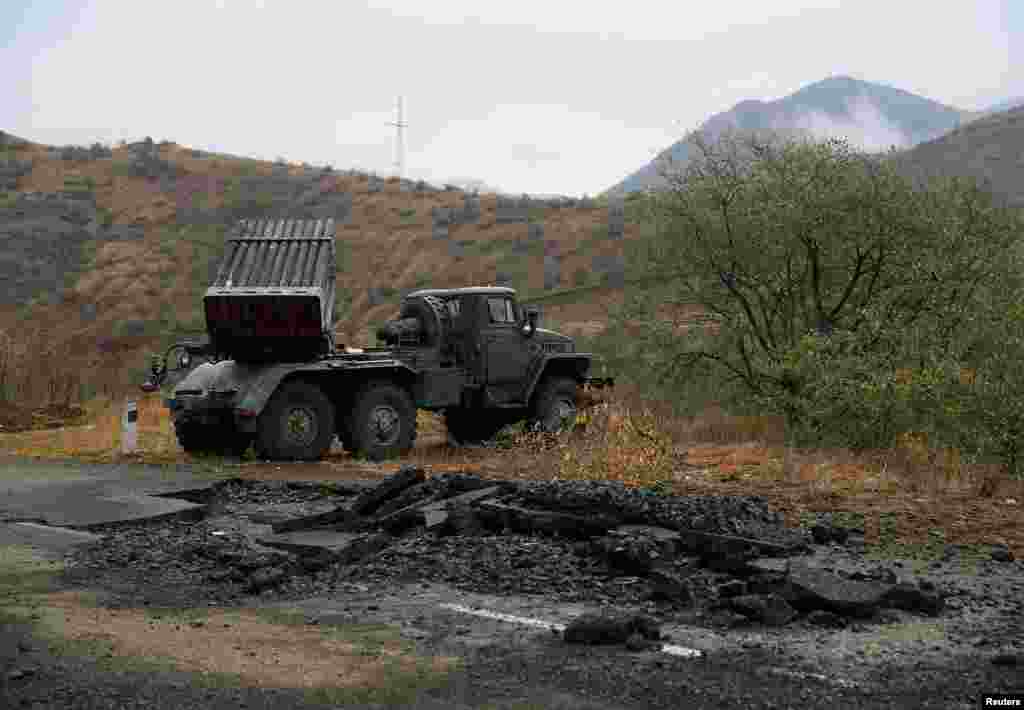
A multiple-rocket launcher belonging to ethnic Armenian forces sits on the road near Shushi/Susa.
7/12 A multiple-rocket launcher belonging to ethnic Armenian forces sits on the road near Shushi/Susa.
Shocking images captured by a photographer for Reuters in a convoy of Russian peacekeepers show heavy casualties in the fighting between Azerbaijani and ethnic Armenian forces in the battle for Shushi/Susa. (WARNING: DISTURBING CONTENT)
8/12
Shocking images captured by a photographer for Reuters in a convoy of Russian peacekeepers show heavy casualties in the fighting between Azerbaijani and ethnic Armenian forces in the battle for Shushi/Susa. (WARNING: DISTURBING CONTENT)
9/12
Shocking images captured by a photographer for Reuters in a convoy of Russian peacekeepers show heavy casualties in the fighting between Azerbaijani and ethnic Armenian forces in the battle for Shushi/Susa. (WARNING: DISTURBING CONTENT)
A burned-out tank on the road near Shushi/Susa
10/12 A burned-out tank on the road near Shushi/Susa
Shocking images captured by a photographer for Reuters in a convoy of Russian peacekeepers show heavy casualties in the fighting between Azerbaijani and ethnic Armenian forces in the battle for Shushi/Susa. (WARNING: DISTURBING CONTENT)
11/12
Shocking images captured by a photographer for Reuters in a convoy of Russian peacekeepers show heavy casualties in the fighting between Azerbaijani and ethnic Armenian forces in the battle for Shushi/Susa. (WARNING: DISTURBING CONTENT)
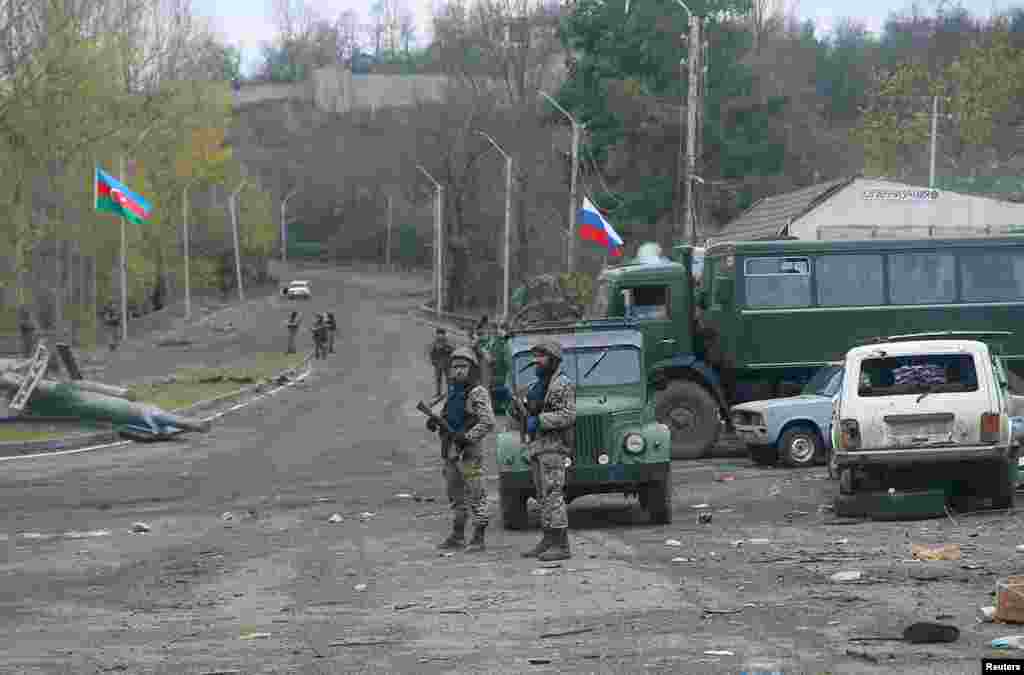
Azerbaijani soldiers guard a checkpoint on the outskirts of Shushi/Susa on November 13.&nbsp;
12/12 Azerbaijani soldiers guard a checkpoint on the outskirts of Shushi/Susa on November 13. 
Shocking images captured by a photographer for Reuters in a convoy of Russian peacekeepers show heavy casualties in the fighting between Azerbaijani and ethnic Armenian forces in the battle for Shushi/Susa. (WARNING: DISTURBING CONTENT)
Previous slide
Next slide

The deal includes the deployment of 2,000 Russian peacekeepers in the region. Several hundreds have already arrived since the announcement of the truce, and Russia’s Defense Ministry said on November 15 that they had set up 25 "observation posts" in the Lachin Corridor -- a mountain road pass that links Nagorno-Karabakh to Armenia -- and two other areas to monitor the cease-fire.

The two sides exchanged the bodies of an unspecified number of dead soldiers on November 14 following the arrival of the Russian troops.

Nagorno-Karabakh is recognized as part of Azerbaijan, but its majority Armenian population has governed its own affairs since Azerbaijani troops and Azeri civilians were pushed out of the region in the war in the 1990s.

Armenia’s Health Ministry said on November 14 that at least 2,300 Armenian and Nagorno-Karabakh Armenian combatants have died during the most recent fighting, which broke out in late September. A ministry spokeswoman, Alina Nikoghosian, said the figure does not include dead soldiers whose bodies remain in Azerbaijani-controlled territory. Their total number is not yet known, she said.

Mass Exodus As Armenians Flee Nagorno-Karabakh
please wait

No media source currently available

0:00 0:03:27 0:00

Azerbaijani authorities have not released their military casualty figures.

The announcement of the peace deal triggered celebrations in Azerbaijan and anti-government rallies in Armenia, where angry protesters stormed government buildings and parliament early on November 10.

The leader of the opposition Homeland party, Arthur Vanetsian, was arrested on November 14 and charged the next day with plotting to overthrow the government and kill a public figure.

The indictment came after the National Security Service (NSS) on November 14 said it had thwarted an assassination attempt against Prime Minister Nikol Pashinian.

Vanetsian, who was released from detention on November 15, formerly headed the NSS. Two other opposition figures are facing similar charges.

Lawyers for the three accused rejected the accusations, saying they were politically motivated.
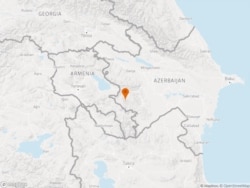
Kalbacar
Kalbacar

Homeland is one of 17 Armenian opposition groups that launched the protests against Pashinian’s government and demanded his resignation. They accuse the prime minister of capitulating to Azerbaijan and committing high treason.

On November 11, 10 prominent opposition figures were arrested and accused of "organizing illegal violent mass disorder.” The detentions were denounced by the opposition as illegal, and the opposition figures were released two days later.

With reporting by AFP, dpa, Reuters, Interfax, and TASS
  • 16x9 Image

    RFE/RL's Armenian Service

    RFE/RL’s Armenian Service, operating out of a bureau in Yerevan, is a leading source of trusted reporting and technical innovation, reaching outsized audiences when developments demand authoritative, up-to-the-minute news most.

  • 16x9 Image

    RFE/RL's Azerbaijani Service

    Despite near-total government control over the media, RFE/RL's Azerbaijani Service has built a high-impact social-media presence in Azerbaijan and a reputation as a leading source of independent news.

This item is part of
XS
SM
MD
LG