


Accessibility links

Breaking News

Kremlin Says Navalny's Hospitalization Shouldn't Hurt Ties With West

Updated
Russian opposition leader Alexei Navalny

MOSCOW -- The Kremlin says it does not want the hospitalization of Russian opposition leader Aleksei Navalny to damage relations between Moscow and the West, but is opposed to saying that Navalny was "poisoned" until medical tests confirm finding a specific toxin in his body.

Germany, the United States, and other Western countries have called on Moscow to open an investigation into why Navalny collapsed on a Russian commercial flight from Siberia last week.

Those calls came after German doctors said their initial medical examination pointed to poisoning.

The renowned Charite hospital in Berlin, where Navalny is being treated, said on August 24 that "clinical findings indicate intoxication by a substance from the group of active substances called cholinesterase inhibitors."

Cholinesterase inhibitors are a broad range of chemicals that are found in several drugs but also in some pesticides and nerve agents. Charite said the specific substance to which Navalny was exposed isn't yet known but that a further series of comprehensive tests had been started.

Despite increasing evidence that Navalny was attacked with poison, the Kremlin insists that the German medical examinations have been inconclusive.

Kremlin spokesman Dmitry Peskov said on August 26 that "there is no reason" for the disagreement to damage Russia's relations with the West .

"Of course we don't want this to happen," Peskov told reporters.

Russian Opposition Leader Navalny Fights For His Life After Suspected Poisoning
please wait

No media source currently available

0:00 0:03:50 0:00

The 44-year-old anticorruption campaigner is a staunch critic of President Vladimir Putin.

He was being treated at Berlin’s Charite hospital where he remained in an induced coma on August 26.

But on August 26, Peskov asked journalists rhetorically, "How can we talk about poisoning if there is no poison?"

"We are categorically against anyone attempting to do any labeling under the current circumstances, we're against calling this condition -- which has not been definitively confirmed as poisoning -- a case of poisoning," Peskov said.

On August 25, Peskov had claimed that German doctors were "rushing" to use the word "poisoning."

Navalny’s supporters say they think he was poisoned when he drank tea purchased at the Tomsk airport in Siberia before boarding his flight.

His rapidly deteriorating condition during the flight forced the plane he was traveling on to make an emergency landing in Omsk, where he spent two days in a hospital before being airlifted to Berlin.

According to a Russian newspaper report, Navalny had been under surveillance by Russian federal security agents during his trip to Siberia.

Meanwhile, Vyacheslav Volodin, the speaker of Russia's lower house of parliament, says a State Duma committee will investigate whether "foreign states" were behind the incident in an attempt "to fuel tensions inside Russia, as well as to formulate fresh accusations against our country."

Kira Yarmysh, Navalny’s spokeswoman, responded to Volodin's remarks by saying that Russian officials appear to have a special training manual to "blame foreign interference."

"It doesn't matter at all whether it sounds just absurd or completely schizophrenic," she wrote on Twitter.

U.S. 'Deeply Concerned'

The United States, NATO, and European countries have called on Russia to conduct a swift investigation into the suspected poisoning.

NATO chief Jens Stoltenberg told journalists on August 26 that he backs calls for a transparent Navalny investigation, while British Prime Minister Boris Johnson also called on August 26 for an independent probe into the case.

"We need a full, transparent investigation into what happened. The perpetrators must be held accountable and the U.K. will join international efforts to ensure justice is done," Johnson said.

Chancellor Angela Merkel and EU foreign policy chief Josep Borrell have issued similar pleas.

U.S. Secretary of State Mike Pompeo said on August 25 that the United States was "deeply concerned" about preliminary findings that Navalny was poisoned.

"If the reports prove accurate, the United States supports the EU's call for a comprehensive investigation and stands ready to assist in that effort," he said in a statement.

In Moscow, U.S. Deputy Secretary of State Stephen Biegun met with Russian Foreign Minister Sergei Lavrov and other diplomats on August 25.

Biegun expressed deep concern about Navalny's condition, "the impact on Russian civil society of reports of his poisoning, and the importance of transparency and freedom of speech in any democratic society," U.S. Embassy spokesperson Rebecca Ross said.

The French Foreign Ministry said that those responsible for "this criminal act" must be identified and brought to justice.

Navalny has exposed rampant corruption at the highest levels in Russia. He has suffered physical attacks in the past.

Run-Ins Endured By Aleksei Navalny, Russia's Leading Opposition Figure

Aleksei Navalny in court in December 2011 after his arrest during an unauthorized anti-government march in Moscow. Navalny was sentenced to 15 days detention for “resisting law enforcement officers.” It was the first of what would later become a regular occurrence for the opposition figure.
1/15 Aleksei Navalny in court in December 2011 after his arrest during an unauthorized anti-government march in Moscow. Navalny was sentenced to 15 days detention for “resisting law enforcement officers.” It was the first of what would later become a regular occurrence for the opposition figure.
Pictures from some of the dozens of encounters Russia’s leading opposition figure has had with police, the courts, and unknown assailants through his years of public activism. Navalny has been jailed more than 10 times and has spent hundreds of days in custody since 2011.
A sign expressing support for Navalny scrawled on the back of a truck outside the detention center where Navalny was being held after his December 2011 arrest. In February 2011, Navalny described President Vladimir Putin&rsquo;s political party, United Russia, as &ldquo;the party of crooks and thieves&rdquo; in a radio interview. The phrase was widely picked up by opposition groups.<br />
&nbsp;
2/15 A sign expressing support for Navalny scrawled on the back of a truck outside the detention center where Navalny was being held after his December 2011 arrest. In February 2011, Navalny described President Vladimir Putin’s political party, United Russia, as “the party of crooks and thieves” in a radio interview. The phrase was widely picked up by opposition groups.
 
Pictures from some of the dozens of encounters Russia’s leading opposition figure has had with police, the courts, and unknown assailants through his years of public activism. Navalny has been jailed more than 10 times and has spent hundreds of days in custody since 2011.
Navalny is escorted to a court session in Moscow in May 2012. He was detained during an opposition rally a day after the May 7 inauguration of Putin. Navalny was sentenced to another 15 days of jail for &quot;participating in an illegal public event.&quot;
3/15 Navalny is escorted to a court session in Moscow in May 2012. He was detained during an opposition rally a day after the May 7 inauguration of Putin. Navalny was sentenced to another 15 days of jail for "participating in an illegal public event."
Pictures from some of the dozens of encounters Russia’s leading opposition figure has had with police, the courts, and unknown assailants through his years of public activism. Navalny has been jailed more than 10 times and has spent hundreds of days in custody since 2011.
A journalist films Navalny&rsquo;s Moscow apartment after it was ransacked by police on June 11, 2012.&nbsp; Russian police raided several opposition leaders&#39; homes amid widespread anti-government protests in the spring and summer of 2012.<br />
&nbsp;
4/15 A journalist films Navalny’s Moscow apartment after it was ransacked by police on June 11, 2012.  Russian police raided several opposition leaders' homes amid widespread anti-government protests in the spring and summer of 2012.
 
Pictures from some of the dozens of encounters Russia’s leading opposition figure has had with police, the courts, and unknown assailants through his years of public activism. Navalny has been jailed more than 10 times and has spent hundreds of days in custody since 2011.
Masked men drive away after searching Navalny&rsquo;s Moscow office on June 12, 2012. Navalny was later summoned for questioning by police, which prevented his participation in a planned protest.
5/15 Masked men drive away after searching Navalny’s Moscow office on June 12, 2012. Navalny was later summoned for questioning by police, which prevented his participation in a planned protest.
Pictures from some of the dozens of encounters Russia’s leading opposition figure has had with police, the courts, and unknown assailants through his years of public activism. Navalny has been jailed more than 10 times and has spent hundreds of days in custody since 2011.
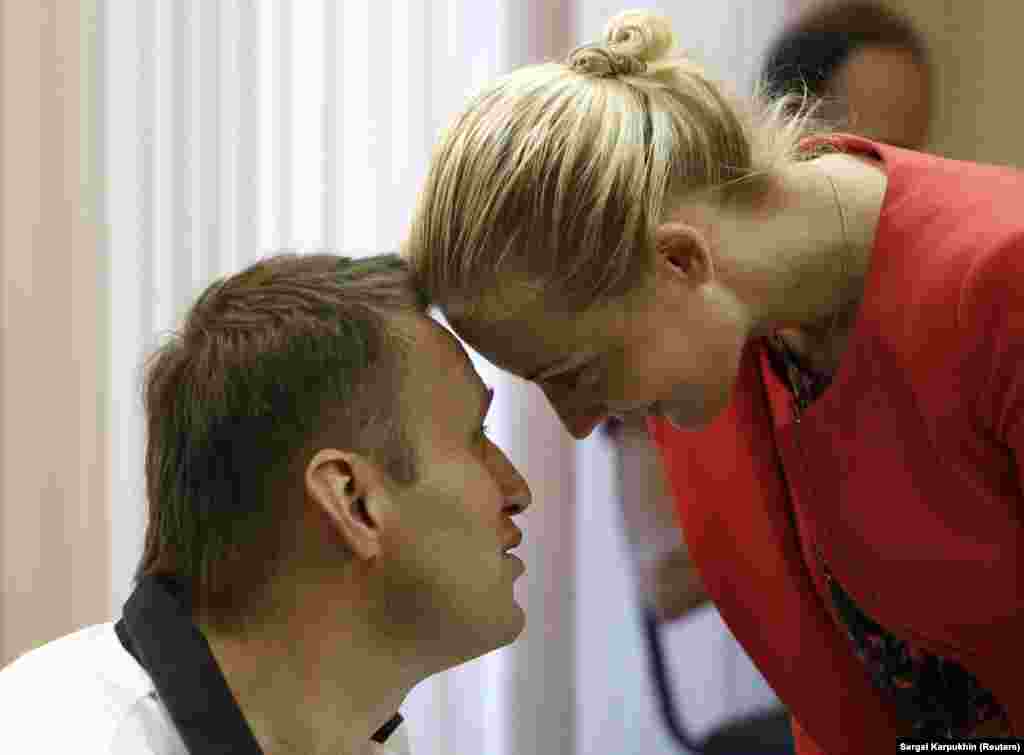
Navalny and his wife, Yulia, during a break in court proceedings in Kirov in July 2013. Navalny was charged with stealing 16 million rubles ($500,000) from a state timber firm. He rejected the charges as trumped up. The court handed down a five-year prison term that was later reduced to a suspended sentence after widespread public protests.<br />
&nbsp;
6/15 Navalny and his wife, Yulia, during a break in court proceedings in Kirov in July 2013. Navalny was charged with stealing 16 million rubles ($500,000) from a state timber firm. He rejected the charges as trumped up. The court handed down a five-year prison term that was later reduced to a suspended sentence after widespread public protests.
 
Pictures from some of the dozens of encounters Russia’s leading opposition figure has had with police, the courts, and unknown assailants through his years of public activism. Navalny has been jailed more than 10 times and has spent hundreds of days in custody since 2011.
Navalny and his brother Oleg (inside cage) during a court hearing in Moscow in December 2014. The pair were convicted of stealing around $500,000 from Russian firms during business dealings dating back several years. They rejected the charges. Aleksei Navalny&rsquo;s sentence was suspended, but his brother served a full prison term of 3 1/2 years, being released in June 2018.<br />
&nbsp;<br />
&nbsp;
7/15 Navalny and his brother Oleg (inside cage) during a court hearing in Moscow in December 2014. The pair were convicted of stealing around $500,000 from Russian firms during business dealings dating back several years. They rejected the charges. Aleksei Navalny’s sentence was suspended, but his brother served a full prison term of 3 1/2 years, being released in June 2018.
 
 
Pictures from some of the dozens of encounters Russia’s leading opposition figure has had with police, the courts, and unknown assailants through his years of public activism. Navalny has been jailed more than 10 times and has spent hundreds of days in custody since 2011.
Navalny being detained after leaving a radio station in Moscow in January 2015. Shortly before, Navalny had snipped off an electronic bracelet he was required to wear while under house arrest for his 2014 suspended sentence.
8/15 Navalny being detained after leaving a radio station in Moscow in January 2015. Shortly before, Navalny had snipped off an electronic bracelet he was required to wear while under house arrest for his 2014 suspended sentence.
Pictures from some of the dozens of encounters Russia’s leading opposition figure has had with police, the courts, and unknown assailants through his years of public activism. Navalny has been jailed more than 10 times and has spent hundreds of days in custody since 2011.
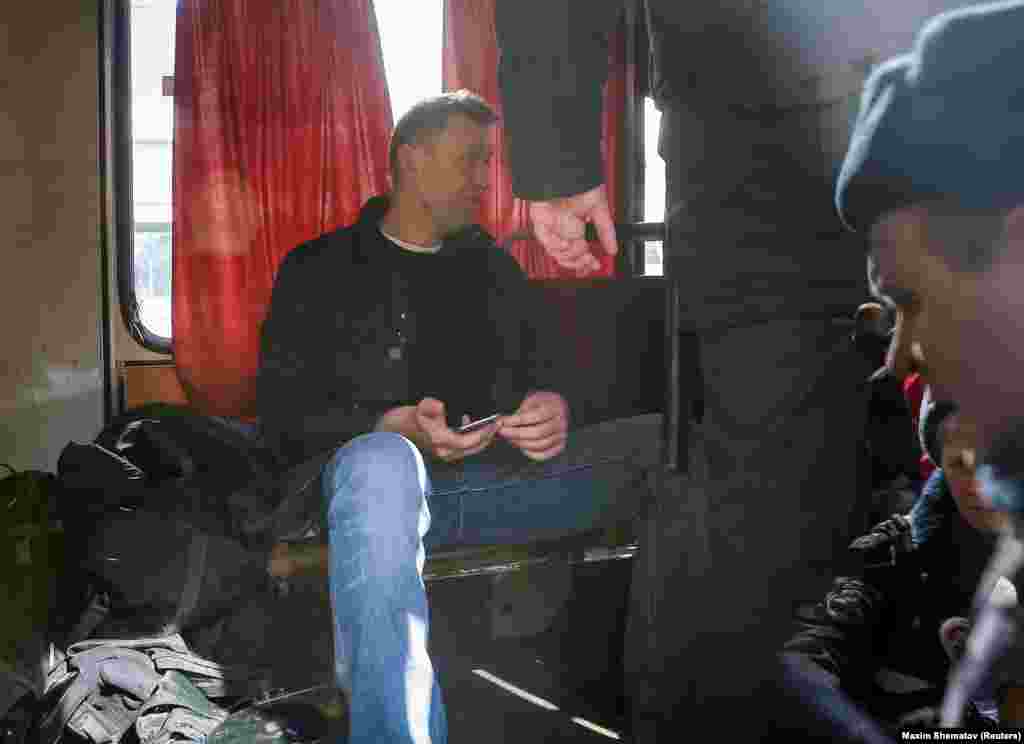
Navalny sitting in a police van after being seized by police during a massive Moscow rally in March 2017. He was fined $350 for taking part in what the authorities called an illegal protest.
9/15 Navalny sitting in a police van after being seized by police during a massive Moscow rally in March 2017. He was fined $350 for taking part in what the authorities called an illegal protest.
Pictures from some of the dozens of encounters Russia’s leading opposition figure has had with police, the courts, and unknown assailants through his years of public activism. Navalny has been jailed more than 10 times and has spent hundreds of days in custody since 2011.
Navalny on his way to the hospital after being splashed with green dye by unknown assailants in Moscow in April 2017. He suffered burns to his eye in the attack.
10/15 Navalny on his way to the hospital after being splashed with green dye by unknown assailants in Moscow in April 2017. He suffered burns to his eye in the attack.
Pictures from some of the dozens of encounters Russia’s leading opposition figure has had with police, the courts, and unknown assailants through his years of public activism. Navalny has been jailed more than 10 times and has spent hundreds of days in custody since 2011.
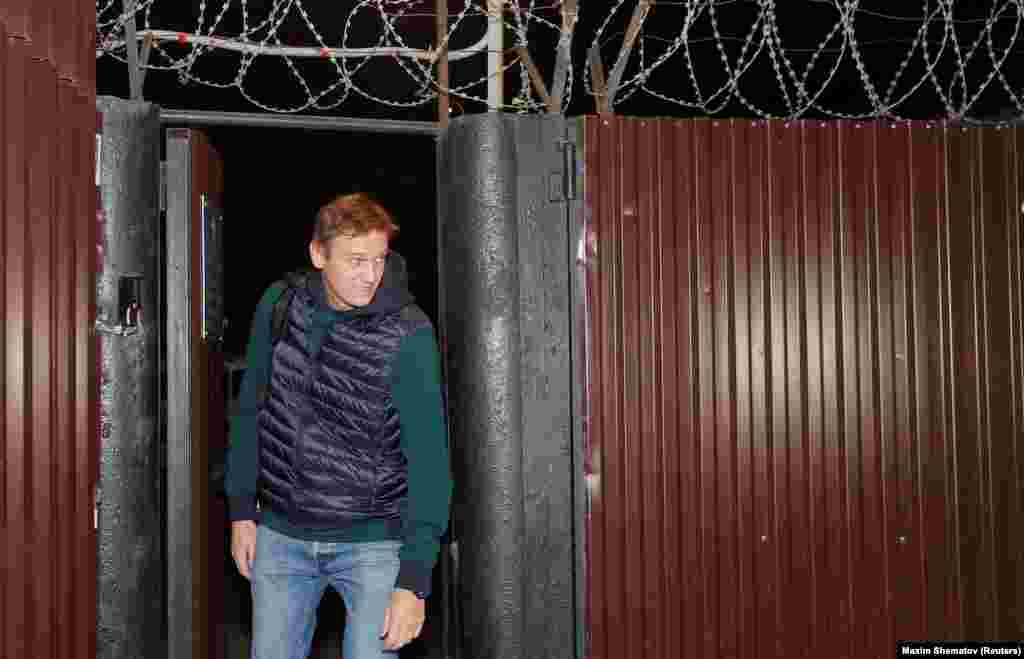
Navalny leaves a Moscow jail in October 2018 after serving 20 days on charges of staging illegal protests.<br />
&nbsp;
11/15 Navalny leaves a Moscow jail in October 2018 after serving 20 days on charges of staging illegal protests.
 
Pictures from some of the dozens of encounters Russia’s leading opposition figure has had with police, the courts, and unknown assailants through his years of public activism. Navalny has been jailed more than 10 times and has spent hundreds of days in custody since 2011.
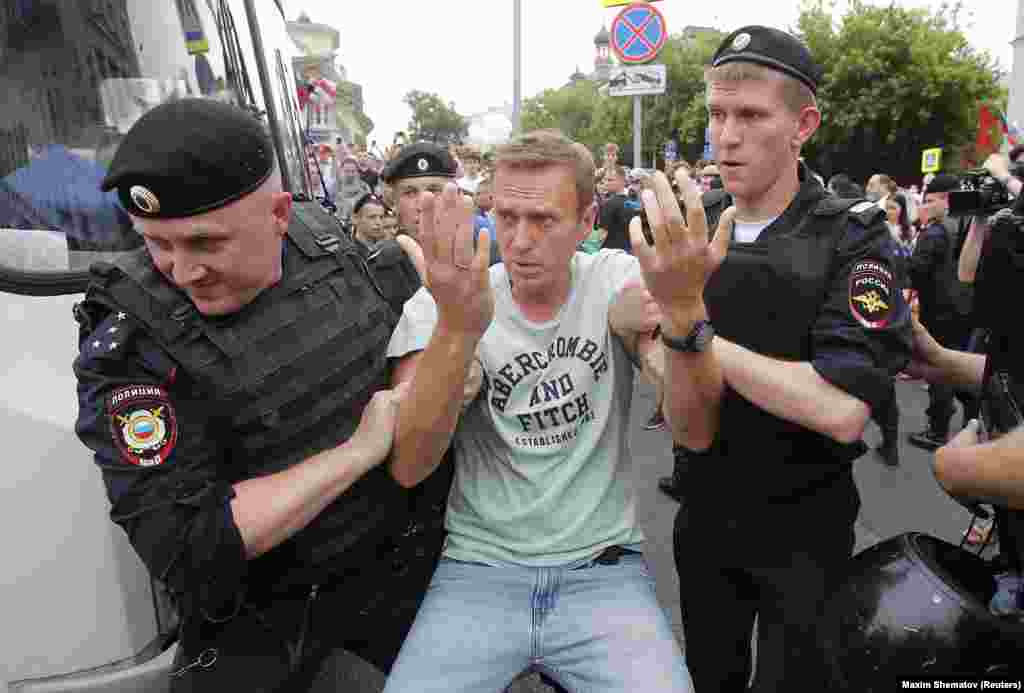
Police detain Navalny during a rally in support of investigative journalist Ivan Golunov, who was detained by police and accused of drug possession on June 12, 2019.<br />
&nbsp;
12/15 Police detain Navalny during a rally in support of investigative journalist Ivan Golunov, who was detained by police and accused of drug possession on June 12, 2019.
 
Pictures from some of the dozens of encounters Russia’s leading opposition figure has had with police, the courts, and unknown assailants through his years of public activism. Navalny has been jailed more than 10 times and has spent hundreds of days in custody since 2011.
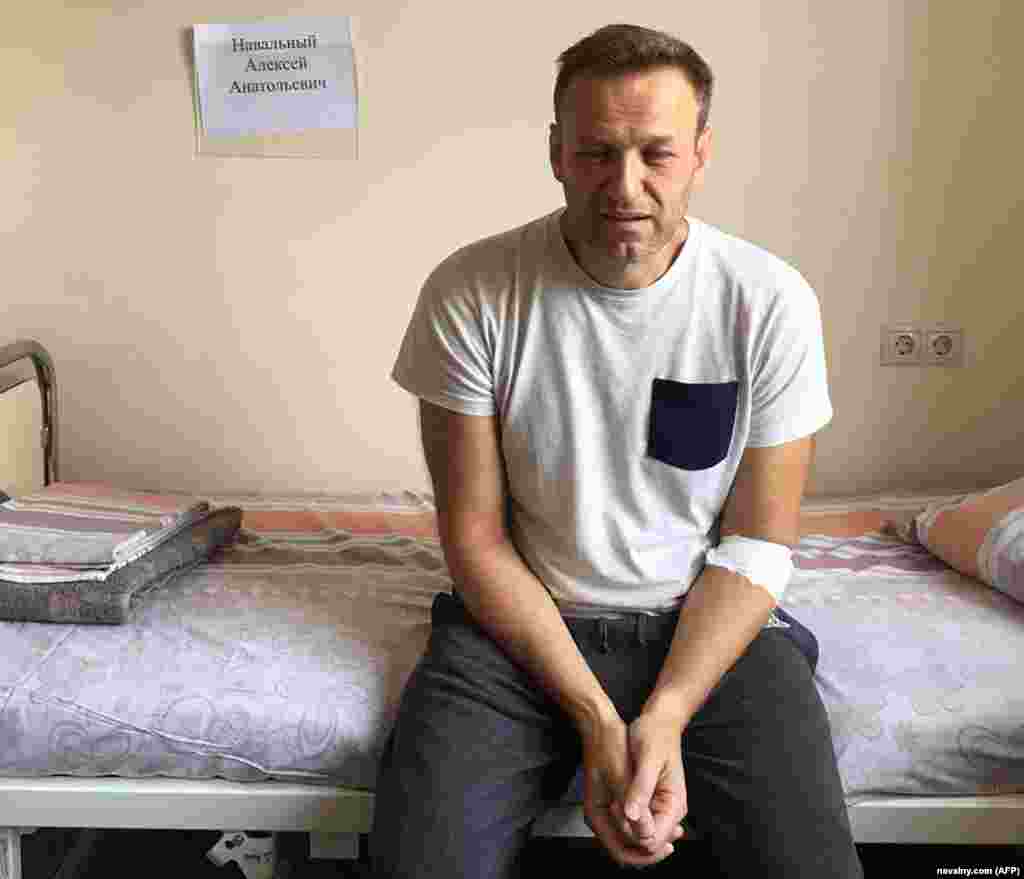
Navalny, his eyes red and puffy, sits on a hospital bed in Moscow on July 29, 2019, after feeling unwell in his Moscow cell while serving a prison term on charges of calling an unauthorized rally. He said he believed he&#39;d been poisoned. Doctors attributed it to an &quot;acute allergic reaction.&quot;
13/15 Navalny, his eyes red and puffy, sits on a hospital bed in Moscow on July 29, 2019, after feeling unwell in his Moscow cell while serving a prison term on charges of calling an unauthorized rally. He said he believed he'd been poisoned. Doctors attributed it to an "acute allergic reaction."
Pictures from some of the dozens of encounters Russia’s leading opposition figure has had with police, the courts, and unknown assailants through his years of public activism. Navalny has been jailed more than 10 times and has spent hundreds of days in custody since 2011.
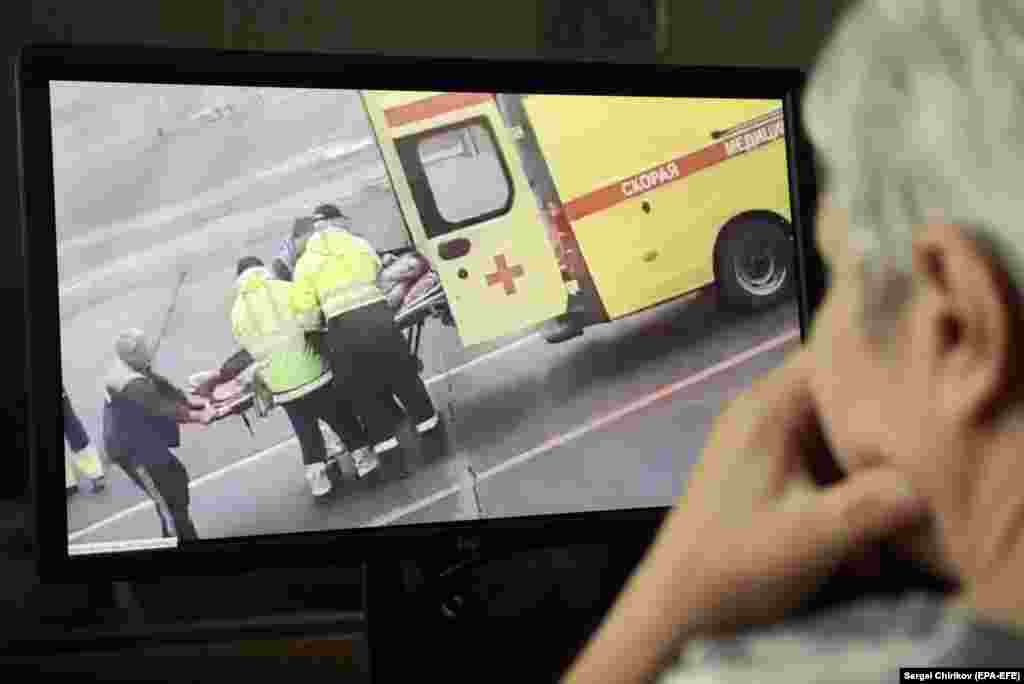
A person watches a video on social media showing Navalny being carried on a stretcher by an ambulance team in Omsk after falling gravely ill from suspected poisoning while aboard a flight from Tomsk to Moscow on August 20.
14/15 A person watches a video on social media showing Navalny being carried on a stretcher by an ambulance team in Omsk after falling gravely ill from suspected poisoning while aboard a flight from Tomsk to Moscow on August 20.
Pictures from some of the dozens of encounters Russia’s leading opposition figure has had with police, the courts, and unknown assailants through his years of public activism. Navalny has been jailed more than 10 times and has spent hundreds of days in custody since 2011.
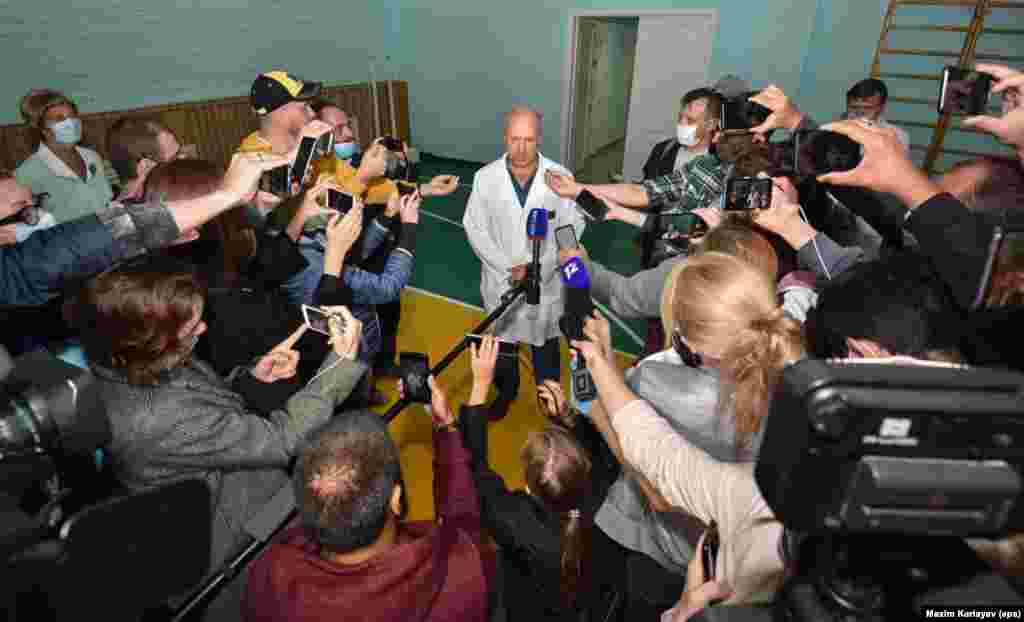
A doctor at an Omsk hospital tells journalists that Navalny had been placed in an induced coma.<br />
&nbsp;<br />
&nbsp;<br />
&nbsp;
15/15 A doctor at an Omsk hospital tells journalists that Navalny had been placed in an induced coma.


Pictures from some of the dozens of encounters Russia’s leading opposition figure has had with police, the courts, and unknown assailants through his years of public activism. Navalny has been jailed more than 10 times and has spent hundreds of days in custody since 2011.
Previous slide
Next slide

He endured chemical burns to one of his eyes in 2017 after he was assaulted with antiseptic dye.

In July 2019, Navalny was given a 30-day jail term after calling for unauthorized protests against Putin's government.

During that jail sentence, he was taken to a hospital with severe swelling of the face and a rash. He later alleged that he had been poisoned while in jail.

He has been jailed several times in recent years for organizing unauthorized public demonstrations and on charges that he and his supporters say have often been politically motivated.

As a result of those cases, he has been barred from running for president and had a bid to run for Moscow mayor blocked.

A long line of Kremlin opponents have fallen seriously ill or have died from poisoning in Russia and abroad.

A Timeline Of Russian Poisoning Cases

A Timeline Of Russian Poisoning Cases

Over Vladimir Putin's 20 years in power, there have been numerous cases where outspoken Kremlin opponents are suspected of having been poisoned -- sometimes fatally.
With reporting by AFP, AP, Reuters, and TASS
  • 16x9 Image

    RFE/RL's Russian Service

    RFE/RL's Russian Service is a multi-platform alternative to Russian state-controlled media, providing audiences in the Russian Federation with informed and accurate news, analysis, and opinion.

This item is part of
XS
SM
MD
LG