


Accessibility links

Breaking News
Ten-year-old Sasha stands in a bomb shelter in Donetsk in eastern Ukraine.

Live Blog: Ukraine In Crisis (Archive)

Follow all of the latest developments as they happen.

Final News Summary For September 29

-- We have started a new Ukraine Live Blog. Find it here.

-- Ukraine is marking 75 years since the World War II massacre of 33,771 Jews on the outskirts of Nazi-occupied Kyiv.

-- German Chancellor Angela Merkel has urged Russian President Vladimir Putin to stabilize a fragile cease-fire in Ukraine and do all he could to improve what Merkel called a "catastrophic humanitarian situation" in Syria.

-- Russia's Supreme Court has upheld a decision by a Moscow-backed Crimean court to ban the Mejlis, the self-governing body of Crimean Tatars in the occupied Ukrainian territory.

* NOTE: Times are stated according to local time in Kyiv (GMT/UTC +3)

12:20 24.7.2016

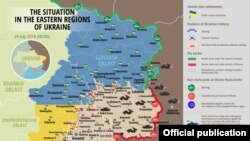
Here's today's map of the latest situation in the Donbas conflict zone, where six Ukrainian servicemen have been reported killed in the past 24 hours. (CLICK IMAGE TO ENLARGE)
12:16 24.7.2016

12:15 24.7.2016

10:58 24.7.2016

Good morning, it seems relatively quiet on the Ukraine front this morning, but here's a few things that caught our attention overnight:

19:40 23.7.2016

Barring any major developments, that ends the live blogging for today.

19:21 23.7.2016

19:17 23.7.2016

The funeral has been held for Pavel Sheremet, who was killed in a car bombing in Kyiv on July 20.

18:40 23.7.2016

15:10 23.7.2016

Sheremet's funeral will take place shortly:

A farewell ceremony honoring prominent Belarusian-born journalist Pavel Sheremet, who was killed in a car bombing in Kyiv on July 20, is taking place at Minsk’s Church of All Saints.

His funeral will take place at 1430 (1530 Prague time).

Sheremet, a journalist at news website Ukrayinska Pravda, was driving to a radio station to do a morning show when the bomb exploded.

His killing shook Ukraine’s media community and sent shock waves into Russia and Belarus.

The 44-year-old had previously worked in Russia and his native Belarus, where he faced pressure from the authorities for his reporting.

The Interior Ministry said the explosives were “skillfully” planted underneath the car and the blast may have been set off by a “remote-controlled or delayed-action” detonator.

On July 22 thousands of mourners took part in a solemn procession through Kyiv’s Ukrainian House including friends, colleagues, lawmakers, and government officials -- among them President Petro Poroshenko.

11:17 23.7.2016

HIV: East Ukraine's Silent Crisis

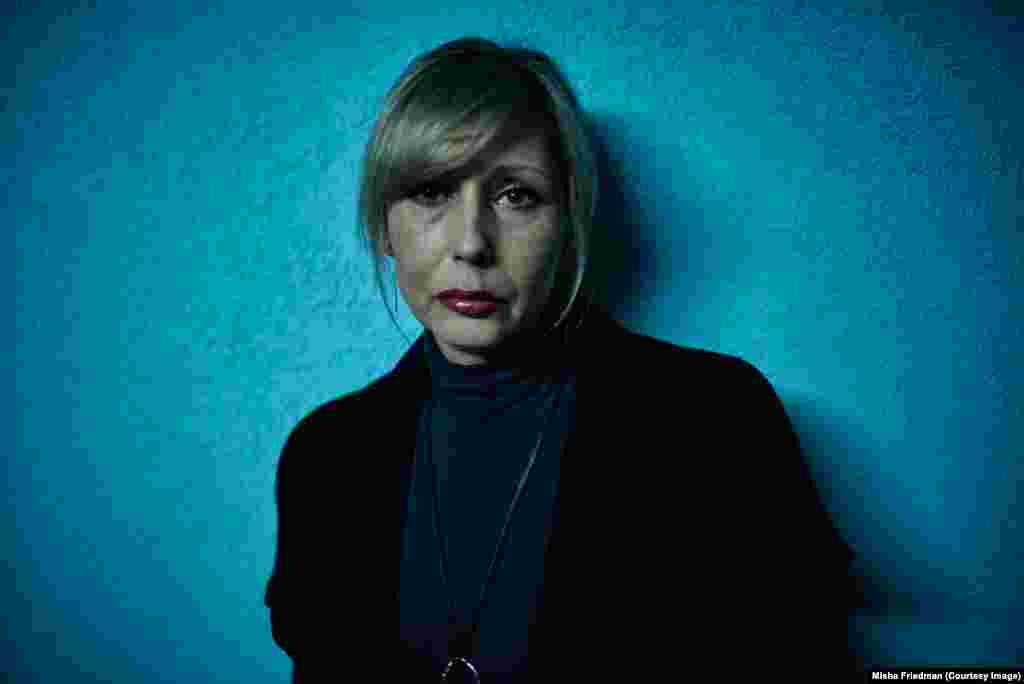
Olha has known about her HIV status for almost 20 years. She was a social worker, helping young women in her hometown Donetsk. But after she openly opposed the separatist regime, she was forced to flee, leaving all of her possessions behind. Her apartment is now occupied by separatists and she lives in a temporary shelter in Odesa. Olga admitted to photographer Misha Friedman that she has attempted suicide.
1/11 Olha has known about her HIV status for almost 20 years. She was a social worker, helping young women in her hometown Donetsk. But after she openly opposed the separatist regime, she was forced to flee, leaving all of her possessions behind. Her apartment is now occupied by separatists and she lives in a temporary shelter in Odesa. Olga admitted to photographer Misha Friedman that she has attempted suicide.
Yana, an outreach worker, visiting an HIV positive patient being treated for tuberculosis in Donetsk. HIV sufferers are particularly susceptible to diseases such as TB, which is currently making a comeback in Ukraine's war zones.
2/11 Yana, an outreach worker, visiting an HIV positive patient being treated for tuberculosis in Donetsk. HIV sufferers are particularly susceptible to diseases such as TB, which is currently making a comeback in Ukraine's war zones.
Tetyana, 33, with her three children. She contracted HIV from her husband, who was a drug user and died of complications from AIDS in January 2016. The family had fled its home during heavy fighting and Tetyana now lives in Kramatorsk, supported solely by NGOs and church groups. She is unable to work, as she is the only caregiver for her children.
3/11 Tetyana, 33, with her three children. She contracted HIV from her husband, who was a drug user and died of complications from AIDS in January 2016. The family had fled its home during heavy fighting and Tetyana now lives in Kramatorsk, supported solely by NGOs and church groups. She is unable to work, as she is the only caregiver for her children.
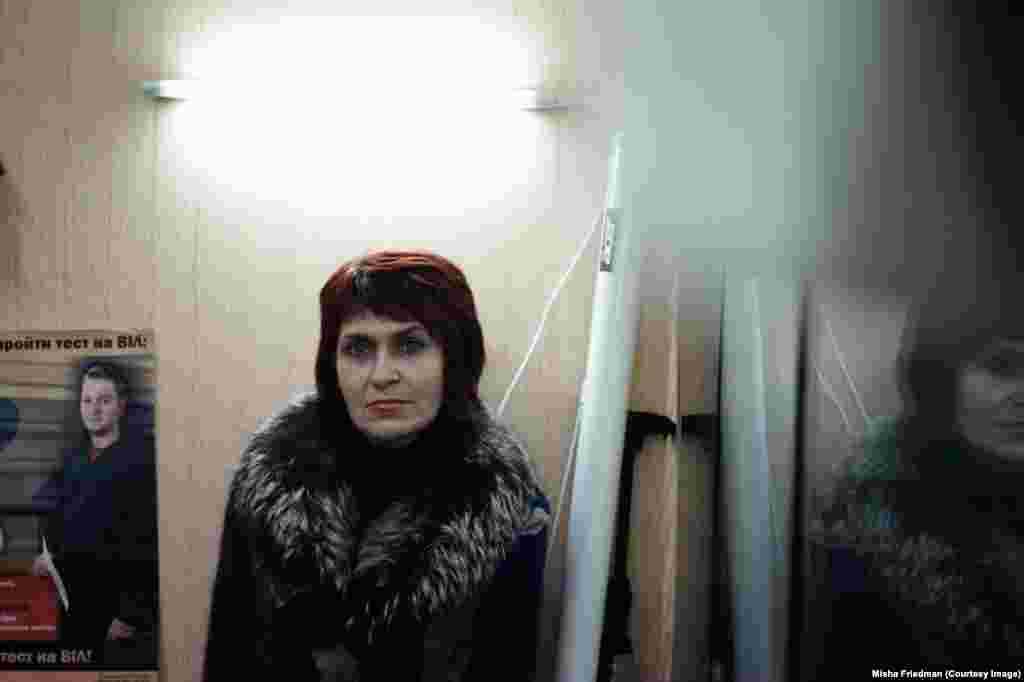
Viktoria, 48, is a social worker for women with HIV in Kramatorsk.
4/11 Viktoria, 48, is a social worker for women with HIV in Kramatorsk.
Alla with her son after getting groceries paid for by an NGO that assists internally displaced people with drug problems. The HIV sufferer fled her home just outside of Donetsk during fighting and is now living with her son in Kramatorsk.<br />
<br />
&nbsp;
5/11 Alla with her son after getting groceries paid for by an NGO that assists internally displaced people with drug problems. The HIV sufferer fled her home just outside of Donetsk during fighting and is now living with her son in Kramatorsk.

 
Alla walks to her apartment after receiving her daily dose of methadone, a substitution therapy for drug users that separatists in eastern Ukraine have made almost impossible to get. The Russia-backed separatists have taken a hard line on drug addiction, in contrast with Kyiv&#39;s policy of making methadone available to those hoping to get off hard drugs.
6/11 Alla walks to her apartment after receiving her daily dose of methadone, a substitution therapy for drug users that separatists in eastern Ukraine have made almost impossible to get. The Russia-backed separatists have taken a hard line on drug addiction, in contrast with Kyiv's policy of making methadone available to those hoping to get off hard drugs.
Svita is reunited with her husband, Oleksiy, in Kyiv after he spent months as a POW of Russia-backed separatists. He hid his HIV status from his captors and Svita managed to sneak his medications to him.
7/11 Svita is reunited with her husband, Oleksiy, in Kyiv after he spent months as a POW of Russia-backed separatists. He hid his HIV status from his captors and Svita managed to sneak his medications to him.
Iryna, 28, fled the war from Yenakiyeve, a town now under separatist control in eastern Ukraine. The HIV sufferer is an intravenous drug user and receives substitution therapy, which was made illegal by separatists.
8/11 Iryna, 28, fled the war from Yenakiyeve, a town now under separatist control in eastern Ukraine. The HIV sufferer is an intravenous drug user and receives substitution therapy, which was made illegal by separatists.
Roza, an outreach worker for a small local NGO, is battling drug addiction as well as HIV. To fund her addiction, Roza was a sex worker and spent time in prison. Now she helps others from similar backgrounds.
9/11 Roza, an outreach worker for a small local NGO, is battling drug addiction as well as HIV. To fund her addiction, Roza was a sex worker and spent time in prison. Now she helps others from similar backgrounds.
Yana (left), 40, with her social worker Olha. Yana was recently released from prison and Olha is helping her readjust to everyday life in Mariupol.
10/11 Yana (left), 40, with her social worker Olha. Yana was recently released from prison and Olha is helping her readjust to everyday life in Mariupol.
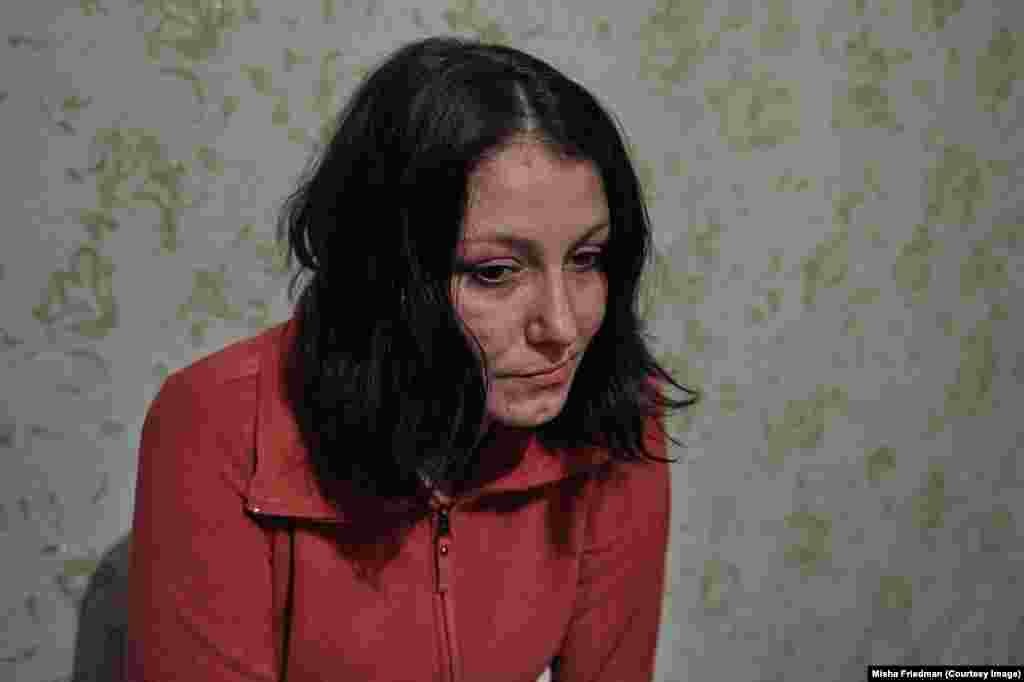
At a warming station for the homeless, Olha listens to a young woman who was kicked out of home by her parents.
11/11 At a warming station for the homeless, Olha listens to a young woman who was kicked out of home by her parents.
Previous slide
Next slide

HIV: East Ukraine's Silent Crisis

As the conflict in eastern Ukraine grinds on, a hidden crisis that began long before the fighting is becoming increasingly severe. Ukraine has one of the highest rates of HIV/AIDS in Europe and, in the war-torn east of the country, the numbers are reportedly three times higher than in the rest of Ukraine. With Russia-backed separatists banning most international medical organizations and taking a harsh stance toward people living with HIV/AIDS, many who can, flee the region, becoming some of Ukraine's most vulnerable IDPs. Photographs by Misha Friedman. ​Reporting for this story was partially funded by the Pulitzer Center.

Load more

XS
SM
MD
LG