


Accessibility links

Breaking News

Government's Claims About Macedonia Terrorist Group Met Skeptically

Updated
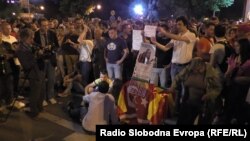
Students gather to protest against police brutality in Skopje on May 8. Leaked wiretaps suggesting rampant abuse of office have led some to suspect the Kumanovo incident was "too suspicious."

SKOPJE -- Ethnically motivated terrorism is nothing new in the Balkans. But neither are authoritarian governments willing to exploit ethnic tensions to push their own agendas.

Macedonians are mindful of these facts as they come to grips with a deadly shoot-out between security forces and purported terrorists in the town of Kumanovo, near the country's borders with Kosovo and Serbia.

Even as the country on May 11 held a second day of mourning for police officers killed in the incident, the details remained sketchy.

But the security challenge comes against the background of a major political crisis in Macedonia that has rocked confidence in the government's motives. Recent releases of tapped phone conversations seem to show a government that will stop at little to maintain its grip on power.

Eight police were killed and 27 wounded in the predawn raid on May 9 against a "terrorist group" of ethnic Albanians. According to Macedonian officials, 14 alleged militants were killed and 30 captured in the Kumanovo action. A large cache of weapons was also reportedly seized.

"One of the most dangerous terrorist groups in the Balkans has been neutralized," an Interior Ministry spokesman told journalists in Skopje on May 9. He said the militants planned to attack state institutions across the country.

Prime Minister Nikola Gruevski said on May 10 that the police "managed to neutralize the terrorists who planned mass murder in Macedonia, aimed at its destabilization."

At the same time, a statement published in the Albanian press purportedly by a group called the National Liberation Army said the raid targeted its fighters but said it would continue its "ongoing fight for the freedom and national dignity" of ethnic Albanians in Macedonia.

Just Criminals, Mercenaries?

But some locals in Kumanovo and analysts are not so sure about the government's version of events.

"If this is a terrorist group, as the Interior Ministry claims, they would need logistical support from the local population if they want to achieve any goals," says Vladimir Pivovarov, a former Macedonian intelligence officer. "In addition, they would need support from the international community if they want to achieve something, some [ethnic-minority] rights. The international community has said for years that there is no possibility of changing the borders [to create Greater Albania]. So that's why this is not clear."

He adds that further investigation is needed to determine if the alleged militants were actually an organized-crime gang or if they were really politically motivated.

Skopje-based political analyst Nasser Ziberi also doubts that the Kumanovo gang had any real connections to Albanian political forces. "I do not see any political support from any Albanian political platform," he tells RFE/RL's Balkan Service. "Most probably, they are a group of mercenaries. I have heard reports like that. Perhaps their goal is connected to the action of jihadi groups in Bosnia and so on. But I do not see an Albanian political option."

PHOTO GALLERY: Aftermath of Kumanovo violence:

Macedonia Mourns Eight Police Killed In Gunbattle

Ethnic Albanian Azem Ibrahimi visits his destroyed house in a neighborhood where a gunbattle took place between Macedonian police and an armed group in the town of Kumanovo.
1/13 Ethnic Albanian Azem Ibrahimi visits his destroyed house in a neighborhood where a gunbattle took place between Macedonian police and an armed group in the town of Kumanovo.
Macedonia is observing a second day of national mourning on May 11 for eight police officers killed during a weekend battle against gunmen in the northern town of Kumanovo. Macedonian President Gjorge Ivanov said 14 suspected gunmen also were killed in the battle, which began early on May 9 in the town near the borders with Kosovo and Serbia.
People stand near destroyed houses following clashes between Macedonian police and an armed group in Kumanovo.
2/13 People stand near destroyed houses following clashes between Macedonian police and an armed group in Kumanovo.
Macedonia is observing a second day of national mourning on May 11 for eight police officers killed during a weekend battle against gunmen in the northern town of Kumanovo. Macedonian President Gjorge Ivanov said 14 suspected gunmen also were killed in the battle, which began early on May 9 in the town near the borders with Kosovo and Serbia.
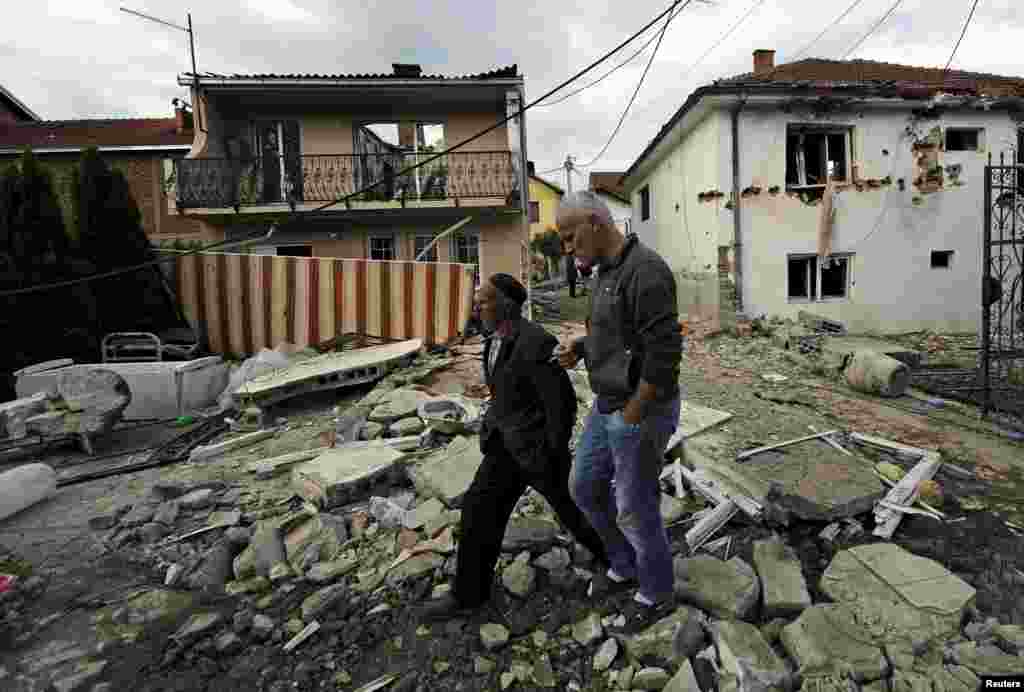
People walk past houses damaged in the gunbattle in Kumanovo.
3/13 People walk past houses damaged in the gunbattle in Kumanovo.
Macedonia is observing a second day of national mourning on May 11 for eight police officers killed during a weekend battle against gunmen in the northern town of Kumanovo. Macedonian President Gjorge Ivanov said 14 suspected gunmen also were killed in the battle, which began early on May 9 in the town near the borders with Kosovo and Serbia.
People watch as Macedonian police troops in armored vehicles leave the area where fighting took place in Kumanovo.
4/13 People watch as Macedonian police troops in armored vehicles leave the area where fighting took place in Kumanovo.
Macedonia is observing a second day of national mourning on May 11 for eight police officers killed during a weekend battle against gunmen in the northern town of Kumanovo. Macedonian President Gjorge Ivanov said 14 suspected gunmen also were killed in the battle, which began early on May 9 in the town near the borders with Kosovo and Serbia.
A doll lies on the ground at the entrance to a destroyed house following clashes between Macedonian police and an armed group in Kumanovo.
5/13 A doll lies on the ground at the entrance to a destroyed house following clashes between Macedonian police and an armed group in Kumanovo.
Macedonia is observing a second day of national mourning on May 11 for eight police officers killed during a weekend battle against gunmen in the northern town of Kumanovo. Macedonian President Gjorge Ivanov said 14 suspected gunmen also were killed in the battle, which began early on May 9 in the town near the borders with Kosovo and Serbia.
Police officers secure a street in Kumanovo.
6/13 Police officers secure a street in Kumanovo.
Macedonia is observing a second day of national mourning on May 11 for eight police officers killed during a weekend battle against gunmen in the northern town of Kumanovo. Macedonian President Gjorge Ivanov said 14 suspected gunmen also were killed in the battle, which began early on May 9 in the town near the borders with Kosovo and Serbia.
A bullet-riddled wall in a house following clashes between Macedonian police and an armed group in Kumanovo.
7/13 A bullet-riddled wall in a house following clashes between Macedonian police and an armed group in Kumanovo.
Macedonia is observing a second day of national mourning on May 11 for eight police officers killed during a weekend battle against gunmen in the northern town of Kumanovo. Macedonian President Gjorge Ivanov said 14 suspected gunmen also were killed in the battle, which began early on May 9 in the town near the borders with Kosovo and Serbia.
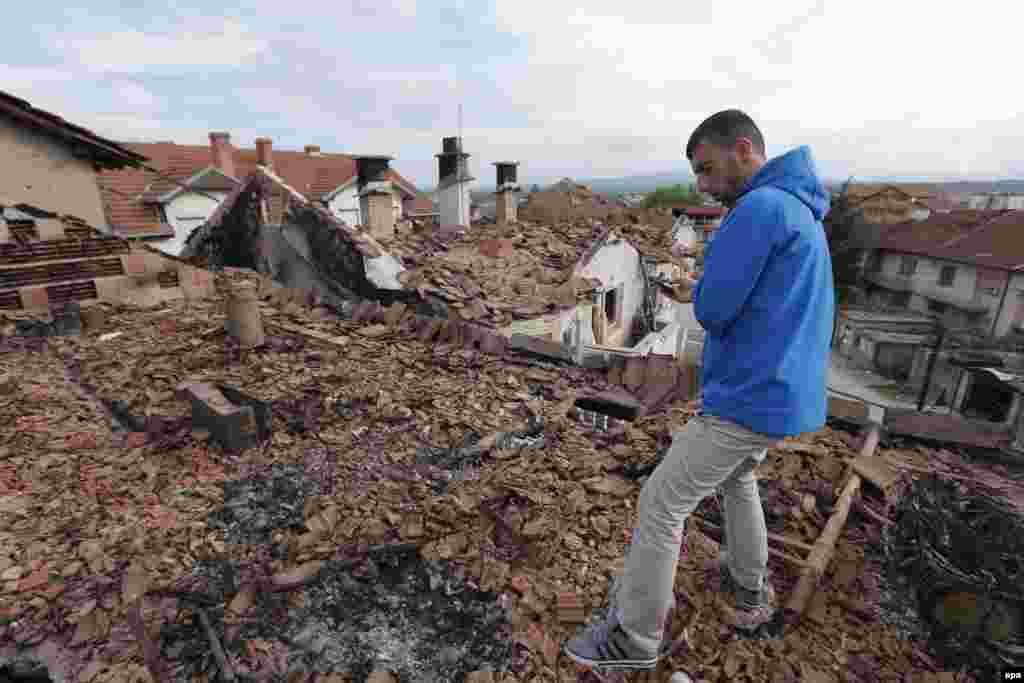
A resident visits destroyed houses in a neighborhood where a gunbattle took place between Macedonian police and an armed group in the town of Kumanovo.
8/13 A resident visits destroyed houses in a neighborhood where a gunbattle took place between Macedonian police and an armed group in the town of Kumanovo.
Macedonia is observing a second day of national mourning on May 11 for eight police officers killed during a weekend battle against gunmen in the northern town of Kumanovo. Macedonian President Gjorge Ivanov said 14 suspected gunmen also were killed in the battle, which began early on May 9 in the town near the borders with Kosovo and Serbia.
Ethnic Albanians pray during the funeral of one of the police officers, Isamedin Osmani, killed in a recent operation, in the village of Studenicani.
9/13 Ethnic Albanians pray during the funeral of one of the police officers, Isamedin Osmani, killed in a recent operation, in the village of Studenicani.
Macedonia is observing a second day of national mourning on May 11 for eight police officers killed during a weekend battle against gunmen in the northern town of Kumanovo. Macedonian President Gjorge Ivanov said 14 suspected gunmen also were killed in the battle, which began early on May 9 in the town near the borders with Kosovo and Serbia.
The funeral procession for Zarko Kuzmanovski, one of the slain police officers, in the village of Brvenica near Tetovo
10/13 The funeral procession for Zarko Kuzmanovski, one of the slain police officers, in the village of Brvenica near Tetovo
Macedonia is observing a second day of national mourning on May 11 for eight police officers killed during a weekend battle against gunmen in the northern town of Kumanovo. Macedonian President Gjorge Ivanov said 14 suspected gunmen also were killed in the battle, which began early on May 9 in the town near the borders with Kosovo and Serbia.
Relatives of Zarko Kuzmanovski, a police officer killed in the operation, mourn next to his coffin draped with the Macedonian flag during his funeral in the village of Brvenica.
11/13 Relatives of Zarko Kuzmanovski, a police officer killed in the operation, mourn next to his coffin draped with the Macedonian flag during his funeral in the village of Brvenica.
Macedonia is observing a second day of national mourning on May 11 for eight police officers killed during a weekend battle against gunmen in the northern town of Kumanovo. Macedonian President Gjorge Ivanov said 14 suspected gunmen also were killed in the battle, which began early on May 9 in the town near the borders with Kosovo and Serbia.
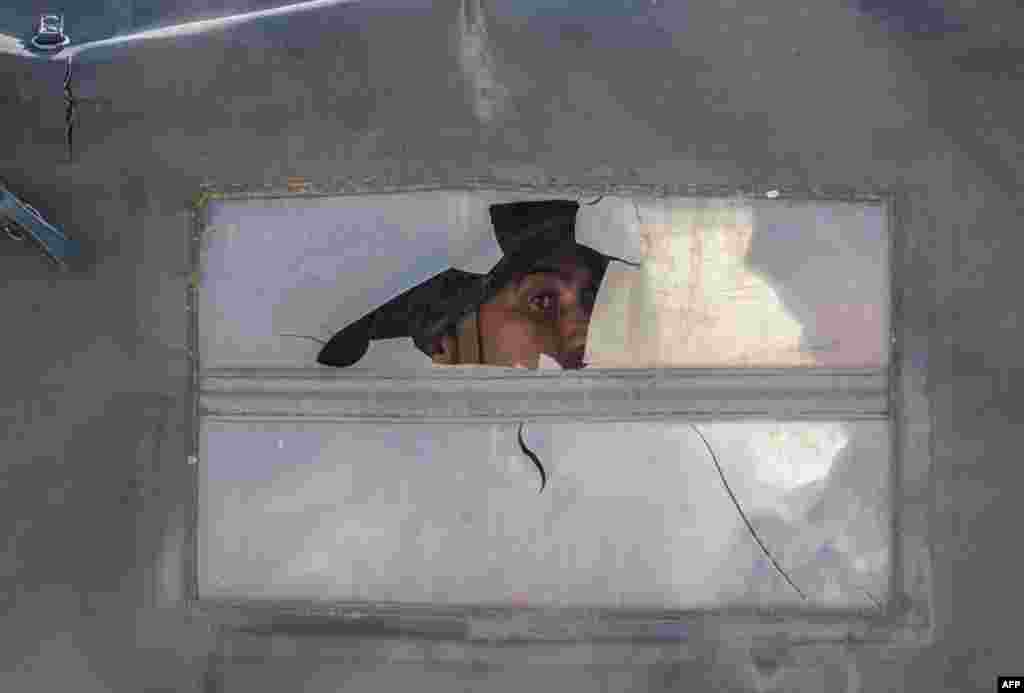
A Macedonian police officer looks out of a ripped truck window in Kumanovo.
12/13 A Macedonian police officer looks out of a ripped truck window in Kumanovo.
Macedonia is observing a second day of national mourning on May 11 for eight police officers killed during a weekend battle against gunmen in the northern town of Kumanovo. Macedonian President Gjorge Ivanov said 14 suspected gunmen also were killed in the battle, which began early on May 9 in the town near the borders with Kosovo and Serbia.
A drone flies over Kumanovo.
13/13 A drone flies over Kumanovo.
Macedonia is observing a second day of national mourning on May 11 for eight police officers killed during a weekend battle against gunmen in the northern town of Kumanovo. Macedonian President Gjorge Ivanov said 14 suspected gunmen also were killed in the battle, which began early on May 9 in the town near the borders with Kosovo and Serbia.
Previous slide
Next slide

...Or A Desperate Government?

The Kumanovo shoot-out comes against the background of a mounting political crisis for Macedonia's government. For months now, Zoran Zaev, the head of the main opposition Social Democrats (SDSM), has been releasing leaked wiretaps that have implicated the ruling VMRO-DPMNE party in several abuse-of-power scandals -- including allegations that it covered up the 2011 killing of a student by an officer of a special police unit called the Tigers.

Although Macedonia's state-controlled media have given little coverage to the Zaev leaks, an estimated 1,000 protesters -- mostly students -- took to the streets on May 5-6 calling for Gruevski's resignation.

WATCH: New video released of gunbattle
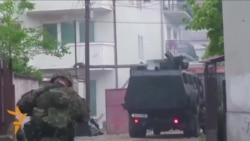
New Video Released Of Macedonia Gunbattle
please wait

No media source currently available

0:00 0:01:12 0:00

In this context, "to many observers, the timing [of the Kumanovo incident] just seems too suspicious," London School of Economics and Political Science researcher James Ker-Lindsay says in an online interview.

"Questions are being asked as to whether the government has somehow orchestrated this in order to divert attention away from the growing scandal," he says. "Given the evidence of serious wrongdoings by the government, many people believe that the administration is more than capable of staging a terrorist attack in order to stay in power."

Russia's Foreign Ministry, in a May 9 statement, accepted Skopje's interpretation of the Kumanovo events and seemed to place the violence in the context of Moscow's own strained relations with the West.

"The choice of some opposition movements and nongovernmental organizations -- including some that were inspired by the West -- in favor of the logic of the street and the notorious scenario of 'colored revolutions' is fraught with dangerous consequences," the Russian statement said. "They could intensify interethnic divisions in multiethnic Macedonia and the surrounding regions in the Balkans, which in the late 1990s and early 2000s went through serious conflicts."

Kumanovo is located about 40 kilometers northeast of Skopje, close to the borders with Serbia and Kosovo. It is within the so-called Kosovo Triangle, a center of ethnic Albanian organized crime. The region is believed to be a transit location for heroin shipments on their way to Western Europe, and some of the profits of the drug trade have allegedly been used to fund pro-Albanian militant groups in the past, including the defunct Kosovo Liberation Army.

Macedonia's population of about 2 million consists of 64 percent ethnic Macedonians, who are Orthodox Slavs, and about 25 percent ethnic Albanians, who are predominantly Muslims. It also has significant Turkish, Romany, Serbian, and Bosniak minorities.

In an interview with Deutsche Welle, Bucharest-based political scientist Franz-Lothar Altmann urged the government to enter into "unconditional talks with the opposition."

"Otherwise," Altmann said, "Macedonia's democracy, weak as it already is, will end up in a national catastrophe."

This item is part of
XS
SM
MD
LG